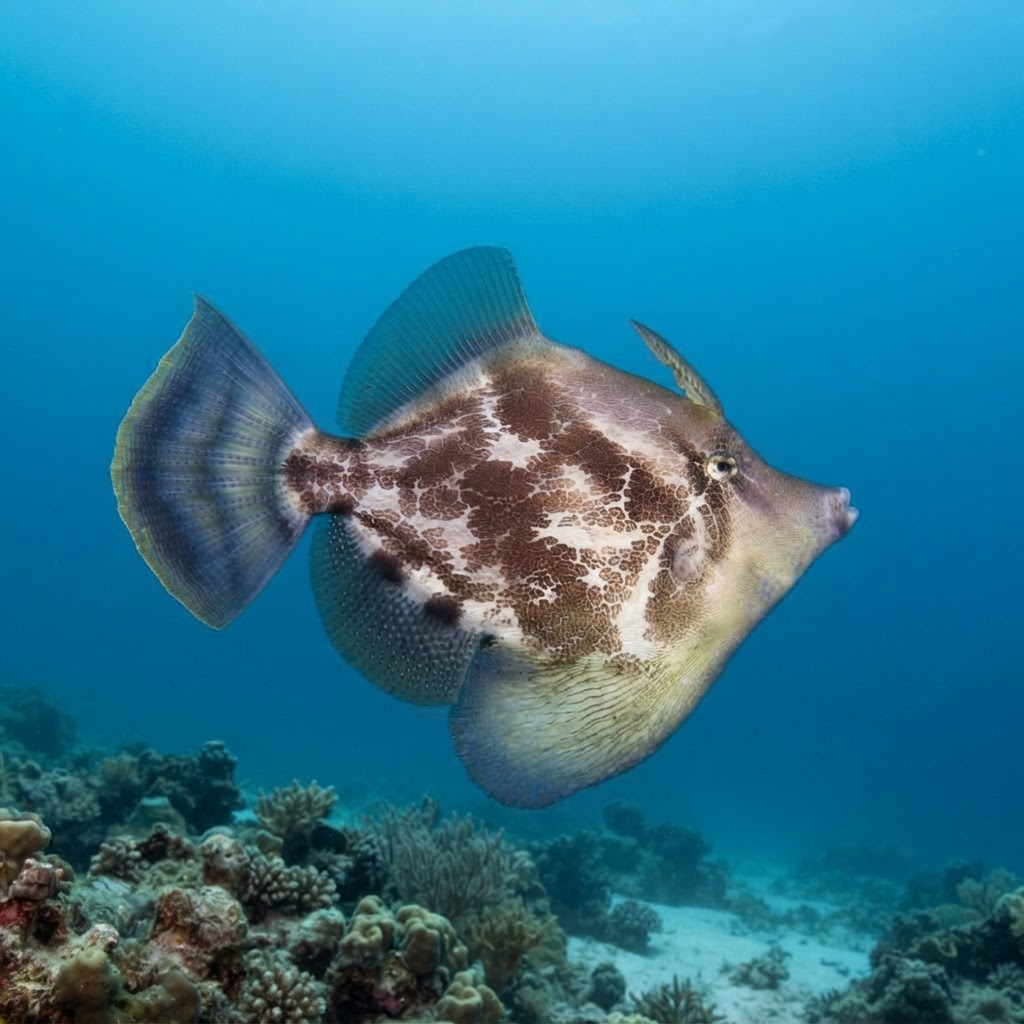
Monacanthus chinensis
Mottled, leaf-shaped filefish common on New South Wales reefs, 21-29C water, seen year-round hovering near sponges and weed.
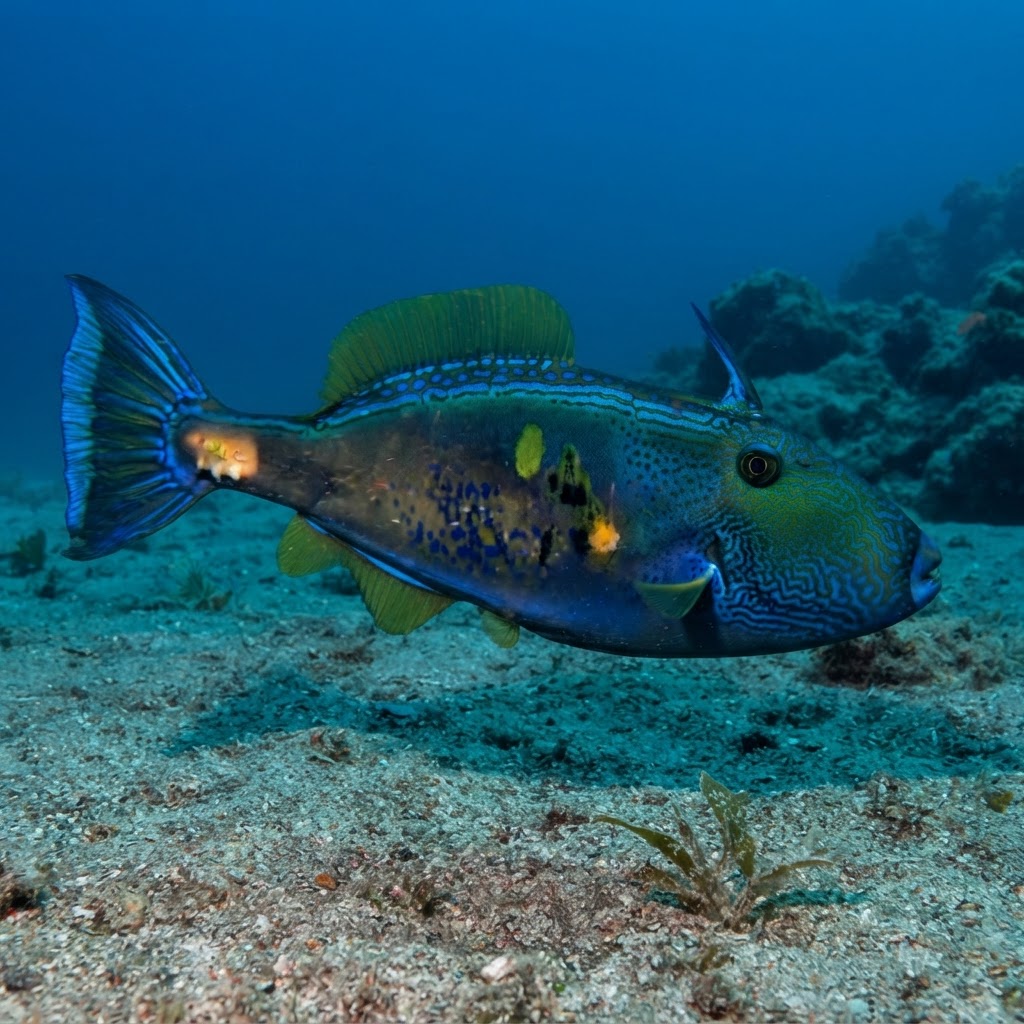
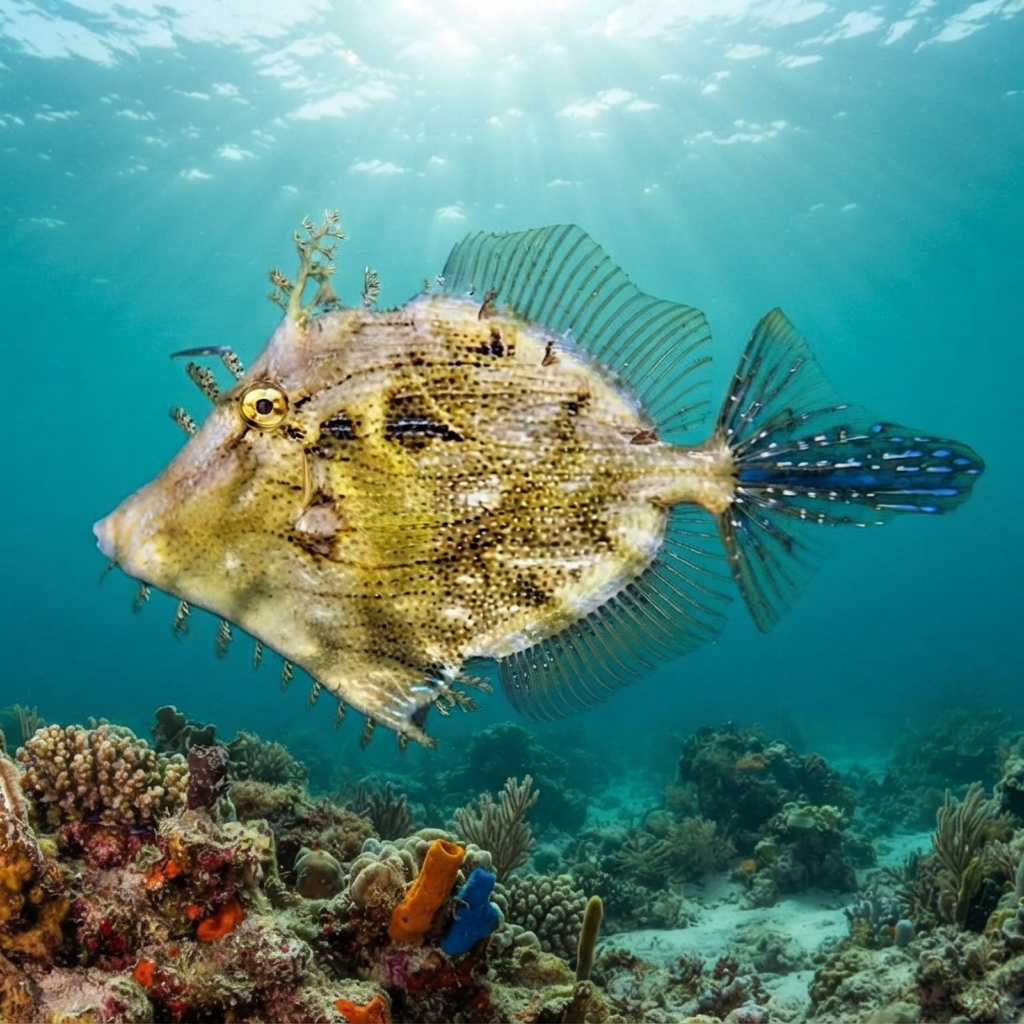
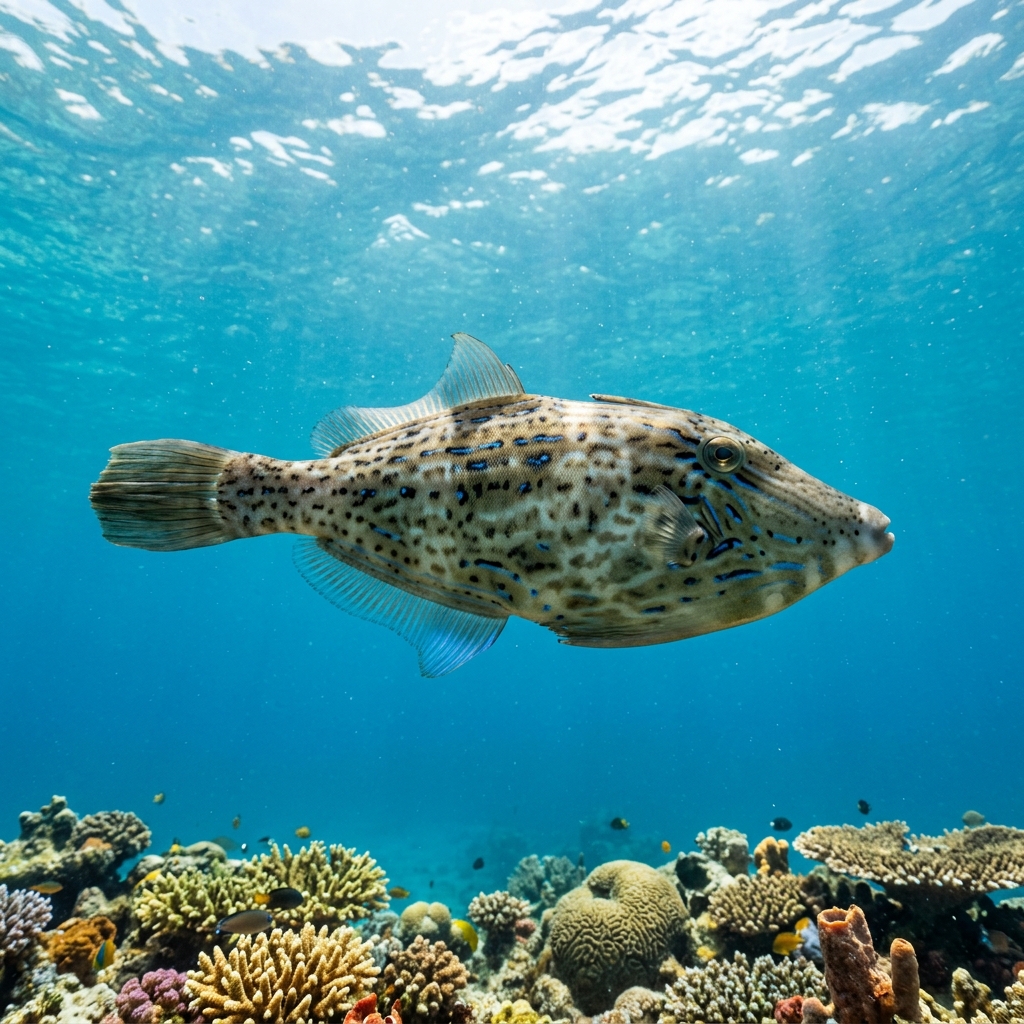
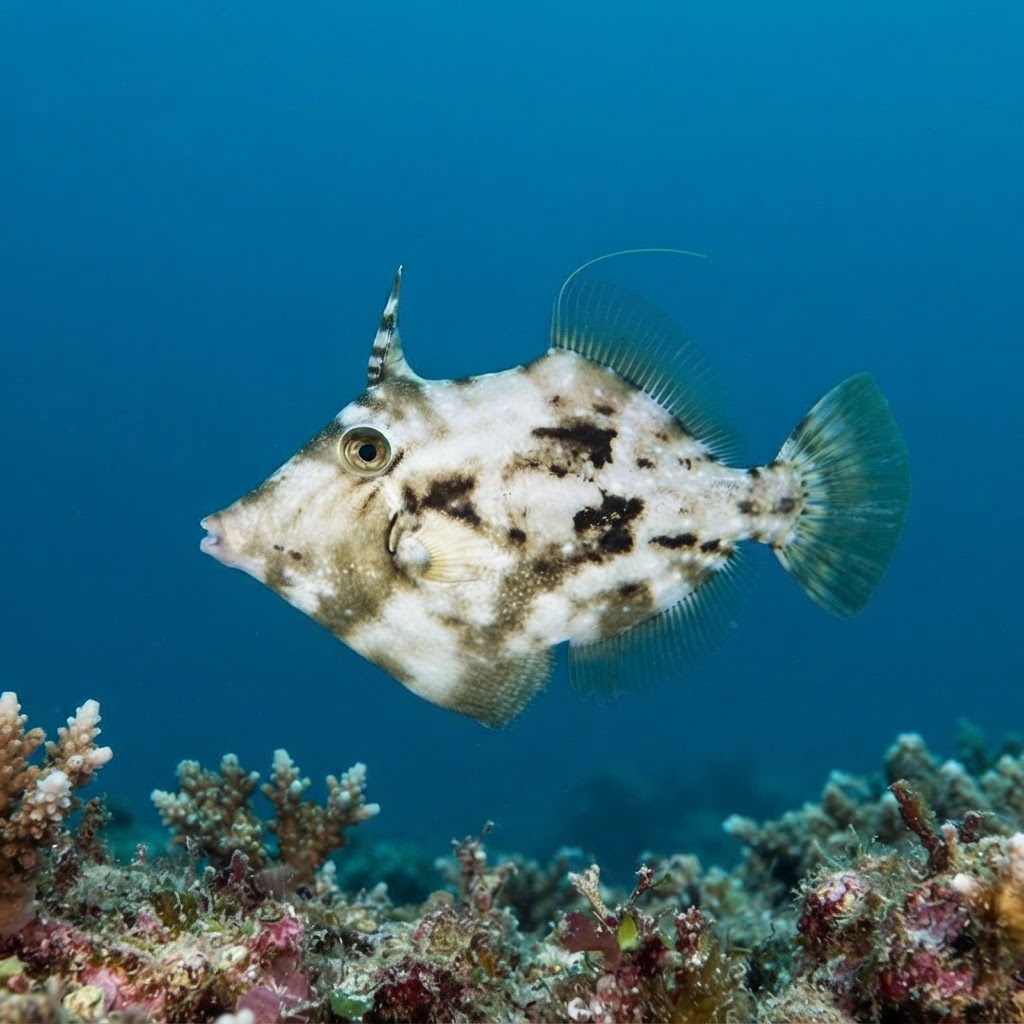
Grows to around 26 cm with a deep, leaf-shaped body that's flattened side to side, giving it an odd, almost paper-thin silhouette when seen head-on. Colour is a mottled patchwork of browns, olive and cream blotches that shifts with mood and background, useful camouflage against sponge and weed-covered reef. Look for the single spine set just above the eye, the small mouth built for nibbling, and a habit of hanging almost motionless with fins fluttering rather than swimming in a straight line.
Divers usually find it hovering low and slow over sponge gardens, weed patches or rubble, using its fanned fins to hold position rather than cruise. It's an unhurried, approachable fish that will often let a diver get close before drifting off with that same odd, fluttering motion. Most sightings are during the day on shallower to mid-depth reef, where it grazes quietly rather than reacting to divers as a threat.
Leatherjackets like this one can flip their dorsal spine upright and lock it in place, wedging themselves into a crevice so predators can't pull them out, a trick shared across the filefish family.
Sightings show no clear seasonal pattern, and with a comfortable range of 21.2 to 29 C it's logged across the year rather than in one particular window. Treat it as a year-round find at the reef and sponge sites where it's already established.
Reef neighbours a diver could mistake it for. Use the identification notes above to tell them apart.
Most reliably logged in New South Wales and Western Australia, with further sightings around Queensland and the Northern Territory, making Australia by far the strongest bet for this fish. Outside Australia it turns up in Sai Kung, Hong Kong, and around Phuket, Thailand, with a smaller presence in Singapore's Southern Islands.
Mapping where Fan-bellied Leatherjacket is logged…
New South Wales and Western Australia are the most consistent regions, with further sightings in Queensland and the Northern Territory. Outside Australia, look for it around Sai Kung in Hong Kong, Phuket in Thailand, and Singapore's Southern Islands.
There's no strong seasonal pattern in sightings, and its comfortable range of roughly 21 to 29 C means it's present on reefs year-round rather than tied to one season.
Look for a deep, leaf-shaped body flattened side to side, mottled brown and cream blotches, and a single spine above the eye. It tends to hover low over the reef fluttering its fins rather than swimming steadily.
They reach around 26 cm in length, a modest, easy-to-overlook size that helps them blend into sponge and weed-covered reef.
No, they're not considered dangerous to divers and are generally calm, approachable fish that will let you watch them at close range.
Like other filefish, they can raise and lock a dorsal spine to jam themselves into a crevice, making it very hard for a predator to drag them out.
Site and sighting data is aggregated from diver logs, iNaturalist and GBIF. For taxonomy and conservation status:
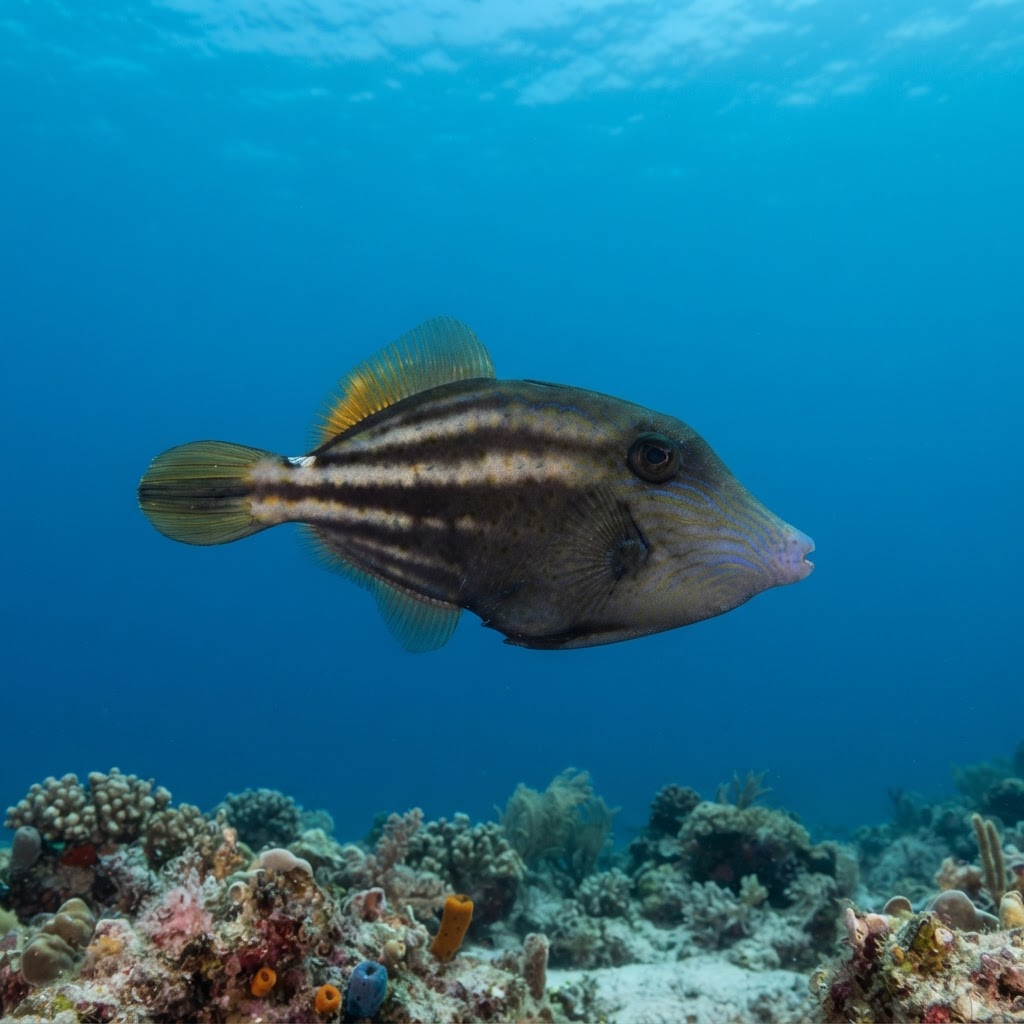
Orangespotted Filefish
836 sites