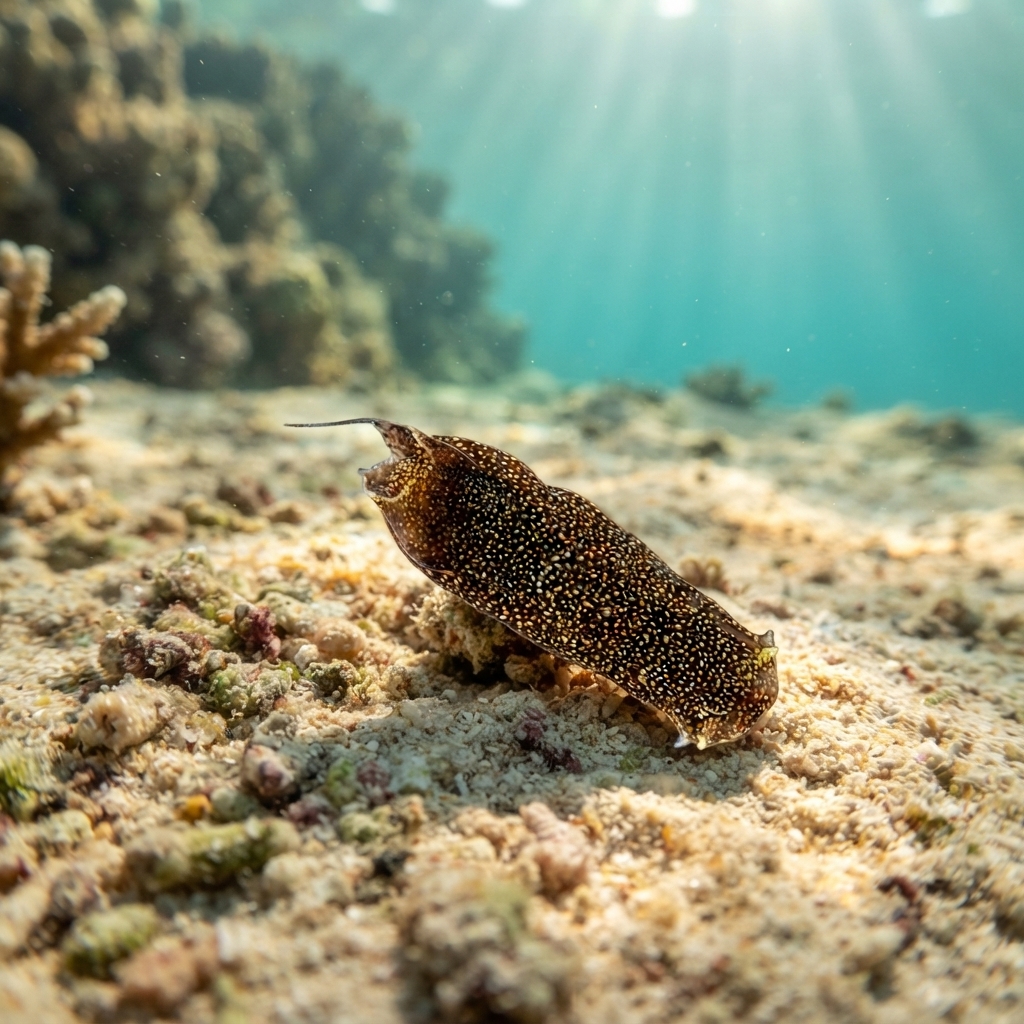
Aglaja ocelligera
A 1cm cold-water sea slug rarely logged in the Pacific Northwest, seen in 8.7-18.9C water. Here's how to actually find one.
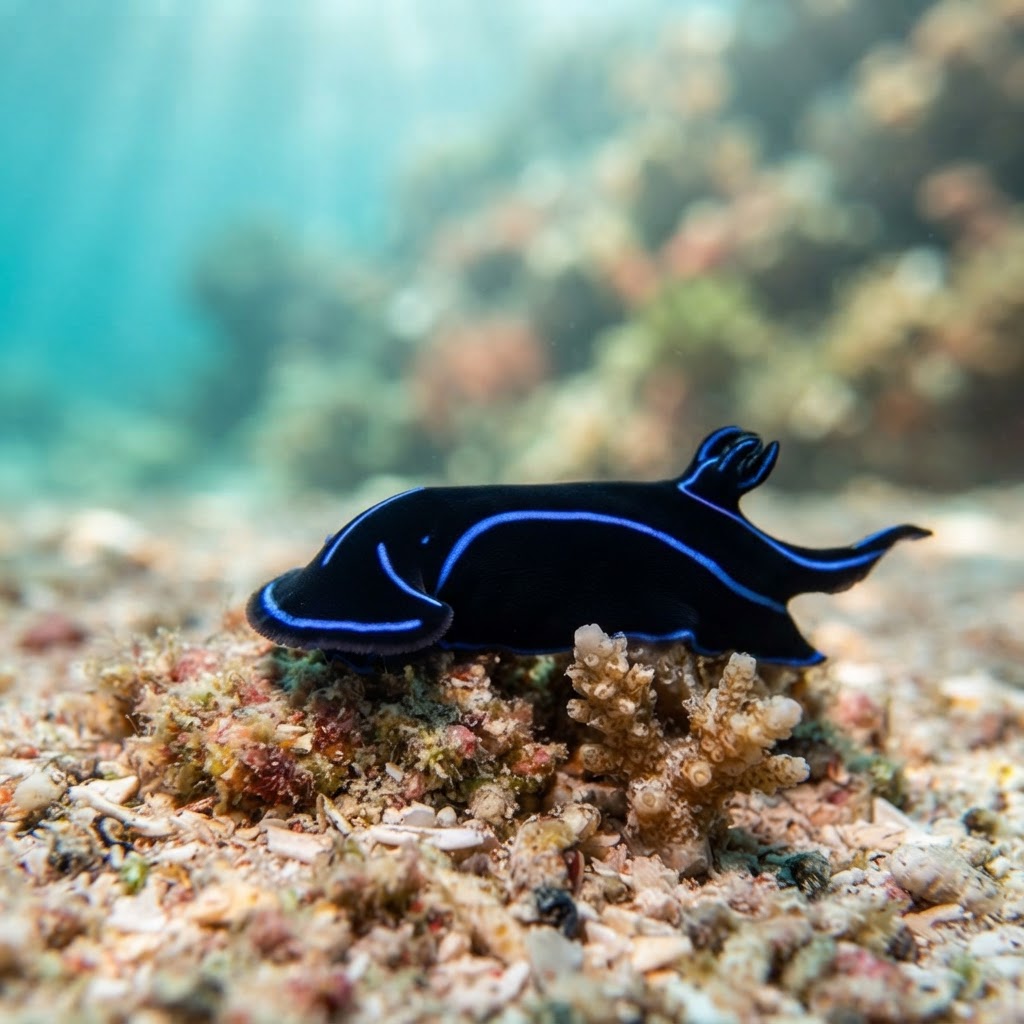
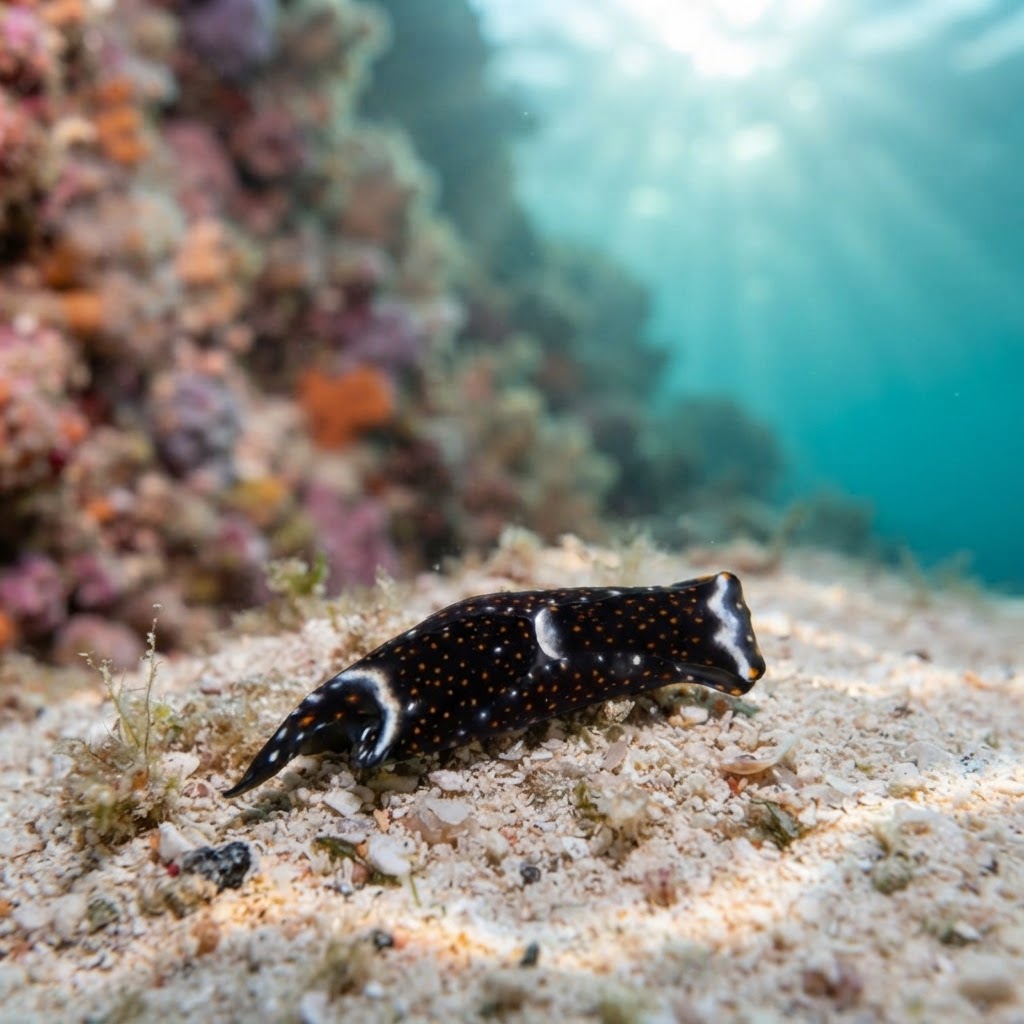
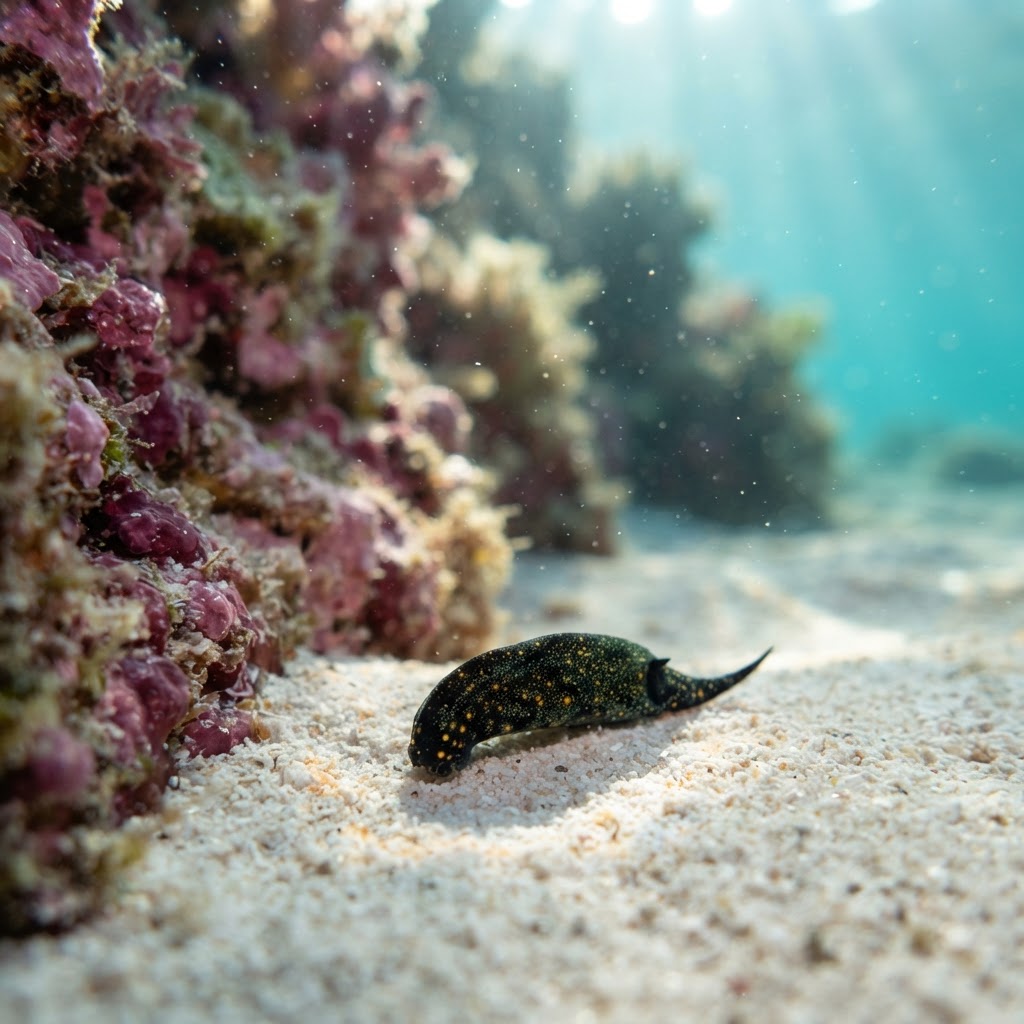
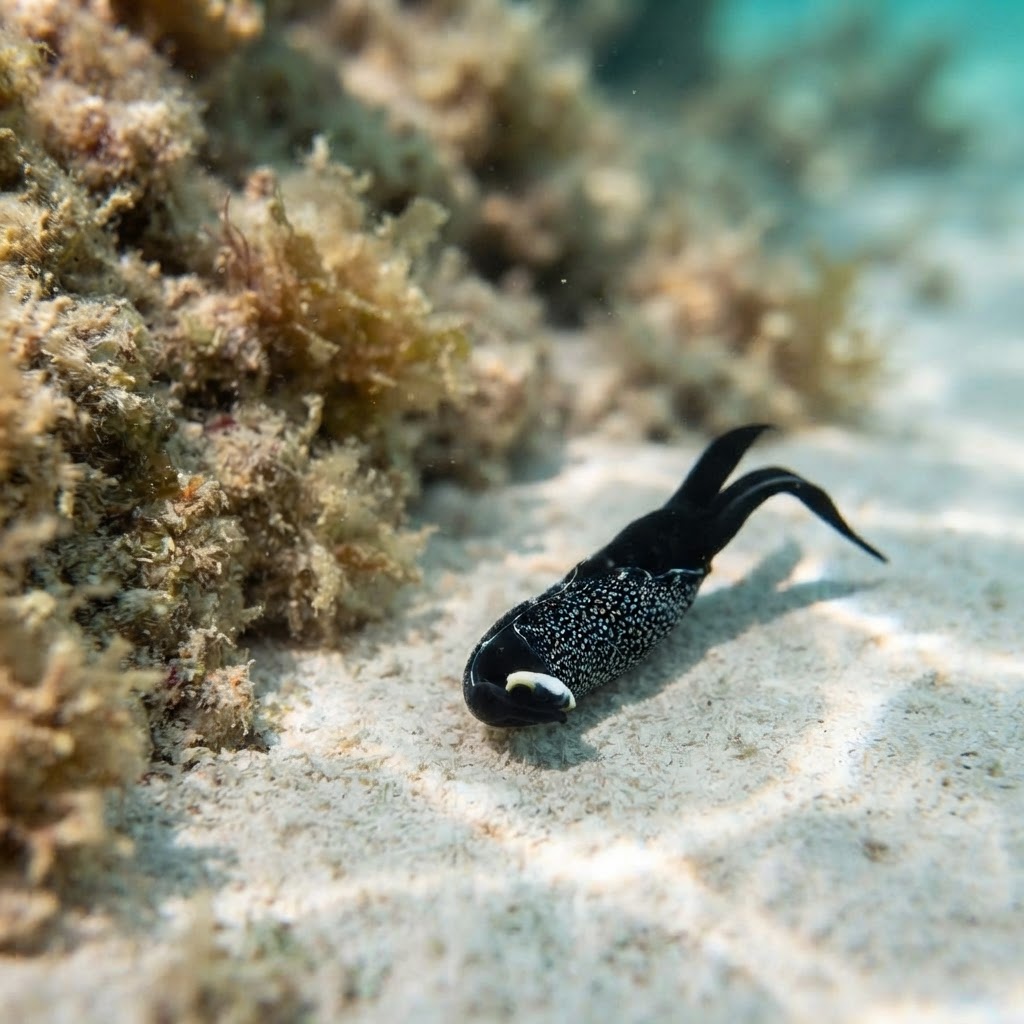
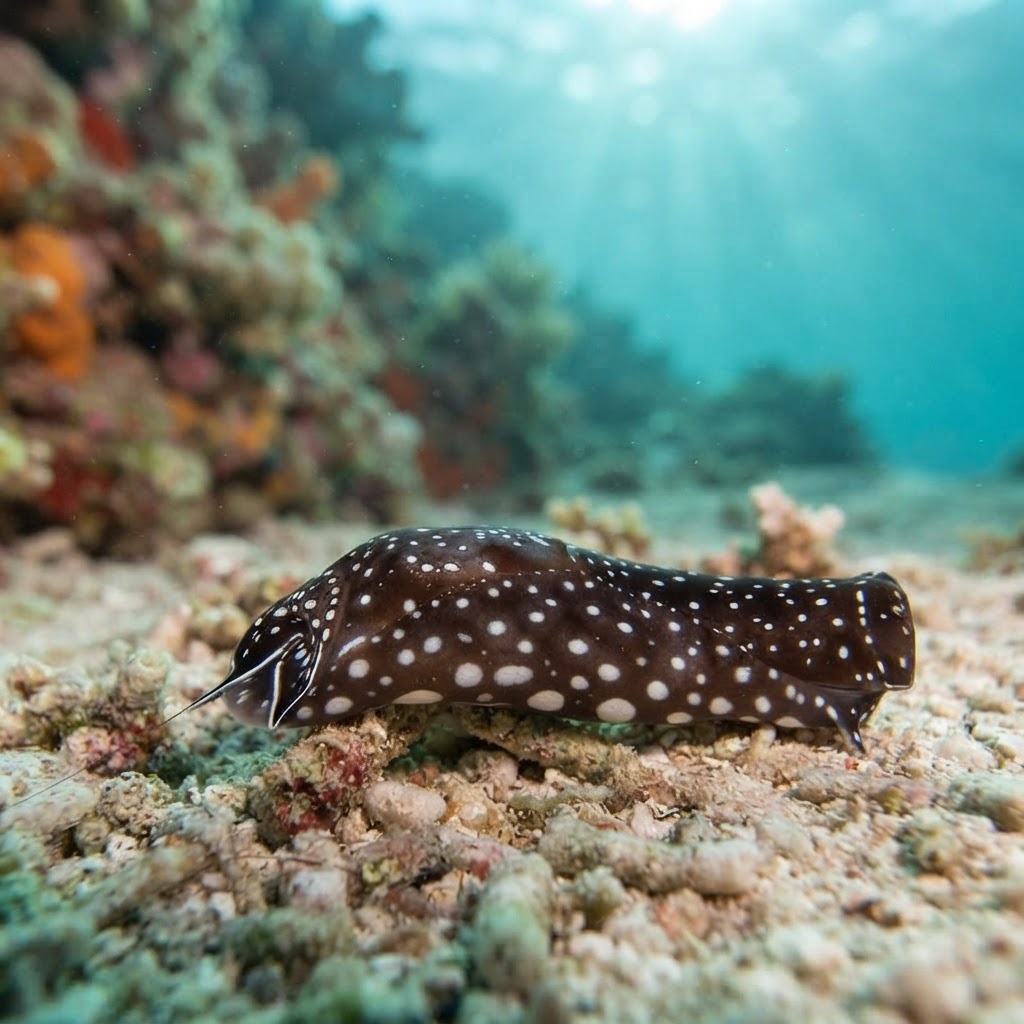
Barely a centimetre long, this headshield slug shows as a smooth, glossy oval body with no obvious shell, usually dark brown to black with fine speckling. Look closely for the paired eyespots near the front of the body that give it its name, tucked into the head shield rather than raised like true eyes. In the water it looks more like a dark smear on rock or sediment than a recognisable animal until you get your mask right down to it.
Divers find it crawling slowly across rock, sediment, or algae on cold-water reefs, doing exactly what small headshield slugs do: grazing along the bottom with little regard for anything nearby. It shows no reaction to divers beyond the usual slow retraction if directly disturbed, and its small size means most sightings happen because someone was already looking closely at the substrate rather than swimming past.
Like other aglajids, it's a predator despite its tiny size and slow crawl, hunting smaller slugs and worms across the silt and rock it moves over.
Sightings don't show a clear seasonal pattern, and the recorded temperature range of 8.7 to 18.9C spans most of the year in Pacific Northwest waters, so treat it as a year-round possibility rather than a seasonal target.
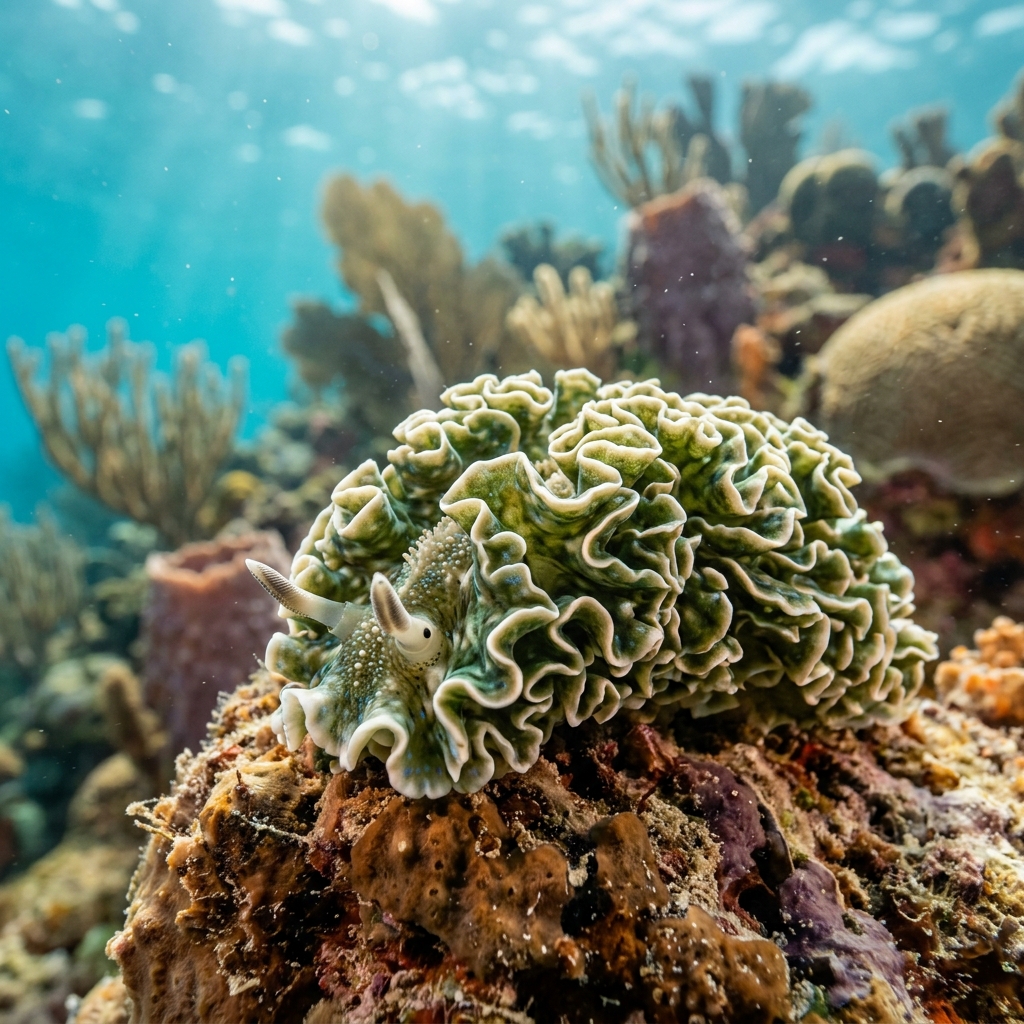
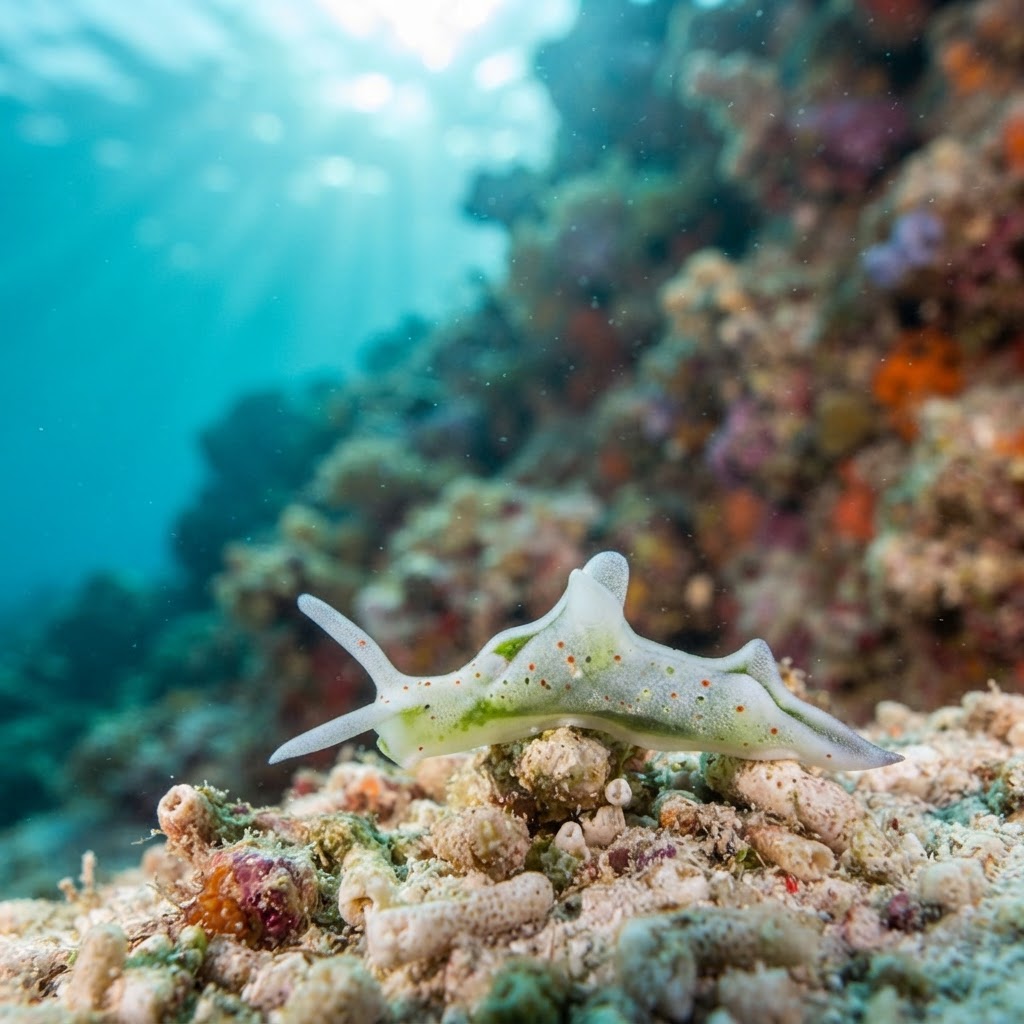
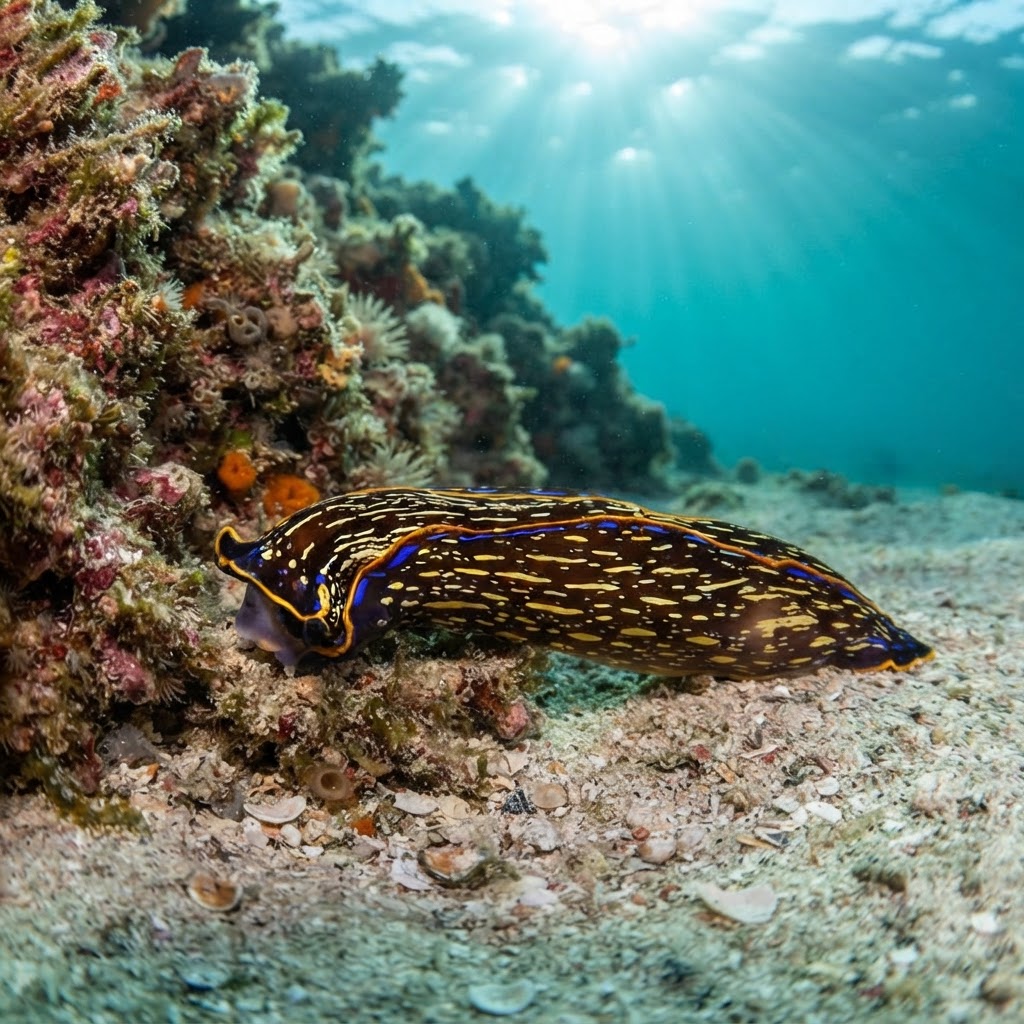
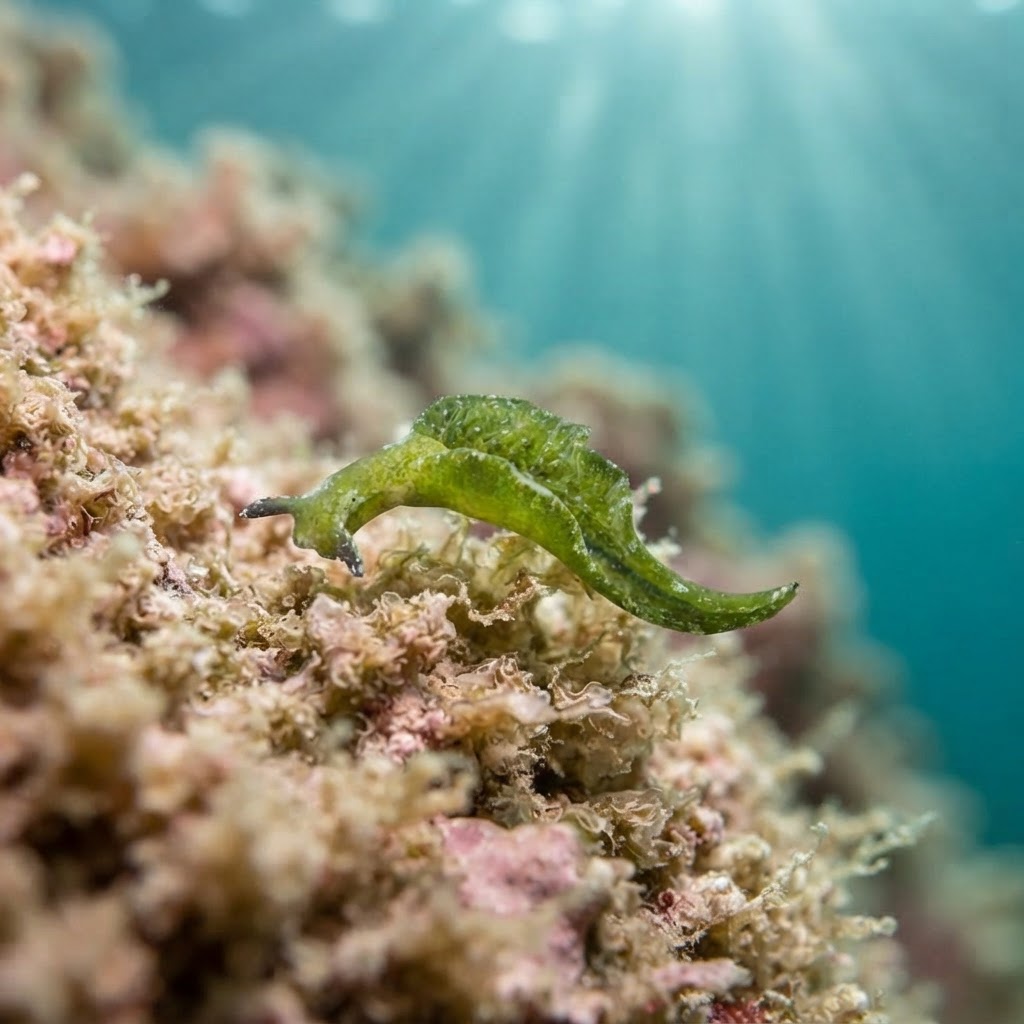
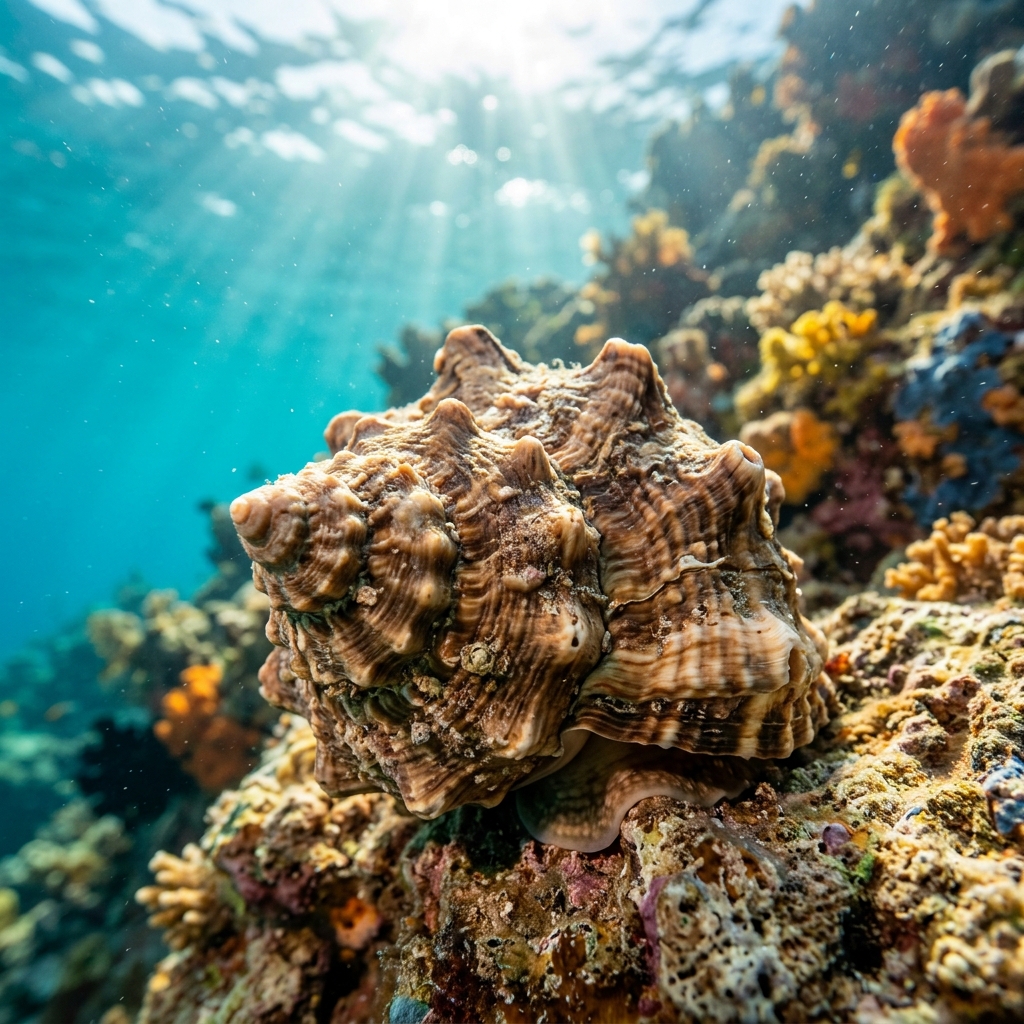
Reef neighbours a diver could mistake it for. Use the identification notes above to tell them apart.
Nearly all logged sightings come from the United States, and specifically the Pacific Northwest, where it turns up far more often than anywhere else in the data. A single site in California rounds out the picture, but this is overwhelmingly a Pacific Northwest find.
Mapping where Eyespot Aglaja is logged…
Almost every logged sighting is from the United States, concentrated in the Pacific Northwest, with a single additional record from California. It's a Pacific Northwest speciality rather than a species you'll find on tropical reefs.
There's no detected season in the sighting data, and its comfort range of roughly 9 to 19C covers Pacific Northwest waters much of the year, so it's best treated as a year-round possibility.
Look for a dark, shell-less body only about a centimetre long, crawling on rock or sediment, with a pair of small eyespots set into the head shield near the front. It's easy to overlook, so slow, close-focus searching on the substrate is the key to finding one.
Around 1cm long, making it one of the smaller headshield slugs divers log in Pacific Northwest waters. You'll need to look closely at rock and sediment to pick one out.
Yes, it's logged as rare at most sites where divers have recorded it, with only one site reporting it as uncommon. Finding one is more about careful searching than luck alone.
Site and sighting data is aggregated from diver logs, iNaturalist and GBIF. For taxonomy and conservation status:
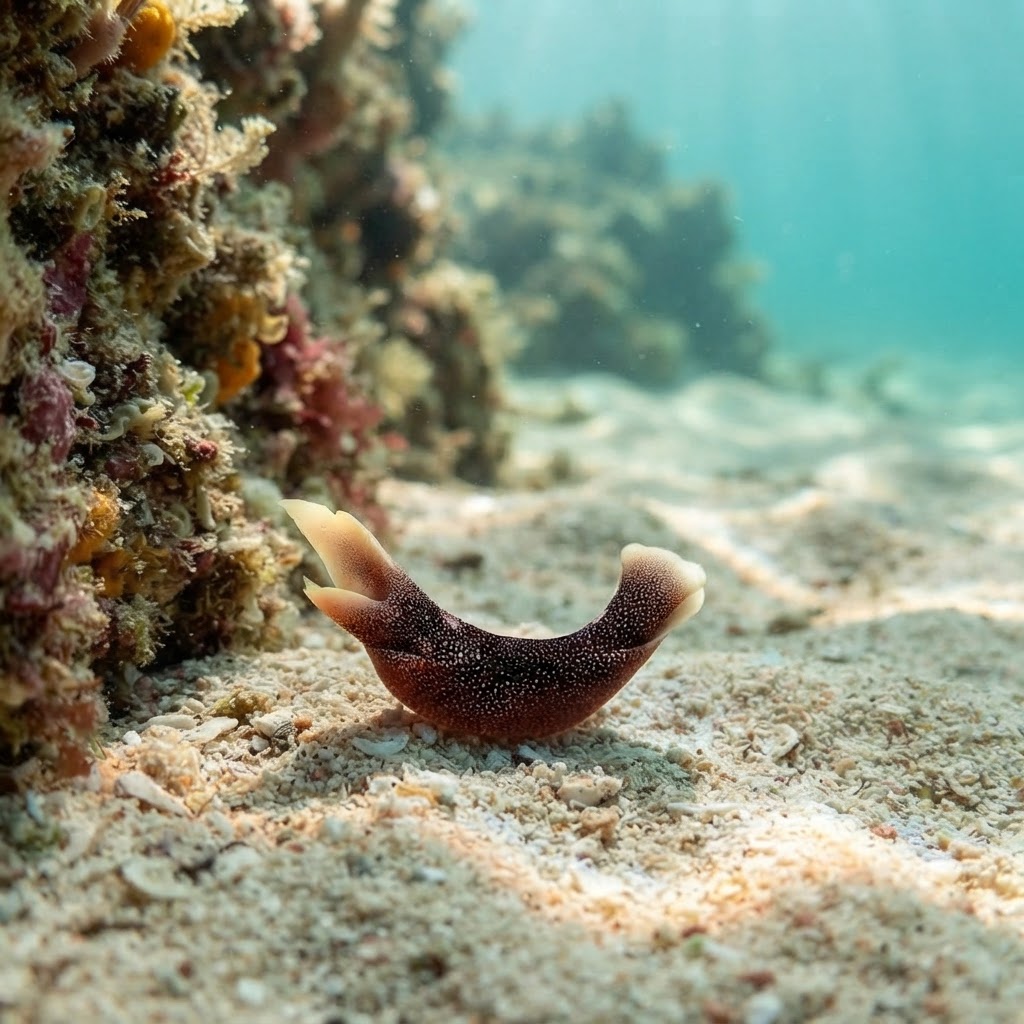
Chelidonura amoena
Elysia Timida
573 sites