Dicentrarchus labrax
Silvery predator often spotted around Lanzarote and Gran Canaria in the Canary Islands, in waters between 7 and 20C, year-round.
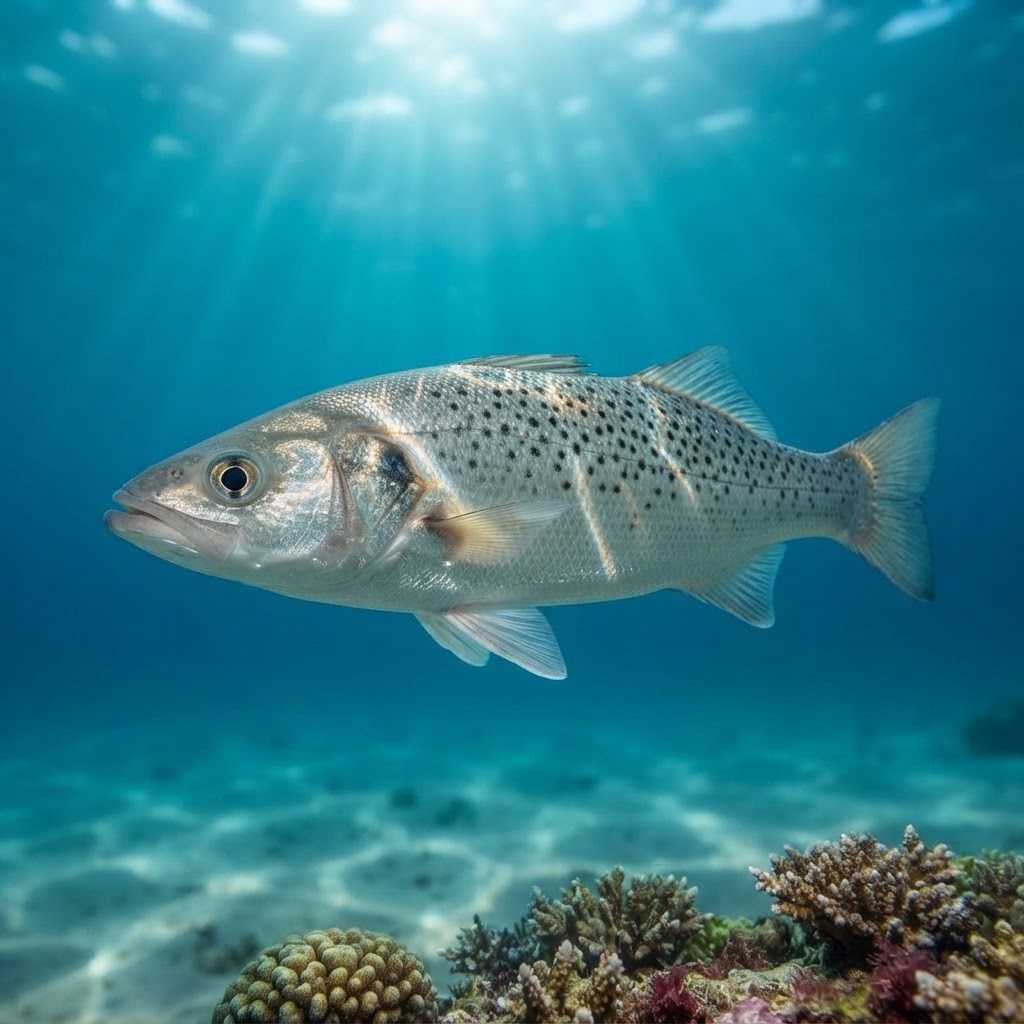
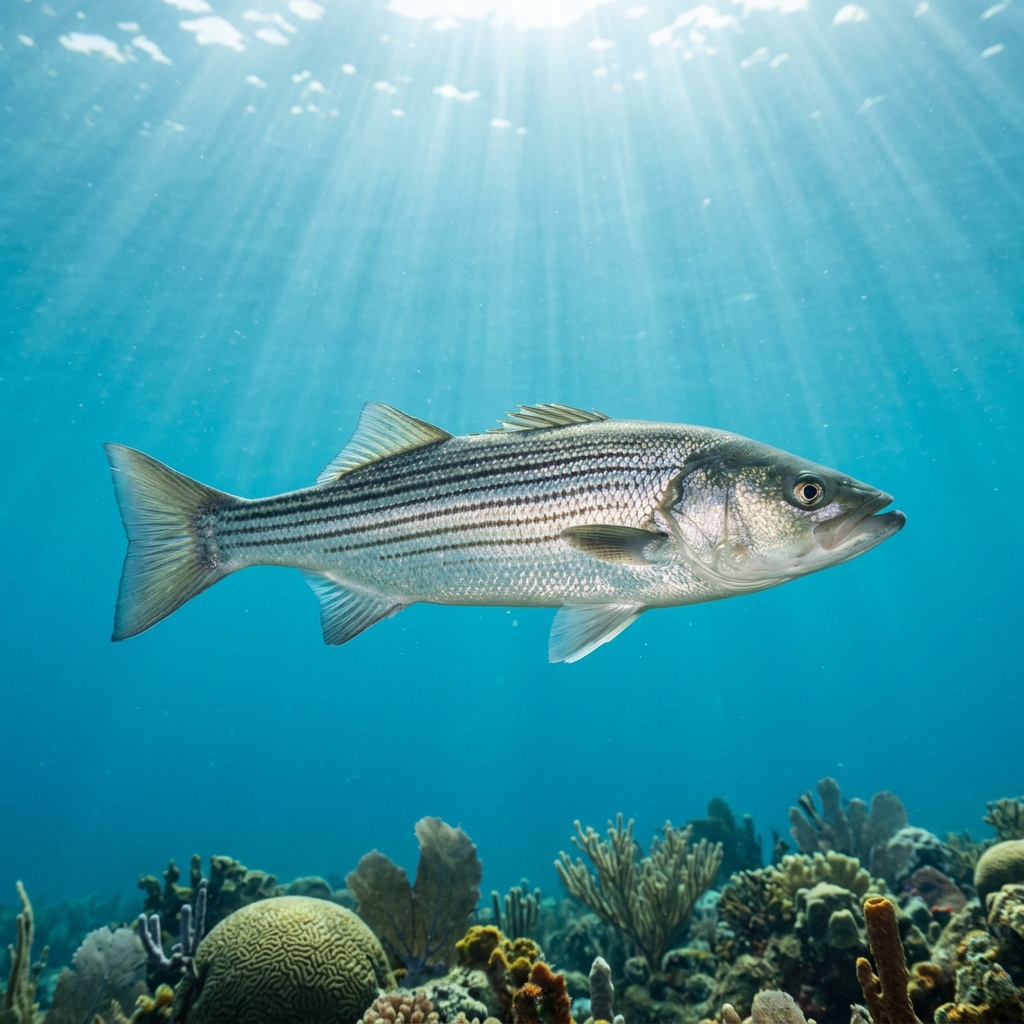
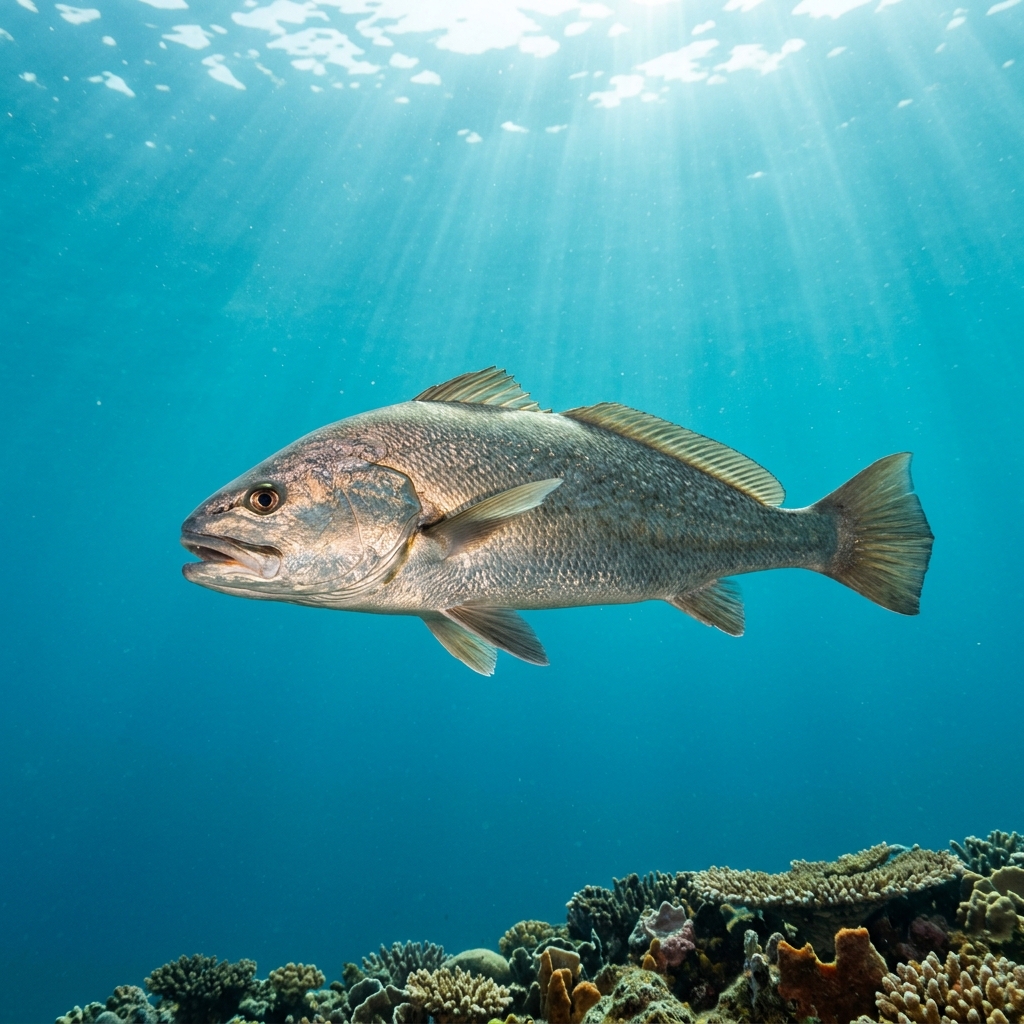
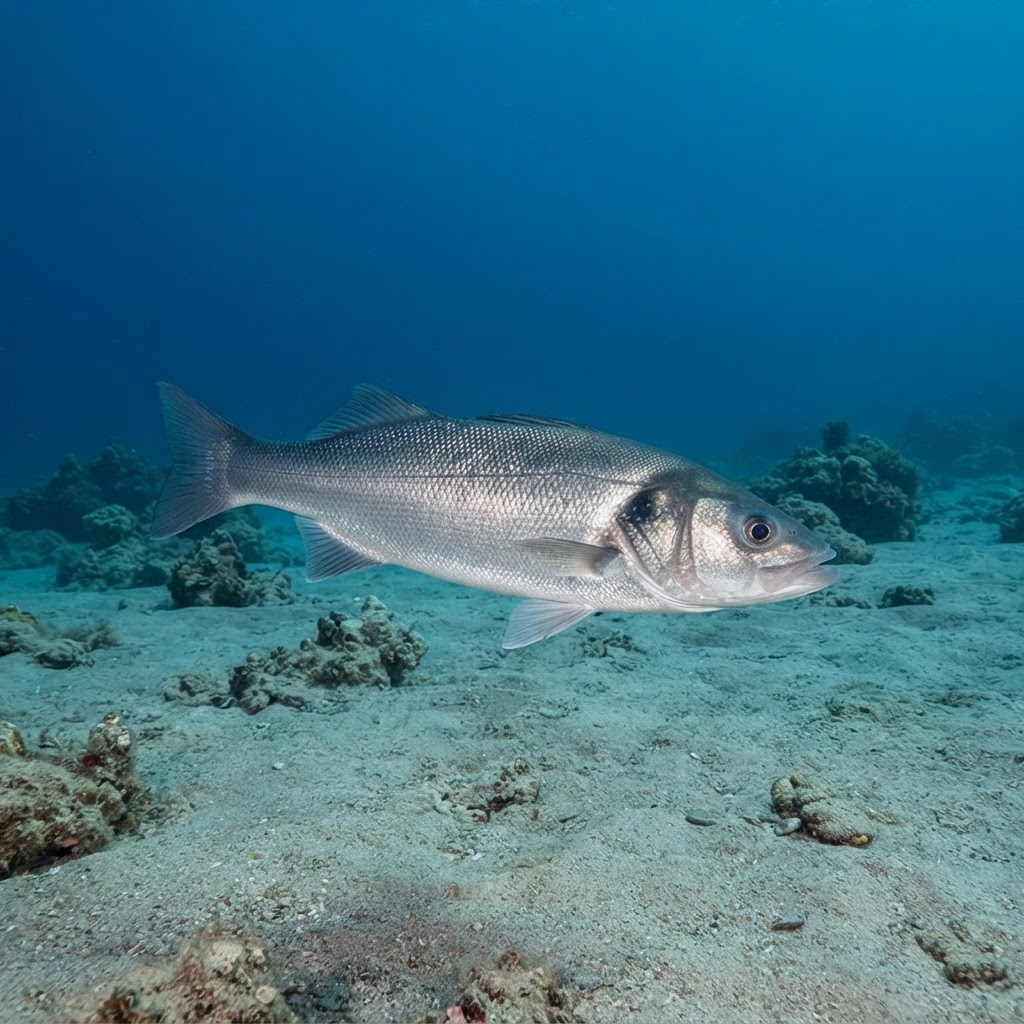
Look for a streamlined, torpedo-shaped body with bright silvery flanks that fade to a pale grey-white belly, growing to around 72cm in the water. Two distinct dorsal fins sit along the back, the first spiny and the second soft-rayed, and a faint dark spot sometimes shows near the gill cover on younger fish. It patrols mid-water or hovers just off rocky bottoms rather than hugging cover like a wrasse or blenny would.
Divers usually find it cruising alone or in loose small groups over rocky bottoms and around harbour structures, hunting smaller fish and crustaceans in the water column rather than sitting still. It tends to keep a cautious distance, drifting off if you approach too directly, and is most often noticed at mid-depth rather than tight to the reef. Sightings lean towards uncommon or rare at most sites, so a clear look is a decent result rather than a given.
It's a real predator with a wide diet, taking small fish, crustaceans and molluscs, which makes it one of the more active hunters divers encounter on temperate rocky reefs.
No clear seasonal pattern shows up in sightings, and its comfort range of roughly 7 to 19.5C covers most of the year across its range, so it's a fair bet on any dive in these regions. Treat it as a year-round encounter rather than a seasonal target.
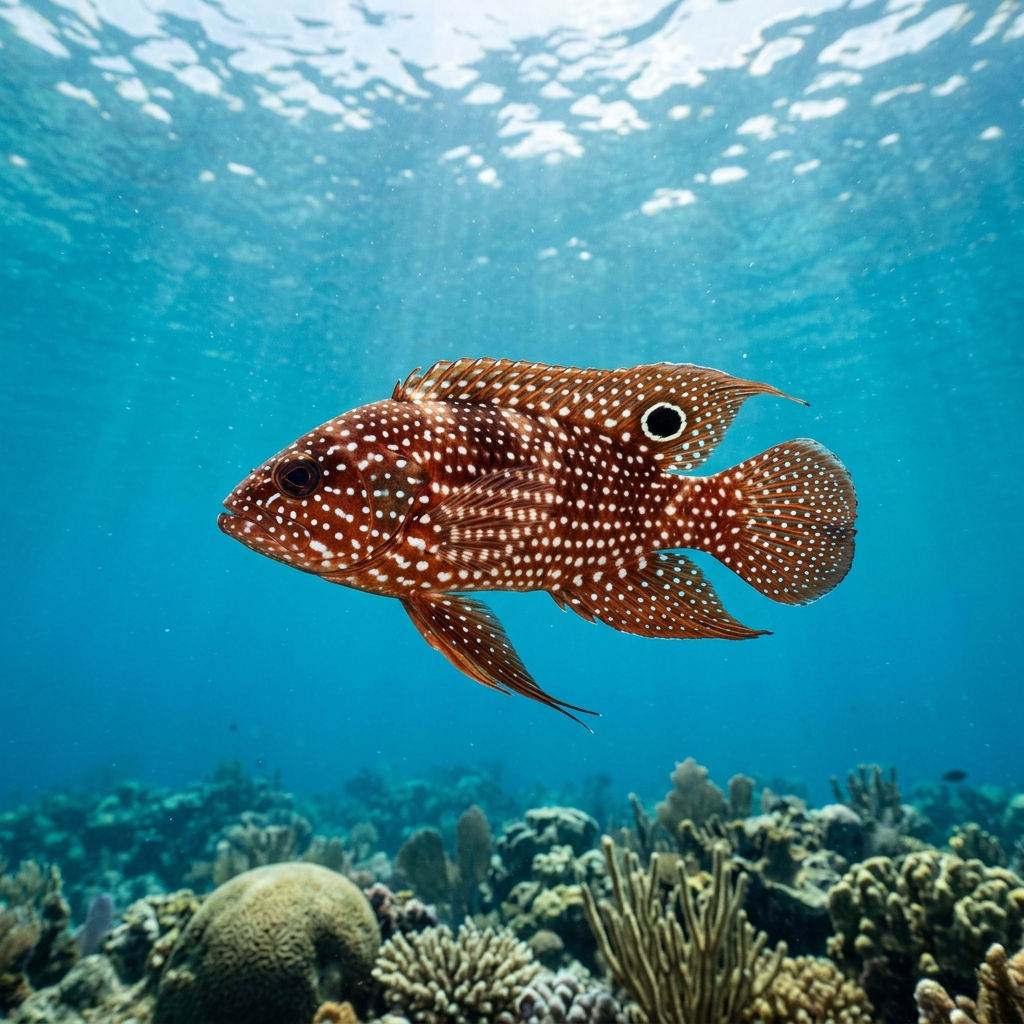
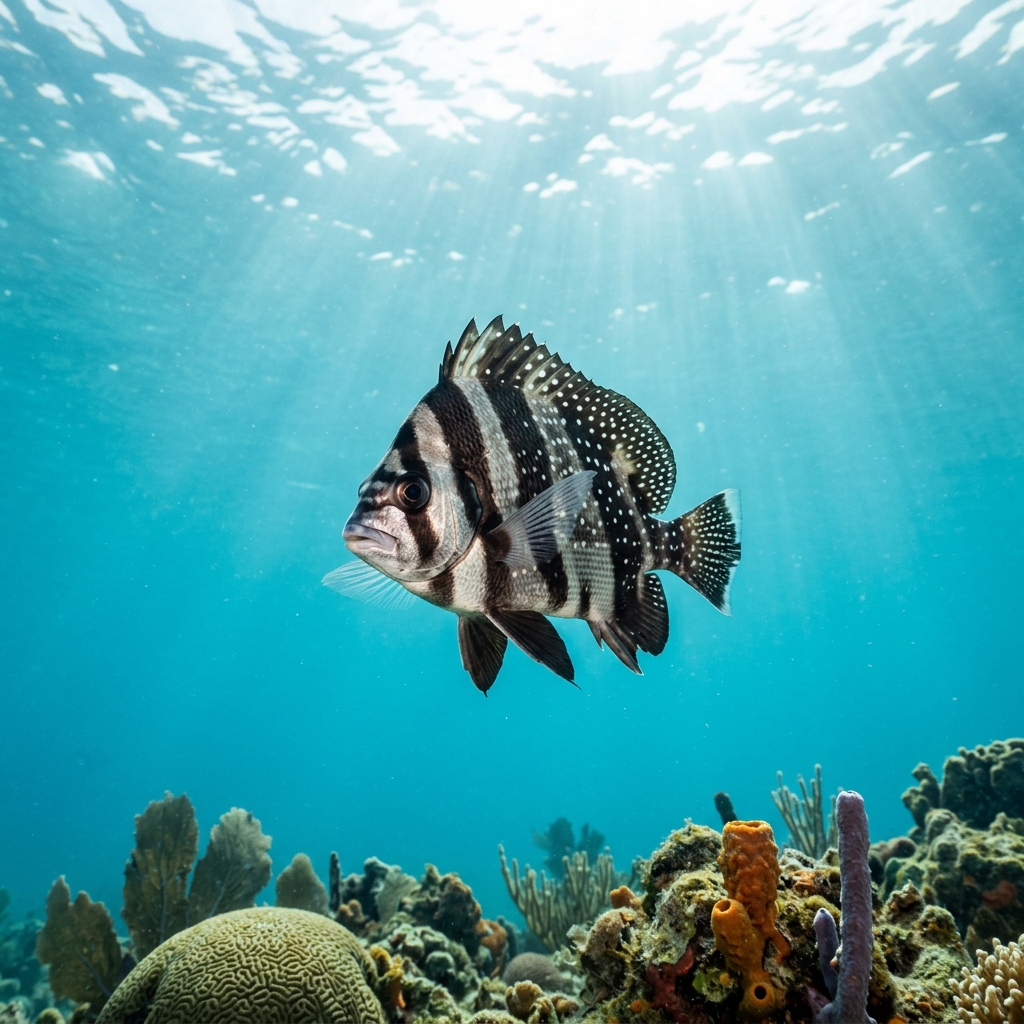
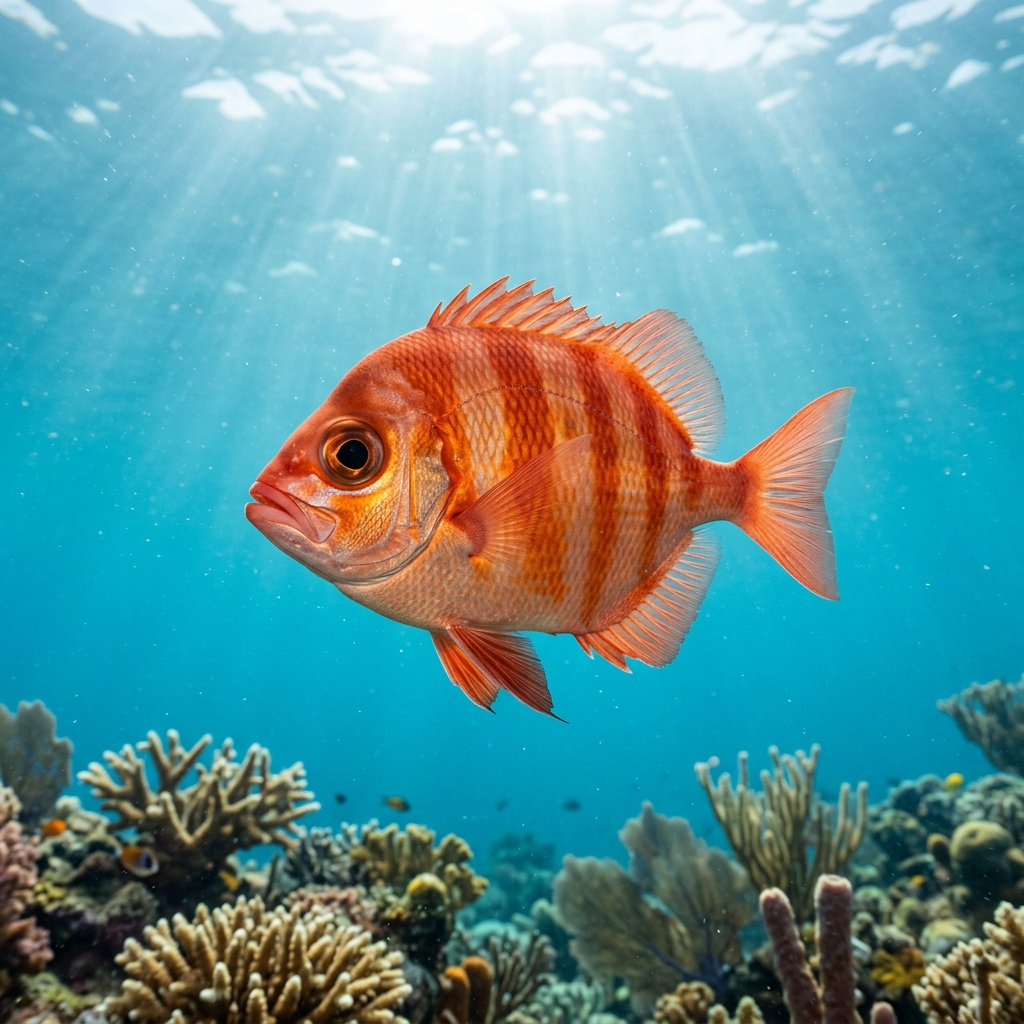
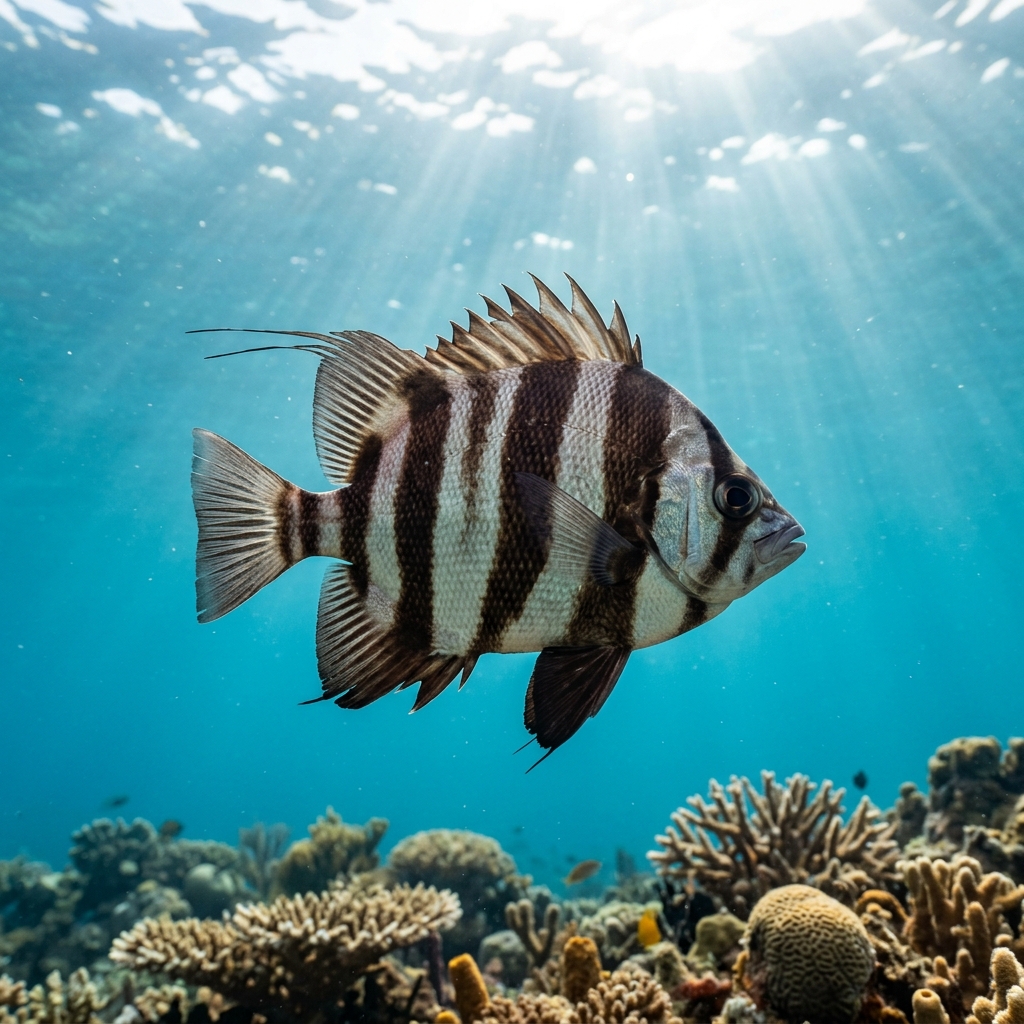
Reef neighbours a diver could mistake it for. Use the identification notes above to tell them apart.
Most reliably logged around the Canary Islands, especially Lanzarote, Gran Canaria, Tenerife and Fuerteventura, where rocky reefs and harbour walls give it plenty of structure to patrol. Beyond the Canaries it turns up along Portugal's Algarve coast, in Brittany in France, and occasionally in Galicia, Spain and the UK.
Mapping where European Seabass is logged…
The strongest sightings come from the Canary Islands, particularly Lanzarote, Gran Canaria, Tenerife and Fuerteventura. It's also seen along Portugal's Algarve, in Brittany in France, and occasionally in Galicia, Spain and UK waters.
There's no strong season in the sighting data, and it tolerates a wide temperature range from about 7 to 19.5C, so it's realistic to encounter year-round in its core regions like the Canary Islands.
Look for a silvery, torpedo-shaped fish around 70cm long with two separate dorsal fins, the front one spiny. It's usually seen cruising mid-water or over rocky bottoms rather than tucked into crevices.
Divers typically encounter them around 72cm, a solid, streamlined size that makes them easy to pick out from smaller reef fish sharing the same rocky habitat.
No, they're not considered dangerous to divers. They tend to keep their distance and are simply worth watching hunt rather than something to be cautious of.
Site and sighting data is aggregated from diver logs, iNaturalist and GBIF. For taxonomy and conservation status:
Meagre
1,159 sites