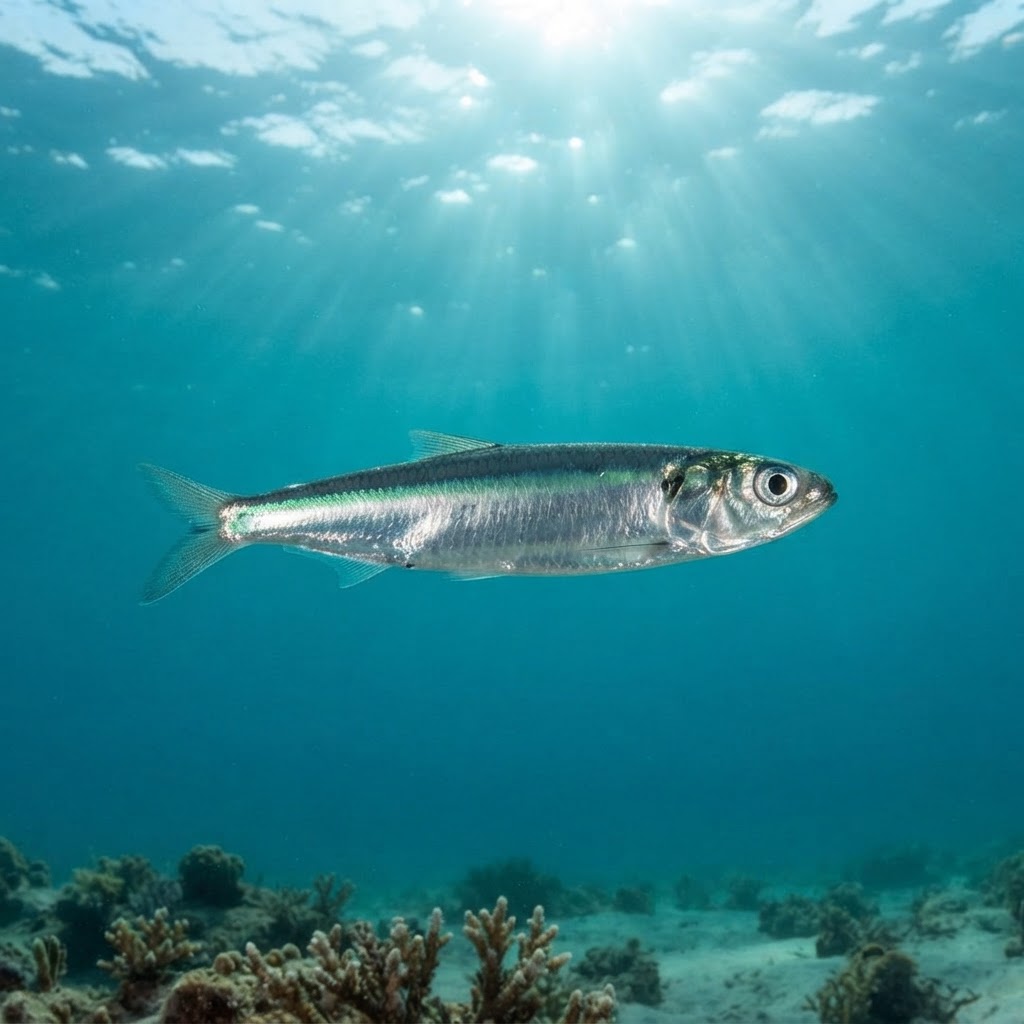
Engraulis encrasicolus
Silvery schooling fish logged across Gran Canaria's dive sites year-round in 7 to 18C water. Here's how to spot them.
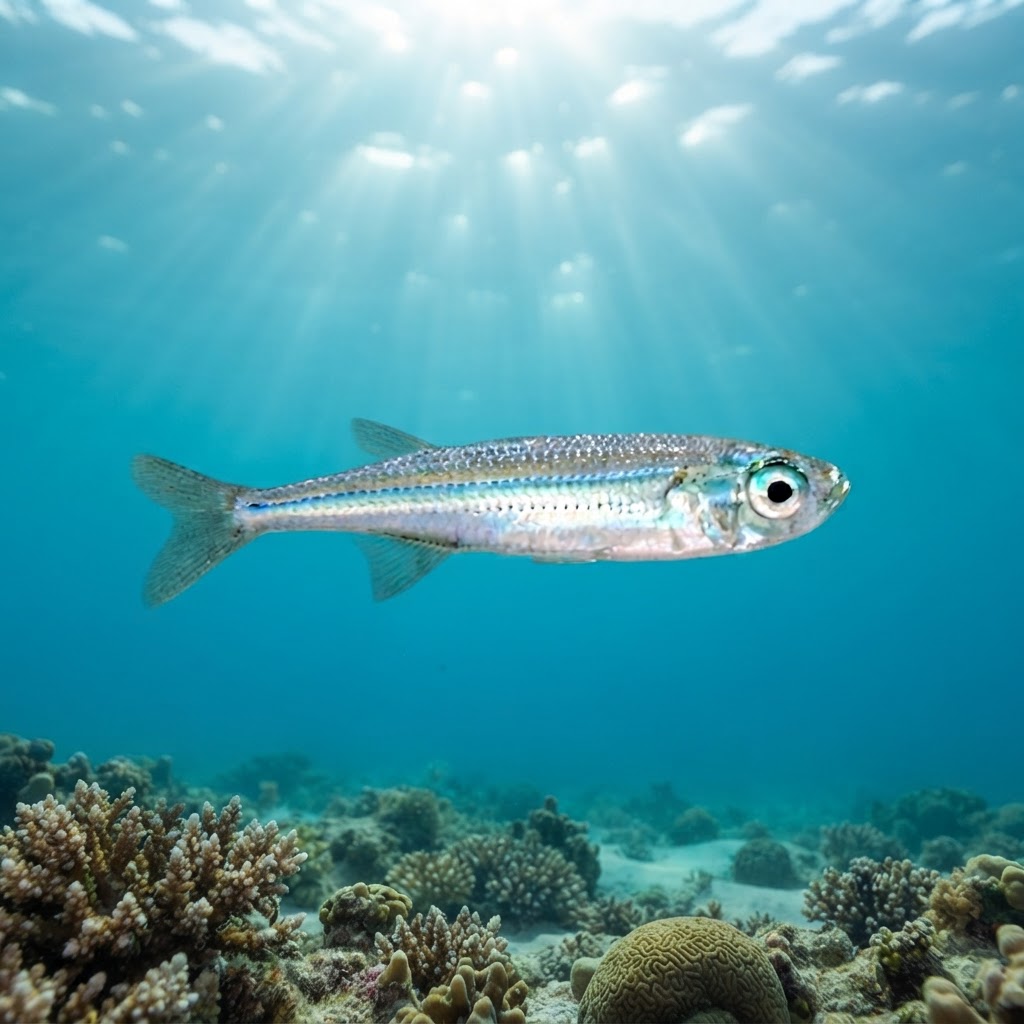
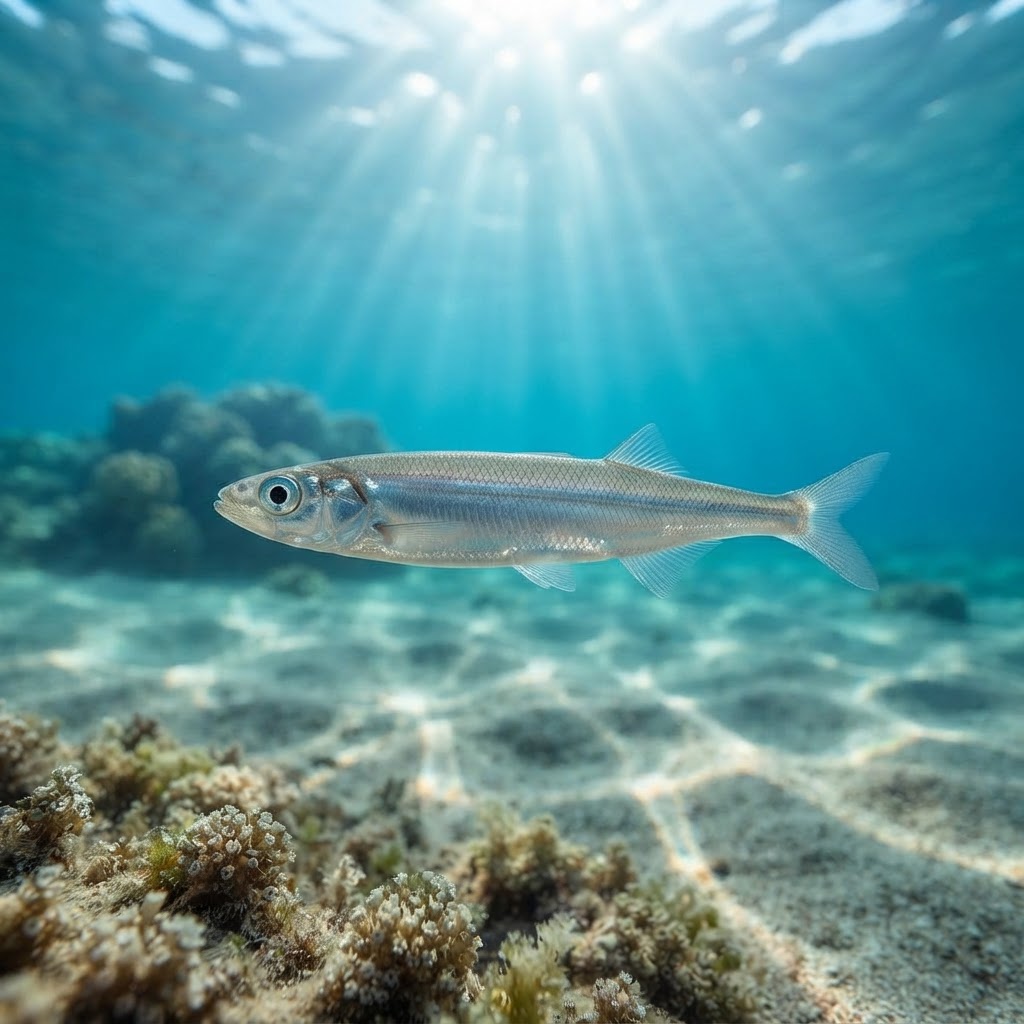
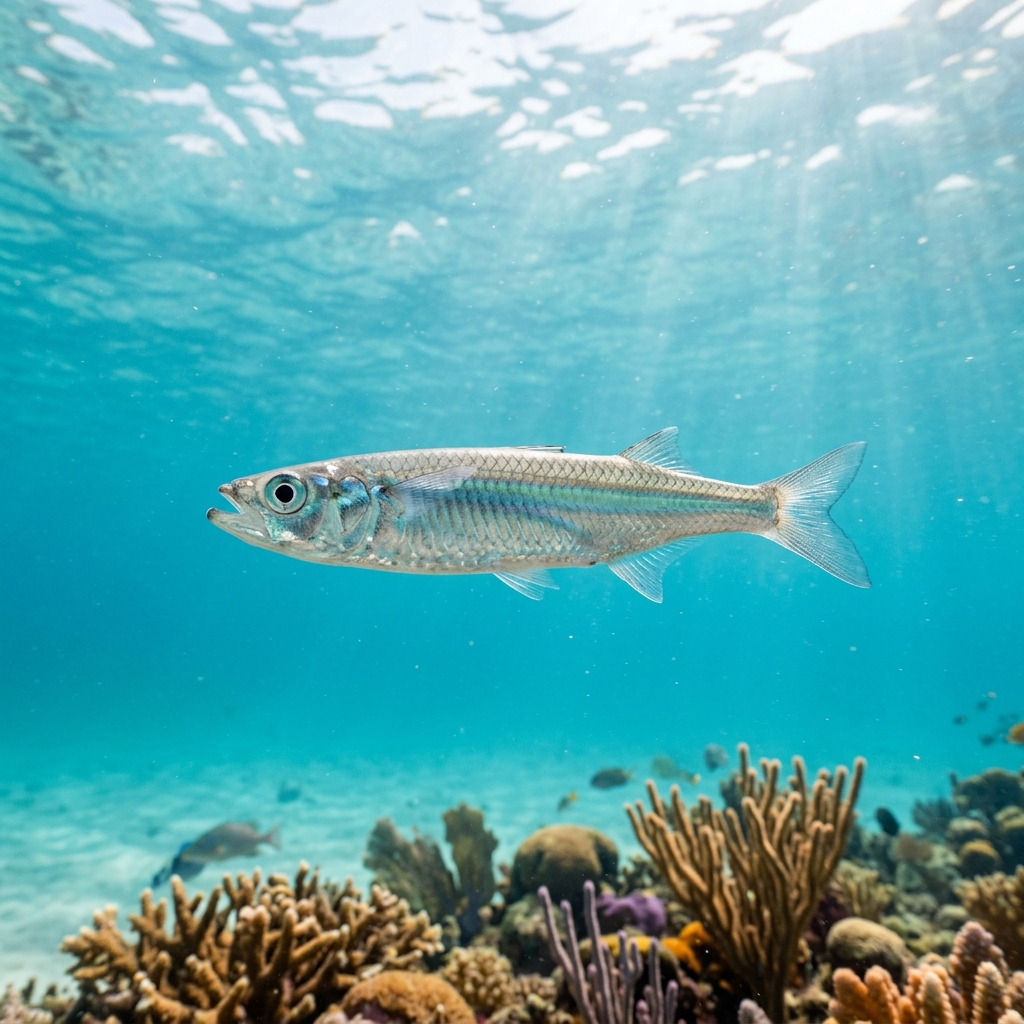
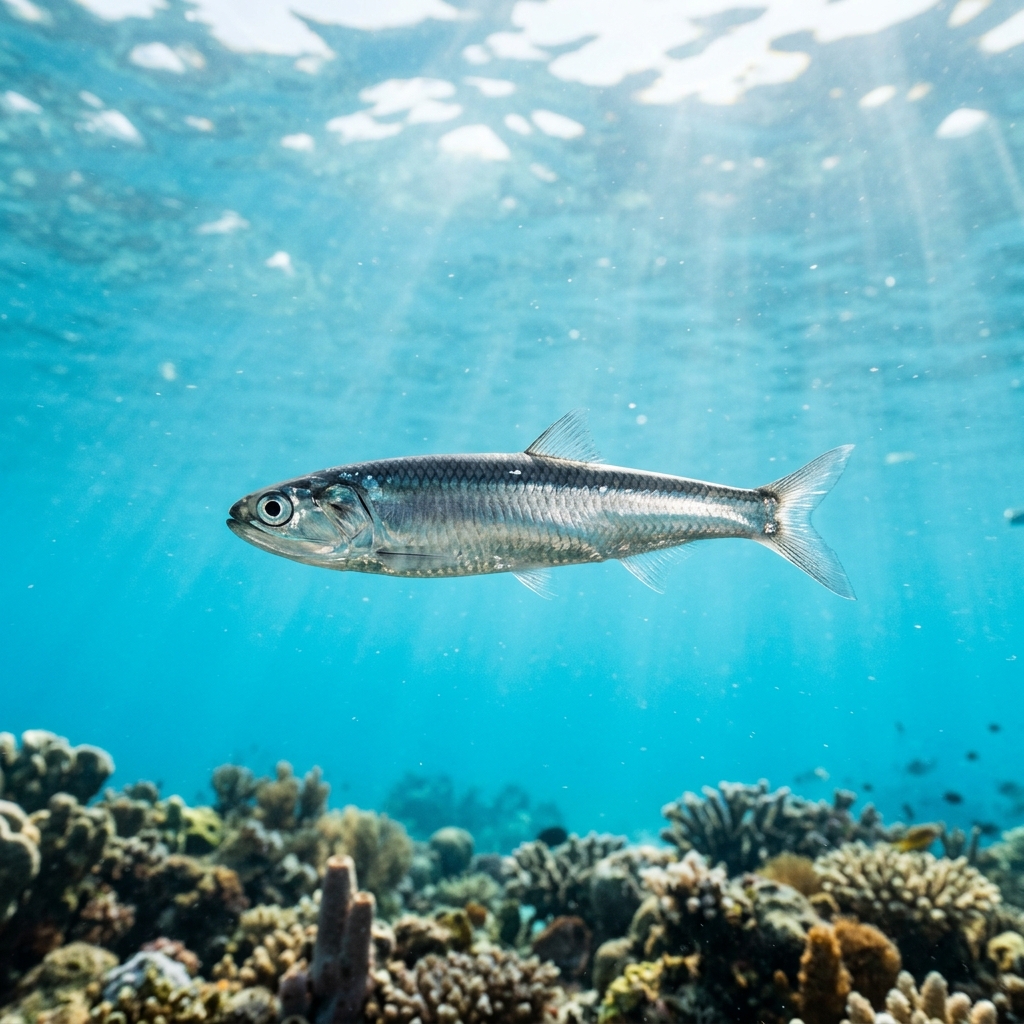
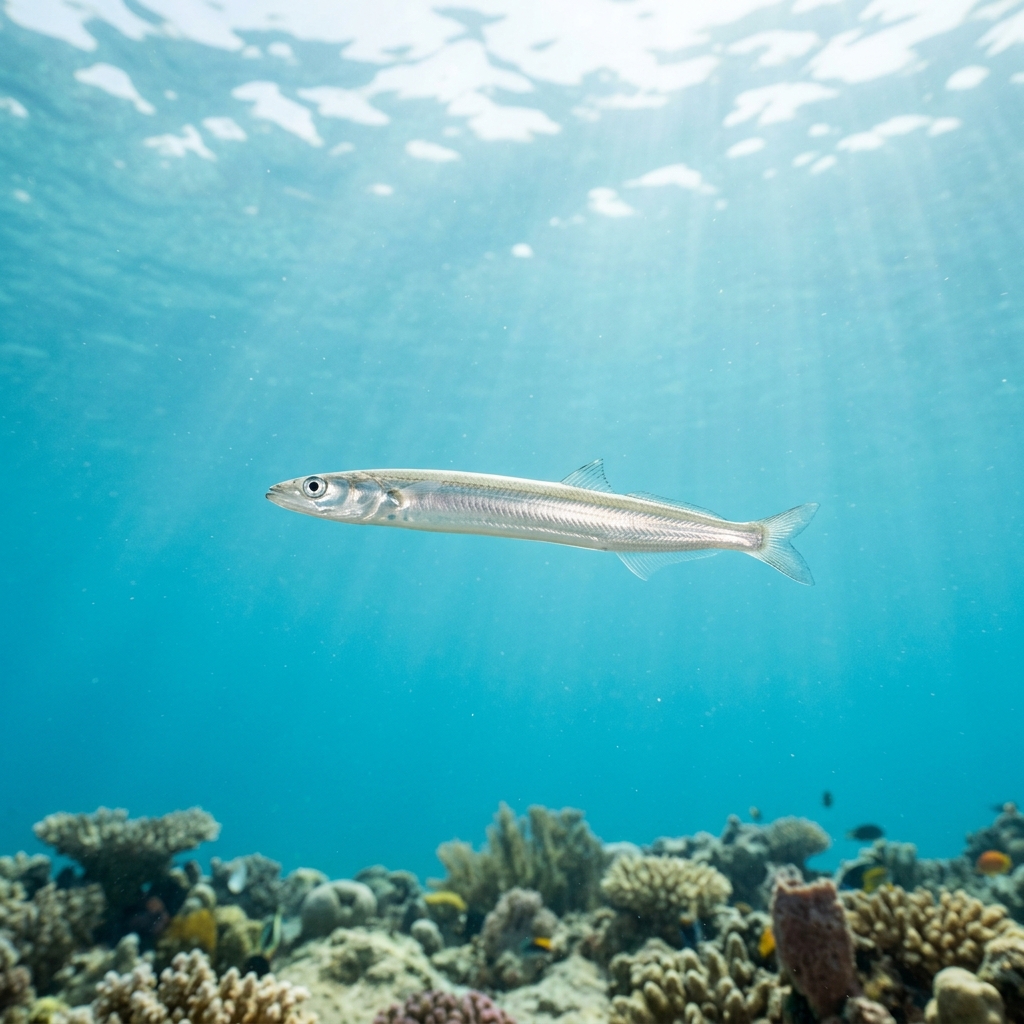
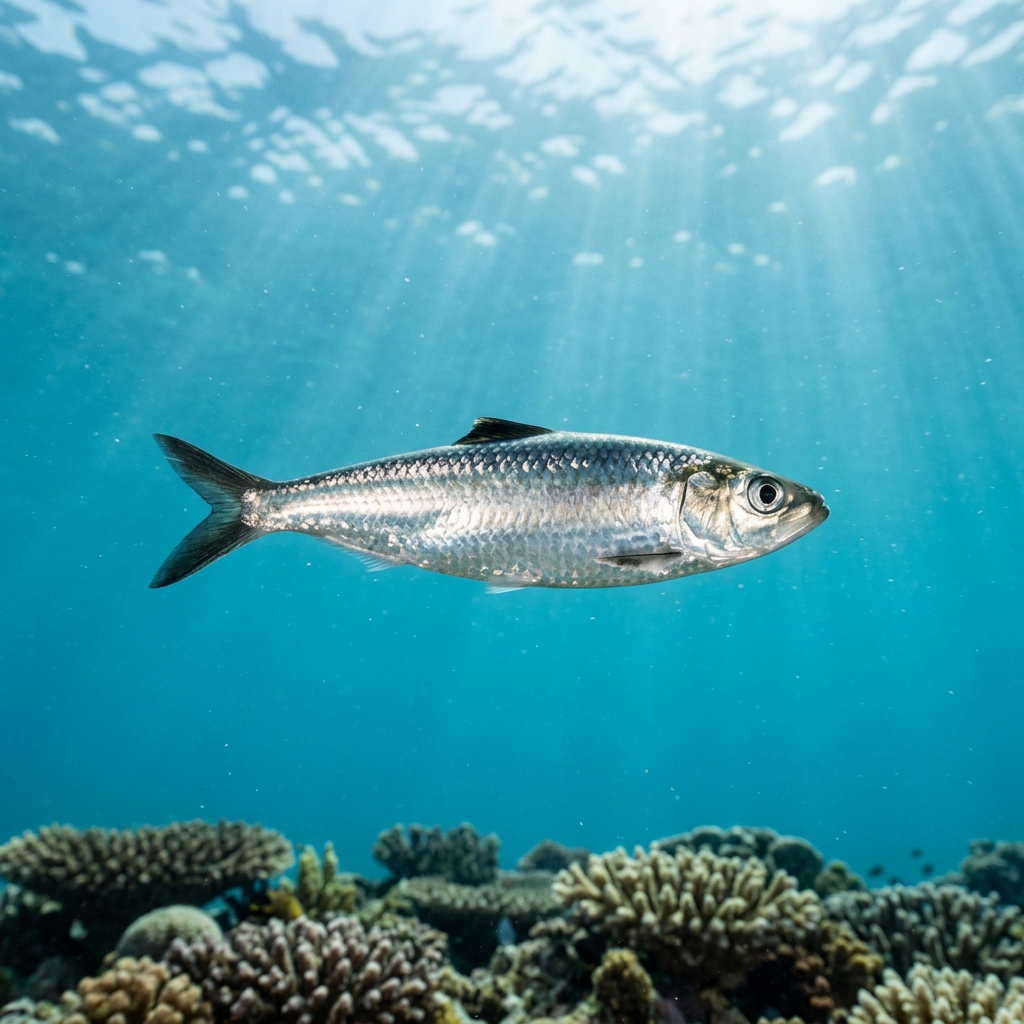
A slender, torpedo-shaped little fish around 14cm long, silvery-white with a blue-green sheen along the back and a distinct silver stripe running down each flank. Look for the pointed snout overhanging a long lower jaw, and the way it moves in tight, shimmering schools rather than alone. Underwater it often reads as a single moving mass rather than individual fish until the school scatters.
Anchovies move in dense, fast-moving schools, wheeling and flashing as one when startled rather than fleeing individually. Divers usually encounter them in open water or over reef rather than tucked into structure, often as a passing wall of fish rather than a stationary sighting. They show little interest in divers and rarely stick around long enough for a close look before the school moves on.
Their tight schooling is a defence tactic: a moving wall of thousands of small, similar-looking fish makes it hard for a predator to lock onto any single individual, which is why you'll often see them explode outward in a shimmering burst when something larger charges through.
Sightings don't show a strong seasonal pattern, and the observed temperature range of 7.1 to 18C spans the cooler end of what Canary Islands divers experience across the year, so anchovies can turn up on any dive here.
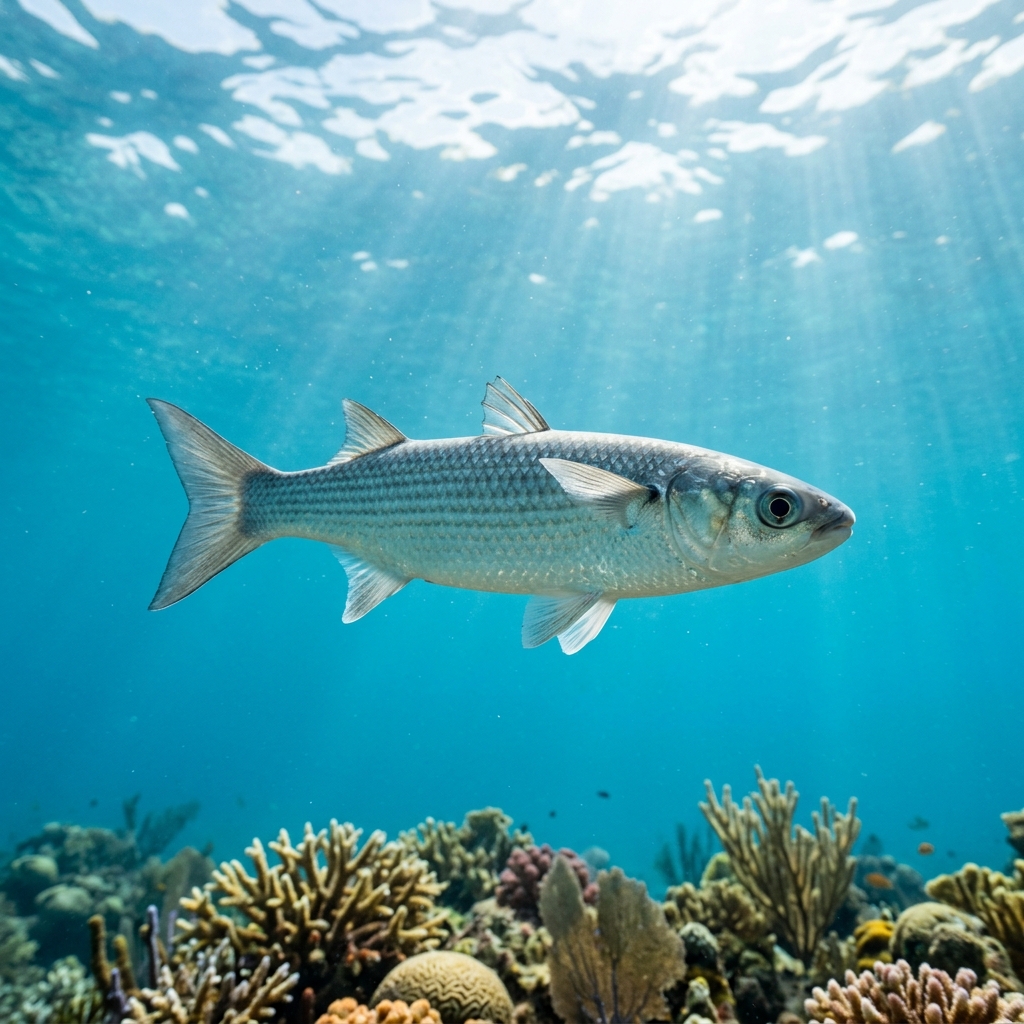
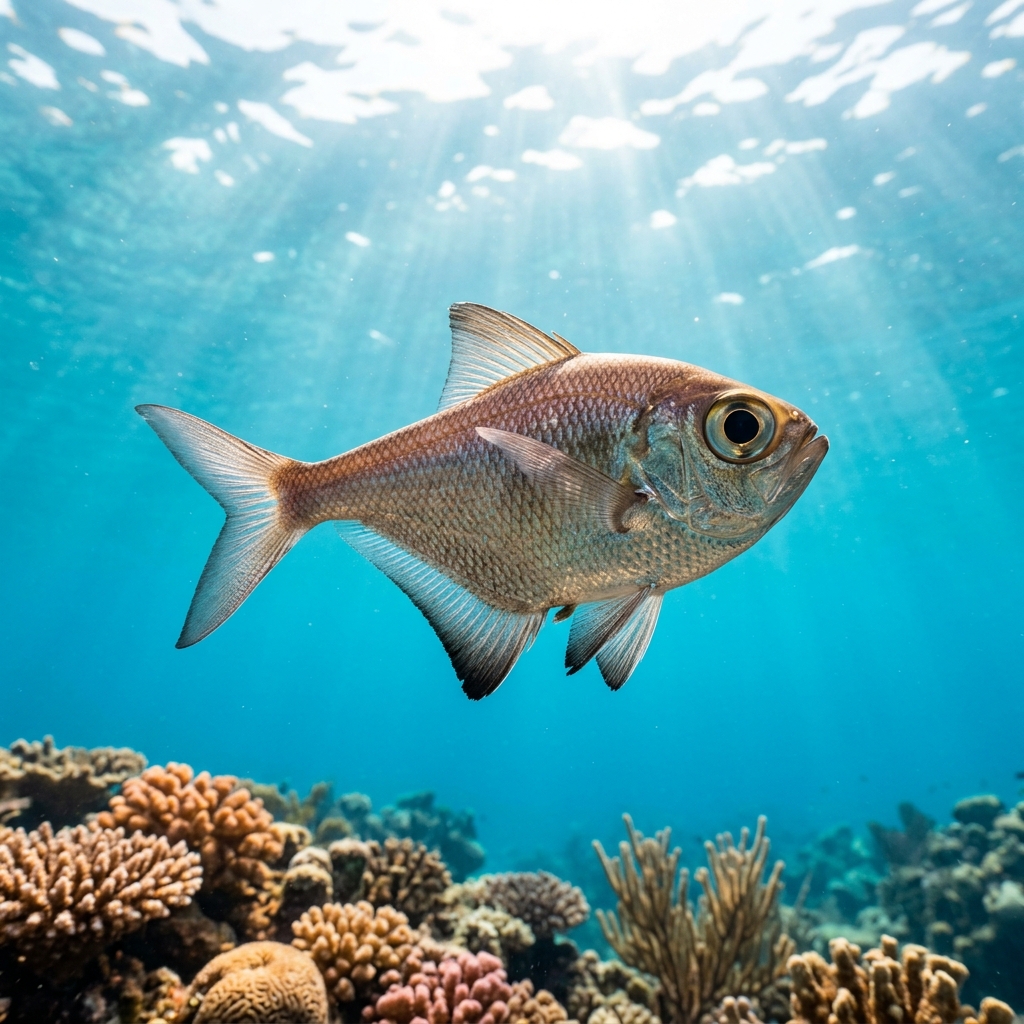
Reef neighbours a diver could mistake it for. Use the identification notes above to tell them apart.
Every logged sighting in this dataset comes from the Canary Islands, with Gran Canaria the clear centre of activity. If you're diving Gran Canaria's coastline, keep an eye on open water and mid-water sections of reef sites where schooling fish pass through.
Mapping where European Anchovy is logged…
The strongest and most consistent sightings come from Gran Canaria in the Canary Islands, where they've been logged at dive sites across the island. Look for them in open water or mid-water rather than tucked into the reef itself.
There's no clear seasonal pattern in the sightings, so they're considered a year-round possibility in the Canary Islands. Water temperatures where they've been recorded range from a cool 7.1C up to 18C.
Look for small, silvery fish around 14cm long moving in dense, fast-moving schools, with a pointed snout, a protruding lower jaw, and a silver stripe along the flank. They're usually seen as a shimmering mass rather than as individuals.
They typically reach around 14cm in length, making them one of the smaller schooling fish you'll encounter on a dive.
No, they pose no risk to divers. They're a harmless, small schooling fish that will simply move away as a group if approached.
Their schooling itself is the standout trait: thousands of individuals swim and turn in near-perfect unison, which confuses predators trying to target a single fish. Divers who encounter a school moving through open water are essentially watching a live predator-defence strategy in action.
Site and sighting data is aggregated from diver logs, iNaturalist and GBIF. For taxonomy and conservation status:
Anchovy
2,433 sites