Atherina hepsetus
Slender silver schoolers common on dives in Catalonia and Central Dalmatia, in water from 16 to 21 C, year-round.
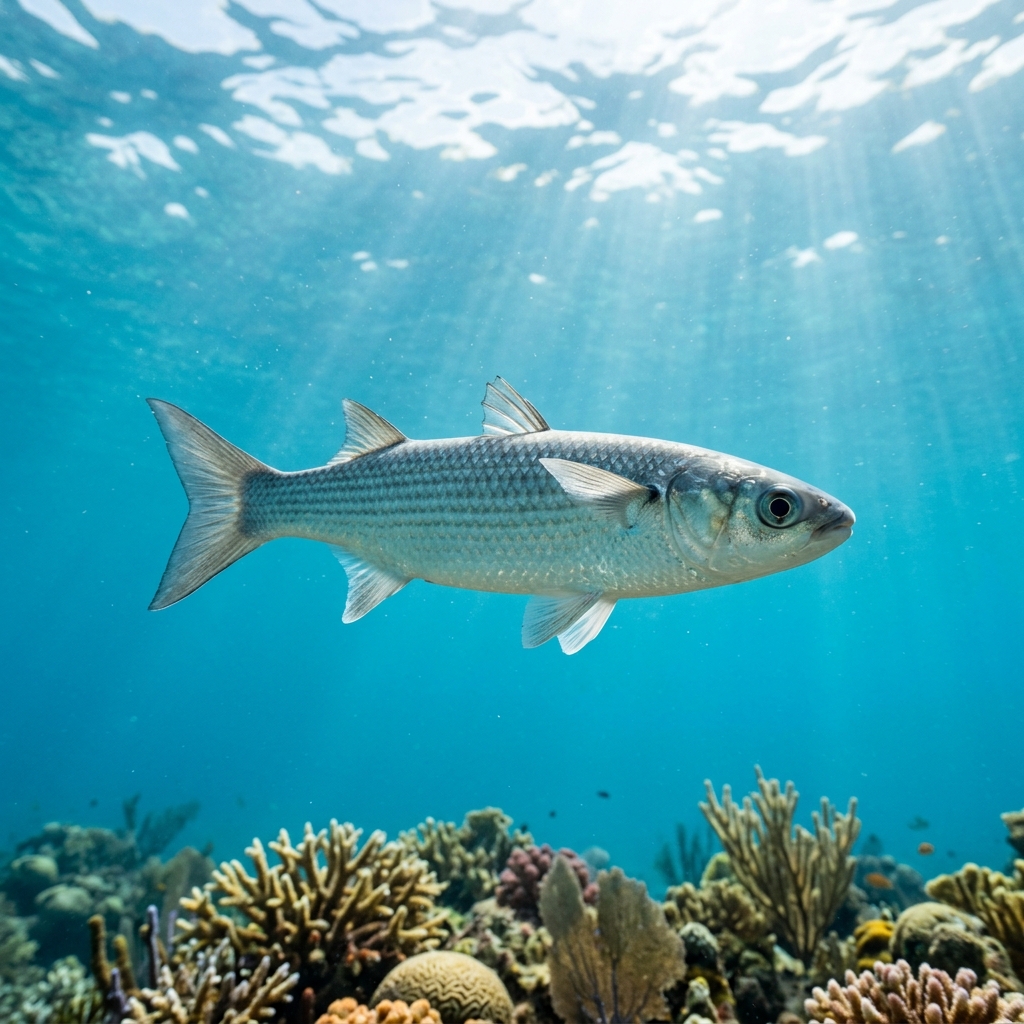
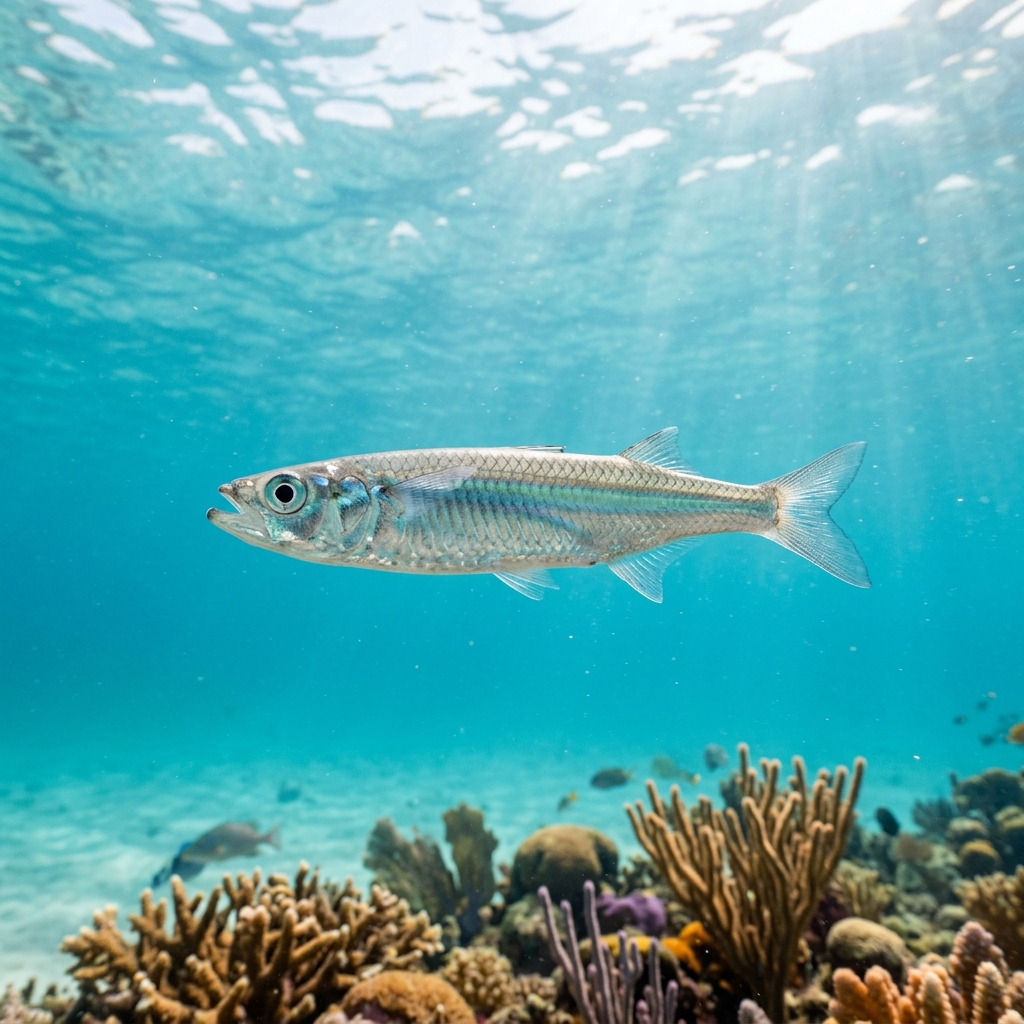
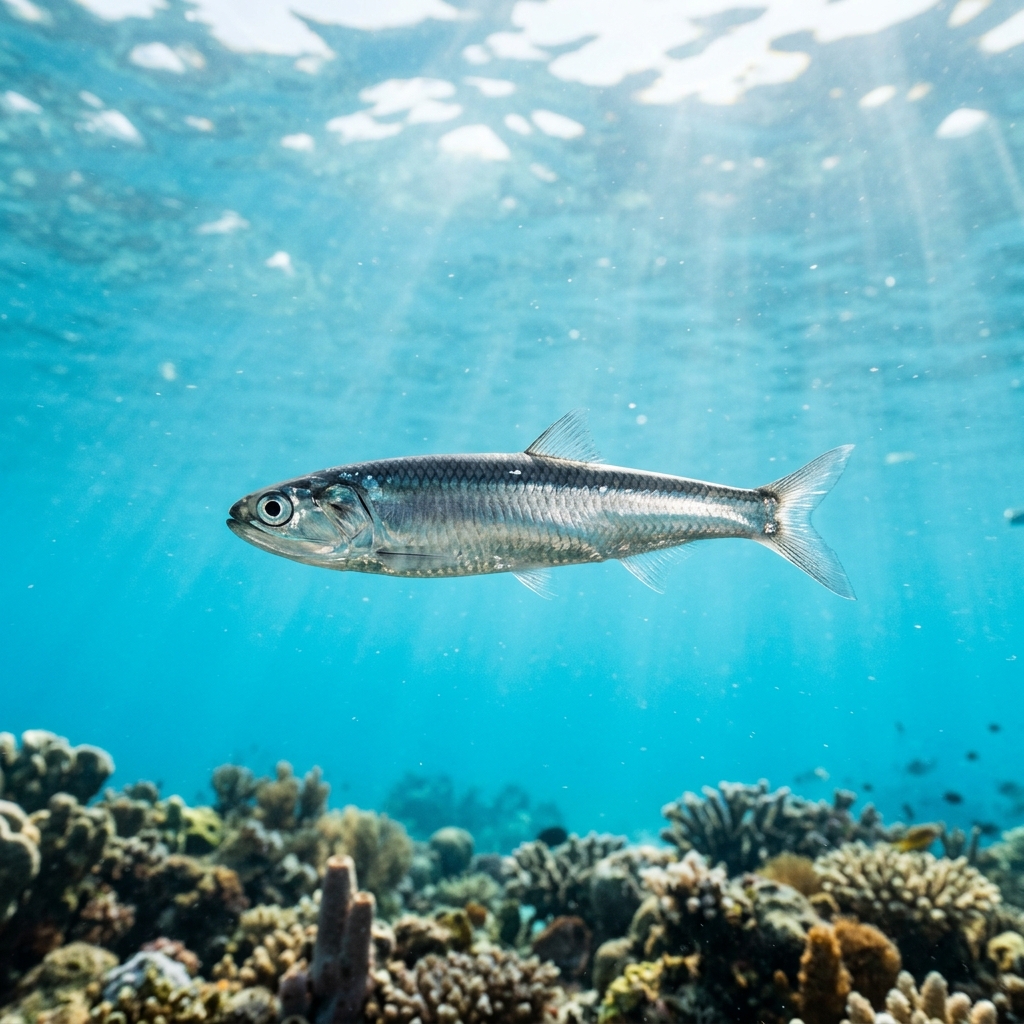
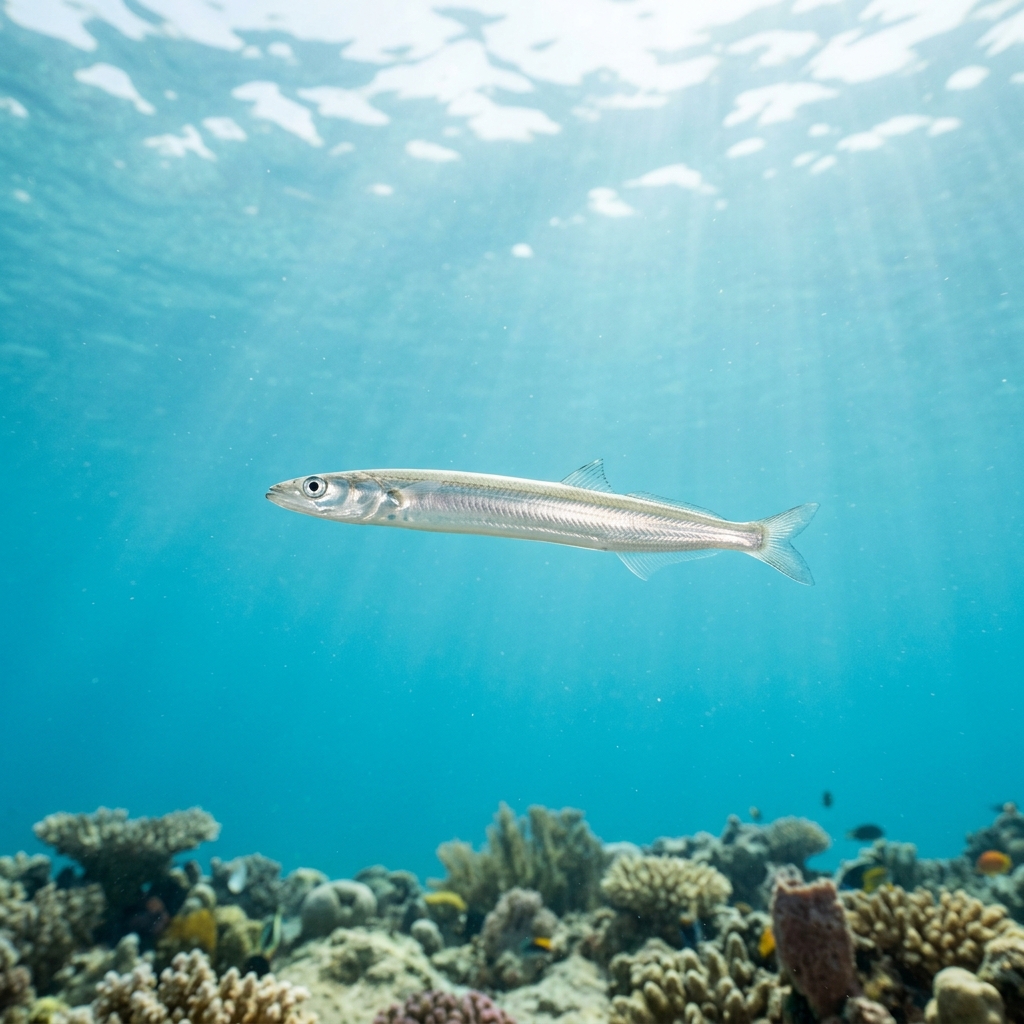
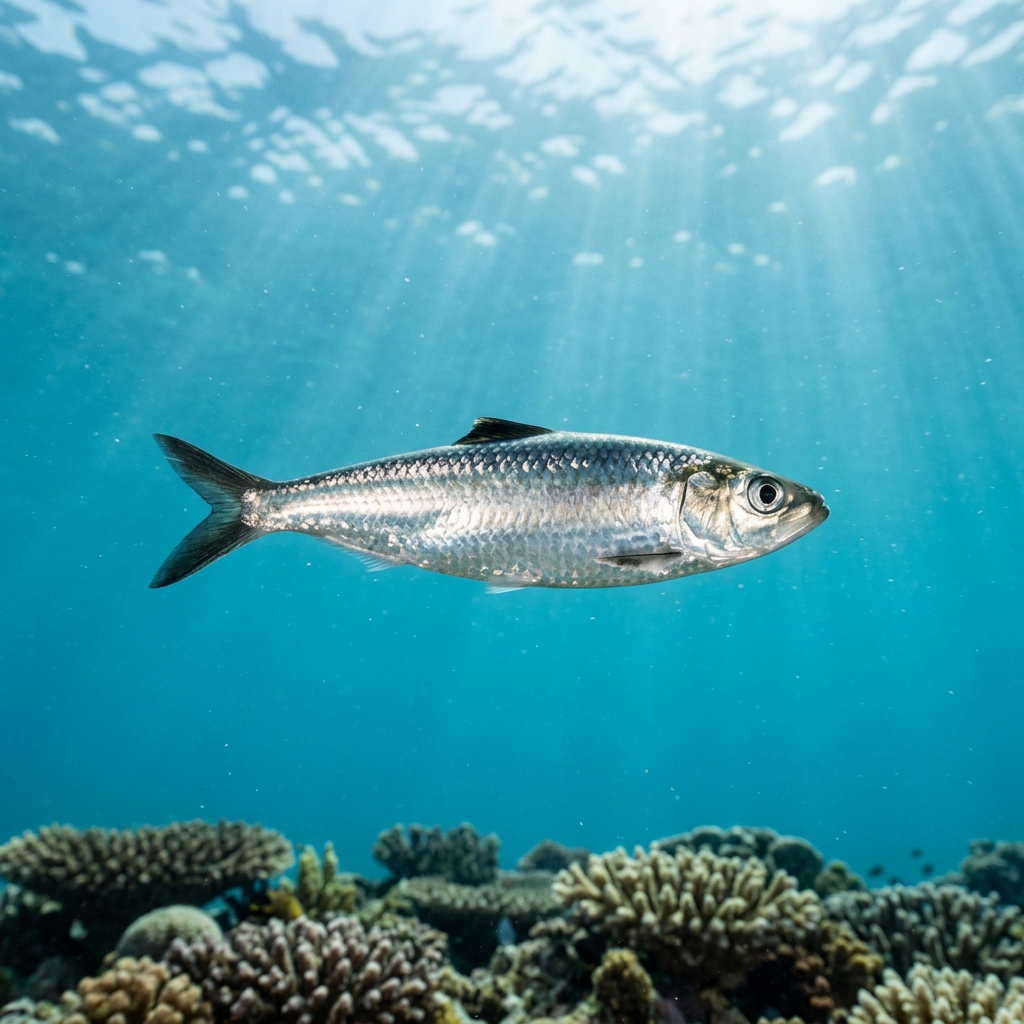
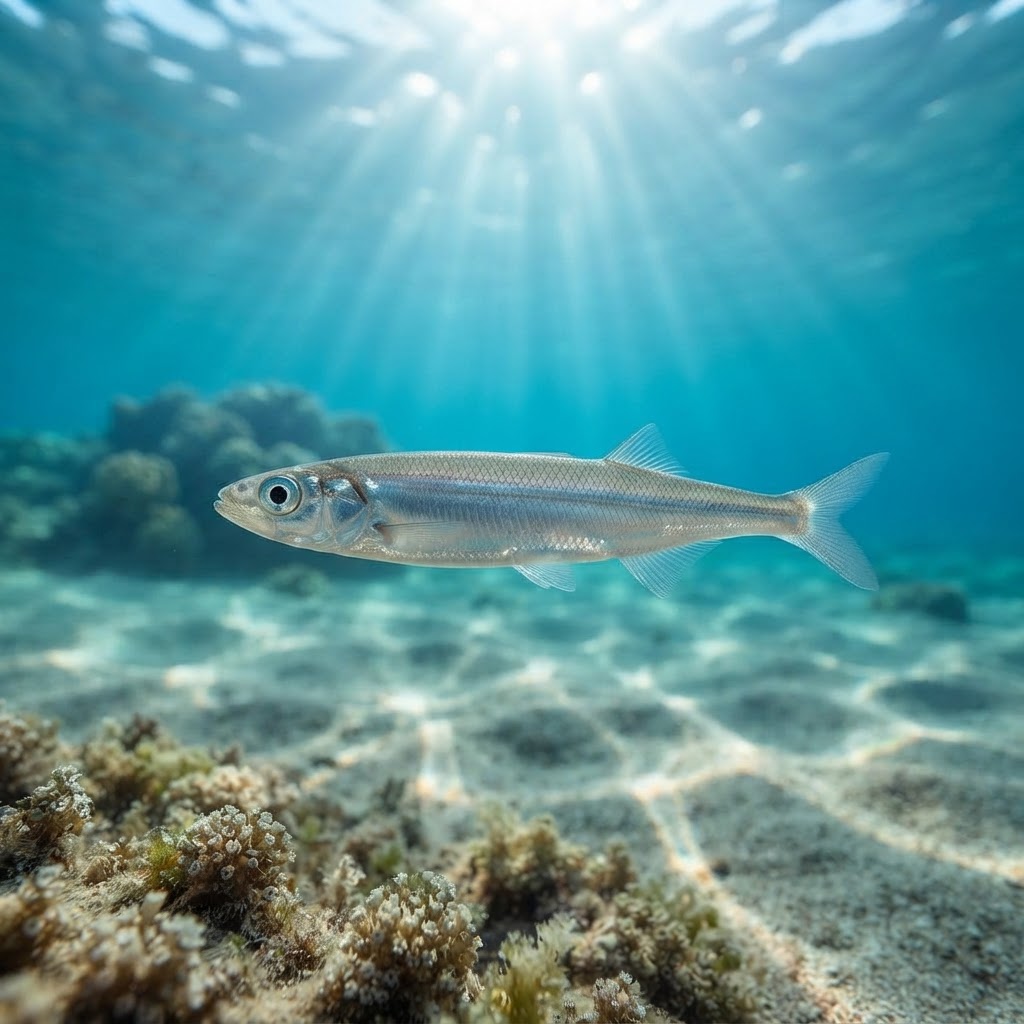
A slim, almost translucent body about 14 cm long with a distinct silver stripe running along its flank from gill to tail. The back is pale olive to greenish, fading to a bright silvery-white belly, and the eyes look proportionally large for the head. Look for it moving in tight, shimmering schools just off sandy or rocky bottoms rather than as a solitary fish.
Divers usually run into loose to tight schools hovering just above sand patches or hugging rocky ledges, feeding on tiny drifting prey rather than picking at the reef itself. It tends to hold formation and drift away from an approaching diver rather than scatter in panic, so a slow approach usually keeps the school intact for a closer look.
Sand smelt schools often shadow larger predatory fish and use their reflective silver flanks to break up their outline in open water, a defence that works surprisingly well against fast-moving hunters targeting the group.
Sightings show no clear seasonal pattern, and with a comfortable range of roughly 16 to 21 C this fish turns up across the Mediterranean diving calendar rather than in one narrow window. Treat it as a year-round encounter at the sites where it is known to occur.
Most reliably logged in Spain, especially Catalonia and Murcia, with strong numbers also reported around Central Dalmatia in Croatia. France turns it up regularly too, particularly in Occitanie, Corsica, and along the French Riviera and Provence, with a scattering of sightings in Andalusia, Valencia, Italy, and Slovenia.
Mapping where Sand Smelt is logged…
They show up most consistently on dives in Catalonia and Murcia in Spain, plus Central Dalmatia in Croatia. Occitanie, Corsica, and the French Riviera and Provence in France are other solid spots to look.
There is no strong seasonal pattern in the sightings, so they are logged across the year wherever water sits in the roughly 16 to 21 C range they favour.
Look for a slender, near-translucent fish around 14 cm with a bright silver stripe along its side and a greenish back fading to a pale belly. They are almost always seen schooling together over sand or rock rather than alone.
They typically reach about 14 cm in length, making them one of the smaller schooling fish a diver will notice in open water.
No. They pose no threat and simply move off in formation if approached too quickly, making them an easy, low-stress fish to watch.
Their tightly packed silver schools help confuse predators by scattering light and blurring individual outlines, a classic defence tactic among small pelagic schooling fish.
Site and sighting data is aggregated from diver logs, iNaturalist and GBIF. For taxonomy and conservation status:
Anchovy
2,433 sites