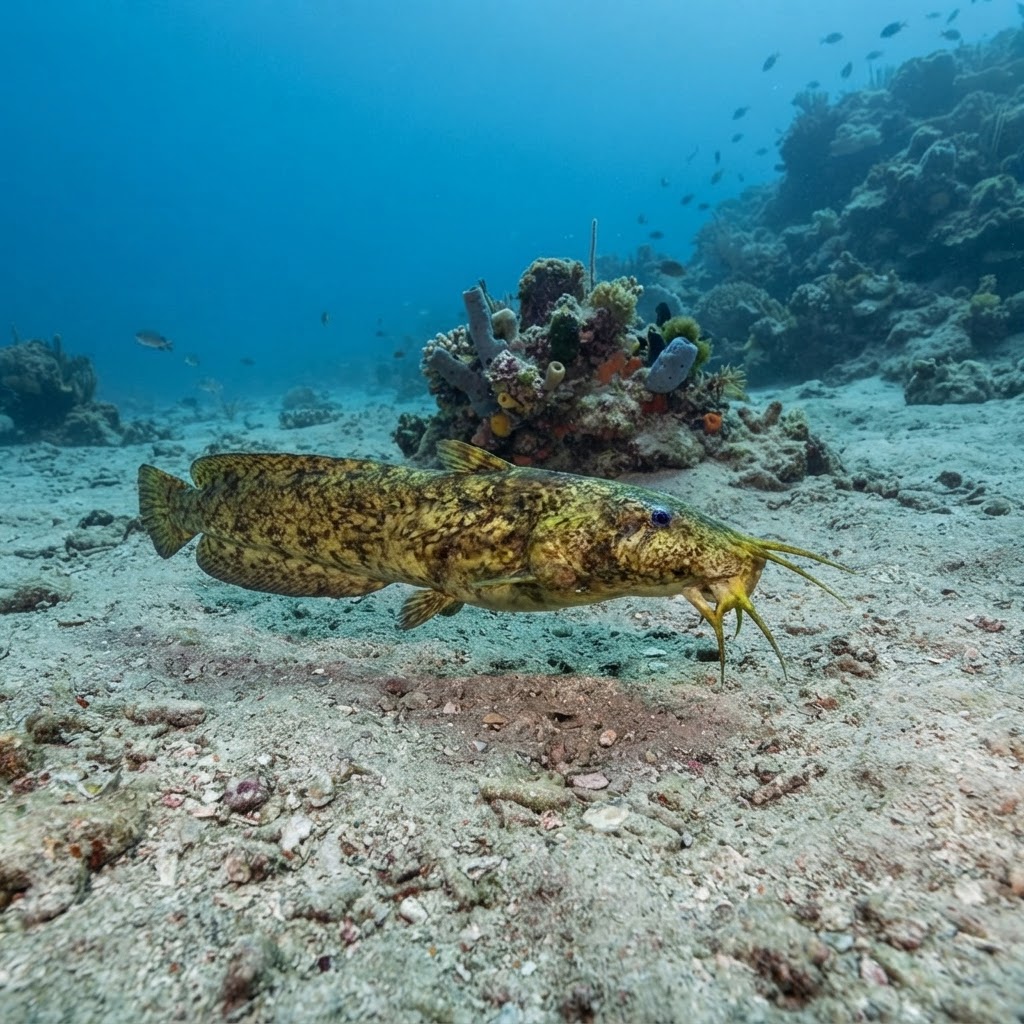
Cnidoglanis macrocephalus
Mottled, whiskered bottom-dweller logged at 94 New South Wales sites, sitting in cool 16.8-22.3C water year-round.
Safety warning
Do not handle or corner one: the dorsal and pectoral spines can deliver a painful venomous sting if grabbed or accidentally brushed. Watch your hand placement around sand and weed patches where it rests, and give it space to move off on its own.
If you're stung
Venomous spinesGeneral first-aid guidance, not a substitute for professional medical care. In an emergency, call your local emergency number.
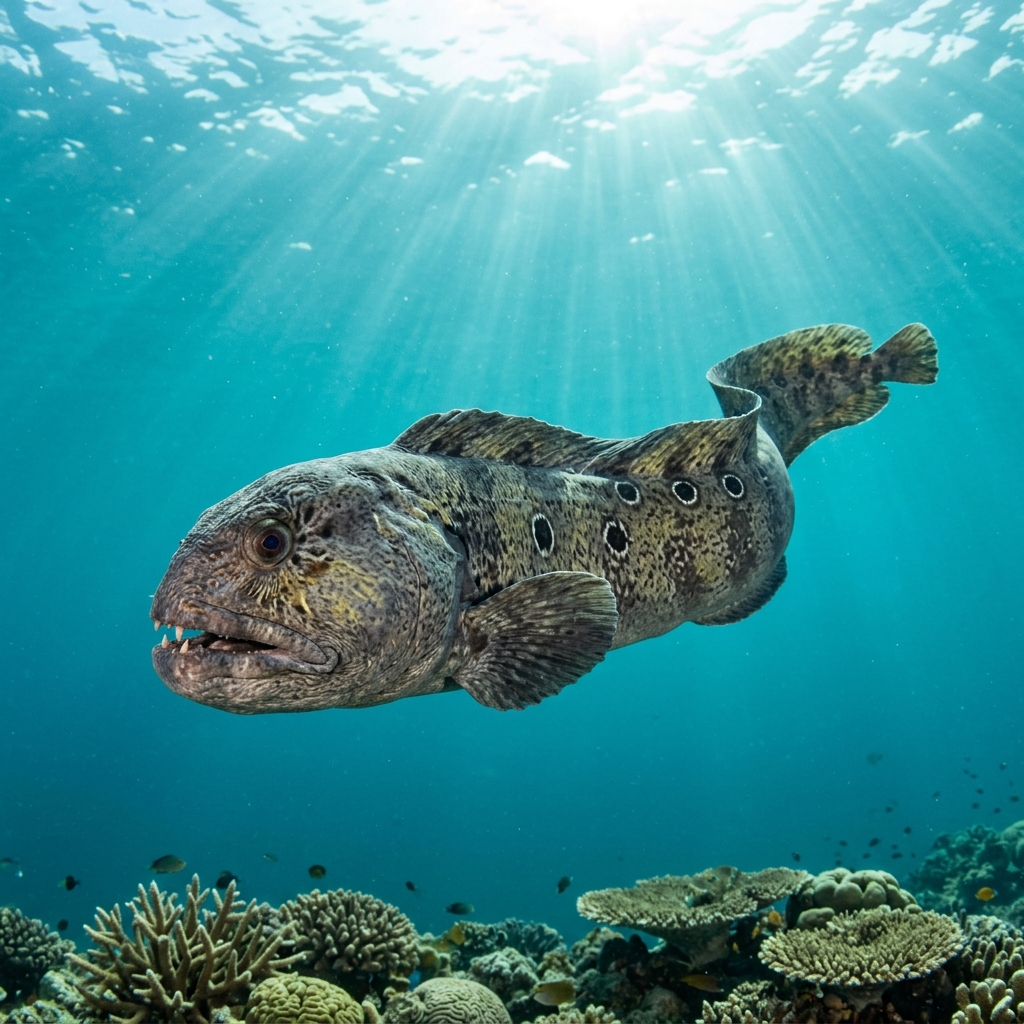
Grows to around 63cm, with a long eel-like body that tapers to a pointed tail and a broad, flattened head with whisker-like barbels around the mouth. Skin is mottled brown, grey and cream, giving it a camouflaged look against sand or rubble. It has no scales, and the dorsal and pectoral fins carry stiff venomous spines, which is the main feature to note and avoid touching.
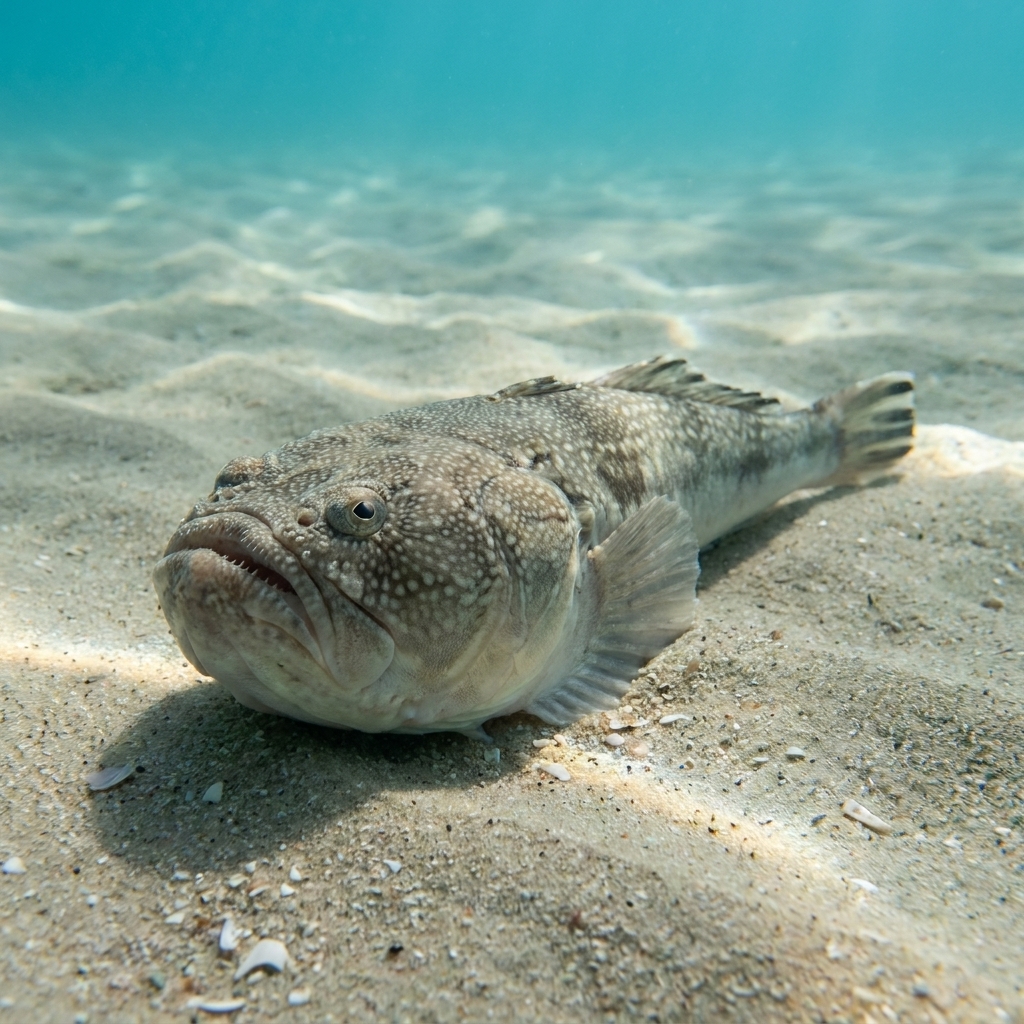
Usually seen resting on or half-buried in sand, mud or weed beds during the day, relying on its camouflage rather than moving off when divers approach. It forages over the bottom using its barbels to find worms, crustaceans and small invertebrates, and is most active at dusk and after dark. Most logs describe it as uncommon rather than a guaranteed find, so a slow look over sandy patches near structure pays off.
Its dorsal and pectoral fin spines carry venom glands, a trait shared with other members of the catfish family Plotosidae, making it one of the few venomous fish regularly encountered on temperate Australian dives.
Sightings show no clear seasonal pattern, so it turns up year-round; the observed water temperature range of 16.8 to 22.3C fits the cool-temperate conditions of southern Australia in most months.
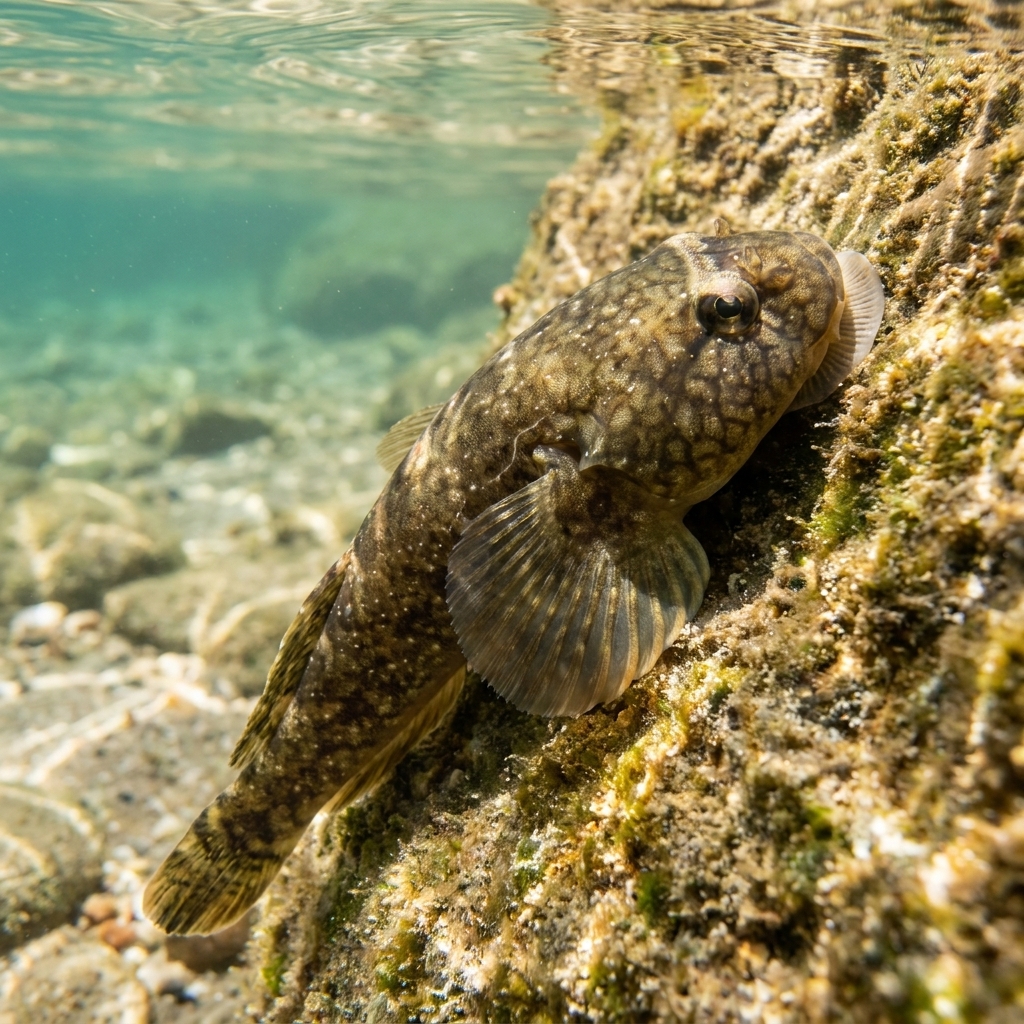
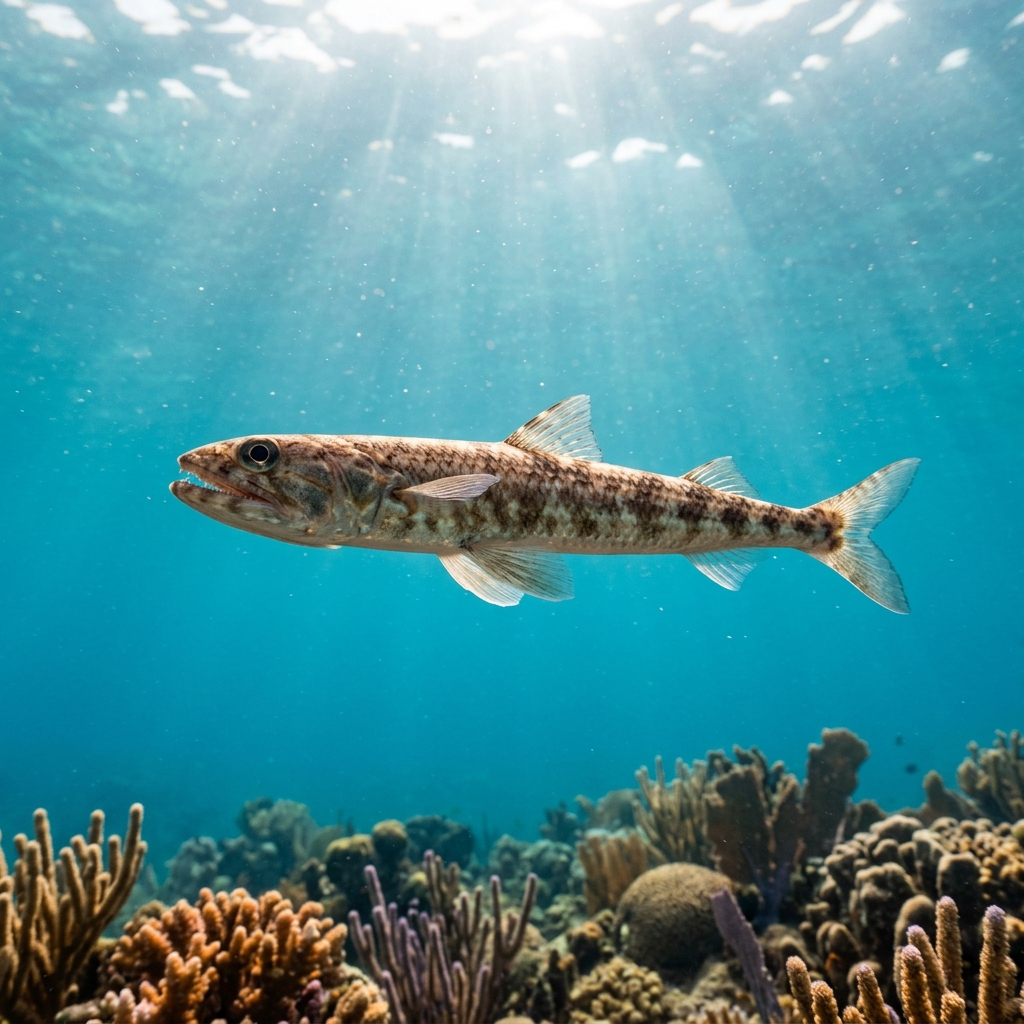
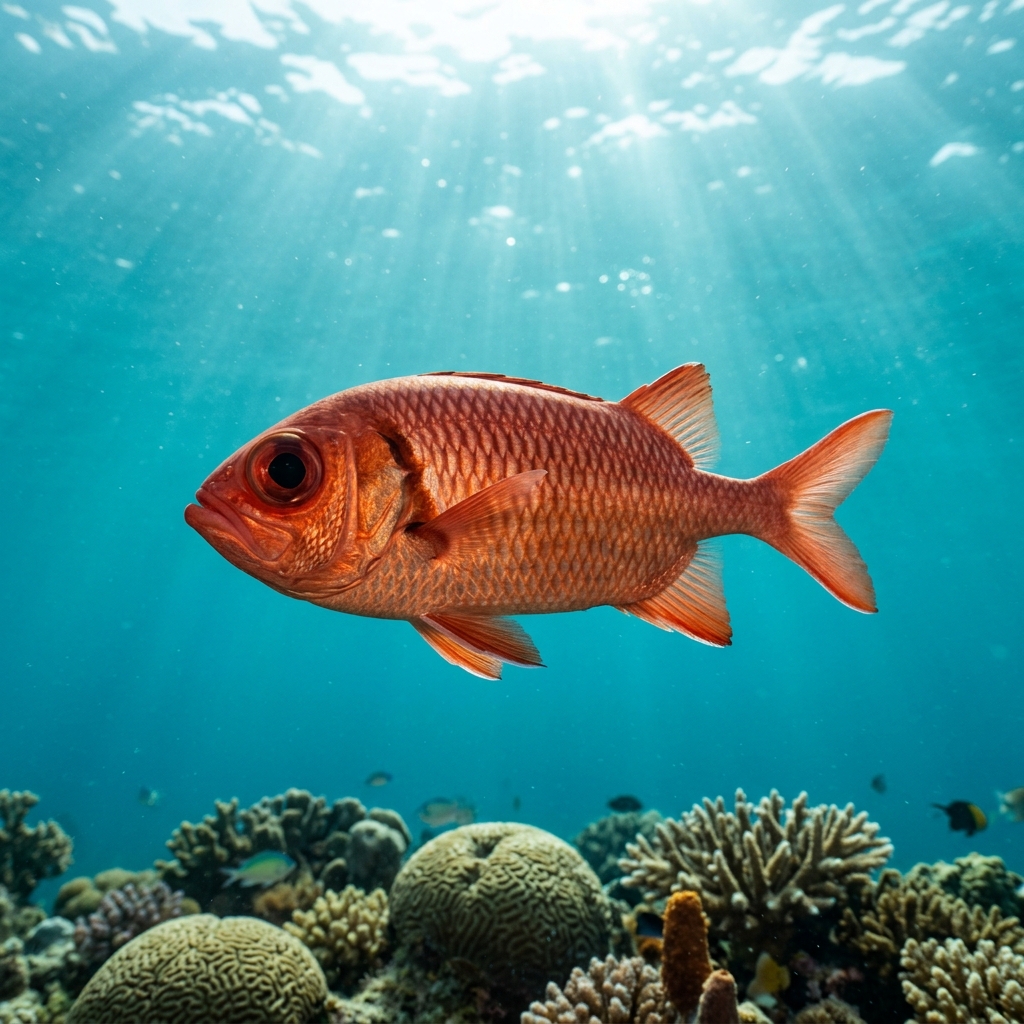
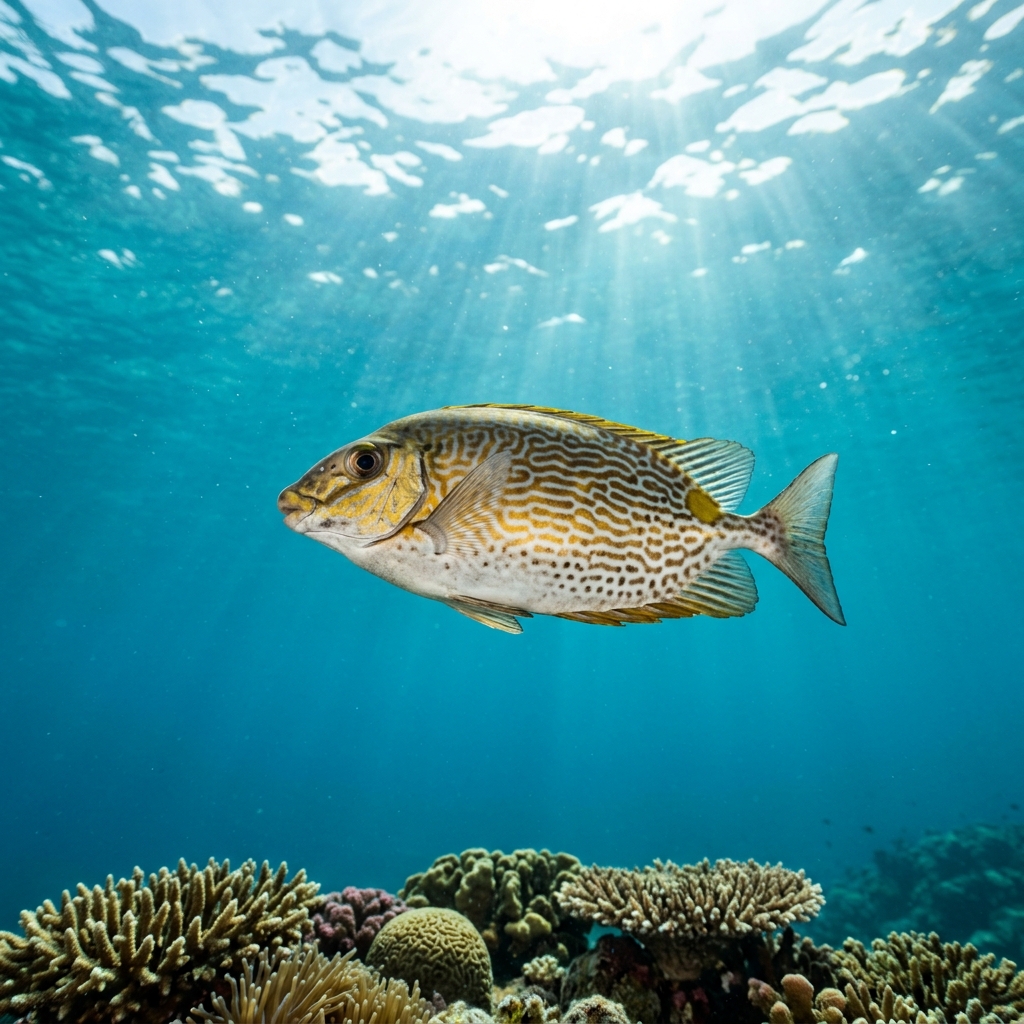
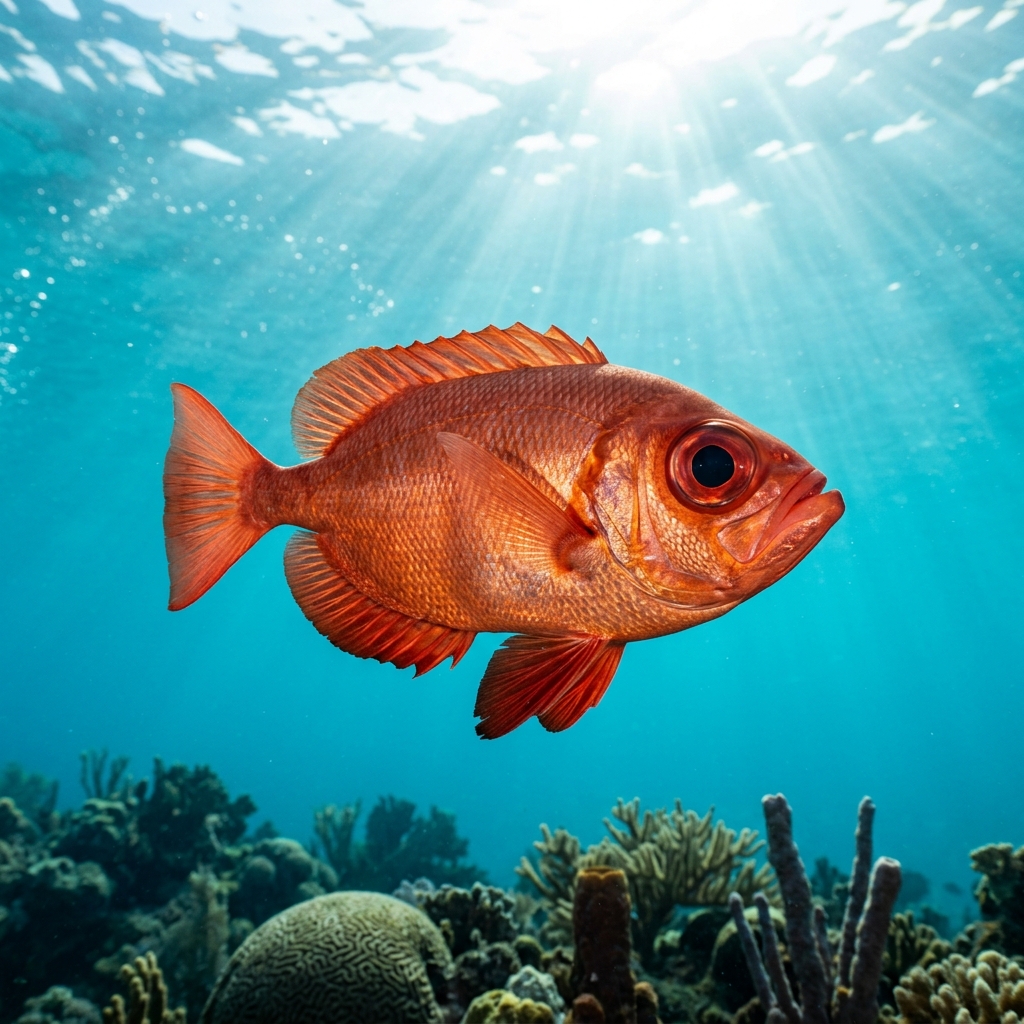
Reef neighbours a diver could mistake it for. Use the identification notes above to tell them apart.
Logged almost entirely in Australia, with New South Wales the strongest region by far, followed by Western Australia, South Australia and Queensland. Divers most often find it on sand, seagrass and rubble patches near estuary mouths and sheltered bays along these coasts.
Mapping where Estuary Catfish is logged…
Almost all logged sightings come from Australia, led by New South Wales, with further records from Western Australia, South Australia and Queensland. Look for it on sand, seagrass and rubble in sheltered coastal and estuary-mouth dive sites.
There's no strong seasonal pattern in the data, so it's seen across the year. It sits in a cool-temperate range of 16.8 to 22.3C, conditions that hold for much of the year in southern Australia.
Yes, its dorsal and pectoral fins carry venomous spines that can cause a painful sting if it's handled or accidentally touched. It's not aggressive, so keeping hands away from sand and weed where it rests is enough to stay safe.
Look for a scaleless, eel-bodied fish up to about 63cm with a mottled brown-grey pattern and barbels around the mouth. It's usually resting still on sand, mud or weed rather than swimming in open water.
They reach around 63cm in length, with a slender, elongated body shape rather than a bulky one.
They're one of the few venomous fish divers regularly meet in temperate Australian waters, with sting-capable spines on both the dorsal and pectoral fins.
Site and sighting data is aggregated from diver logs, iNaturalist and GBIF. For taxonomy and conservation status:
Soldierfish
3,612 sites