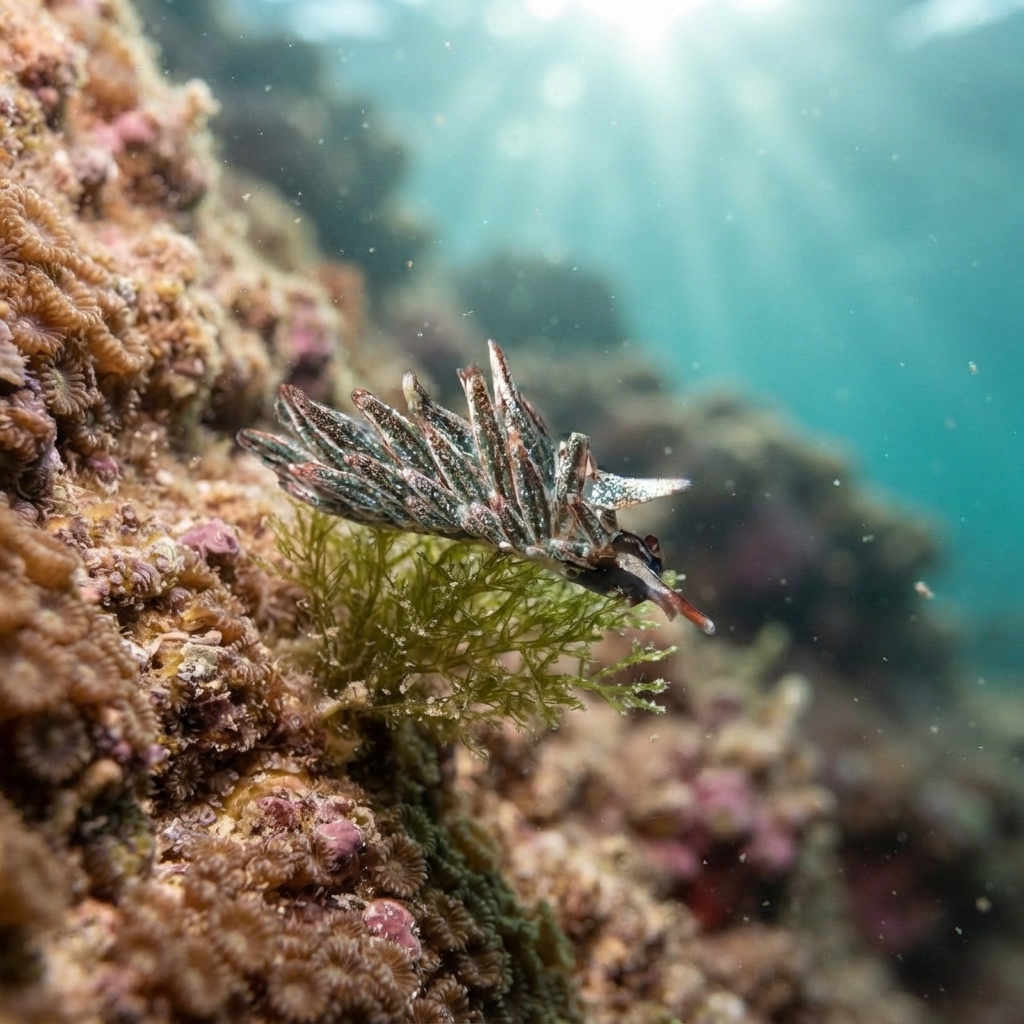
Aplysiopsis enteromorphae
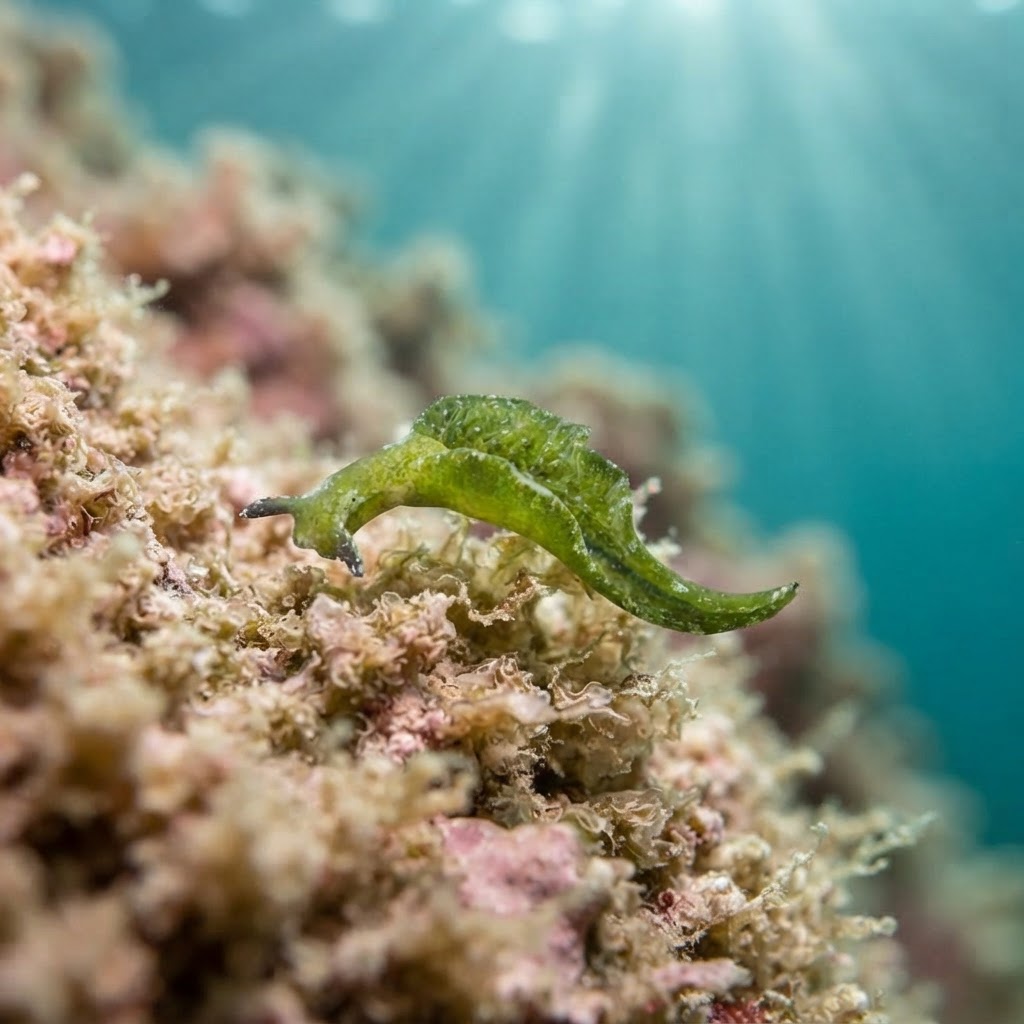
A 1cm green sea slug logged along California's coast, uncommon but findable if you know the algae to search.
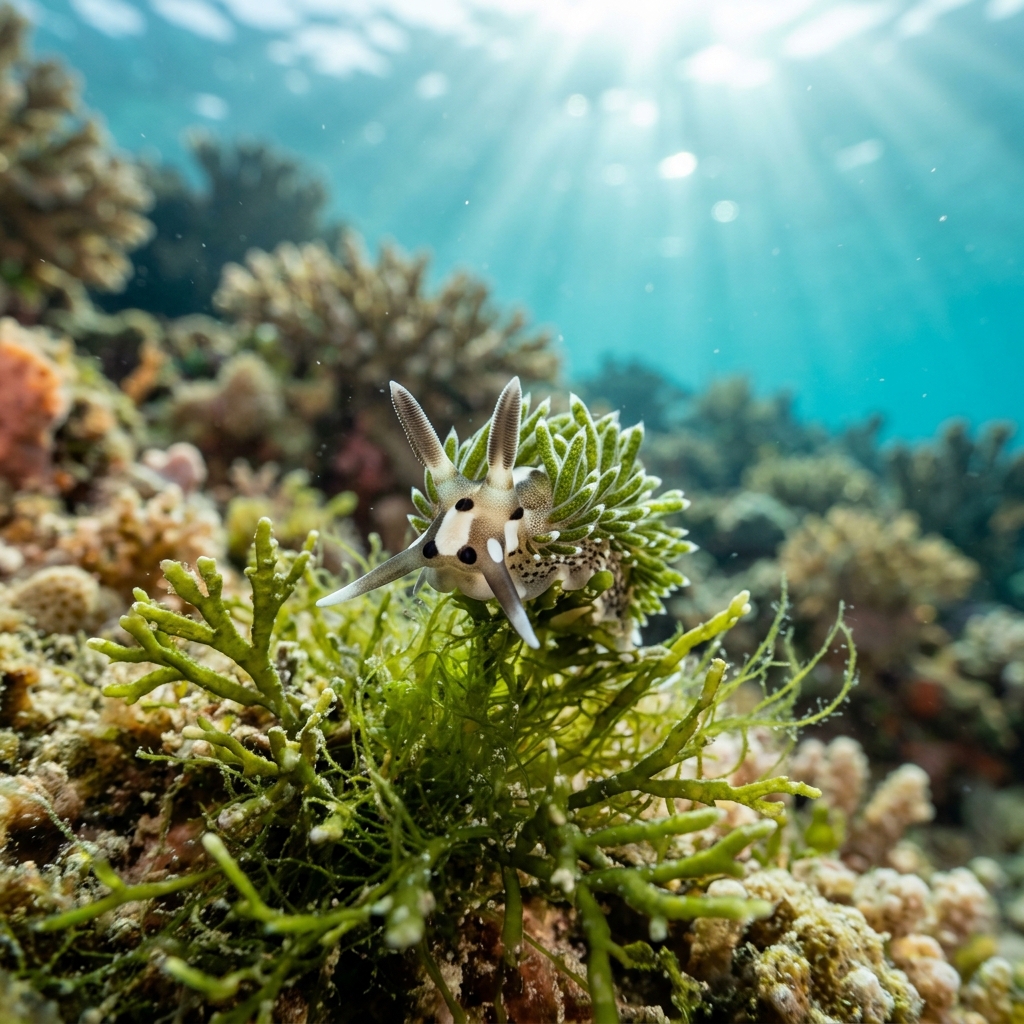
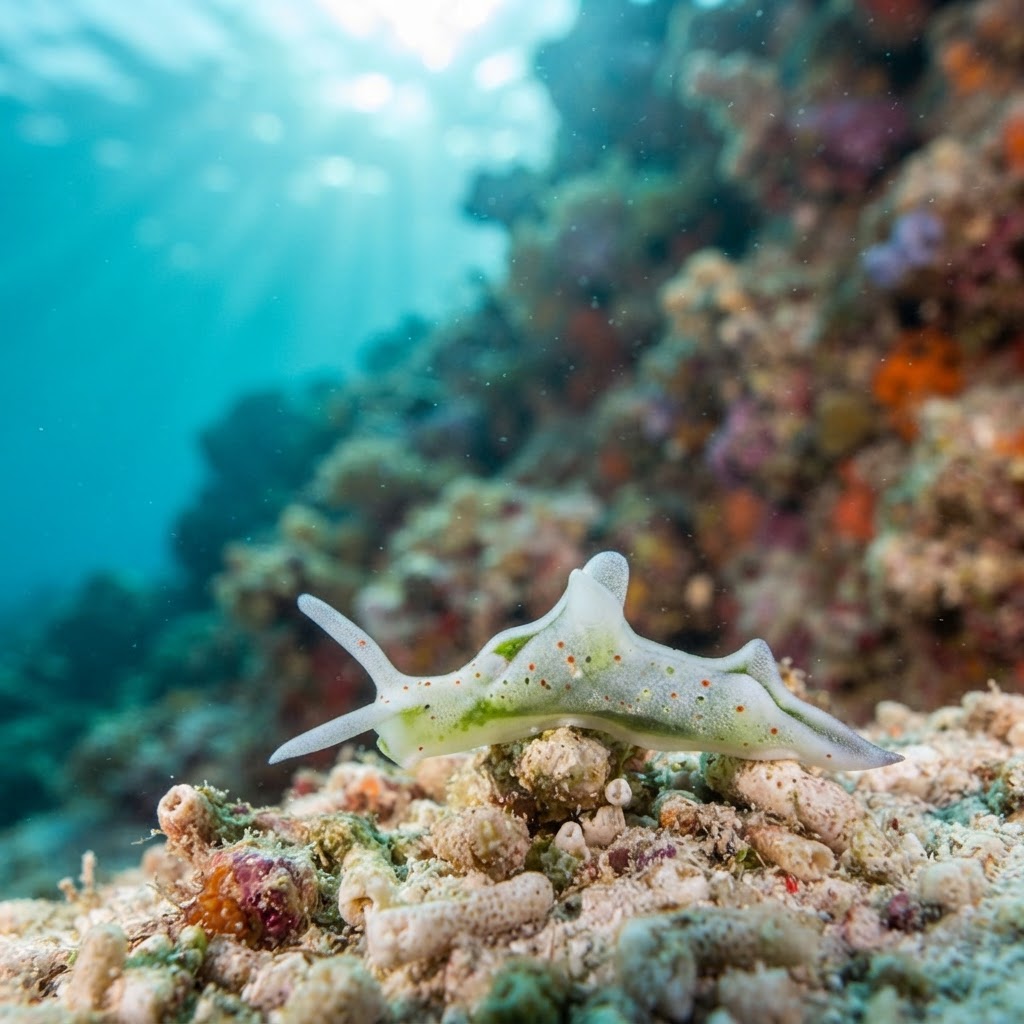
Barely a centimetre long, this slug is a slender, translucent green that blends almost perfectly with the tubular green algae it lives on. Look for a pair of short, tapering cerata (the finger-like projections along its back) rather than a smooth slug body, and a head with two small rolled tentacles. Its colour usually shifts slightly with the algae it has been feeding on, so tone can vary from pale to deep green.
Divers find it parked on or grazing through mats of green algae, especially the tubular Enteromorpha/Ulva strands it's named for, moving slowly and rarely bothering to react to a torch or a close look. It's a benthic (bottom-dwelling) grazer, so check algae-covered rock and cobble rather than open sand or reef structure, and expect to need a slow, close-focus search rather than a casual glance.
Like other members of its family, it likely sequesters chloroplasts or pigments from the algae it eats into its own tissue, which is a big part of why its colour so closely tracks its food source.
Sightings don't cluster into a clear season, so this one is logged year-round wherever the water sits in its comfortable 10.6 to 18.5C range, which is most of the year on the California and Pacific Northwest coasts.
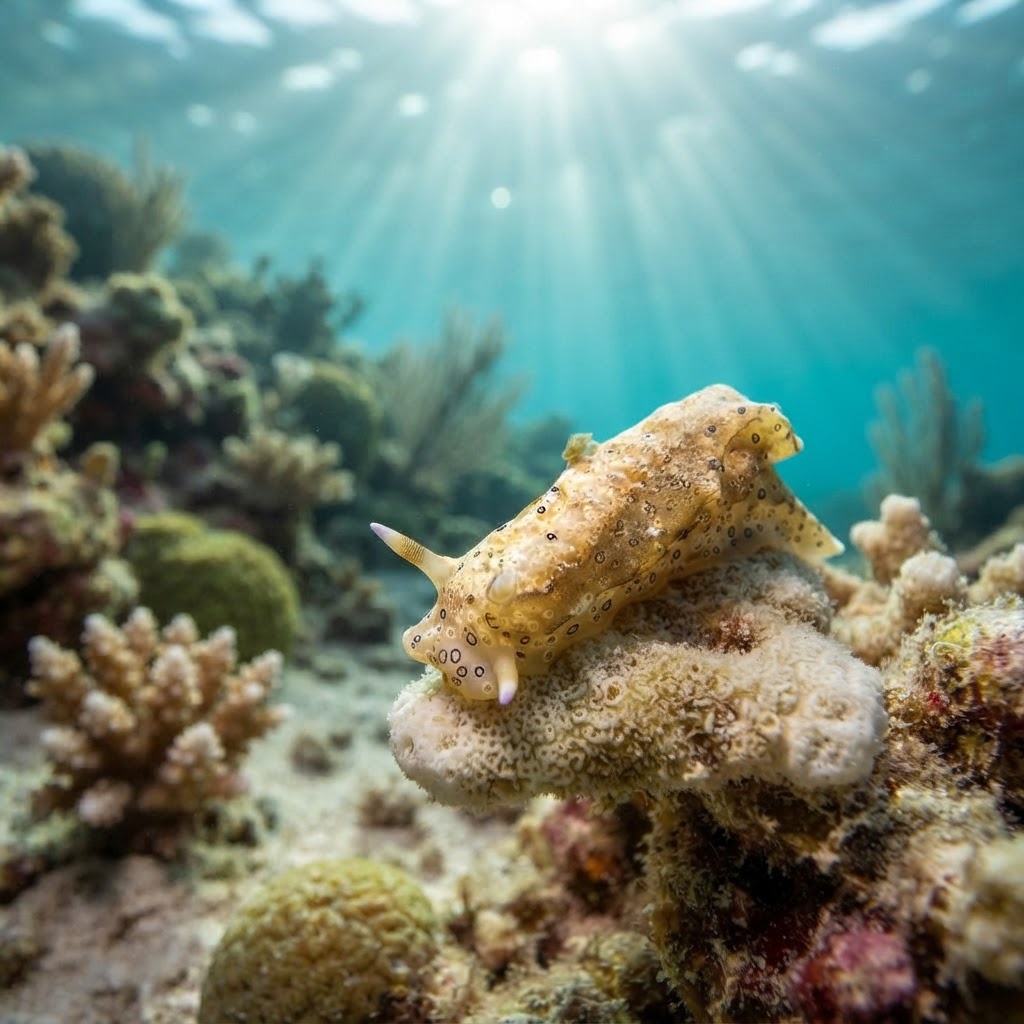
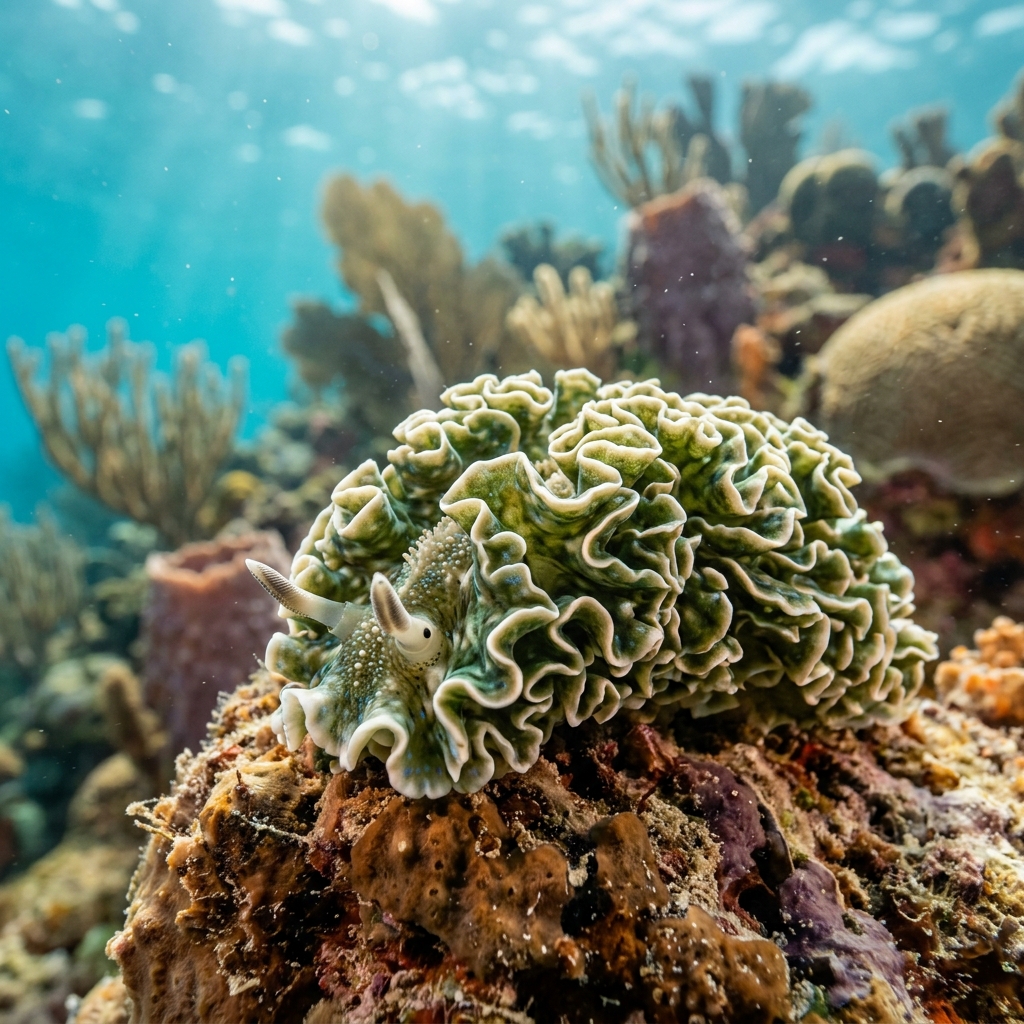
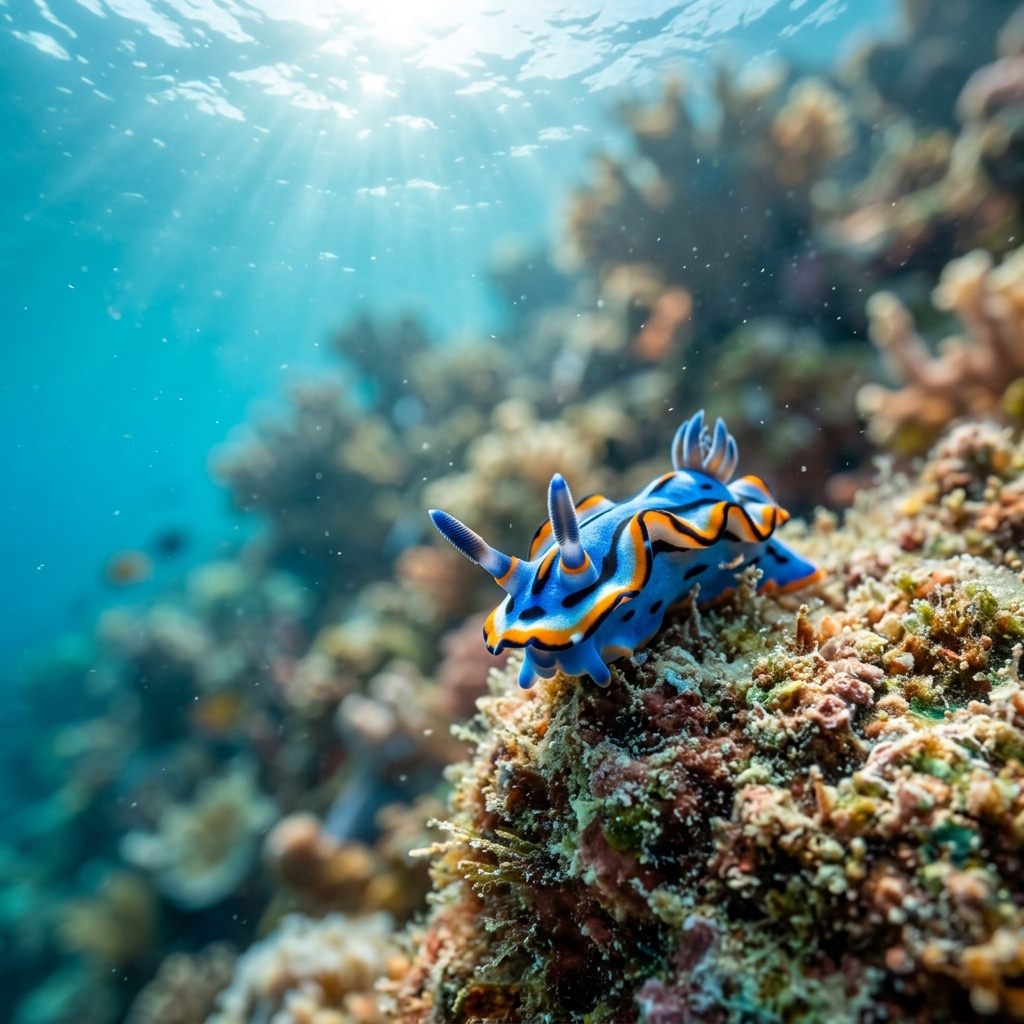
Reef neighbours a diver could mistake it for. Use the identification notes above to tell them apart.
Nearly all logged sightings come from the United States, with California doing the heavy lifting, especially sites through the state's central and southern coast, and a smaller but reliable showing in the Pacific Northwest. It hasn't been documented elsewhere in the data, so treat it as a West Coast speciality for now.
Mapping where Enteromorpha-eating Sapsucker is logged…
It's most reliably logged in California, particularly along the central and southern coast, with additional sightings from the Pacific Northwest. Outside the US West Coast it hasn't been documented in diver records.
There's no strong seasonal pattern in the sightings, so it's considered a year-round find within its cooler water-temperature range of roughly 10.6 to 18.5C.
Look for a slender green slug about a centimetre long with short cerata along its back, sitting on or grazing through tubular green algae. Its colour often matches the algae it's feeding on, making close, slow searching essential.
It tops out at around 1cm, so it's easy to miss without a slow, focused search of algae-covered rock.
No. It's a tiny, harmless algae-grazing slug with no sting or bite that affects divers.
It feeds on filamentous green algae and, like related sap-sucking slugs, may incorporate pigments or chloroplasts from its food into its own body, which helps explain why its colour shifts to match its algal diet.
Site and sighting data is aggregated from diver logs, iNaturalist and GBIF. For taxonomy and conservation status:
Elysia Timida
573 sites