Enoplometopus occidentalis
Rare and vividly coloured, the Red Reef Lobster has been logged by divers in Western Australia. Here's what to look for and when to dive.
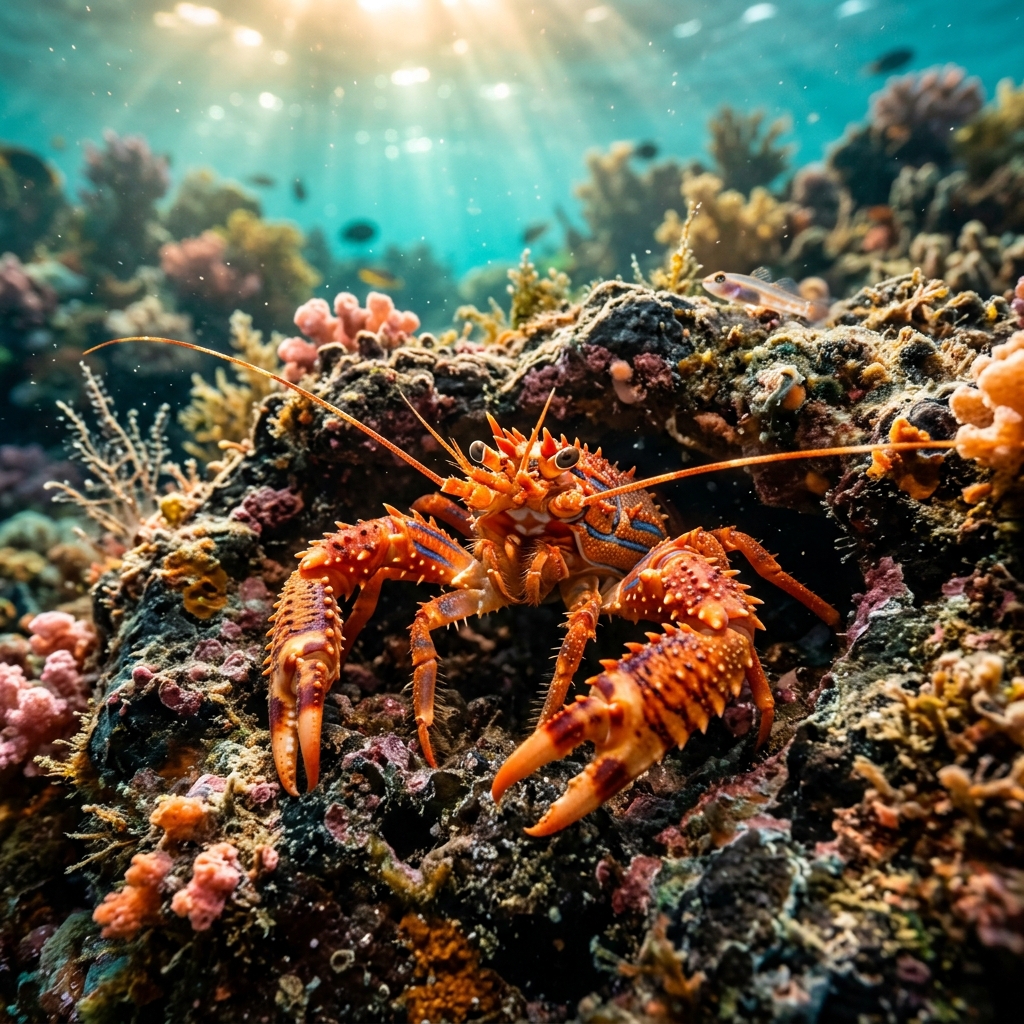
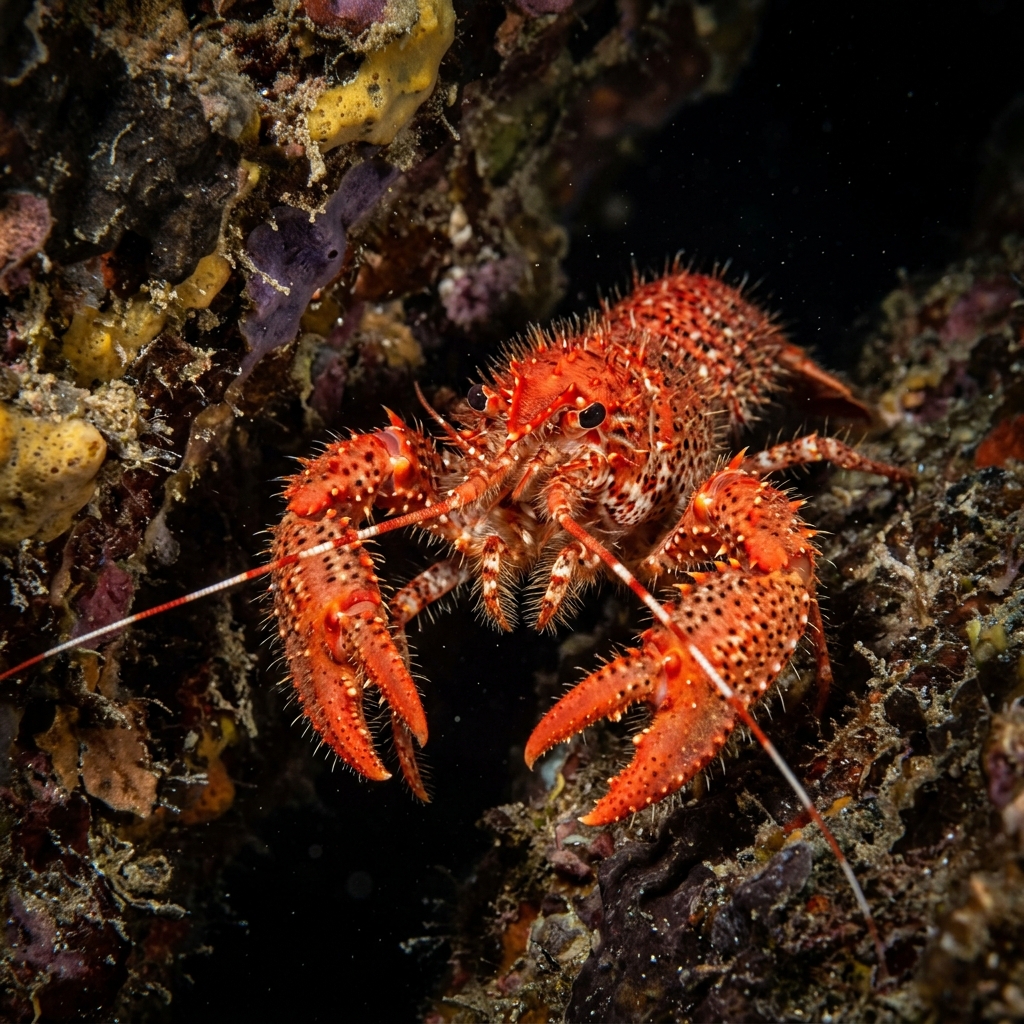
Vivid scarlet to deep red colouration covers the entire body, making this small lobster one of the most striking crustaceans on the reef when you do manage to spot it. The claws are notably robust and marked with white spots or blotches, which are a reliable distinguishing feature at close range. Unlike the spiny lobsters it shares habitat with, it has prominent chelae (claws), which immediately sets it apart from most other lobsters a tropical diver is likely to encounter.
Red reef lobsters are nocturnal by nature, sheltering deep inside reef crevices and beneath coral ledges during the day. On night dives you have the best chance of catching one at the entrance to its lair or moving slowly across the reef in search of food. When approached, they typically retreat backwards into cover rather than fleeing into open water.
This species belongs to the family Enoplometopidae, a small and ancient group of reef lobsters distinct from both spiny lobsters and true clawed lobsters. Their vivid red pigmentation is thought to provide camouflage in the low-light conditions of their crevice homes, where red wavelengths are the first to disappear with depth.
There is not enough monthly sighting data to identify a peak season, so treat this as a year-round possibility. The observed water temperature range of roughly 25 to 29 degrees Celsius points to warm tropical conditions.
Reef neighbours a diver could mistake it for. Use the identification notes above to tell them apart.
Diver sightings have so far been recorded in Western Australia, making Australia the only confirmed country in the Fin dataset. The data footprint is very small, so encountering one is a real event worth celebrating.
Mapping where Red Reef Lobster is logged…
Diver-logged sightings place the Red Reef Lobster in Western Australia. The species has a broader Indo-Pacific range, but confirmed dive-site records are rare, making any encounter in Australian waters a notable find.
There is no clear seasonal peak in the data, so year-round diving is your best strategy. Night dives give you the strongest chance, as these lobsters are far more active after dark when they leave their crevices to forage.
Look for an all-red body paired with clearly visible claws marked with white spots. Those claws are the key: most lobsters divers meet in tropical Indo-Pacific waters are spiny lobsters with no claws at all, so the presence of chelae narrows it down quickly. Size is small to moderate, and it will almost always be tucked into a crack or crevice.
Very rare. At every site where it has been logged, sighting frequency is classified as rare. Nocturnal habits, a preference for deep reef crevices, and limited survey coverage all contribute. A night dive on a rocky tropical reef gives you the best odds.
No. The Red Reef Lobster is currently assessed as Least Concern on the IUCN Red List, meaning it faces no immediate conservation threat at the species level.
Site and sighting data is aggregated from diver logs, iNaturalist and GBIF. For taxonomy and conservation status:
Caribbean Spiny Lobster
2,209 sites