Mithraculus sculptus
Tiny green crab hiding in Caribbean sponges and rubble, most reliably logged around the Yucatán Peninsula and Montego Bay year-round.
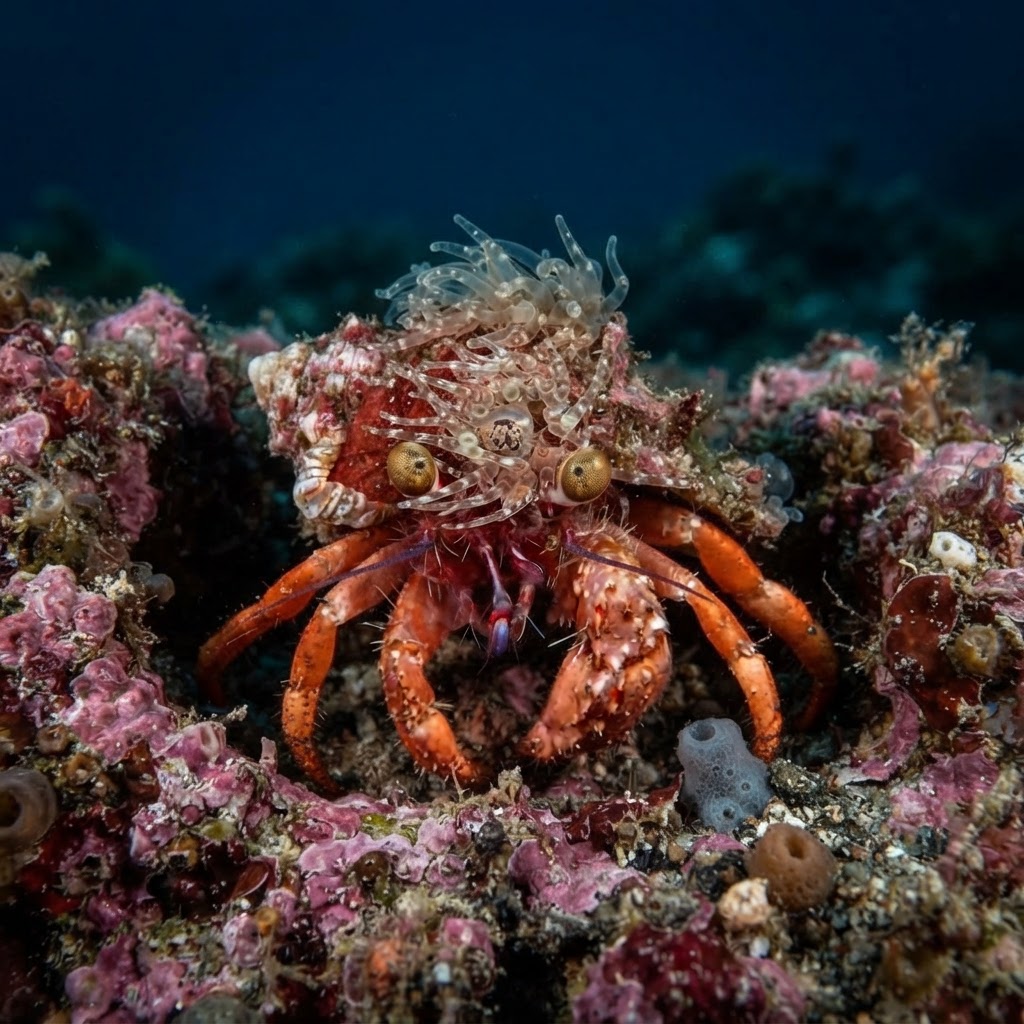
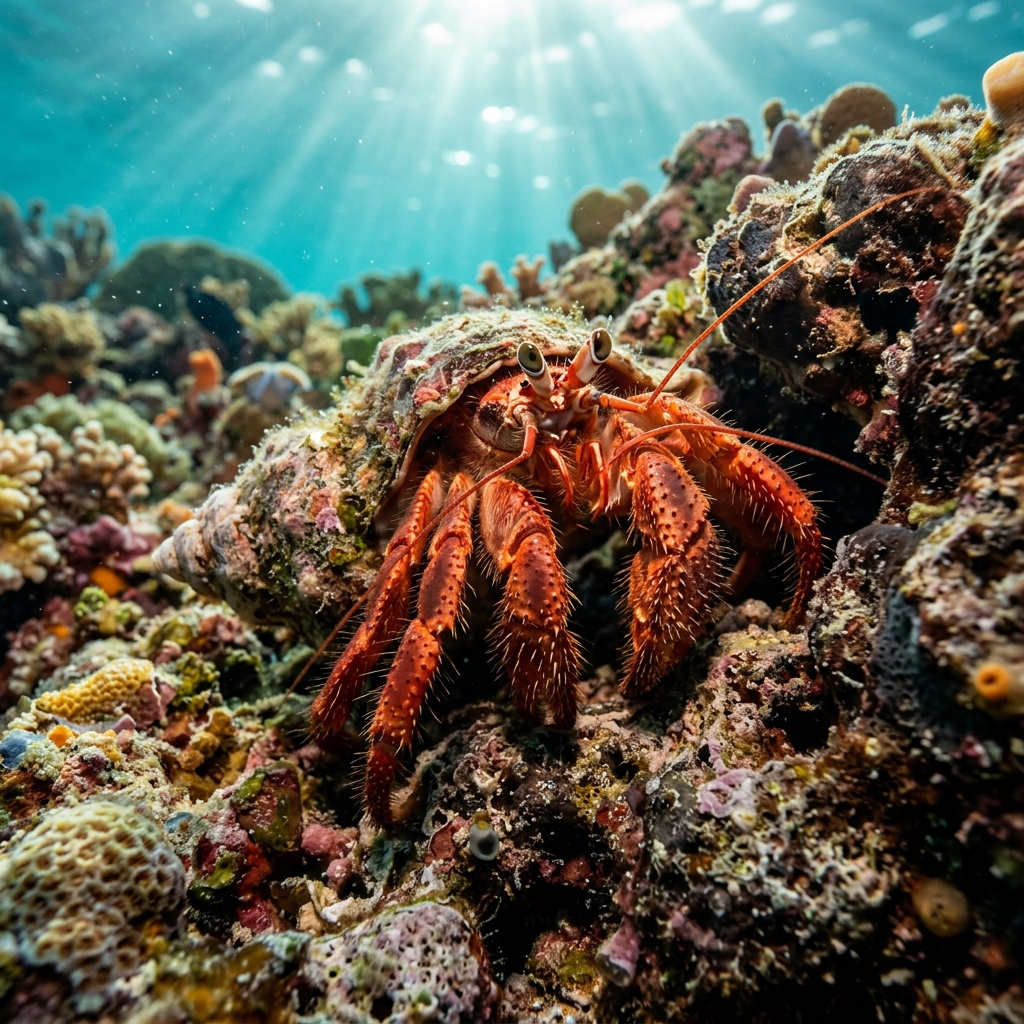
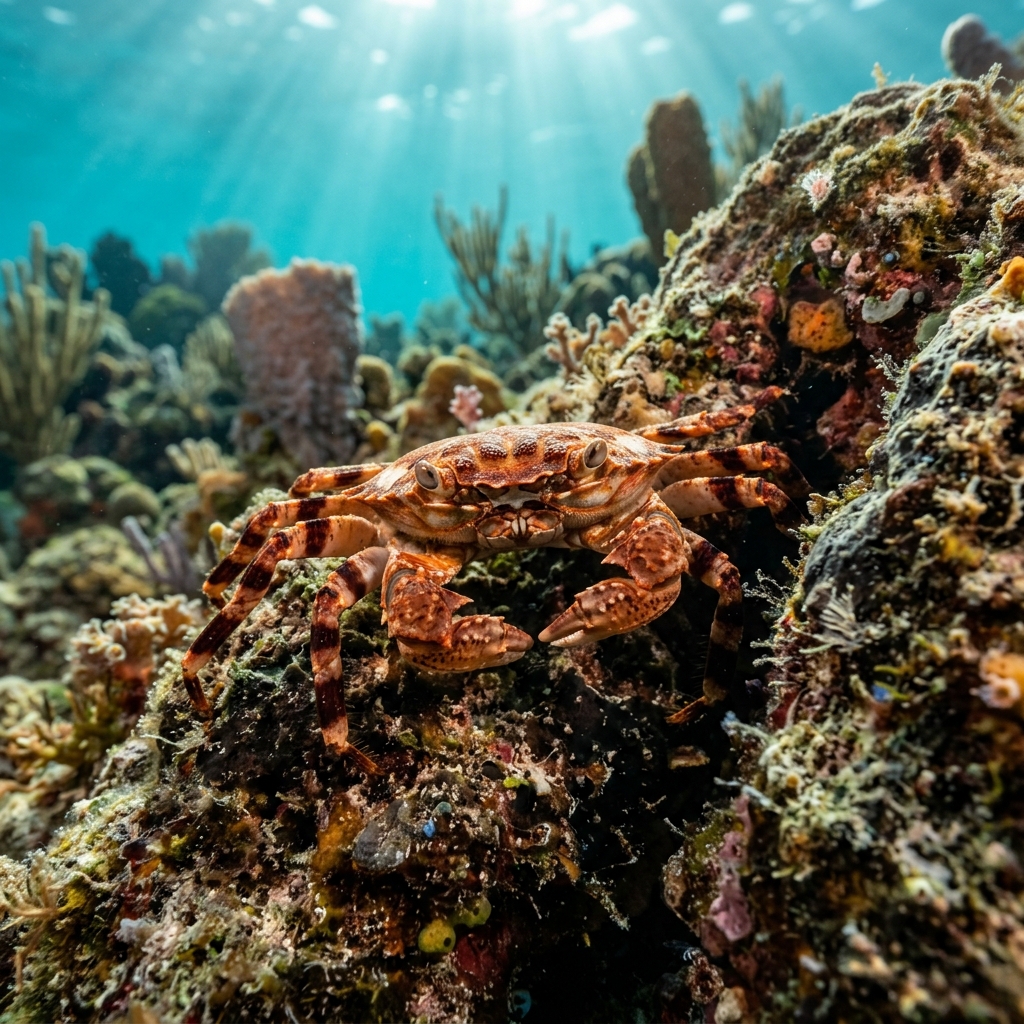
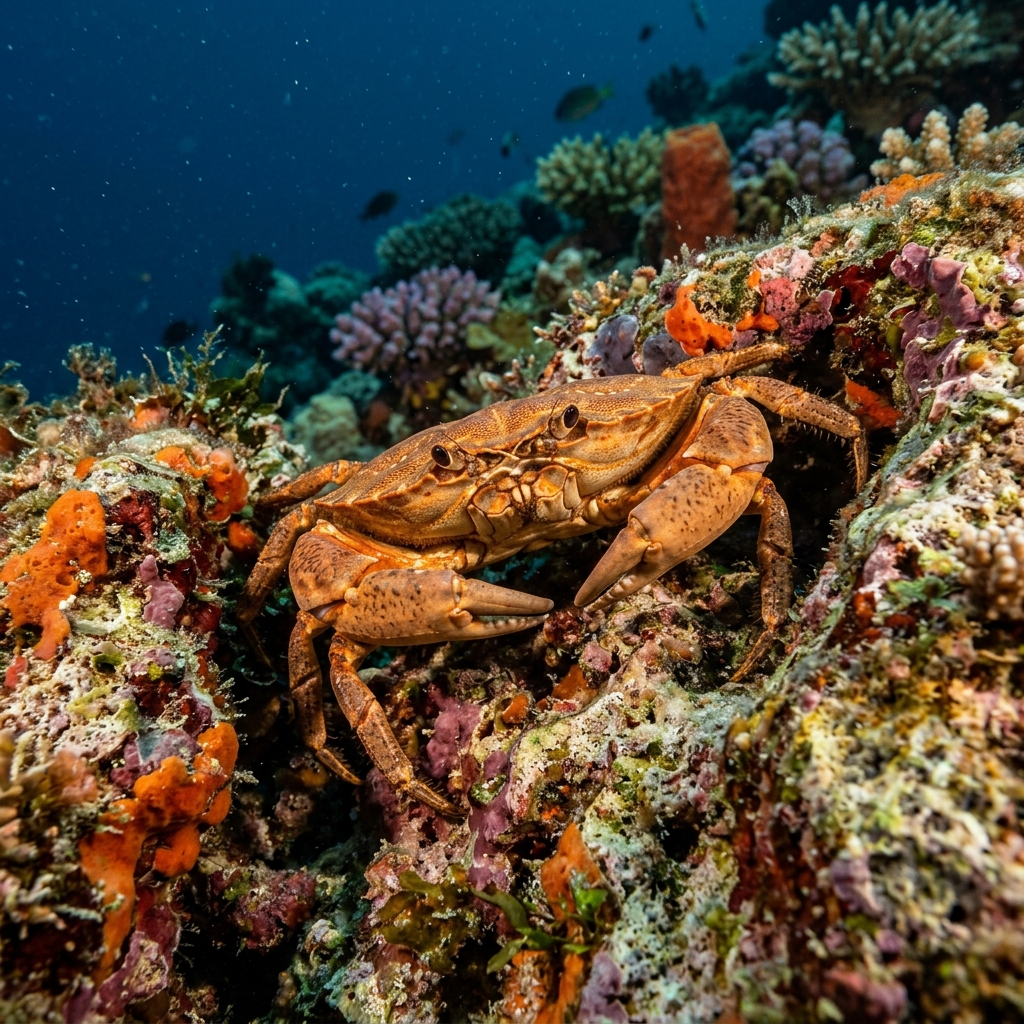
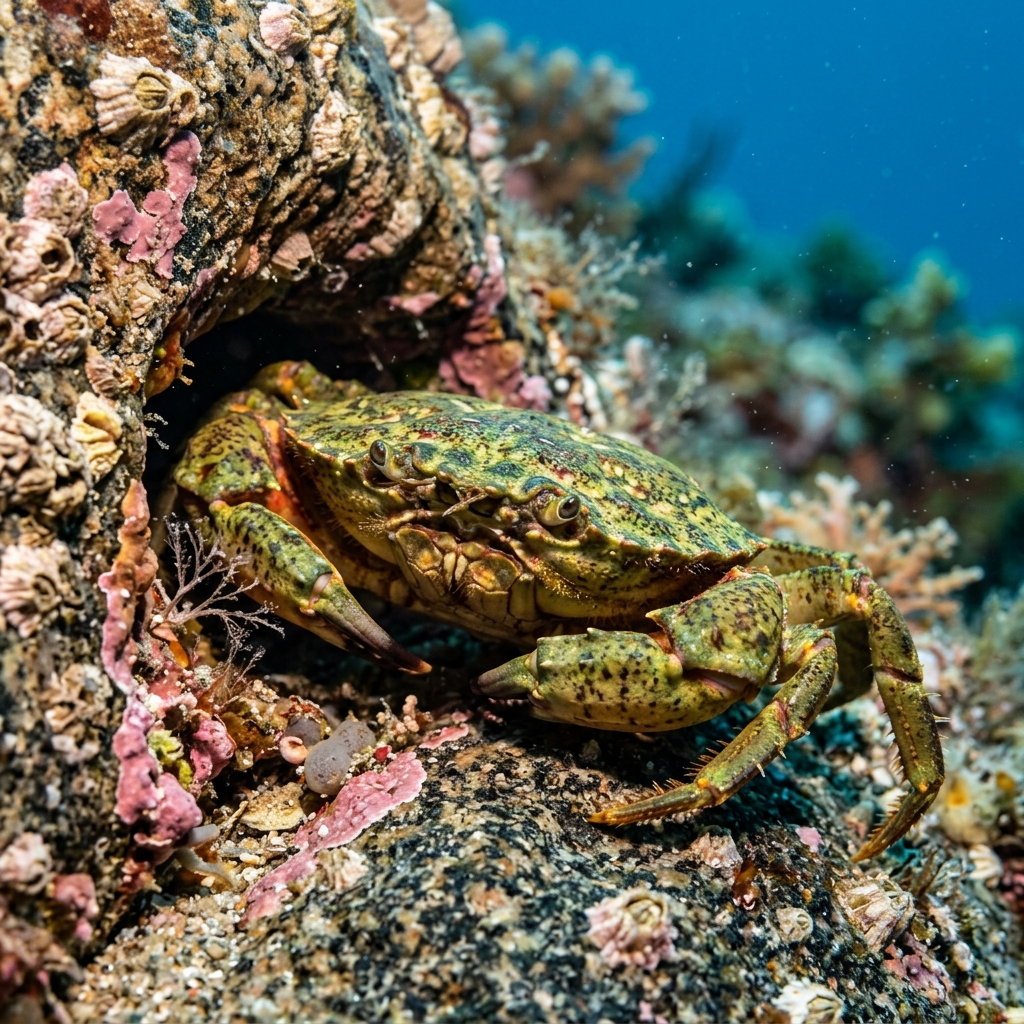
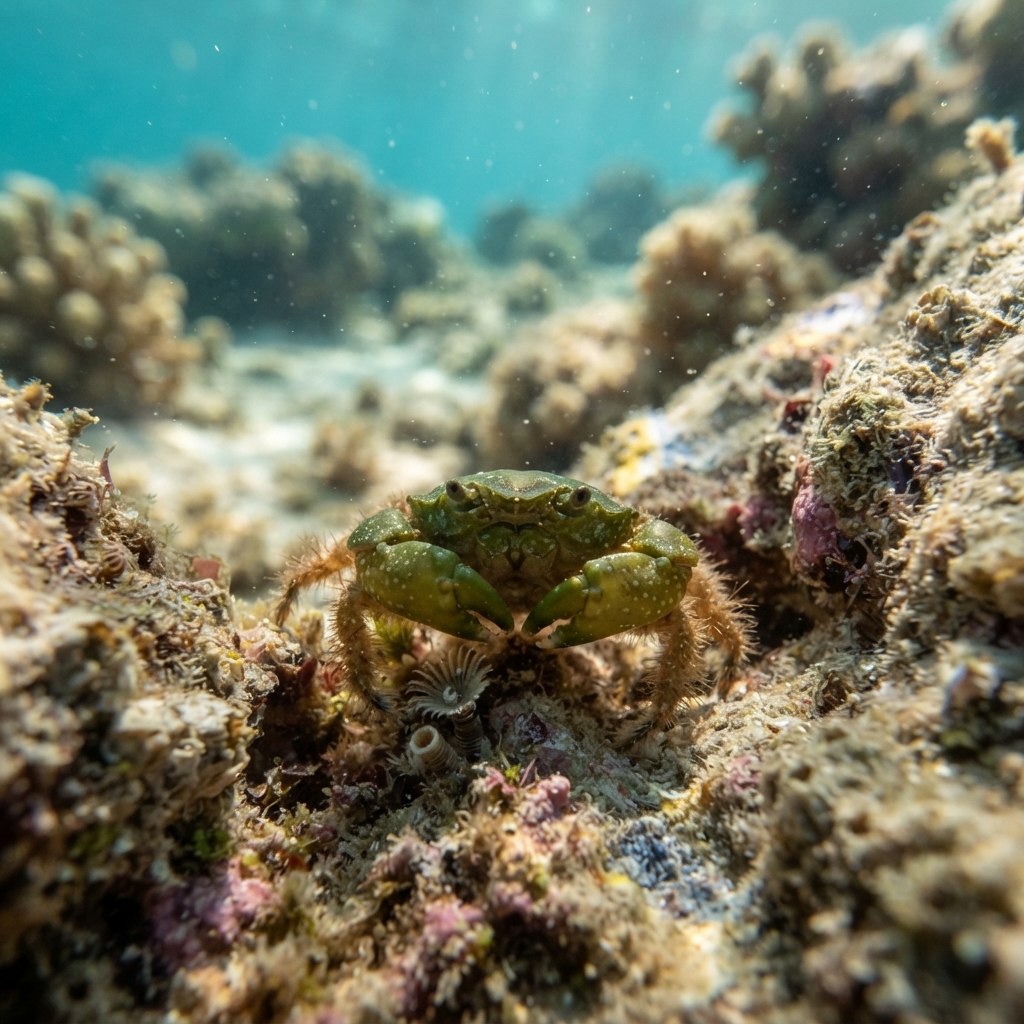
A tiny crab, barely 1cm across, with a rounded, boxy shell that's usually a soft emerald to olive green, sometimes with faint mottling. The claws are stout and pale-tipped compared to the body, and the legs are short and tucked close, so it reads underwater as a small green pebble with legs rather than a typical scuttling crab. You'll need to look closely into crevices, sponges, and rubble to pick it out since it doesn't move much or stand out at a glance.
Spend most of the daylight hours wedged into sponge cavities, coral rubble, or tucked under ledges, barely moving and easy to swim right past. Divers who do spot one usually find it while scanning slowly at close range rather than during a normal reef cruise, since it doesn't dart off or react much to a torch or a close look. Night dives can turn up more activity as it forages over the reef surface.
It's one of several small Caribbean crabs known to pick algae and detritus off sponges and corals, functioning as a tiny reef groundskeeper in the crevices it occupies.
No clear seasonal pattern shows in the data, and with a comfortable range of roughly 24 to 30C across Caribbean reefs, it's there year-round rather than tied to a particular month.
Reef neighbours a diver could mistake it for. Use the identification notes above to tell them apart.
Most reliably logged around the Yucatán Peninsula in Mexico, with strong numbers also around Montego Bay and Ocho Rios in Jamaica. Divers also report it steadily in the Bay Islands of Honduras, along Colombia's Caribbean coast, around Tobago in Trinidad and Tobago, and off Punta Cana in the Dominican Republic.
Mapping where Emerald Mythrax Crab is logged…
The Yucatán Peninsula in Mexico turns them up most consistently, alongside Montego Bay and Ocho Rios in Jamaica. The Bay Islands of Honduras, Colombia's Caribbean coast, and Tobago are also solid spots to look.
There's no strong seasonal pattern in the sightings, and the water it's found in stays a comfortable 24 to 30C year-round on Caribbean reefs, so any month works.
Look for a rounded green shell about 1cm across tucked into rubble, sponges, or crevices, with short legs and pale-tipped claws. It rarely moves much, so it's more about spotting stillness than motion.
They stay tiny, topping out around 1cm across the shell, which is part of why they're logged as uncommon or rare even on reefs where they're present.
No. They're small, sedentary, and pose no threat to divers; you'd need to actively pick one up to have any interaction at all.
Site and sighting data is aggregated from diver logs, iNaturalist and GBIF. For taxonomy and conservation status:
European Green Crab
2,469 sites