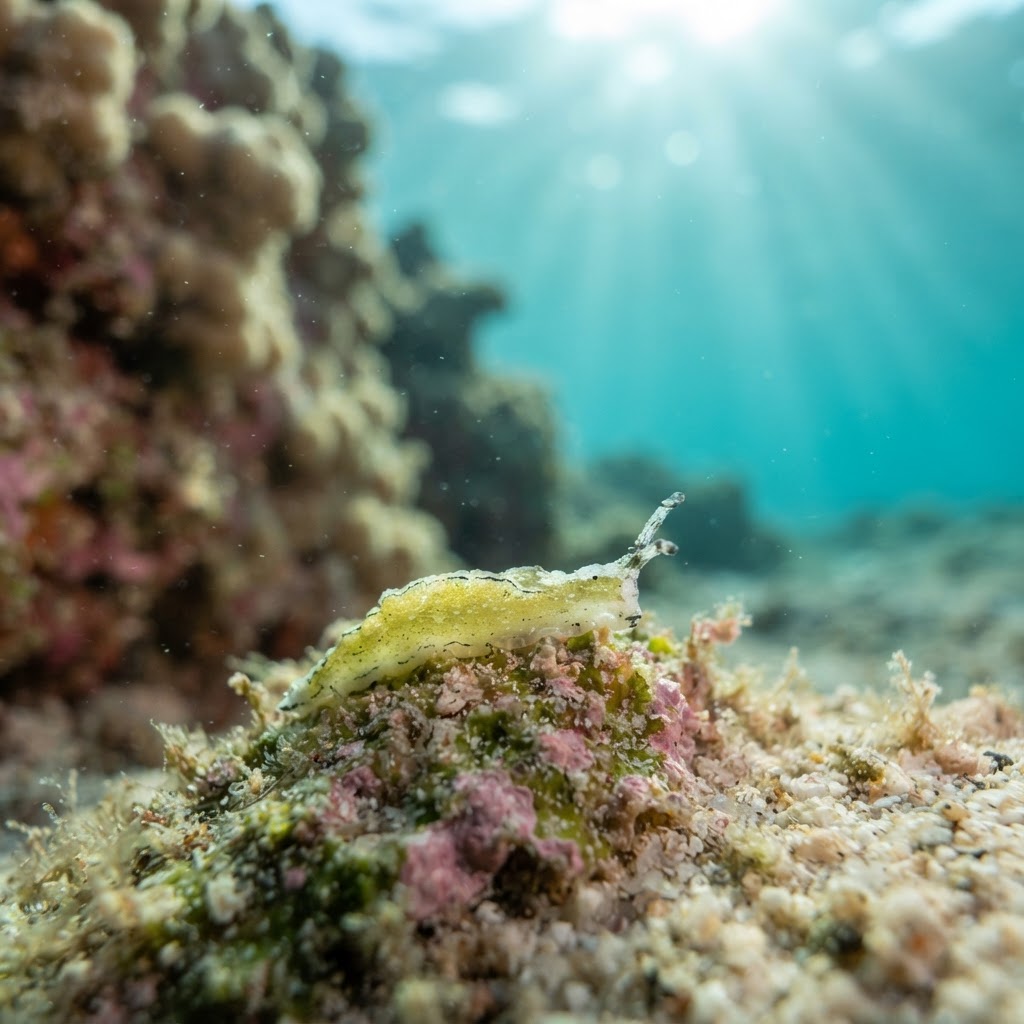
Elysia zuleicae
A pinhead-sized sea slug most reliably logged around Grande-Terre, Guadeloupe, in warm 25-31C water year-round.
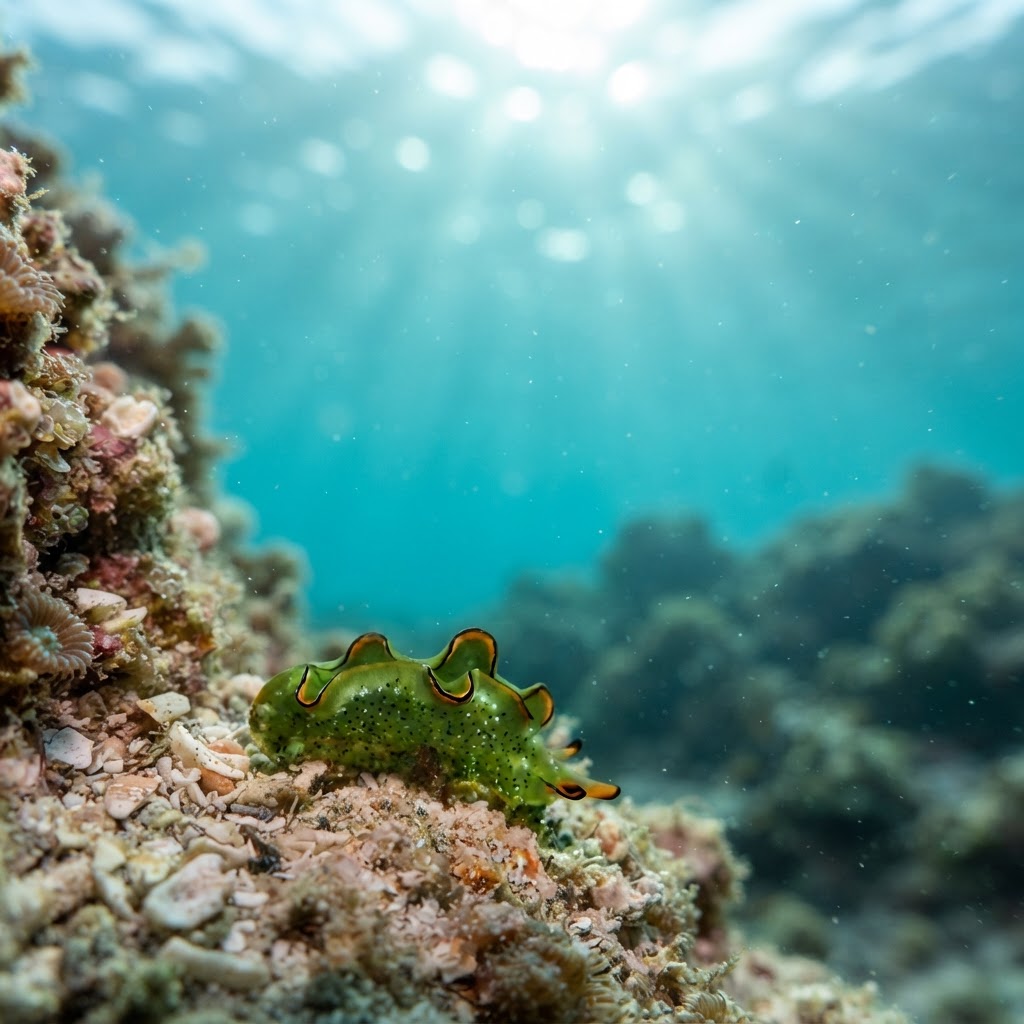
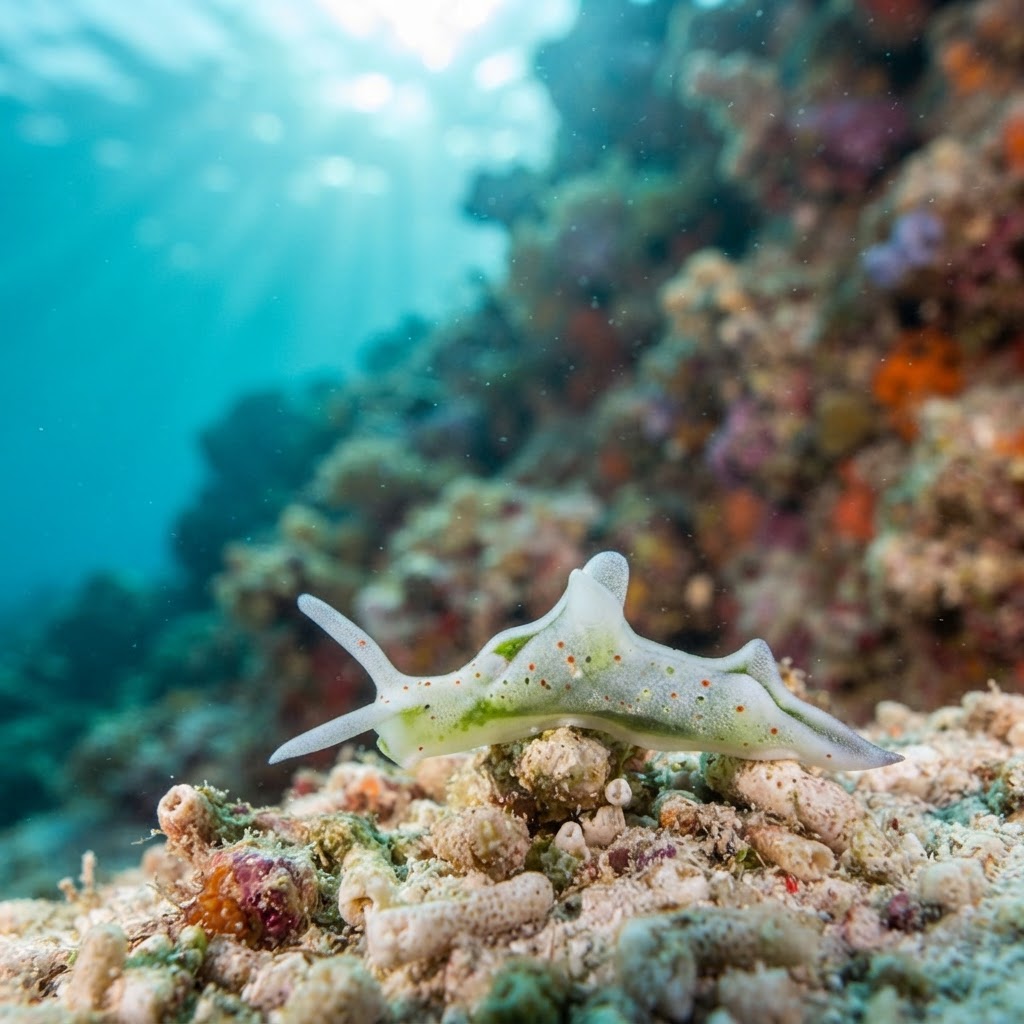
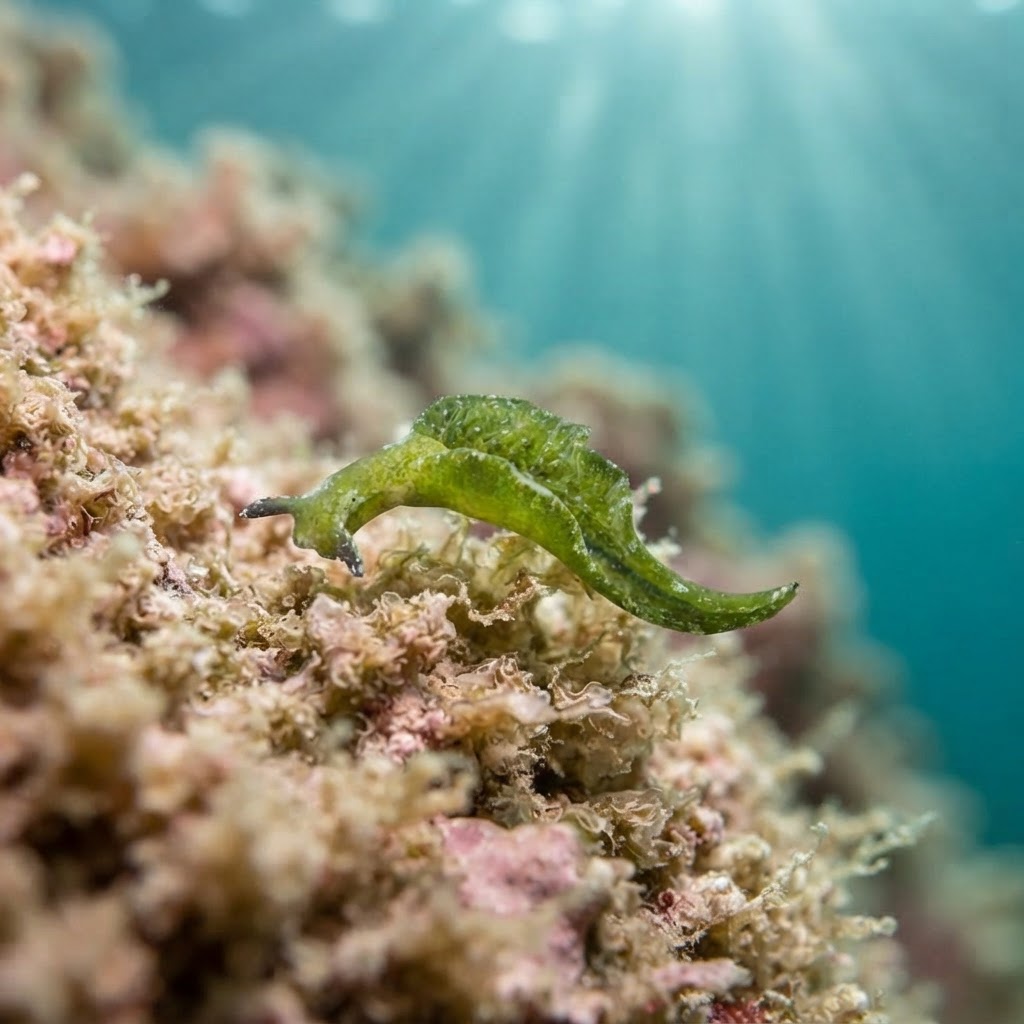
Barely a centimetre long, so this is a slow, deliberate search rather than a swim-by sighting. Look for a flattened, leaf-like body with two wing-like flaps (parapodia) folded along the back, typically green to translucent with fine darker speckling that lets it blend into algae and rubble. There's no dramatic colour burst to key on here, it's the shape and size that give it away once you know to look at that scale.
Divers find it grazing slowly over algae-covered rubble and rock, usually during the day on a close, macro-focused look rather than a passing glance. It doesn't react to divers in any meaningful way, being far too small and slow to flee, so a steady hand and a macro lens are the real tools here.
Like other members of Plakobranchidae, it's thought to retain functioning chloroplasts from the algae it eats, effectively running on a bit of borrowed photosynthesis alongside normal grazing.
No clear seasonal pattern shows up in the data, and with a comfortable range of roughly 25 to 31C it's likely present on Guadeloupe's reefs year-round rather than tied to a particular month.
Reef neighbours a diver could mistake it for. Use the identification notes above to tell them apart.
This one is very much a Guadeloupe speciality, with sightings concentrated around Grande-Terre and logged across a wide spread of sites there. A single record from Grand Cayman shows it can turn up in the wider Caribbean, but Guadeloupe is where divers actually go looking for it.
Mapping where Elysia Zuleicae is logged…
It's most reliably found around Grande-Terre in Guadeloupe, where the majority of logged sightings come from. A single sighting from Grand Cayman suggests it may occur more widely across the Caribbean than records currently show.
There's no detected seasonal pattern, and its warm-water niche of roughly 25 to 31C suggests it's around on tropical reefs throughout the year rather than during a specific window.
Look for a flattened, leaf-shaped body under a centimetre long, greenish to translucent with fine speckling, and folded wing-like flaps along its back. It's easy to overlook against algae-covered rubble, so a slow macro search is the way to spot one.
They stay tiny, around 1 centimetre long, which makes them a proper macro find rather than something you'll notice from a distance.
Like several relatives in its family, it's believed to hold onto living chloroplasts from the algae it feeds on, letting it top up energy through photosynthesis for a while after feeding.
Site and sighting data is aggregated from diver logs, iNaturalist and GBIF. For taxonomy and conservation status:
Elysia Timida
573 sites