Elysia timida
A pea-sized green sea slug logged across Catalonia and the Balearics, often mistaken for algae until it moves.
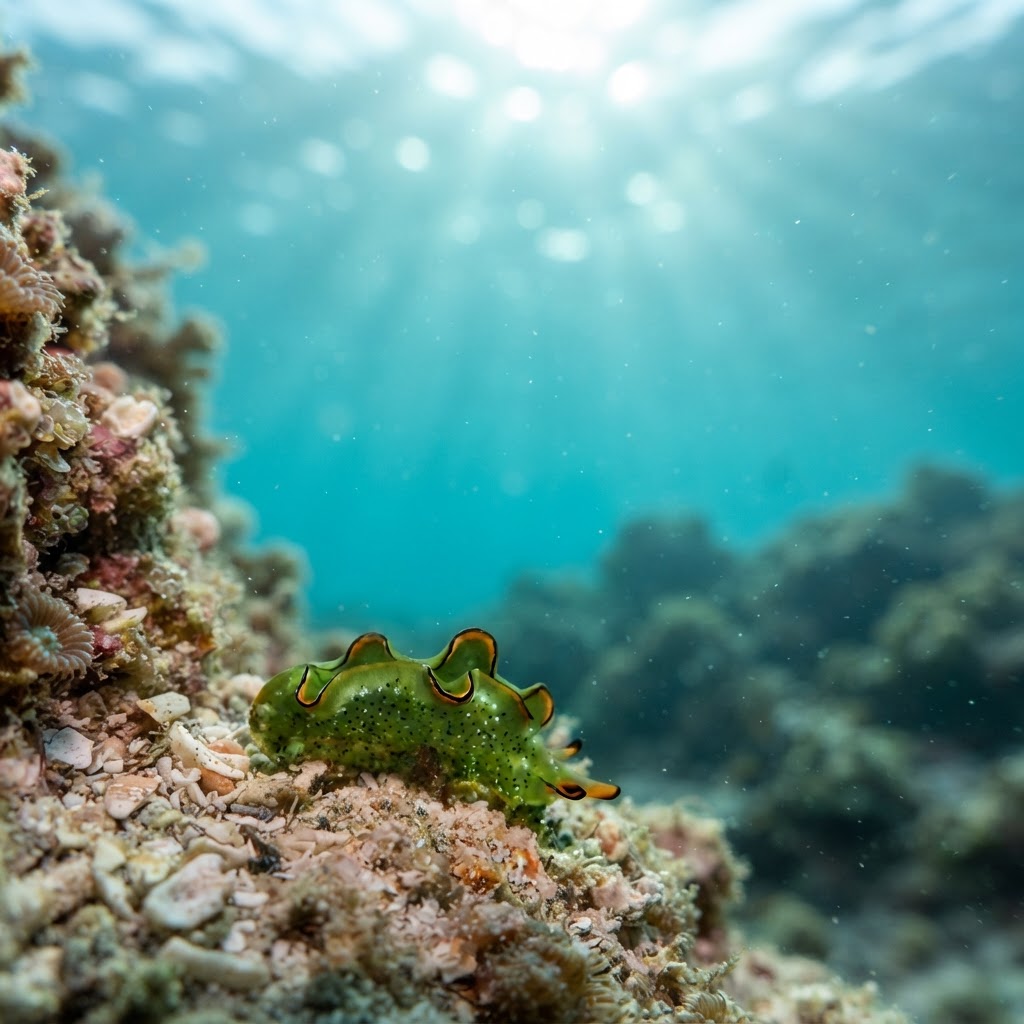
Look for a flattened, leaf-shaped body barely a centimetre long, coloured bright green to olive with a scatter of small iridescent blue-violet spots along the edges and back. The body margins (parapodia) fold up slightly like a lettuce leaf rather than sitting flat, and there is no external shell to spot. Because it is so small and blends into the algae it feeds on, most divers only notice it once they slow right down and scan rock and turf algae at close range.
It spends its time grazing on the green algae it lives on, moving in slow, deliberate glides across rock surfaces and algal turf in shallow water. It shows no reaction to divers beyond simply continuing to feed, so the real challenge is spotting it rather than approaching it. Most logged sightings come from shallow, sheltered rocky ground where the algae it depends on grows thickly.
It practices kleptoplasty: it steals chloroplasts from the algae it eats and keeps them functioning in its own tissue, effectively running on a bit of stolen photosynthesis alongside its normal diet.
Sightings are logged across the year with no strong seasonal spike, which fits its comfort range of roughly 15.5 to 21.5C, a band the Mediterranean holds through much of spring, autumn, and into winter. Rather than chasing a season, focus on shallow, algae-covered rock at any time of year and dive slowly.
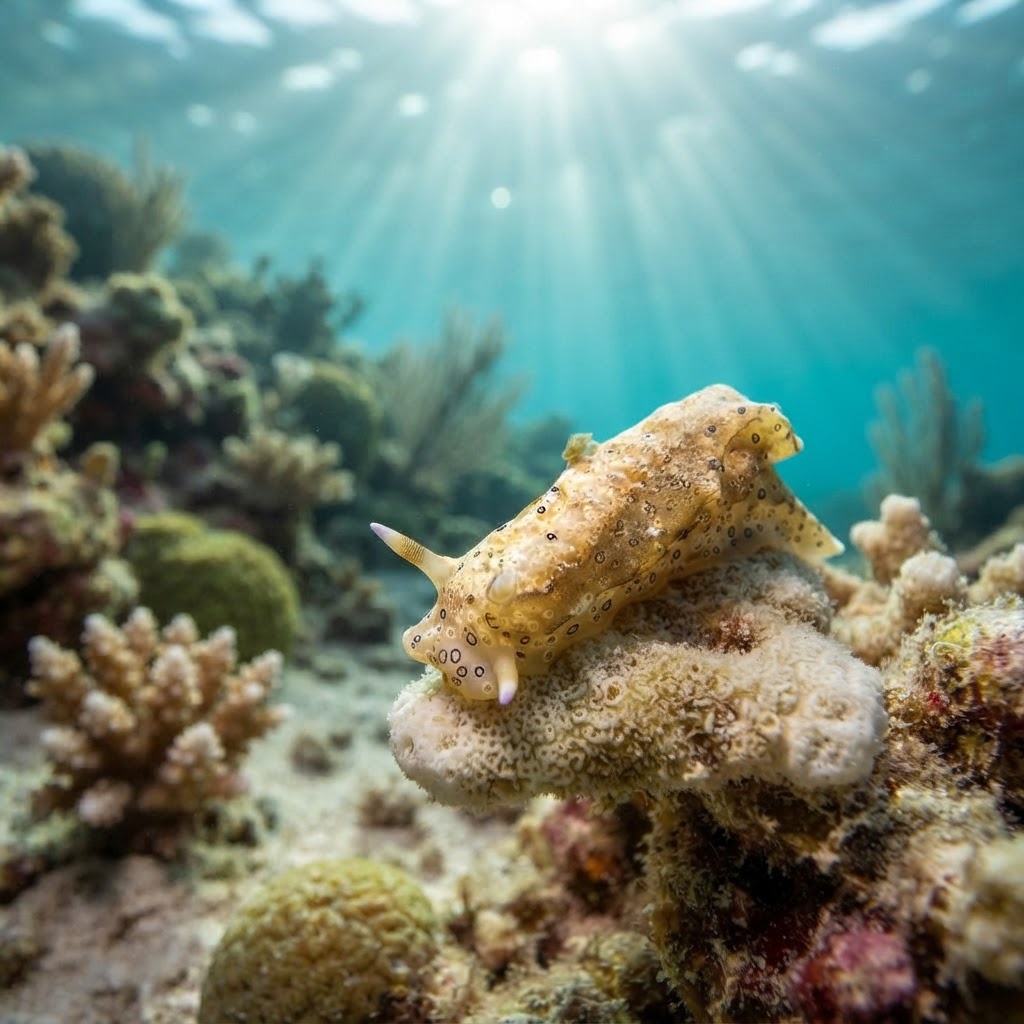
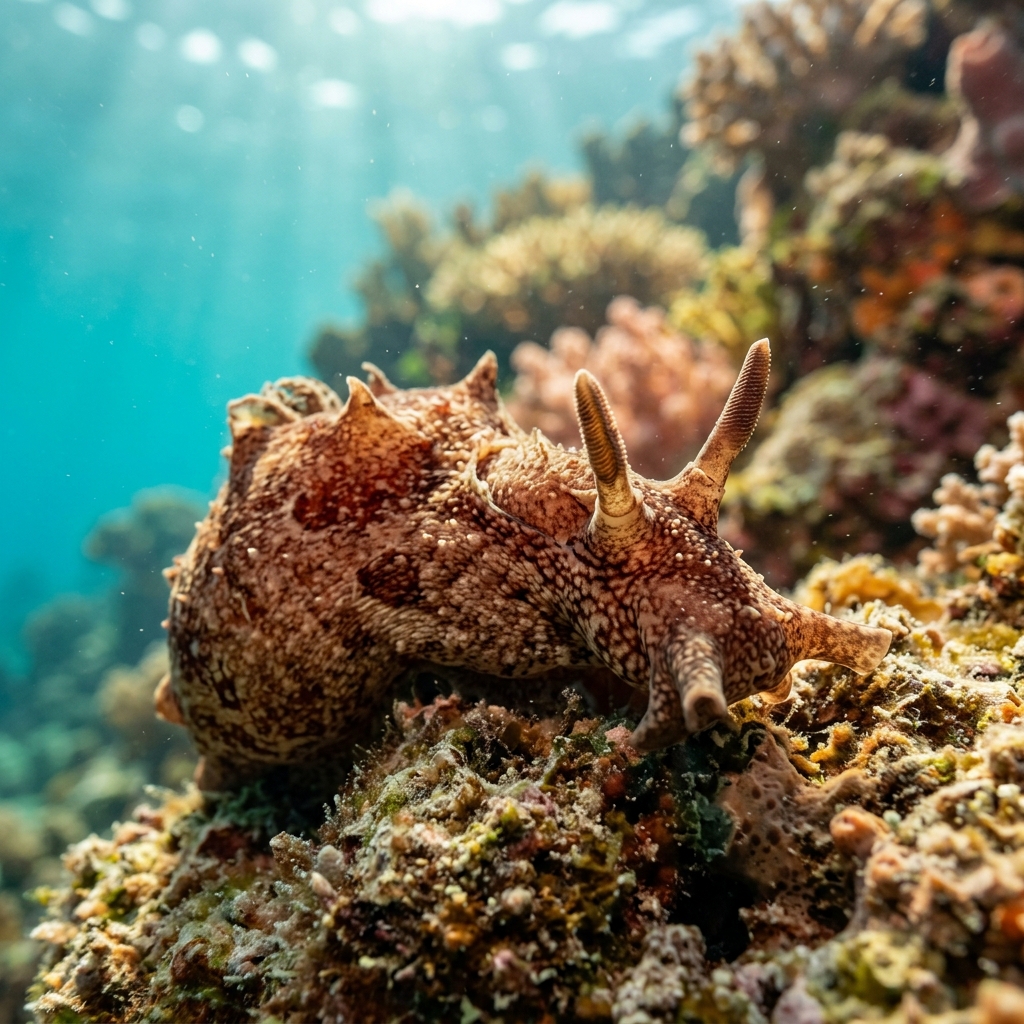
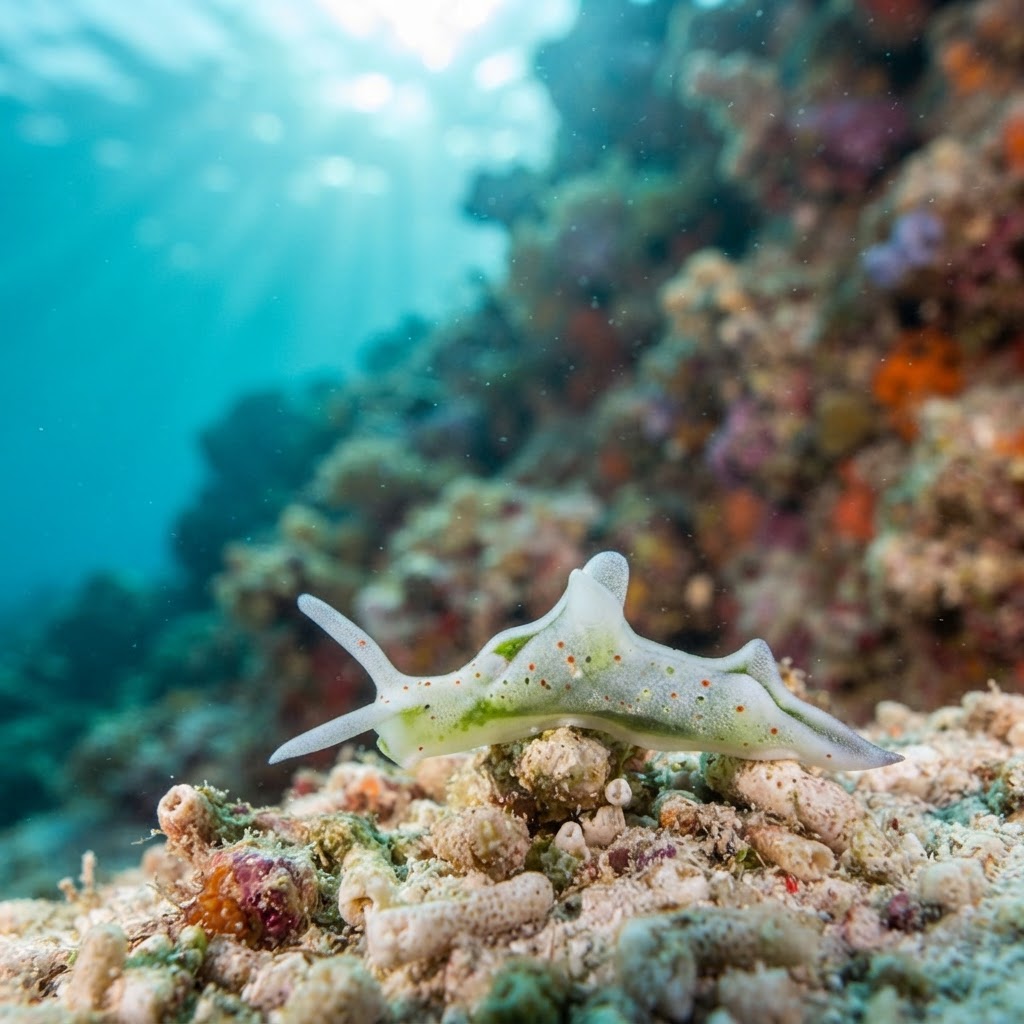
Reef neighbours a diver could mistake it for. Use the identification notes above to tell them apart.
This one is most reliably found in Spain, particularly Catalonia, the Balearic Islands, and Valencia, with France's Riviera and Provence coast close behind as a stronghold. Malta's Gozo coast, Sicily, Crete, and the Ionian Islands in Greece also turn up steady sightings, making the whole northwestern and central Mediterranean the place to search.
Mapping where Timid Elysia is logged…
Catalonia, the Balearic Islands, and Valencia in Spain are the strongest areas, alongside the French Riviera and Provence coastline. Gozo in Malta, Sicily, Crete, and the Ionian Islands also produce regular sightings for divers who search shallow algae-covered rock.
There is no strong season in the sighting data, so it can turn up year-round. Its comfort range of roughly 15.5 to 21.5C covers much of the Mediterranean diving calendar outside the hottest summer peak.
Look for a flattened, leaf-like body around a centimetre long, green with scattered iridescent blue-violet spots and no visible shell. It moves slowly over algae-covered rock in shallow water, which is usually the giveaway that it is not just a piece of algae.
It stays tiny, typically no more than about a centimetre or so in length, which is why most divers overlook it entirely unless they are looking closely at algae-covered rock.
It steals chloroplasts from the algae it feeds on and keeps them active inside its own tissue, a process called kleptoplasty that lets it draw some extra energy from light alongside normal feeding.
No. It has no known defence mechanisms that pose any risk to divers and simply continues grazing when approached.
Site and sighting data is aggregated from diver logs, iNaturalist and GBIF. For taxonomy and conservation status:
Light-spotted Aegires
3,168 sites