Elysia jibacoaensis
A small, uncommon sea slug most reliably spotted on reefs in Grande-Terre, Guadeloupe, in warm water between 25 and 31C.
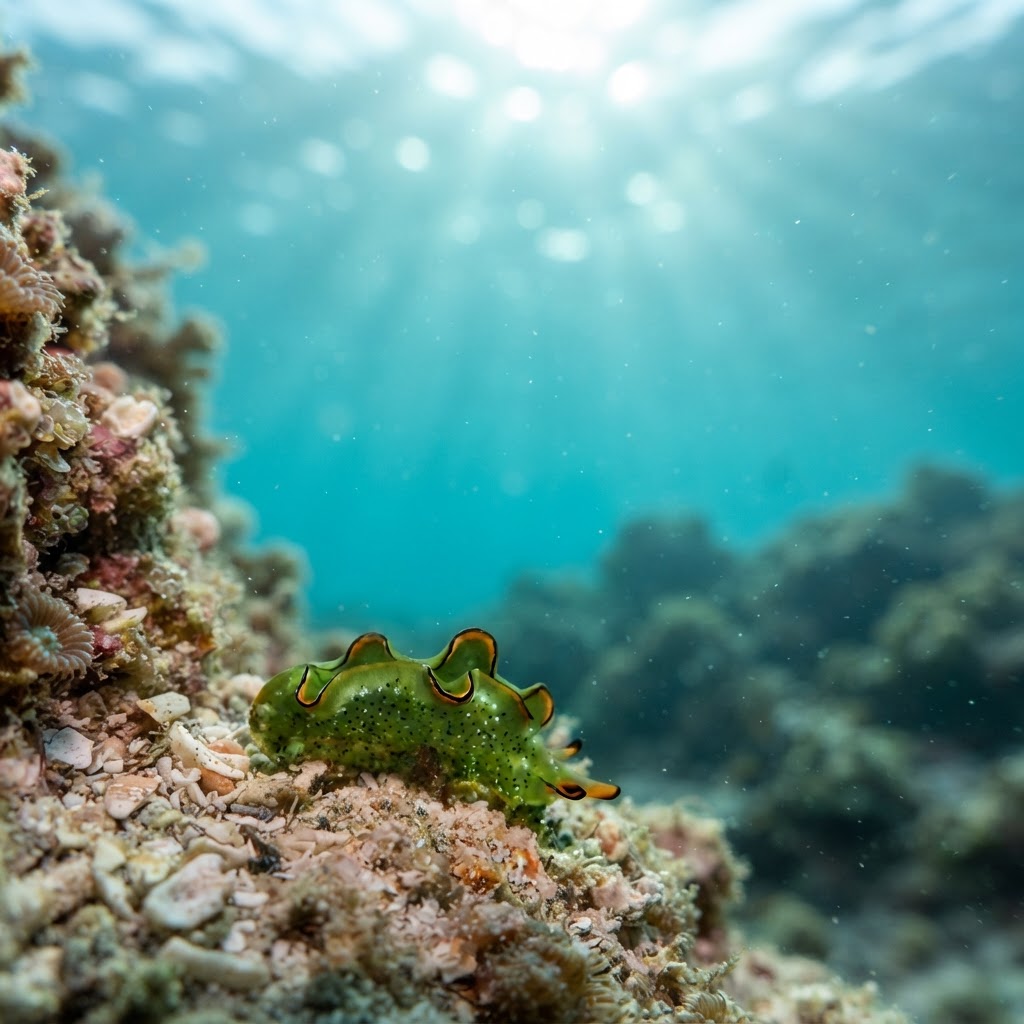
A small sea slug with wing-like flaps (parapodia) along its back that it can hold open flat or fold up over the body like a leaf. Colouring runs toward mottled green and brown tones that blend into algae and rubble, which is exactly why divers tend to swim past it without noticing. Look closely at reef substrate rather than open water; this is a creature you find by scanning slowly, not one that swims out to meet you.
Divers log this slug crawling slowly over reef substrate and rubble, grazing rather than swimming, which is typical for sap-sucking slugs in this family. It shows no reaction to divers beyond continuing to feed, and it is easy to miss unless you are already in slow, close-focus macro mode. Most reports come from shallower reef sections where algae cover gives it both food and camouflage.
Elysia species in this family practice kleptoplasty: they eat algae and retain the algae's chloroplasts in their own tissue, effectively running solar-powered digestion for days after a meal.
Sightings show no clear seasonal pattern, and the water temperature range logged (24.7 to 30.7C) covers Guadeloupe's reefs year-round, so there is no obvious best month to plan around. Treat it as a species to look for on any dive rather than one tied to a particular season.
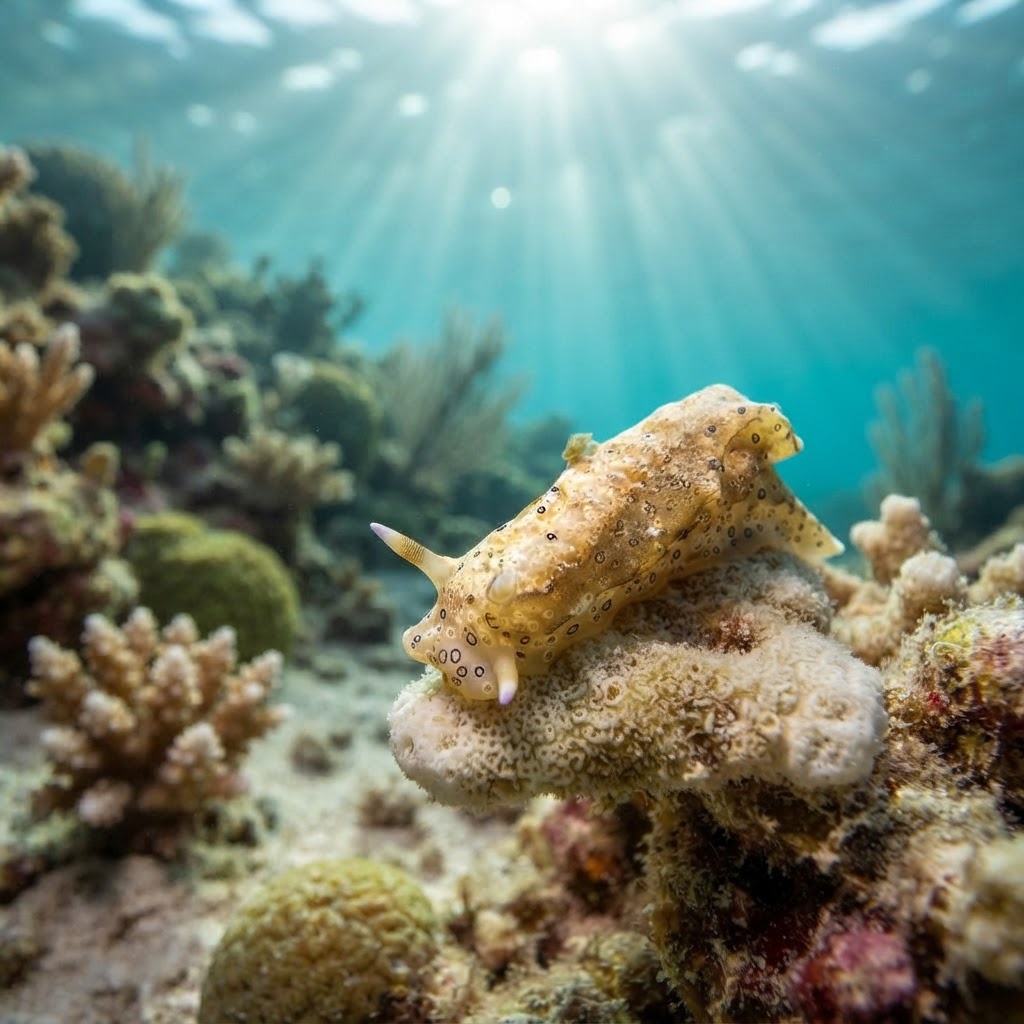
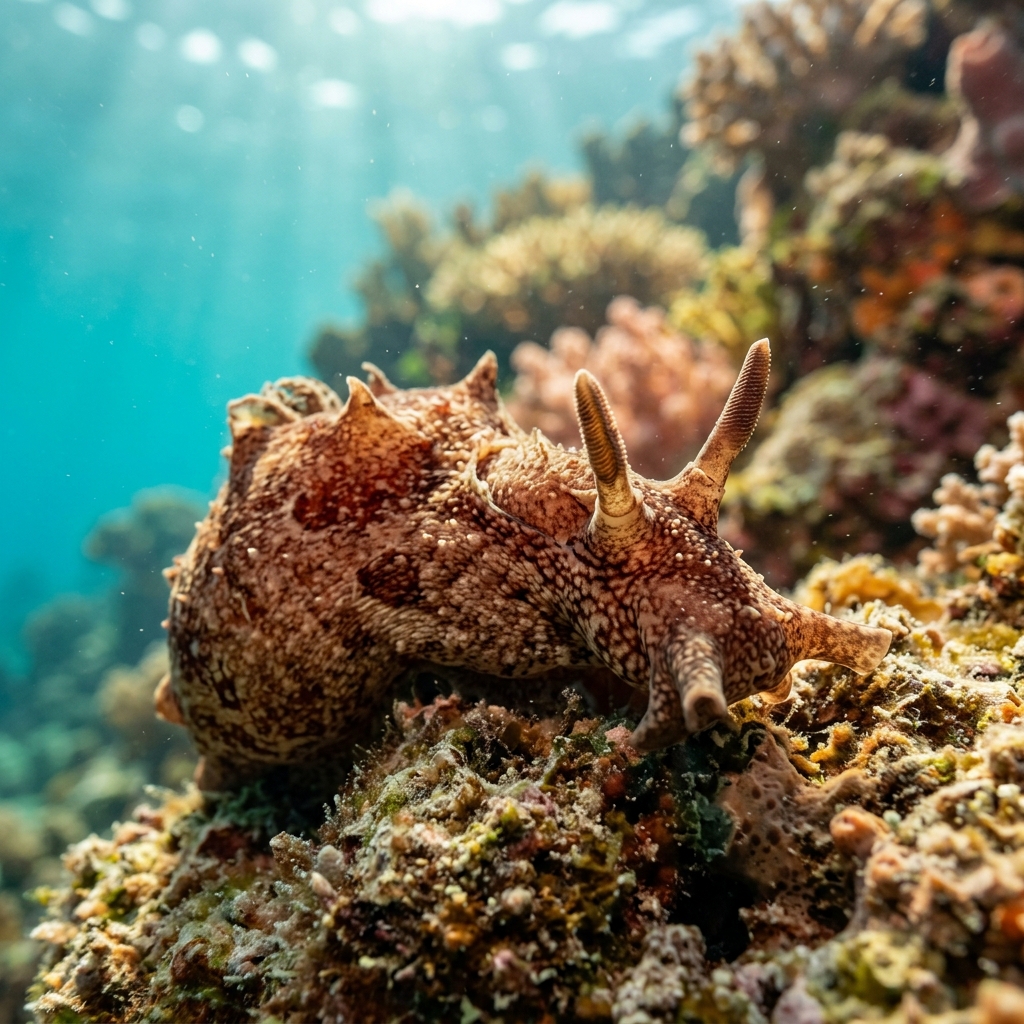
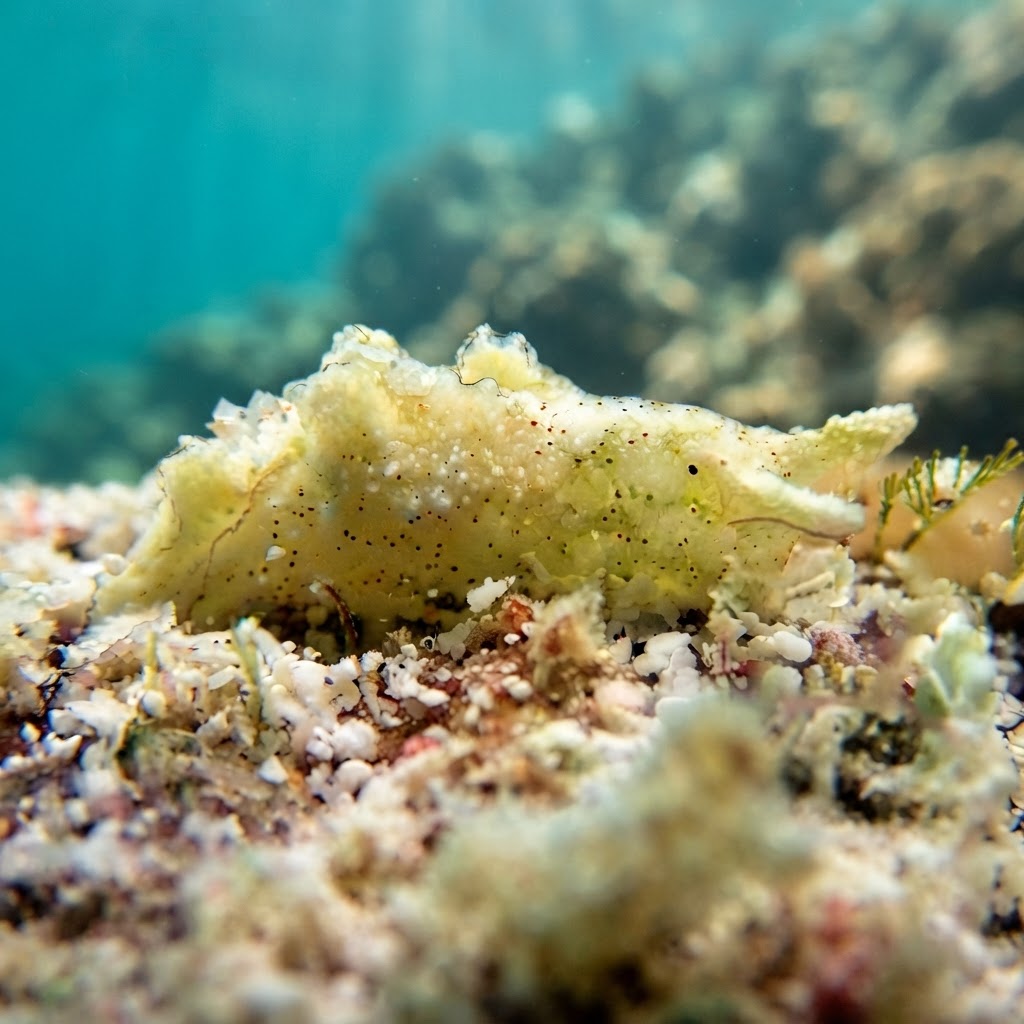
Reef neighbours a diver could mistake it for. Use the identification notes above to tell them apart.
This one is very much a Guadeloupe species as far as diver logs go, with Grande-Terre producing the bulk of sightings and a smaller cluster of records from Basse-Terre. If you are hunting for it specifically, Grande-Terre is the region to focus a muck-diving or slow macro search on.
Mapping where Jibacoa Elysia is logged…
It is most reliably logged in Guadeloupe, with the strongest concentration of sightings from Grande-Terre and a smaller number from Basse-Terre. Outside Guadeloupe it has little to no logged diver record so far.
There is no detected season in current sighting data, and the observed temperature range (roughly 25 to 31C) spans Guadeloupe's reef conditions year-round. It is best treated as a species to look for on any dive rather than a seasonal target.
Look for a small slug with leaf-like side flaps and mottled green-brown colouring that blends into algae-covered rubble. It moves slowly while grazing and is easy to overlook unless you are searching close to the substrate.
Like other Elysia sea slugs, it feeds on algae and holds onto the algae's chloroplasts inside its own body, letting it photosynthesise for a period after eating. This trick, called kleptoplasty, is one of the more unusual survival strategies in the animal kingdom.
No, it poses no danger to divers. It is a small, slow-moving grazer with no sting or bite risk.
Site and sighting data is aggregated from diver logs, iNaturalist and GBIF. For taxonomy and conservation status:
Light-spotted Aegires
3,168 sites