Calcinus elegans
Cobalt legs and orange claws on the reefs of Xiaoliuqiu, Taiwan and Saint-Paul, Reunion, warm water 22.6 to 28.6C, year-round.
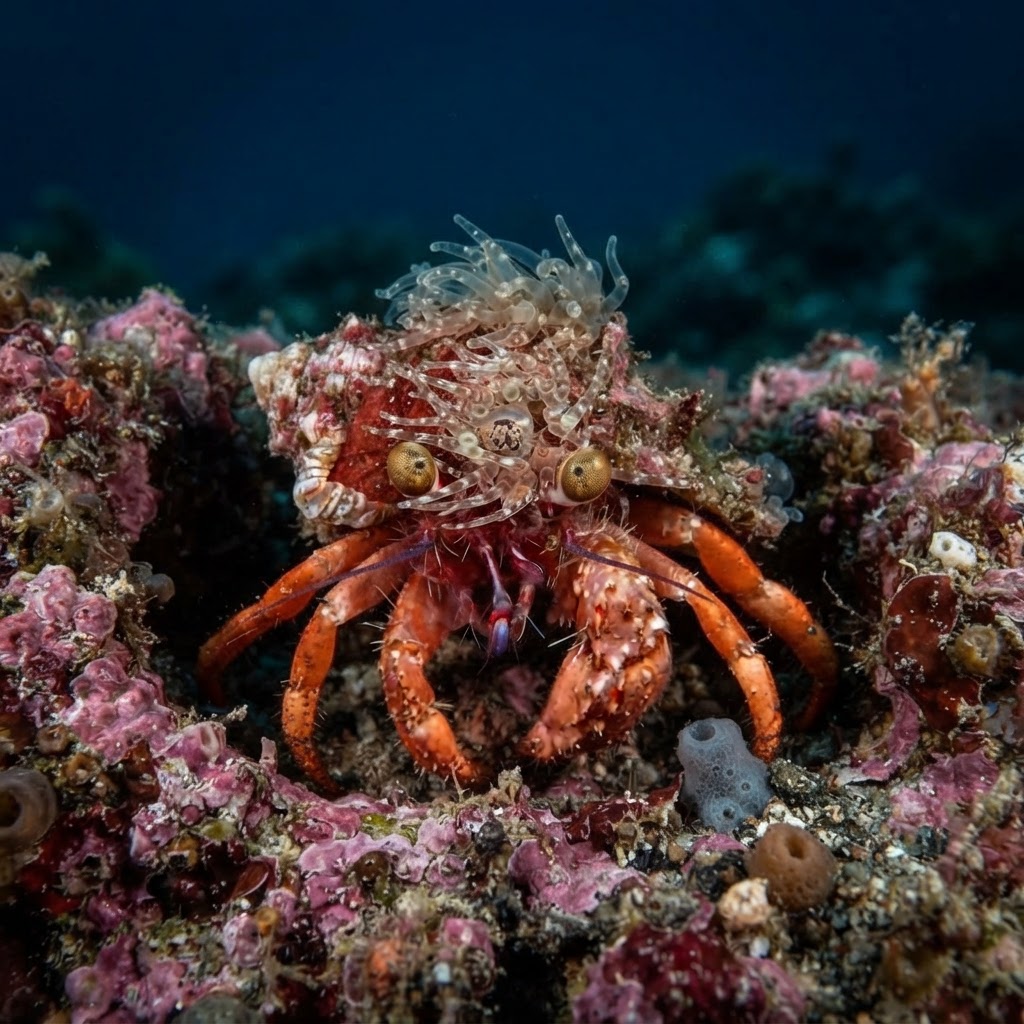
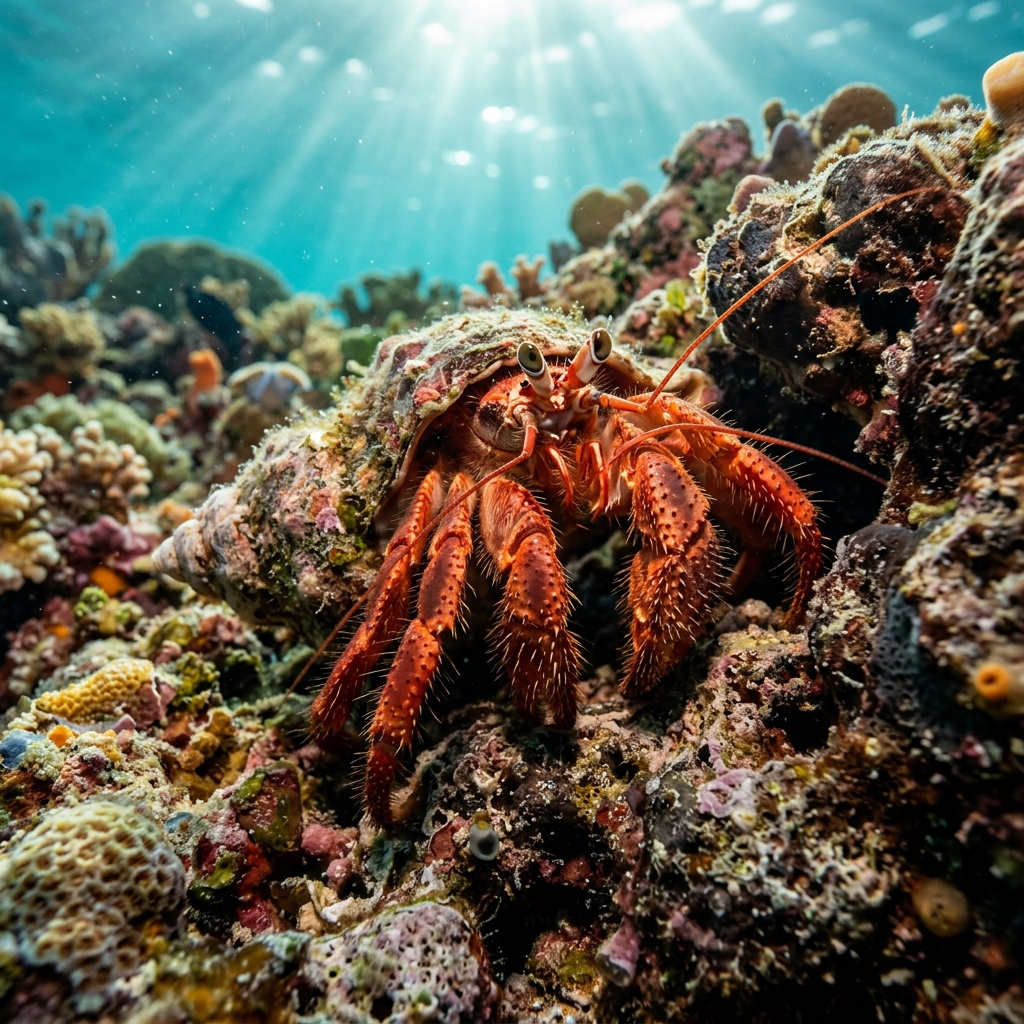
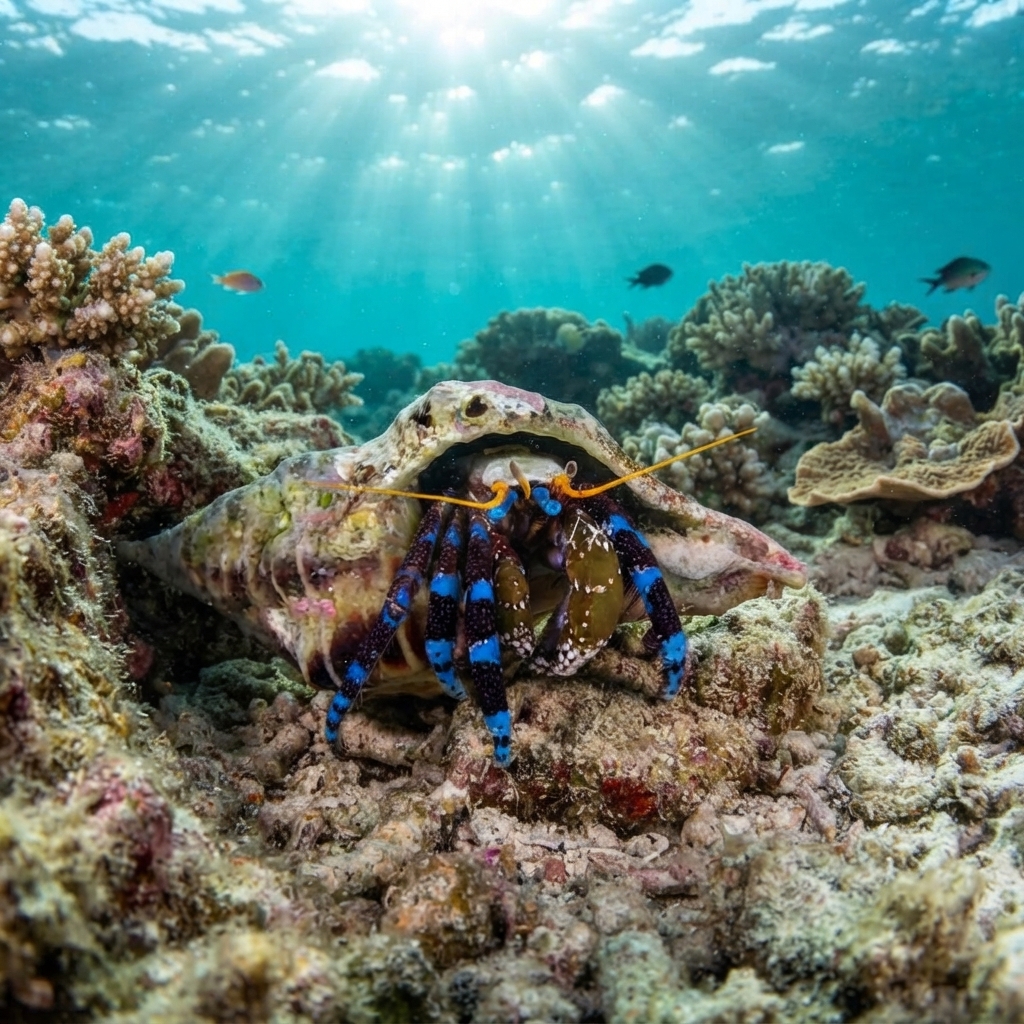
Bright electric-blue legs are the giveaway, paired with orange-tipped claws and eyestalks that pop against any background. Body size stays small enough that most divers only spot it once they slow down and scan crevices and rubble. It moves inside a scavenged snail shell like all hermit crabs, so the shell shape varies but the leg colour does not.
Look for it tucked into rocky crevices and rubble patches by day, legs often the only thing visible until it edges out to forage. It is a slow, deliberate mover that will withdraw into its shell if a torch or hand comes too close, so a patient, low-light approach gets the best look. Night dives tend to catch it more active and out in the open than daytime dives do.
Like other hermit crabs it has to trade up to a bigger borrowed shell as it grows, and divers occasionally spot the brief, exposed moment mid-swap when it is at its most vulnerable.
No clear seasonal pattern shows up in the sightings, and its comfort range of 22.6 to 28.6C covers most of the year on these reefs, so it is a year-round possibility rather than a seasonal target.
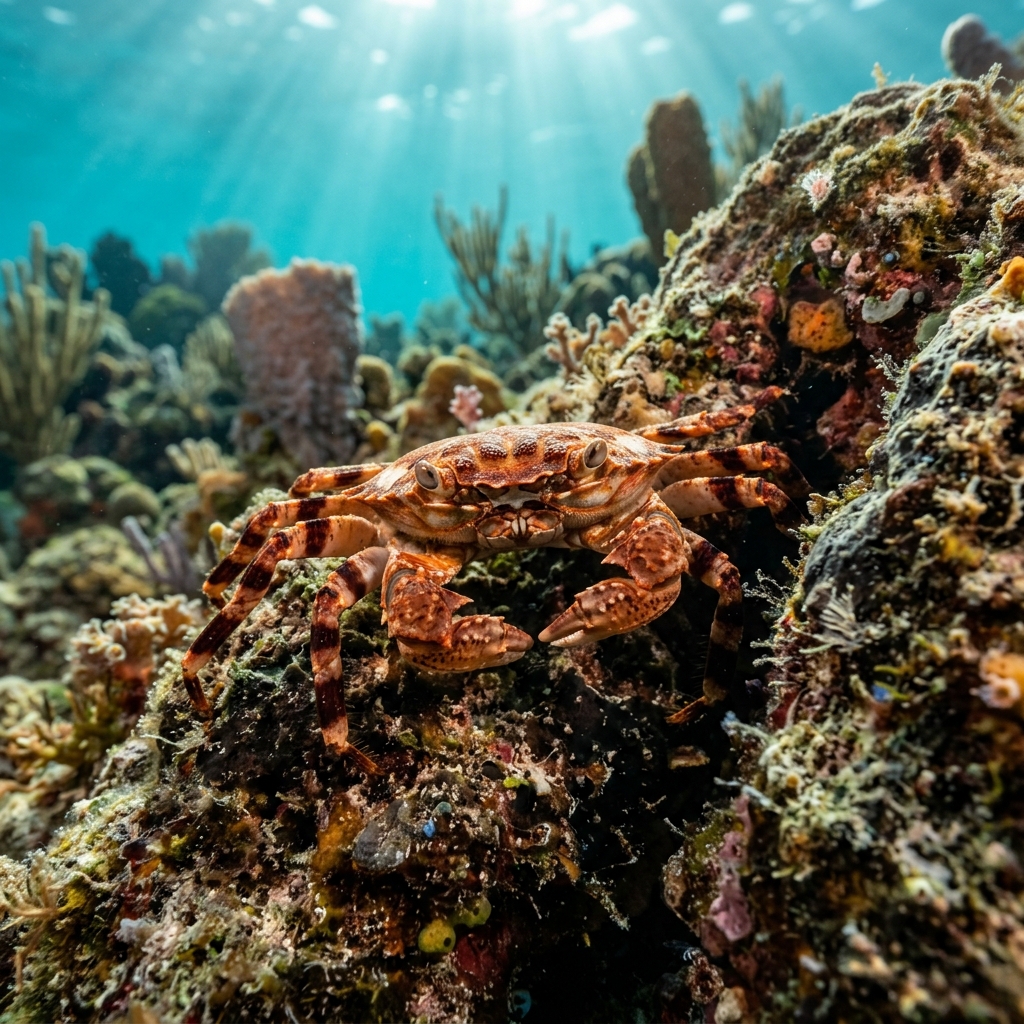
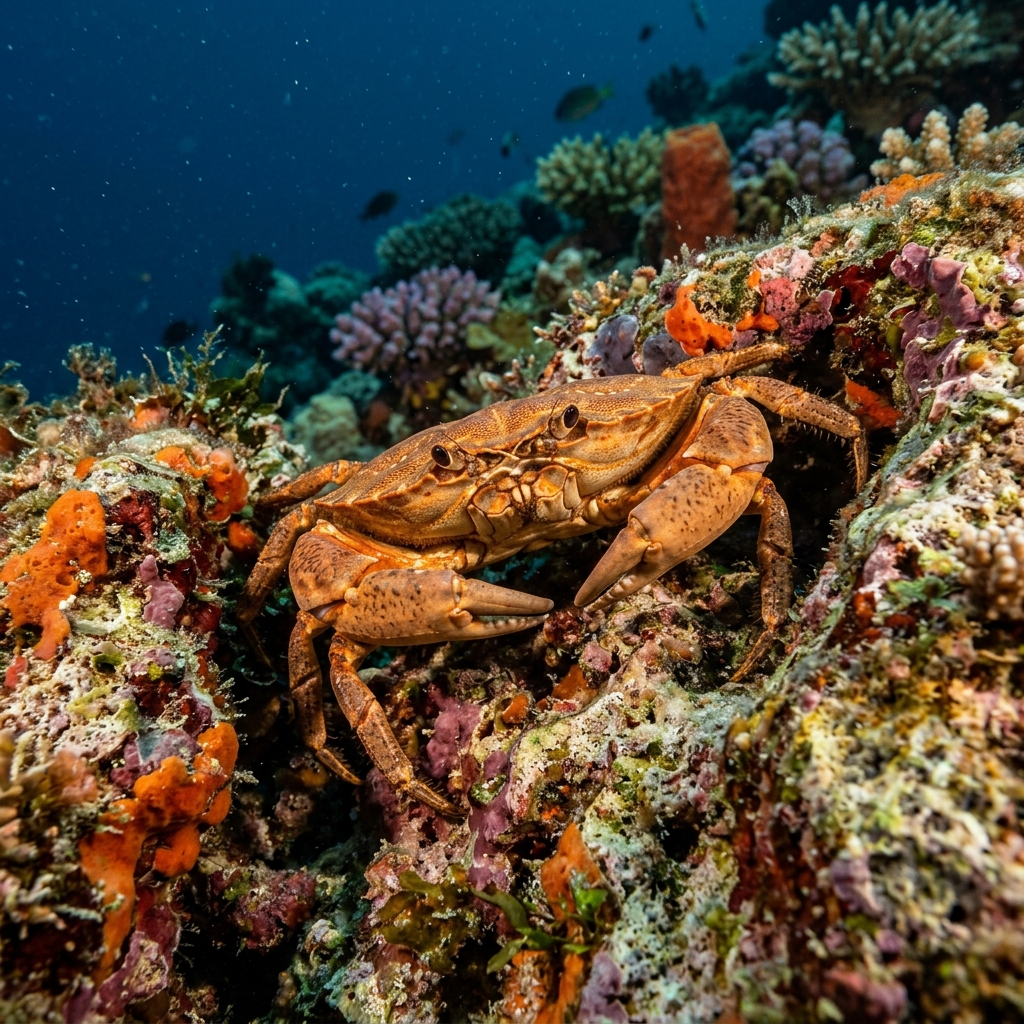
Reef neighbours a diver could mistake it for. Use the identification notes above to tell them apart.
Xiaoliuqiu in Taiwan is the strongest spot for this crab, logged there more often than anywhere else in the data, with Saint-Paul in Reunion the other reliable option. Outside those two regions it turns up as an uncommon to rare find, so treat any sighting as a bonus rather than a given.
Mapping where Electric Blue Hermit Crab is logged…
Xiaoliuqiu in Taiwan is the most consistent site, with Saint-Paul in Reunion also producing sightings. Elsewhere it is logged only occasionally, so these two regions are the best bet.
There is no detected season in the sighting data. Water in its comfort range of 22.6 to 28.6C persists year-round at its known sites, so any month is workable.
Check the legs first: a saturated electric blue is unusual among hermit crabs and stands out even under a dive light. Orange-tipped claws and eyestalks confirm it, and it will be riding around in a scavenged shell rather than showing a soft exposed body.
Exact size data is not confirmed, but like most Calcinus hermit crabs it stays small, easily overlooked unless a diver is scanning crevices closely.
It has to periodically abandon its shell and dash for a larger one as it grows, leaving its soft body briefly exposed during the swap, a moment divers rarely catch but is worth watching for at night.
Site and sighting data is aggregated from diver logs, iNaturalist and GBIF. For taxonomy and conservation status:
European Green Crab
2,469 sites