Pelates octolineatus
A small striped fish rarely logged in Western Australia's coastal waters, most often seen in 24-29C shallows year-round.
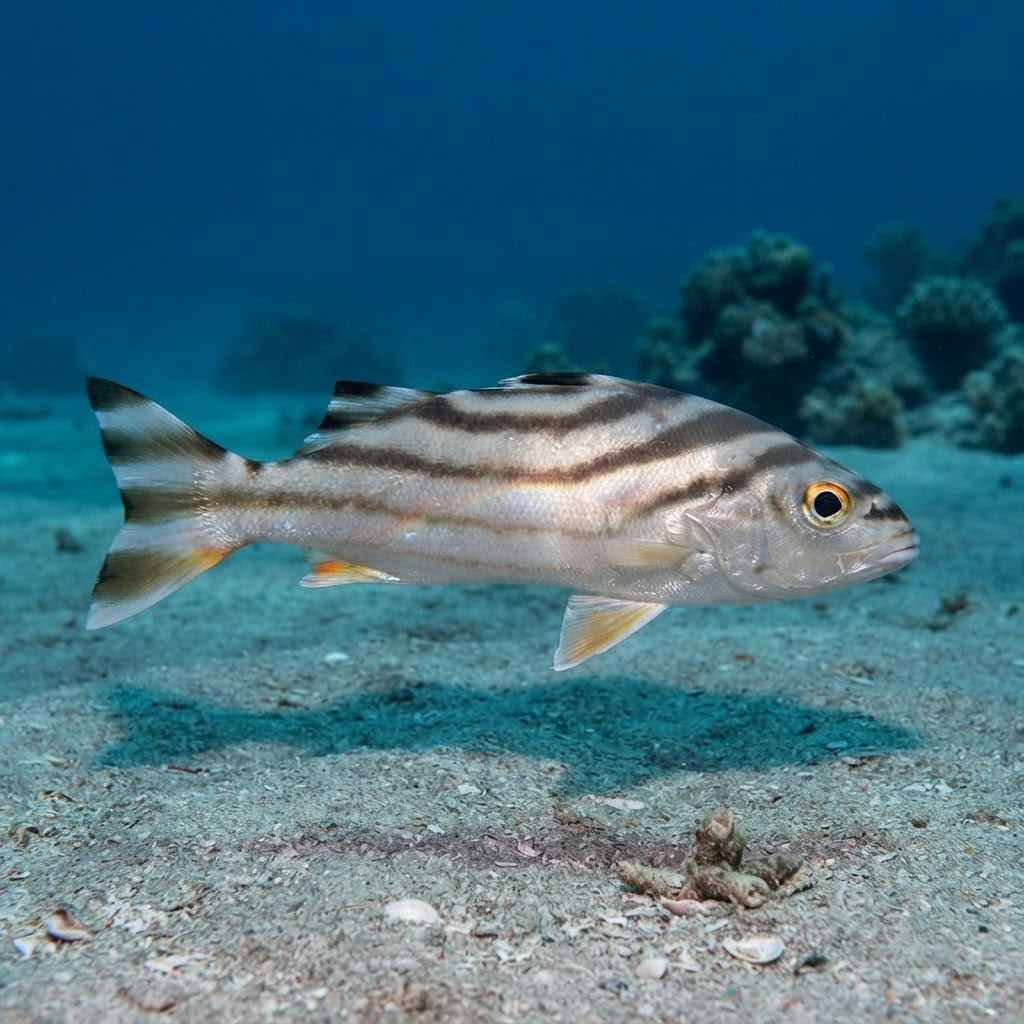
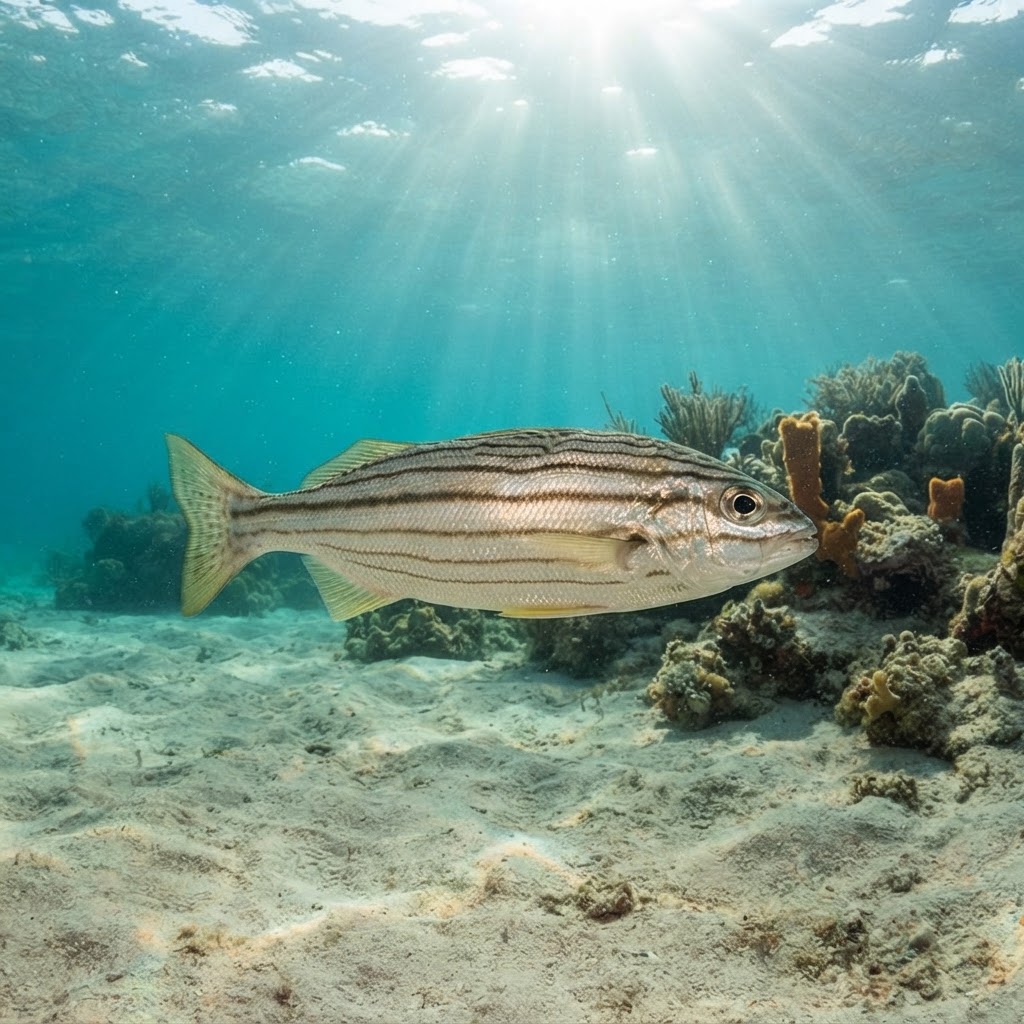
Small and slender, topping out around 19 cm, with a row of dark horizontal stripes running the length of a silvery-grey body that gives the species its name. The head is short and blunt-nosed, and the body has a slightly compressed, elongated shape typical of terapontid fish. Look for it hovering close to the bottom rather than out in open water, where the stripe pattern stands out against pale sand.
Divers typically find it hovering or resting near the bottom rather than schooling in open water, consistent with its demersal (bottom-dwelling) habits. It is not a fish that seeks divers out, and most logs describe it as an occasional, unhurried sighting rather than a bold or curious one. Expect brief, close-range encounters over sand or low reef structure rather than dramatic behaviour.
It is logged as rare at the large majority of sites where it turns up at all, so even in its Western Australian stronghold, spotting one is more a case of paying attention to the bottom than expecting a guaranteed encounter.
Sightings show no clear seasonal pattern, and with a comfortable temperature niche of roughly 24 to 29C, it appears to be present through the year rather than tied to a particular season. Treat it as a year-round possibility rather than planning a trip around a specific month.
Reef neighbours a diver could mistake it for. Use the identification notes above to tell them apart.
Almost every logged sighting comes from Australia, with Western Australia carrying by far the strongest numbers, particularly around sites in that region, and a smaller but steady spread of records from South Australia. Outside these two regions it barely registers in diver logs, so Western Australia is the safe bet if you want a real shot at one.
Mapping where Eight-lined Trumpeter is logged…
Nearly all logged sightings come from Australia, with Western Australia the strongest region by far and South Australia a distant second. Outside these two areas, records are sparse to non-existent.
There is no detected seasonal pattern, and it favours water between about 24 and 29C, so it is considered a year-round possibility rather than a seasonal target.
Look for a small, slender fish under 20 cm with a silvery-grey body marked by dark horizontal stripes running nose to tail. It sits close to the sea floor rather than swimming in open water, which helps separate it from more free-swimming striped species.
They typically reach around 19 cm, making them a small, easy-to-overlook fish on the bottom rather than a standout-sized reef resident.
No, they pose no known danger to divers and are not aggressive or venomous.
At most sites where it has been logged, divers report it as rare, with only a handful of sites where it shows up as common or very common. Western Australia offers the best odds of a sighting.
Site and sighting data is aggregated from diver logs, iNaturalist and GBIF. For taxonomy and conservation status:
Soldierfish
3,612 sites