Simocarcinus simplex
Spot the Eiffel Crab in Hawaii's warm reef waters (24-29°C). Learn how to identify this rare benthic crab and where divers are most likely to encounter it.
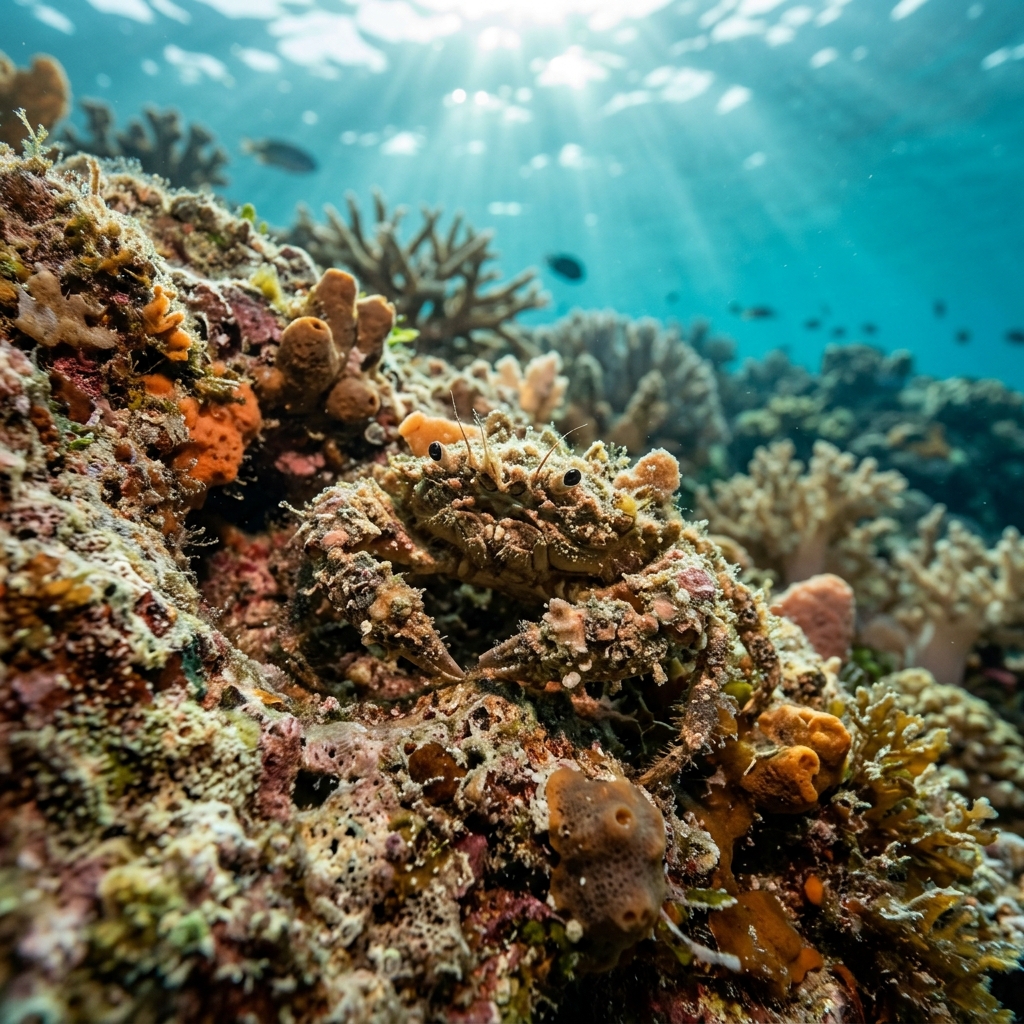
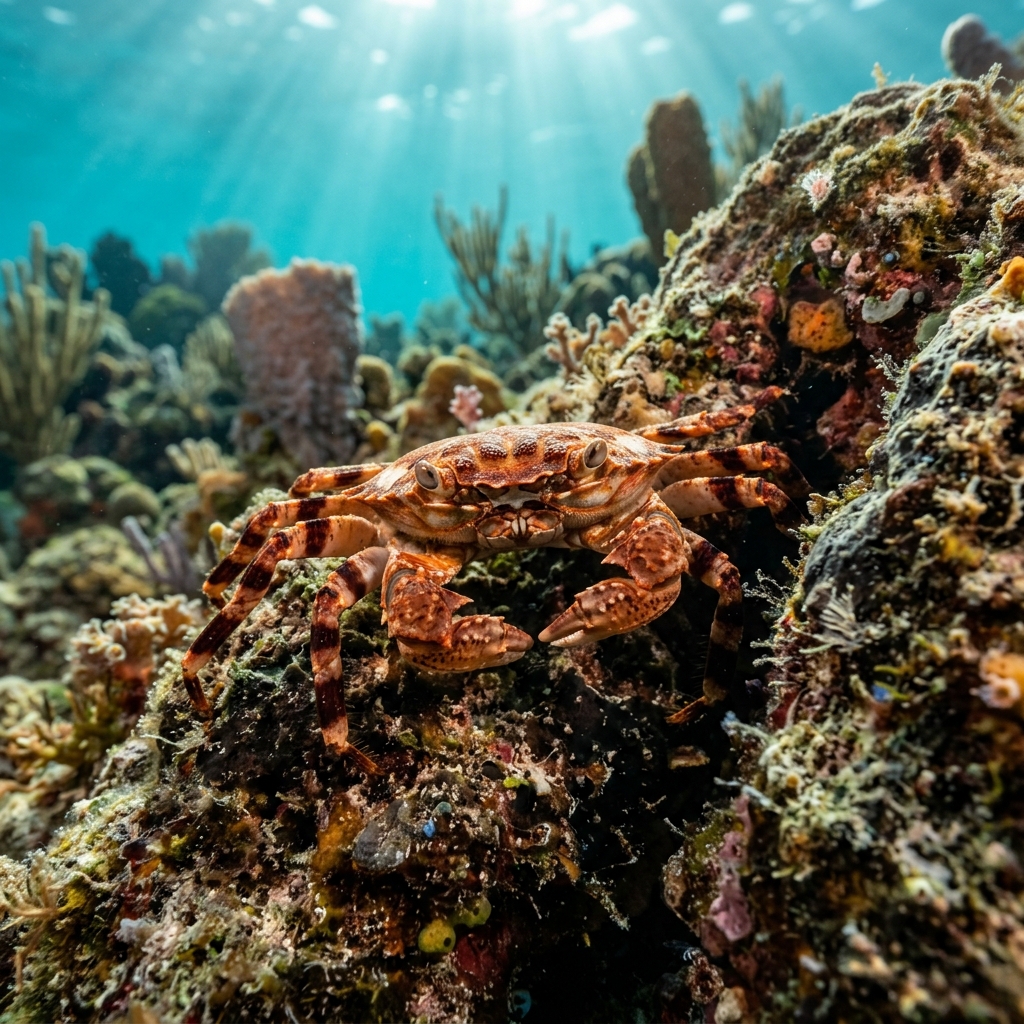
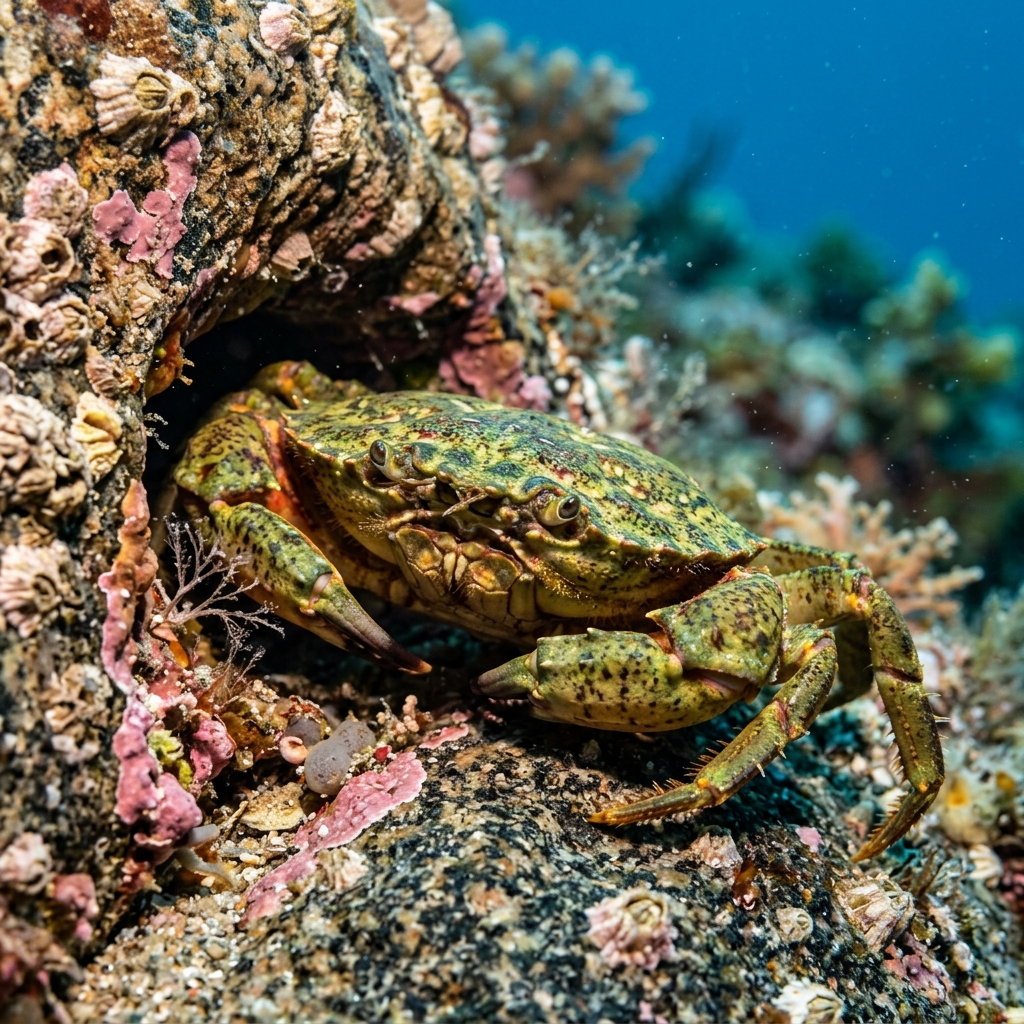
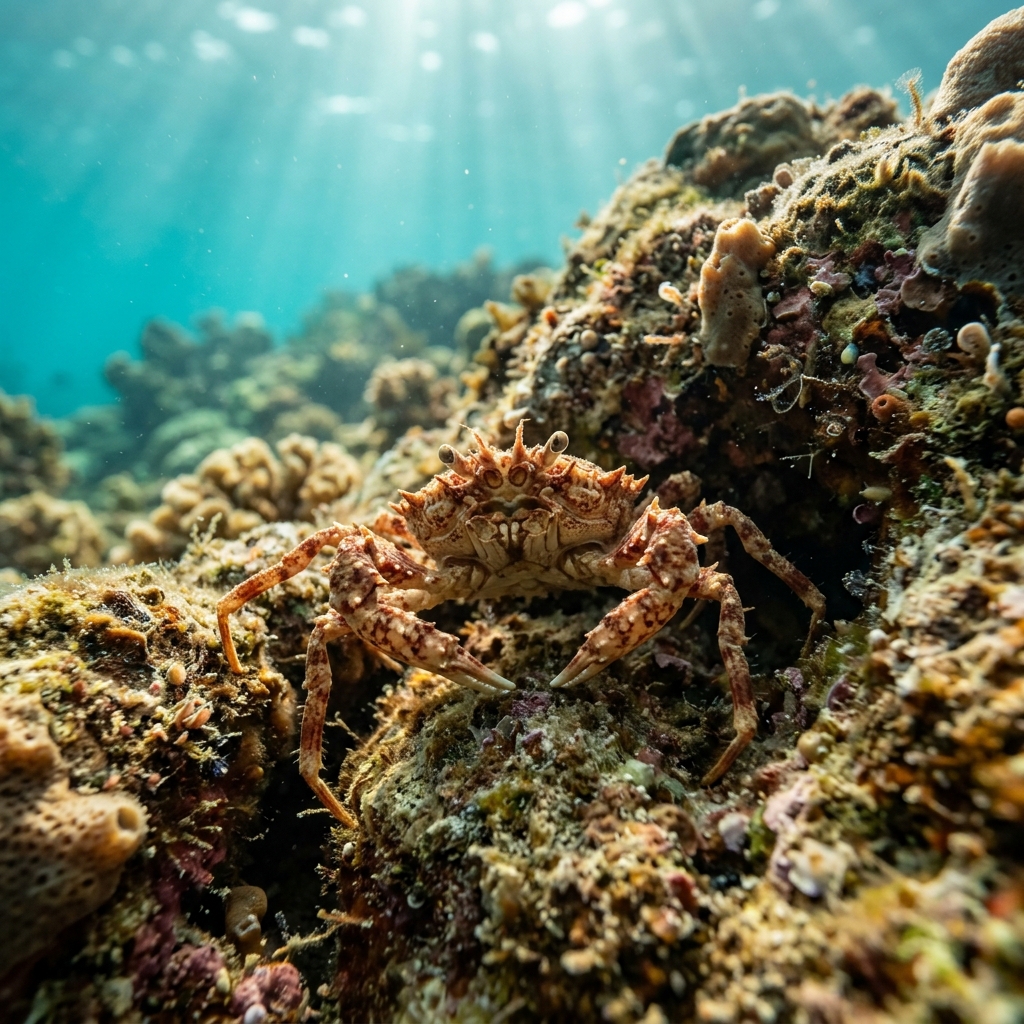
An angular, spider-like body silhouette is the key underwater identifier for this small epialtid (spider-type) crab. The carapace is notably narrow and elongated compared to typical reef crabs, giving it a distinctive triangular or trestle-like profile that prompted the common name. Colouration tends towards pale tan to yellowish-brown, often matching the algae or encrusting reef material it rests on, which can make it surprisingly easy to overlook at first glance.
Like most epialtids, the Eiffel Crab is a benthic creature, spending its time close to or on the reef surface, often motionless among algae, coral rubble, or encrusting organisms. It tends to rely on camouflage and stillness as a first defence, so divers who slow down and scan methodically are more likely to spot one than those moving at pace. Best looked for in the shallower, algae-rich sections of Hawaiian reefs where it can blend into the background.
Members of the Epialtidae family are known for decorating behaviour, where they attach fragments of algae and sponge to hooked hairs on their carapace to improve camouflage, and the Eiffel Crab may employ a version of this tactic.
No strong seasonal pattern has emerged from sighting data, so the Eiffel Crab can be considered a year-round target in Hawaii. Its observed water-temperature range of roughly 24 to 29°C aligns well with Hawaii's consistently warm reef conditions throughout the year.
Reef neighbours a diver could mistake it for. Use the identification notes above to tell them apart.
All diver-reported and modelled sites for this species fall within the Hawaiian Islands, United States, making Hawaii the only reliable region to target it. The range model points to Hawaiian reef habitats as the core of its known distribution.
Mapping where Eiffel Crab is logged…
Based on current data, the Eiffel Crab is found at dive sites across the Hawaiian Islands, United States. Hawaii represents the only region where this species is currently modelled or reported, making Hawaiian reefs the obvious place to search for it.
No clear seasonal peak has been recorded for this species. Hawaii's warm reef temperatures stay comfortably within the crab's known range of 24 to 29°C for most of the year, so any dive trip to Hawaiian reefs could in principle turn one up.
Look for a small, triangular or trestle-shaped carapace with long, slender legs, giving it a spider-like stance. The body tends to be pale tan or brownish, often blending with algae-covered reef surfaces. Slow, methodical searching close to the substrate is the best approach.
No. This small benthic crab poses no threat to divers. Like most epialtids it is cryptic and non-aggressive, and your main challenge is spotting it rather than avoiding it.
The name most likely refers to the crab's distinctive body shape: a narrow, angular carapace with long, spreading legs that can evoke the latticed, tower-like silhouette of a trestle structure. This body plan is characteristic of the Epialtidae family more broadly.
Site and sighting data is aggregated from diver logs, iNaturalist and GBIF. For taxonomy and conservation status:
European Green Crab
2,469 sites