Centropyge eibli
Grey-and-black striped dwarf angelfish common on reefs in Sulawesi and the Philippines, comfortable year-round in 26.5-29.6C water.
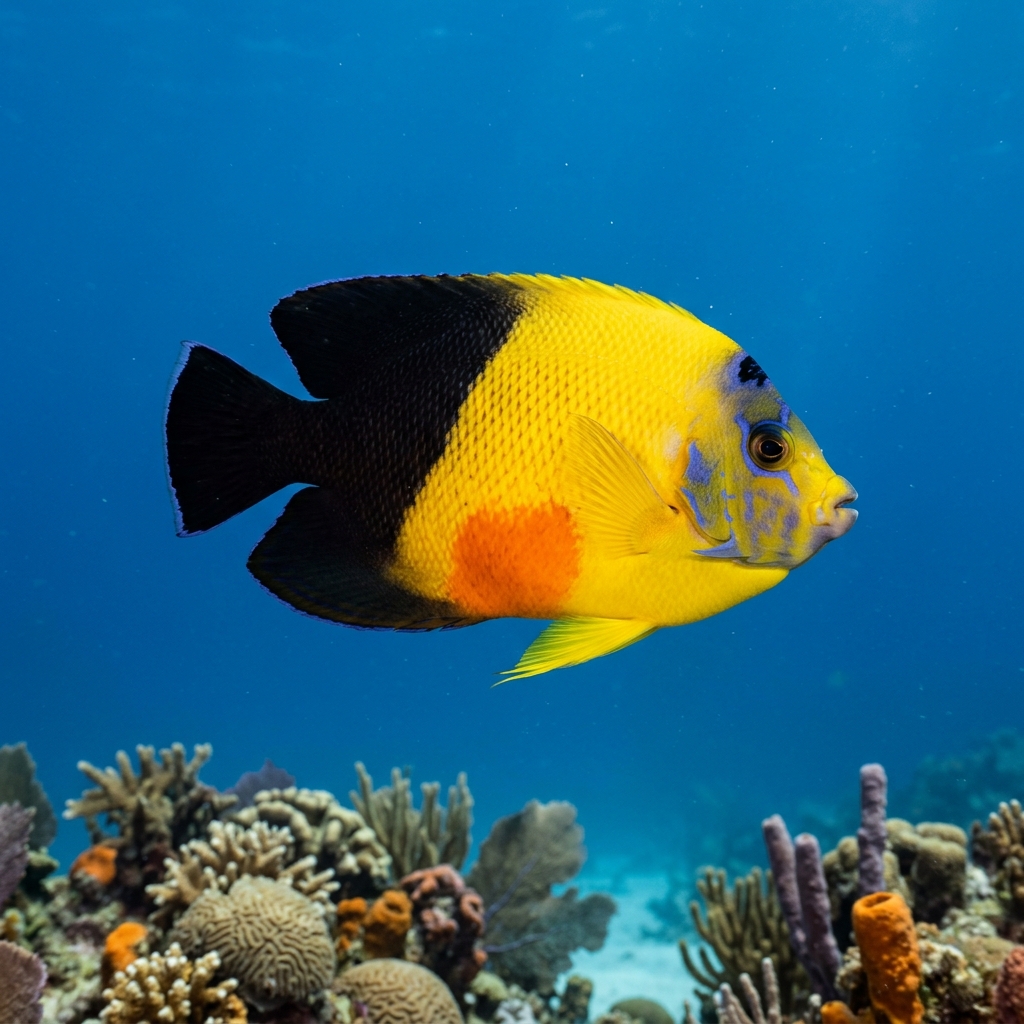
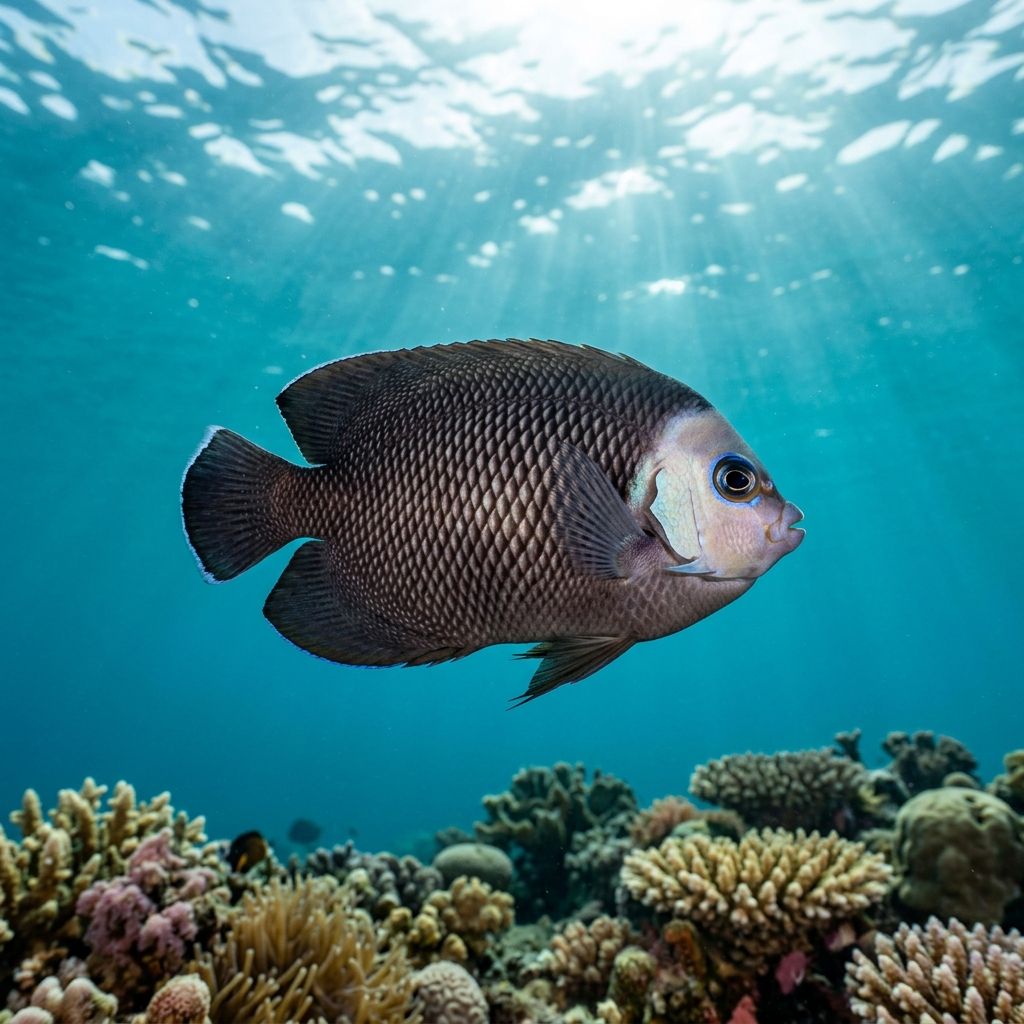
Small angelfish, around 10 cm, with a pale grey to bluish-grey body crossed by fine diagonal black stripes that sweep back toward a bright yellow tail edge. A dark, almost black patch covers the rear third of the body, giving it a two-tone look at a glance. Diamond-shaped body typical of dwarf angelfish, usually seen hovering close to a specific patch of reef rather than swimming in open water.
Usually spotted picking around coral rubble, crevices and the reef base rather than out in the open, grazing on algae and small invertebrates through the day. It tends to dart for cover when divers get close, so slow, steady approaches and a bit of patience give the best look. Often logged as a solo sighting rather than in groups, tucked into the same territory dive after dive.
Like other dwarf angelfish in the genus Centropyge, it feeds by grazing algal turf and detritus off dead coral and rubble, a role that helps keep reef surfaces clear for new coral growth.
No clear seasonal pattern shows up in the sightings, and its temperature niche of roughly 26.5 to 29.6C is met year-round across its Southeast Asian range, so any month works for a dive.
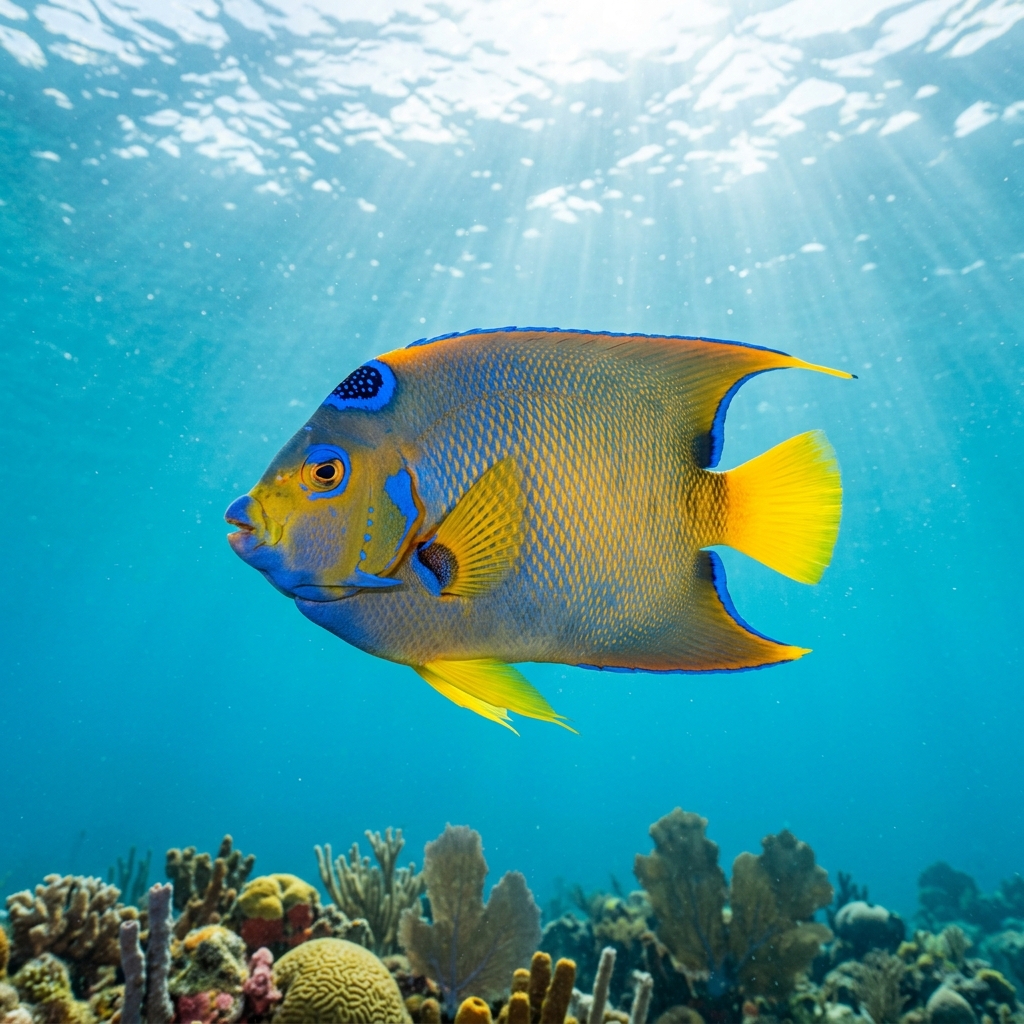
Reef neighbours a diver could mistake it for. Use the identification notes above to tell them apart.
Most reliably logged across Indonesia and the Philippines, with strong numbers of sites in Sulawesi, Luzon, Palawan, Mindanao and the Visayas. Thailand, Malaysia and Vietnam also turn up solid records, particularly in Sabah, Sumatra and Java, making this a fixture of Coral Triangle and Southeast Asian reef diving generally.
Mapping where Eibl's Angelfish is logged…
It shows up most consistently on reefs in Indonesia and the Philippines, especially Sulawesi, Luzon, Palawan, Mindanao and the Visayas, with further sightings across Thailand, Malaysia and Vietnam.
There is no strong seasonal pattern in the sightings, and water temperatures in its range stay within its comfort zone of 26.5 to 29.6C all year, so it can be found on any dive trip regardless of month.
Look for a small grey angelfish with diagonal black stripes, a dark rear half and a yellow-tinged tail. It tends to sit low on the reef near rubble and crevices rather than swim in open water.
They stay small, reaching around 10 cm as adults, typical for a dwarf angelfish in the genus Centropyge.
No, they pose no threat to divers. They are shy, small reef fish that tend to retreat into cover rather than approach or confront anyone nearby.
Site and sighting data is aggregated from diver logs, iNaturalist and GBIF. For taxonomy and conservation status:
Rock Beauty
1,573 sites