Zoarces viviparus
Eelpout turns up year-round in Zeeland's cold, silty water at 7 to 11C, usually as an uncommon find tucked near the bottom.
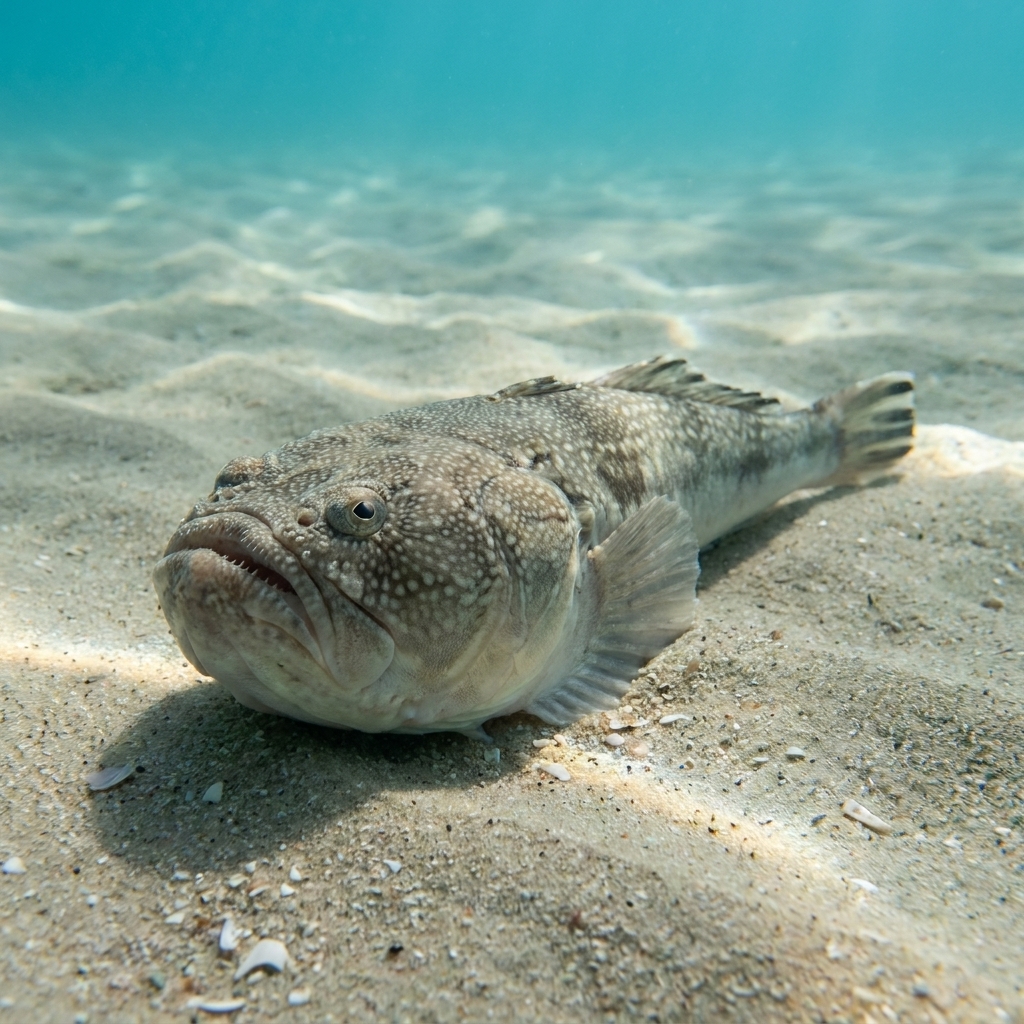
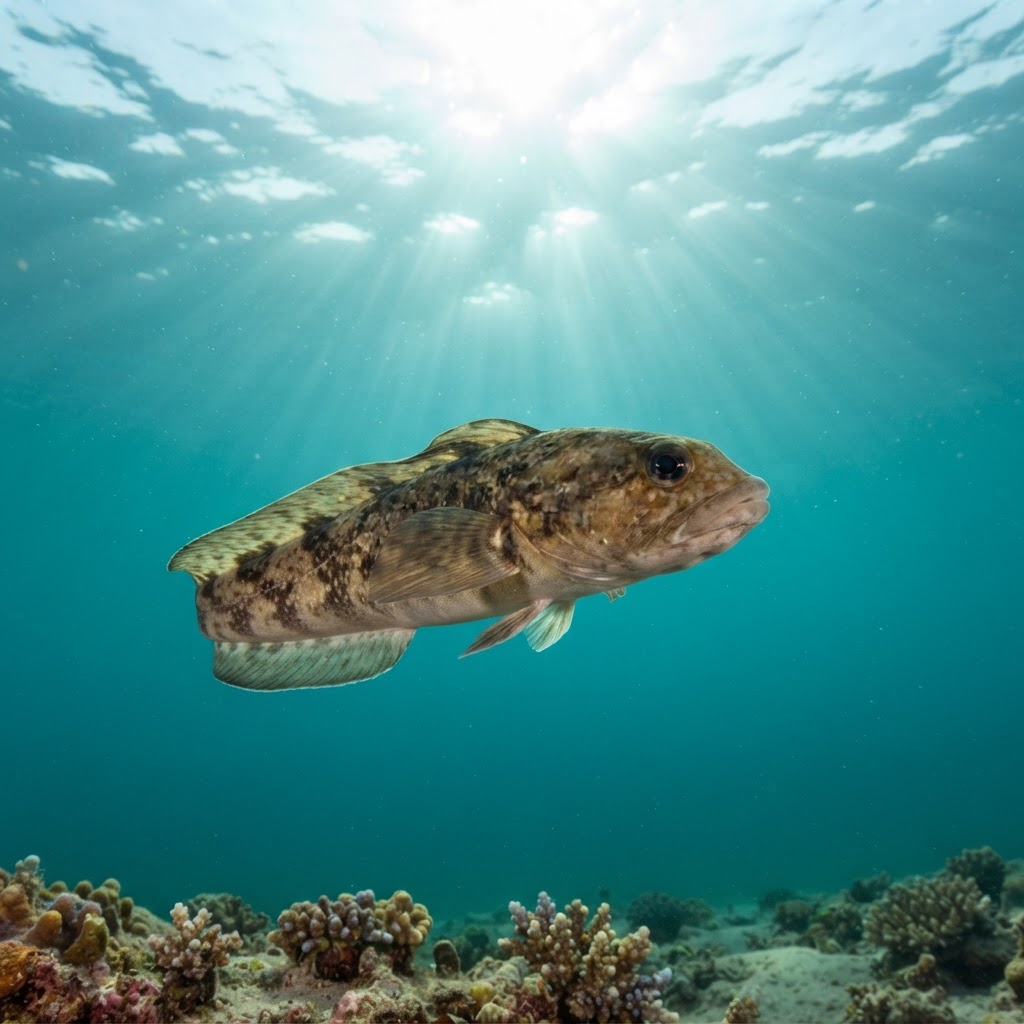
An elongated, eel-like body around 36 cm long, usually mottled brown or olive with darker blotches down the flanks that help it blend into sand or mud. No obvious scales visible underwater, and the dorsal fin runs almost the full length of the back into a pointed tail, giving it a continuous, ribbon-like outline rather than a distinct fin-and-tail break. It tends to lie still on or near the bottom rather than swim in open water, which is often the biggest tell.
Divers most often find eelpout resting motionless on sand, mud, or amongst low structure near the bottom rather than swimming out in the open. It's unbothered by divers at close range, generally holding still or making a slow retreat rather than bolting, which makes it an easy fish to get a good look at once you've spotted the shape against the seabed.
Unlike most fish, eelpout give birth to live young rather than laying eggs, a trait reflected in the species name viviparus.
Sightings don't show a clear seasonal pattern, and with a comfortable range of 7.3 to 11.3C this is a cold-water resident that can be found across the diving year rather than during a narrow window.
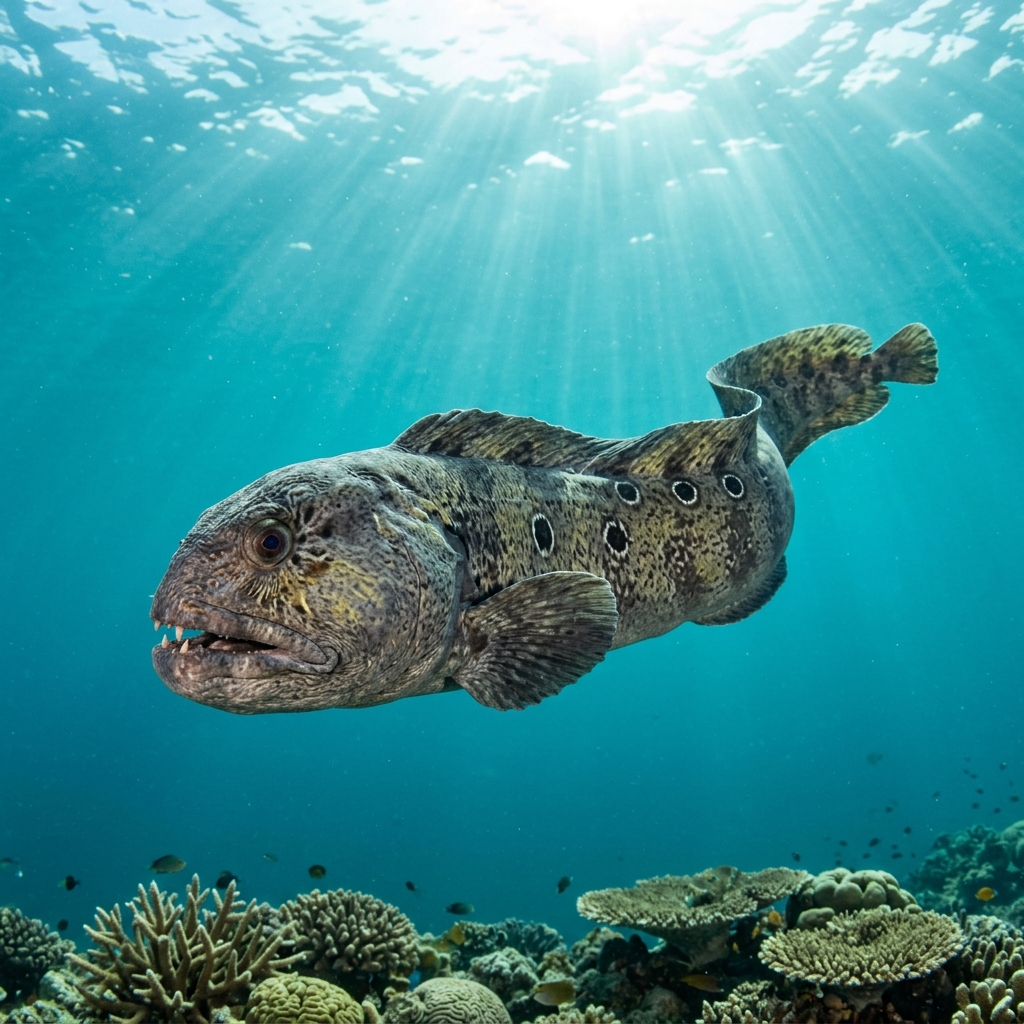
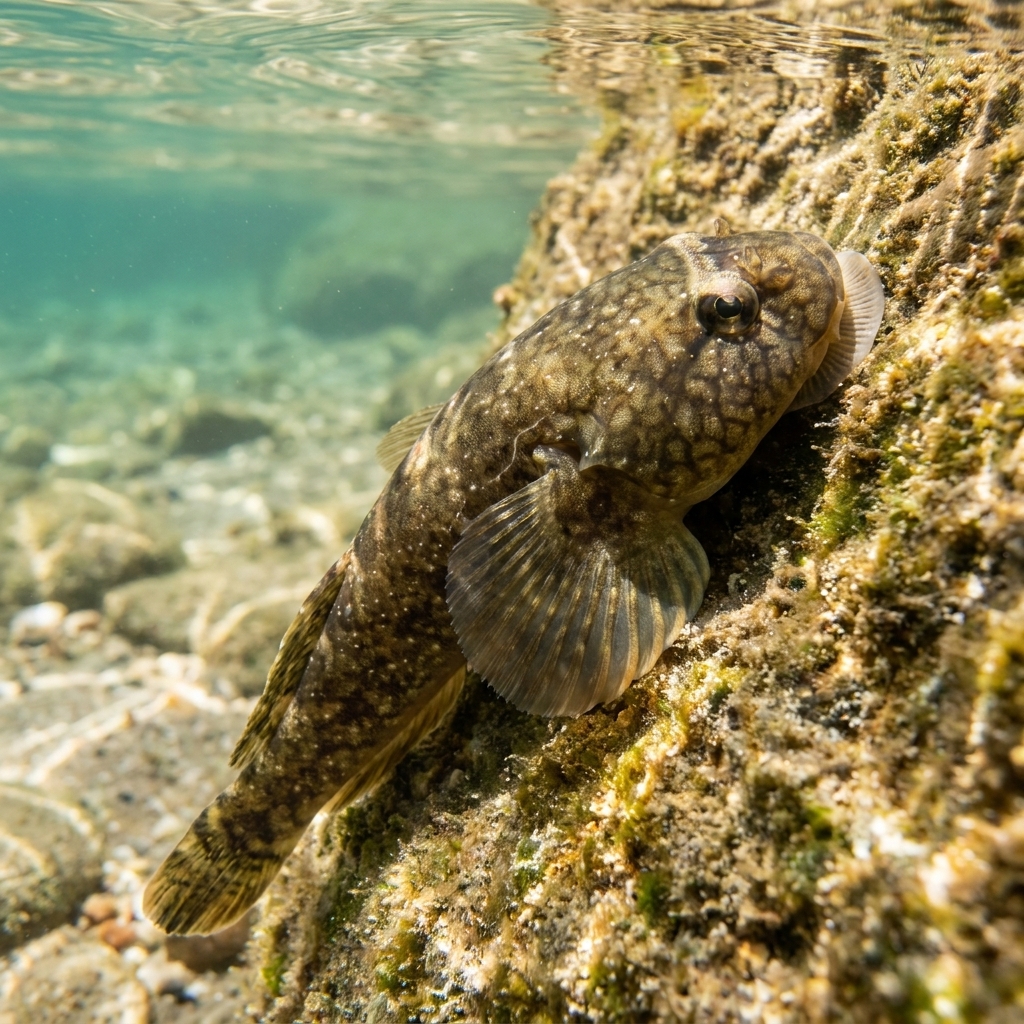
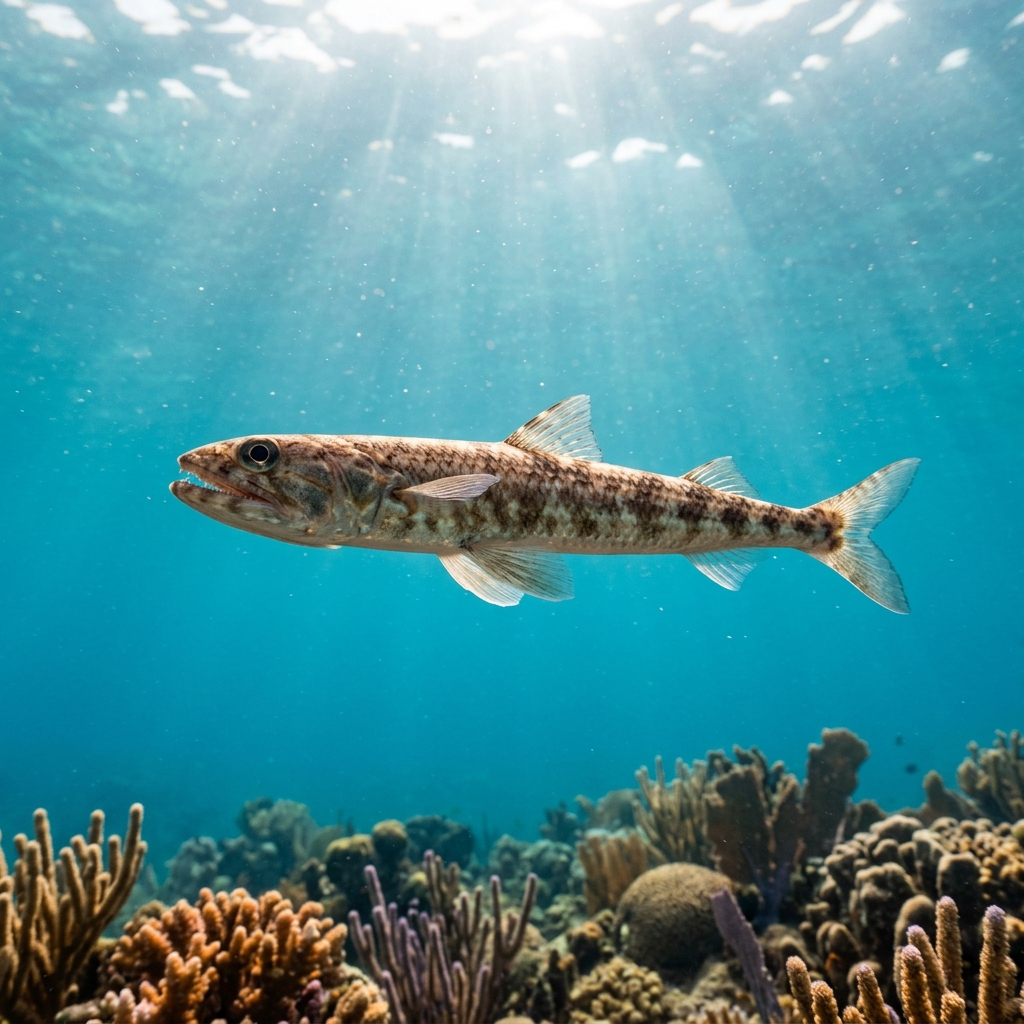
Reef neighbours a diver could mistake it for. Use the identification notes above to tell them apart.
Zeeland in the Netherlands is by far the most reliable place to find eelpout, with a strong secondary presence in Schleswig-Holstein, Germany, and across Jutland in Denmark. Smaller numbers turn up around Zealand, Denmark, so any cold, silty North Sea or Baltic-adjacent dive site in these regions is worth checking.
Mapping where Eelpout is logged…
Zeeland in the Netherlands is the strongest region for eelpout sightings, with further records from Schleswig-Holstein in Germany and Jutland in Denmark. It's a cold-water species tied to North Sea and Baltic-adjacent dive sites rather than tropical reefs.
There's no strong seasonal pattern in the sighting data, and its temperature niche of 7.3 to 11.3C is typical of Northern European dive sites year-round, so it can be found across most of the diving calendar.
Look for an elongated, eel-like body around 36 cm long with mottled brown or olive blotching, a long dorsal fin running into the tail, and a habit of lying still on sand or mud rather than swimming in open water.
Eelpout typically reach around 36 cm in length, giving them a slim, elongated profile closer to a small eel than a typical reef fish.
No, eelpout pose no danger to divers. They're a calm, bottom-resting fish that tolerates close approach without any defensive or aggressive behaviour.
Eelpout give birth to live young instead of laying eggs, an unusual reproductive strategy for a fish and one that's reflected directly in its scientific name, Zoarces viviparus.
Site and sighting data is aggregated from diver logs, iNaturalist and GBIF. For taxonomy and conservation status:
Soldierfish
3,612 sites