Sagmariasus verreauxi
Long orange-brown antennae and a spiny shell in New South Wales and North Island, NZ waters around 16.5-22.5C, but sightings stay rare.
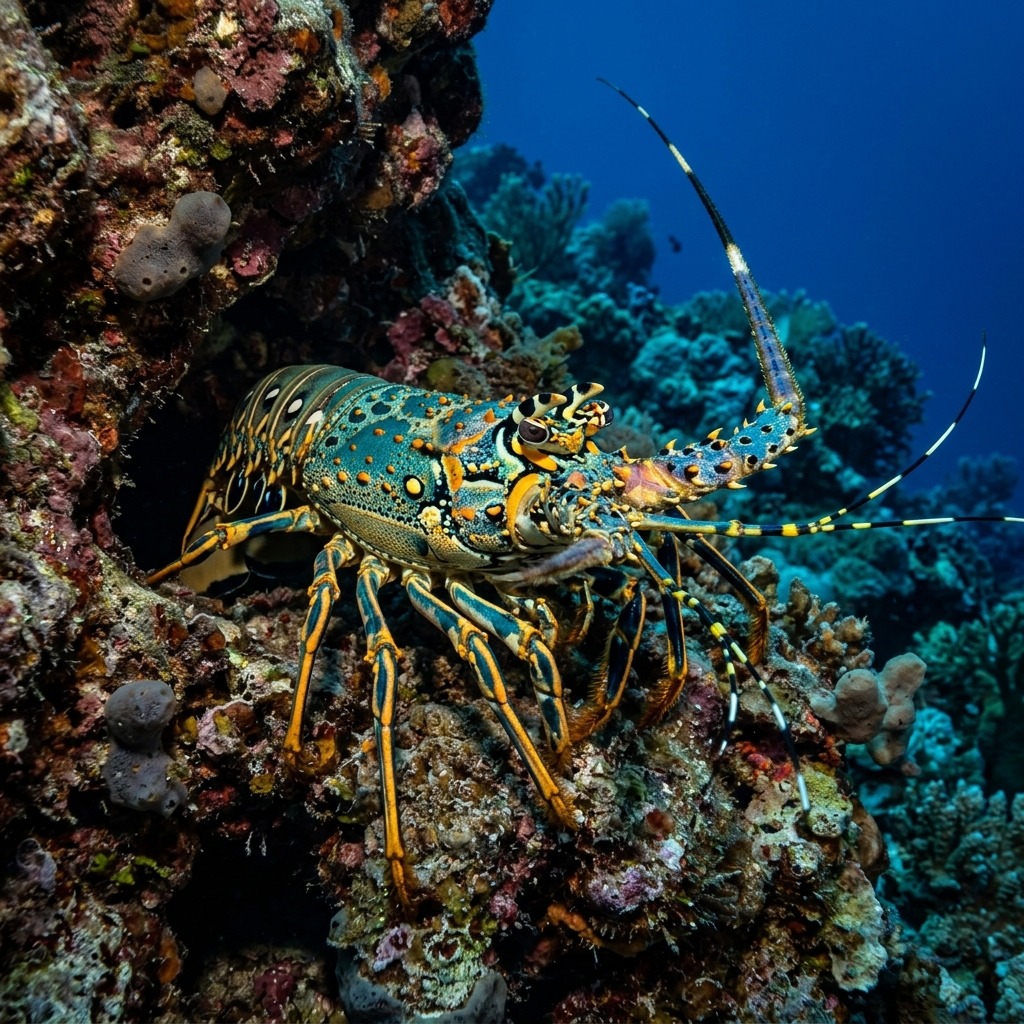
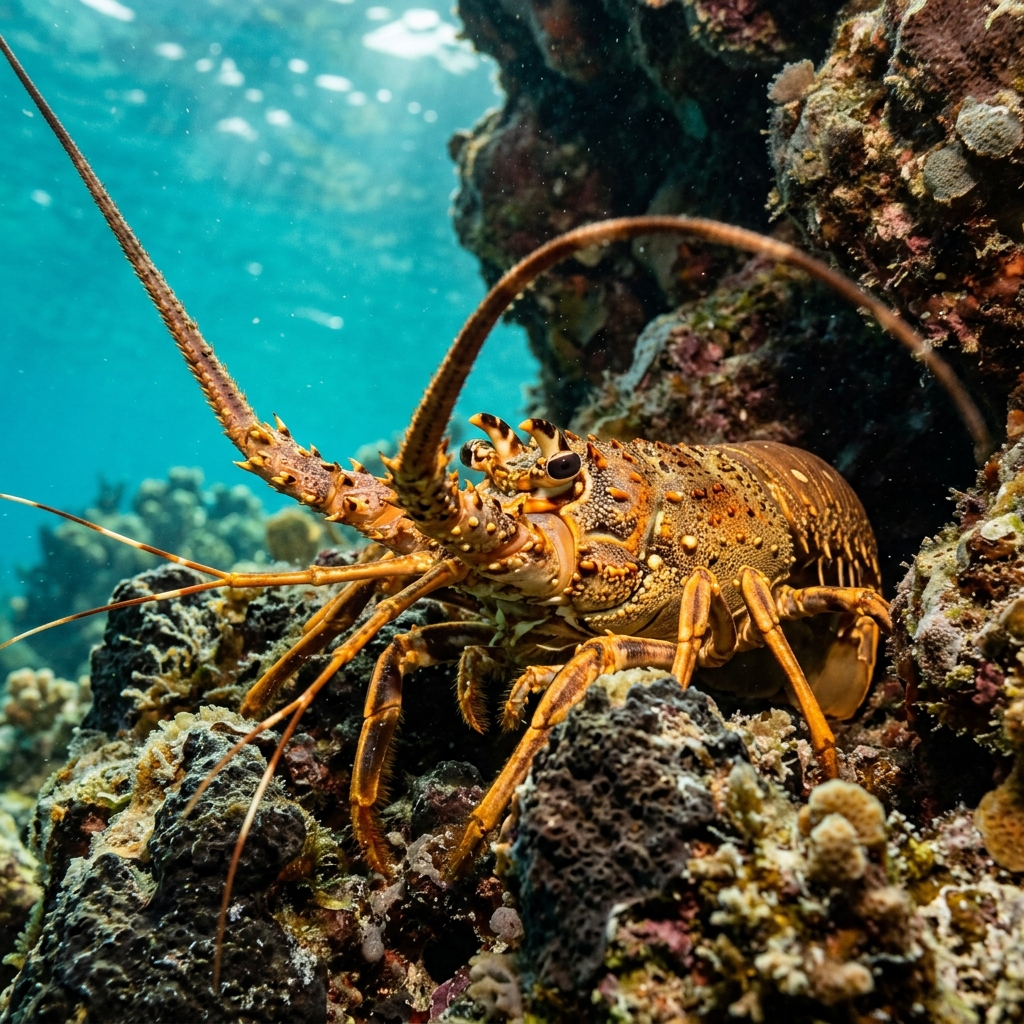
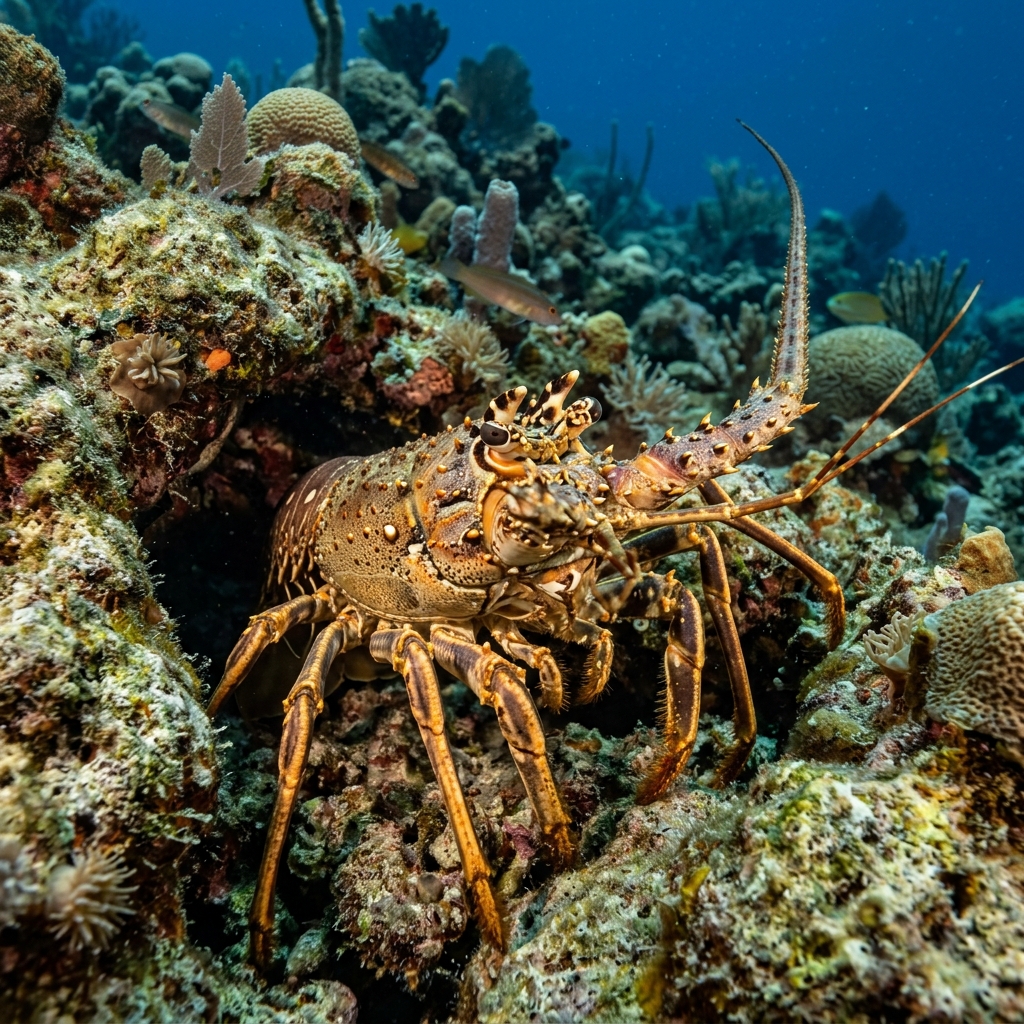
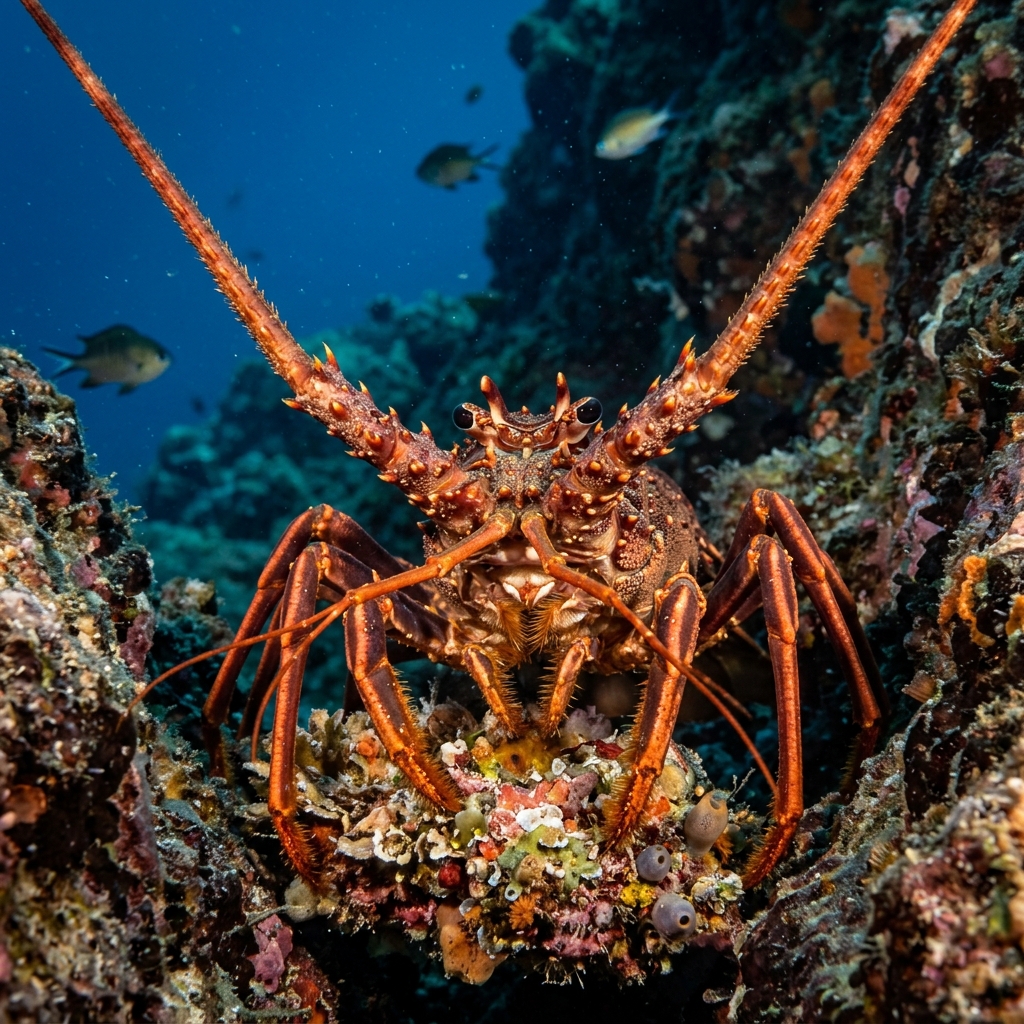
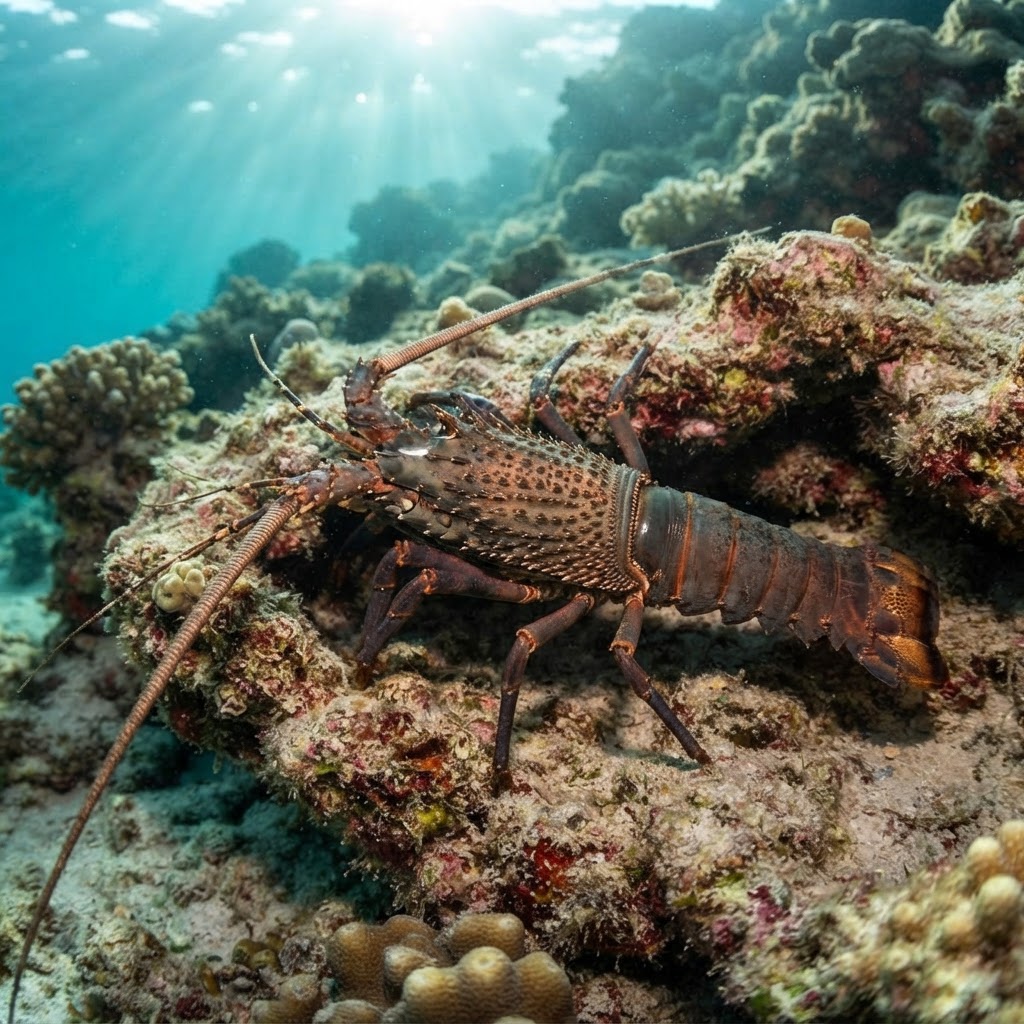
A big, heavy-bodied lobster reaching around 43cm, with a spiny orange-brown to reddish carapace and extremely long, thick banded antennae that often give it away before the body does. Unlike clawed lobsters, it has no large front pincers, just spiny walking legs and those long antennae sweeping the water. Look for it wedged into crevices or under ledges with only the antennae and legs visible.
Usually found tucked into rocky crevices, overhangs and under ledges by day, with antennae and spiny legs poking out into open water. It tends to hold its ground when divers approach rather than bolt, relying on its shell and the cover of the crevice, though it will retreat deeper if repeatedly disturbed. Night dives on temperate rocky reefs tend to turn up more active individuals out foraging.
Those long antennae are its early-warning system, whipped constantly to sense approaching predators or divers well before it can be seen clearly in a crevice.
No clear seasonal pattern shows up in the sighting data, so it is best treated as a year-round find. Its comfort range of roughly 16.5 to 22.5C spans the cooler temperate water typical of southeastern Australia and northern New Zealand for most of the year.
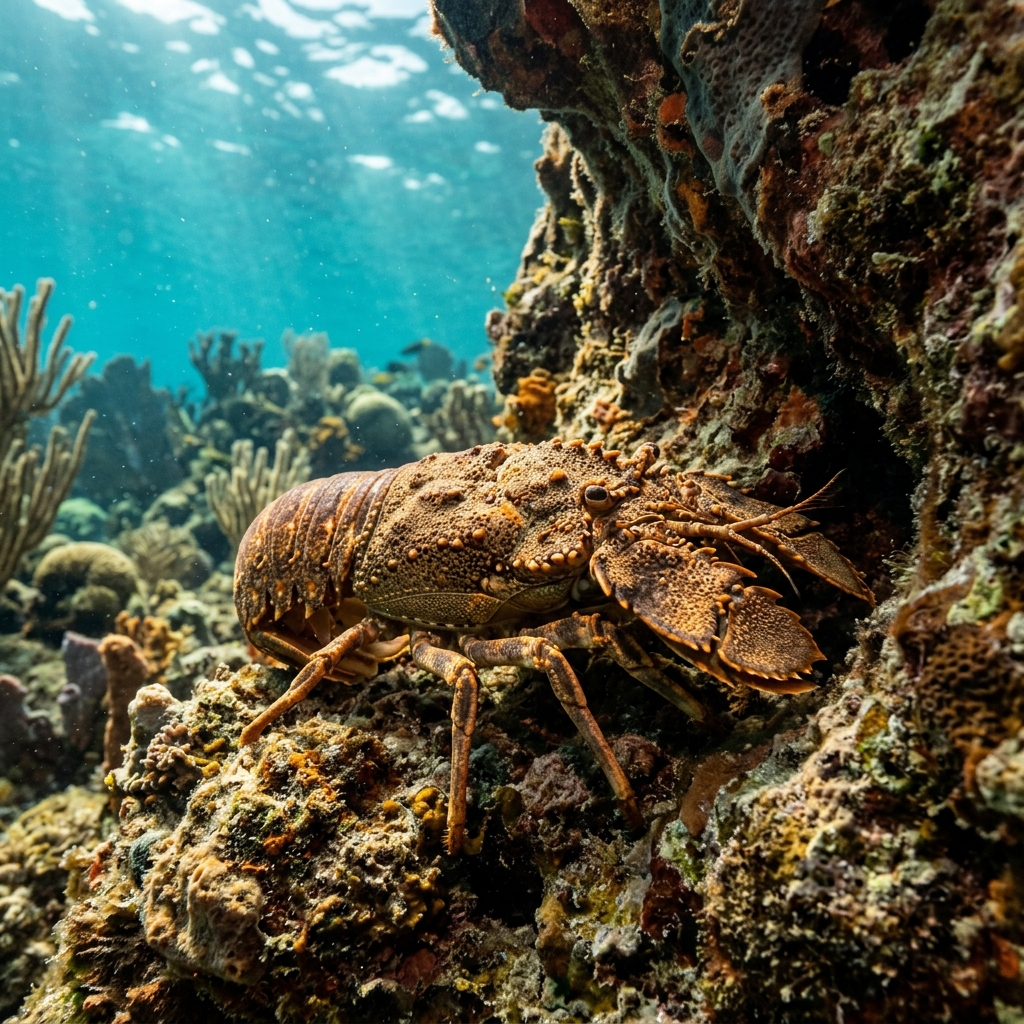
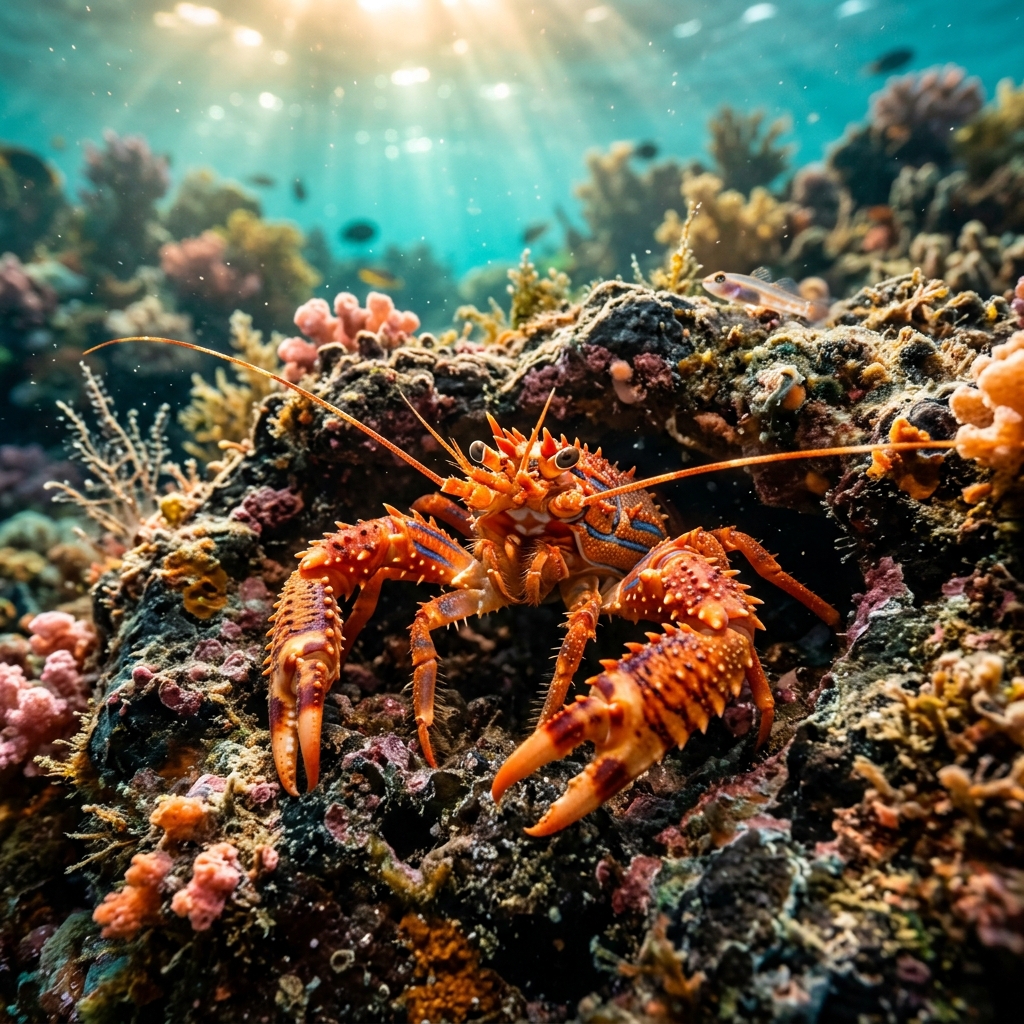
Reef neighbours a diver could mistake it for. Use the identification notes above to tell them apart.
Most reliably logged on reef and rocky-shore sites in New South Wales, Australia, with a solid second population around North Island, New Zealand, and occasional records from Victoria, Australia. It stays a rare to uncommon find even at its best sites, so treat any sighting as a bonus rather than a given.
Mapping where Eastern Rock Lobster is logged…
Best chances are on rocky reef sites in New South Wales, Australia, and around North Island, New Zealand, with occasional sightings in Victoria, Australia. Even in these regions it is logged as rare to uncommon, so it takes a patient search of crevices and ledges.
There is no strong seasonal pattern in the sightings, so it can turn up year-round. It favours cooler temperate water, generally between 16.5 and 22.5C, which suits southeastern Australia and northern New Zealand for most of the year.
Look for a spiny orange-brown shell around 43cm long, no large front claws, and very long, thick banded antennae poking out from under a ledge. It usually shows only its antennae and legs while the body stays hidden in a crevice.
They grow to around 43cm in length, making them one of the larger spiny lobsters divers encounter on temperate reefs.
No, they pose no threat to divers. They are defensive rather than aggressive, relying on their spiny shell and crevice cover instead of attacking.
Site and sighting data is aggregated from diver logs, iNaturalist and GBIF. For taxonomy and conservation status:
Caribbean Spiny Lobster
2,209 sites