Octopus rubescens
Find East Pacific Red Octopus along the Pacific Coast of the US and British Columbia in cold 8-14 °C water. Best seen on night dives, Nov, Mar.
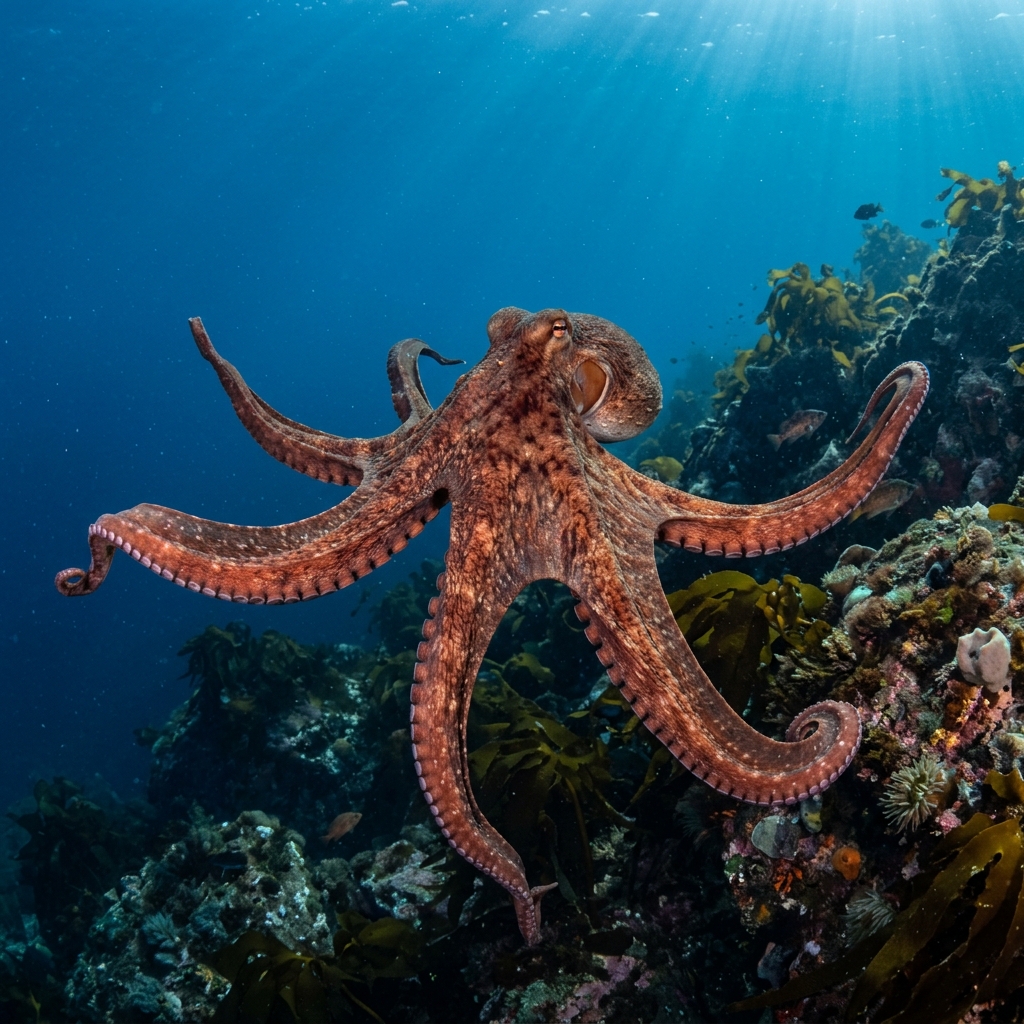
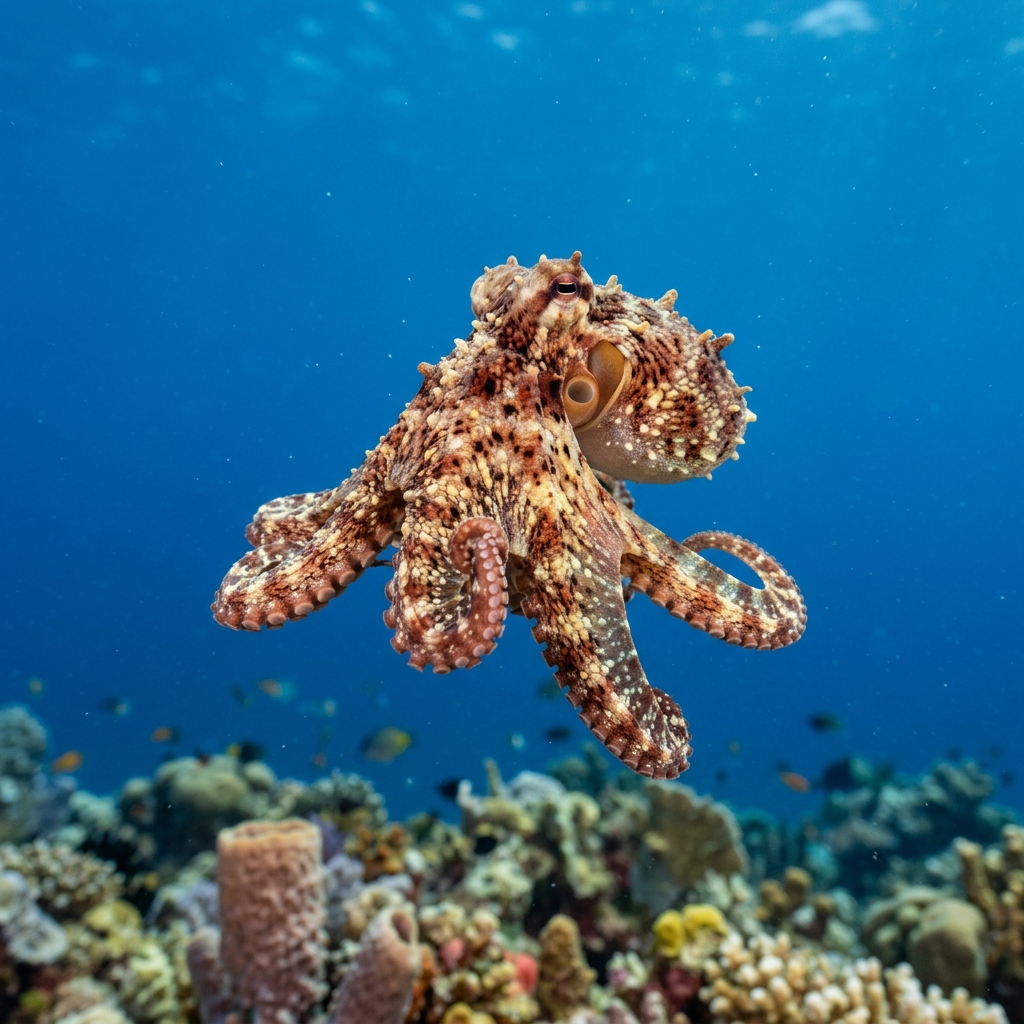
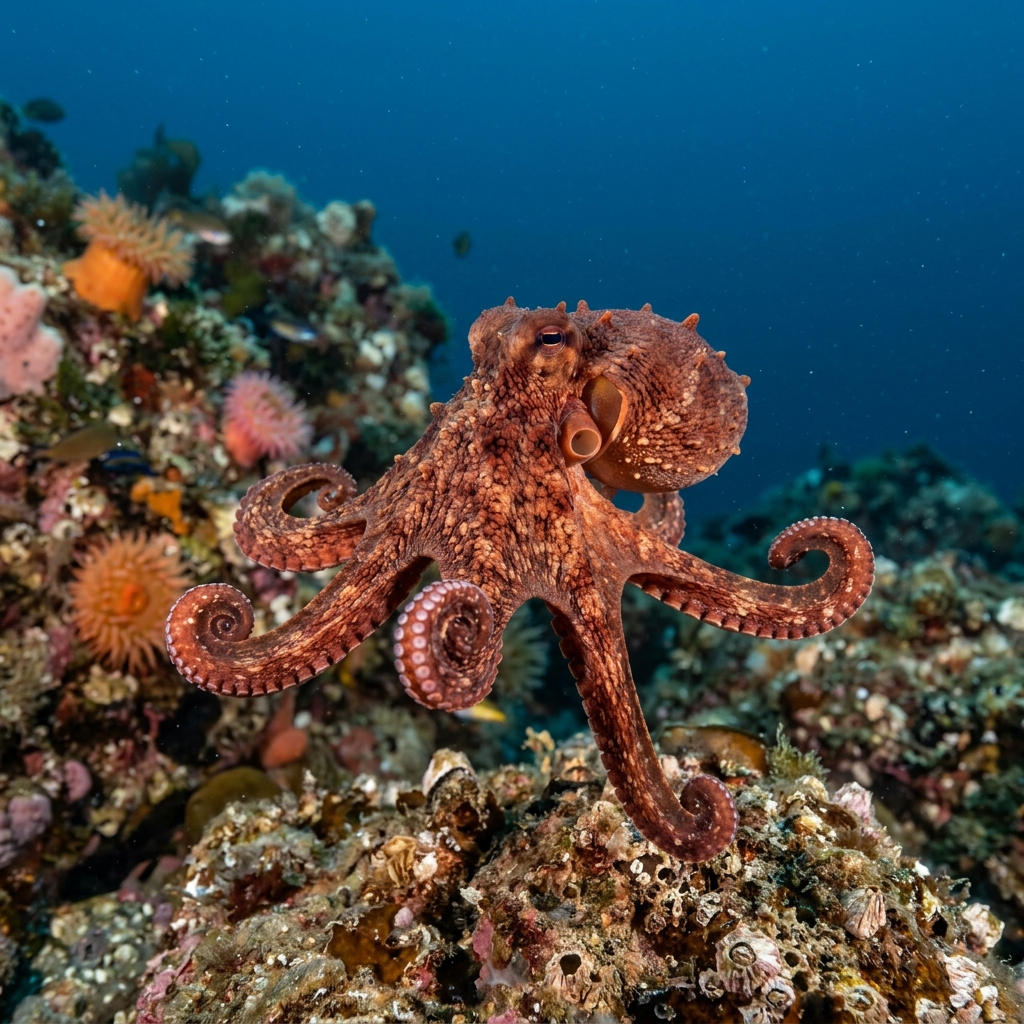
Small enough to fit in your hand at around 30 cm total length, this is a compact, reddish-brown octopus with strongly textured skin covered in papillae (small warty projections) that it raises and lowers to blend into rocky substrate. A white stripe often shows along the underside of each arm, and there is typically a distinctive white spot below each eye. Colour shifts rapidly between red, brown, and white, but the papillae texture and the pale arm undersides are the most reliable field marks when it is actively moving.
Shy and quick to disappear, it spends most of daylight hours tucked inside a rocky den, often identifiable by a neat pile of empty shells and crab claws at the entrance. At night or during twilight it ventures out to hunt, moving across the reef with deliberate arm-over-arm crawls. Approach slowly and stay low; sudden movements or bright torch beams cause it to flush ink or bolt back into cover, but a patient, still diver can watch it forage at close range.
It produces a venomous saliva used to subdue crabs and other crustaceans, but this is delivered by bite rather than by contact, so an undisturbed animal poses no meaningful risk to a diver who does not handle it.
Seasonality data points to November through March as the peak window for sightings, aligning with the species' comfort in cold water between 8.6 and 14.4 °C. Night dives or late twilight dives during these months offer the best chance of catching one actively foraging.
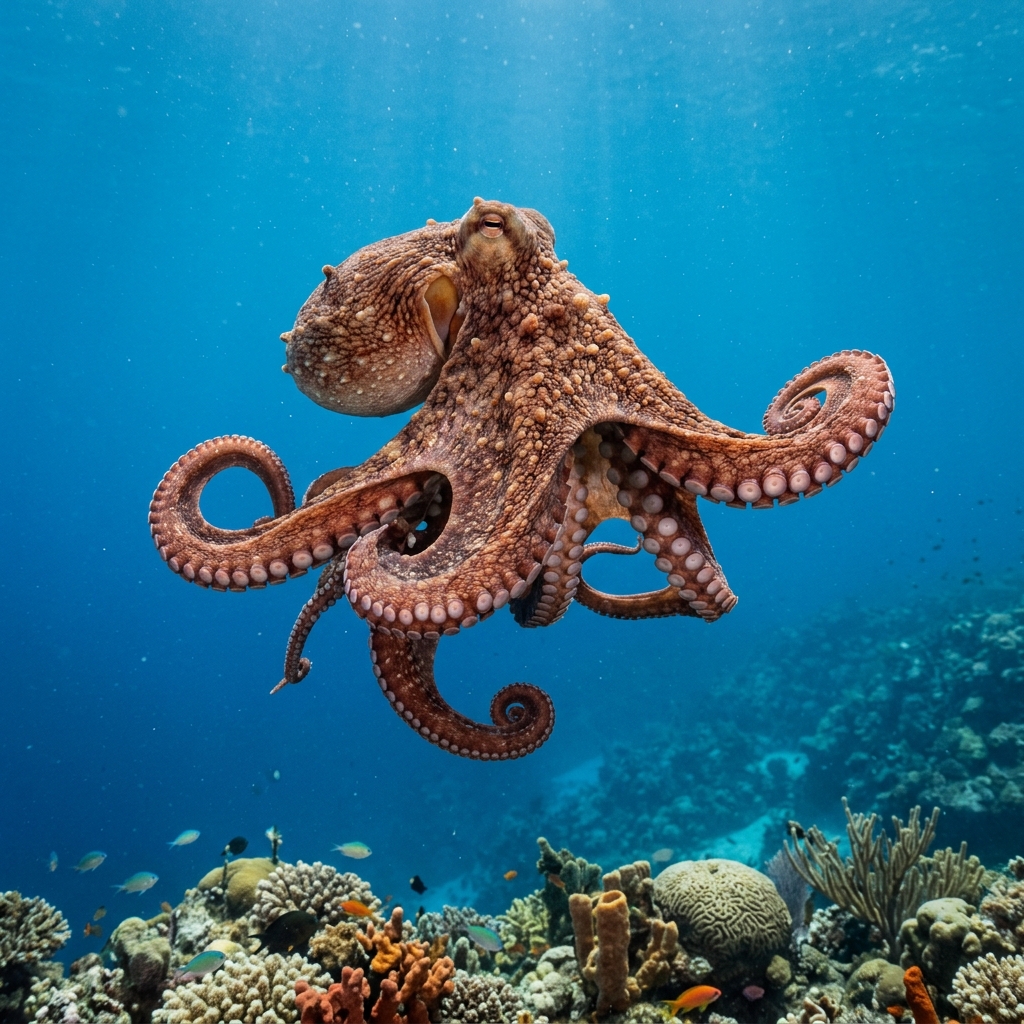
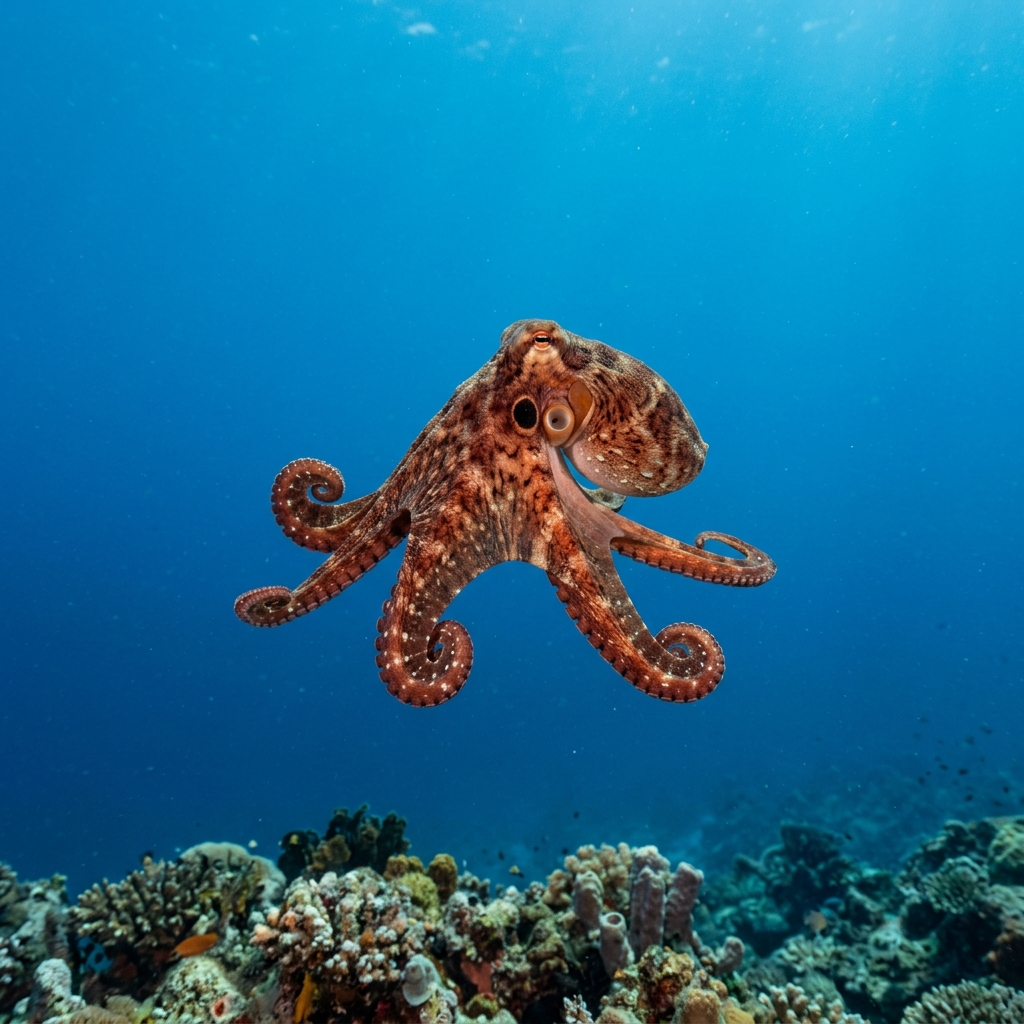
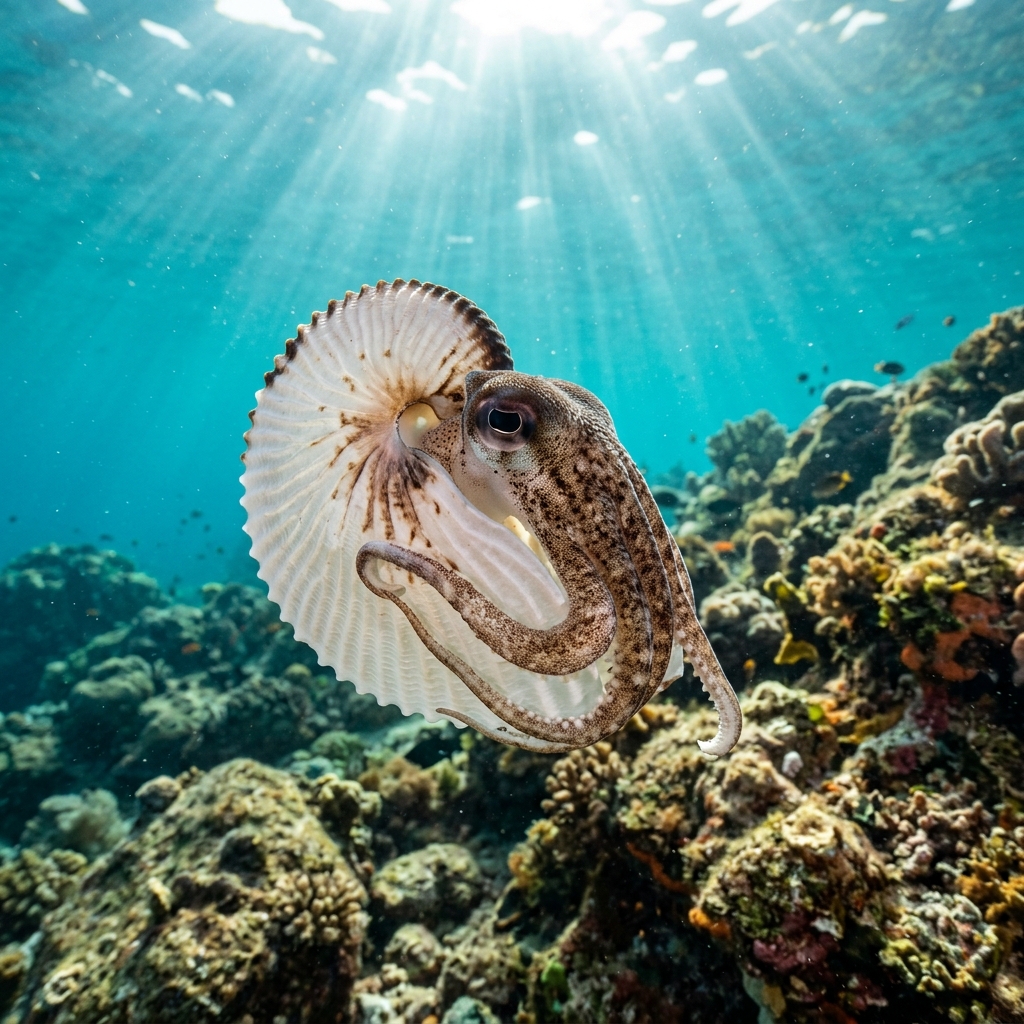
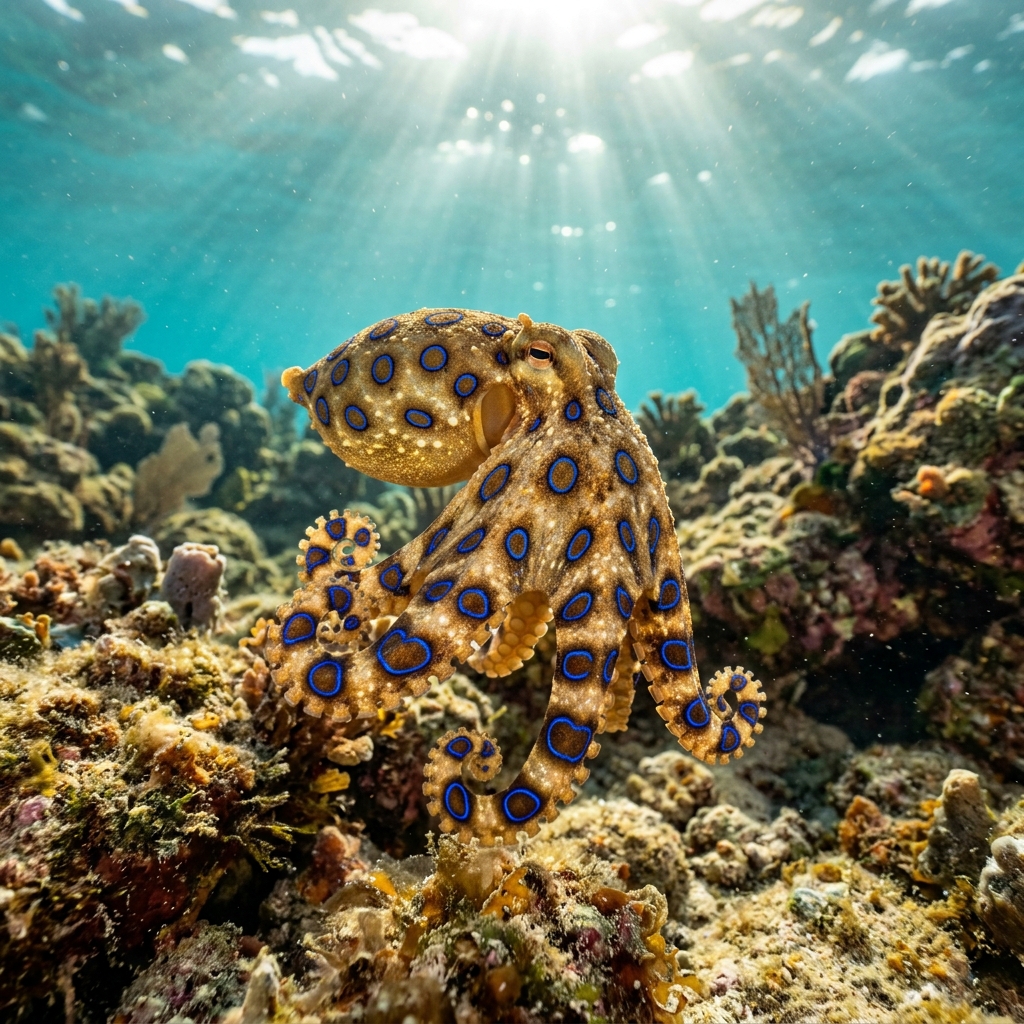
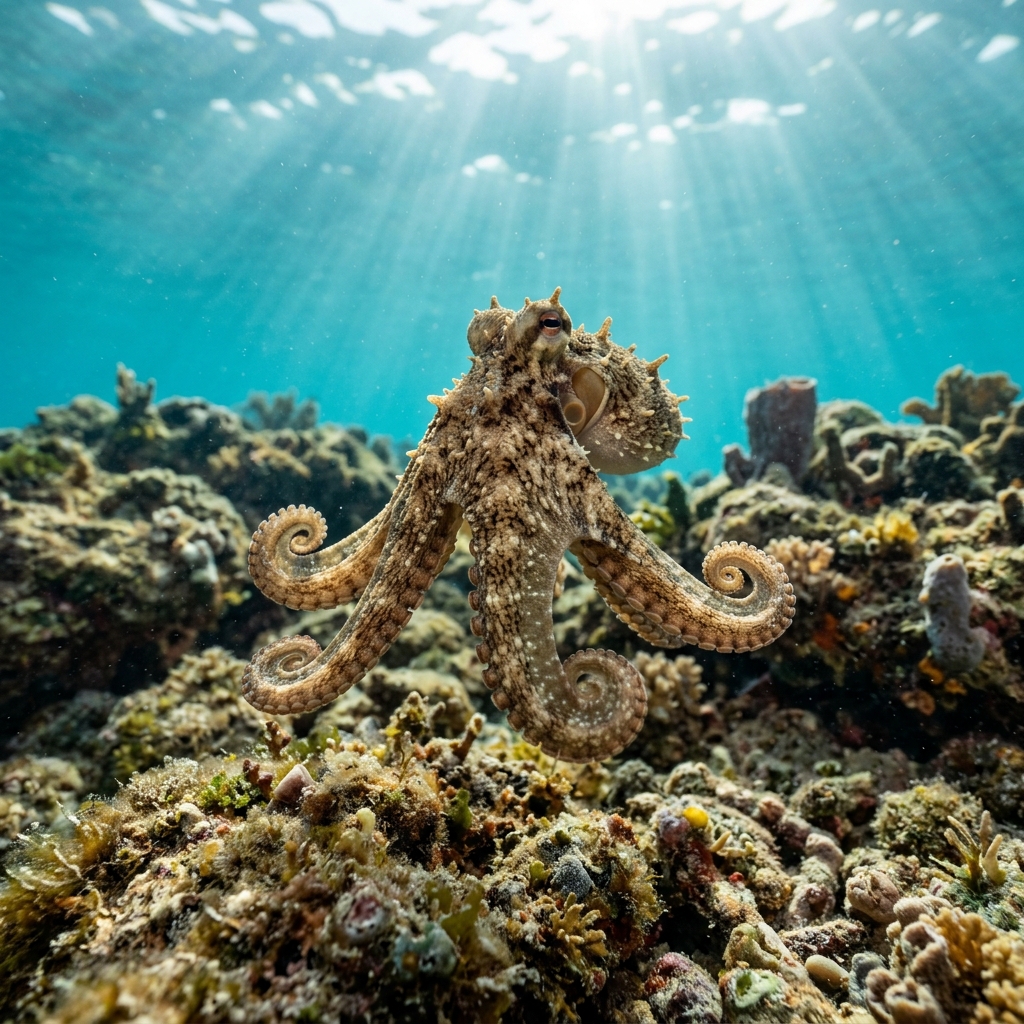
Reef neighbours a diver could mistake it for. Use the identification notes above to tell them apart.
This is overwhelmingly a cold-water Pacific species, most commonly logged along the Pacific Coast of the United States and the British Columbia Coast of Canada, with additional sightings recorded in Alaska and a small number of sites in Mexico. The US Pacific Coast holds the greatest concentration of confirmed sighting sites, but British Columbia is a strong runner-up, particularly around the kelp-covered rocky reefs of that coastline.
Mapping where East Pacific Red Octopus is logged…
The species is most reliably logged along the Pacific Coast of the United States and the British Columbia Coast of Canada. Smaller numbers of sightings come from Alaska and Pacific Coast Mexico. Rocky, kelp-covered reefs in cold, nearshore water are the consistent habitat across all these regions.
Sightings concentrate between November and March. Within any season, night dives are far more productive than daytime dives because this species forages mainly after dark. Water temperatures through this period run roughly 8 to 14 °C, so a drysuit or thick wetsuit is essential.
Look for a small, reddish-brown octopus with prominently textured, papillae-covered skin, a pale underside along each arm, and a white spot below each eye. At 30 cm it is far smaller than the Giant Pacific Octopus, which shares the same range and can reach many times that size. The raised papillae and the pale arm stripe together are the most useful field marks.
Typical total length is around 31 cm, arms included, making this a relatively small octopus. In the water it can appear even more compact when contracted, and considerably larger when fully extended while hunting across open rock.
No. Like all octopuses it can bite if handled, and its saliva contains venom used to subdue prey, but an animal that is not grabbed or cornered will flee rather than confront a diver. Leave it undisturbed and the risk is negligible.
Site and sighting data is aggregated from diver logs, iNaturalist and GBIF. For taxonomy and conservation status:
Brazilian Reef Octopus
1,142 sites