Amblycirrhitus pinos
Red-blotched and barely 6cm, this hawkfish perches on Caribbean reefs from Saba to Guadeloupe year-round in 25-28°C water.
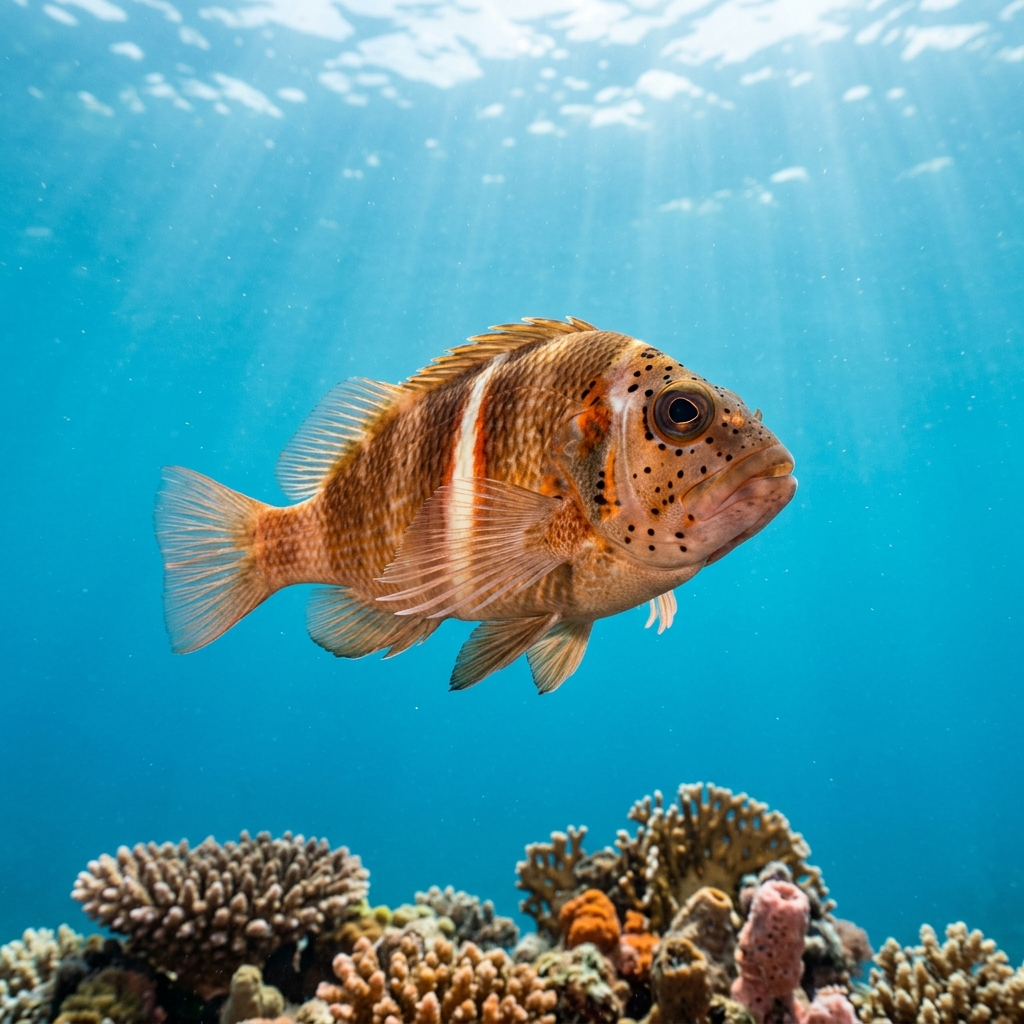
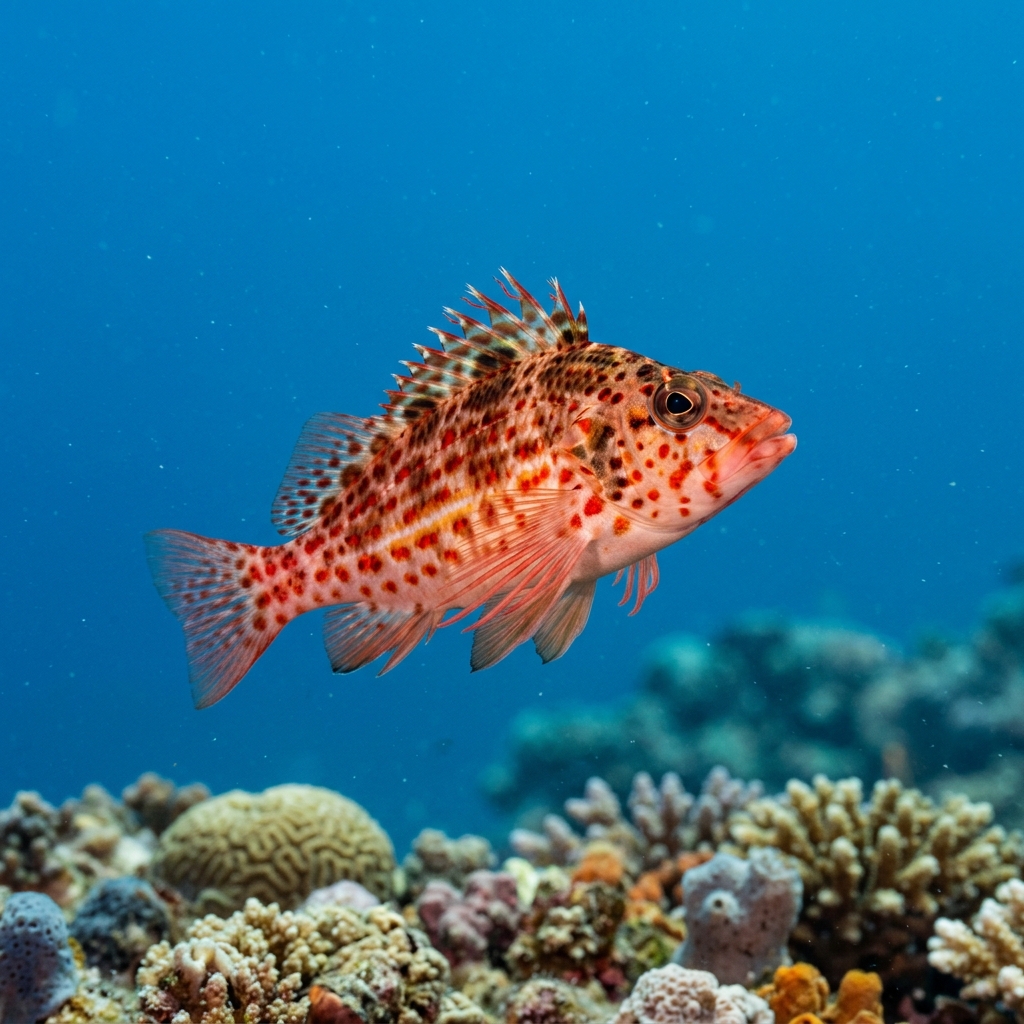
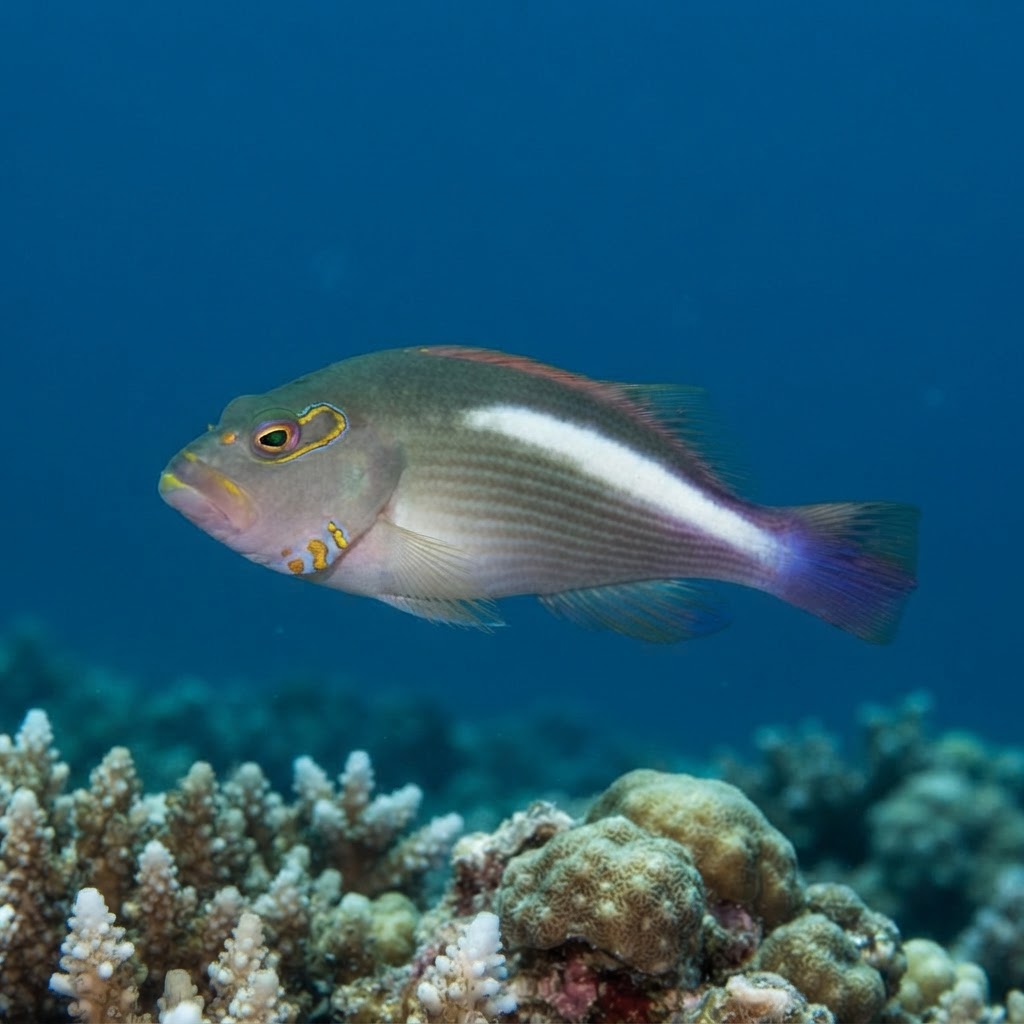
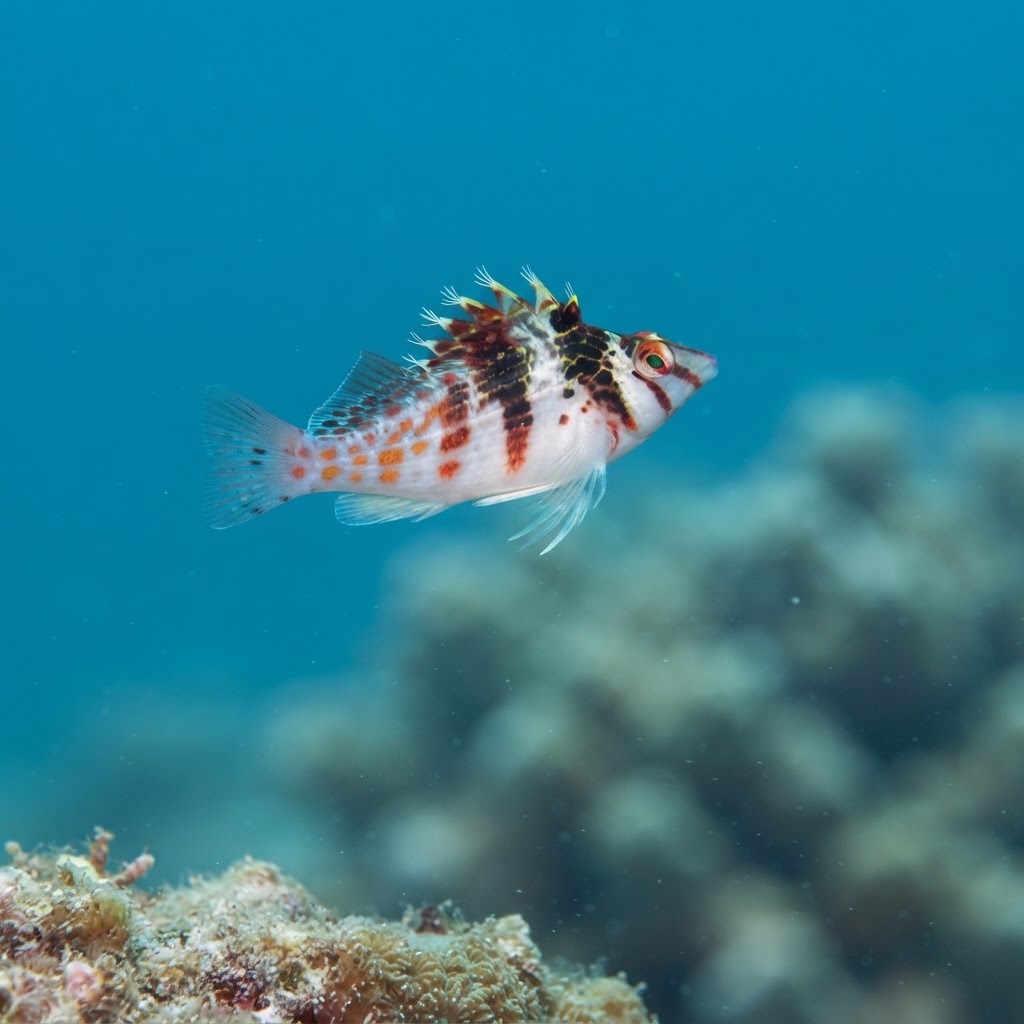
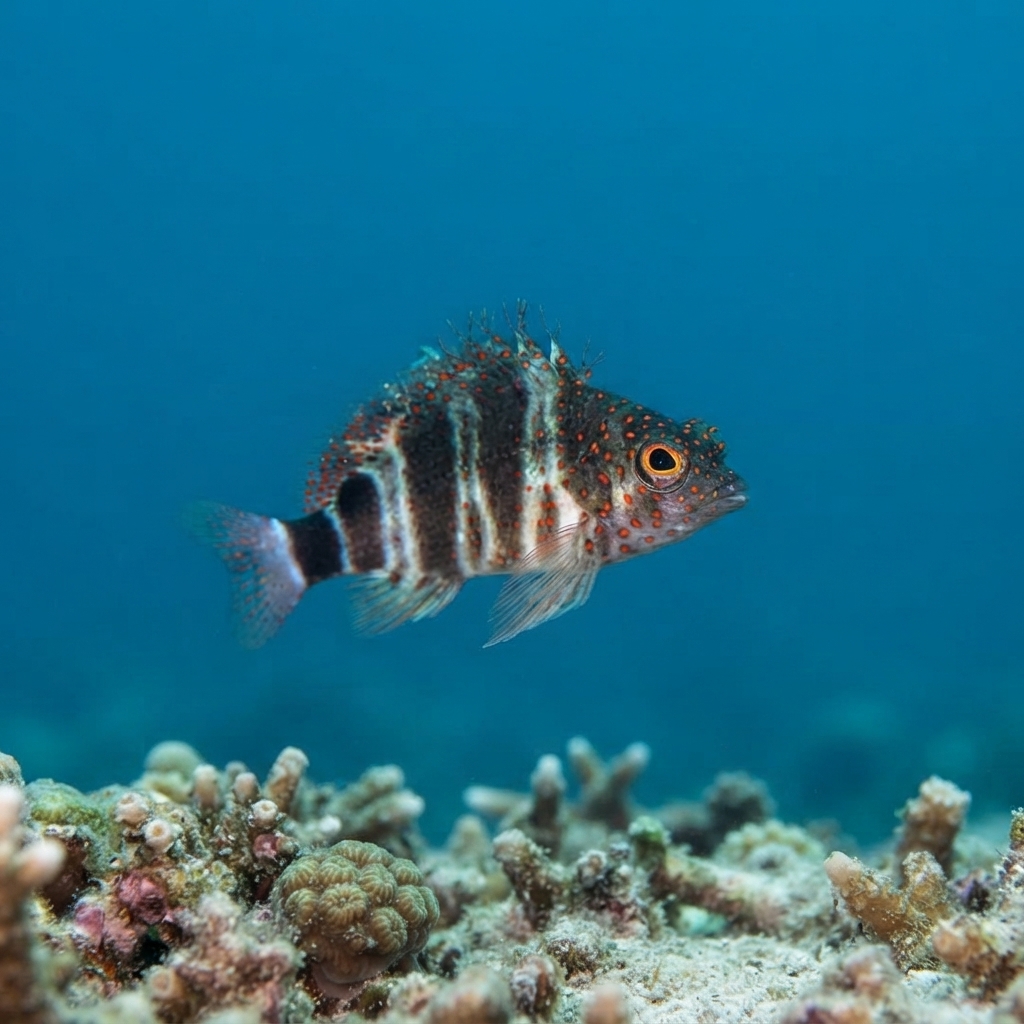
A tiny fish, rarely more than 6 cm, with a stocky body covered in reddish-brown blotches over a pale white to cream background, giving it a mottled, almost tortoiseshell look. Look for the tufted spines on the tips of the dorsal fin rays, a hawkfish family trait, and its habit of sitting motionless on a coral head rather than swimming in open water. The head and blotching pattern are distinctive enough that once you spot one, you will not mistake the species for anything else on a Caribbean reef.
Expect to find it wedged into a crevice or perched on top of coral rubble and sponges, staying almost perfectly still until you get close, then hopping a short distance to the next perch rather than fleeing into open water. It is a sit-and-wait hunter, picking off small crustaceans and invertebrates from its perch rather than actively foraging, and it tends to ignore divers who keep a respectful distance. Most sightings are logged as uncommon rather than common, so it rewards divers who slow down and scan ledges and sponge clusters closely.
Hawkfish lack a swim bladder, which is exactly why this species is happy to sit motionless on a perch for long stretches rather than hover in midwater like most reef fish.
No clear seasonal pattern shows up in sightings, and with a comfortable range of 25 to 28.4°C it sits happily on tropical reefs all year, so any month works for a dive trip.
Most reliably logged in the Dutch and French Caribbean, with strong numbers around Sint Eustatius, Saba's Tent Reef, and Grande-Terre in Guadeloupe. It also turns up consistently in Martinique's Saint-Pierre area, Brazilian reefs in Bahia, and across Saint Lucia, the US Virgin Islands, and the Cayman Islands.
Mapping where Redspotted Hawkfish is logged…
Best logged around Sint Eustatius, Saba, and Guadeloupe, with reliable sightings also in Martinique, Saint Lucia, the US Virgin Islands, the Cayman Islands, and Bahia in Brazil.
There is no strong season in the sighting data. It stays on warm Caribbean and Brazilian reefs year-round in water between 25 and 28.4°C, so any month is fine.
Look for a tiny, stocky fish under 6 cm with reddish-brown blotches over a white body, perched motionless on coral or sponges rather than swimming freely. Tufts on the dorsal fin spines confirm it as a hawkfish.
They stay small, typically around 6 cm, making them one of the more overlooked fish on a Caribbean reef unless you are looking closely at coral heads and sponges.
No. They are small, non-aggressive reef fish that pose no threat to divers and will simply hop to another perch if approached too closely.
Like other hawkfish, they lack a swim bladder, so instead of hovering in midwater they perch on coral or sponges and dart out only to snatch prey.
Site and sighting data is aggregated from diver logs, iNaturalist and GBIF. For taxonomy and conservation status:
Pixy Hawkfish
762 sites