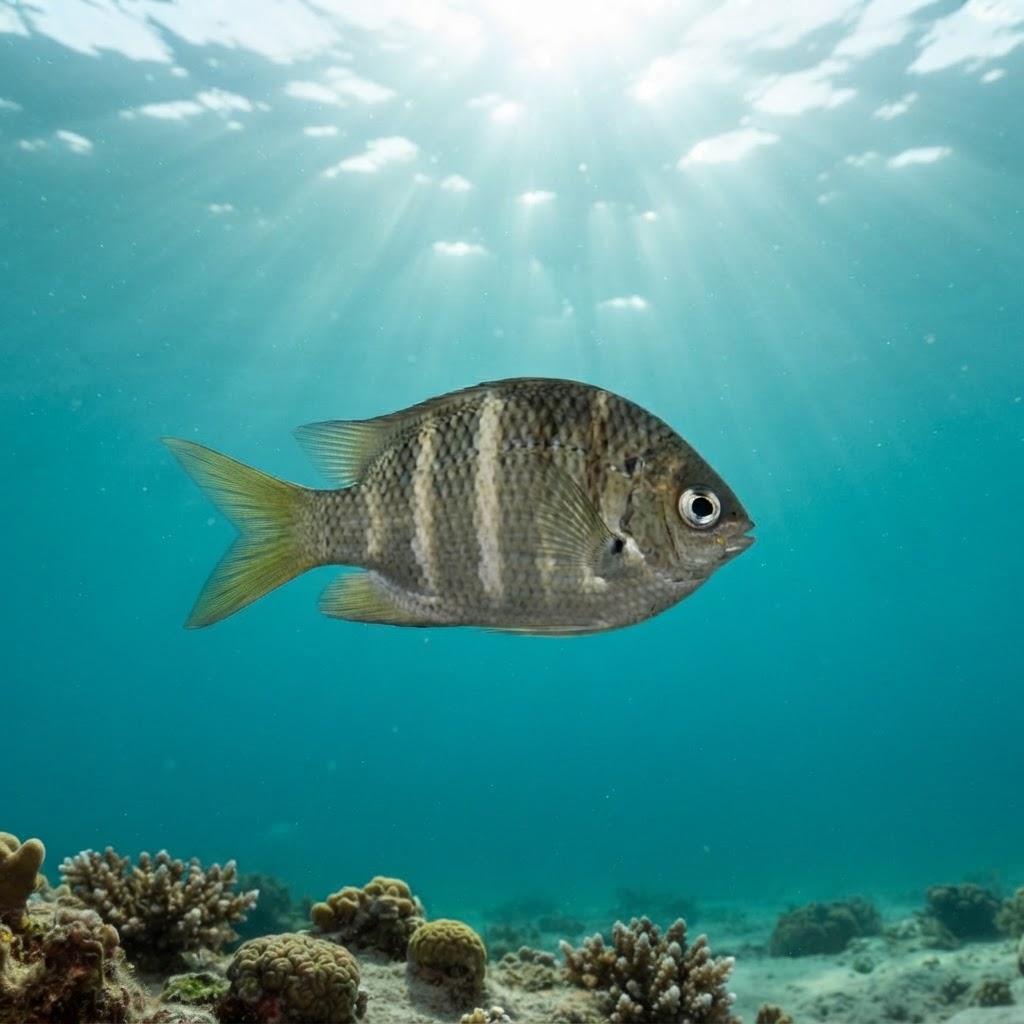
Abudefduf notatus
Grey-brown reef damsel logged at 93 sites, thickest around Koh Lipe and Phuket in waters averaging 23-29C, year-round.
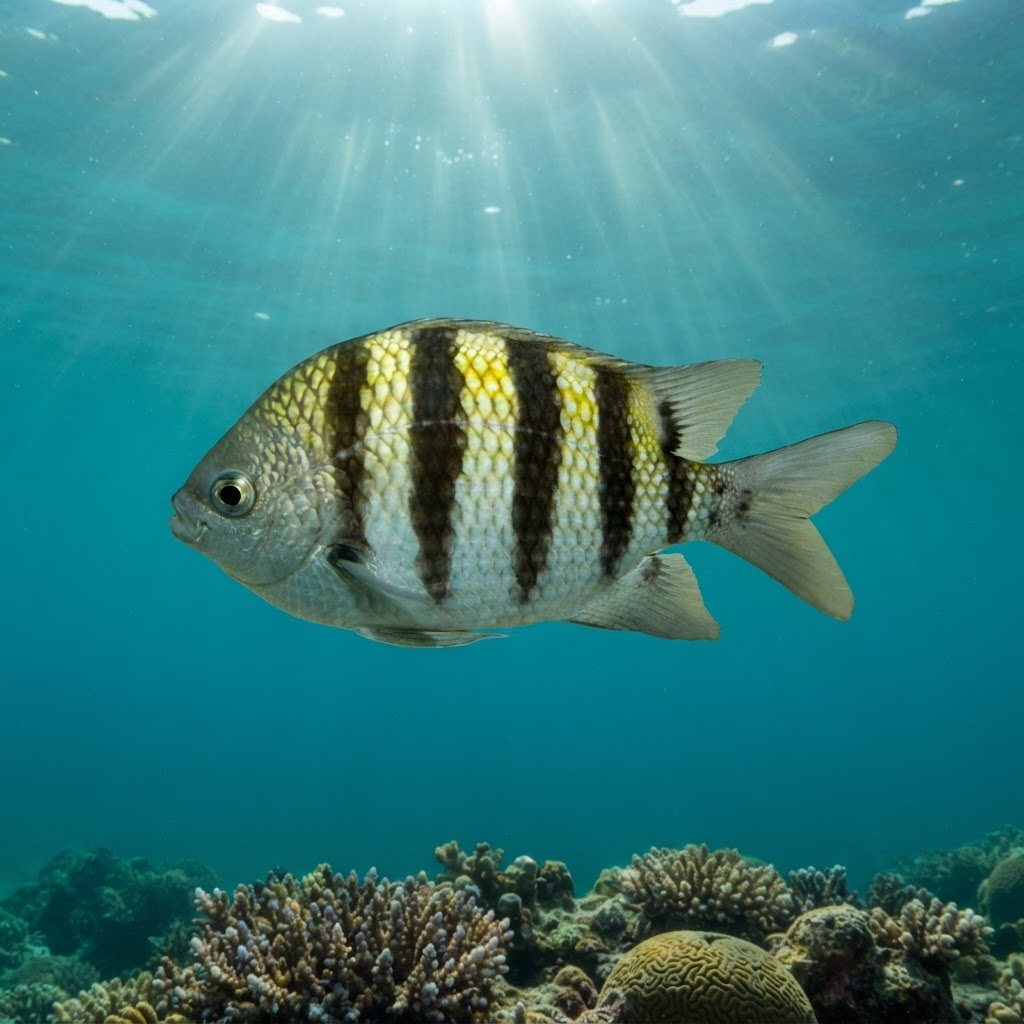
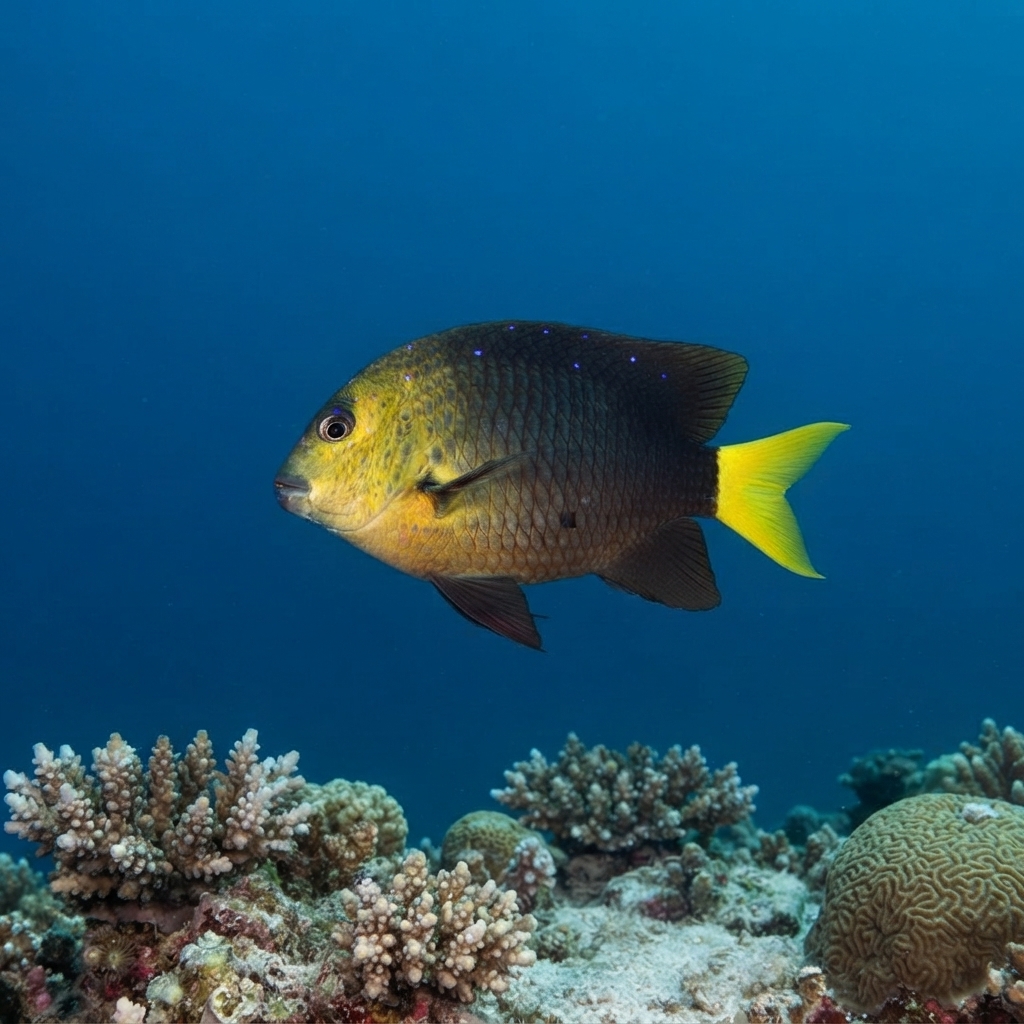
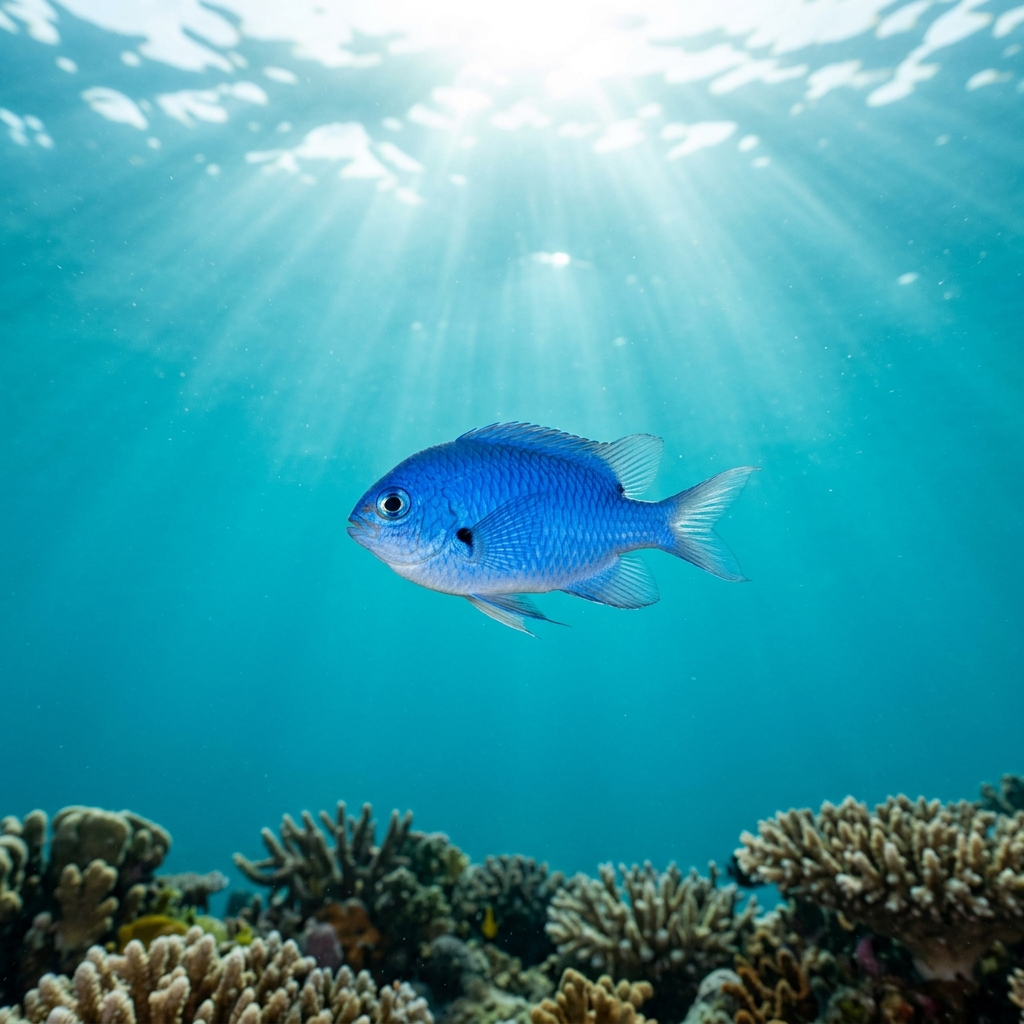
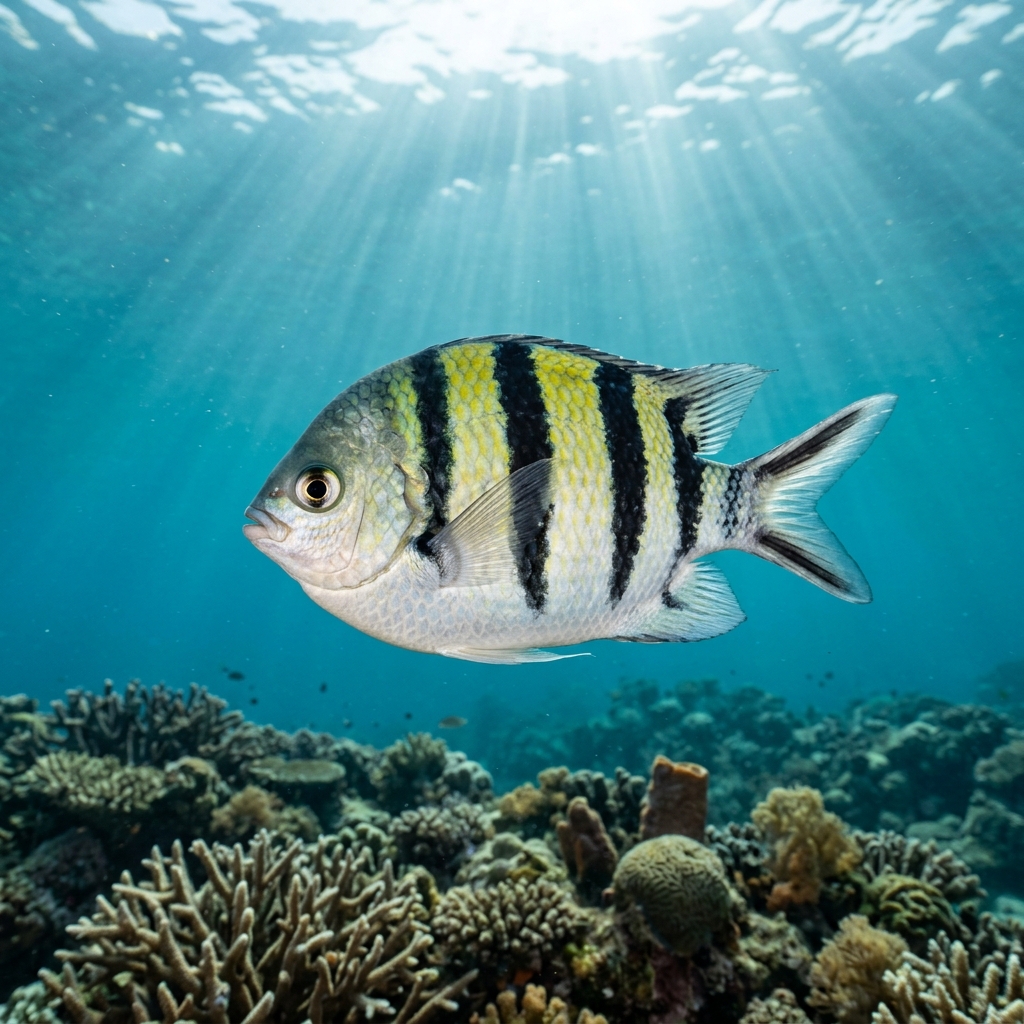
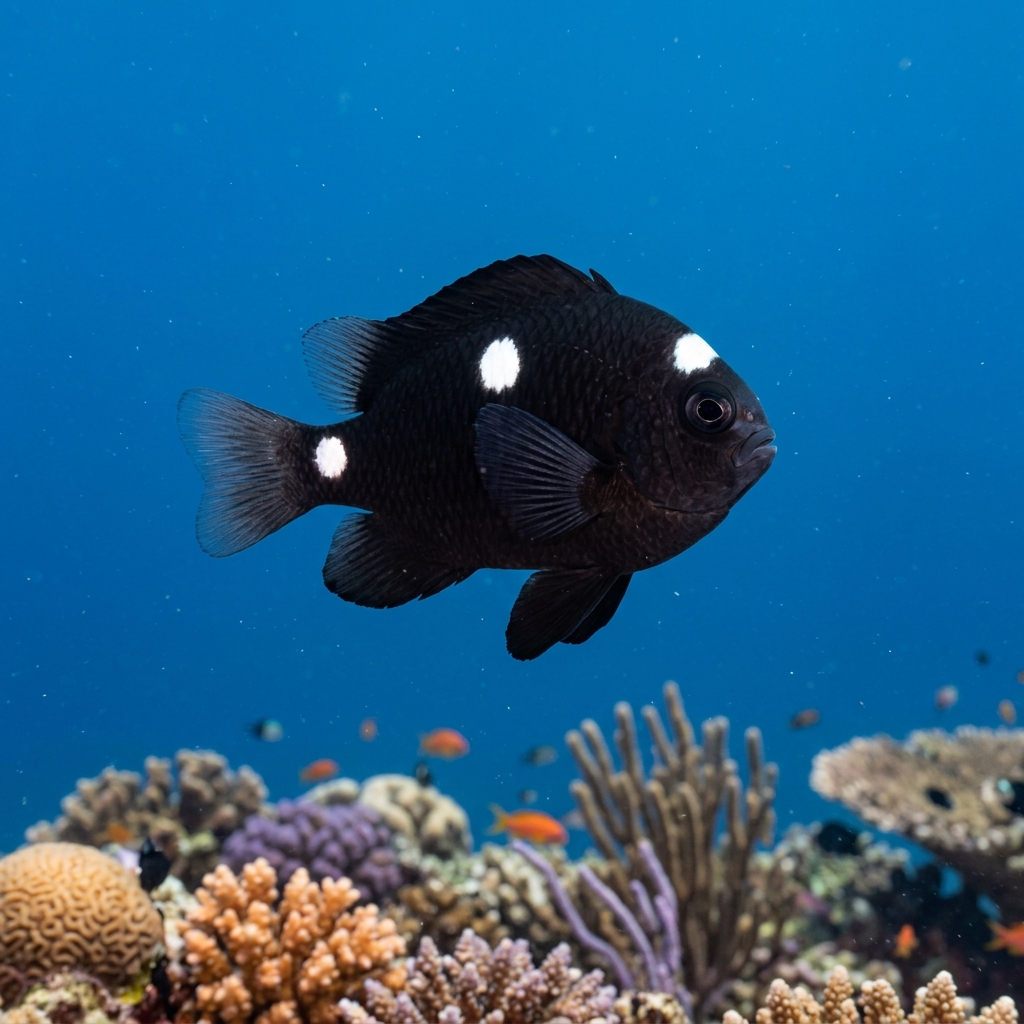
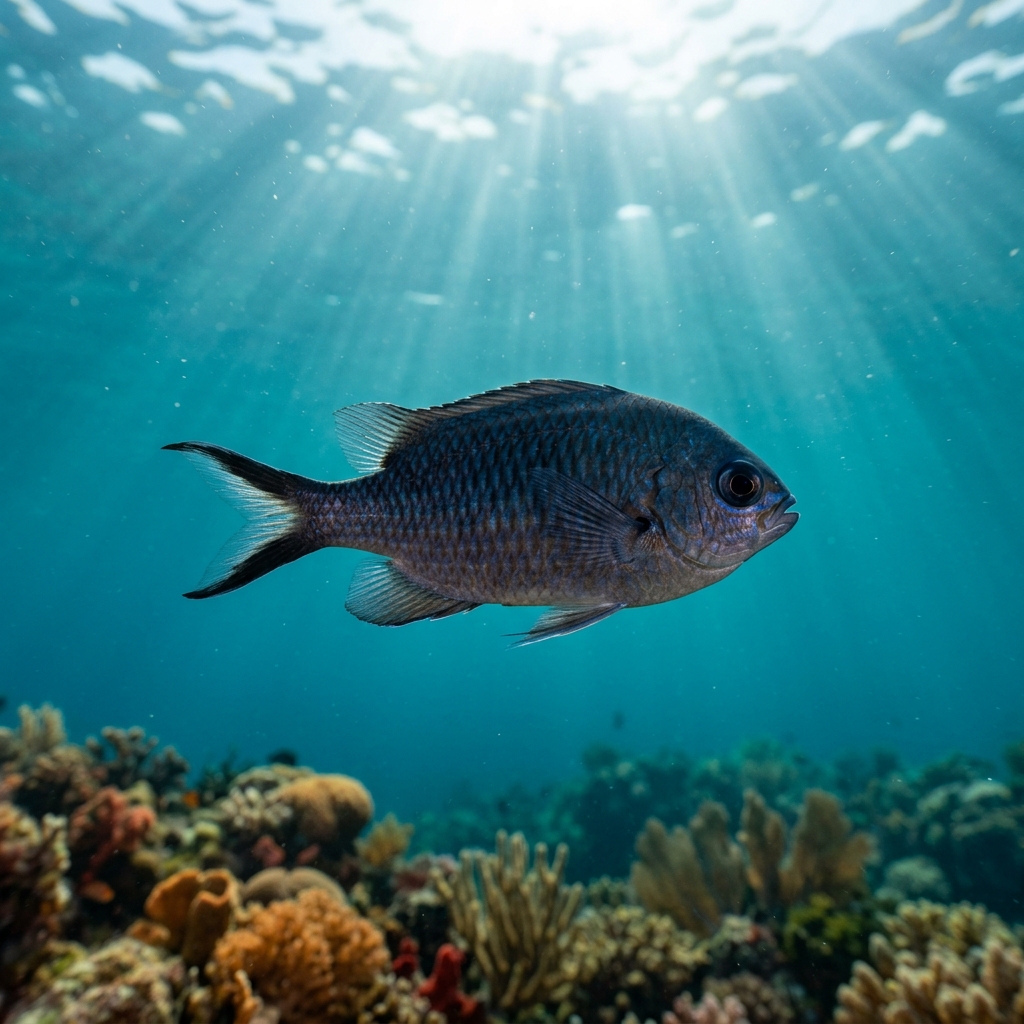
A small, deep-bodied damselfish around 12cm, with a grey to brownish body and faint pale edging on each scale that gives a cross-hatched look. Look for a dark smudge at the base of the tail and a forked tail fin, often two-tone with a paler centre. It swims in loose, nervous groups rather than alone, hugging rock or coral structure rather than open water.
Expect to see it in loose, shifting groups picking over algae and reef debris on rocky or coral-covered bottoms, usually keeping close to shelter rather than venturing into open water. It is not a bold fish around divers, tending to dart for cover if you get too close, though it will resume feeding quickly once you back off. Most sightings come from shallower reef flats and slopes rather than deep structure.
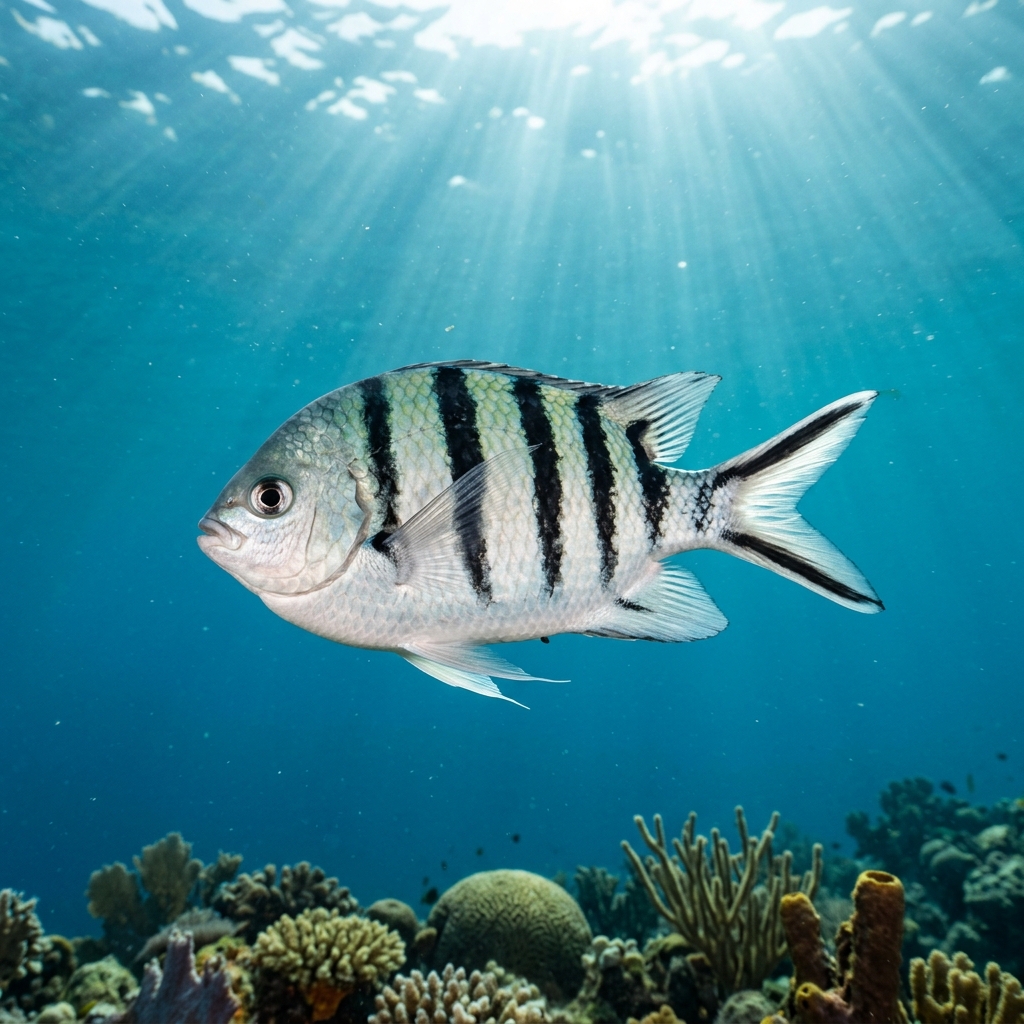
It belongs to the same genus as the Sergeant Major, and shares that group's habit of grazing algae turfs, a role that helps keep reef surfaces clear for coral recruitment.
No clear seasonal pattern shows in the data, and its comfort range of roughly 23 to 29C spans the tropical reefs it favours year-round, so any month works for a dive trip built around it.
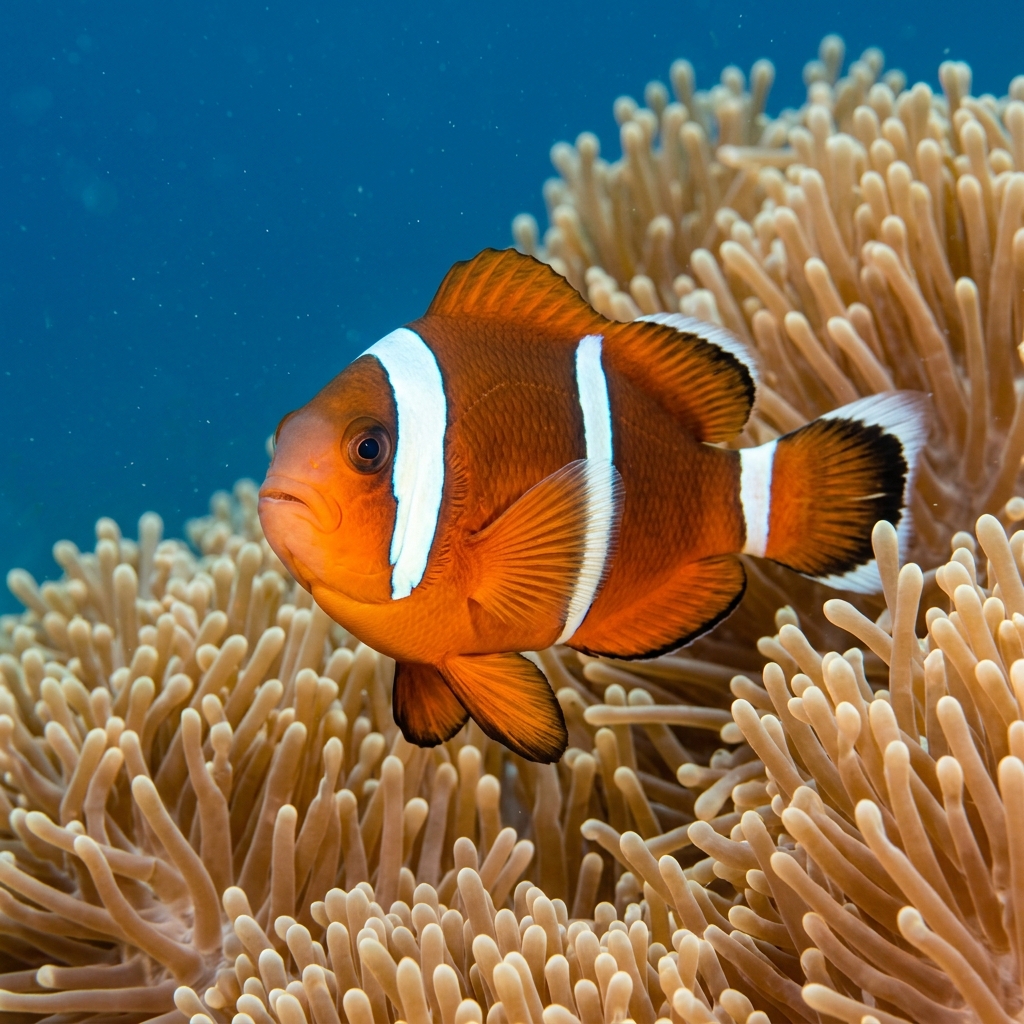
Reef neighbours a diver could mistake it for. Use the identification notes above to tell them apart.
Thailand is by far the strongest bet, with dense logging around Koh Lipe, Phuket, Koh Chang and Koh Lanta. The Inner Islands of Seychelles are also a reliable spot for it, with a single logged site in KwaZulu-Natal, South Africa rounding out its known range.
Mapping where Dusky Damsel is logged…
Thailand is the most consistent place to find it, especially around Koh Lipe, Phuket, Koh Chang and Koh Lanta. It also turns up reliably in the Inner Islands of Seychelles.
There is no strong seasonal signal in sighting data, and it sits comfortably in water from about 23 to 29C, so it is present on tropical reefs throughout the year.
Look for a small, deep-bodied fish around 12cm with a grey-brown body, pale scale edging that gives a netted texture, and a forked tail. It usually moves in loose groups close to reef structure rather than swimming in open water.
They typically reach around 12cm, a small, easily overlooked reef fish among larger damselfish species.
No, they pose no threat to divers and tend to retreat into reef structure rather than confront anything approaching.
Site and sighting data is aggregated from diver logs, iNaturalist and GBIF. For taxonomy and conservation status:
Yellowtail Clownfish
3,523 sites