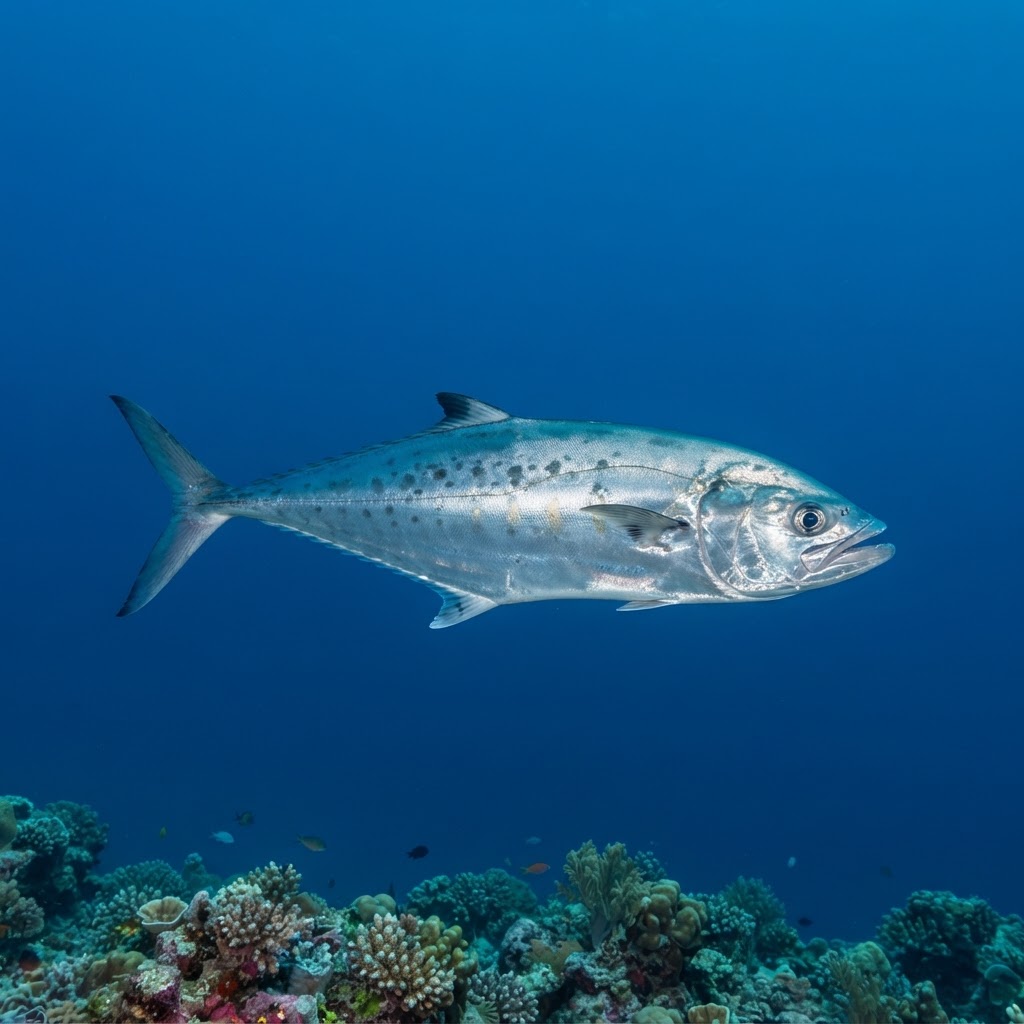
Scomberoides lysan
Silvery jack with two dark spots along its flank, most reliably logged off Hawaii, Khao Lak and the Maldives' Central Atolls year-round.
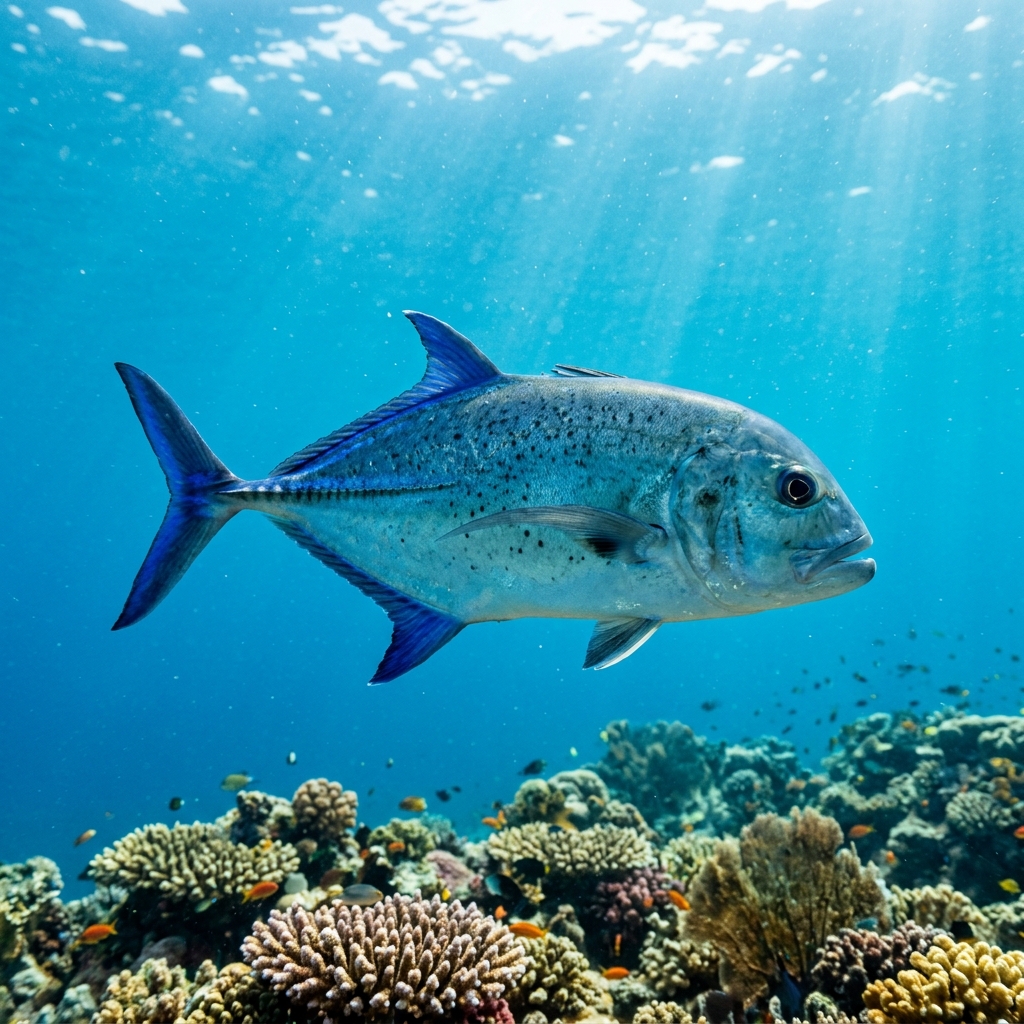
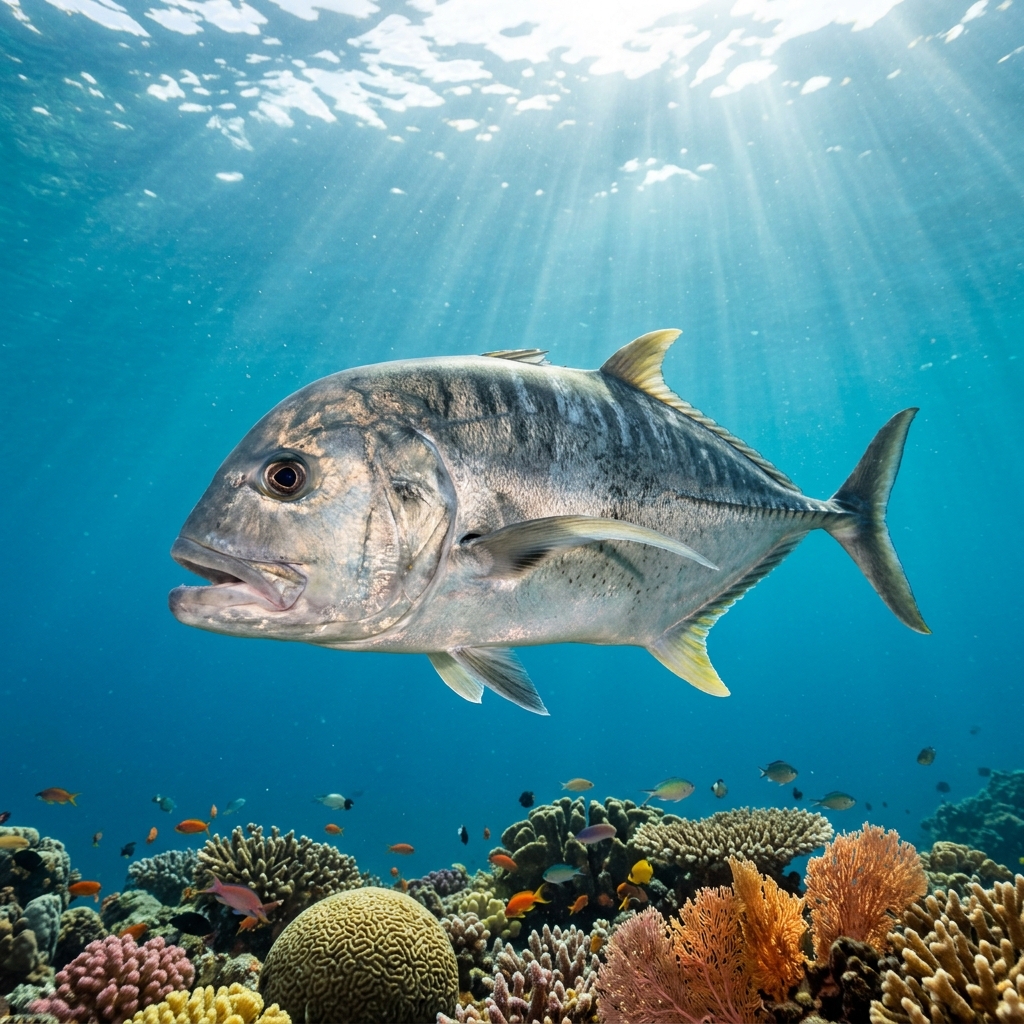
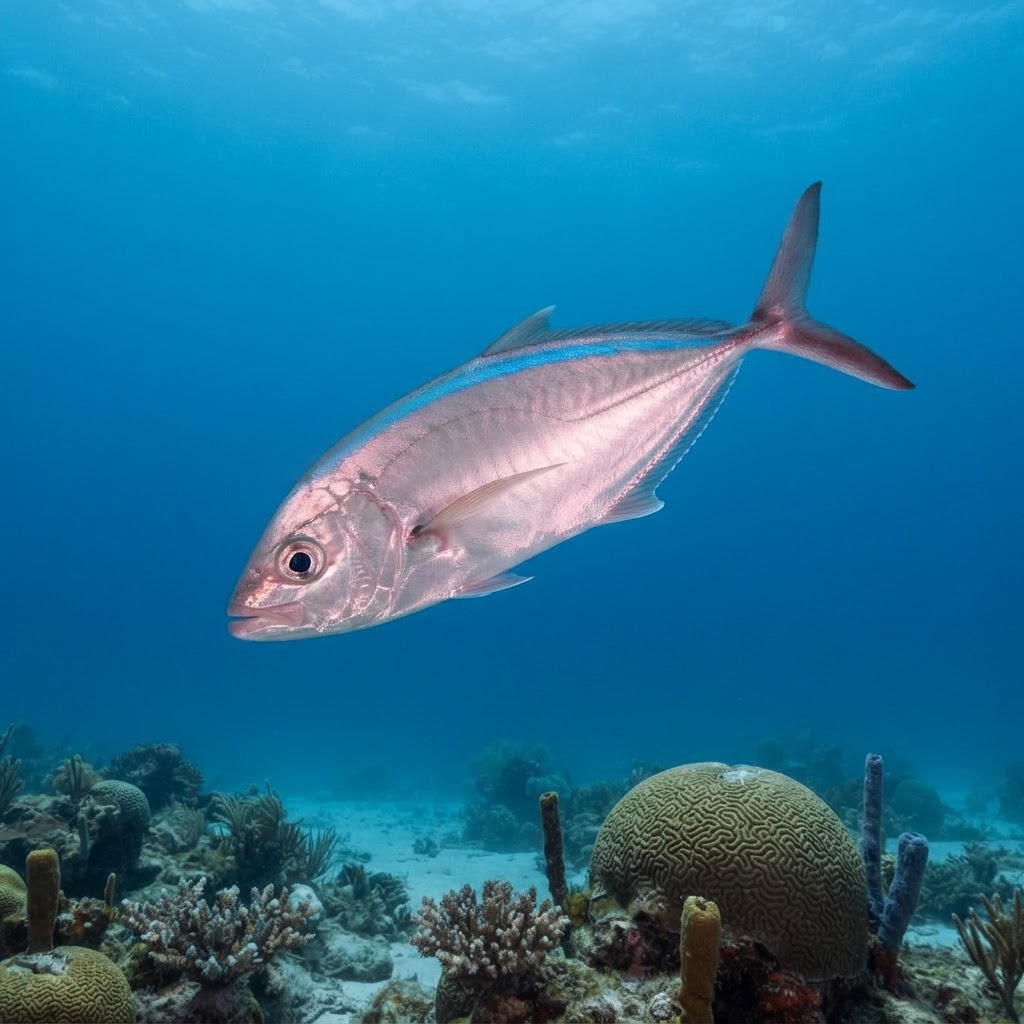
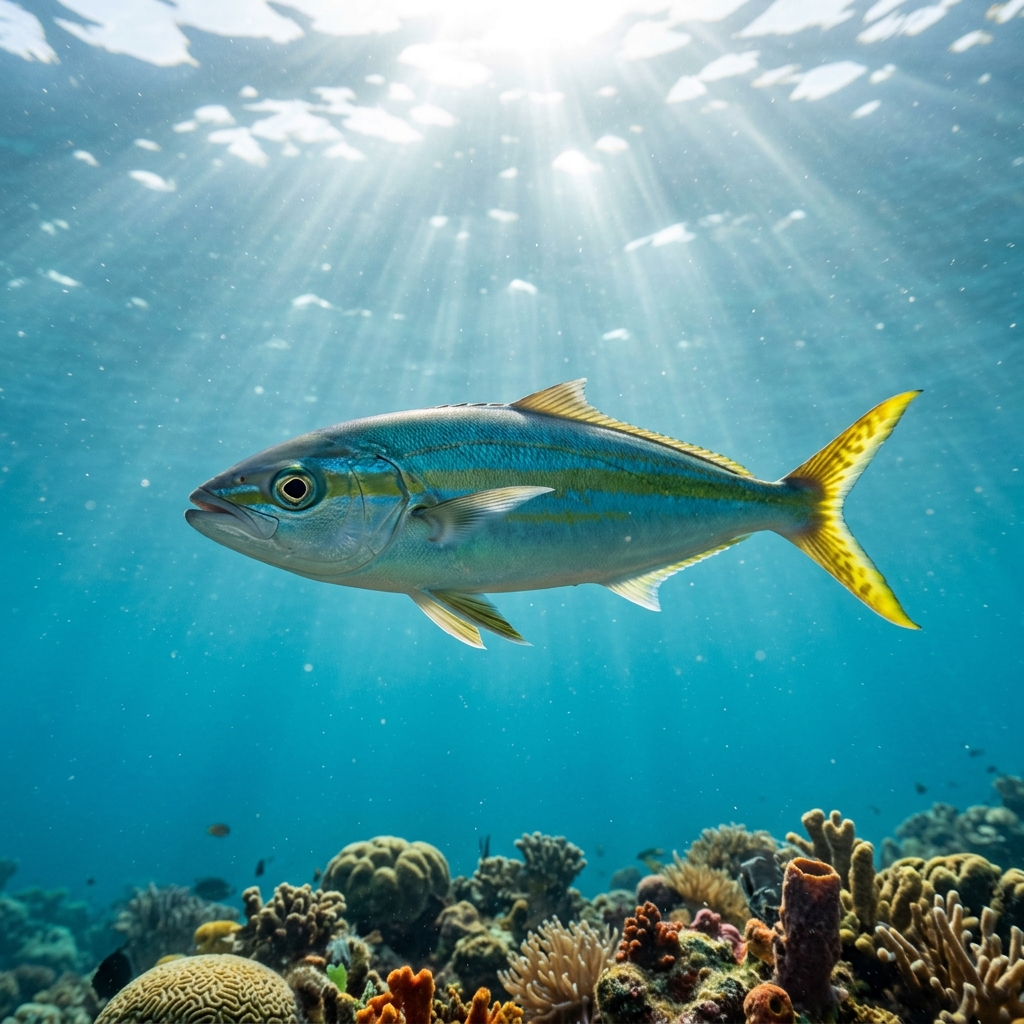
Long, laterally flattened silver body reaching up to 77 cm, with a pointed snout and a row of small dark spots running along the upper flank, usually two more prominent than the rest. Look for the deeply forked tail and the way it holds a straight, torpedo-like posture as it cruises mid-water or along the reef edge. The dorsal profile is fairly straight rather than deeply arched, which helps separate it from the deeper-bodied jacks it swims alongside.
Usually seen singly or in loose pairs patrolling along reef edges and sandy flats rather than schooling tightly like many of its jack relatives. Divers report it staying at a cautious distance, cruising past rather than lingering, and it is logged as uncommon at almost all sites where it turns up, so a sighting tends to be a brief, close look rather than a repeat encounter. It often works the same stretch of reef across a dive, hunting over open ground rather than tucking into structure.
That spotted flank pattern is a real identification shortcut among jacks, most of which are plain silver, and it is thought to help break up its outline against dappled reef light while hunting.
No clear seasonal pattern shows up in the sighting data, and its comfort range of roughly 25 to 29 C matches warm reef water year-round, so any month on these reefs is fair game.
Reef neighbours a diver could mistake it for. Use the identification notes above to tell them apart.
Most consistently logged off Hawaii, with Khao Lak in Thailand and the Central Atolls of the Maldives also strong areas for sightings. French Polynesia's Society Islands turn it up less often but reliably enough to be worth watching for on reef edges there.
Mapping where Doublespotted Queenfish is logged…
Hawaii turns up the most logged sightings, with Khao Lak in Thailand and the Central Atolls of the Maldives also solid bets. The Society Islands in French Polynesia are worth checking too, though sightings there are less frequent.
There's no strong season in the sighting data, and its 25 to 29 C comfort range covers these reefs all year, so it can show up on any dive regardless of month.
Look for a long silvery jack shape with a forked tail and a line of dark spots along the upper flank, usually with two standing out more than the rest. Its body profile is straighter than deeper-bodied trevallies swimming nearby.
They can reach around 77 cm in length, making them a mid-sized presence among the jacks and trevallies you'll spot cruising reef edges.
No, they're not considered a risk to divers. They tend to keep a cautious distance and cruise past rather than approach.
Site and sighting data is aggregated from diver logs, iNaturalist and GBIF. For taxonomy and conservation status:
Bigeye Trevally
2,591 sites