Parupeneus insularis
Pale reef forager with twin black bars, most reliably spotted around Hawaii's reef flats in 24-29C water, year-round.
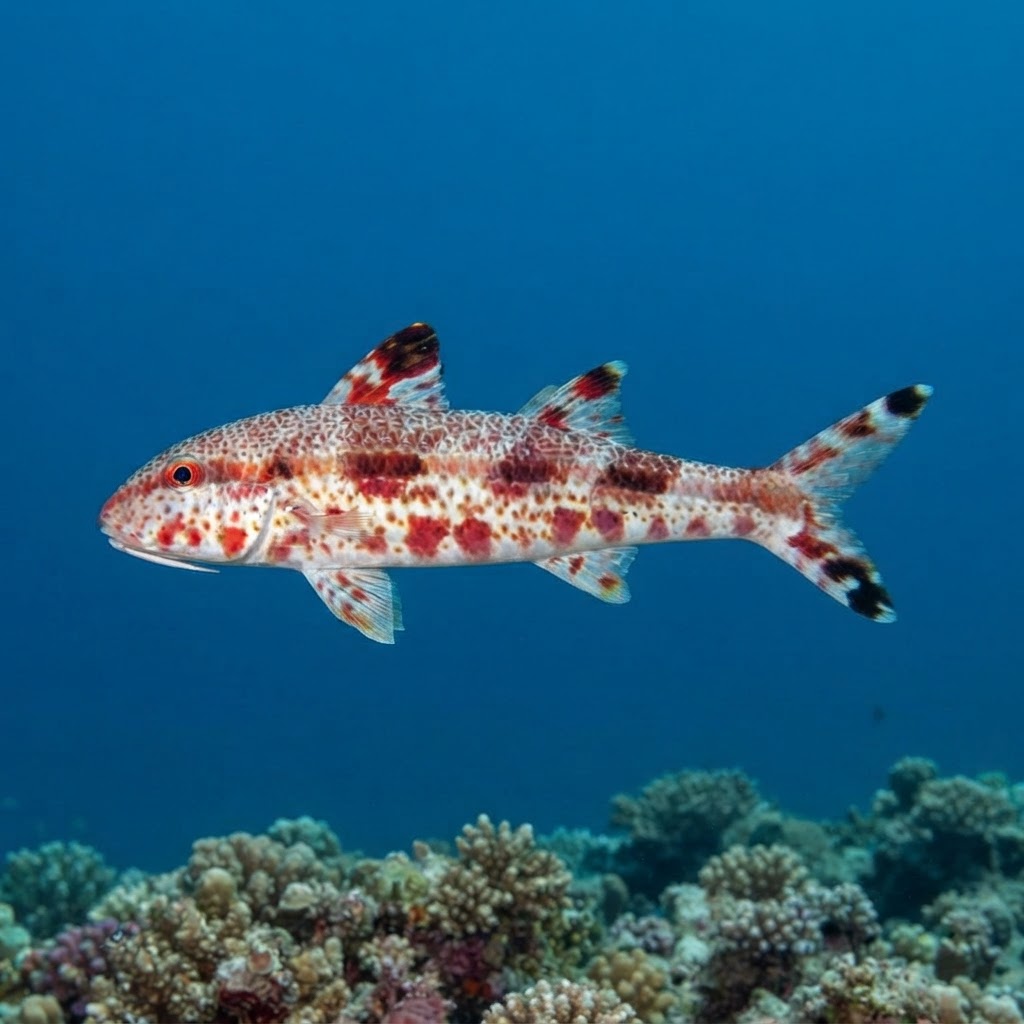
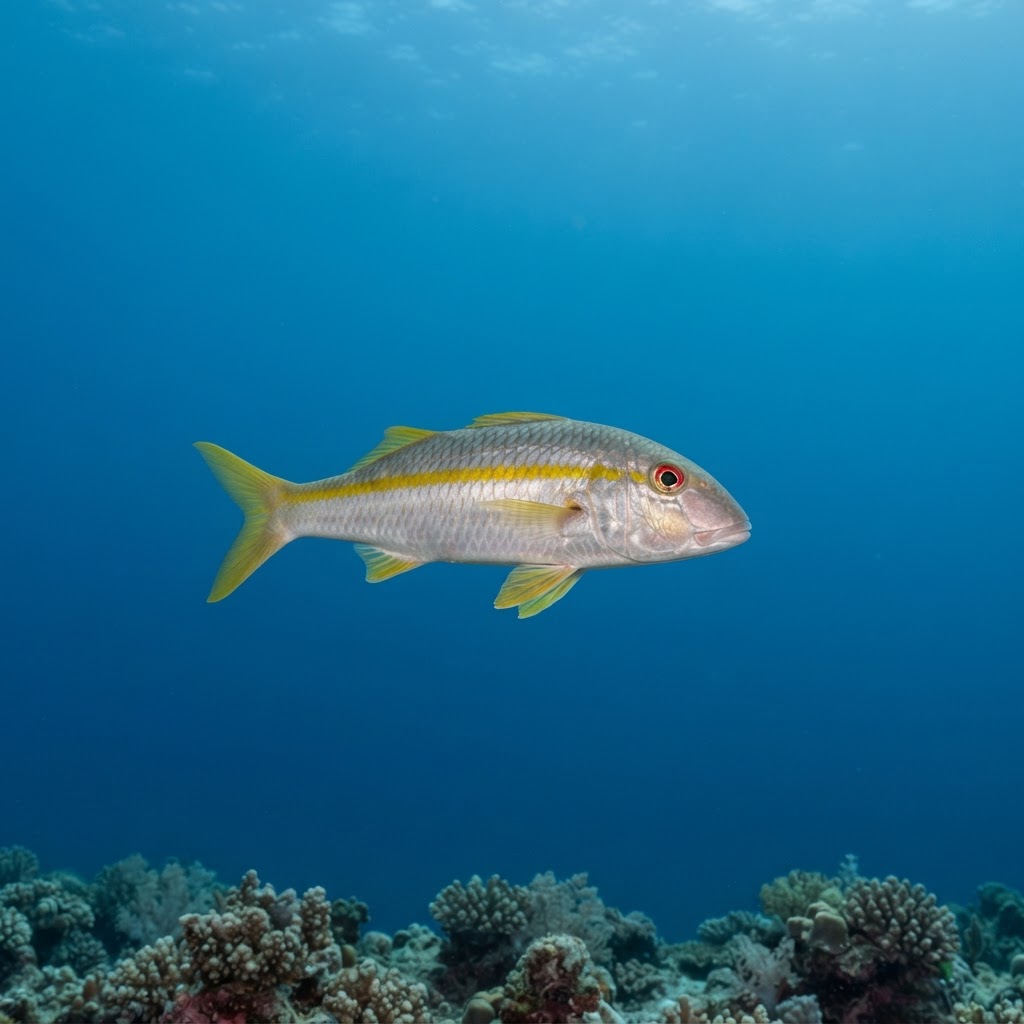
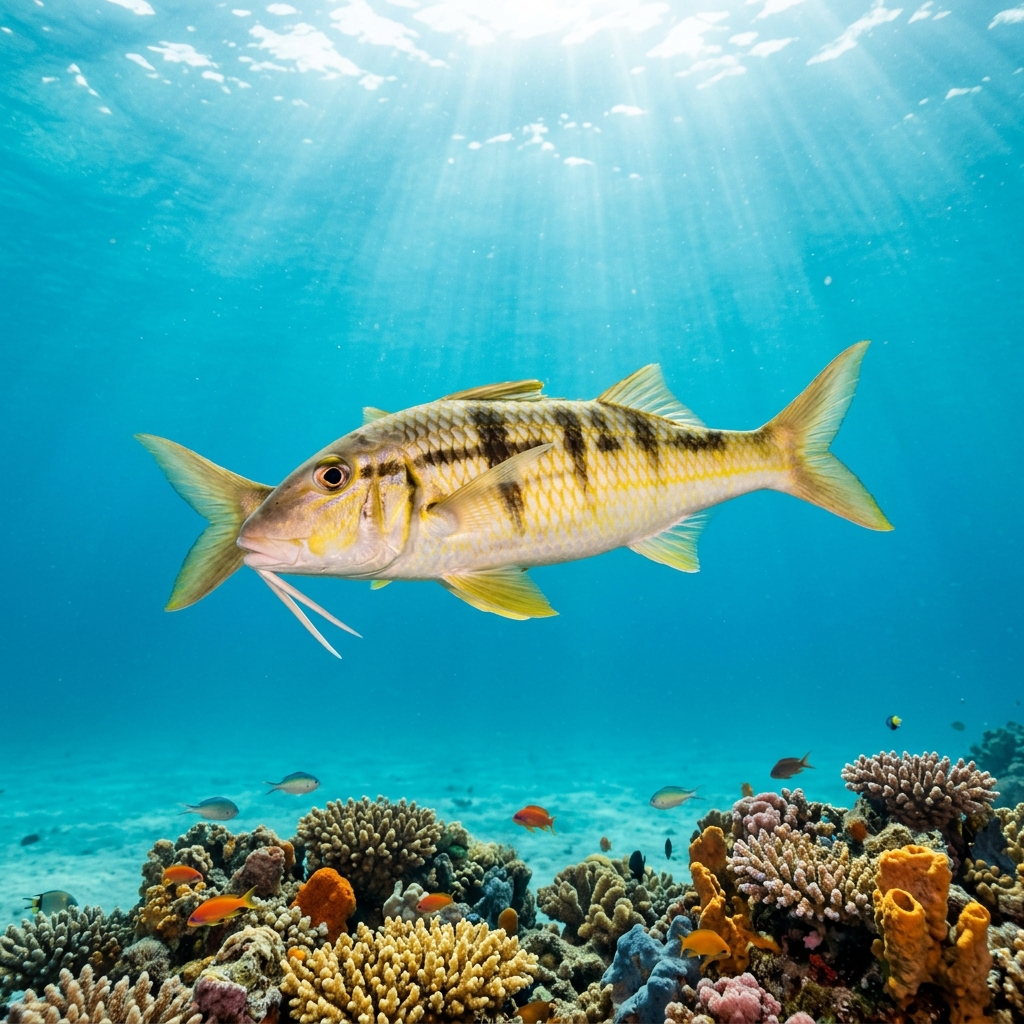
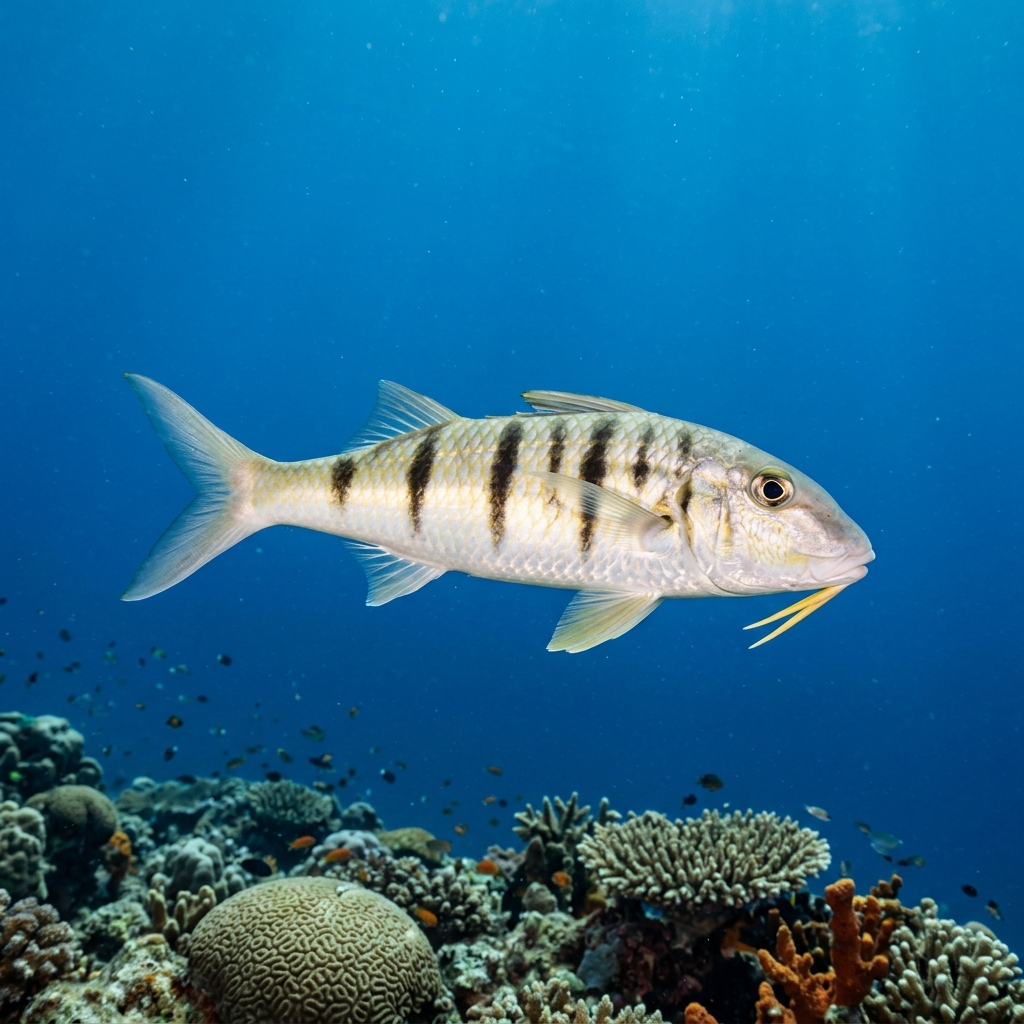
Grows to about 21cm, with a slim, torpedo-shaped body in pale grey to whitish tones and a pair of chin barbels it uses to probe the sand. The name-giving feature is two dark bars set toward the rear half of the body, one below the dorsal fin and one nearer the tail, which is the quickest way to separate it from other pale goatfish on the same reef. It often swims with its barbels down, actively sweeping sand and rubble rather than resting in the open.
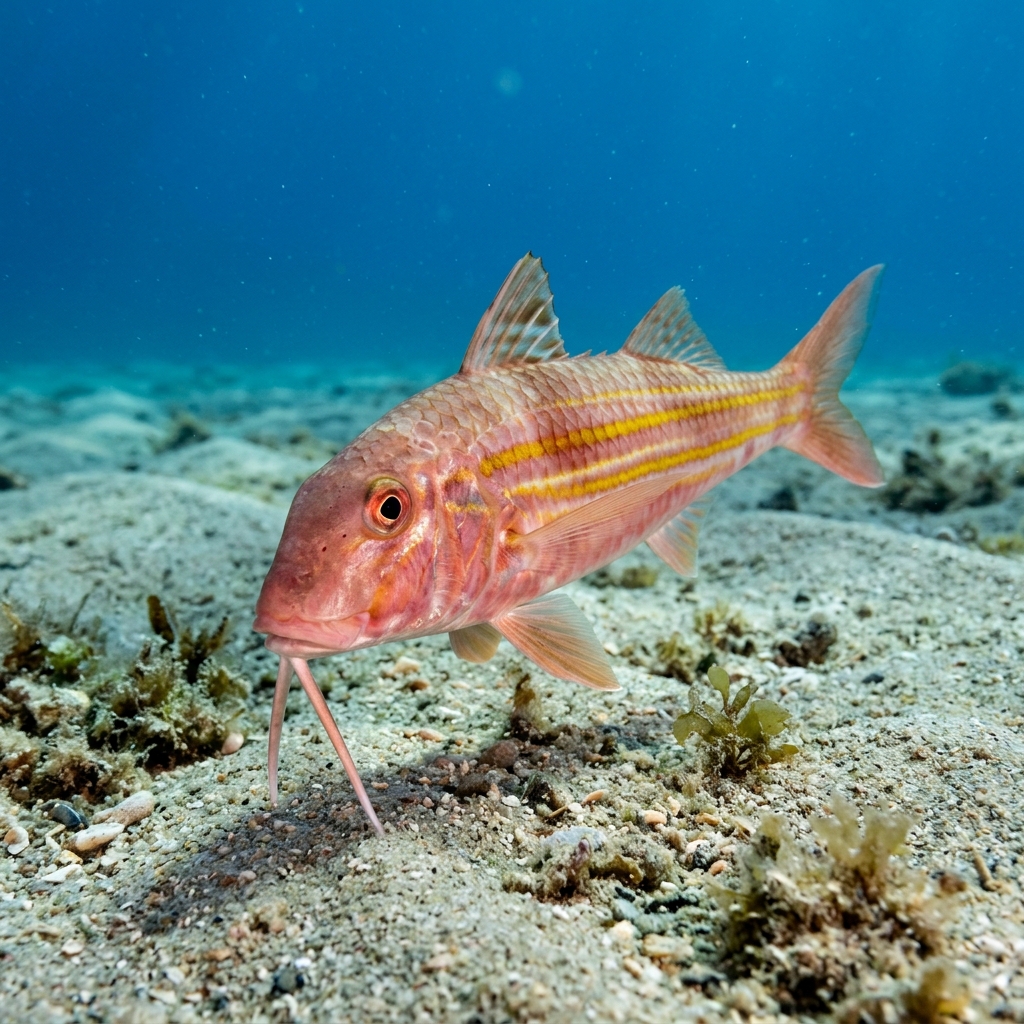
Look for it working sandy patches and rubble zones close to the reef, barbels down, sweeping side to side as it hunts small invertebrates buried just under the surface. It is not a fish that schools tightly or draws attention, most divers log it as a single fish quietly foraging rather than reacting to the camera. It tends to keep moving rather than settle, so a slow drift alongside it usually works better than a direct approach.
Those chin barbels are loaded with taste and touch sensors, letting it detect buried prey in sand it cannot see, then flick the barbels aside to bite once something is found.
No clear seasonal pattern shows up in the data, and its comfort range of roughly 24 to 29C matches tropical reef temperatures year-round, so any month is workable in Hawaii or French Polynesia.
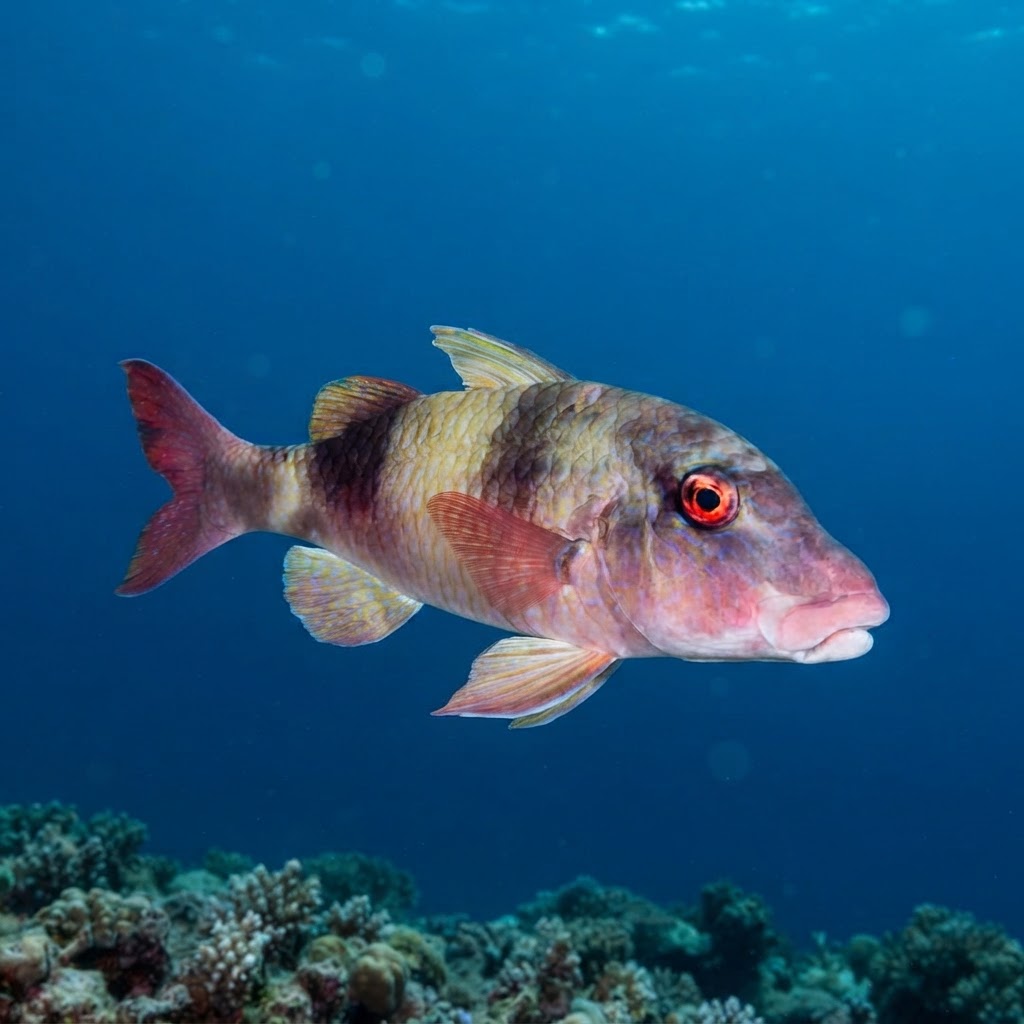
Reef neighbours a diver could mistake it for. Use the identification notes above to tell them apart.
Most consistently logged around Hawaii, where it turns up across a wide spread of reef sites, making it the easiest place to plan a search. It also shows up in French Polynesia, with sightings from the Society Islands and the Tuamotu Islands, though at lower numbers than Hawaii.
Mapping where Island Goatfish is logged…
Hawaii is by far the most reliable place, showing up across a broad spread of reef sites. Smaller numbers are also logged in French Polynesia, around the Society Islands and Tuamotu Islands.
There is no strong season in the sighting data. It sits comfortably in 24 to 29C water, which describes Hawaiian and Polynesian reefs most of the year, so it is a fair bet on any dive trip.
Check for a slim, pale grey to whitish body around 21cm long with a pair of chin barbels, and look for two distinct dark bars toward the rear half of the body. Watching it forage with barbels down over sand is another good clue.
They average around 21cm in length, a modest, slim-bodied reef fish rather than anything large or bulky.
They forage using a pair of sensory barbels under the chin, sweeping them through sand and rubble to feel and taste out hidden prey before striking. It is a distinctive way to hunt without relying on sight alone.
Site and sighting data is aggregated from diver logs, iNaturalist and GBIF. For taxonomy and conservation status:
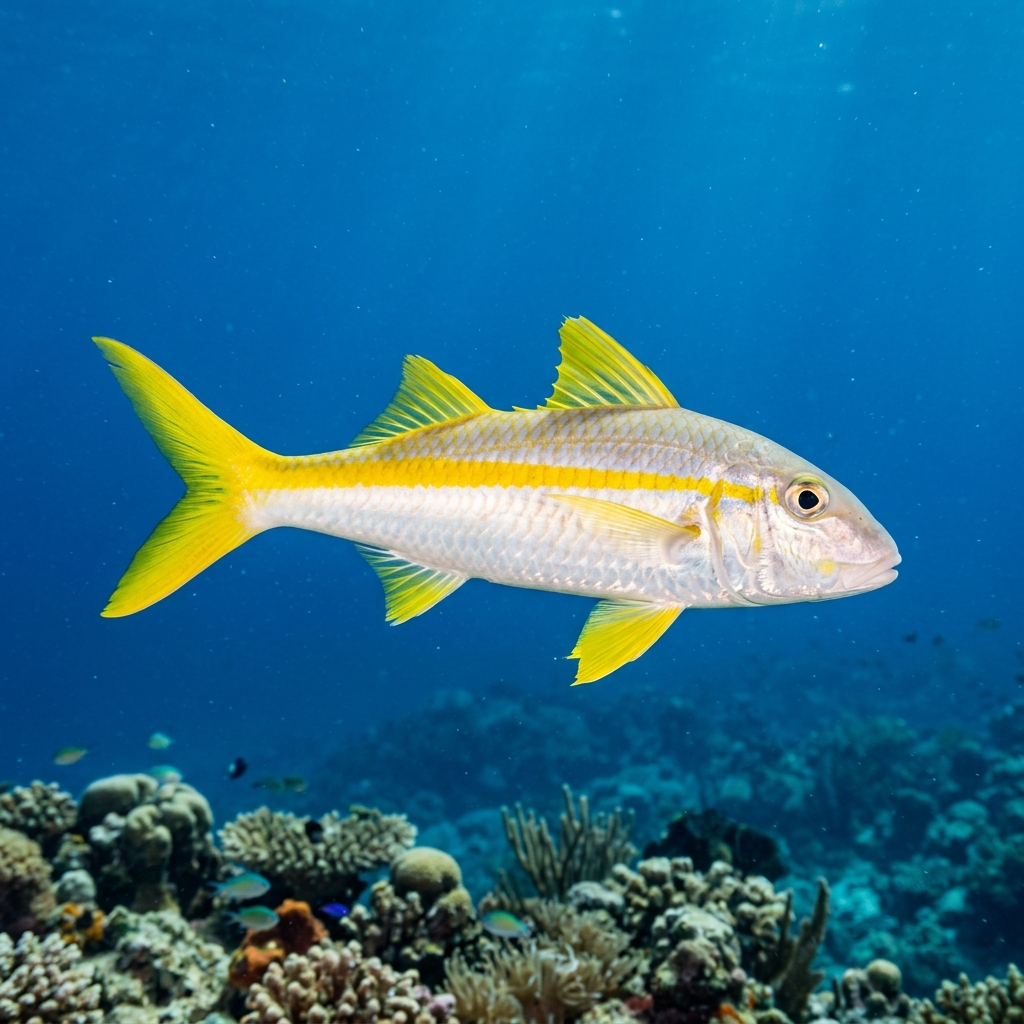
Yellowfin Goatfish
2,241 sites