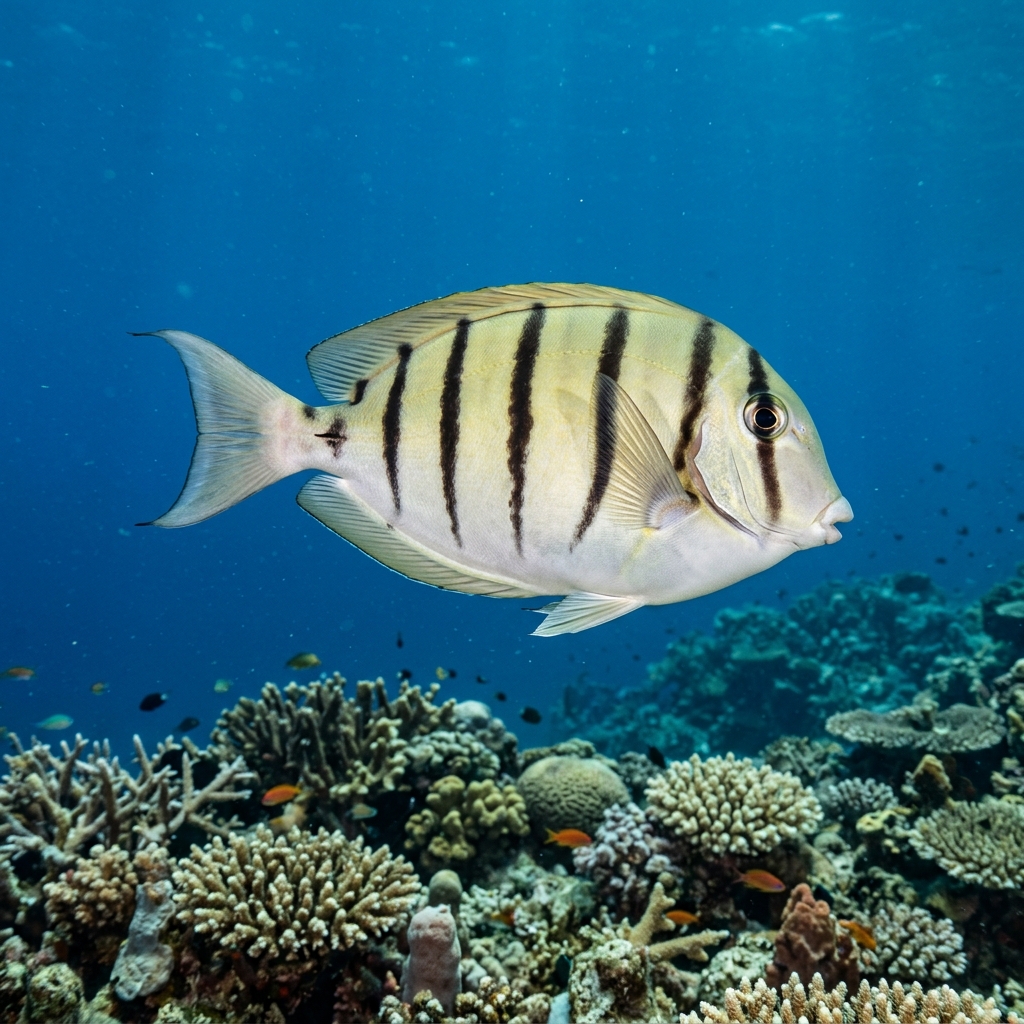
Acanthurus tennentii
Grey-brown reef surgeonfish with two dark bands, most reliably logged in the Maldives' Northern Atolls and Sulawesi. Water sits at 25-29C year-round.
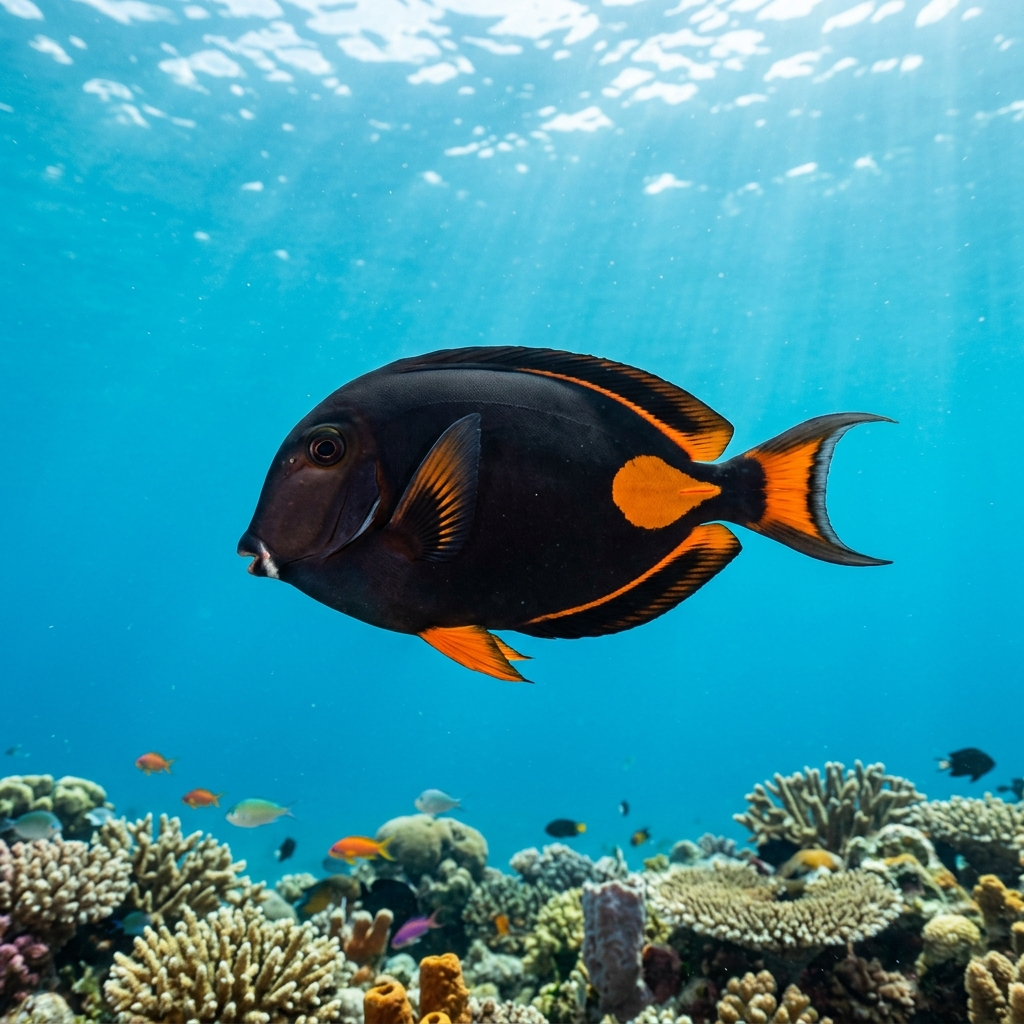
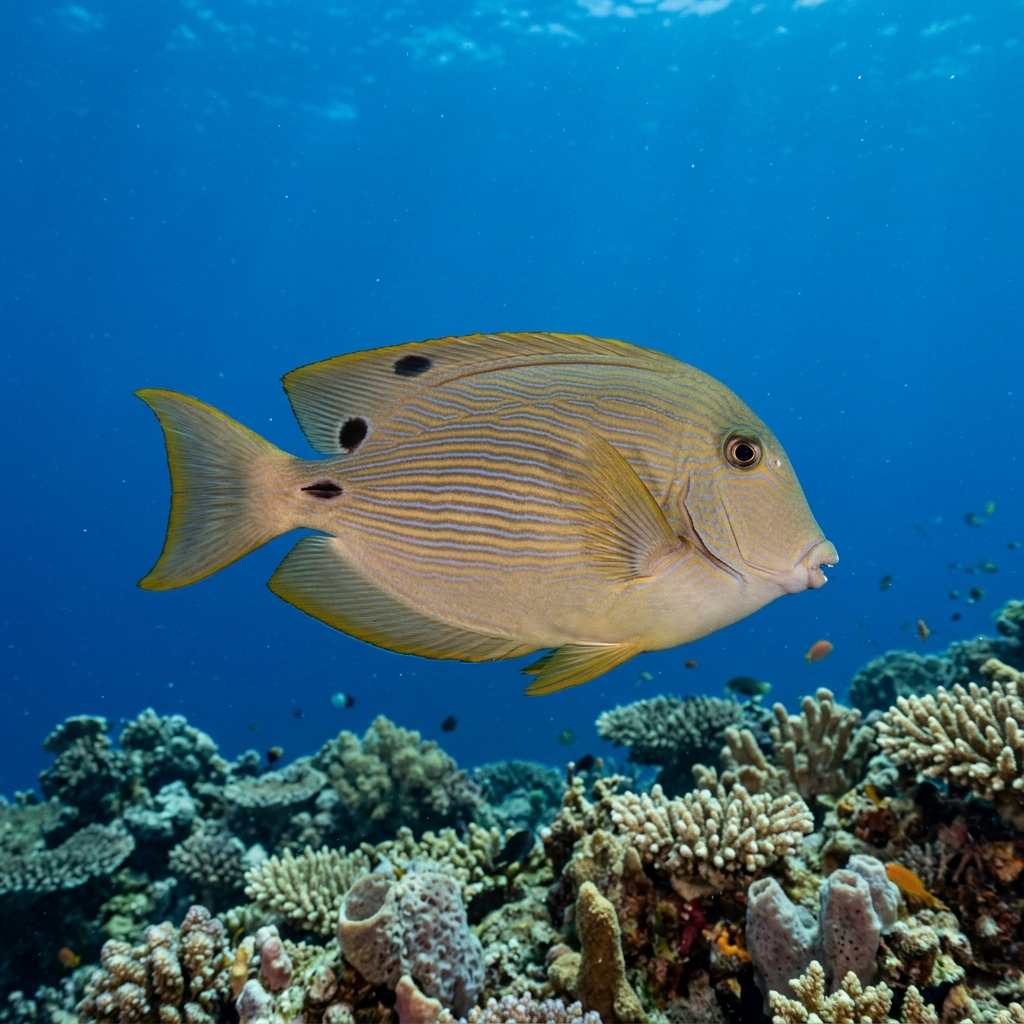
Grey to brownish-grey body around 21 cm long, with the two dark bands near the tail base that give it its name, one crossing the caudal peduncle and one just forward of it. Look for a fine orange ring around the eye and the pale, almost white tail fin margin, which stands out even in murky light. Body shape is the classic surgeonfish oval, flattened side to side, with a scalpel-like spine folded near the tail that it flicks out when threatened.
Usually seen picking algae off rock and dead coral surfaces on the reef flat and outer reef slope, often alone or in loose small groups rather than big schools. It keeps a fairly cautious distance from divers, drifting off into cover rather than approaching, and is most active during daylight hours when grazing.
Like other surgeonfish it carries a sharp, blade-like spine on each side of the tail that folds flat against the body until needed, a defensive tool rather than a weapon it uses against divers.
No clear seasonal pattern shows up in the sightings, and with a comfortable range of 25 to 29.3C it turns up on tropical reefs across the Indo-Pacific and western Indian Ocean all year round.
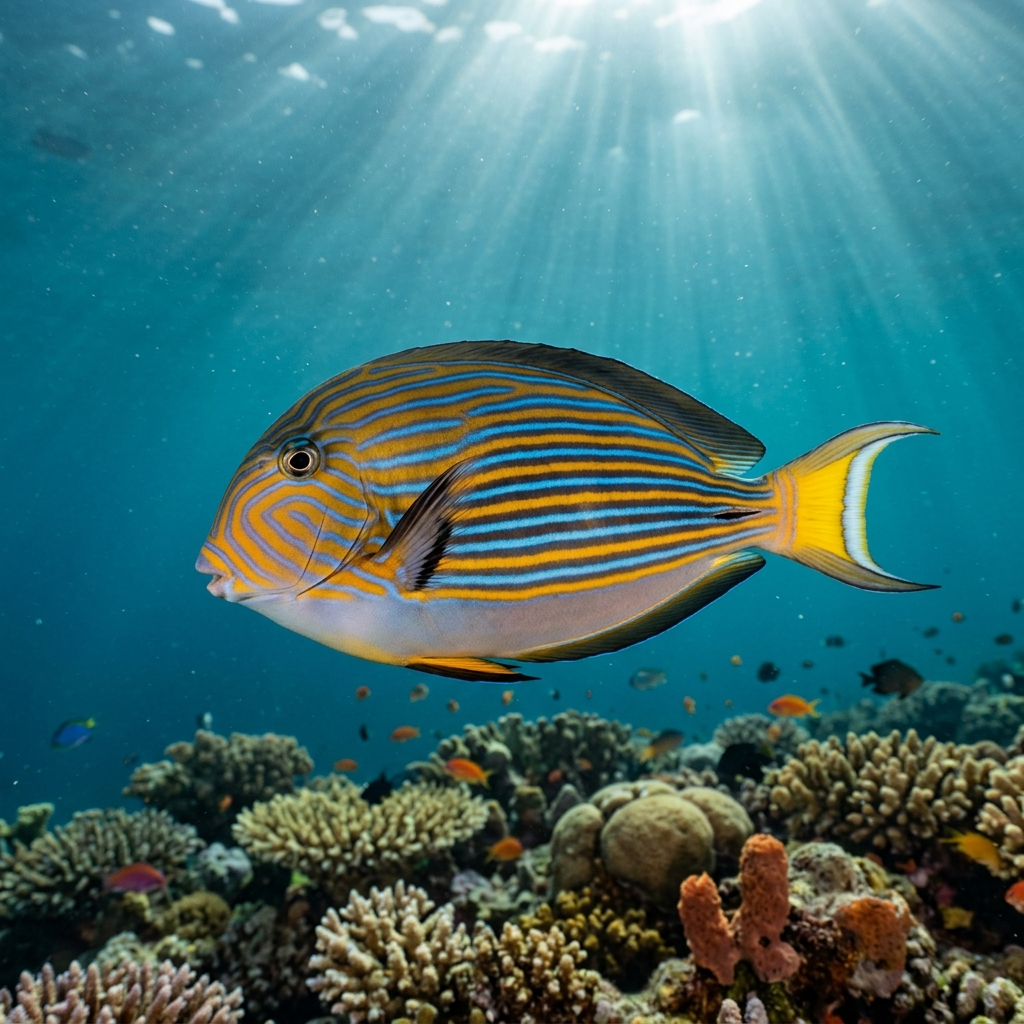
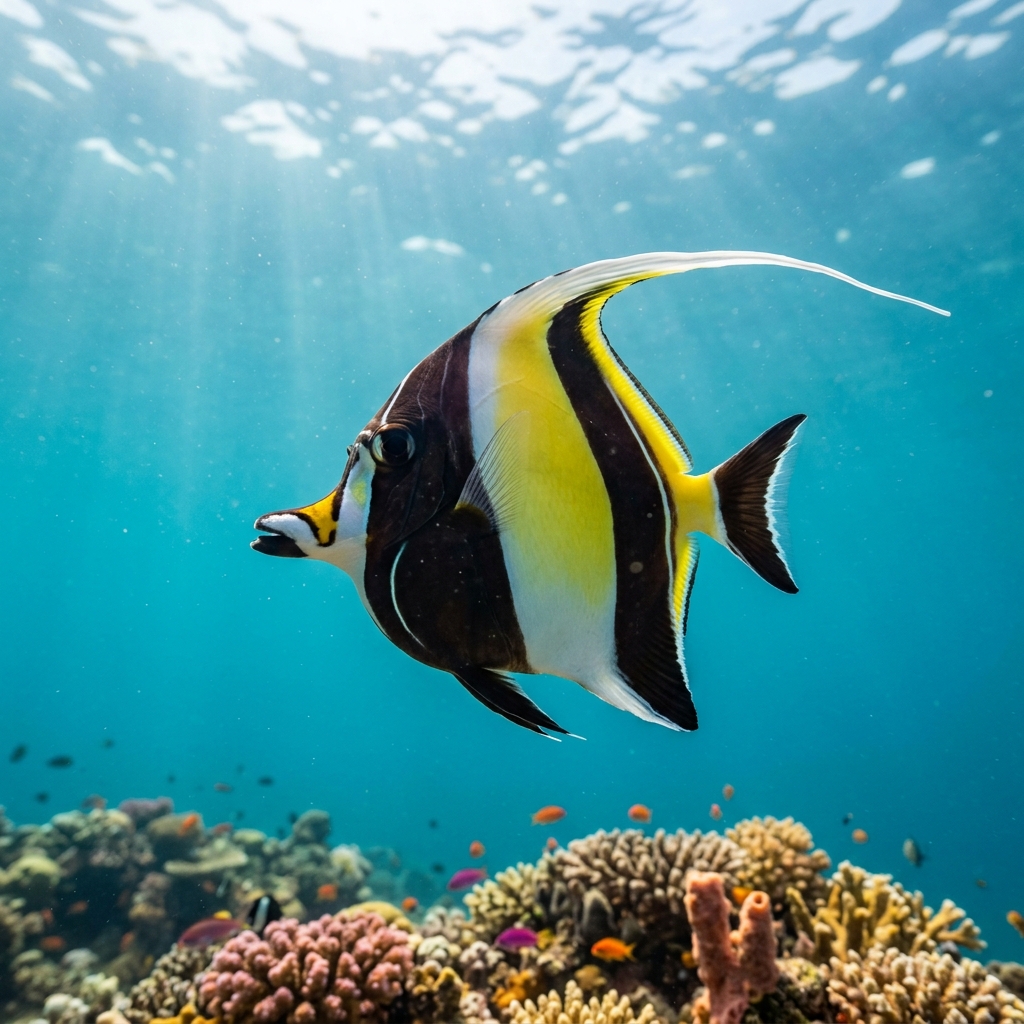
Reef neighbours a diver could mistake it for. Use the identification notes above to tell them apart.
Most reliably logged across the Maldives, especially the Northern, Southern and Central Atolls, and a strong presence through the Philippines in Luzon, Palawan, Visayas and Mindanao. Indonesia's Sulawesi is another dependable region, with further sightings logged in Malaysia, Seychelles, Saudi Arabia, Egypt and South Africa.
Mapping where Doubleband Surgeonfish is logged…
Best chances are in the Maldives, particularly the Northern and Southern Atolls, and across the Philippines in Luzon, Palawan and Visayas. Sulawesi in Indonesia also produces regular sightings.
There is no strong seasonal pattern in the sightings, so it is considered a year-round species on the reefs where it lives, thanks to a stable warm-water niche of 25 to 29.3C.
Look for a grey-brown oval-bodied fish around 21 cm with two dark bands near the tail base, an orange-ringed eye and a pale tail fin edge. It grazes low over reef surfaces rather than schooling in open water.
They typically reach around 21 cm in length, a modest mid-sized surgeonfish you will usually spot alone or in small loose groups over the reef.
No, they are not considered dangerous to divers. Like all surgeonfish they carry a sharp spine near the tail for defence, but they keep their distance and pose no real risk if left alone.
Site and sighting data is aggregated from diver logs, iNaturalist and GBIF. For taxonomy and conservation status:
Striped Surgeonfish
3,289 sites