Pentapodus emeryii
Uncommon but findable in West Papua's reefs, this slim silver fish with long tail streamers shows up year-round in 27 to 29 C water.
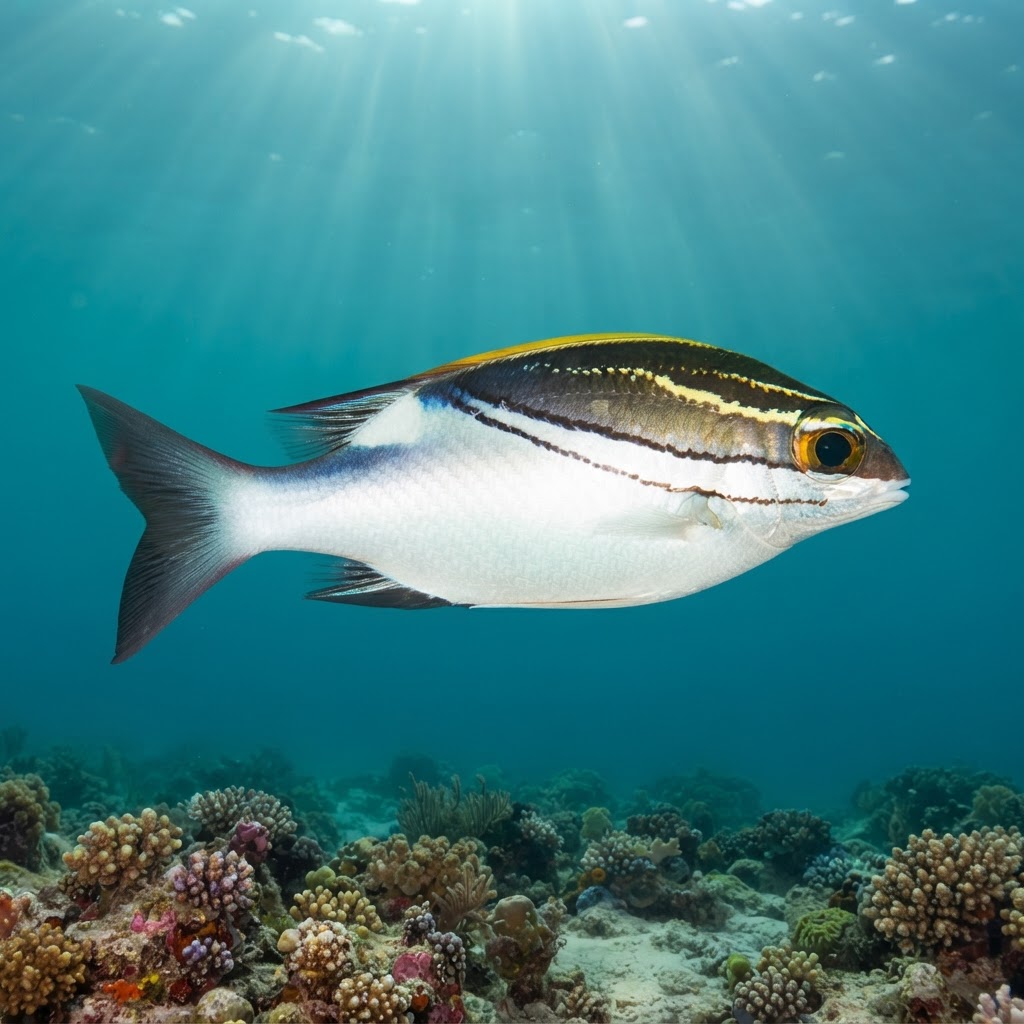
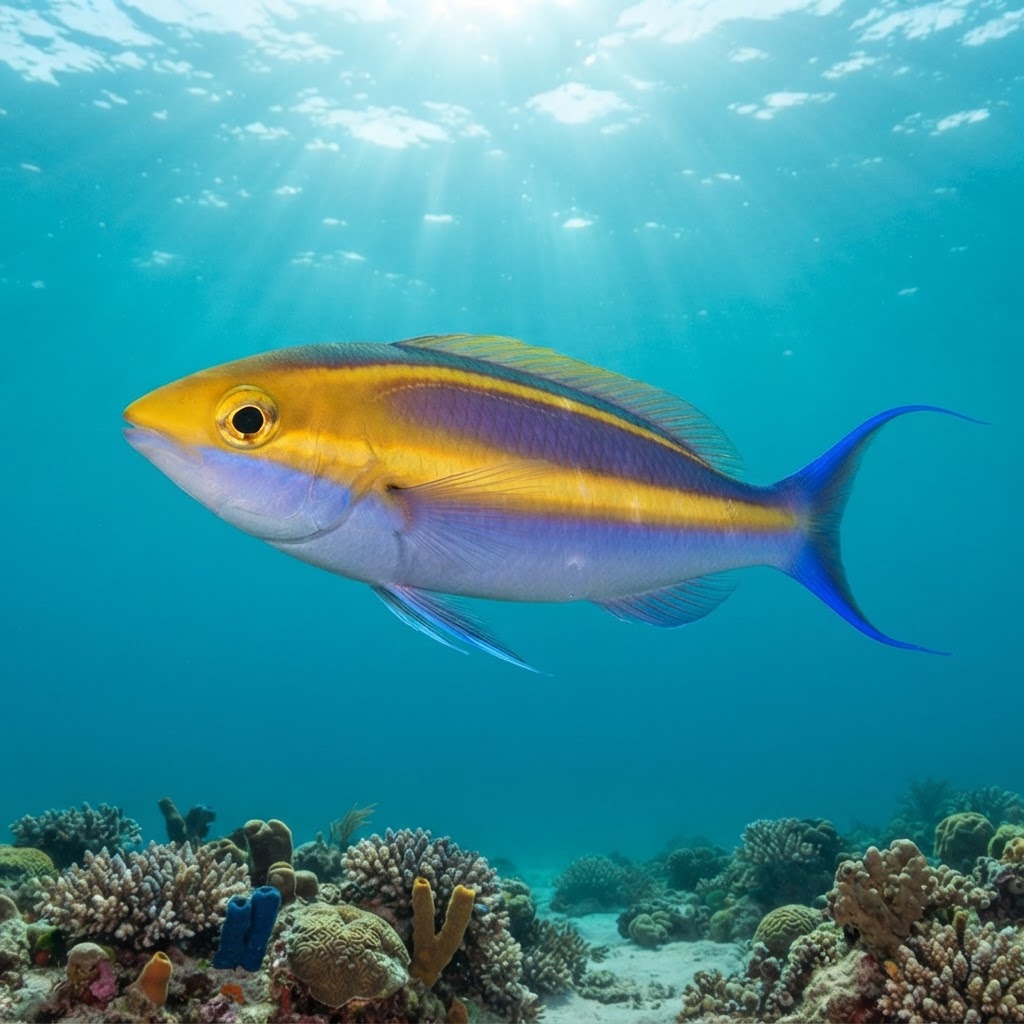
A slim, elongated body running silvery-grey to pale blue with faint yellow highlights along the flanks, growing to around 24 cm. The giveaway is the tail: two long, thin streamers trail from the caudal fin, giving the fish its name and making it easy to pick out even at a distance. It swims with a fairly straight, unhurried posture, often angled slightly nose-down over the reef.
Usually seen cruising alone or in loose pairs over sand, rubble, or the mixed edges near coral, picking at the substrate for small invertebrates. It tends to keep a bit of distance from divers rather than approach, and doesn't school tightly the way some reef fish do. Logged as uncommon even at the sites where it does turn up, so a sighting is worth noting rather than expecting.
Those trailing tail filaments are thought to help break up its outline against the sand, making it harder for predators to fix on a clean target as it forages.
Sightings don't show a seasonal pattern, and the observed water temperature range of 27.2 to 29.1 C matches West Papua's reefs year-round, so any month should work.
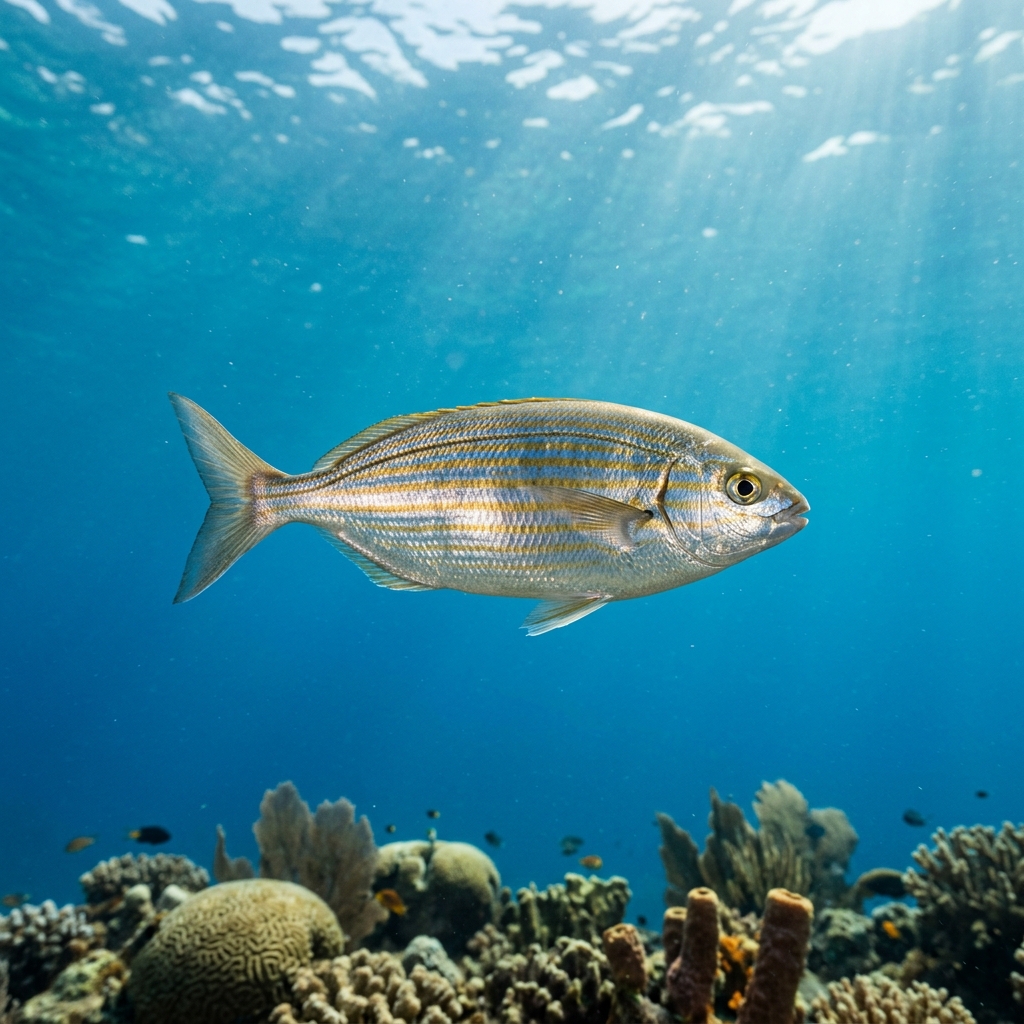
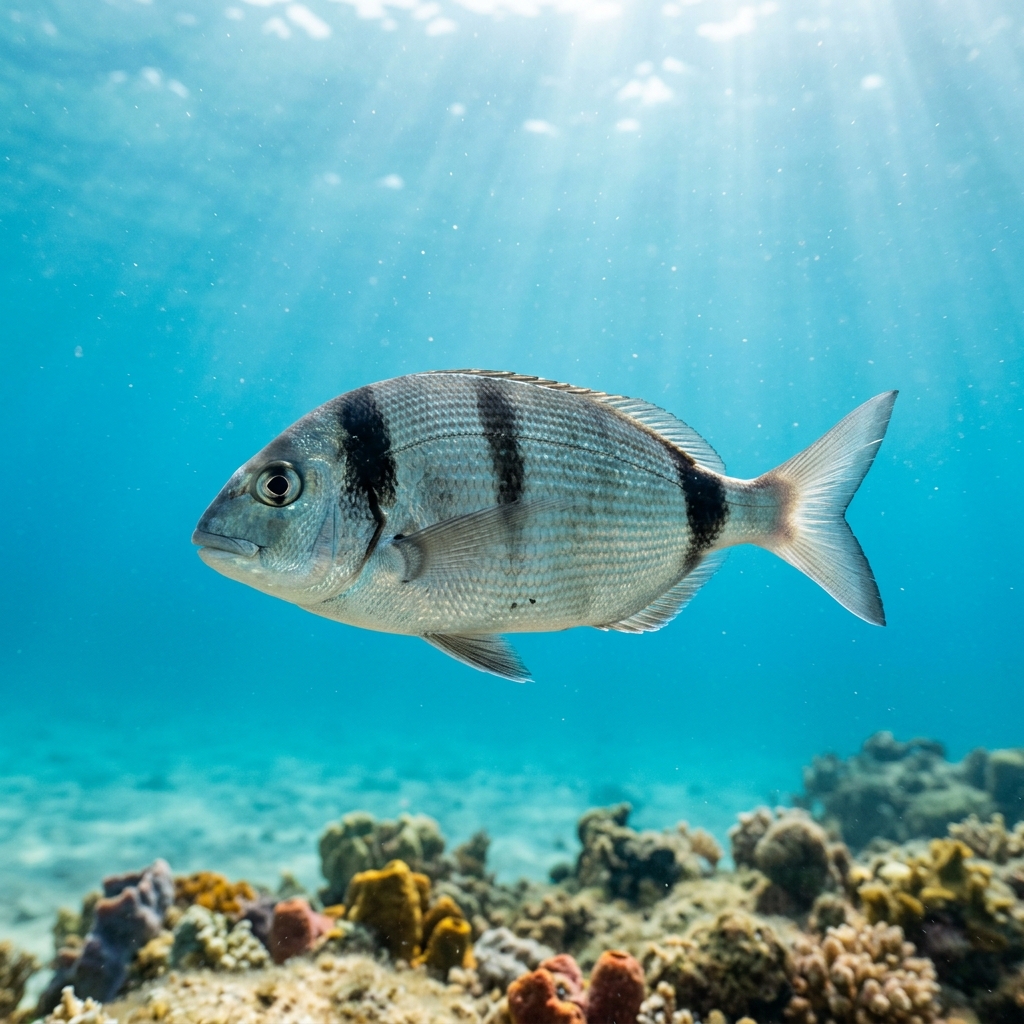
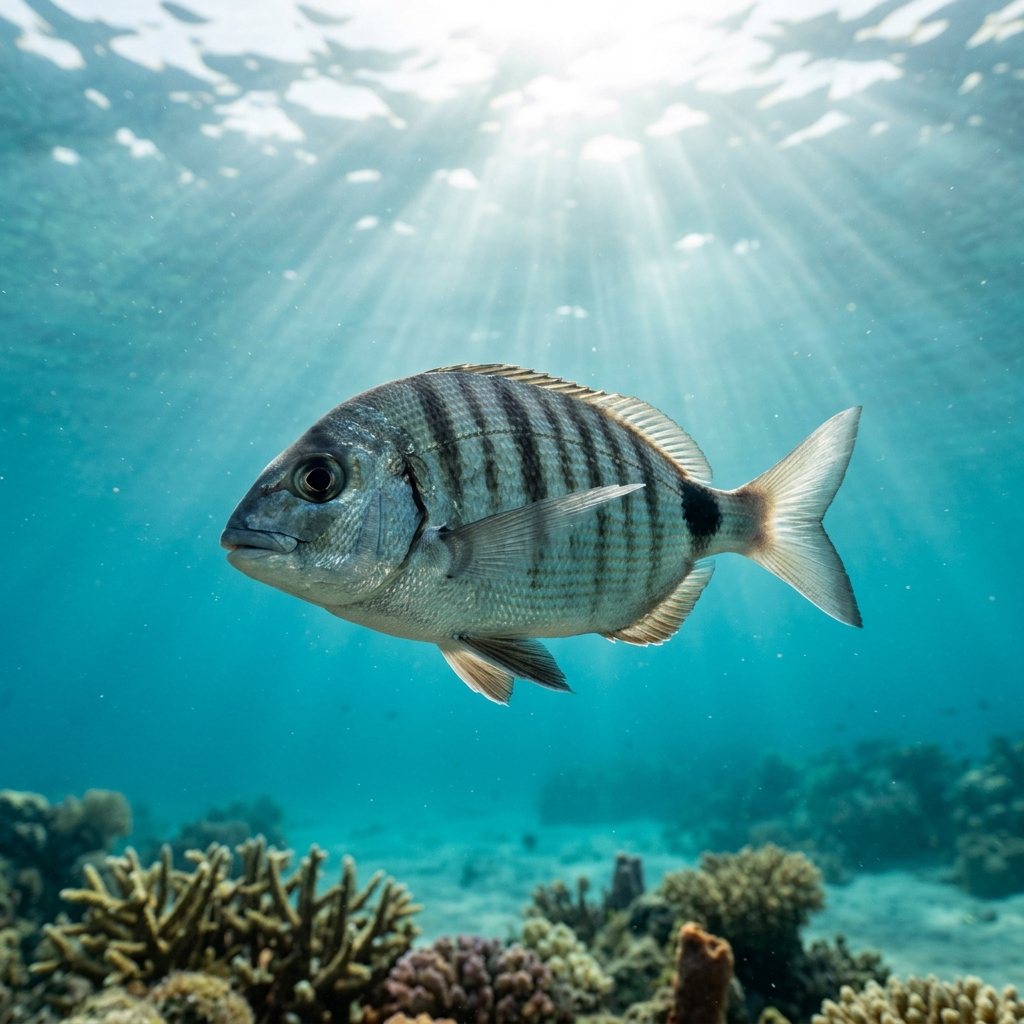
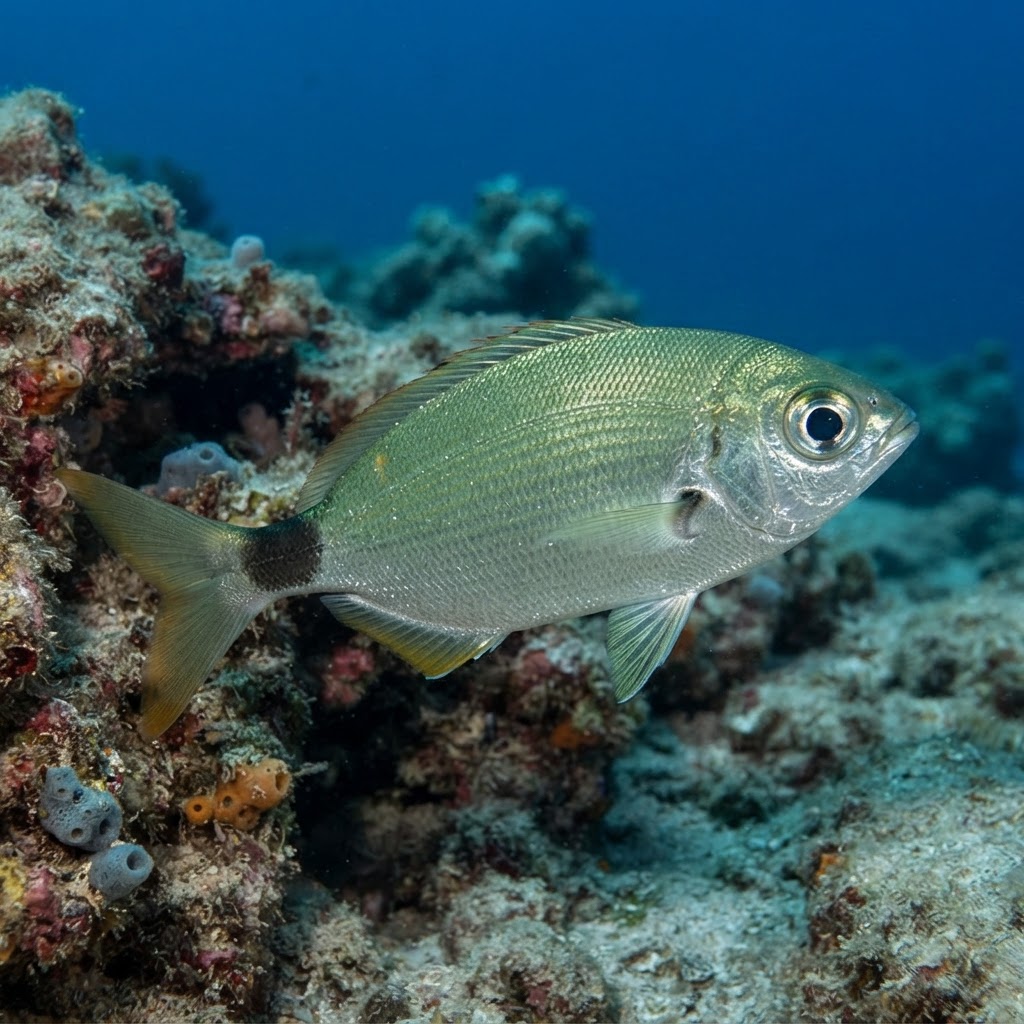
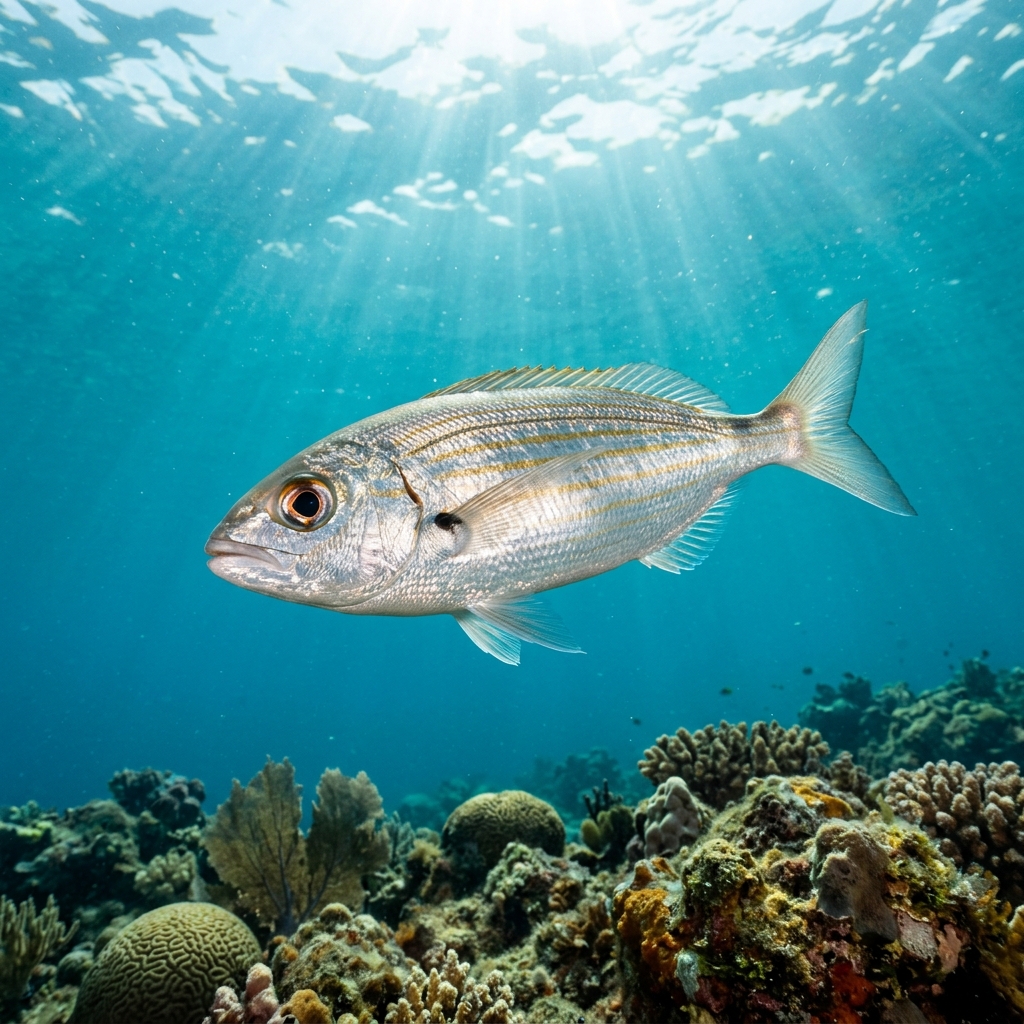
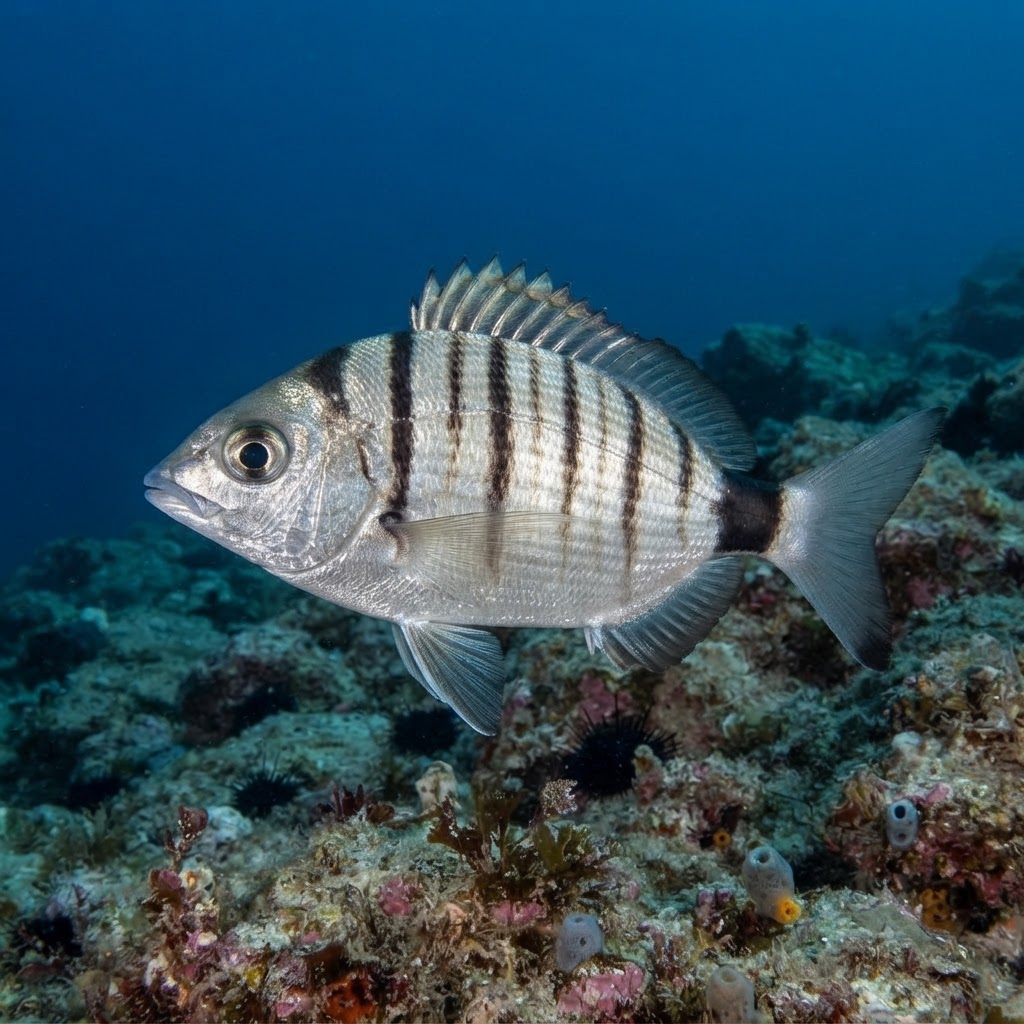
Reef neighbours a diver could mistake it for. Use the identification notes above to tell them apart.
Almost all logged sightings come from Indonesia, with West Papua the clear stronghold and a single record from Sulawesi. If you are diving Raja Ampat or the wider West Papua region, keep an eye on open sand and rubble patches near reef structure.
Mapping where Double Whiptail is logged…
West Papua, Indonesia is by far the strongest area for sightings, with a single additional record from Sulawesi. It's worth watching sand and rubble zones on Raja Ampat-area dives.
There's no detected season, so it's a year-round possibility. Water in its recorded range sits between 27.2 and 29.1 C, consistent with tropical reef conditions all year.
Look for a slender silvery-grey fish around 24 cm with two long thin streamers trailing off the tail fin. It swims with a straight, calm posture, often near sand or rubble patches rather than deep in coral.
They reach about 24 cm in length, a slim-bodied fish rather than a bulky one, with the tail streamers adding extra visual length beyond the body itself.
No, they pose no threat to divers. They're a shy, non-aggressive reef fish that tends to keep its distance rather than interact.
The long paired tail streamers that give this fish its name are thought to disrupt its silhouette against sand, offering some camouflage from predators while it forages on the bottom.
Site and sighting data is aggregated from diver logs, iNaturalist and GBIF. For taxonomy and conservation status:
Saddled Bream
3,846 sites