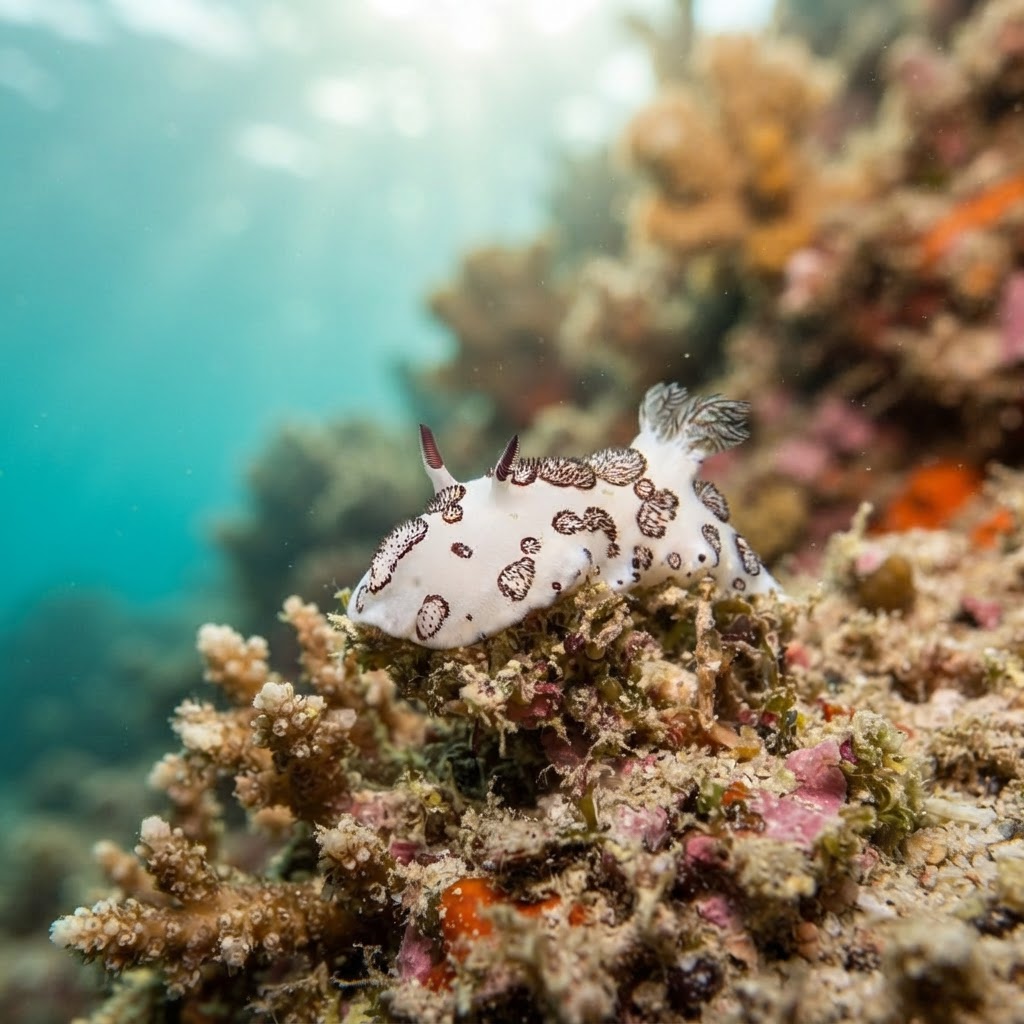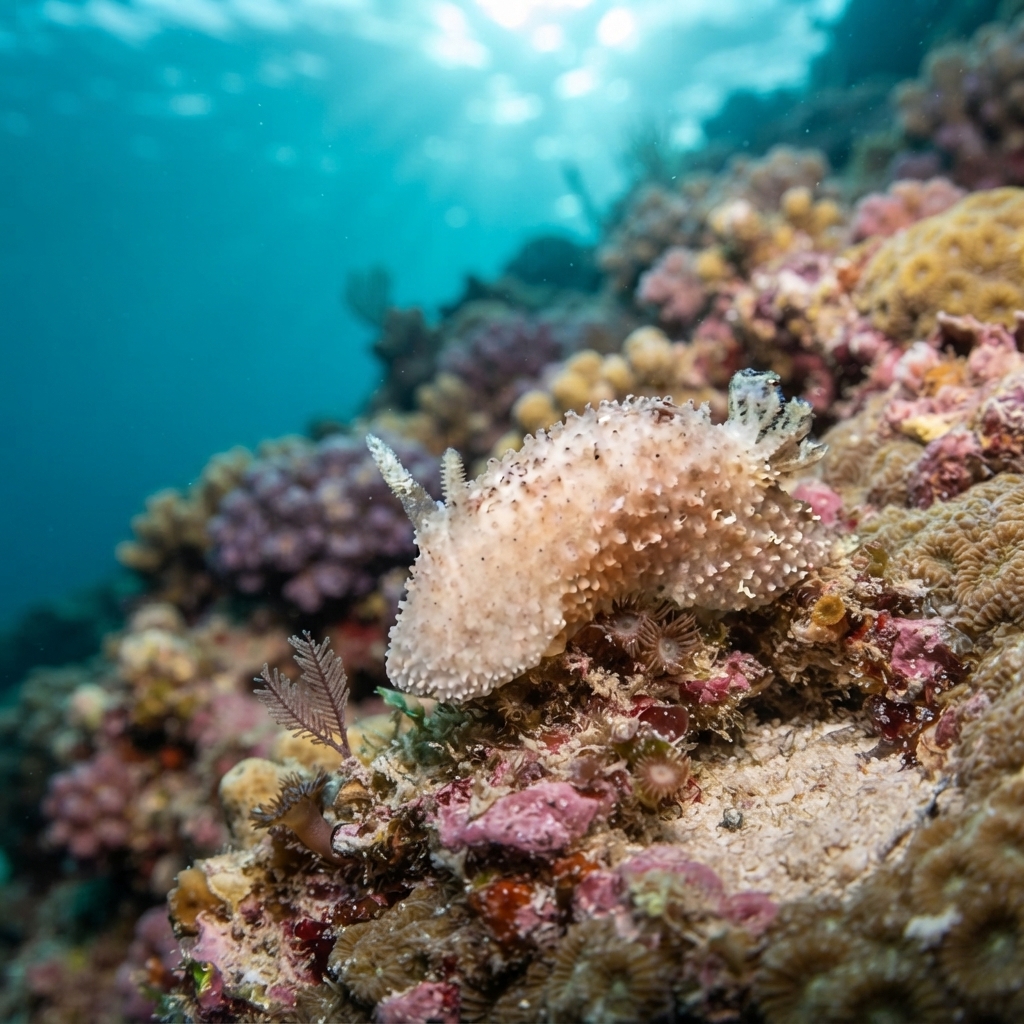
Doris cameroni
A cool-water nudibranch most often logged in Victoria, Australia, in temperatures from 14.7 to 22C, seen year-round on temperate reefs.
Look for a small, soft-bodied dorid nudibranch with a mottled, textured back and a pair of feathery gills (called the gill rosette) toward the rear. Its body sits low and broad against the reef, and the surface has a rough, warty look rather than a smooth sheen. Size in the water tends toward the small end for this family, so slow down and scan rocky rubble and encrusting sponge rather than open sand.
Divers typically find it parked on rock, rubble or encrusting growth, moving at the unhurried pace typical of dorid nudibranchs as it grazes. It shows no reaction to divers beyond retracting slightly if touched, so a slow approach and a torch on night or low-light dives usually gets the best look. Most logs come from the sponge-and-rubble ground that lines Victoria's cooler reef systems rather than open water.
Like other dorid nudibranchs, it feeds by rasping at sponges with a specialised radula, and its warty back likely helps it blend into the encrusting growth it lives on.
Sightings are spread across the year with no clear seasonal peak, which fits its tolerance for cool water from around 15 to 22C. Plan around Victoria's temperate diving conditions generally rather than a specific month.
Reef neighbours a diver could mistake it for. Use the identification notes above to tell them apart.
This one is very much an Australian speciality, with the strongest logs coming out of Victoria and a smaller but real presence in New South Wales. Divers in the Port Phillip Bay area and other cool-temperate Victorian sites report it most consistently, making the state the reliable bet for a sighting.
Mapping where Cameron Doris is logged…
Victoria, Australia is by far the most reliable region, with New South Wales offering a smaller number of confirmed sightings. It is not commonly reported outside Australian waters.
There is no strong seasonal pattern in the data, so sightings happen year-round in Victoria's cool-temperate waters, which sit roughly between 15 and 22C.
Check for a small, mottled, warty-backed nudibranch with a feathery gill tuft near the tail, usually resting on rubble or sponge-covered rock. Its rough texture and muted colouring help separate it from smoother or brightly patterned dorids.
Exact size data is not documented for this species, but like most members of its family it stays on the small side, typically a few centimetres when spotted on the reef.
No. It poses no threat to divers and, like other nudibranchs, has no reason to interact with you beyond a mild retraction if handled, which is best avoided anyway.
Site and sighting data is aggregated from diver logs, iNaturalist and GBIF. For taxonomy and conservation status:
Light-spotted Aegires
3,168 sites