Doriprismatica stellata
Spot the Starry Doriprismatica in warm 28-30 °C waters around Papua New Guinea, Indonesia, and Malaysia. ID tips, best sites, and dive planning inside.
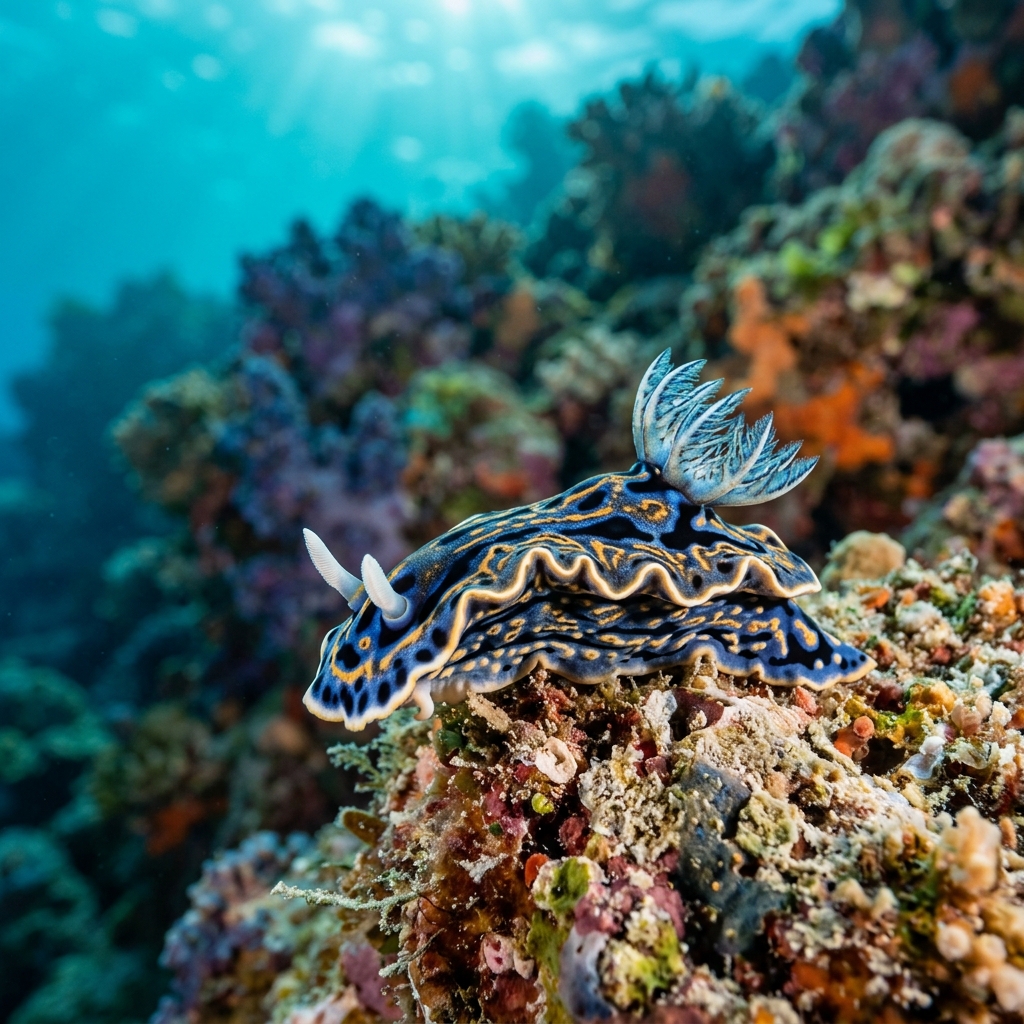
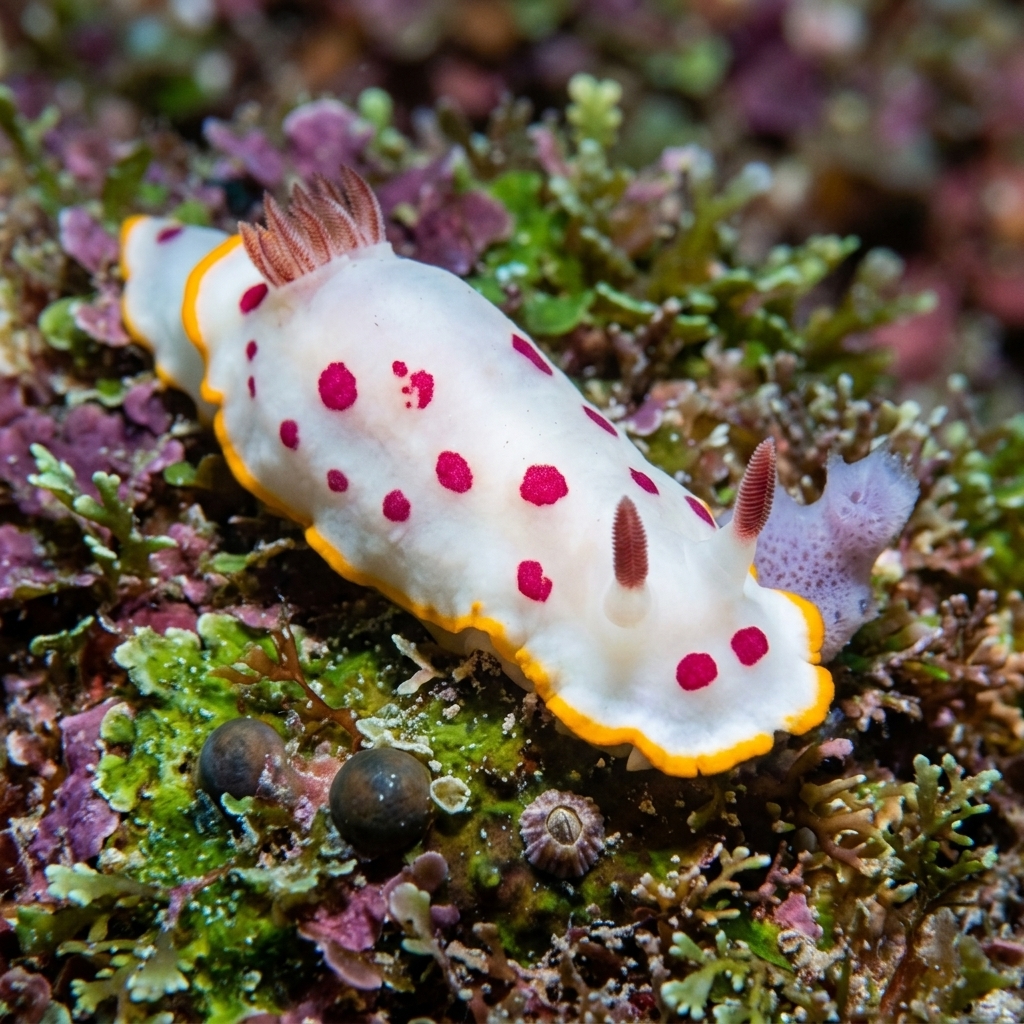
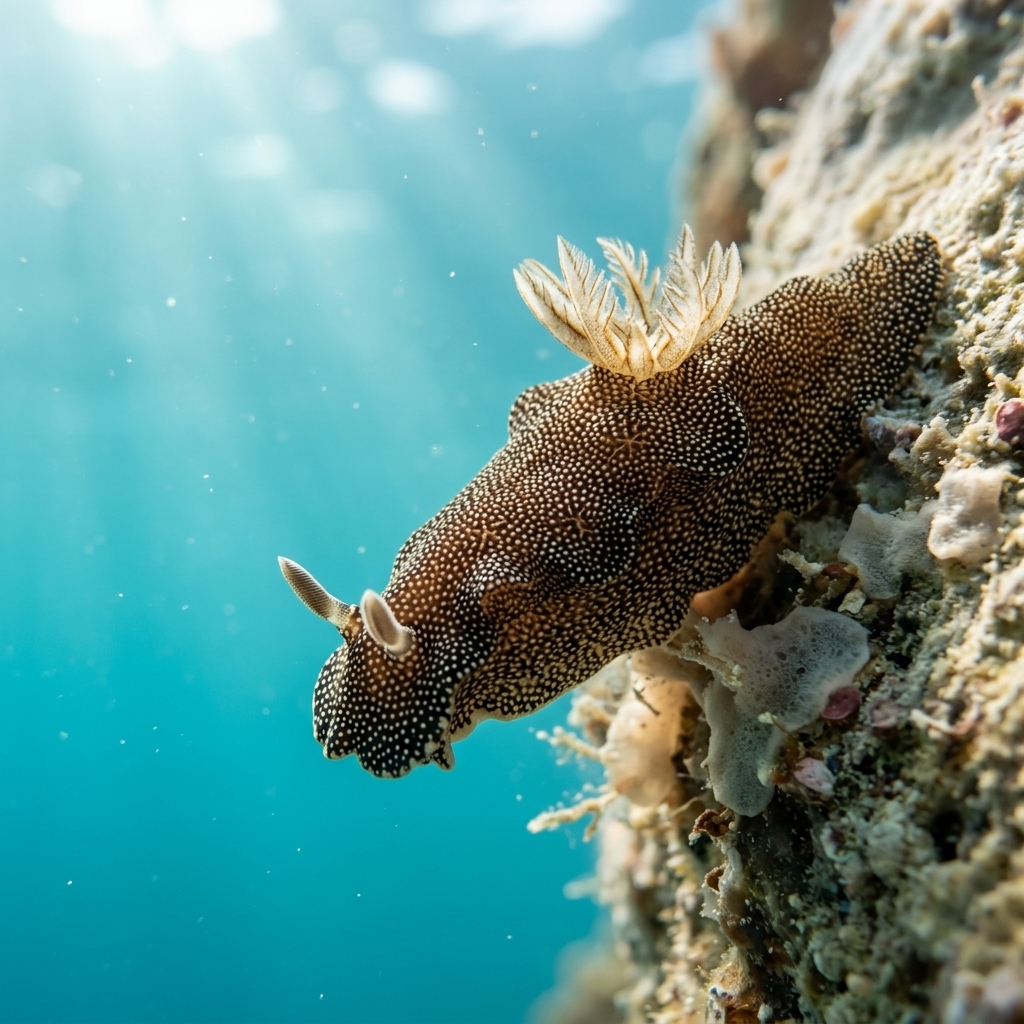
A chromodorid-family nudibranch, Doriprismatica stellata is recognised by its pale, translucent body scattered with small star-shaped or dot-like markings that give it its name. Like others in its family, it has a smooth, flattened mantle with a gill plume at the rear and rhinophores (sensory stalks) at the front. It is a small animal, typically encountered creeping slowly across reef substrate or sponge. The combination of a bright gill plume and distinctly patterned mantle edge is the quickest underwater key.
Divers typically encounter it moving slowly across hard reef, encrusting sponge, or rubble, grazing on its food source rather than swimming freely. It shows little reaction to approaching divers and will continue feeding or moving unless physically disturbed. Like most nudibranchs, it is a daytime animal, so daylight dives on the reef slope or reef flat offer the best chances.
As a chromodorid, it almost certainly sequesters toxic or distasteful chemicals from the sponges it eats, advertising this defence through its vivid colouration, a strategy known as aposematism. This is why such a soft, shell-less animal can crawl in plain sight without hiding.
No strong seasonal pattern has emerged from the data, so sightings appear year-round. Its observed temperature range of around 28 to 30 °C aligns with the consistently warm reefs of the Coral Triangle, meaning conditions support it throughout the year.
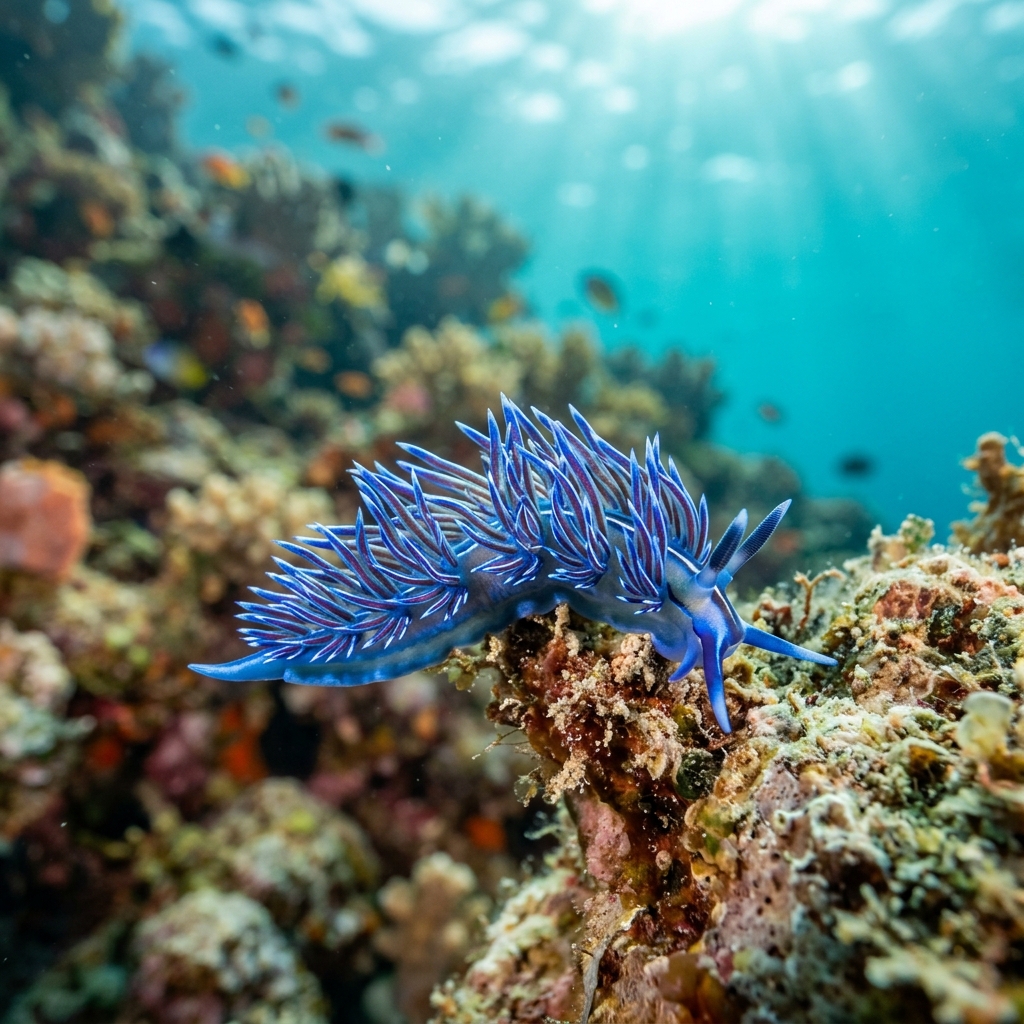
Reef neighbours a diver could mistake it for. Use the identification notes above to tell them apart.
Most sightings come from Papua New Guinea, particularly the Tufi region, which accounts for the largest share of logged encounters. Indonesia's Sulawesi is the next most productive area, followed by Sipadan and East Sabah in Malaysian Borneo. All three regions offer the warm, clear coral-triangle waters this species favours.
Mapping where Starry Doriprismatica is logged…
The strongest concentration of sightings is in Tufi, Papua New Guinea, followed by Sulawesi in Indonesia and the Sipadan area of Malaysian Borneo. All are Coral Triangle destinations with warm, reef-rich diving.
There is no clearly defined season in the data. Because it lives in consistently warm tropical waters around 28 to 30 °C, it can be encountered year-round at its known sites. Plan around dive conditions and visibility rather than a specific month.
Look for a small, flat-bodied nudibranch with a pale mantle dotted with star-like markings, a feathery gill plume at the rear, and paired rhinophores at the front. The patterned mantle edge and the characteristic chromodorid body shape are the quickest ID clues.
It is considered uncommon across most of its known sites, with a handful of locations where it is logged as rare. It is not the sort of animal you will see on every dive, so a deliberate slow-paced reef search focusing on sponge and rubble zones gives the best odds.
No. Like all nudibranchs, it poses no threat to divers. Avoid touching it, both to protect the animal and because some nudibranchs can release skin irritants if handled.
Site and sighting data is aggregated from diver logs, iNaturalist and GBIF. For taxonomy and conservation status:
Blue Dragon
3,163 sites