Allomycterus pilatus
Rare but recorded across New Zealand and southern Australia, the Deepwater Burrfish favours cool 13-21 °C waters. Here's where divers spot it.
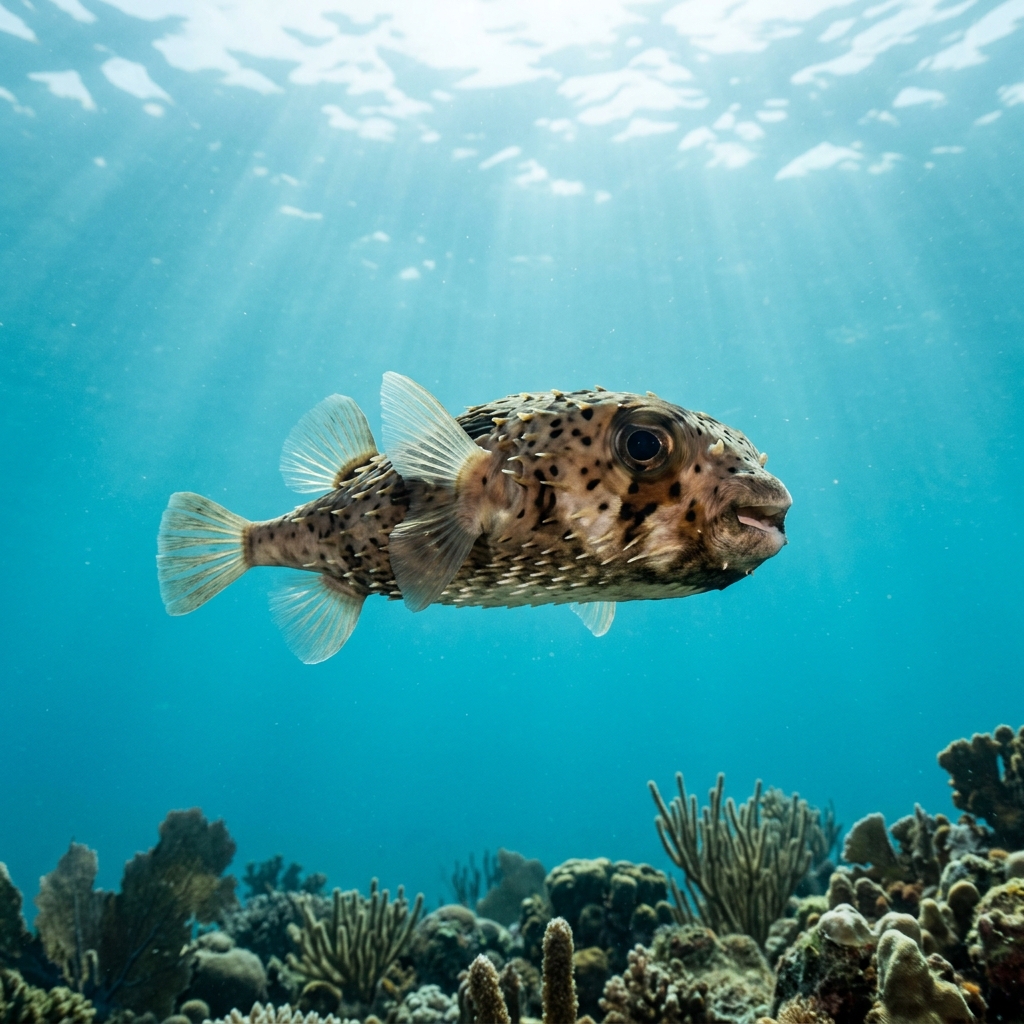
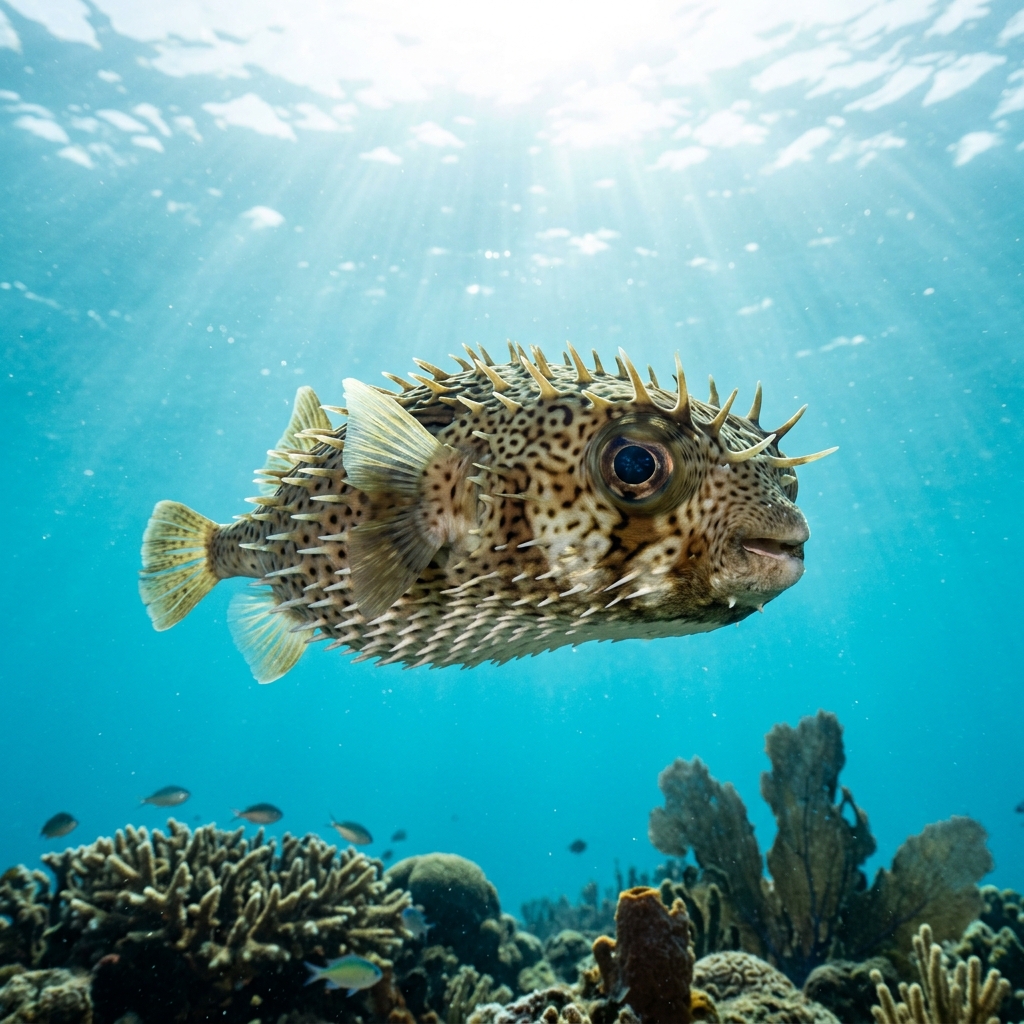
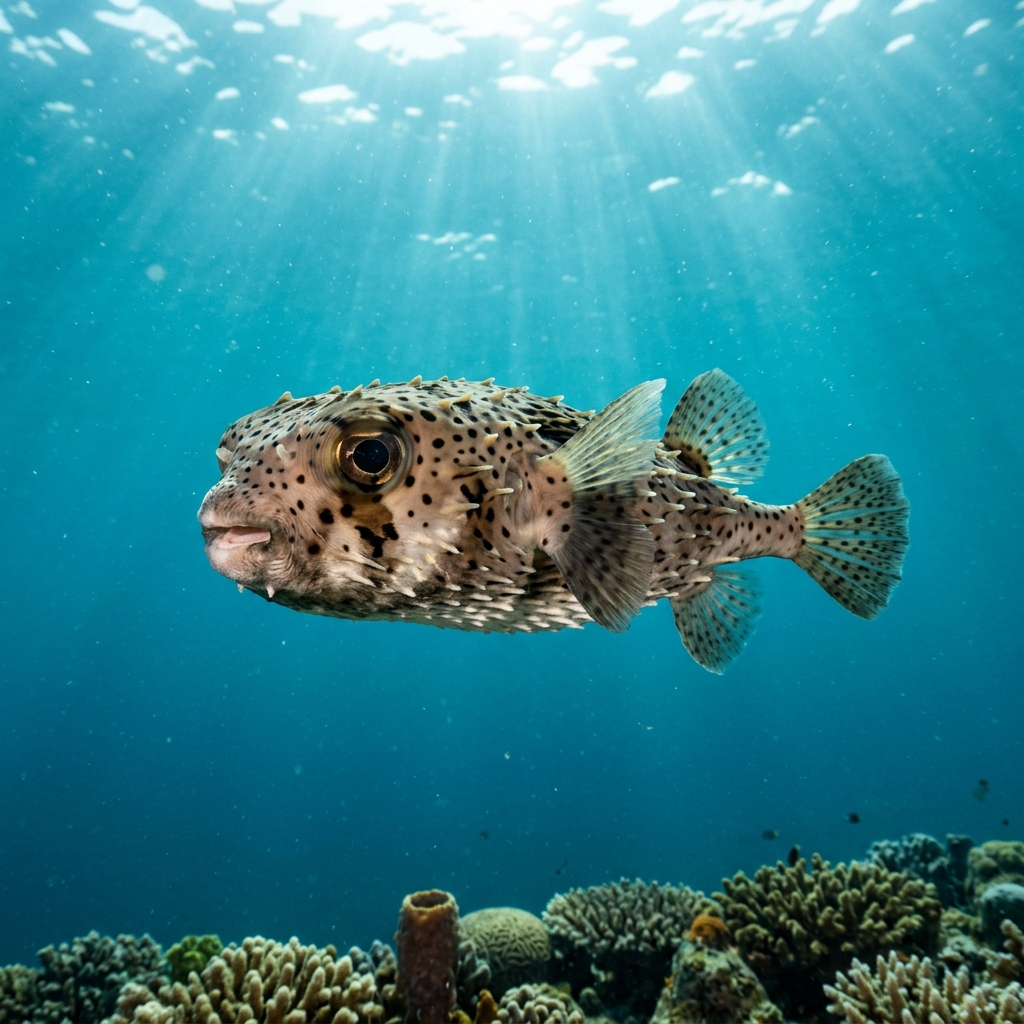
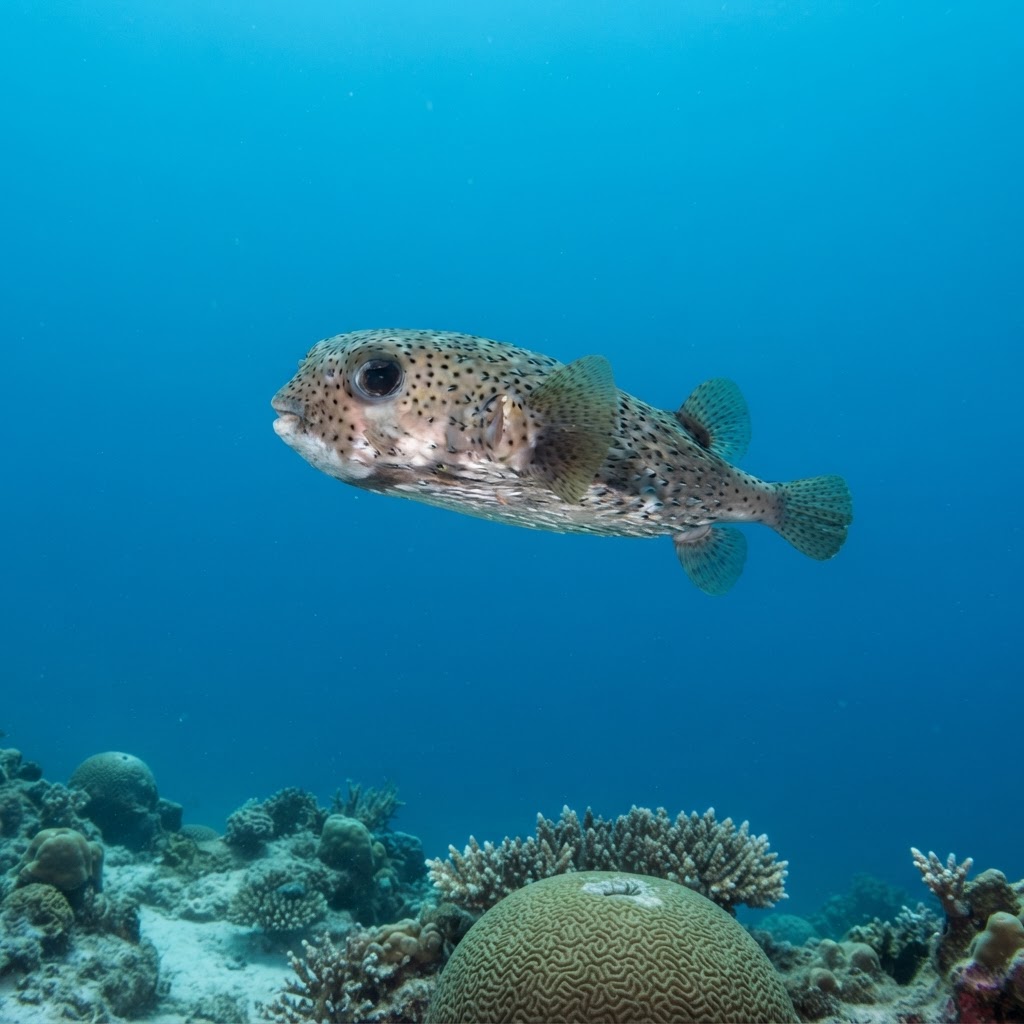
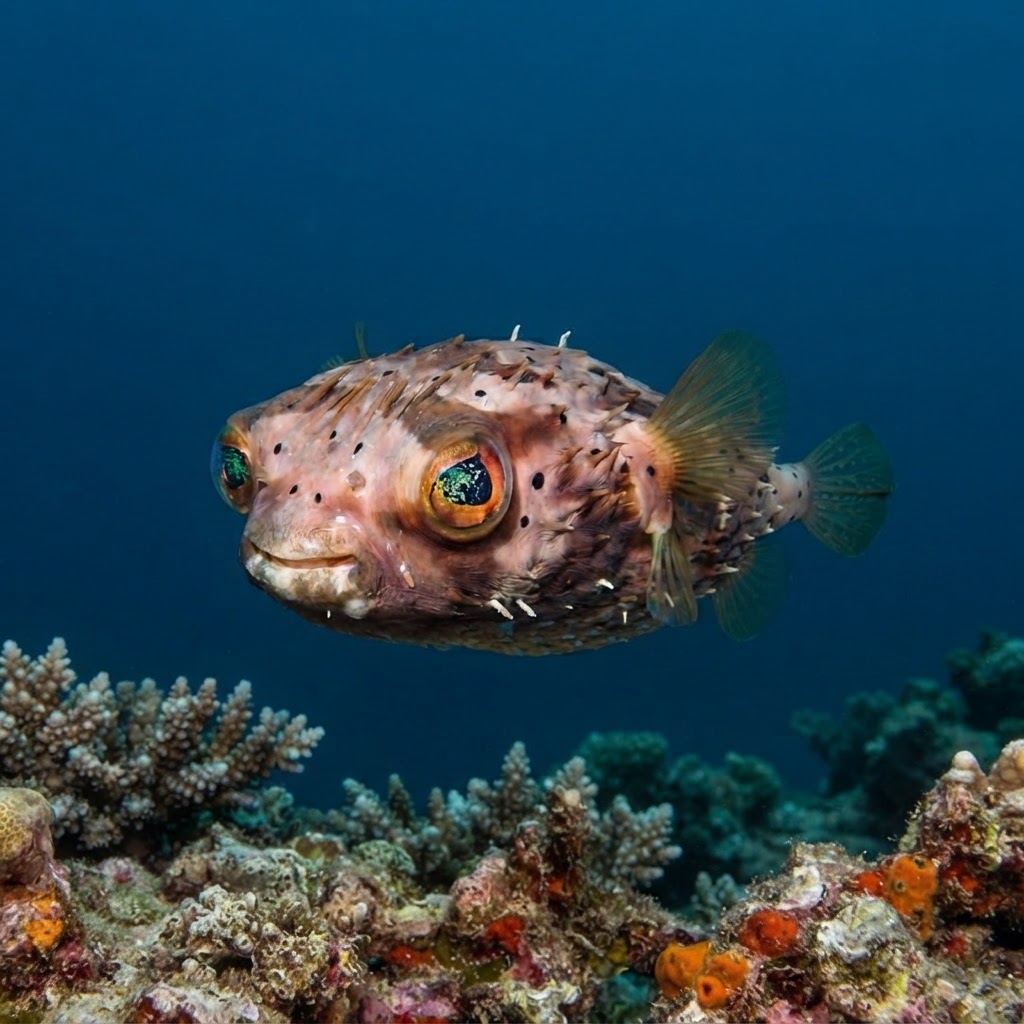
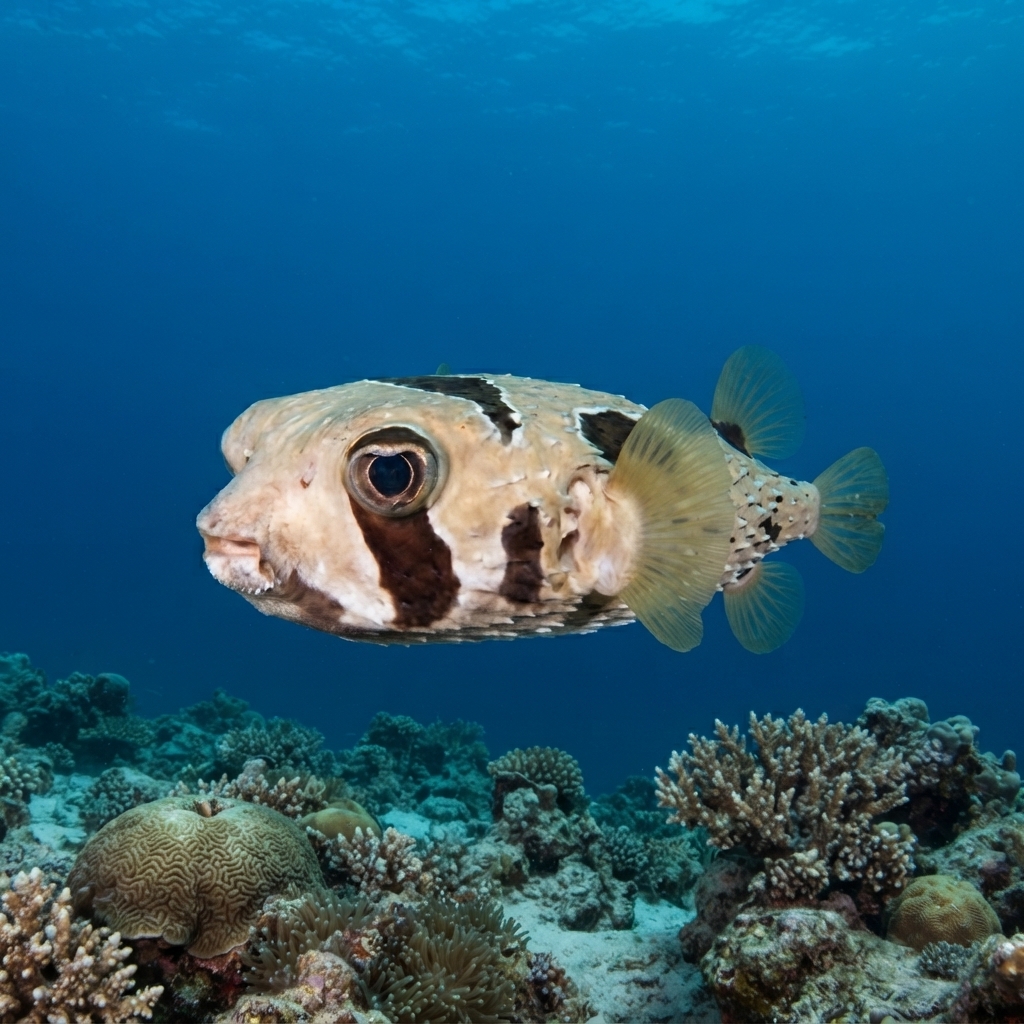
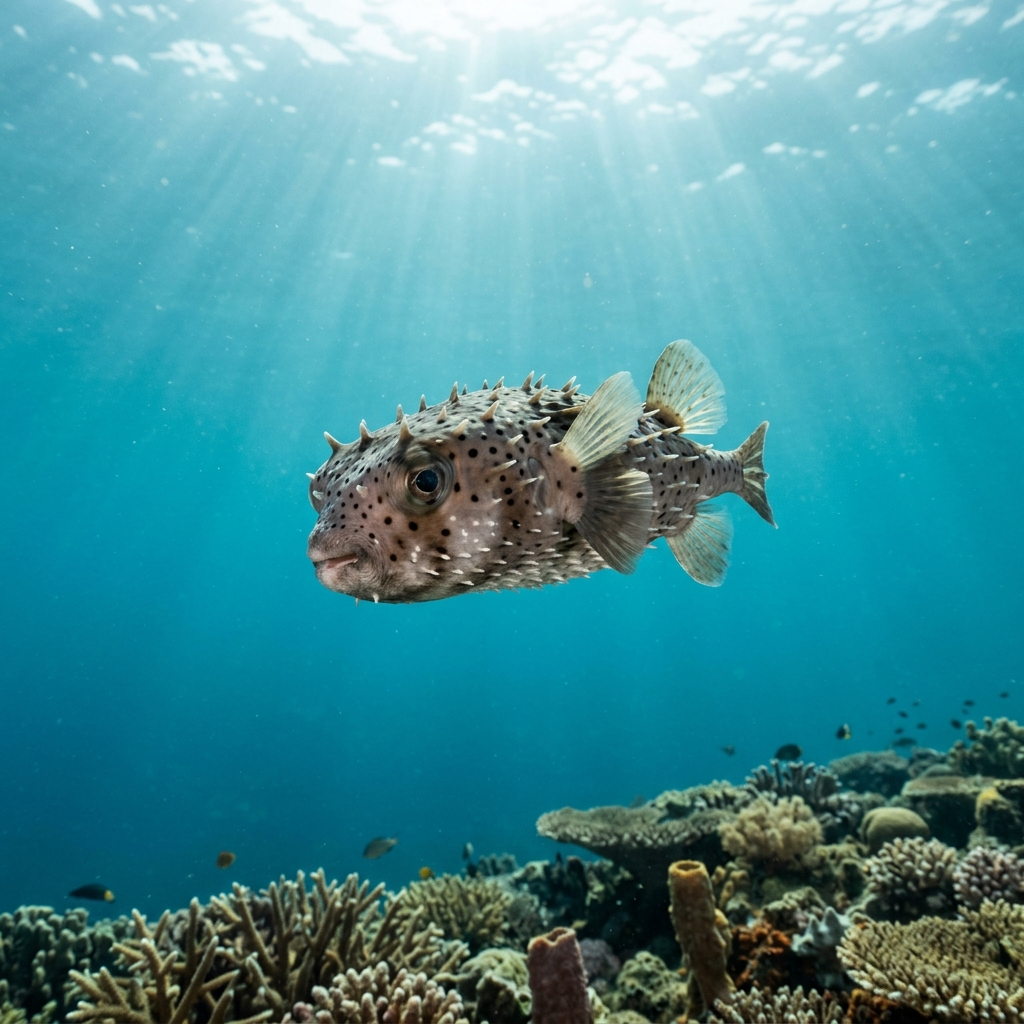
A compact, rounded porcupinefish relative covered in short, fixed spines (unlike the folding spines of true porcupinefish, burrfish spines stay erect at all times). Colouration is typically pale to yellowish-brown on the back with darker mottling, fading to a lighter underside. The blunt beak-like fused teeth and large eyes are the easiest features to lock onto underwater. Typical of the family, it can inflate its body into a ball when threatened.
Most encounters are with solitary individuals resting on or hovering close to rocky reef structure. Like other burrfish, it tends to hold its ground rather than flee, relying on its spines and the threat of inflation as a deterrent. Divers should approach slowly and avoid crowding it, as stress can trigger inflation, which is costly for the fish.
Unlike porcupinefish, whose spines fold flat when relaxed, burrfish cannot retract their spines. Every sighting, whether the fish is calm or startled, shows those spines standing proud.
Seasonality data from New Zealand points to December through April, coinciding with the austral summer and autumn when water temperatures in its preferred 13 to 21 °C range are most accessible to divers.
Reef neighbours a diver could mistake it for. Use the identification notes above to tell them apart.
New Zealand is by far the most reliable place to encounter this species, with sightings spread across the Coromandel and Bay of Plenty, and the Northland and Auckland regions leading the count. In Australia, South Australia and Tasmania account for most records, with a handful from New South Wales. These cool, temperate reef systems are the places to look.
Mapping where Deepwater Burrfish is logged…
New Zealand is the top destination, particularly the Coromandel, Bay of Plenty, and Northland and Auckland regions. In Australia, South Australia and Tasmania are the most consistent locations. All recorded sites sit in cool, temperate waters.
In New Zealand, sightings concentrate between December and April, the austral summer and autumn. This aligns with the species' cool-water preference of roughly 13 to 21 °C, when those temperatures are most comfortably diveable.
Look for a small, round, heavily spined fish on temperate rocky reefs. The spines are always erect, which immediately separates it from porcupinefish. The blunt fused beak, large eyes, and mottled brownish back are the key features to confirm the ID.
It is considered rare at the majority of sites where it has been recorded, with only a small number of locations classing it as common. Patience and local knowledge give you the best chance. A slow, attentive dive along rocky reef structure in New Zealand or southern Australia is your best strategy.
No, they pose no direct threat to divers. As with all porcupinefish relatives, the main caution is to avoid stressing them, since repeated inflation can exhaust the fish. Give them space and observe without crowding.
Site and sighting data is aggregated from diver logs, iNaturalist and GBIF. For taxonomy and conservation status:
Long-spine Porcupinefish
1,222 sites