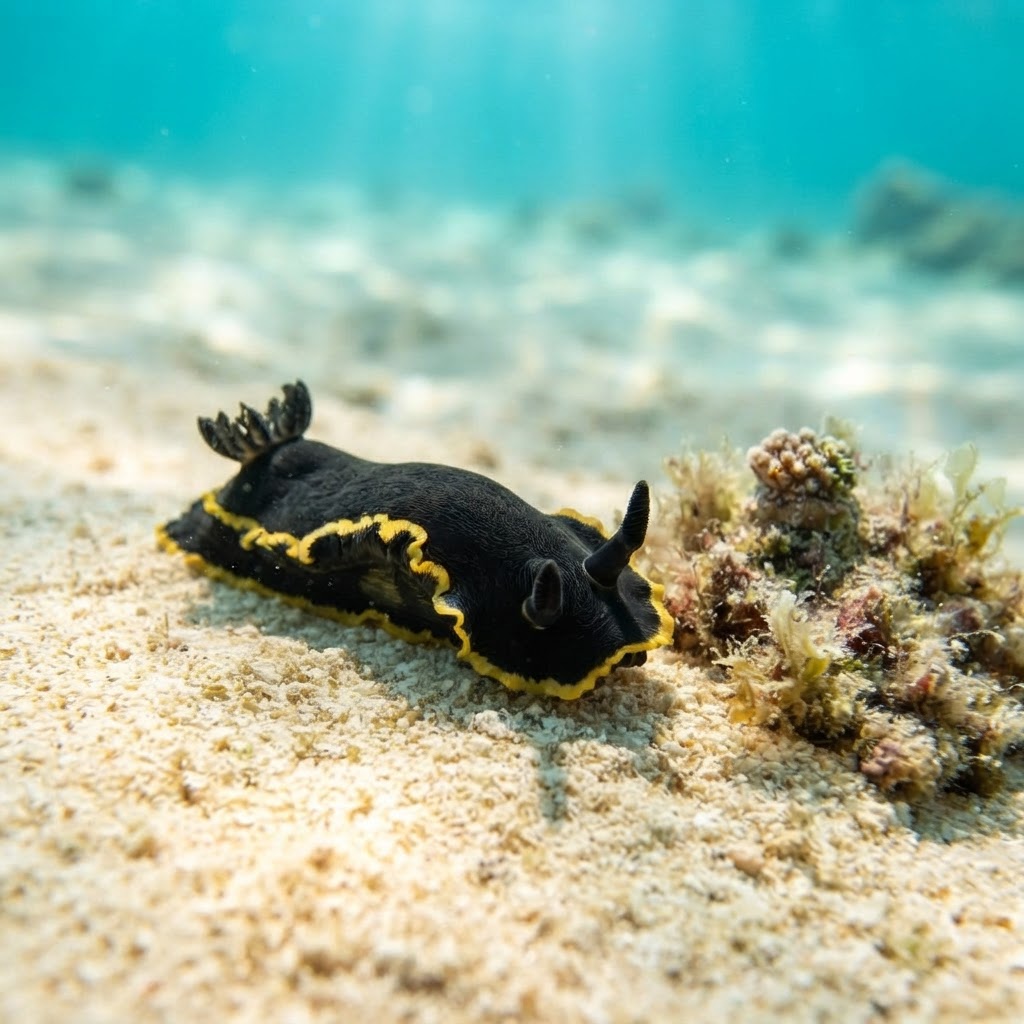
Dendrodoris limbata
Uncommon but steady in Croatia's Kvarner and France's Riviera, this dark nudibranch turns up on Adriatic and Mediterranean reefs year-round.
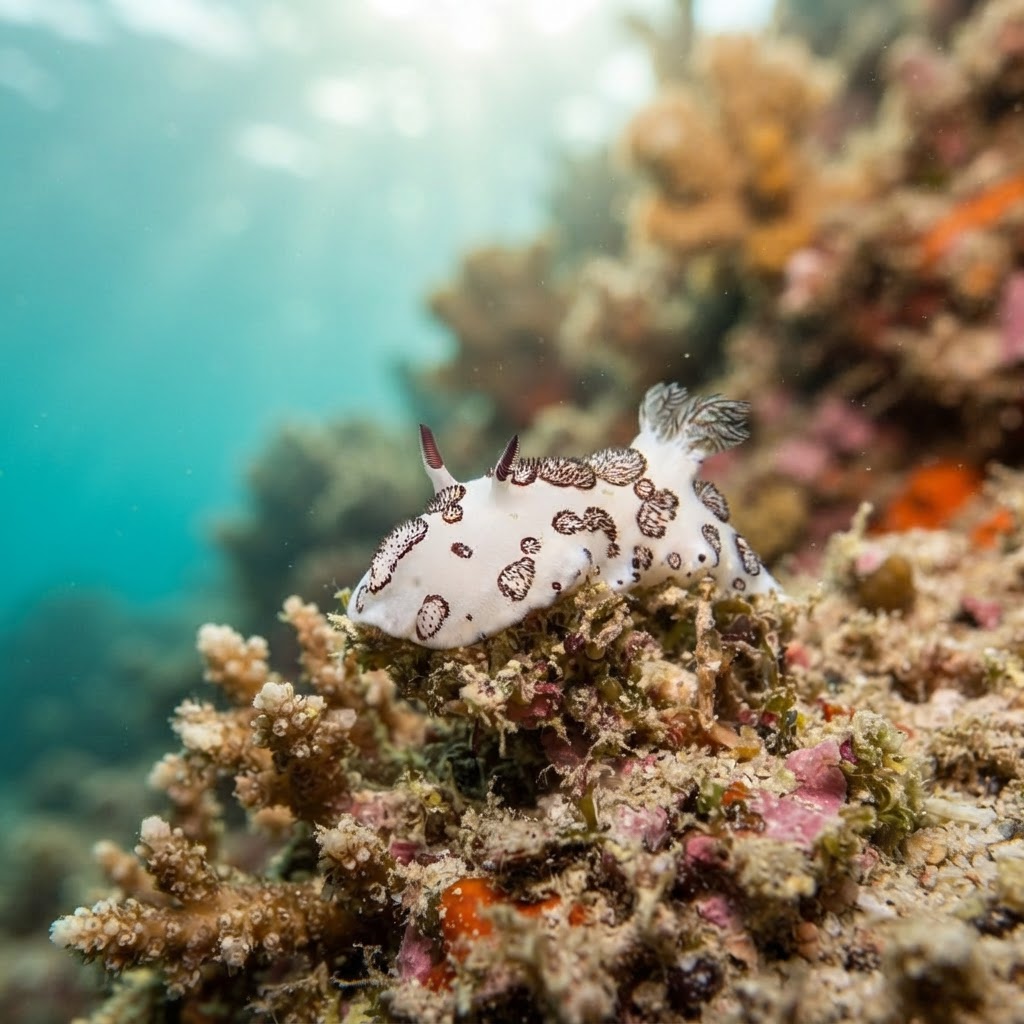
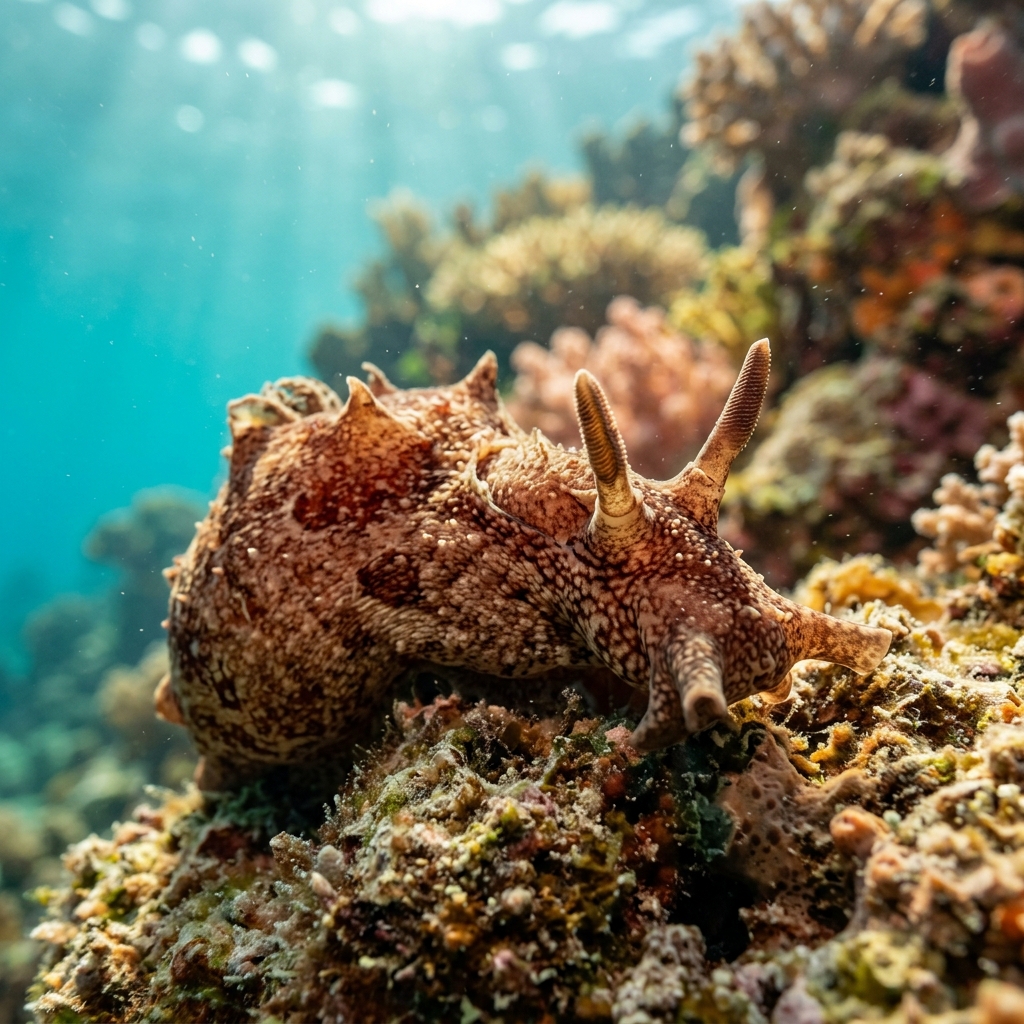
A soft-bodied nudibranch with a broad, leathery-looking mantle in dark brown to blackish tones, often with a paler, mottled edge running around the rim. It lacks the bright contrasting spots of many reef nudibranchs, relying instead on its rippled, slug-like outline and velvety texture to stand out against rock and algae. No conspicuous rhinophores or gill plume colour break is needed to key it out, as the overall dark, matte body is the main giveaway.
Divers typically find it moving slowly over rock, rubble or algae-covered substrate, often tucked into crevices or under ledges rather than out in the open. It shows no reaction to divers beyond its usual unhurried crawl, so a careful eye on likely encrusted rock during a normal reef or wall dive is more useful than searching for it at a particular time of day.
Like other dorid nudibranchs, it lacks a protective shell as an adult and instead relies on distasteful skin secretions to deter predators, which is part of why it can sit exposed on open rock in daylight without much trouble.
Sightings are logged across the year with no clear seasonal spike, which fits its cool-water niche of roughly 13.8 to 19.8 C, a range the northern Adriatic and Riviera hold for much of the year. Treat it as a year-round find rather than a seasonal target.
Reef neighbours a diver could mistake it for. Use the identification notes above to tell them apart.
Most reliably logged in Croatia, especially around Kvarner and Istria, and along France's Riviera and Provence coast and the Occitanie region. Slovenia's short coastline and a couple of sites on Italy's Adriatic coast round out the known range, making this largely a northern Adriatic and northwest Mediterranean species from a diver's-log perspective.
Mapping where Bordered Dendrodoris is logged…
It shows up most in Croatia, particularly Kvarner and Istria, and along France's Riviera and Occitanie coasts. Slovenia's coast and a couple of Adriatic sites in Italy also have confirmed sightings.
There is no strong season in the data, so it is logged year-round. Its comfort range of about 13.8 to 19.8 C covers much of the diving calendar in the northern Adriatic and northwest Mediterranean.
Look for a dark brown to blackish, leathery-bodied nudibranch with a rippled mantle edge and no bright spotting. It is usually found crawling slowly over rock or algae rather than out in open sand.
No. It poses no threat to divers and can be observed and photographed at close range without any risk.
It has no shell as an adult and instead uses skin secretions that make it unappealing to predators, which lets it sit exposed on open rock in daylight.
Site and sighting data is aggregated from diver logs, iNaturalist and GBIF. For taxonomy and conservation status:
Light-spotted Aegires
3,168 sites