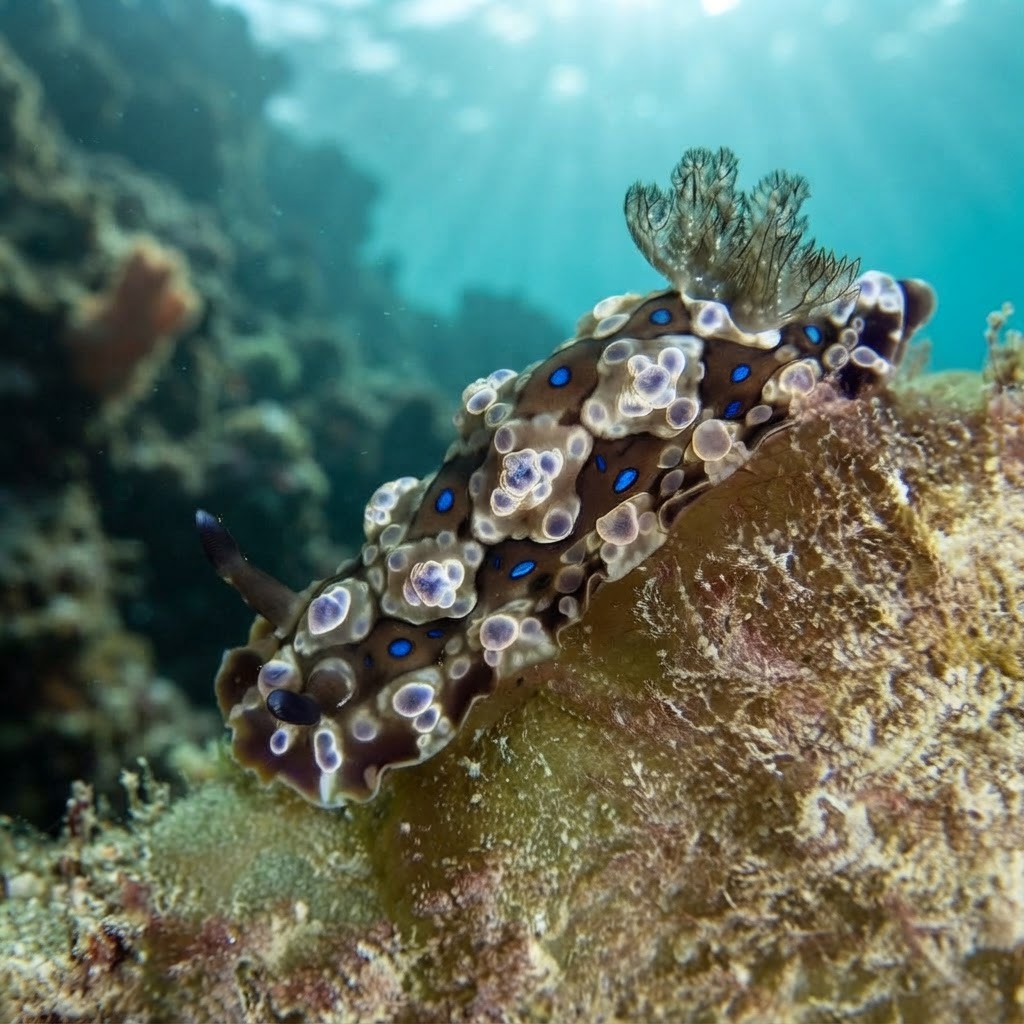
Dendrodoris krusensternii
A soft-bodied nudibranch logged from North Island New Zealand to KwaZulu-Natal, spotted year-round in waters from 17 to nearly 30C.
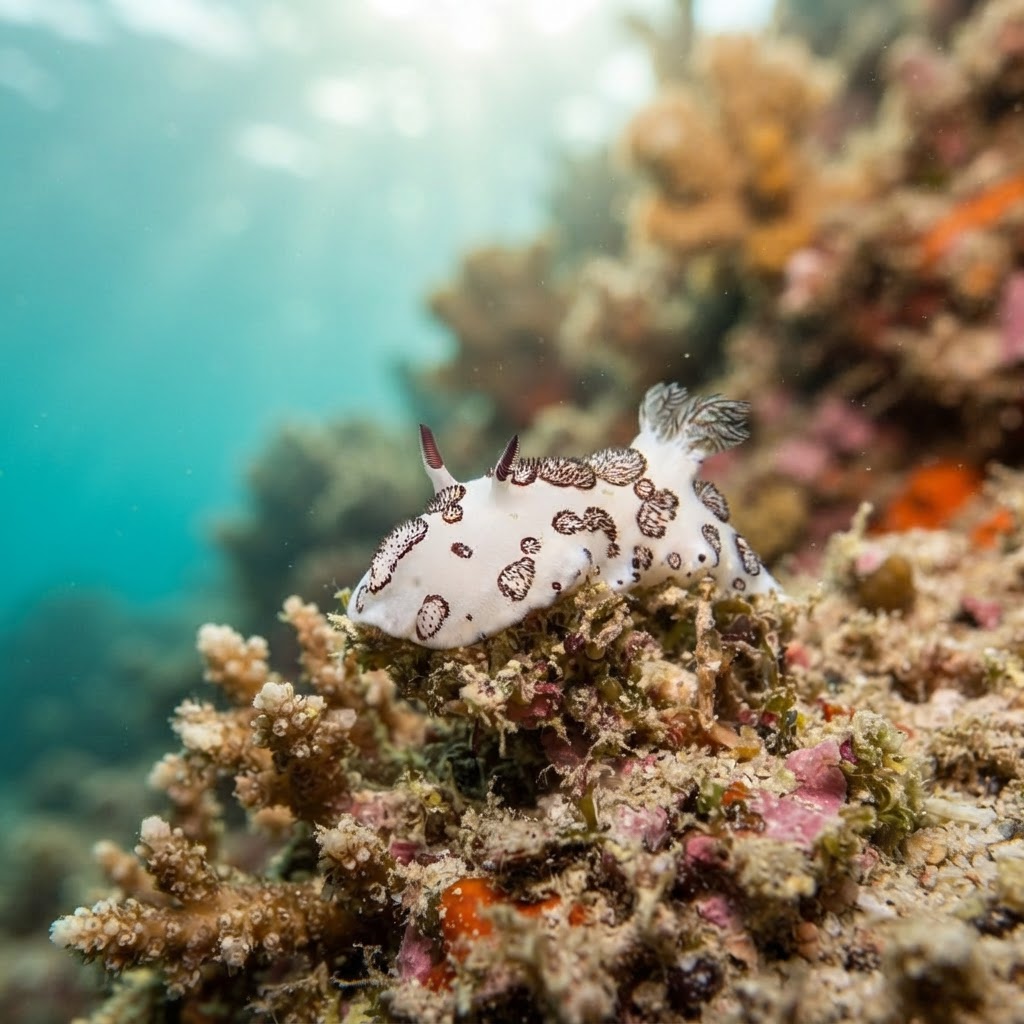
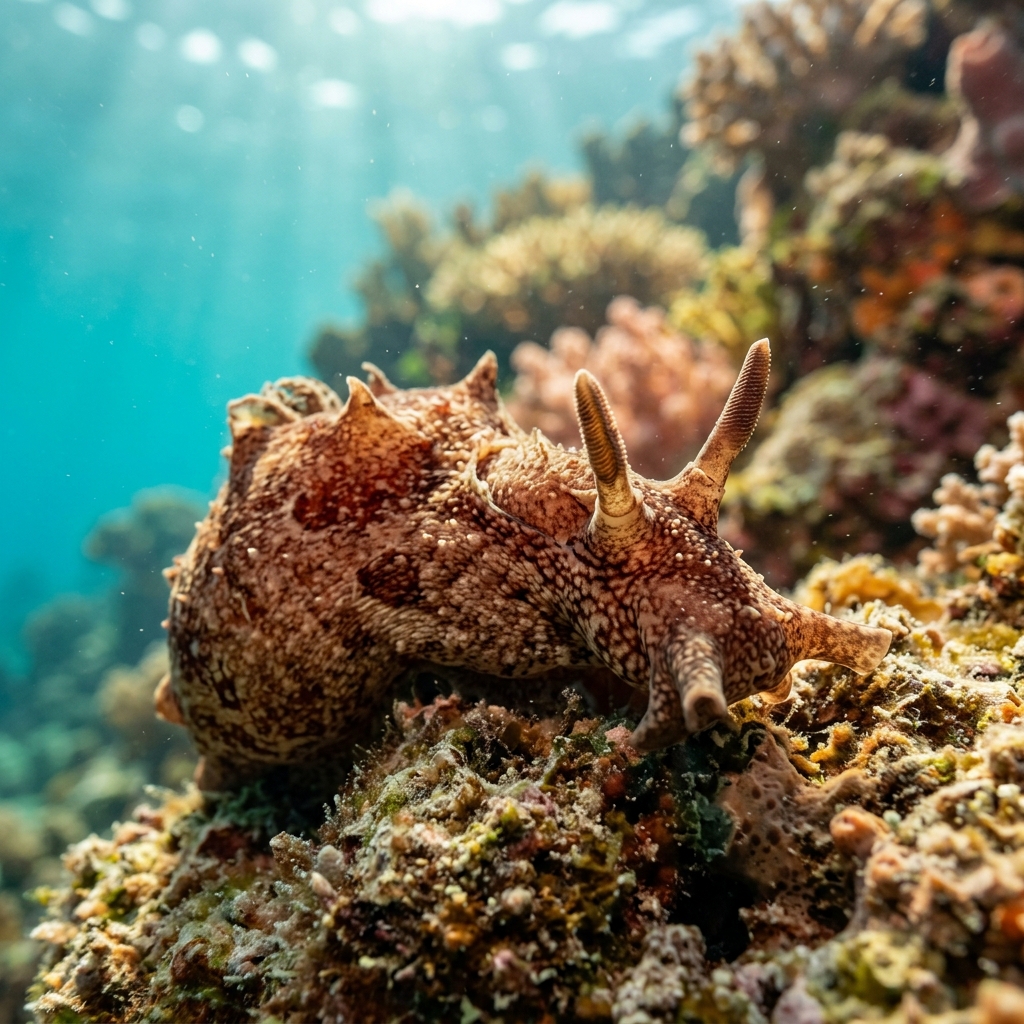
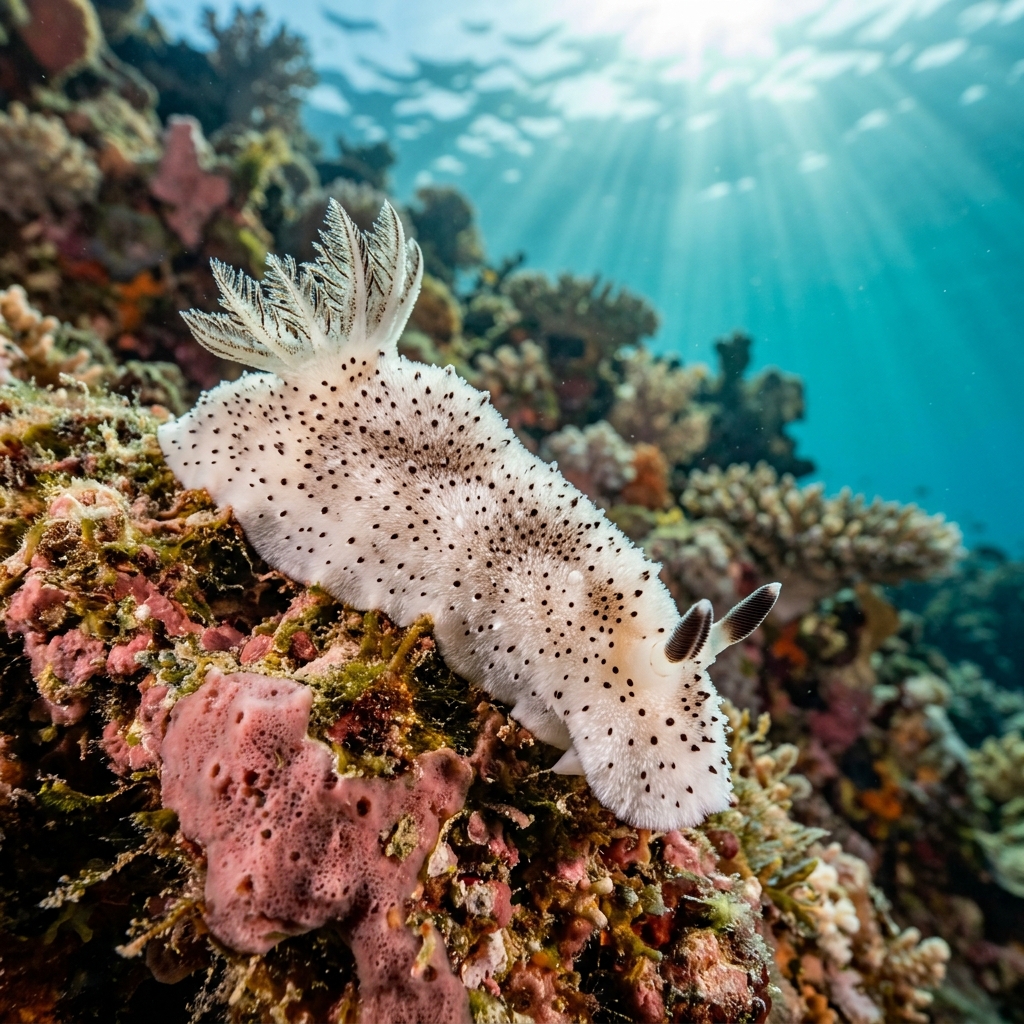
A soft, gill-less looking dorid nudibranch with a smooth, leathery back and a fringe of feathery gills tucked toward the rear, near-invisible unless you look closely. Body colour reads as mottled and understated rather than flashy, which is exactly why it gets walked past by divers hunting brighter species. Size in the water is modest, so most sightings come from divers running a slow, close-focus search of rock and reef surfaces rather than mid-water scanning.
Turns up parked on rock faces and reef substrate rather than out swimming, moving at the unhurried pace typical of dorid nudibranchs as it grazes. Divers most often find it during slow macro-focused passes along walls and ledges, and it shows no particular reaction to torch light or close approach since it has no real means of fleeing. Most logs describe it as uncommon to rare at any given site, so it rewards divers who stop and check rock crevices rather than those cruising past.
Like other Dendrodoris species, it lacks a hard shell and instead relies on distasteful skin secretions for defence, which is part of why it can sit exposed on open rock without much apparent risk.
No clear seasonal pattern shows up in the data, so treat it as a year-round find. It has been logged across a wide temperature range from 16.7C to 29.5C, which fits with sightings spread through the year in both temperate New Zealand/South Africa sites and warmer tropical spots like Goa and the UAE.
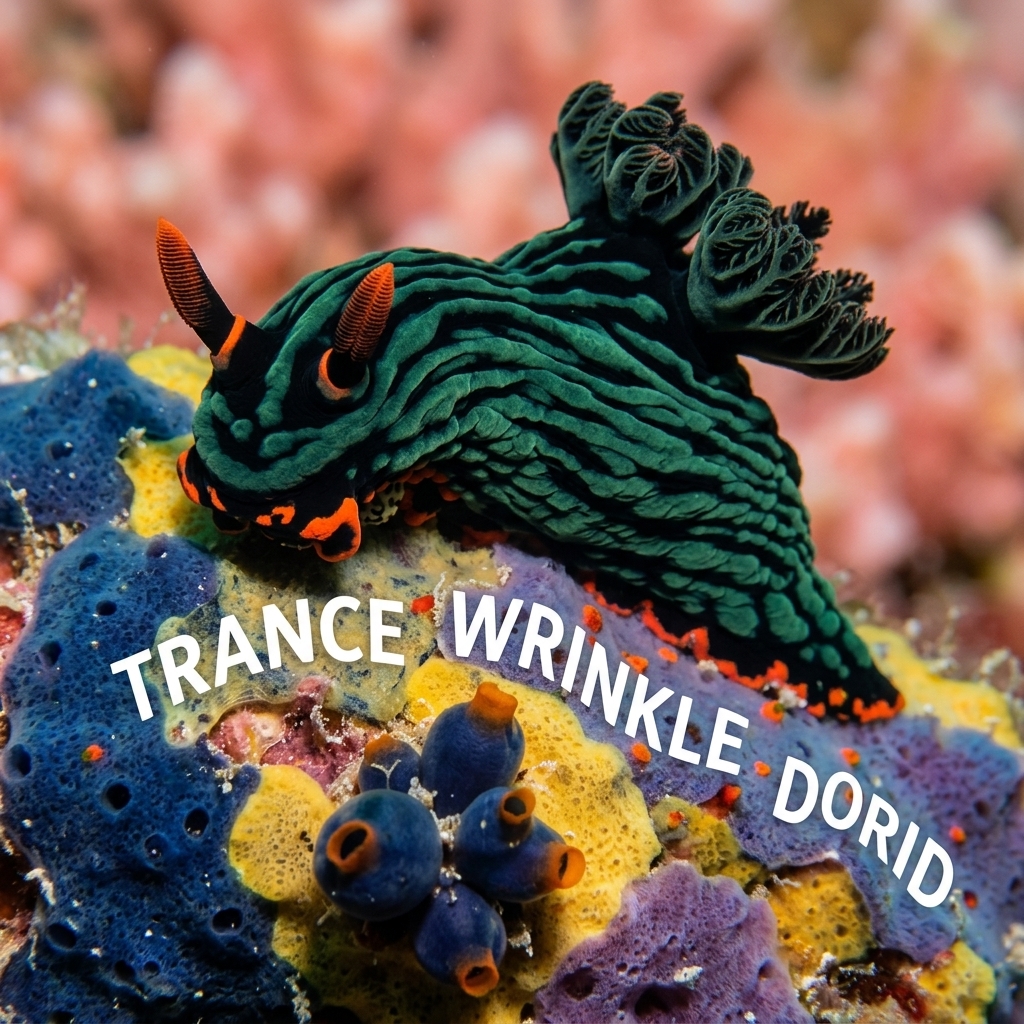
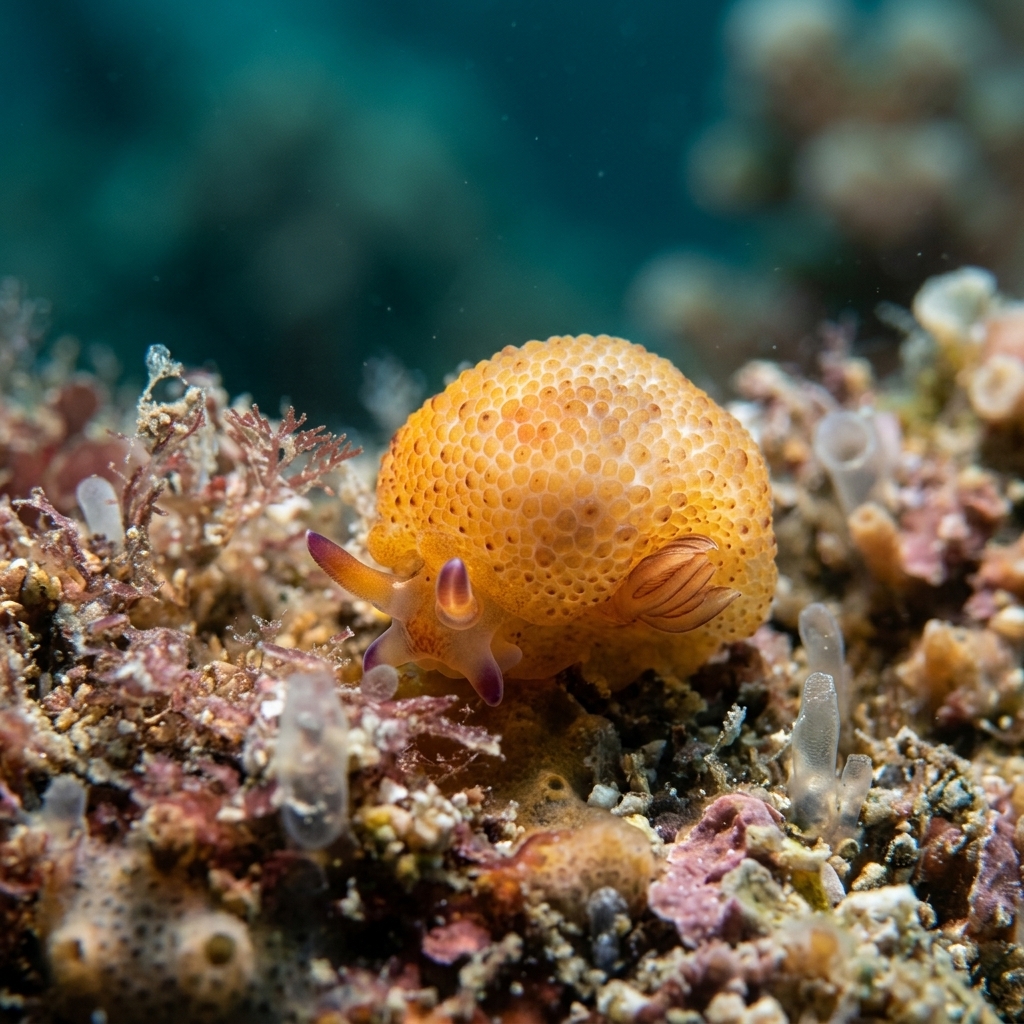
Reef neighbours a diver could mistake it for. Use the identification notes above to tell them apart.
Most reliably logged around North Island, New Zealand, which alone accounts for the bulk of sightings, with strong secondary populations across New South Wales, Queensland and Western Australia in Australia. Outside Australasia it turns up consistently in KwaZulu-Natal, South Africa, Goa, India, the East Coast of the United Arab Emirates and Mindanao in the Philippines, making it a cross-regional find rather than a one-country specialty.
Mapping where Dendrodoris Gunnamatta is logged…
Best logged around North Island, New Zealand, with further strong records across New South Wales, Queensland and Western Australia in Australia. It also shows up reliably in KwaZulu-Natal (South Africa), Goa (India) and the UAE's East Coast.
There is no strong season in the sighting data, so it is considered a year-round find. Recorded water temperatures range from 16.7C to 29.5C, spanning both temperate and tropical dive seasons.
Look for a smooth-backed, soft-bodied nudibranch resting on rock or reef surfaces, modest in size and lacking bright, showy colouring. It is easy to overlook next to flashier nudibranchs, so slow, close-up searching is the key to finding it.
No, it poses no danger to divers. It has no sting or bite and relies purely on skin secretions to deter predators, so it is completely safe to observe and photograph.
Most dive site logs describe it as uncommon, with a fair number of rare records and fewer sites reporting it as common. It is the kind of species you find by deliberately searching reef and rock surfaces rather than stumbling across by chance.
Exact size data is not confirmed for this species, but like most Dendrodoris nudibranchs it stays small, generally a few centimetres in length, making close-focus viewing the best way to appreciate it.
Site and sighting data is aggregated from diver logs, iNaturalist and GBIF. For taxonomy and conservation status:
Light-spotted Aegires
3,168 sites