Syngnathus typhle
Uncommon but findable in Sicily and the French Riviera, this thin seagrass dweller hides in plain sight down to 20 metres.
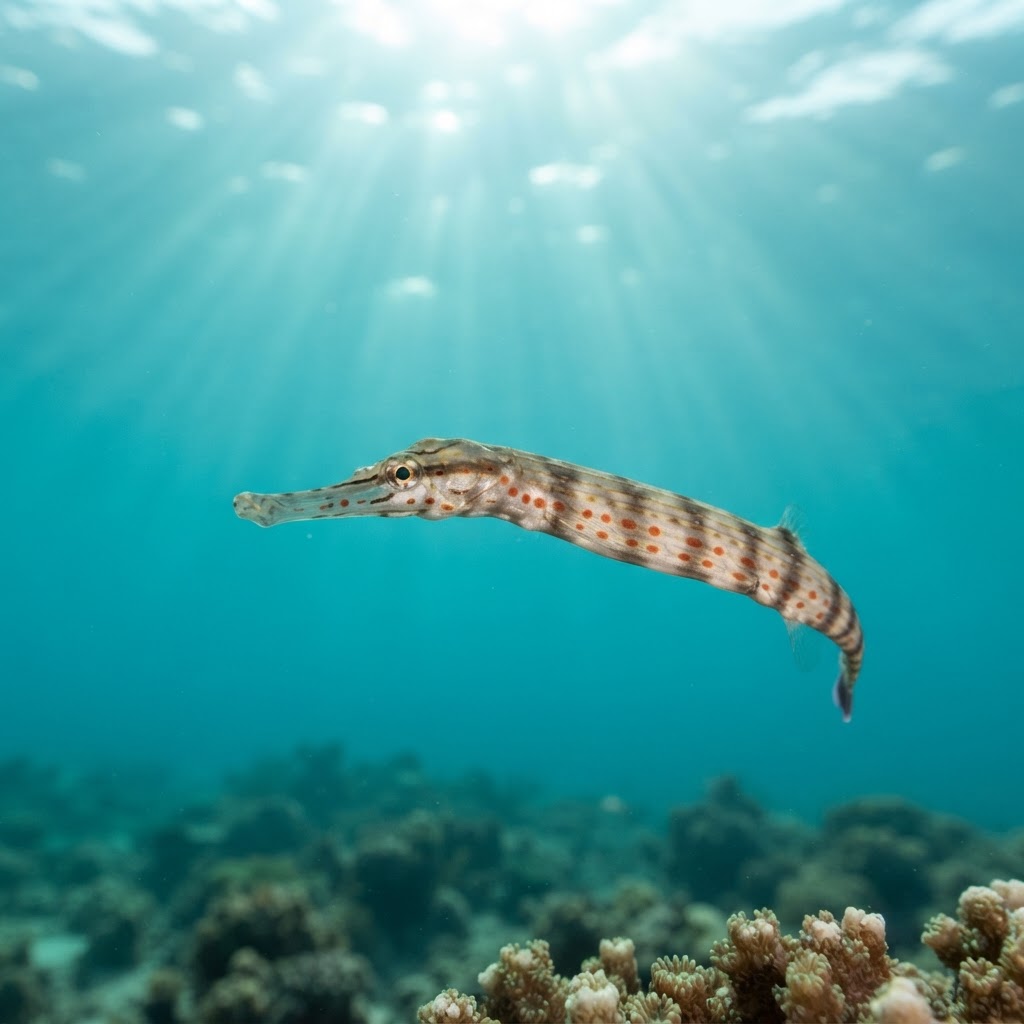
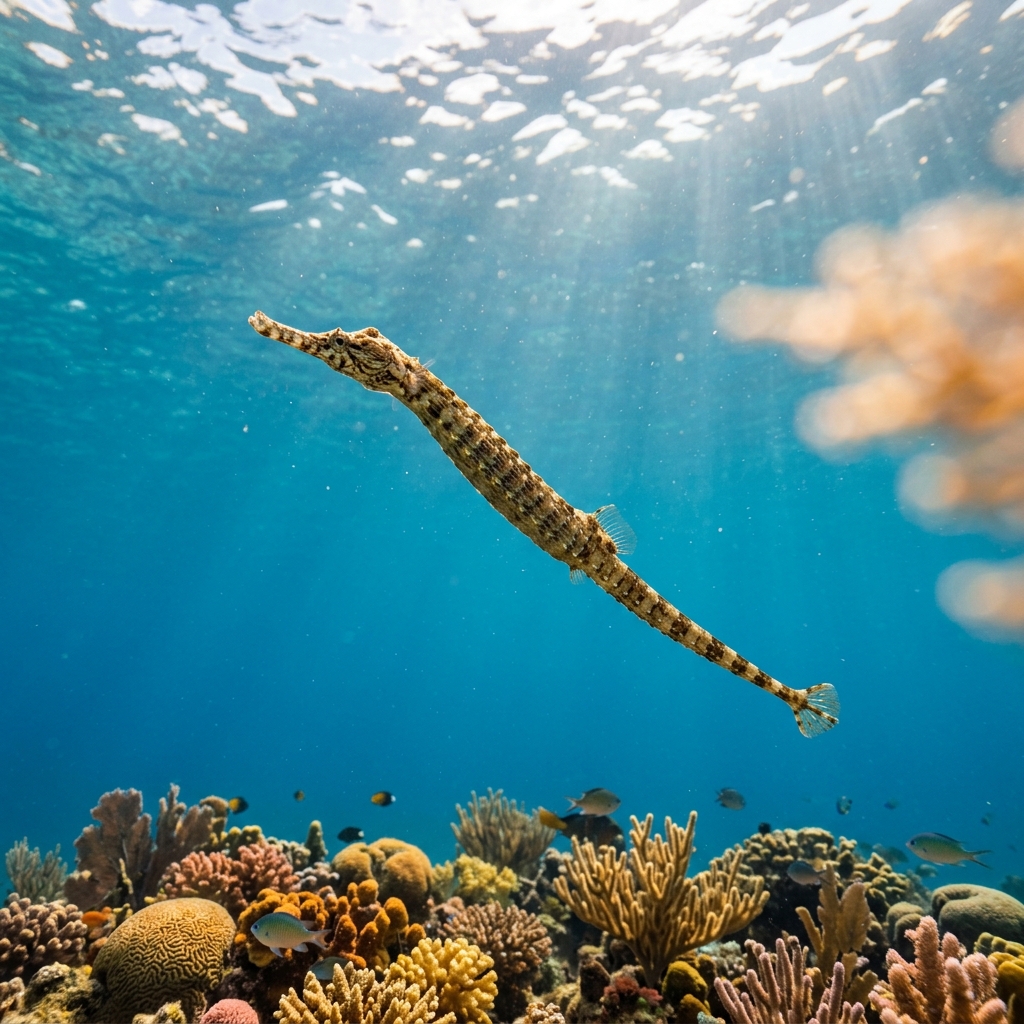
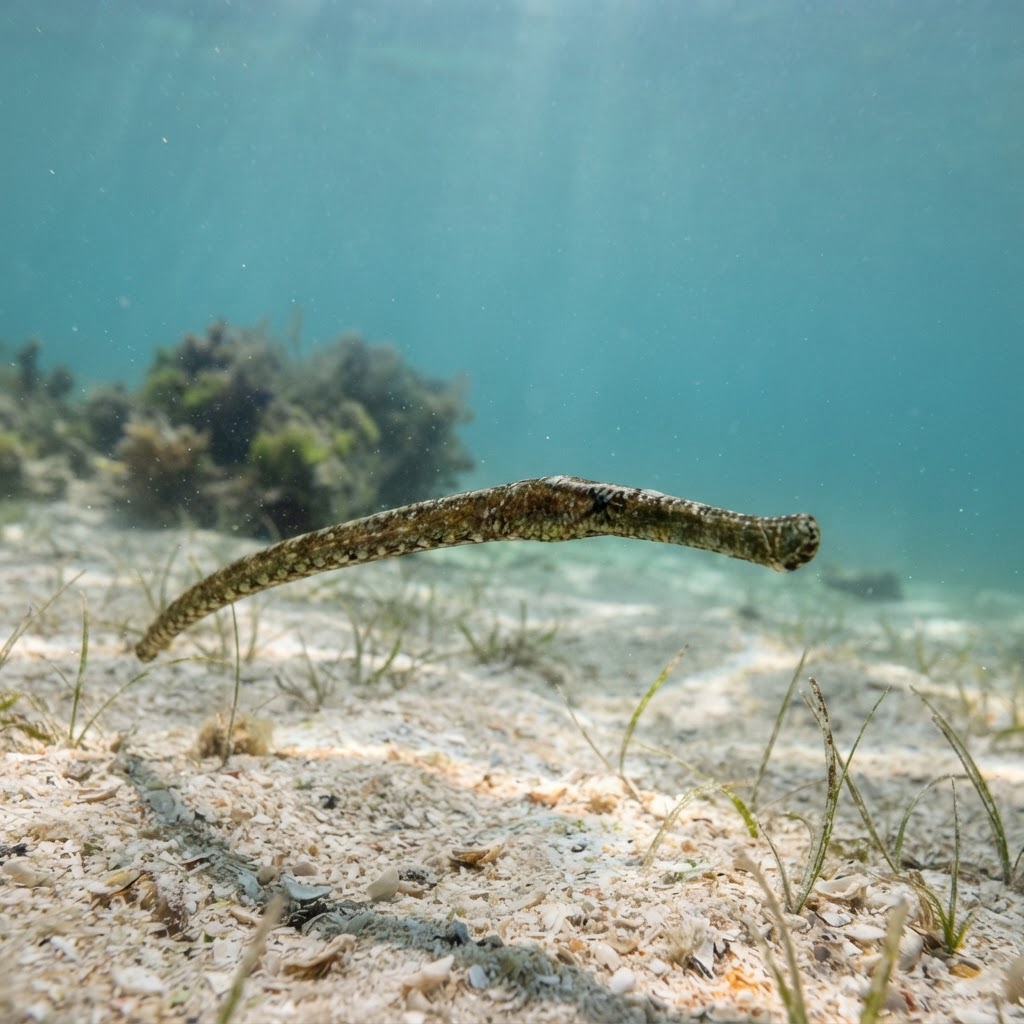
Long, thin, straight-bodied fish up to about 24 cm, built like a stretched-out rod rather than the curled S-shape of a seahorse. Colour runs from olive-green to brown with faint mottled banding that breaks up its outline against seagrass and weed. The snout is long and tubular with a small upturned mouth, and it swims by rippling its body in a near-vertical, head-up posture rather than darting. Males carry eggs in a visible pouch under the tail during breeding, giving them a swollen belly females lack.
Look for it hovering nose-down among seagrass blades or weed, holding almost perfectly still and swaying gently with the current to mimic the plants around it. It's a slow, deliberate feeder, sucking up small crustaceans through its tubular snout rather than chasing prey, and it tends to sit tight rather than flee when divers approach, relying on camouflage over speed. Most sightings are close to the bottom in shallow, vegetated areas rather than open water.
Like seahorses, it's the male that carries the fertilised eggs, in a brood pouch on the underside of his tail, until the young are ready to swim off on their own.
Sightings are logged across the year with no strong seasonal pattern in the data, and its wide temperature tolerance, from around 9 to nearly 20 C, means it's present in both the cool Baltic-influenced sites and the warmer Mediterranean year-round.
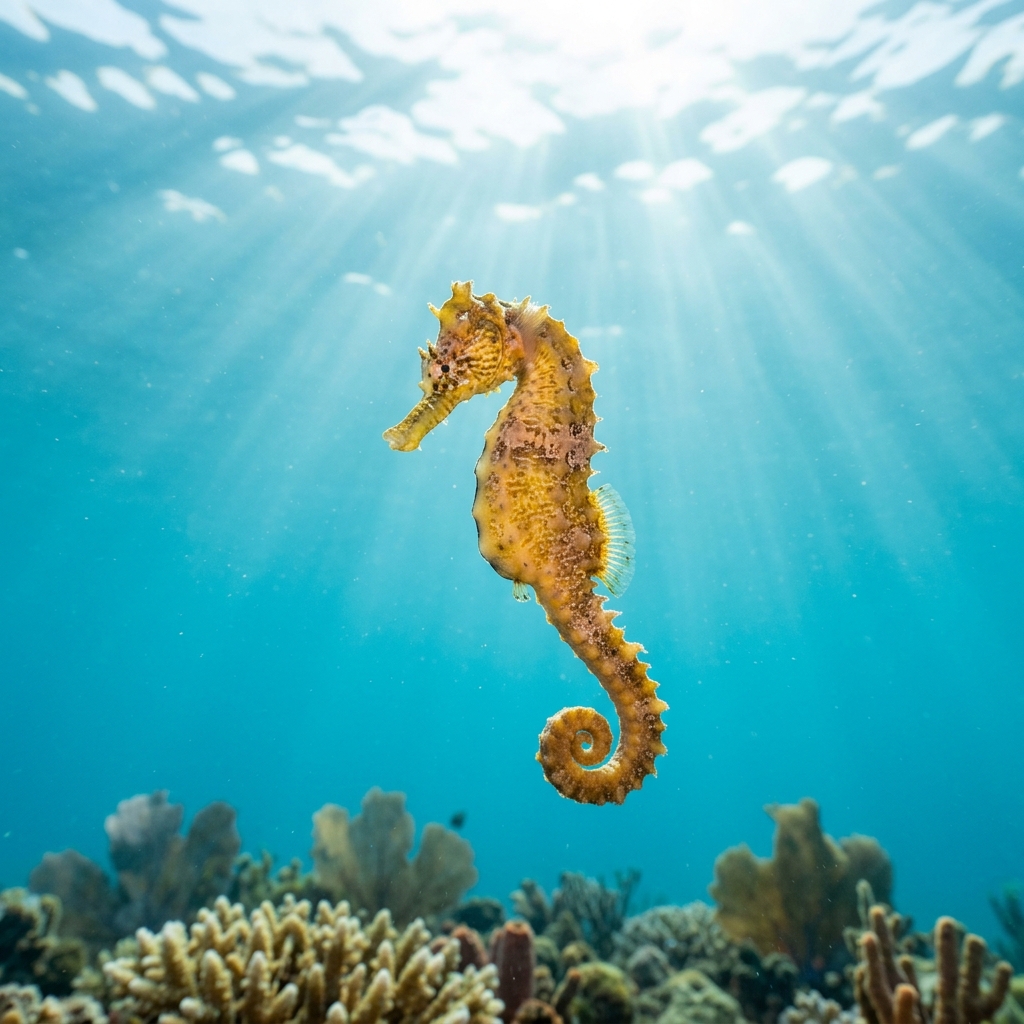
Reef neighbours a diver could mistake it for. Use the identification notes above to tell them apart.
Most reliably logged around Sicily and Lazio in Italy, plus the French Riviera and Provence in southern France, with a further cluster of sightings in Danish waters around Zealand and in Germany's Schleswig-Holstein. Smaller numbers turn up in Sweden's Bohuslän, Spain's Balearic Islands, and around Jersey and Guernsey in the UK, so it spans both Mediterranean seagrass beds and cooler northern European shallows.
Mapping where Deep-snouted Pipefish is logged…
Sicily and Lazio in Italy and the French Riviera in France are the most consistent spots, with further sightings around Zealand in Denmark and Schleswig-Holstein in Germany.
There's no strong seasonal pattern in the sighting data, and its wide temperature range means it can turn up year-round in both Mediterranean and northern European seagrass beds.
Look for a long, straight, pencil-thin body up to 24 cm, mottled brown or olive in colour, hovering head-down in seagrass with a tubular snout and a rippling swimming motion.
They reach around 24 cm in length, though their thin body means they're easy to miss even at that size against a weedy background.
Yes, males brood fertilised eggs in a pouch under the tail until they hatch, the same reproductive strategy used by their seahorse relatives.
No, they have no venom or defensive behaviour toward divers and simply rely on camouflage to stay hidden in seagrass and weed.
Site and sighting data is aggregated from diver logs, iNaturalist and GBIF. For taxonomy and conservation status:
Seahorse
1,346 sites