Istigobius decoratus
Sand-loving goby common across the Visayas and Sulawesi reefs, resting on coral rubble in 24-29 C water year-round.
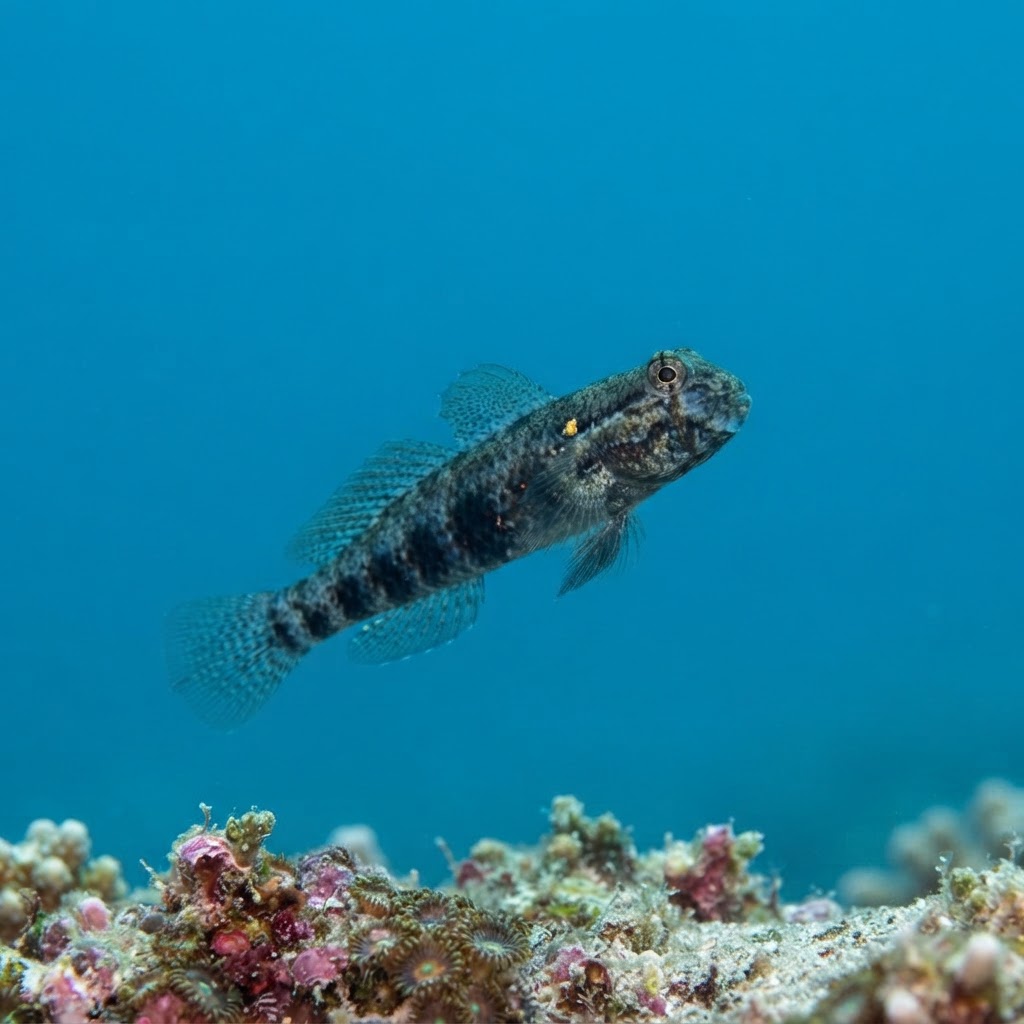
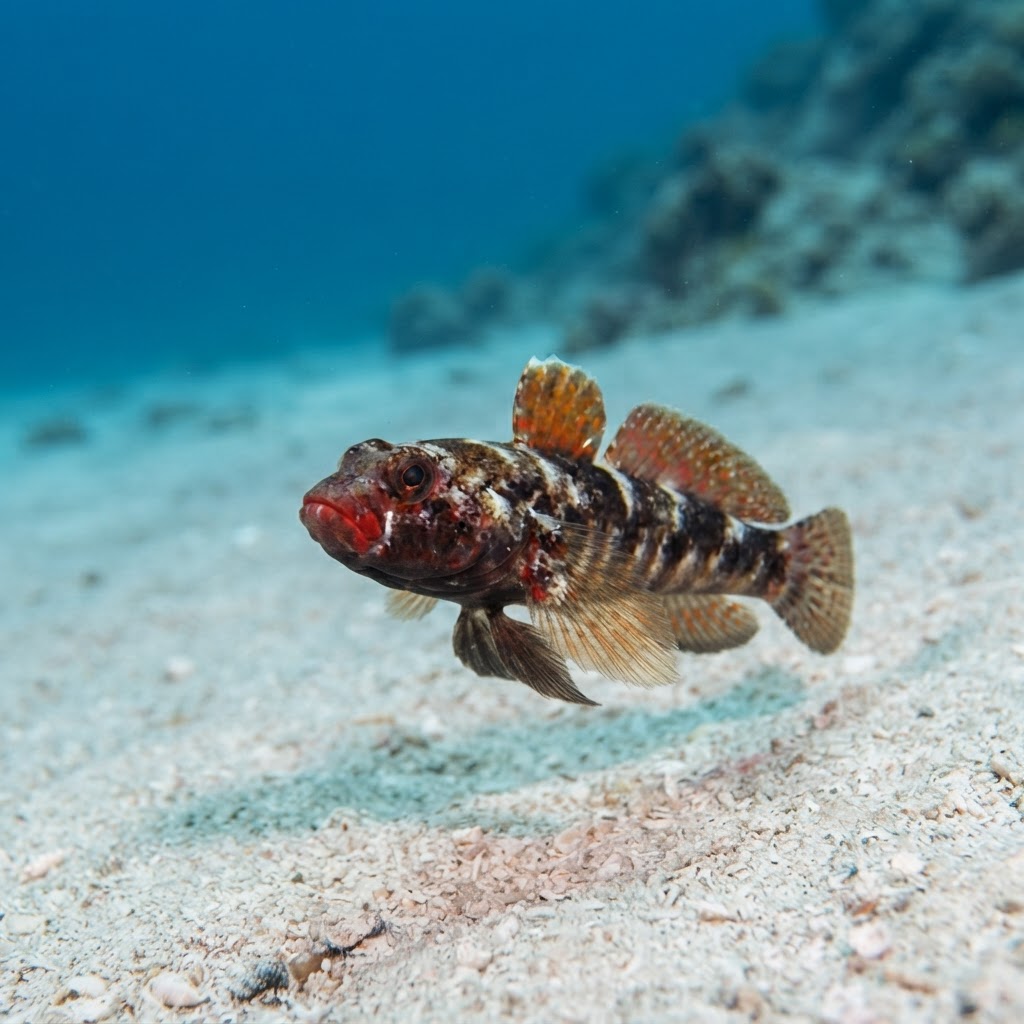
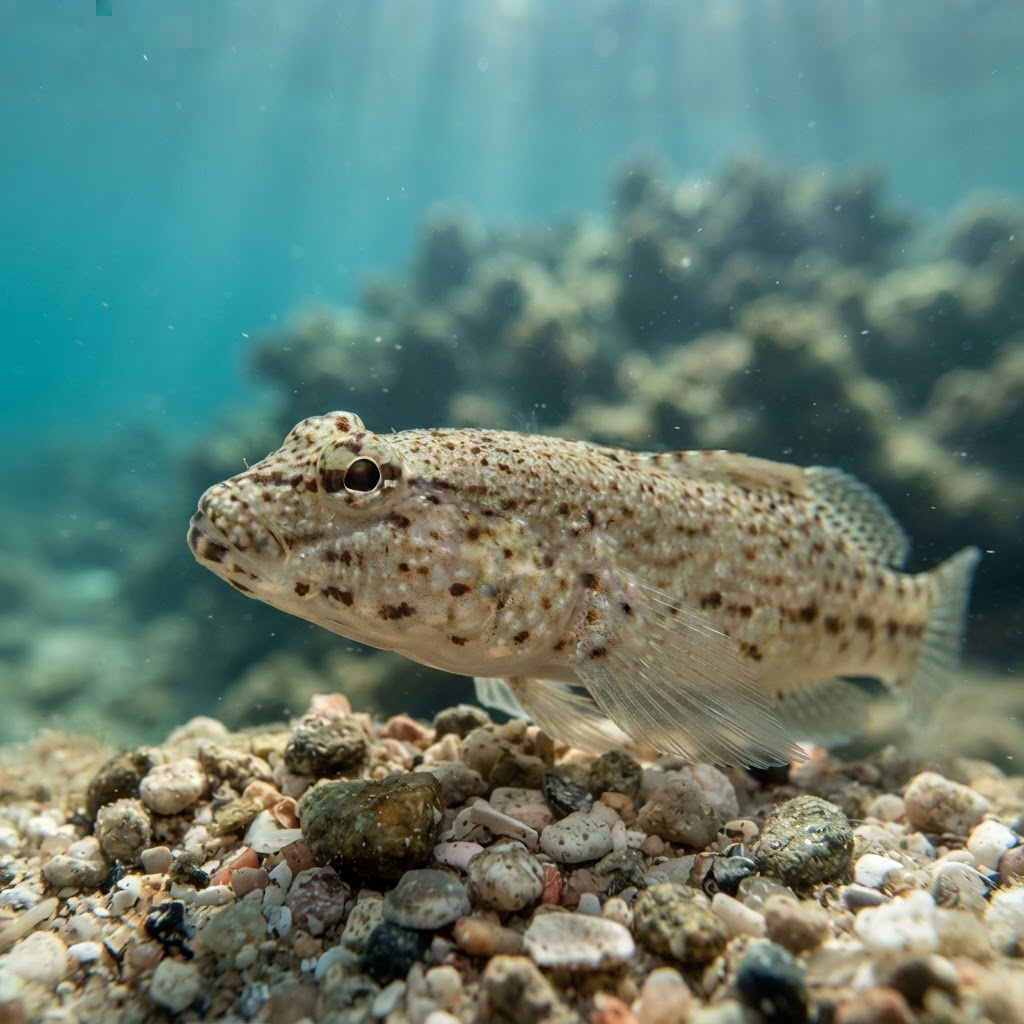
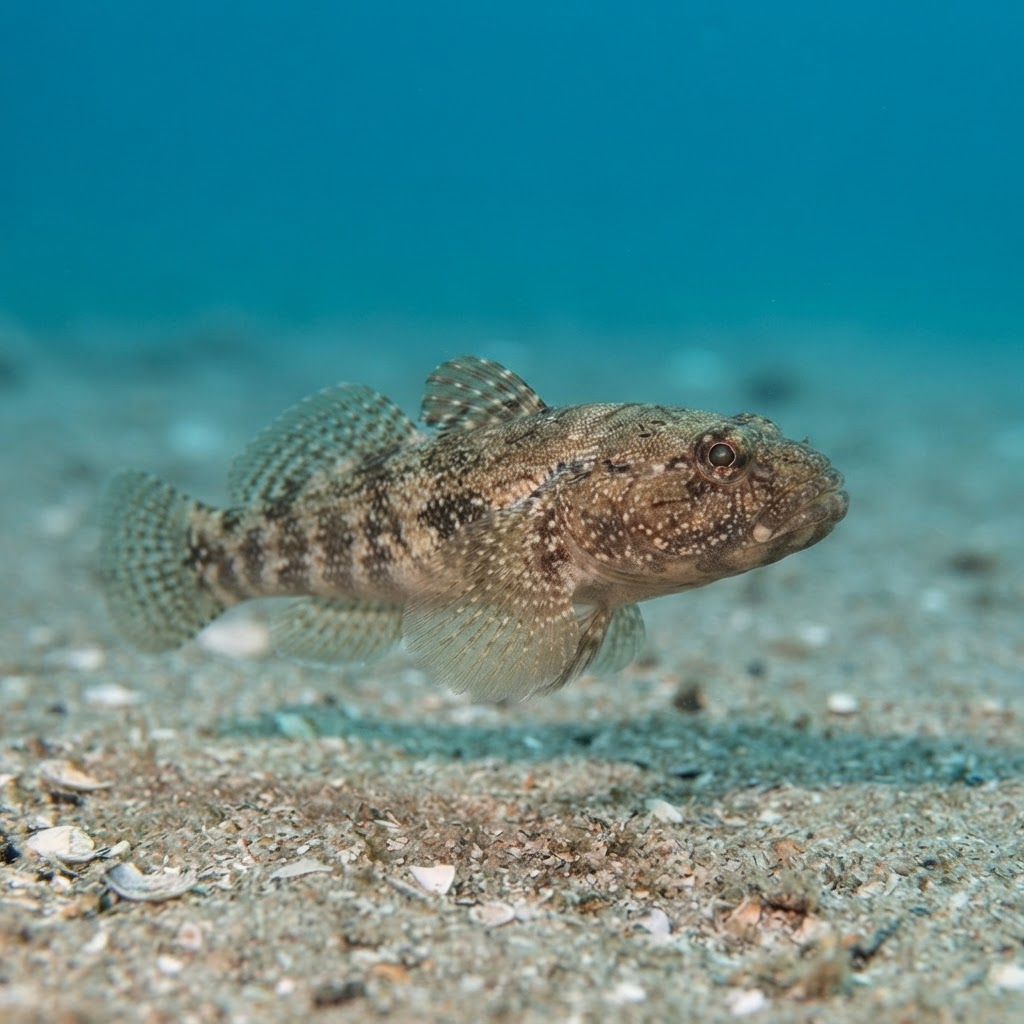
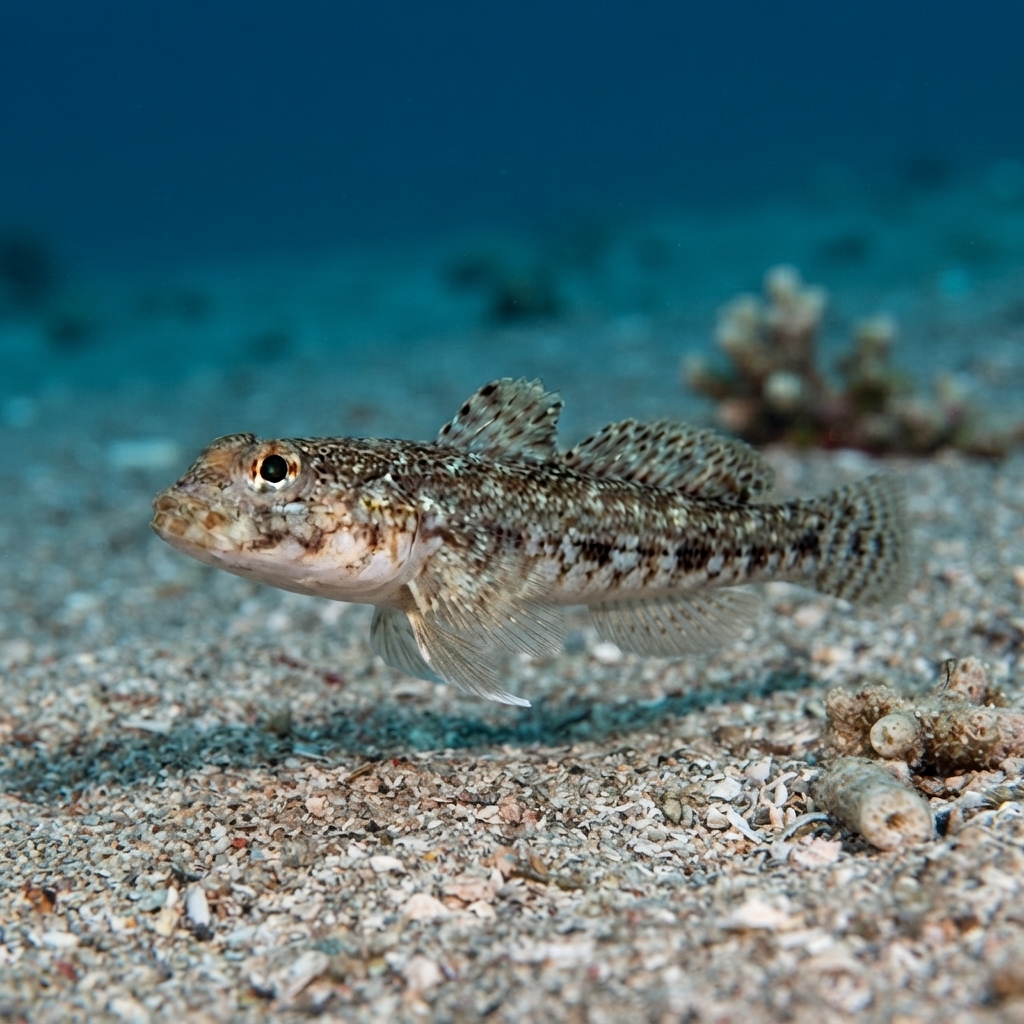
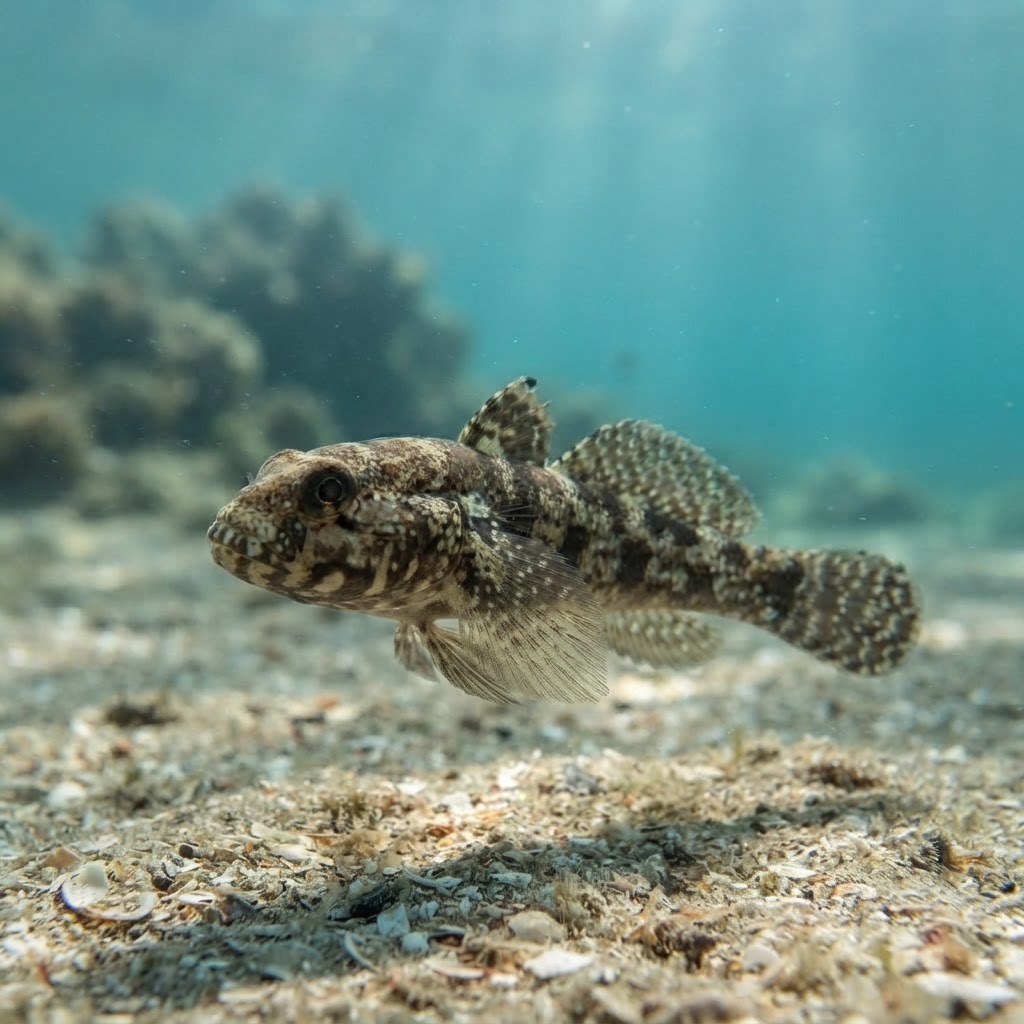
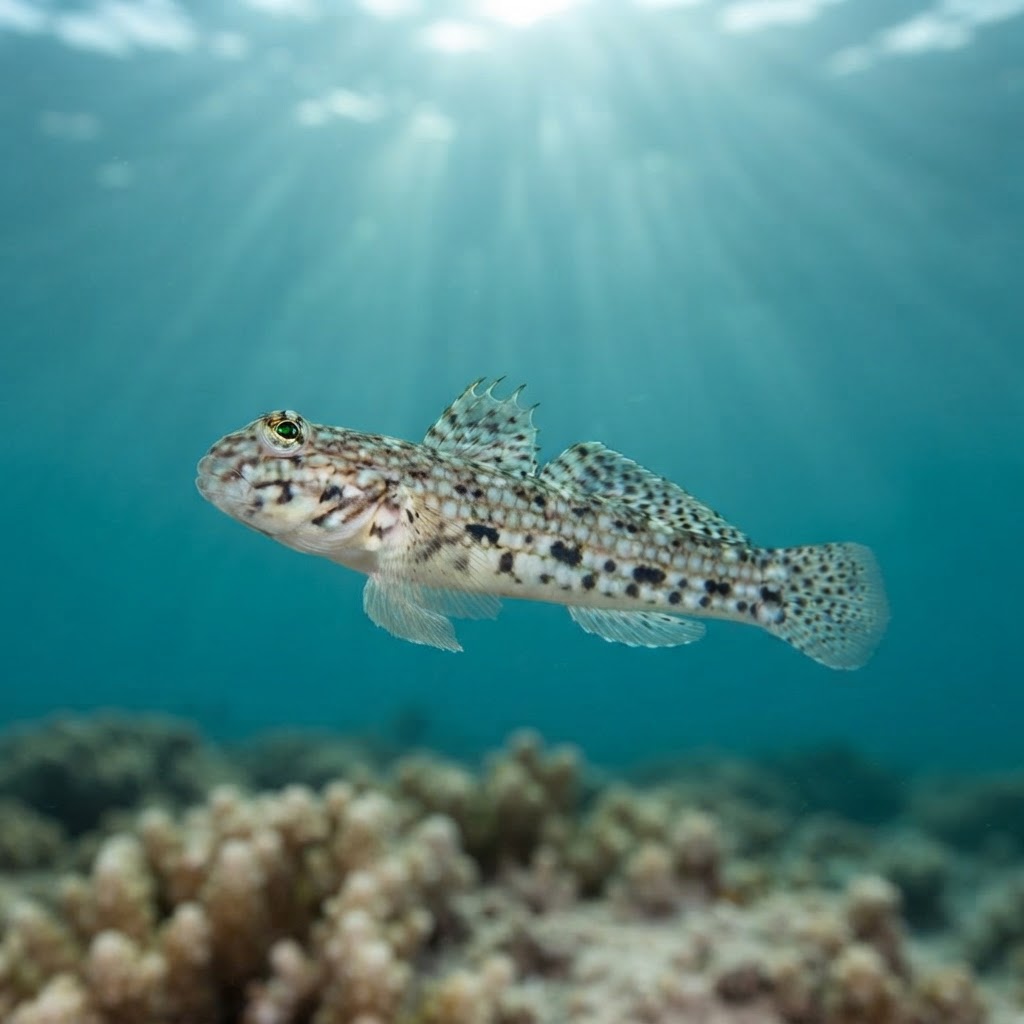
Small, slender fish around 9 cm, pale grey to sandy in colour with rows of dark speckled spots running along the flanks and a scattering of fine markings on the head. It rests propped on its pelvic fins rather than swimming freely, body angled slightly upward, blending in against sand and rubble patches. The tail base often shows a darker blotch, which is the quickest cue when it is sitting still against a similar-toned bottom.
Spend most dives watching this one hold still on sand, rubble or the base of coral heads, propped up on its front fins rather than cruising the reef. It tends to sit tight rather than bolt when a diver approaches, though it will dart a short distance and resettle if you get too close. Look for it on the lower reef slope and flat sandy patches rather than up in the coral itself, usually in shallow to mid depths.
Like other sand gobies, it holds a favoured perch and will retreat into a nearby burrow or rubble gap rather than flee across open ground when threatened.
Comfortable across a 24.6 to 29.3 C range, so it sits on tropical reefs year-round with no clear seasonal window in the data. Any month works at its core sites in the Philippines, Indonesia and Oman.
Reef neighbours a diver could mistake it for. Use the identification notes above to tell them apart.
Most reliably logged in the Philippines, especially across the Visayas, and in Indonesia's Sulawesi region, with a strong presence in Oman's Daymaniyat Islands too. Divers also find it around Dili in Timor-Leste, Flic-en-Flac in Mauritius, Queensland in Australia, and the Red Sea Riviera in Egypt, though it turns up as an uncommon sighting at most of these sites rather than in numbers.
Mapping where Decorated Goby is logged…
It is most commonly logged in the Philippines, particularly the Visayas, and across Sulawesi in Indonesia. Good numbers also show up around Oman's Daymaniyat Islands, Dili in Timor-Leste, Flic-en-Flac in Mauritius, and Queensland, Australia.
There is no strong seasonal pattern in the sightings, and it tolerates a wide 24.6 to 29.3 C range, so it is present on reefs throughout the year at its core sites.
Look for a small pale fish around 9 cm, propped on its front fins on sand or rubble rather than swimming freely, with rows of fine dark speckles along the body and a darker blotch near the tail base.
They reach around 9 cm, making them one of the smaller reef fish you will spot resting on open sand or rubble patches.
No. They are harmless, small bottom-dwelling fish that pose no risk to divers and simply resettle nearby if disturbed.
Site and sighting data is aggregated from diver logs, iNaturalist and GBIF. For taxonomy and conservation status:
Slender Goby
806 sites