Cephalopholis urodeta
Small reddish grouper with a dark tail mark, most reliably logged around Sulawesi, Rarotonga and Palau's Rock Islands, year-round on warm reefs.
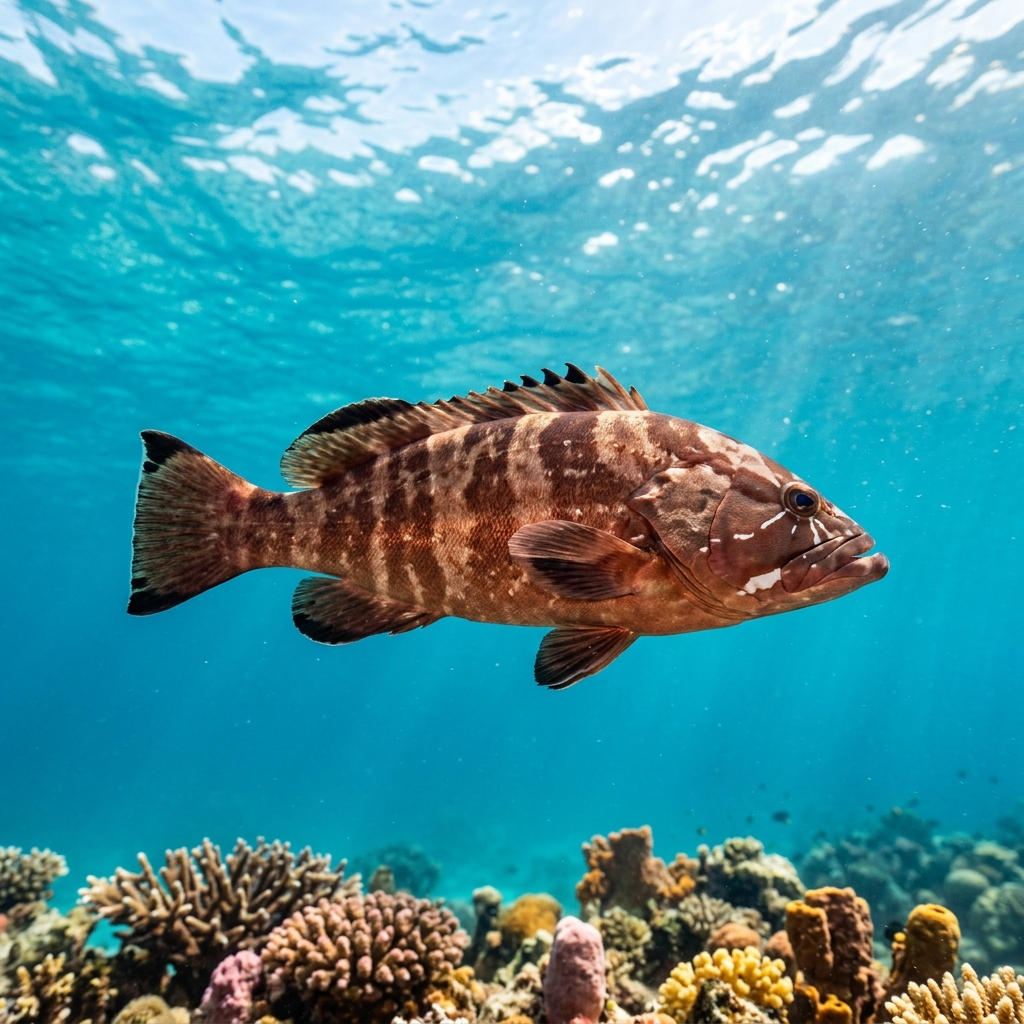
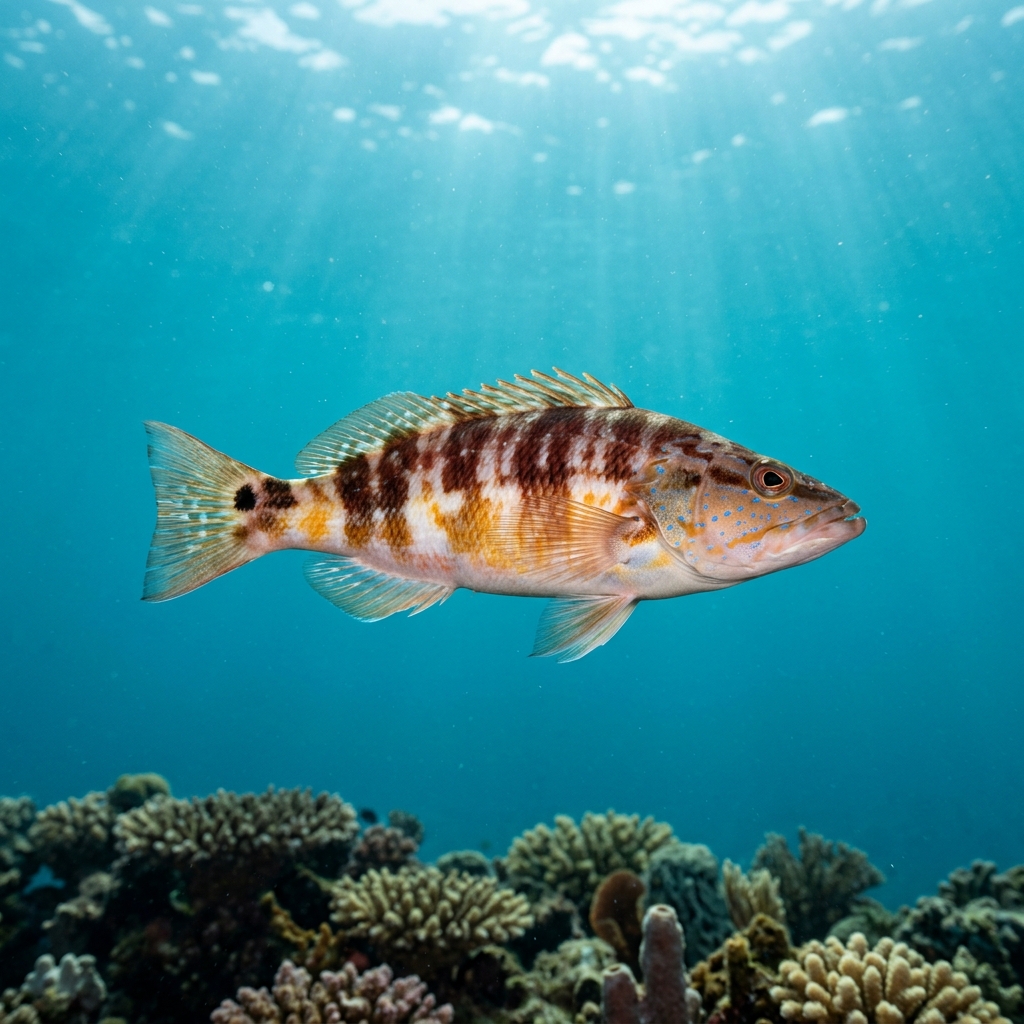
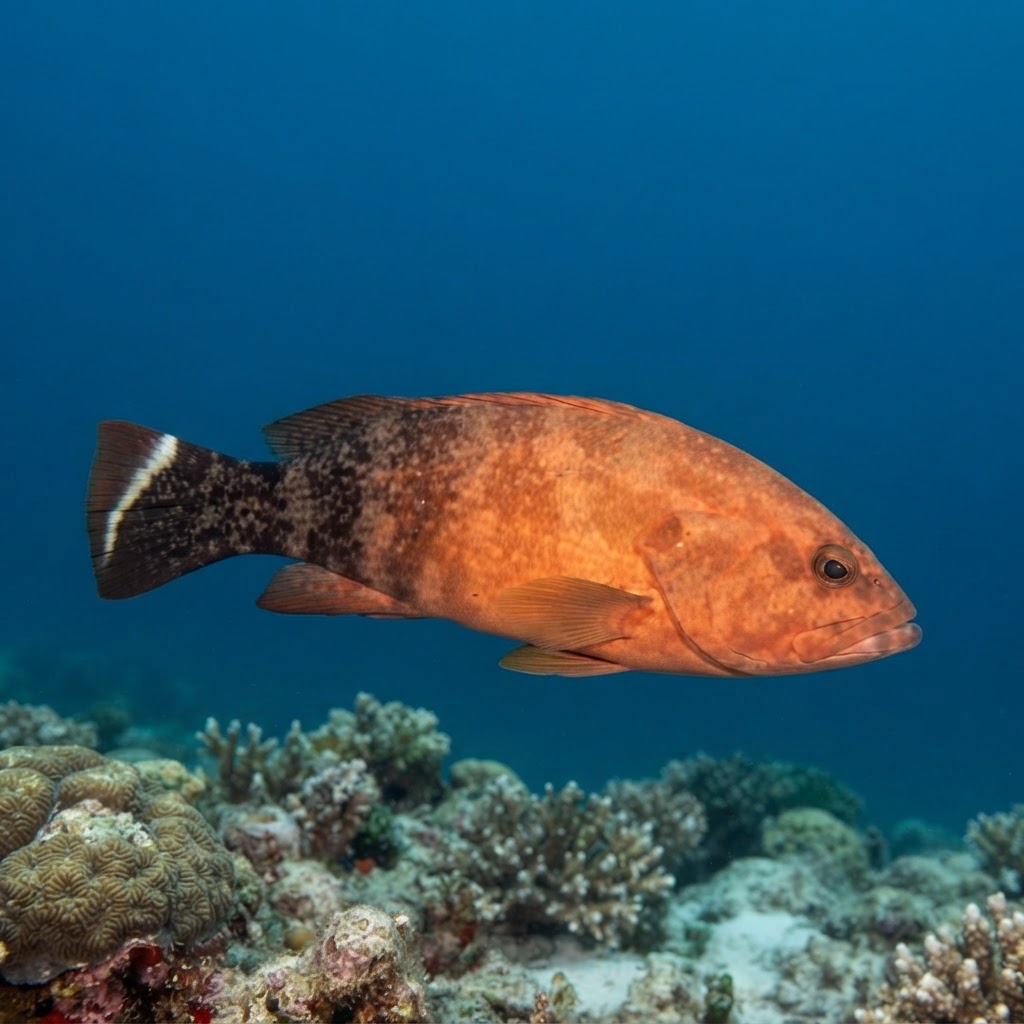
Small for a grouper at around 19 cm, with a slim, torpedo-shaped body in reddish-brown to orange, scattered with faint pale spots. The giveaway is a dark, almost black patch at the base of the tail fin, often edged with a thin white line, which is where the common name comes from. Usually seen hovering near a coral head or ducking into a crevice rather than swimming in open water.
Typically spotted hovering just off the reef structure, close to a favourite crevice or coral head it can dart into if startled. It is not shy so much as unbothered, holding its ground at a cautious distance rather than fleeing outright, and tends to turn up on the same patch of reef dive after dive. Most sightings are during daylight hours on shallower reef sections, where it sits and ambushes small prey as it passes.
Like other hinds in this genus, it is a protogynous hermaphrodite, meaning individuals start life as females and some later switch to male, a common groupers trait that shapes how they group up to spawn.
No strong seasonal pattern shows up in the data, and with a comfortable range of about 25 to 29 C it stays active on tropical reefs all year, so any month works for a visit.
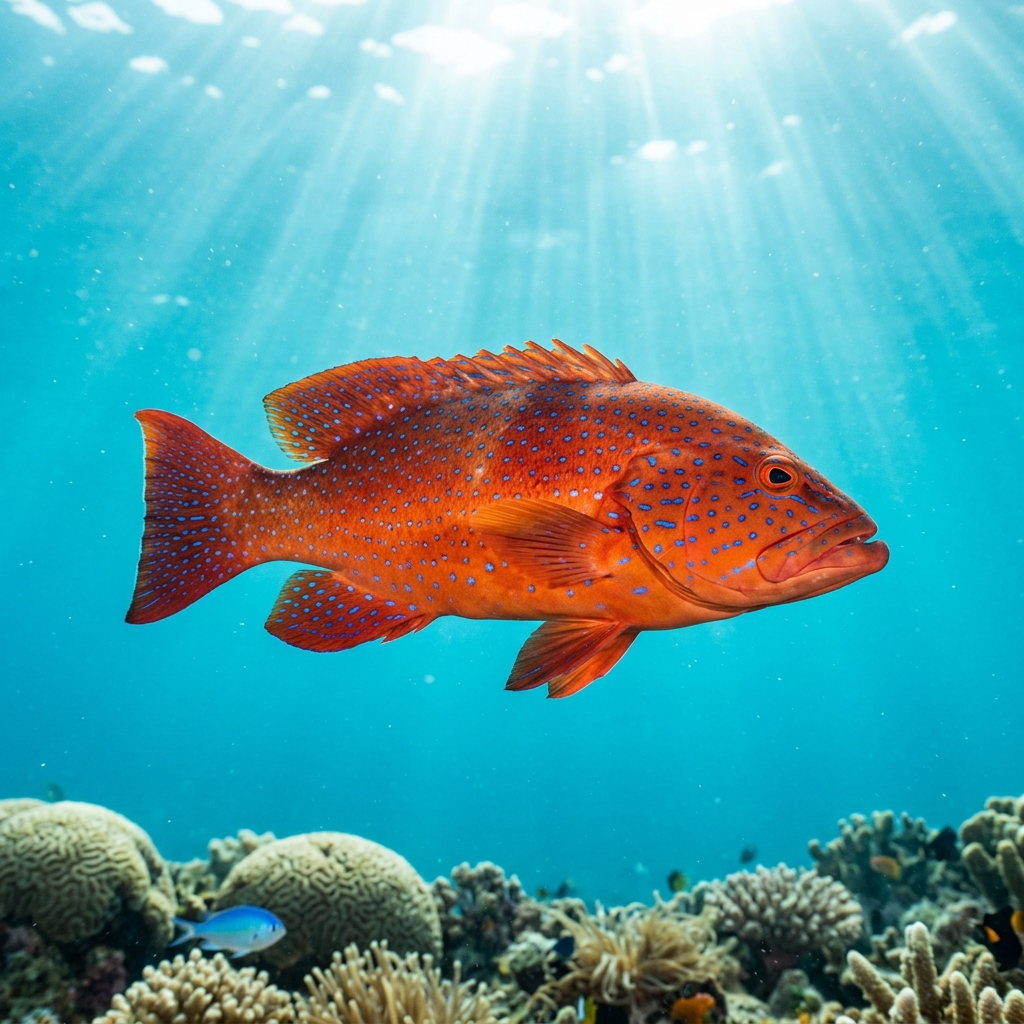
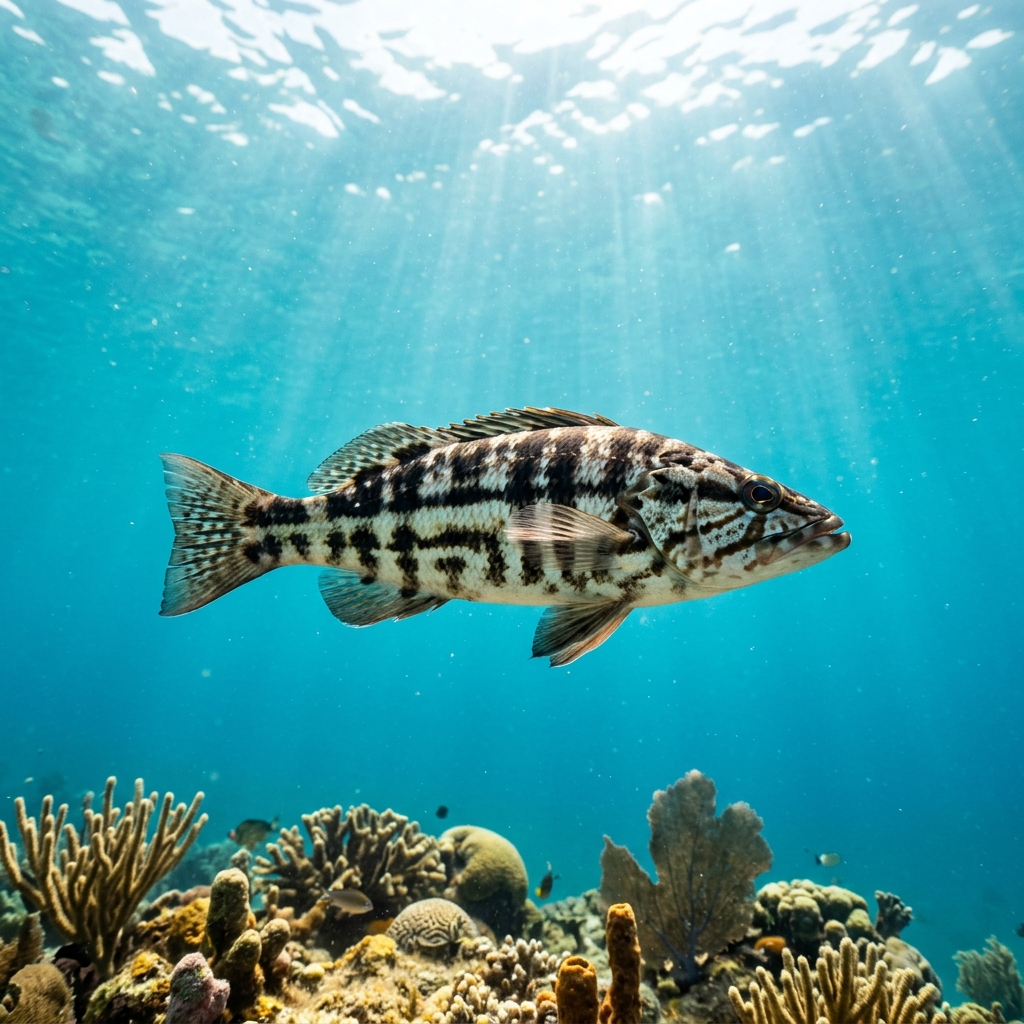
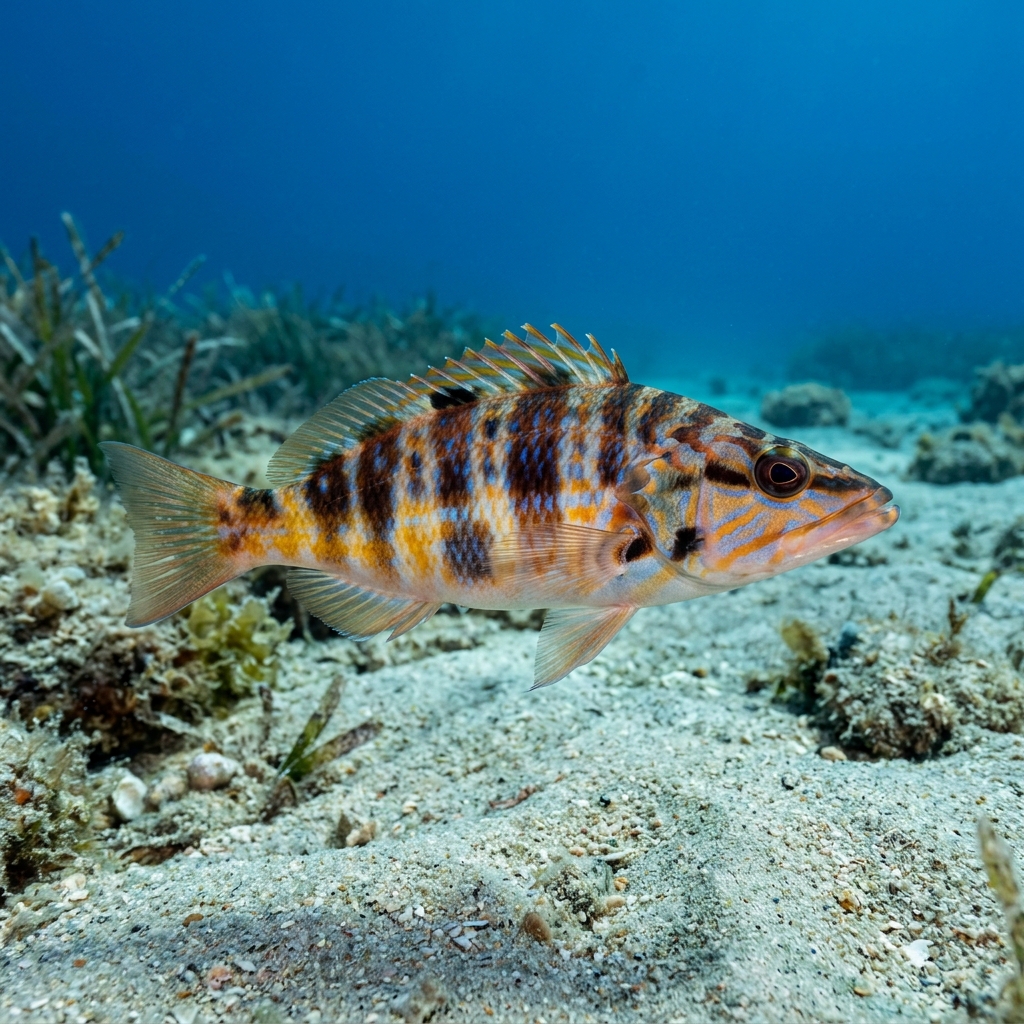
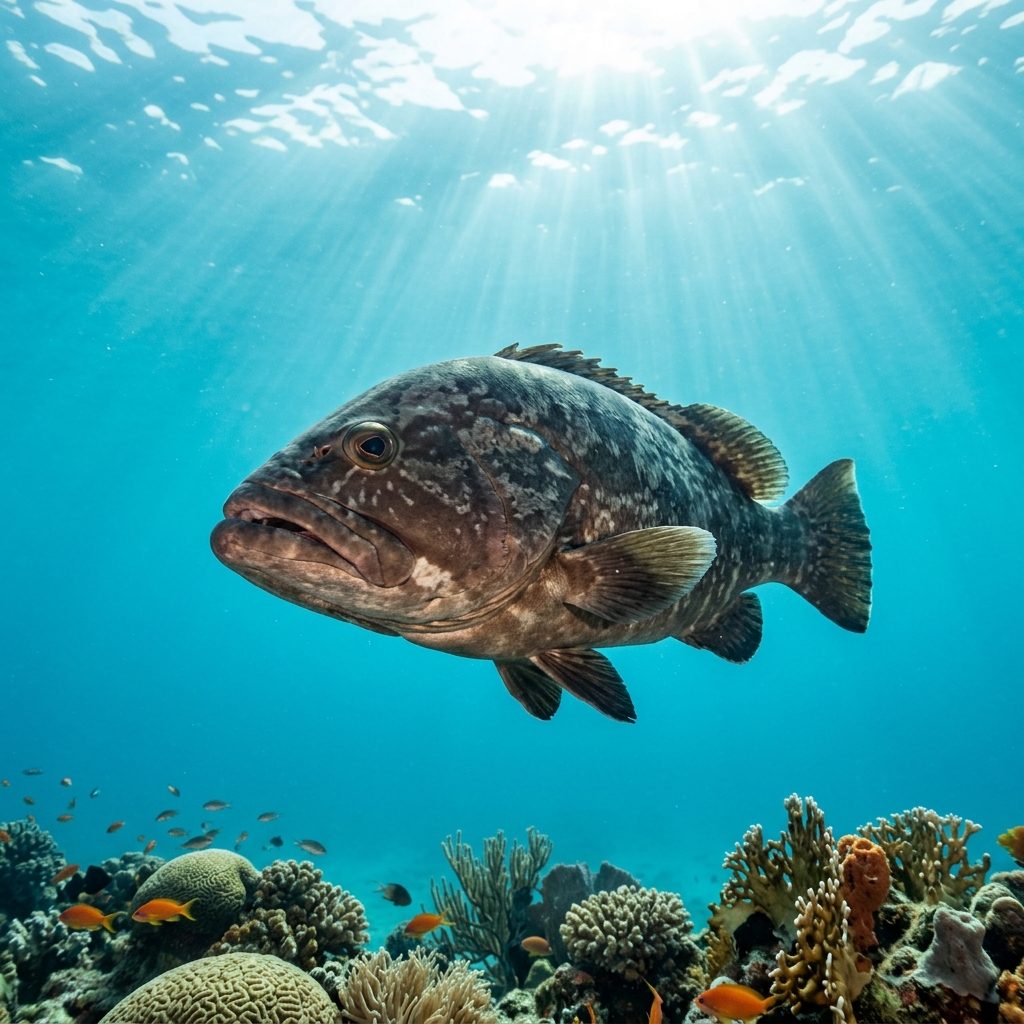
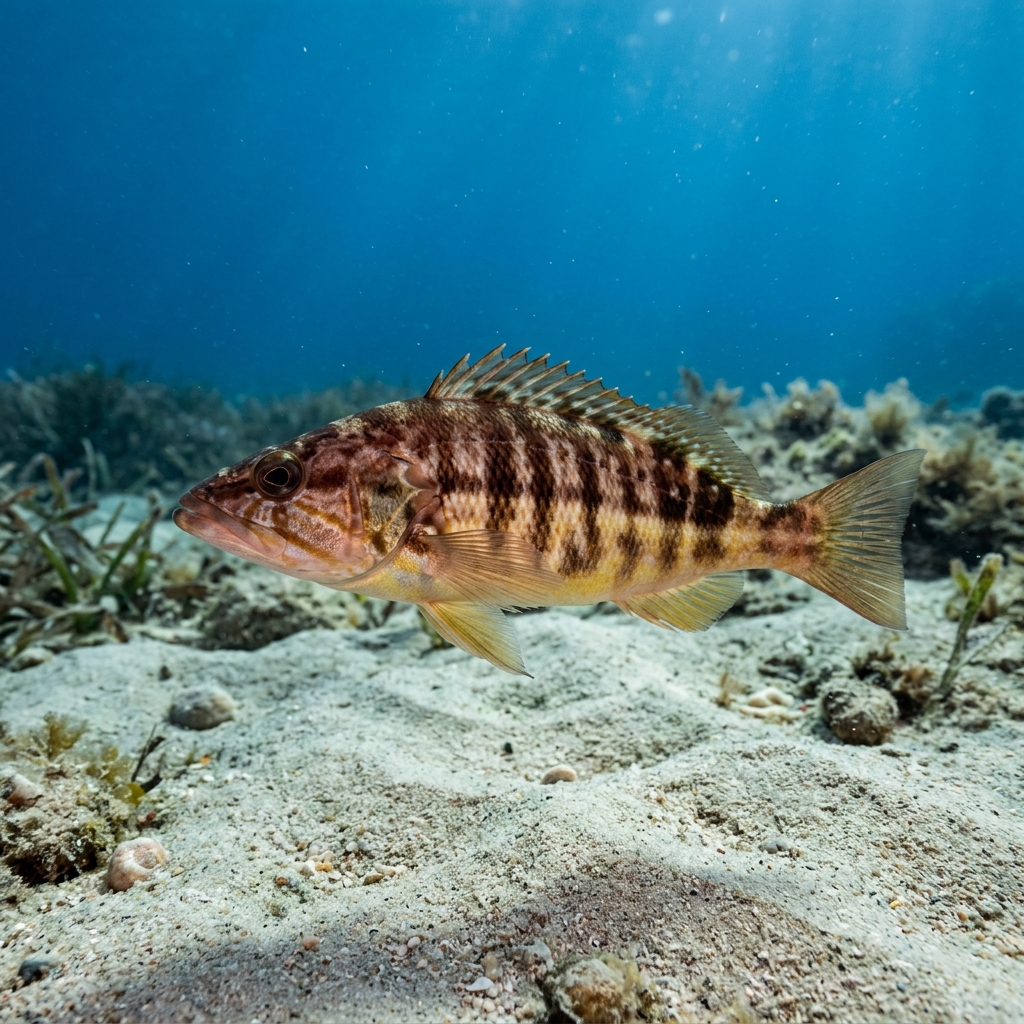
Reef neighbours a diver could mistake it for. Use the identification notes above to tell them apart.
Most consistently logged across Indonesia, especially Sulawesi, and in the Philippines' Visayas region. Also a reliable find in Palau's Rock Islands, around Rarotonga in the Cook Islands, and through the Tuamotu Islands in French Polynesia, with further sightings in Kenting (Taiwan), Taveuni (Fiji) and Queensland.
Mapping where Darkfin Hind is logged…
Sulawesi in Indonesia and the Visayas in the Philippines are the strongest spots, alongside Palau's Rock Islands and Rarotonga in the Cook Islands. It also turns up in French Polynesia's Tuamotu Islands, Taiwan's Kenting region, Fiji's Taveuni and parts of Queensland.
There is no clear seasonal pattern in sightings, and it tolerates a wide warm-water range of roughly 25 to 29 C, so divers log it on tropical reefs throughout the year.
Look for a small reddish-brown grouper, only around 19 cm long, hovering near reef structure with a distinctive dark blotch at the base of its tail fin. It rarely strays far from a shelter spot on the reef.
They stay small for a grouper, typically reaching around 19 cm in length, so do not expect the bulk of larger reef groupers.
Yes, like many groupers it is a protogynous hermaphrodite, starting life as female with some individuals later transitioning to male as they mature.
Site and sighting data is aggregated from diver logs, iNaturalist and GBIF. For taxonomy and conservation status:
Blacktip Grouper
2,726 sites