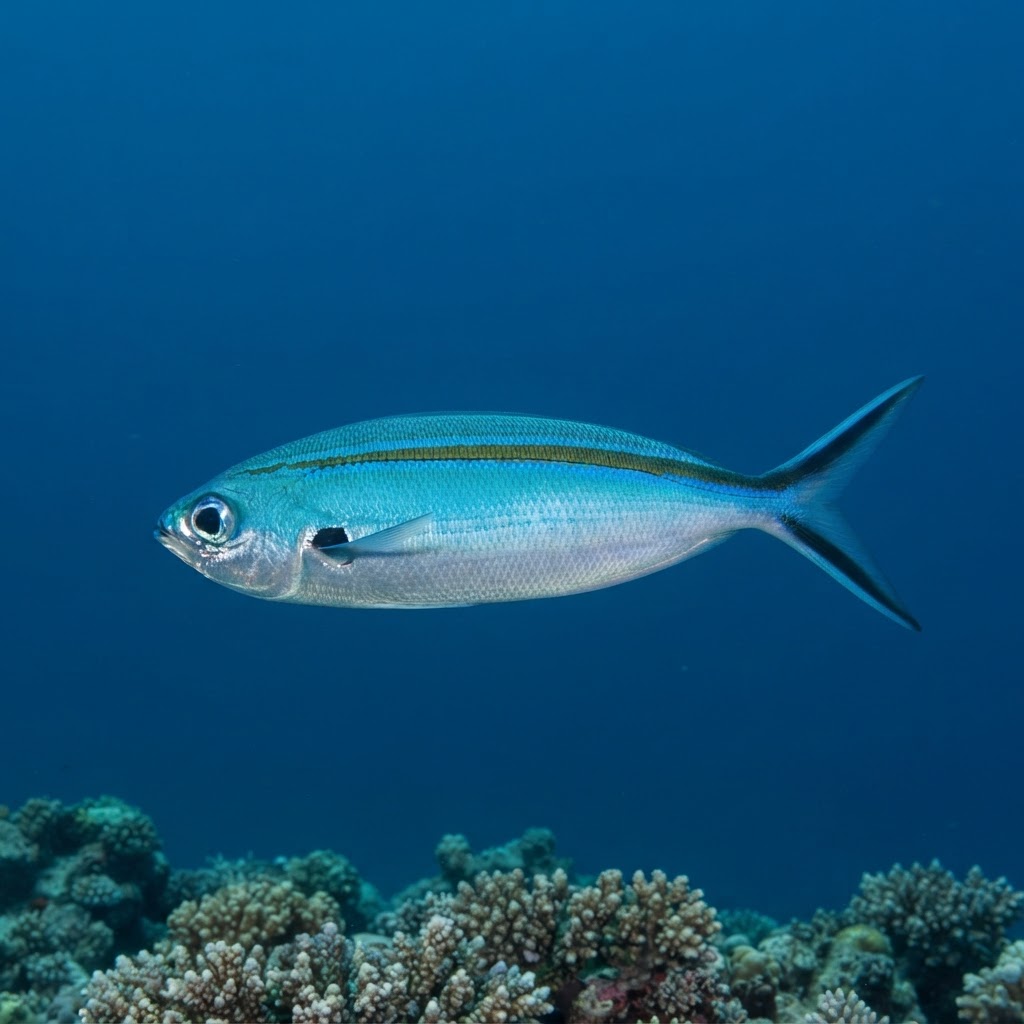
Pterocaesio tile
Streamlined blue-and-yellow schooling fish common across Sulawesi and the Maldives' Central Atolls, in warm 25-29C reef water year-round.
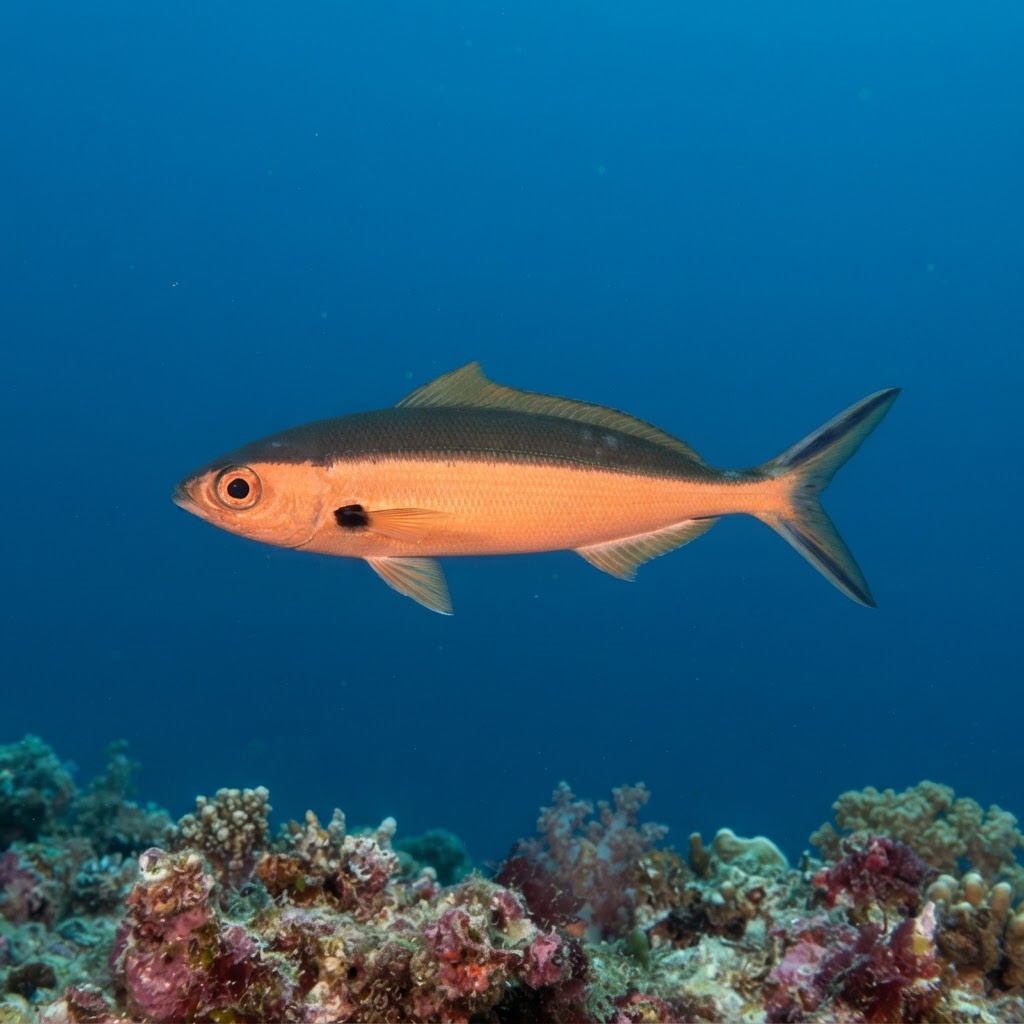
Slim, torpedo-shaped body around 21 cm long, built for constant mid-water swimming rather than hovering. Look for a bluish-grey to olive back with a darker horizontal band running from eye to tail, and a paler, silvery belly. It nearly always turns up in tight, fast-moving schools rather than alone, which is often the quickest giveaway before you even clock the stripe.
Divers usually spot it streaming in loose to dense schools over reef slopes and drop-offs, often mixing in with other fusilier species as they pick plankton out of the water column. It keeps a comfortable distance from divers but rarely bolts, more likely to part around you and re-form a few metres on. Most active over open reef during the day, tightening into denser balls when a predator like a jack or trevally makes a run at the school.
Like other fusiliers, it can shift colour within seconds, flushing a deeper red or darker tone when startled or resting at night, then fading back to its usual blue-grey by day.
No clear seasonal pattern shows up in sightings, and with a comfortable range of roughly 25 to 29C, it's present on tropical reefs year-round. Plan around good visibility and calm currents at your chosen site rather than a particular month.
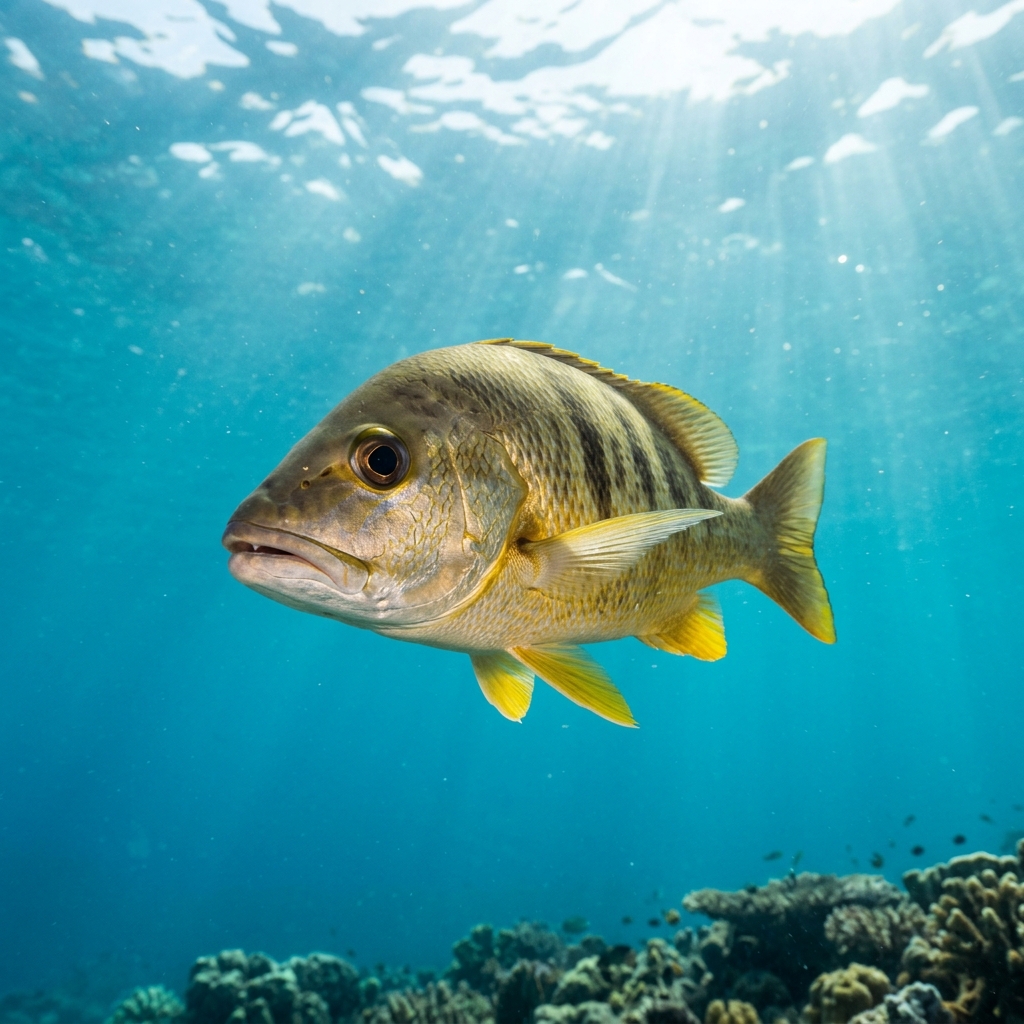
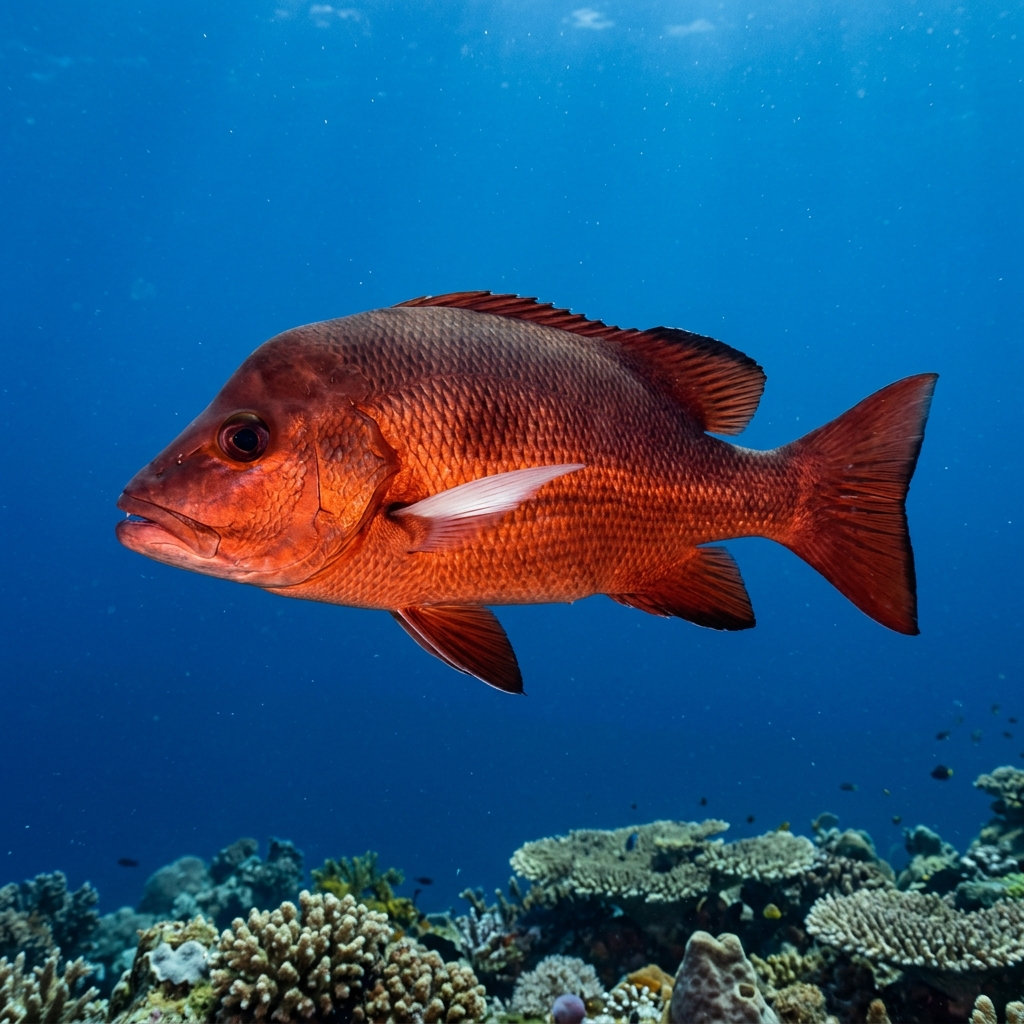
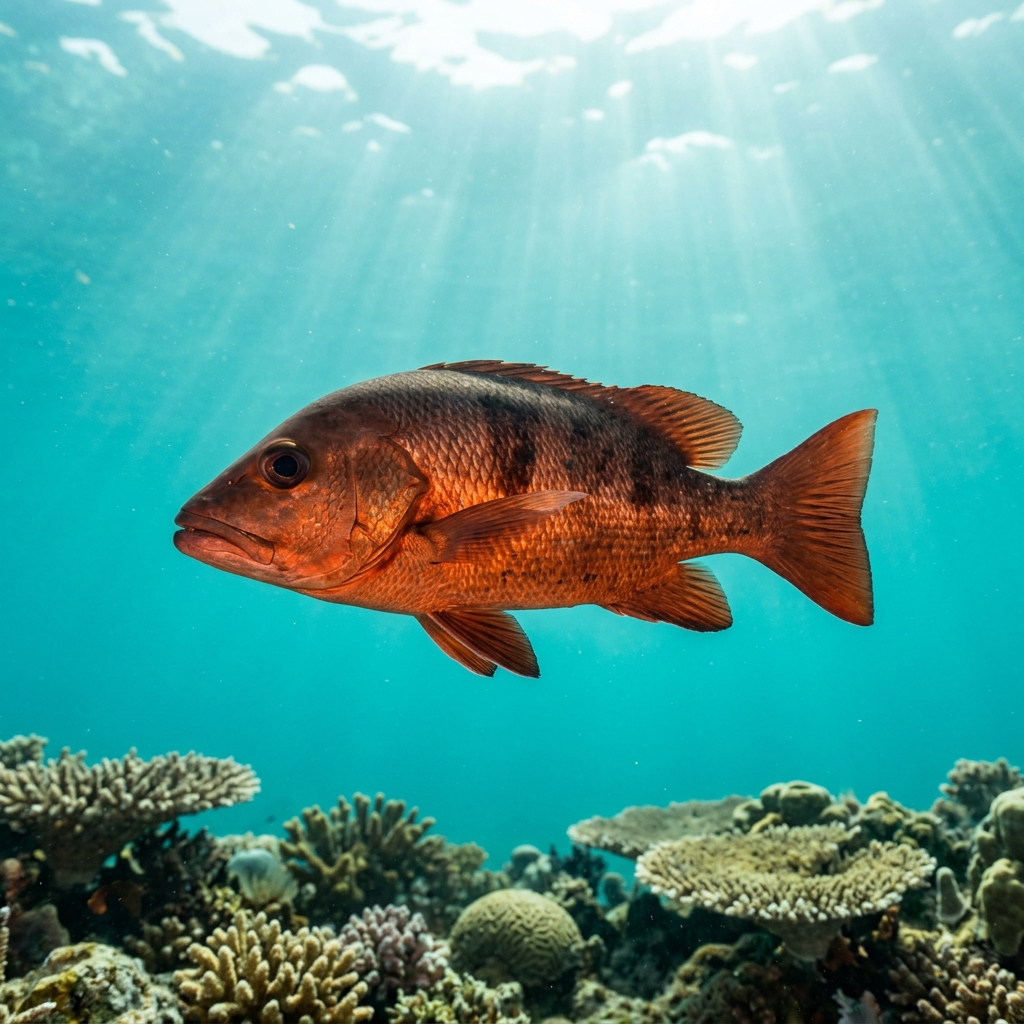
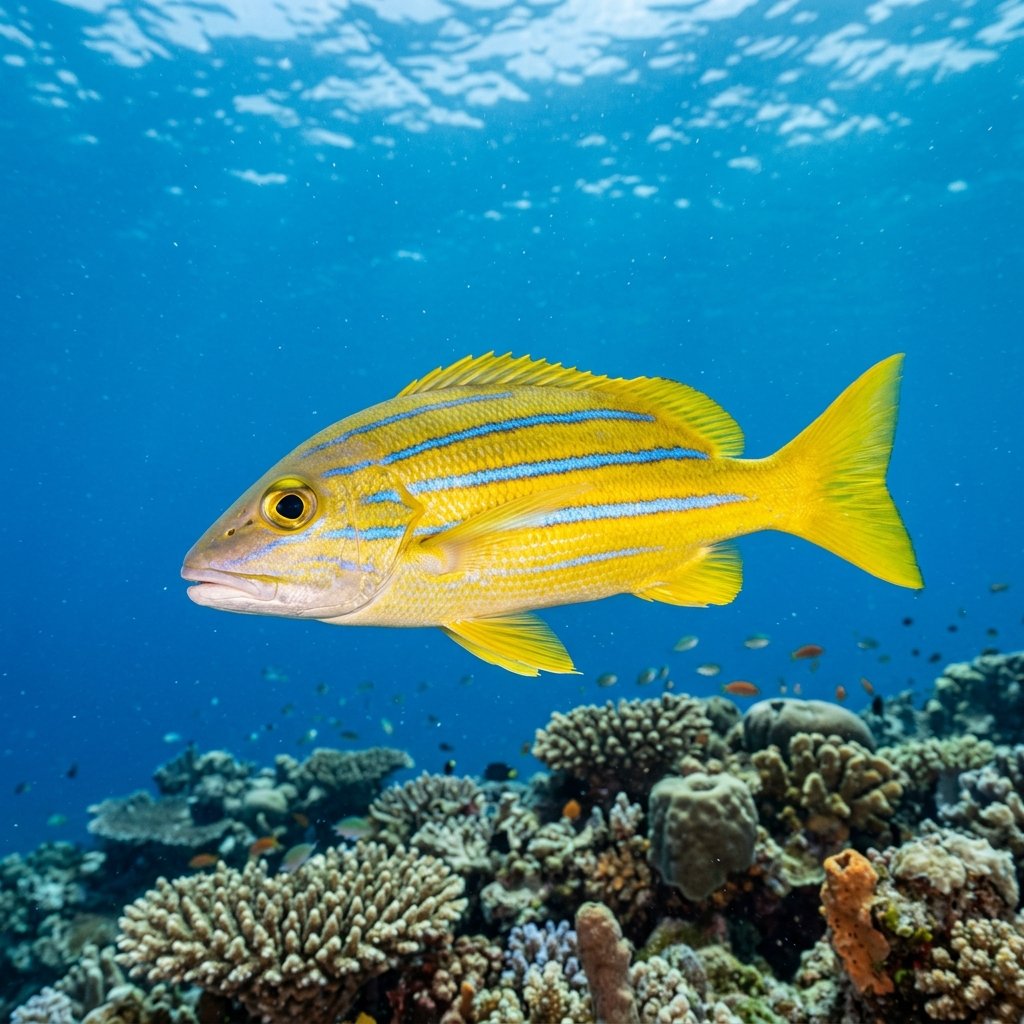
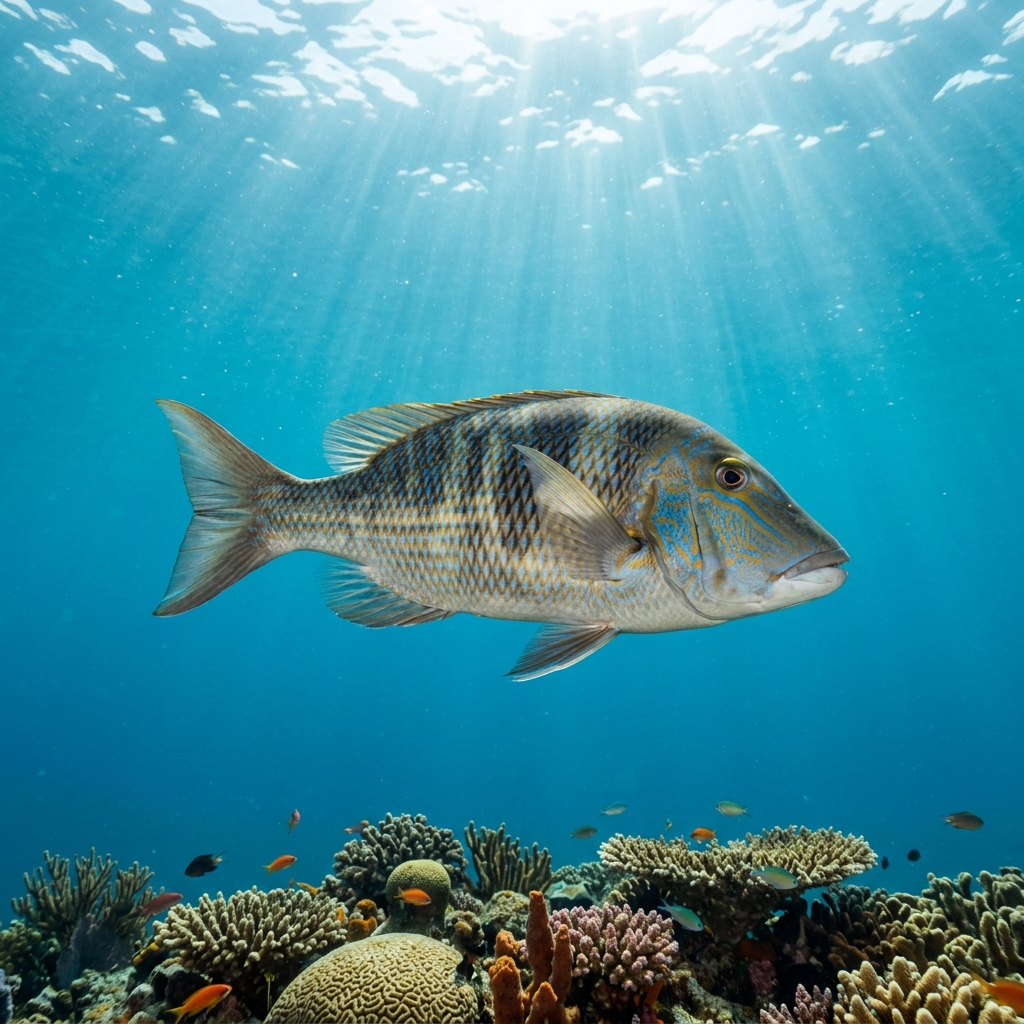
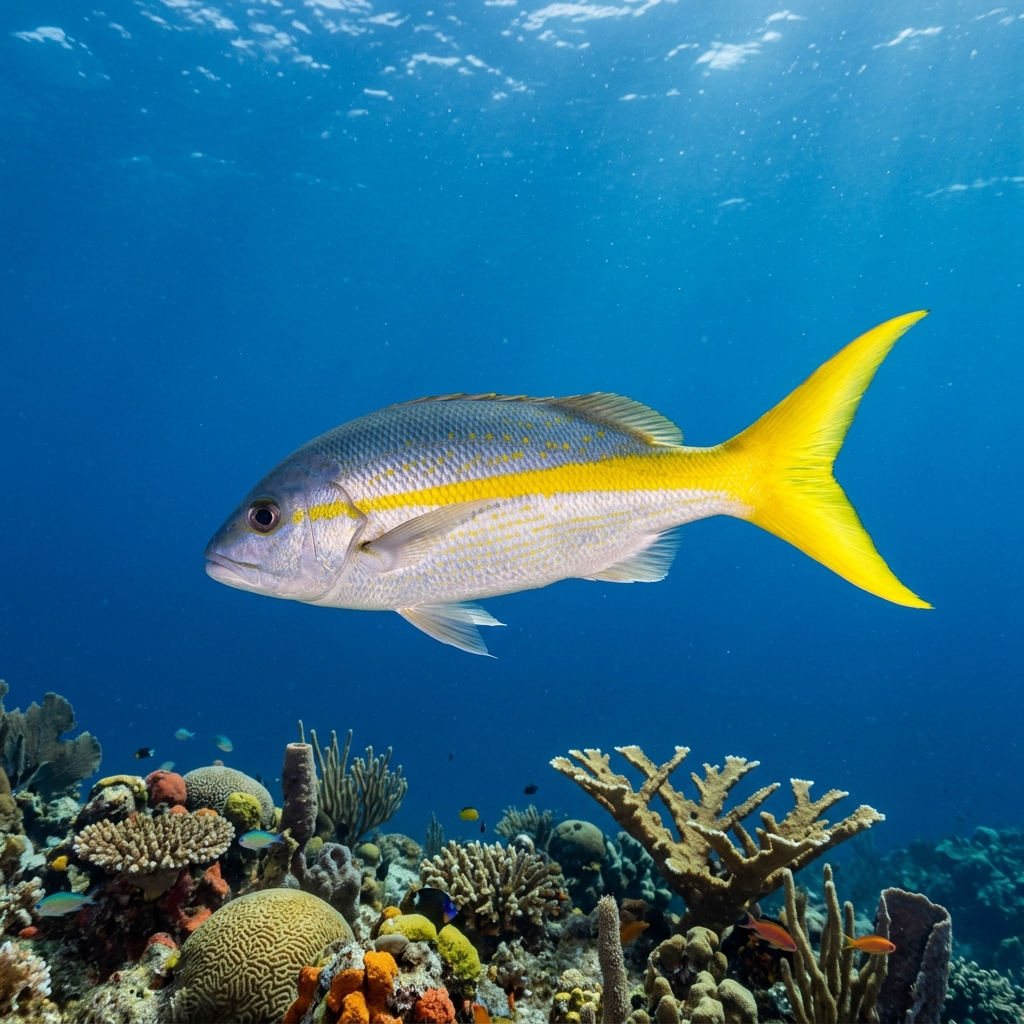
Reef neighbours a diver could mistake it for. Use the identification notes above to tell them apart.
Most reliably logged in Indonesia, especially around Sulawesi, and in the Maldives' Central Atolls, where it's one of the regular schooling fusiliers over reef slopes. Also a solid find in Sabah in Malaysia, the Inner Islands of Seychelles, Khao Lak in Thailand, Palau's Rock Islands, and Atauro Island in Timor-Leste.
Mapping where Dark-banded Fusilier is logged…
Best chances are in Indonesia, particularly Sulawesi, and in the Maldives' Central Atolls. It's also regularly logged in Sabah (Malaysia), Seychelles' Inner Islands, Khao Lak in Thailand, and Palau's Rock Islands.
There's no strong seasonal pattern in sightings, so it's a year-round fish on tropical reefs where water stays between about 25 and 29C. Any time you're diving its range is a reasonable time to look for it.
Look for a slim, streamlined fish around 21 cm with a dark horizontal band running along a blue-grey body, almost always seen schooling rather than solo. The tight, fast-moving group behaviour is often the first clue before the stripe.
They typically reach around 21 cm in length, a modest size that suits their fast, schooling lifestyle in open water over reefs.
No, they pose no threat to divers. They're a peaceful, plankton-feeding schooling fish that simply parts around divers and carries on feeding.
Site and sighting data is aggregated from diver logs, iNaturalist and GBIF. For taxonomy and conservation status:
Bluestriped Snapper
2,054 sites