Cyerce graeca
A rare, leaf-backed sea slug found in the French Riviera, in cool 14-20°C water year-round for divers who look closely.
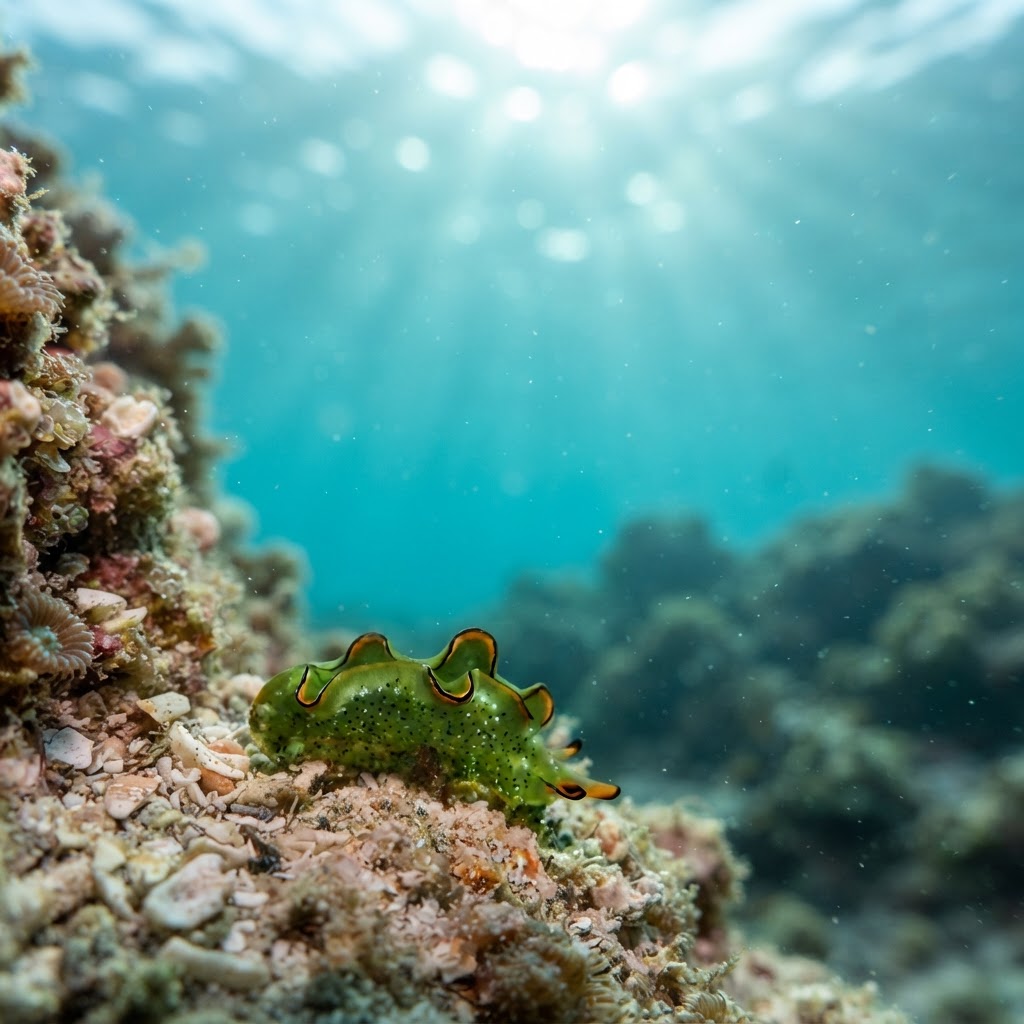
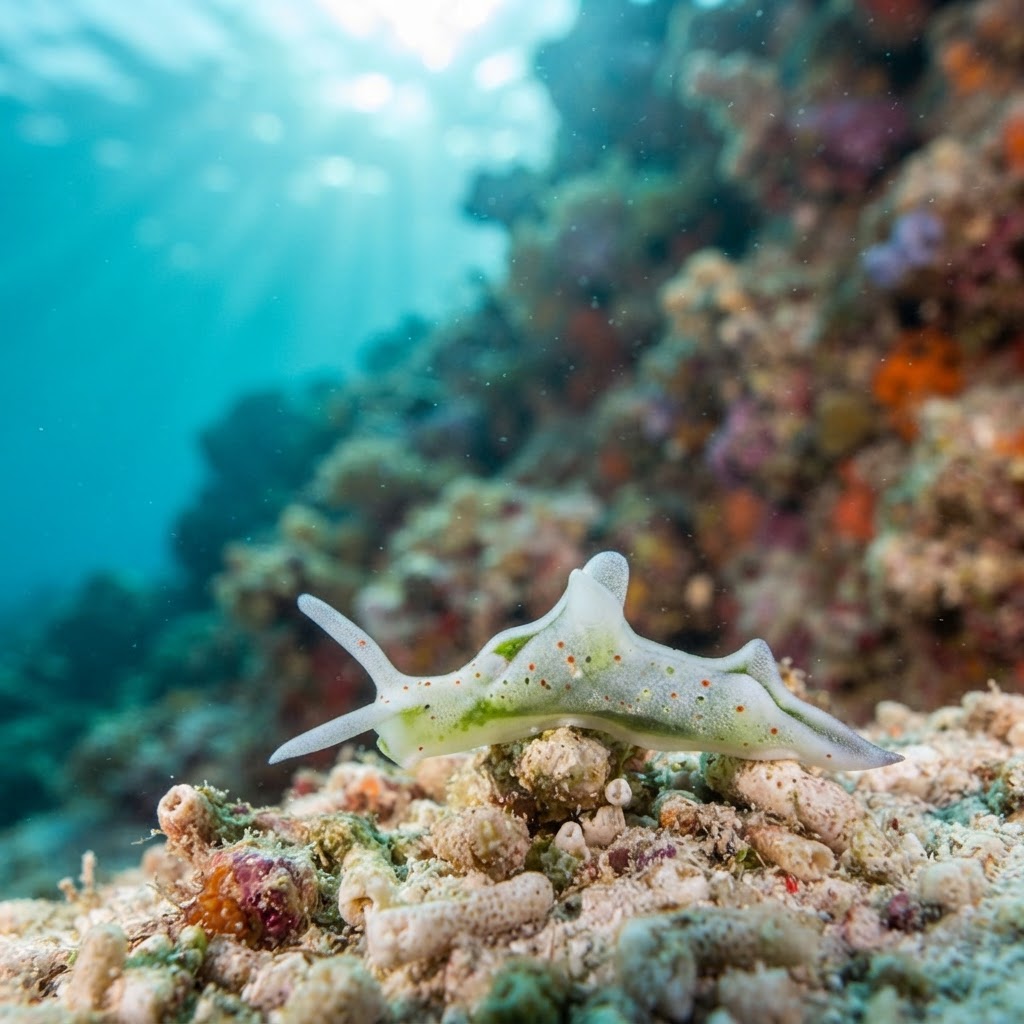
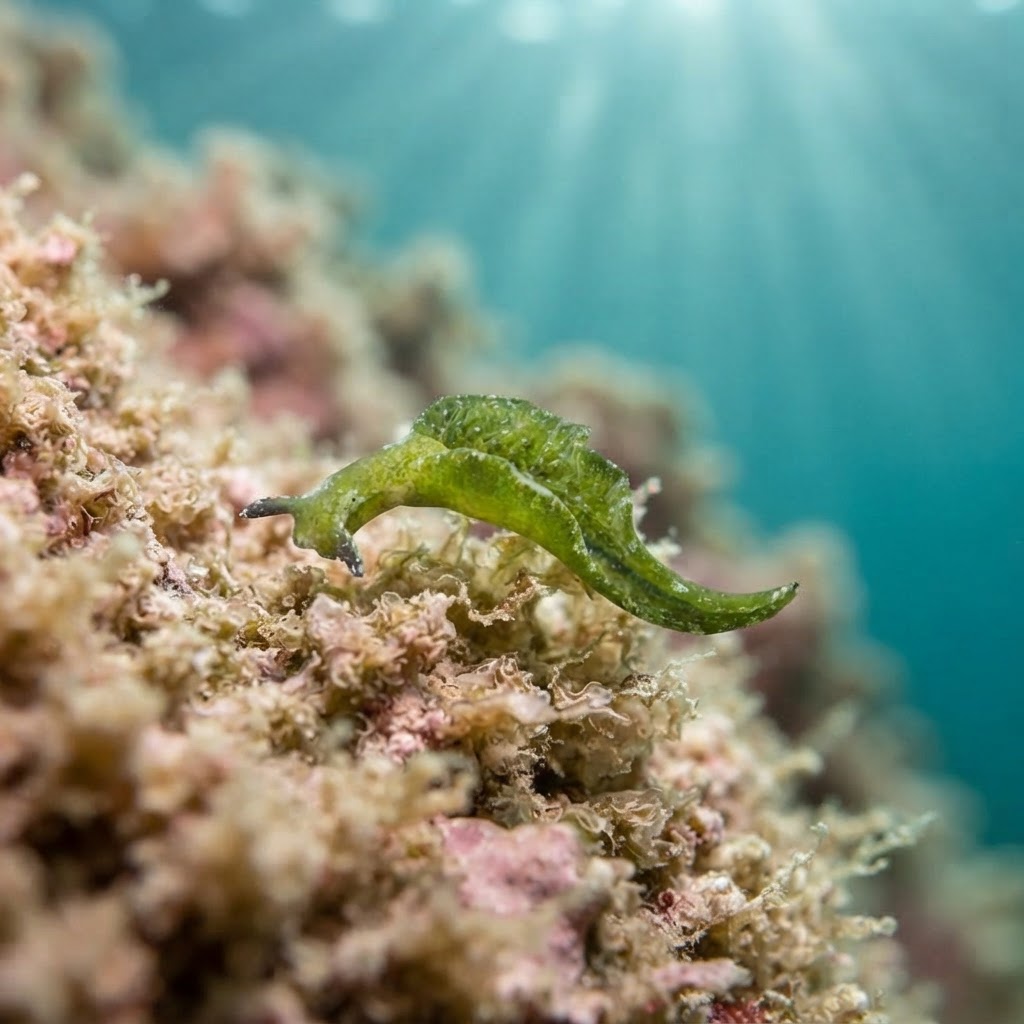
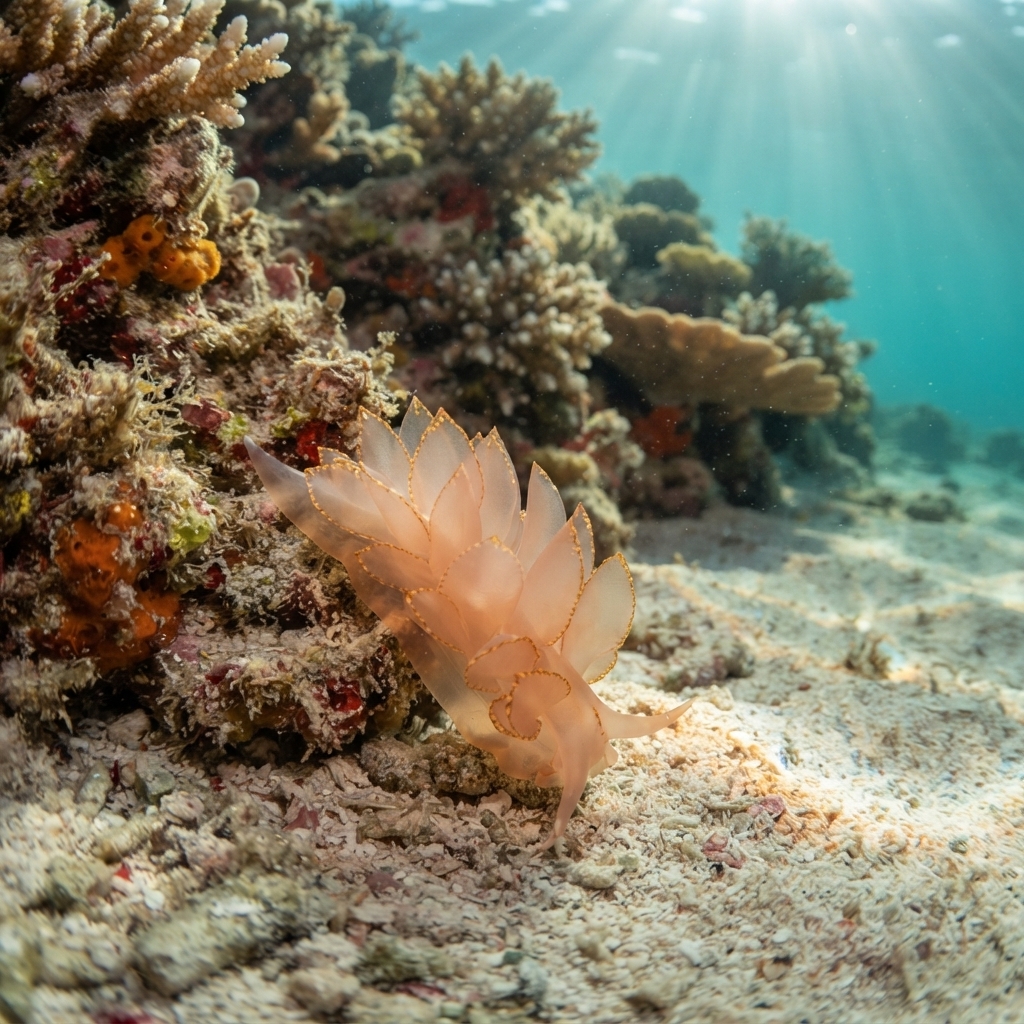
Look for a small, soft-bodied sea slug covered in flattened, leaf-shaped appendages (cerata) that give it a frilly, almost lettuce-like silhouette. The cerata are translucent to pale green or brownish, often edged with a thin iridescent line, and lie along the back in overlapping rows rather than standing upright like fingers. Its body is slender and easy to miss against rock and algae unless you're scanning slowly with a torch.
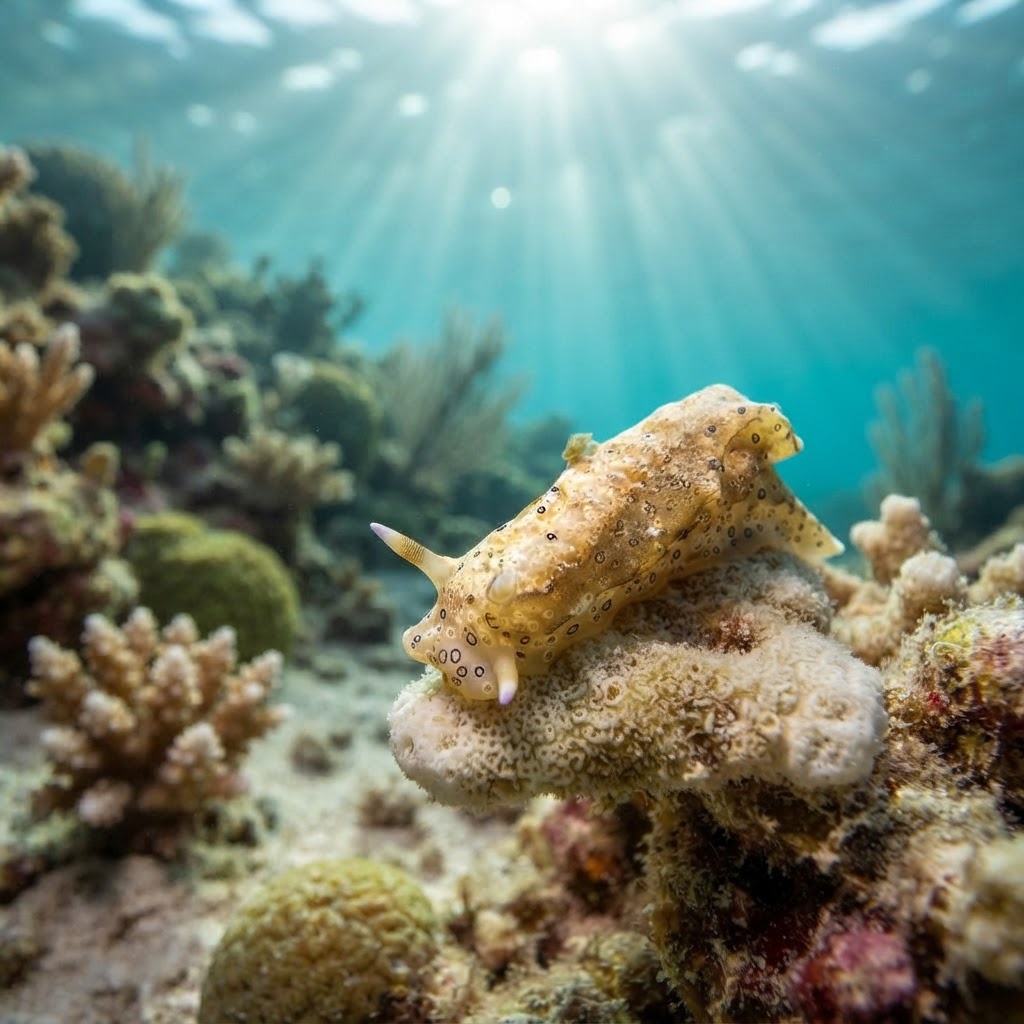
Divers find it clinging low on rock and algae-covered substrate, moving slowly and staying put when approached rather than darting for cover. It's the kind of animal you notice only when you stop finning and start peering into cracks and weedy patches, usually on a slow, methodical macro dive rather than a drift or wall dive.
Like other members of the Caliphyllidae, its leaf-like cerata can be shed readily if grabbed or stressed, a defence trick that likely helps it slip away from predators while the rest of the body escapes unharmed.
Sightings don't cluster in any particular month, so treat it as a year-round possibility on Riviera and Provence dives, consistent with the cooler 14.1 to 20.1°C water this species is found in across seasons.
Reef neighbours a diver could mistake it for. Use the identification notes above to tell them apart.
Every logged sighting in the data comes from France, concentrated in the French Riviera and Provence, making this the region to search if you want a real shot at finding one. Outside this stretch of the Mediterranean coast there's no reliable record to point to yet.
Mapping where Cyerce Graeca is logged…
All confirmed sightings come from France, specifically the French Riviera and Provence coastline, where it turns up as a rare find on rocky, algae-rich dive sites.
There's no clear seasonal pattern in the sighting data, so it's considered a year-round possibility in the French Riviera and Provence, matching its use of cooler Mediterranean water between roughly 14 and 20°C.
Check for a small slug with flattened, leaf-shaped cerata lying in overlapping rows along the back, translucent to pale green or brown in colour. It moves slowly over rock and algae and lacks the upright, finger-like projections seen on some similar slugs.
No, it poses no danger to divers. It's a small, slow-moving slug best appreciated with a careful look rather than any handling.
Its leaf-shaped cerata are thought to be shed easily as a defence, a trait shared with related sea slugs, letting it lose a body part to escape a predator's grip while the rest of it gets away.
Site and sighting data is aggregated from diver logs, iNaturalist and GBIF. For taxonomy and conservation status:
Elysia Timida
573 sites