Canthigaster coronata
Small, spotted, and uncommon on Hawaii's reefs at 23.8 to 28.3 C, the crowned puffer rewards divers who check the rubble edges closely.
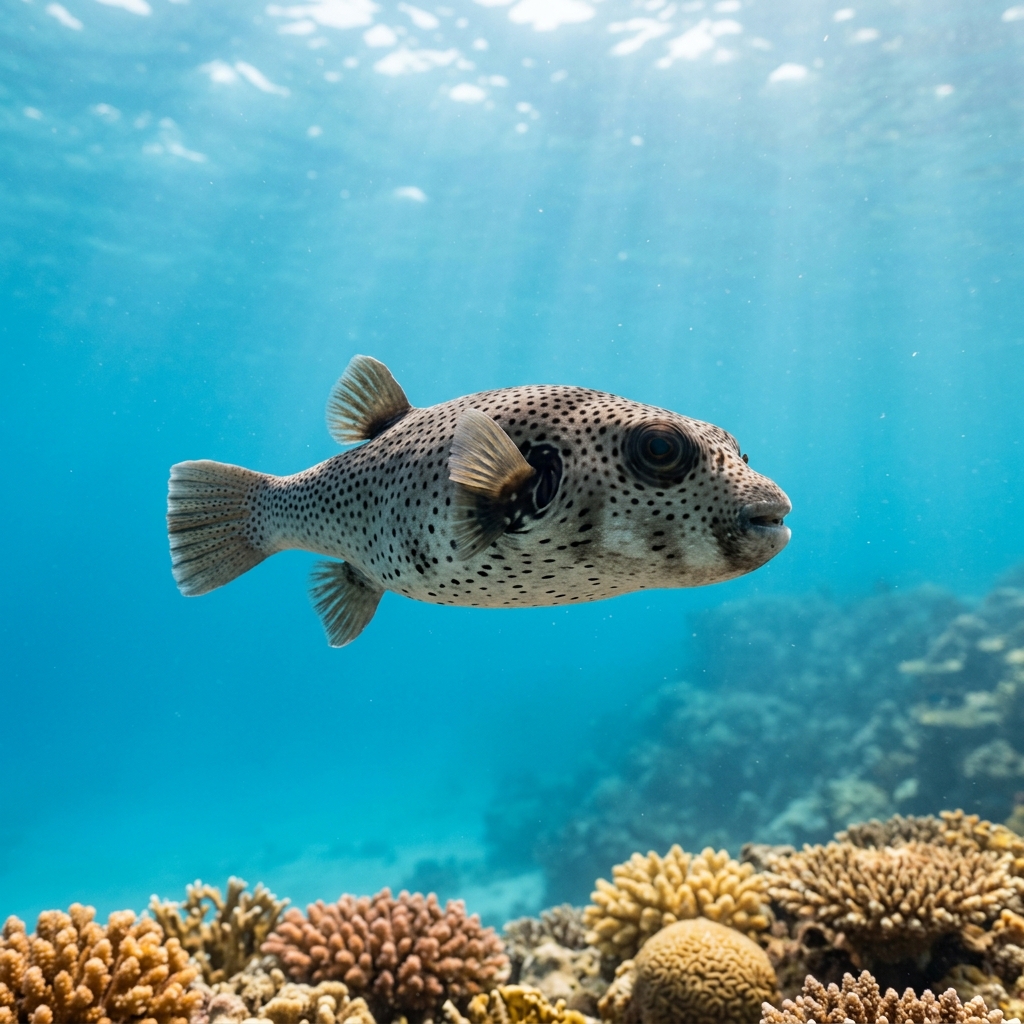
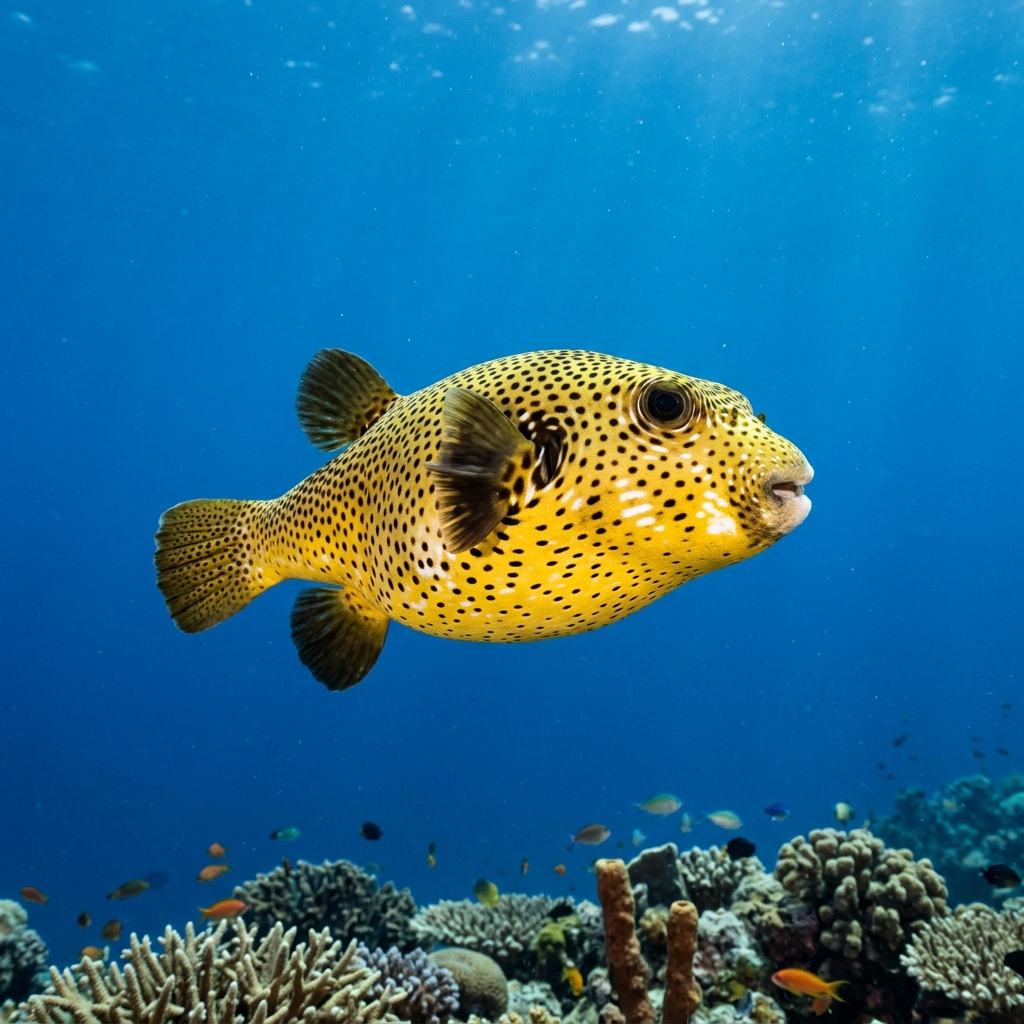
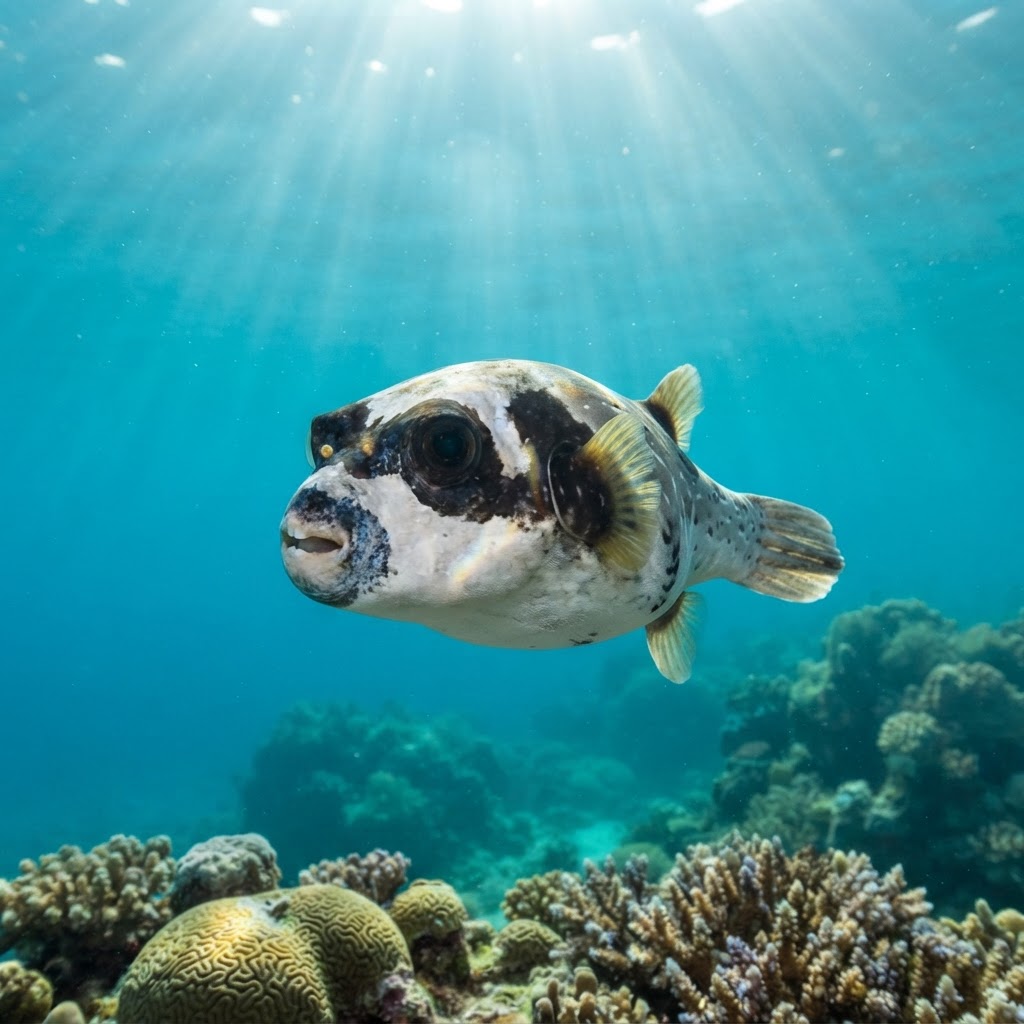
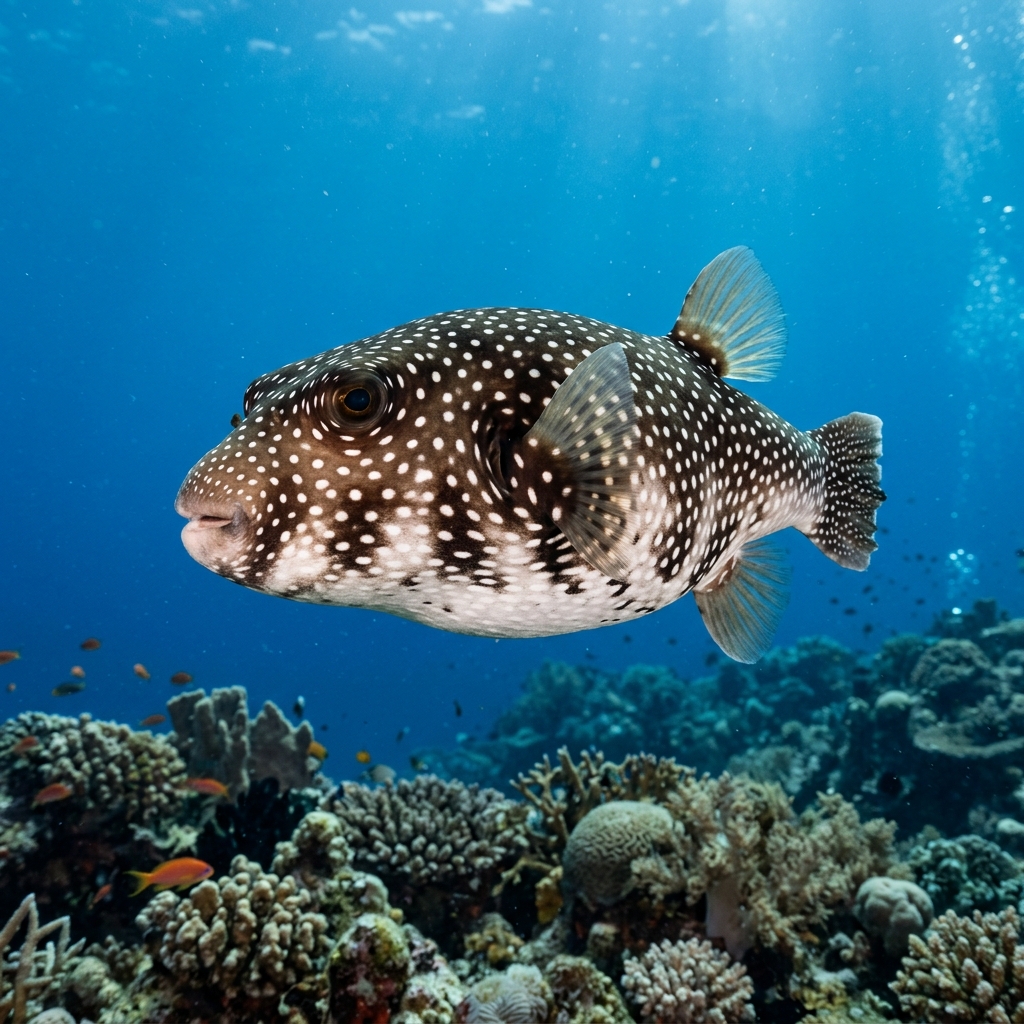
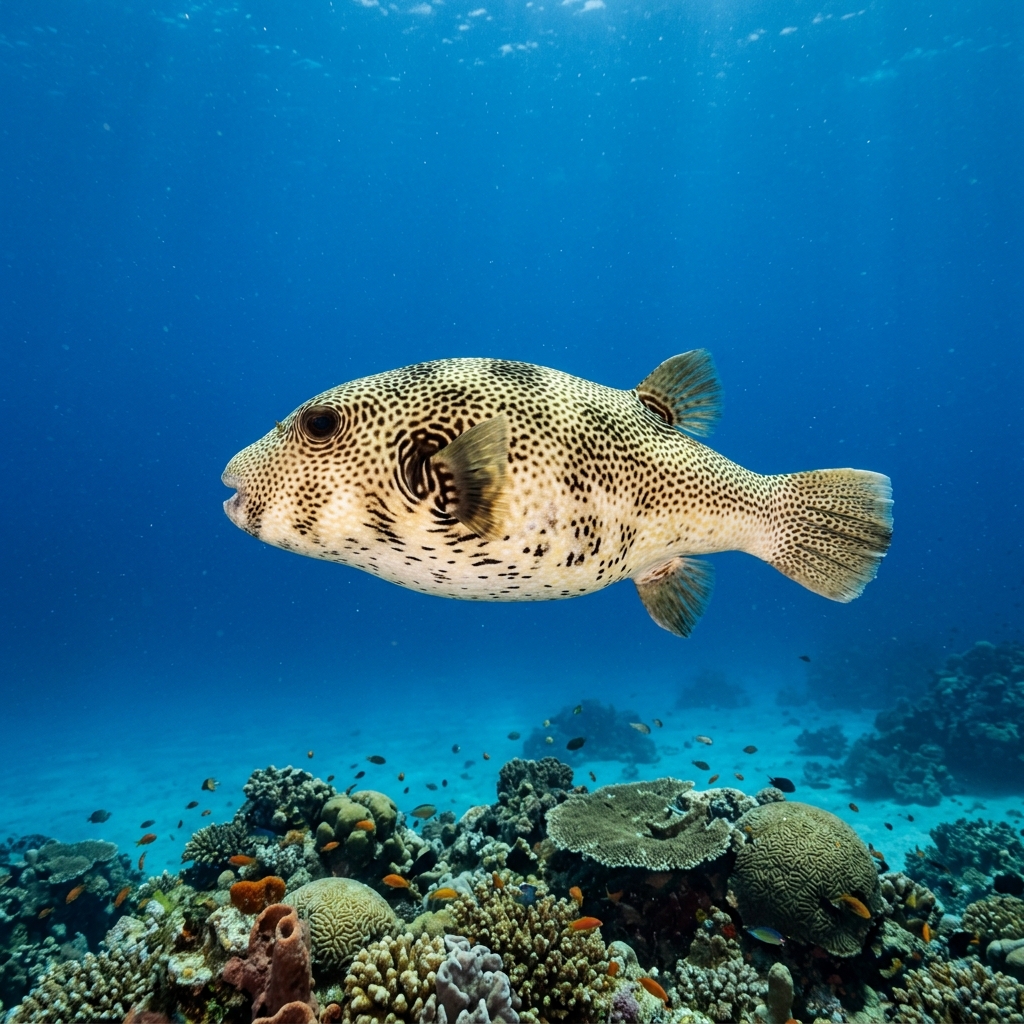
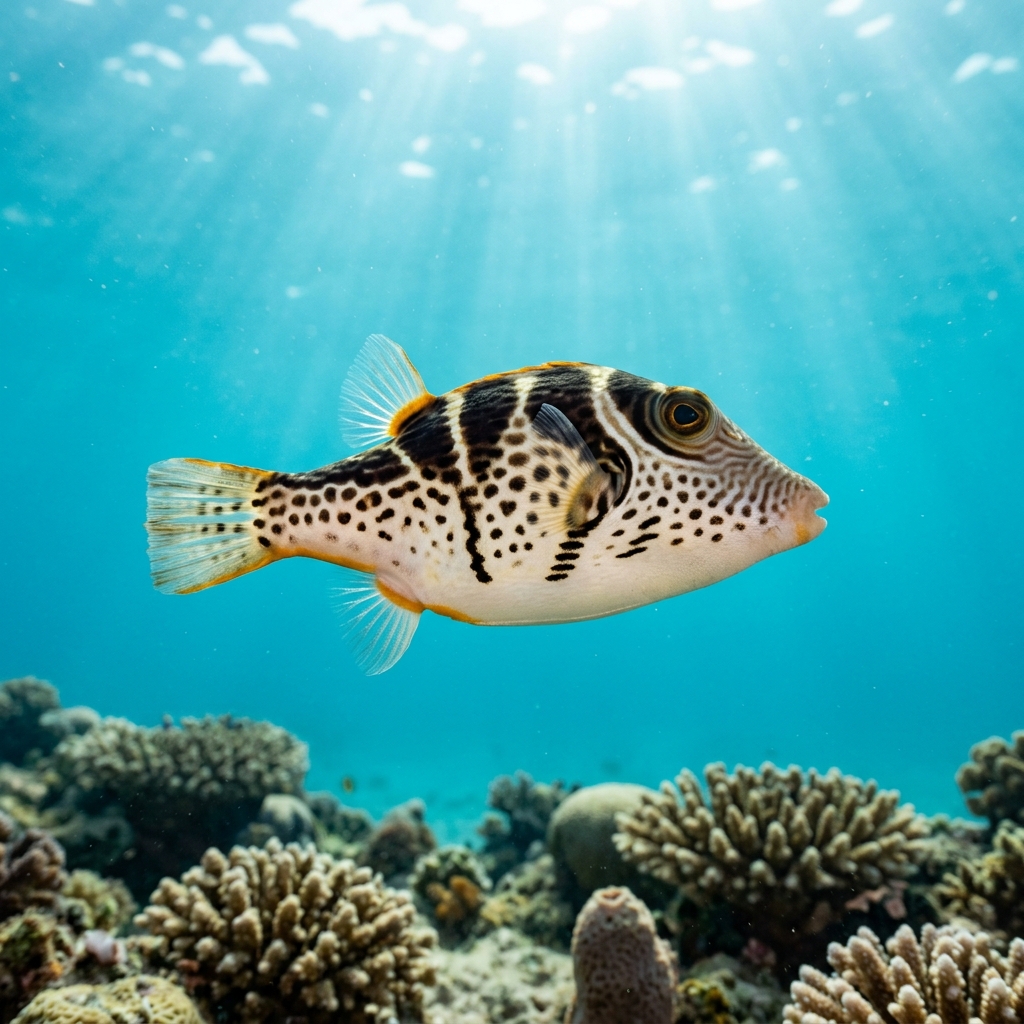
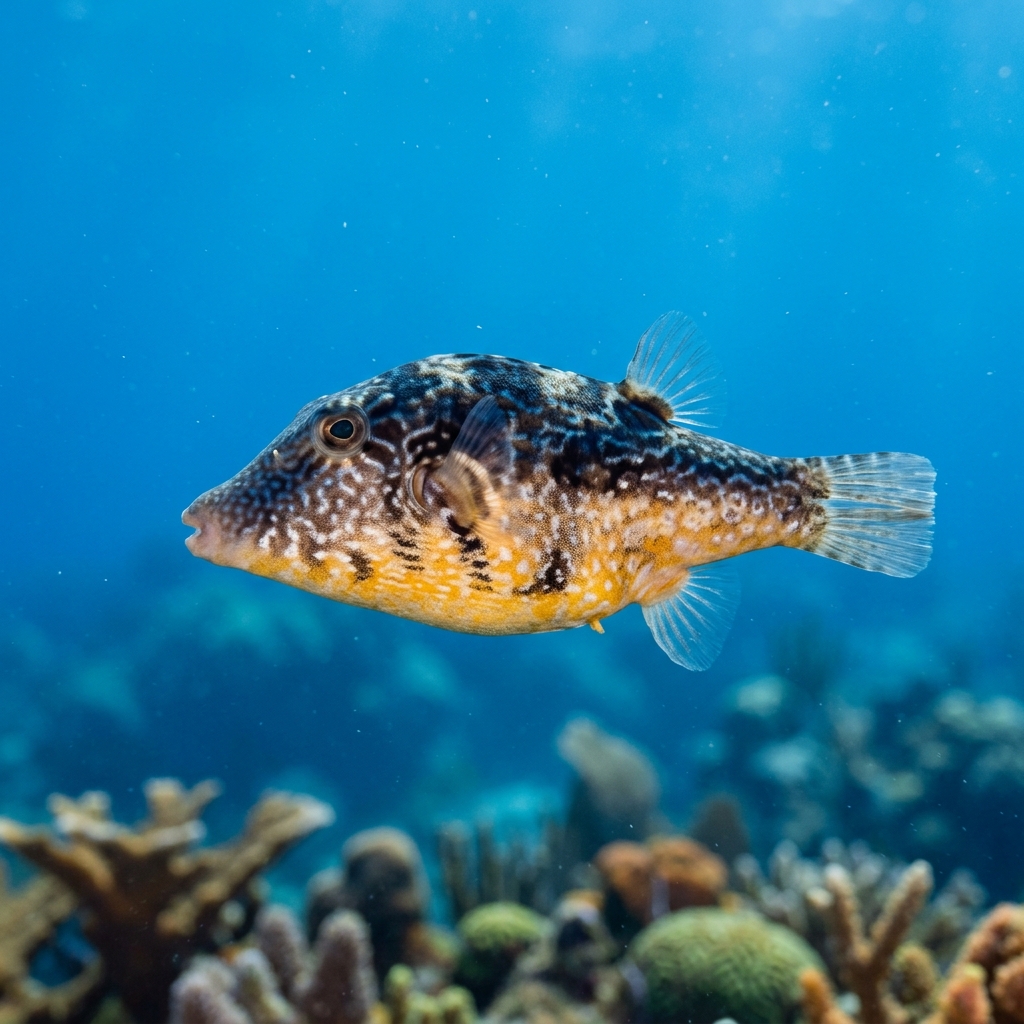
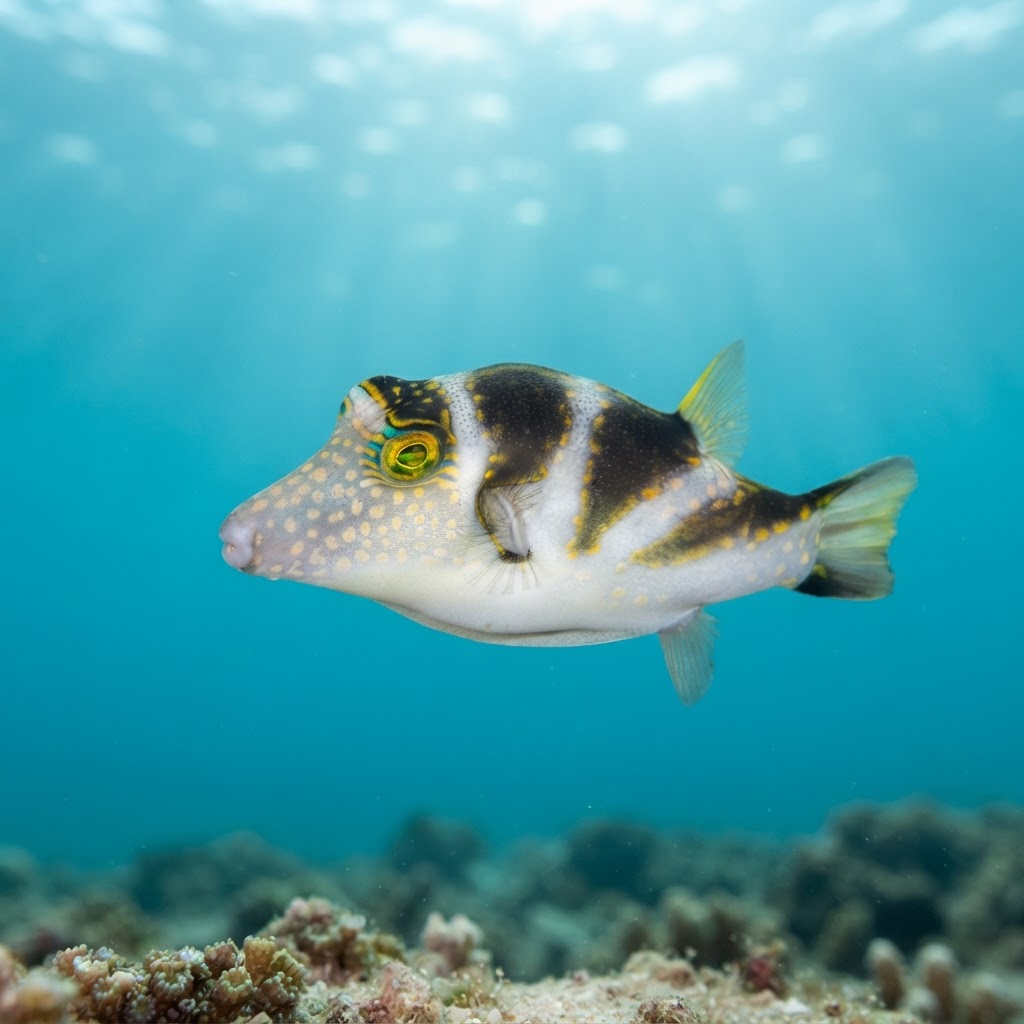
A small, rounded puffer barely bigger than your palm, with a brown to olive body covered in pale spots and dark blotches that give it a mottled, camouflaged look. Look for the orange rings circling each eye and a scattering of dark spots along the upper body that thin out toward the tail. It hovers close to the reef rather than swimming in open water, and its stubby fins give it a slightly hesitant, hovering swim style typical of pufferfish.
Divers typically find it tucked near ledges, rubble, and reef crevices rather than out in the open, moving in that slow, deliberate hover common to small puffers. It's not shy exactly, but it tends to hold its position or duck into cover when a diver gets close rather than bolting, so a slow approach gives you the best look. Most logs describe it as an uncommon find, meaning you'll need to actively scan low reef structure rather than expect it to swim into view.
Like other pufferfish, it carries tetrodotoxin in its skin and organs as a defence, which is why almost nothing on the reef bothers it despite its small size and slow swimming.
Sightings show no detectable seasonal pattern, and with a comfortable range of 23.8 to 28.3 C, Hawaii's reef temperatures suit it year-round. Plan around good visibility and calm conditions rather than a specific month.
Reef neighbours a diver could mistake it for. Use the identification notes above to tell them apart.
Nearly all logged sightings come from Hawaii, making it the place to look for this species, with no other regions showing up strongly in diver records to date. Within Hawaii it turns up at a wide spread of sites rather than clustering at one or two famous spots, so it's worth checking rubble patches and reef edges on almost any Hawaiian dive.
Mapping where Crowned Puffer is logged…
Hawaii is by far the strongest region for this species in diver records, with sightings spread across a wide range of sites rather than concentrated at one location.
There's no clear seasonal pattern in sightings, and Hawaii's reef temperatures of roughly 24 to 28 C support it year-round, so any time of year works.
Look for a small, rounded puffer around 8 cm with a mottled brown and pale-spotted body and distinct orange rings around each eye. It hovers near reef structure rather than swimming in open water.
They stay small, typically around 8 cm, making them one of the more compact pufferfish species divers encounter on Hawaiian reefs.
No, it poses no threat to divers and won't act aggressively. Like other pufferfish it contains tetrodotoxin internally, but this is only a concern if handled or eaten, not during normal diving.
It carries a potent natural toxin, tetrodotoxin, in its skin and tissues, which deters nearly all predators despite its small size and slow, hovering swimming style.
Site and sighting data is aggregated from diver logs, iNaturalist and GBIF. For taxonomy and conservation status:
Valentini Pufferfish
2,830 sites