Coris gaimard
Spot the African Clown Wrasse across Hawaii, the Philippines, and Indonesia. Adults are unmistakable; juveniles are a different beast entirely.
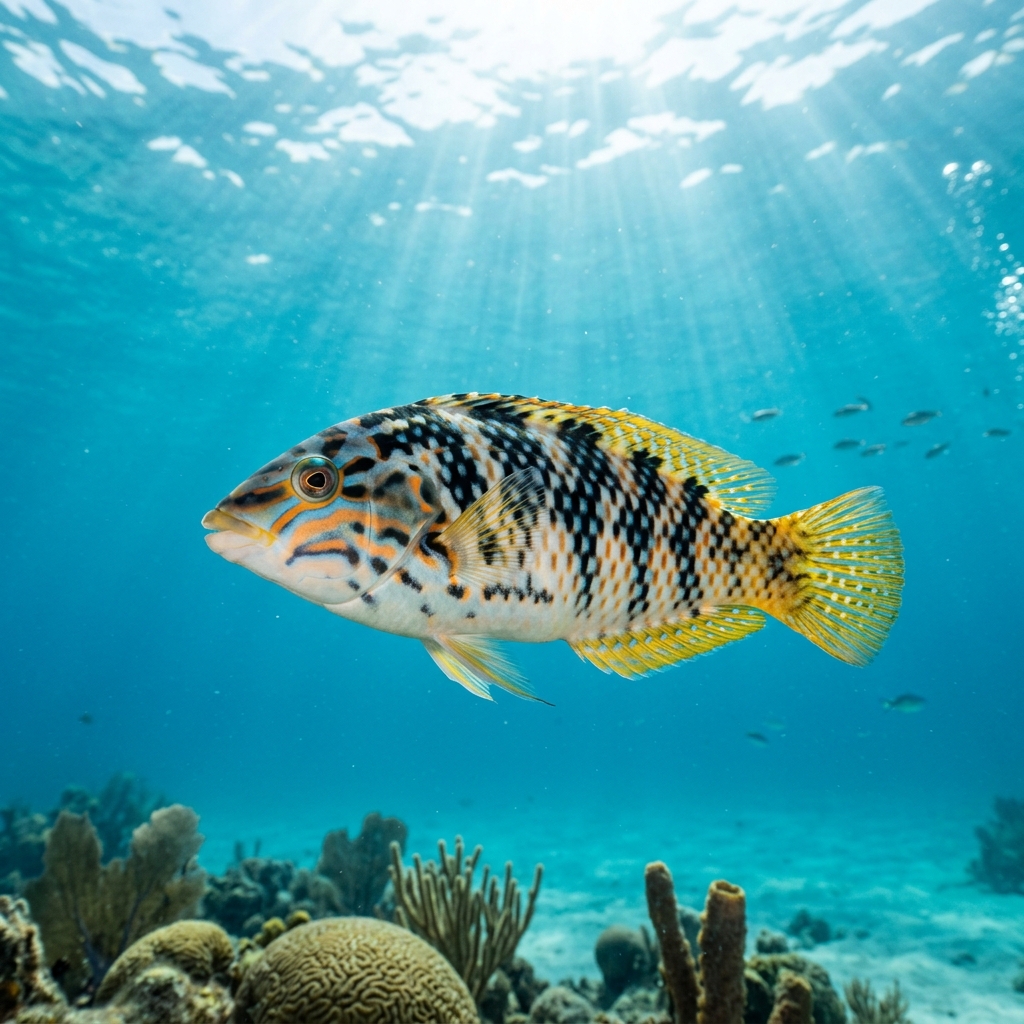
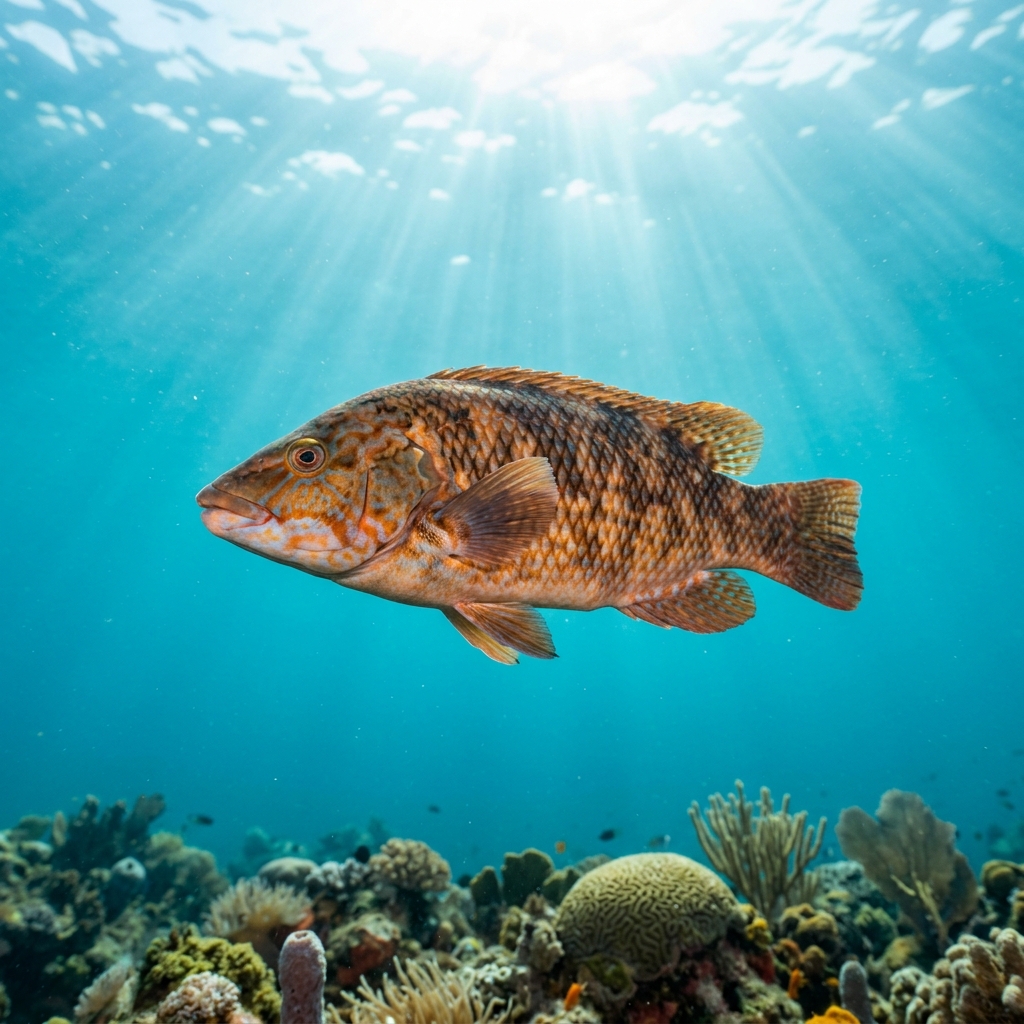
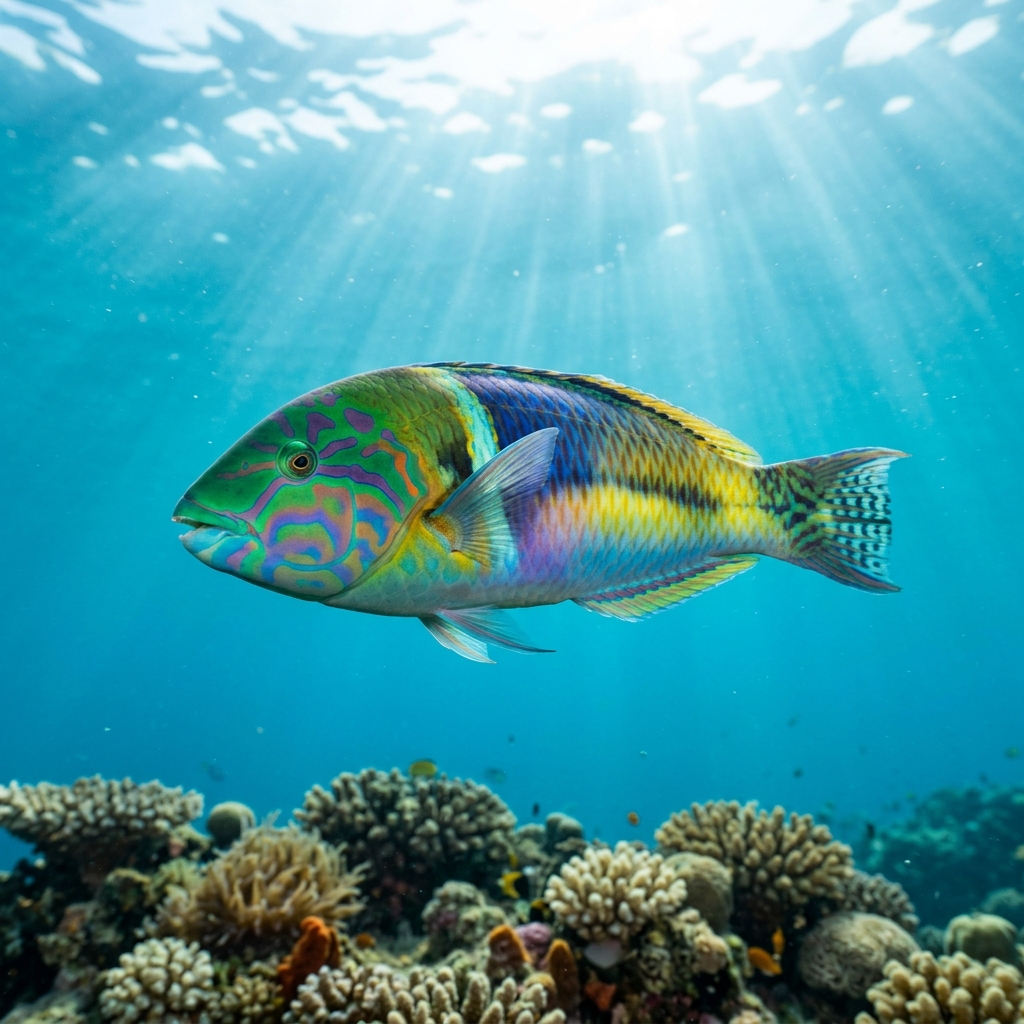
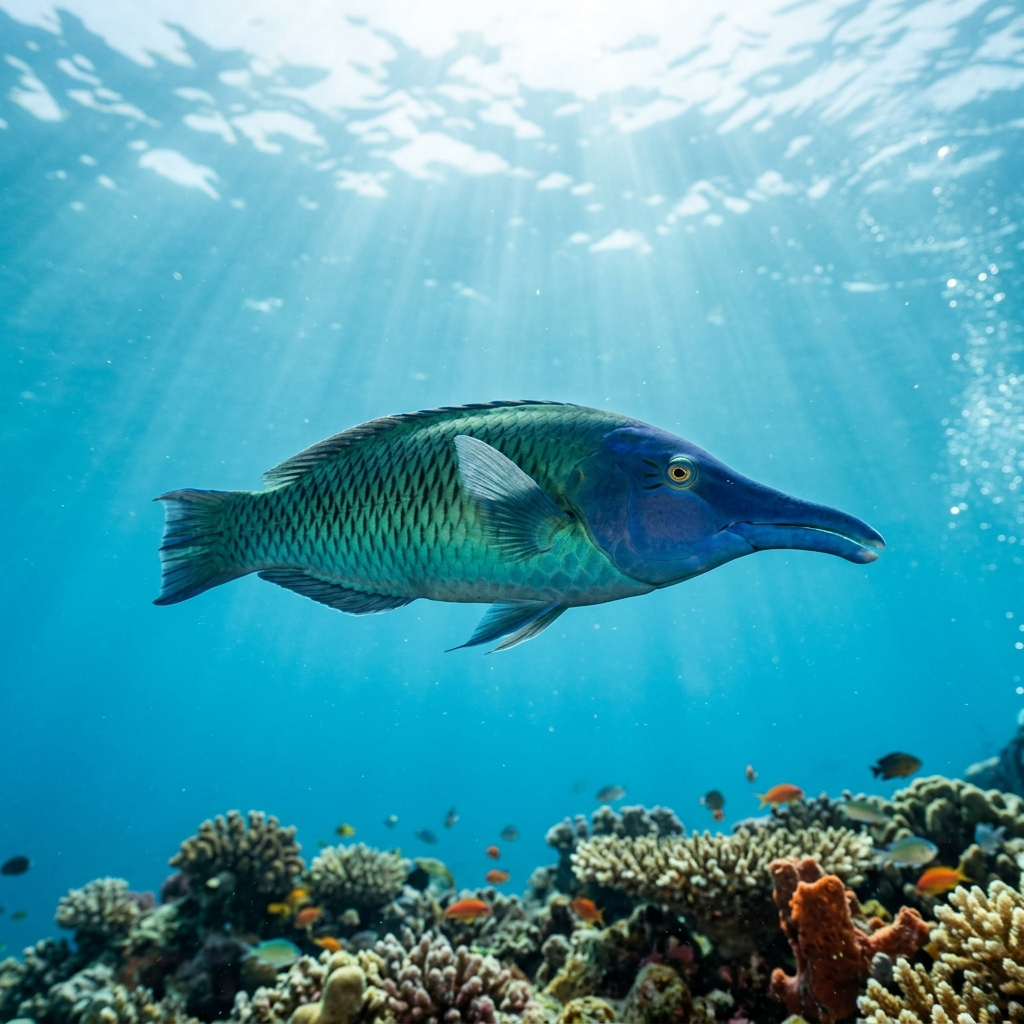
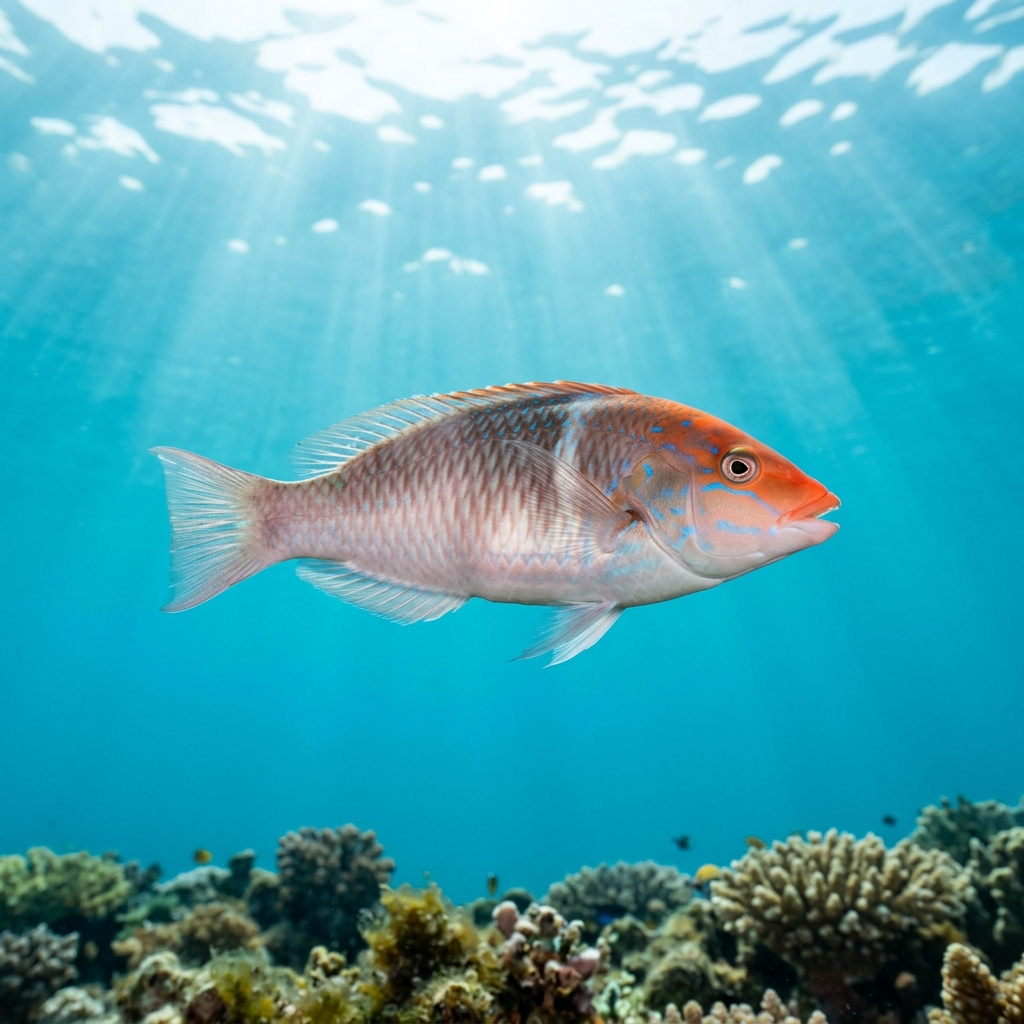
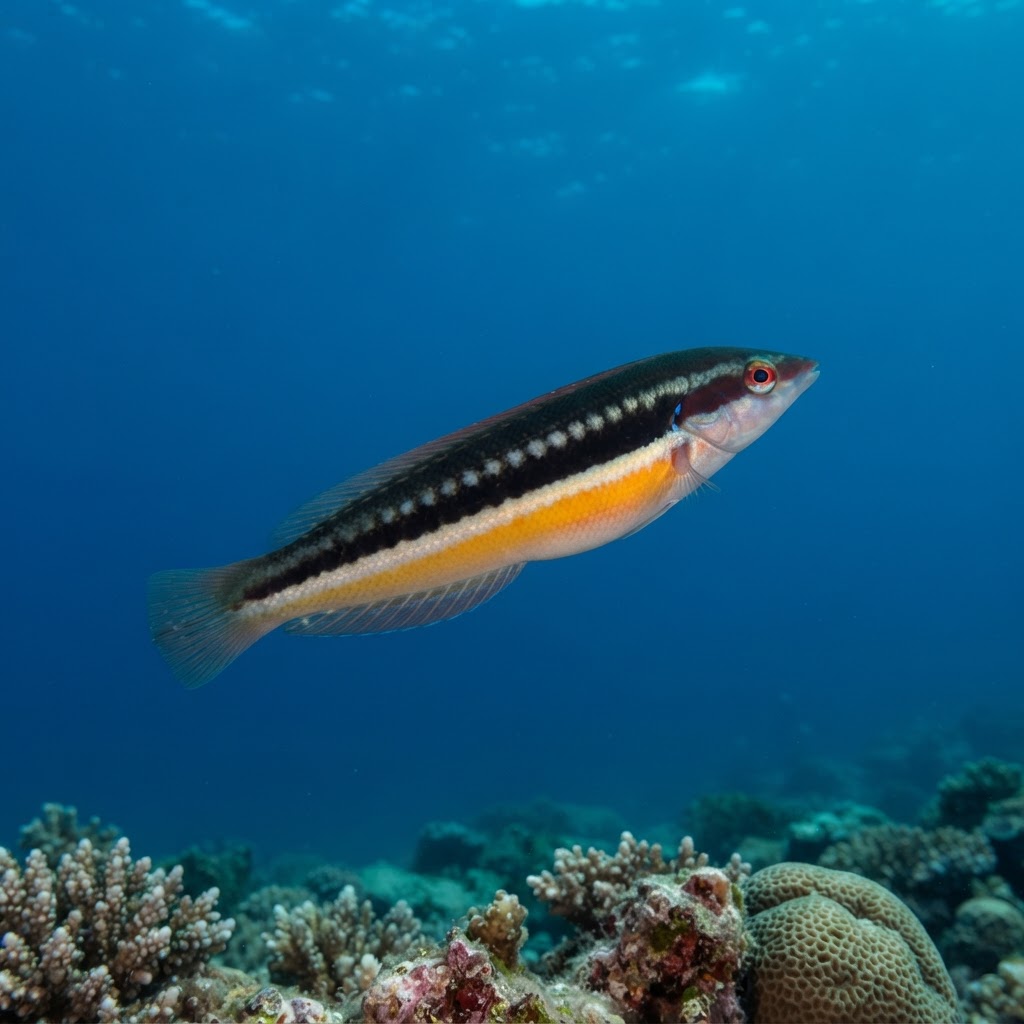
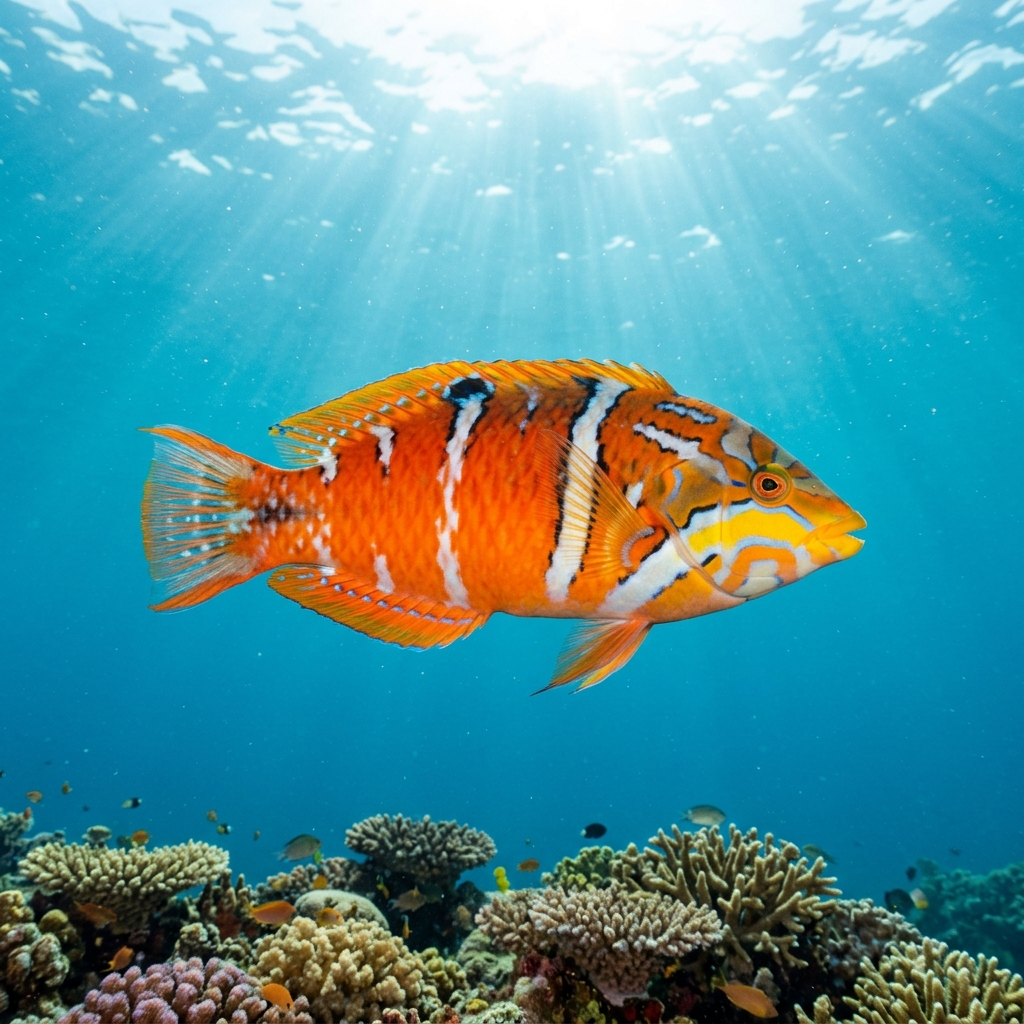
Adults are hard to miss: a vivid red to orange body covered in small white or pale spots, with a green-marked face and brighter colours around the snout. Juveniles look so different they could be a separate species entirely, sporting a deep black body with bold white-edged orange-red spots and a white tail. Both phases have the elongated, robust wrasse body shape that sets them apart from the more slender reef fish around them. The intermediate phase shows a patchwork of both colour schemes, which can cause real puzzlement underwater.
You will typically encounter the African Clown Wrasse moving purposefully across sandy patches and rubble zones adjacent to coral reef, often picking at the substrate in search of small invertebrates and molluscs. It tends to be a solitary roamer rather than a schooling fish, and while it will give a diver a wide berth if approached too quickly, calm swimmers can often observe it at close range. Sightings are more frequent in shallow reef areas during daylight, when the animal is actively foraging.
Juveniles are so strikingly different from adults that they were historically described as a separate species. The transformation from the black-and-red juvenile pattern to the spotted orange adult is gradual, and intermediate-phase individuals showing blended colouration are among the most confusing ID puzzles on any Indo-Pacific reef.
In the Northern Hemisphere, sightings concentrate from May through September; in the Southern Hemisphere, July through January tends to be most productive. The species favours water between roughly 25 and 29°C, so it is essentially a year-round resident on warmer tropical reefs within that band.
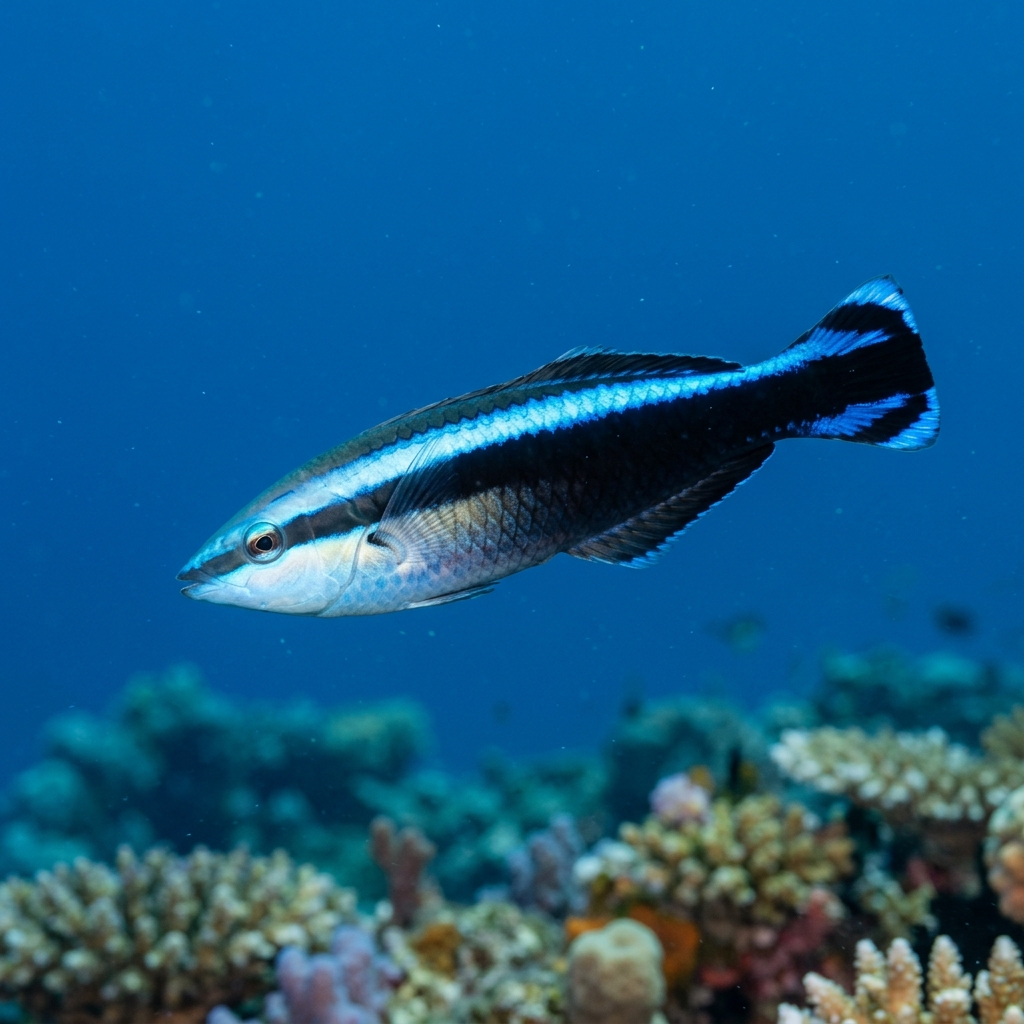
Reef neighbours a diver could mistake it for. Use the identification notes above to tell them apart.
Most logged across Hawaii, the Philippines, and Indonesia, with particularly strong records from the Visayas in the central Philippines and Sulawesi in Indonesia. French Polynesia, especially Tahiti, is another reliable region, and Okinawa in Japan represents a consistent northerly outpost. Sipadan and East Sabah in Malaysia also produce solid sightings.
Mapping where African Clown Wrasse is logged…
The species is most consistently logged across Hawaii, the Philippines, and Indonesia. Strong regional hotspots include the Visayas in the Philippines, Sulawesi and Nusa Tenggara in Indonesia, Tahiti in French Polynesia, and Okinawa in Japan. Sipadan in Malaysia is another reliable option.
In the Northern Hemisphere, sightings peak from May through September. In the Southern Hemisphere, July through January is the most productive window. On warm tropical reefs within its preferred temperature range, it can be encountered year-round.
Look for a stocky, elongated wrasse with an orange-red body covered in pale spots and a distinctively green-marked face. Juveniles are black with orange-red white-edged spots and a white tail, so stage matters enormously for identification. The intermediate phase shows a mix of both patterns.
Adults typically reach around 30 to 40 cm in length, making them a medium-sized wrasse. Underwater they appear robust and elongated rather than deep-bodied, which helps separate them from similarly coloured but chunkier reef fish.
The juvenile sports a black body with bright orange-red spots and a white tail, while the adult is orange-red with pale spots and green facial markings. The transformation is so dramatic that scientists originally classified them as two separate species. Intermediate individuals showing blended colouration can be spotted during the gradual colour shift.
Site and sighting data is aggregated from diver logs, iNaturalist and GBIF. For taxonomy and conservation status:
Bird Wrasses
3,632 sites