Conus textile
Spot the Cloth-of-gold Cone in Okinawa, Queensland, and French Polynesia. Warm-water reefs, 23-29 °C. ID tips and best dive sites inside.
Safety warning
This animal carries a powerful venom delivered by a bite or a harpoon-like sting, and it can be fatal. Never handle it or pick up its shell, even one that looks empty.
If you're stung
Venomous stingGeneral first-aid guidance, not a substitute for professional medical care. In an emergency, call your local emergency number.
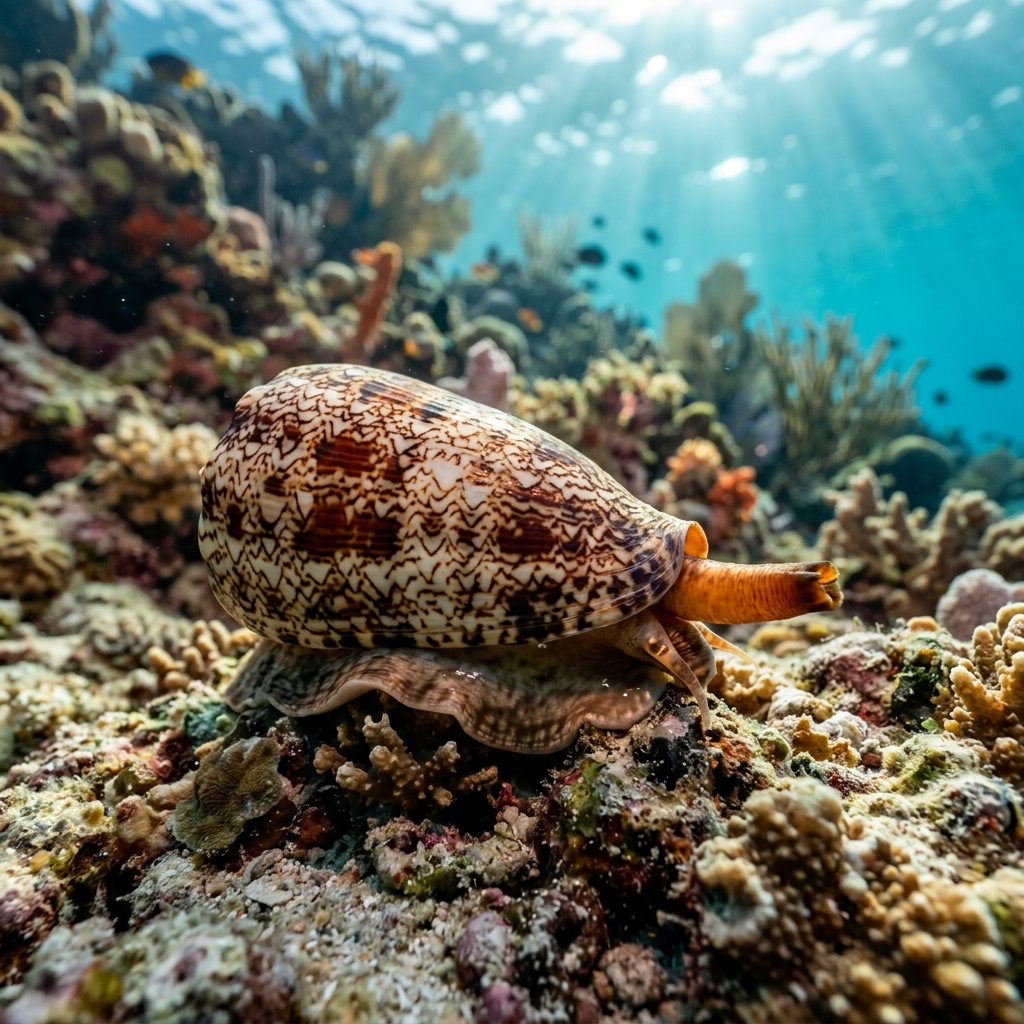
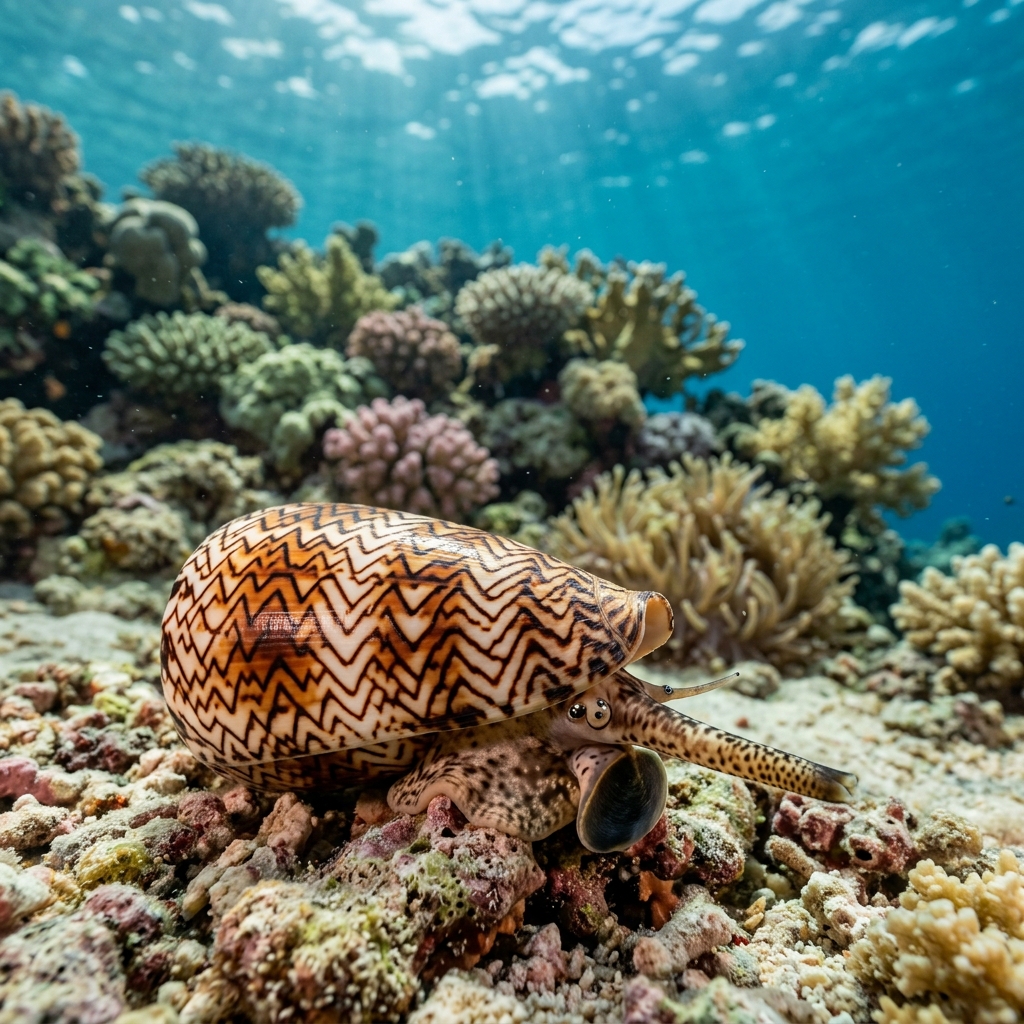
A medium-sized cone shell patterned with overlapping triangular or tent-like markings in warm gold, brown, and cream, arranged in rows across a roughly cylindrical shell that narrows sharply toward the tip. The overall effect resembles woven brocade fabric, which is exactly where the common name comes from. Look for the broad, flattened shoulder near the spire and a relatively smooth surface compared to knobbed or ridged cone relatives.
Cloth-of-gold Cones are most often spotted partially buried in sand or rubble, or tucked beneath coral slabs and rubble during daylight hours. Like most cone snails, they are more active at night, so a torch-lit reef walk is often more productive than a daytime dive. When found, the animal is typically stationary or moving very slowly; it rarely reacts dramatically to a diver's presence.
Despite the data flagging this species as not dangerous to divers in the context of a typical encounter, Conus textile is one of the relatively small number of cone snails known to carry a potent venom delivered via a harpoon-like tooth called a radula. It hunts other molluscs rather than worms or fish, and its venom is adapted accordingly. Handle with care or, better still, do not handle it at all.
No clear seasonal peak emerges from the sighting data, so this is effectively a year-round species across its range. It is consistently found in water temperatures of roughly 23 to 29 °C, meaning any visit to its tropical and subtropical Indo-Pacific haunts can produce an encounter.
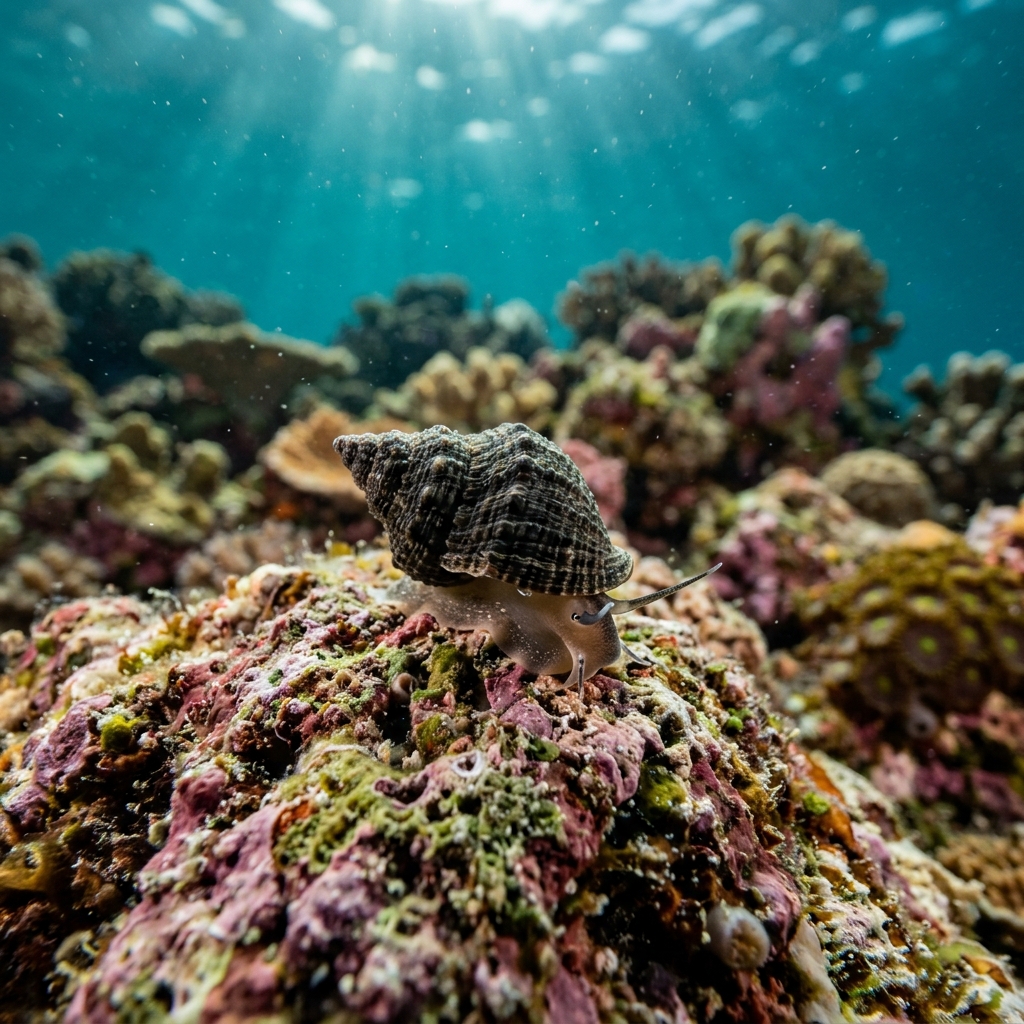
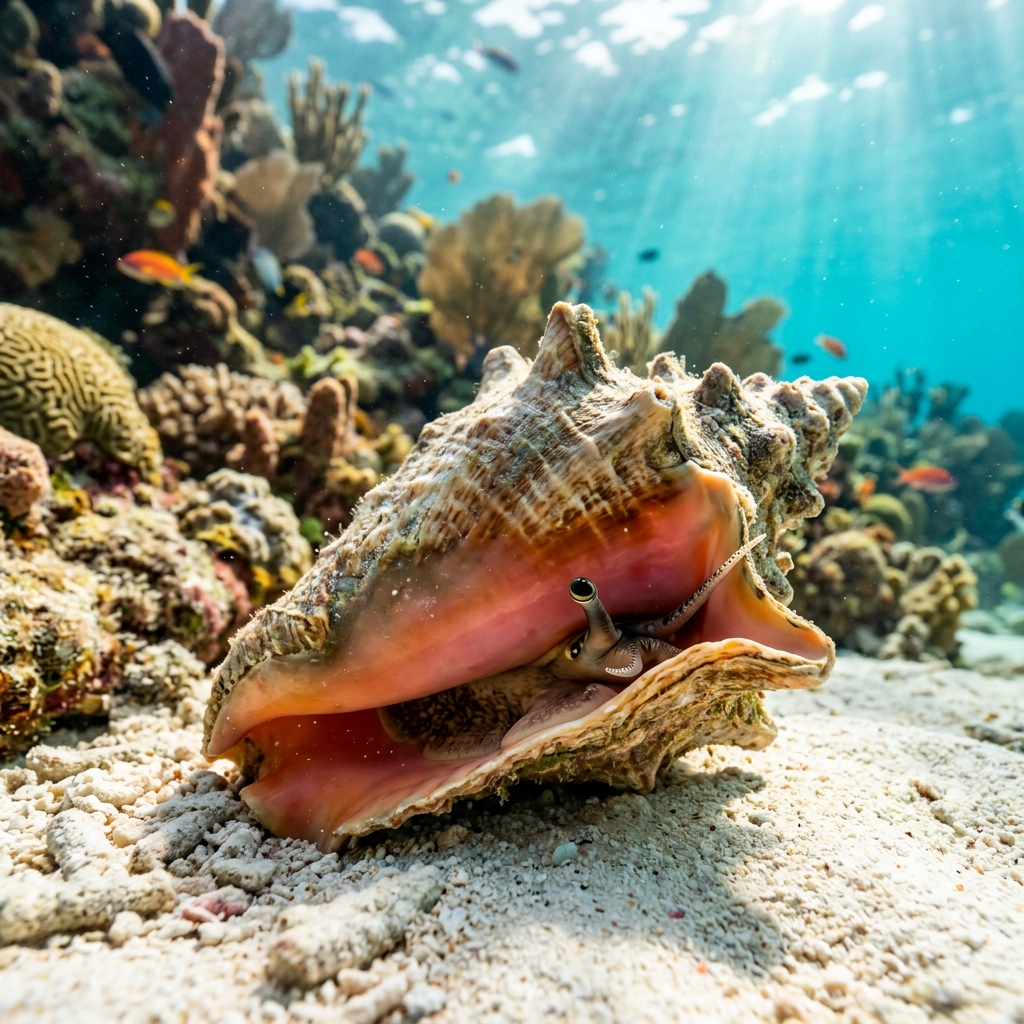
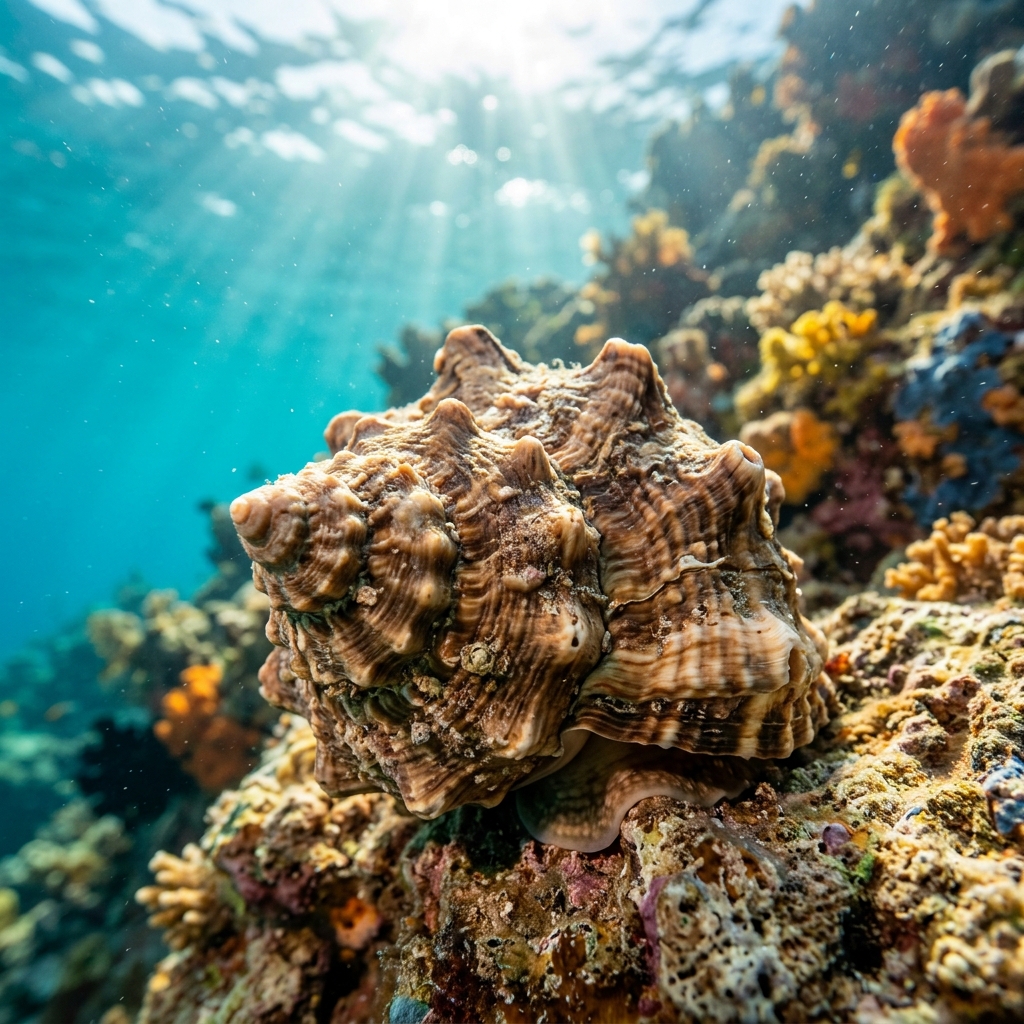
Reef neighbours a diver could mistake it for. Use the identification notes above to tell them apart.
Most logged across the Indo-Pacific, with Okinawa and the wider Ryukyu Islands of Japan standing out as the strongest concentration of sightings by a wide margin. Queensland in Australia and Tahiti in French Polynesia are also reliable hunting grounds, and divers in Fujairah (UAE), Kwajalein Atoll (Marshall Islands), and the Visayas in the Philippines report it regularly too. If you are specifically targeting this species, Japan's Okinawa Islands give you the best statistical odds.
Mapping where Cloth-of-gold Cone is logged…
Okinawa, Japan is by far the most-logged location, followed by Queensland in Australia, Tahiti in French Polynesia, Fujairah in the UAE, Kwajalein Atoll in the Marshall Islands, the Visayas in the Philippines, Viti Levu in Fiji, and Hawaii. It is a wide-ranging Indo-Pacific species found across more than a dozen countries.
Sightings are spread throughout the year with no obvious seasonal peak, so there is no single best month. It favours water temperatures between roughly 23 and 29 °C, which describes tropical and subtropical Indo-Pacific reefs year-round. Night dives improve your chances as the animal is more active after dark.
Look for a cone-shaped shell with a distinctive pattern of interlocking golden-brown triangles or tents arranged in rows across a cream background, resembling woven fabric. The shell has a broad shoulder near the spire and tapers to a point. That tent pattern is the key underwater field mark.
It is not typically regarded as a serious threat during a normal dive, but Conus textile does possess a venomous radula (a harpoon-like tooth) capable of delivering a sting. Fatalities have been recorded in the scientific literature from handling this species. The sensible rule is to look without touching, as with all cone snails.
Sighting data from logged dives places it firmly in the rare-to-uncommon range; most sites that record it do so infrequently. It is also cryptic by habit, resting under rubble or partially buried in sand. Targeted night dives in Okinawa or Queensland give you the best realistic shot at finding one.
Site and sighting data is aggregated from diver logs, iNaturalist and GBIF. For taxonomy and conservation status:
Triton Shell
2,297 sites