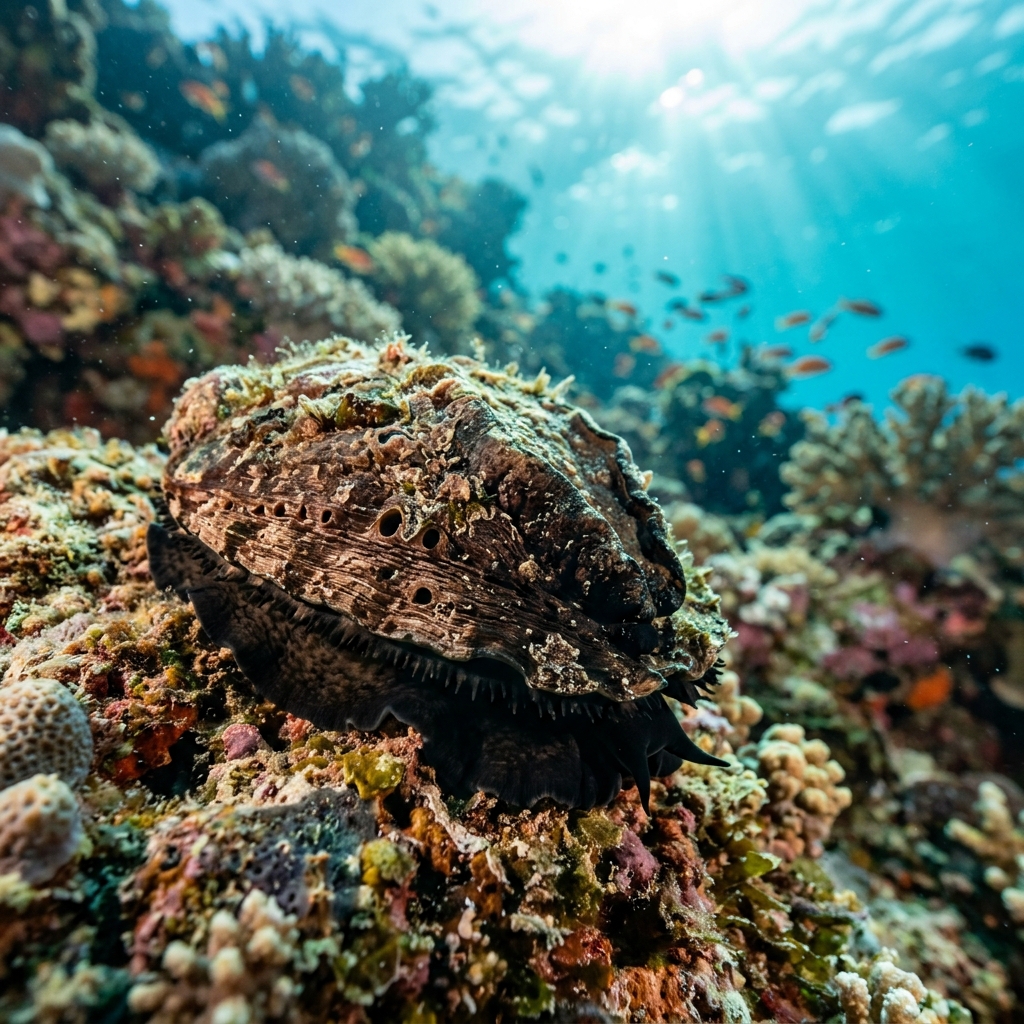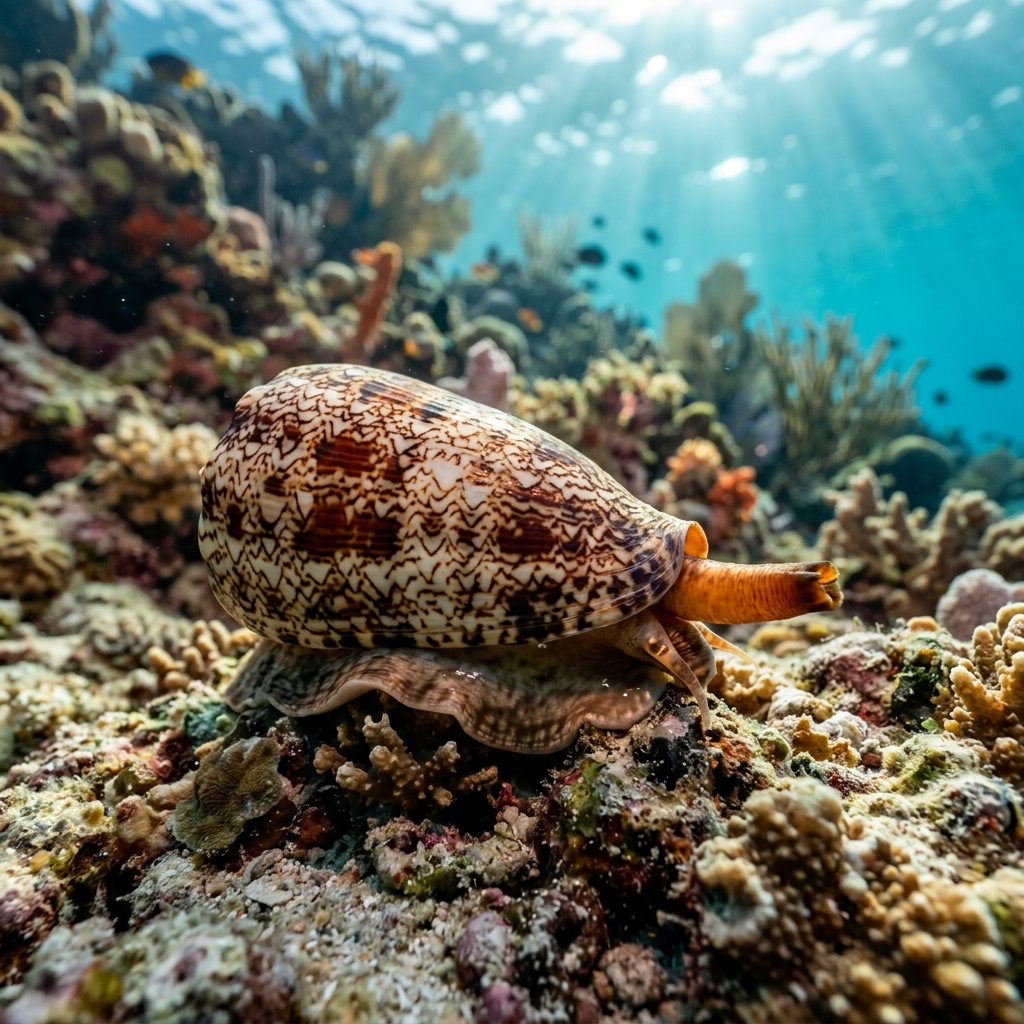
Conus geographus
Recognise the Geographer Cone by its map-like shell markings. Found in warm tropical waters around 26-29°C. Here's what divers need to know.
Safety warning
This animal carries a powerful venom delivered by a bite or a harpoon-like sting, and it can be fatal. Never handle it or pick up its shell, even one that looks empty.
If you're stung
Venomous stingGeneral first-aid guidance, not a substitute for professional medical care. In an emergency, call your local emergency number.
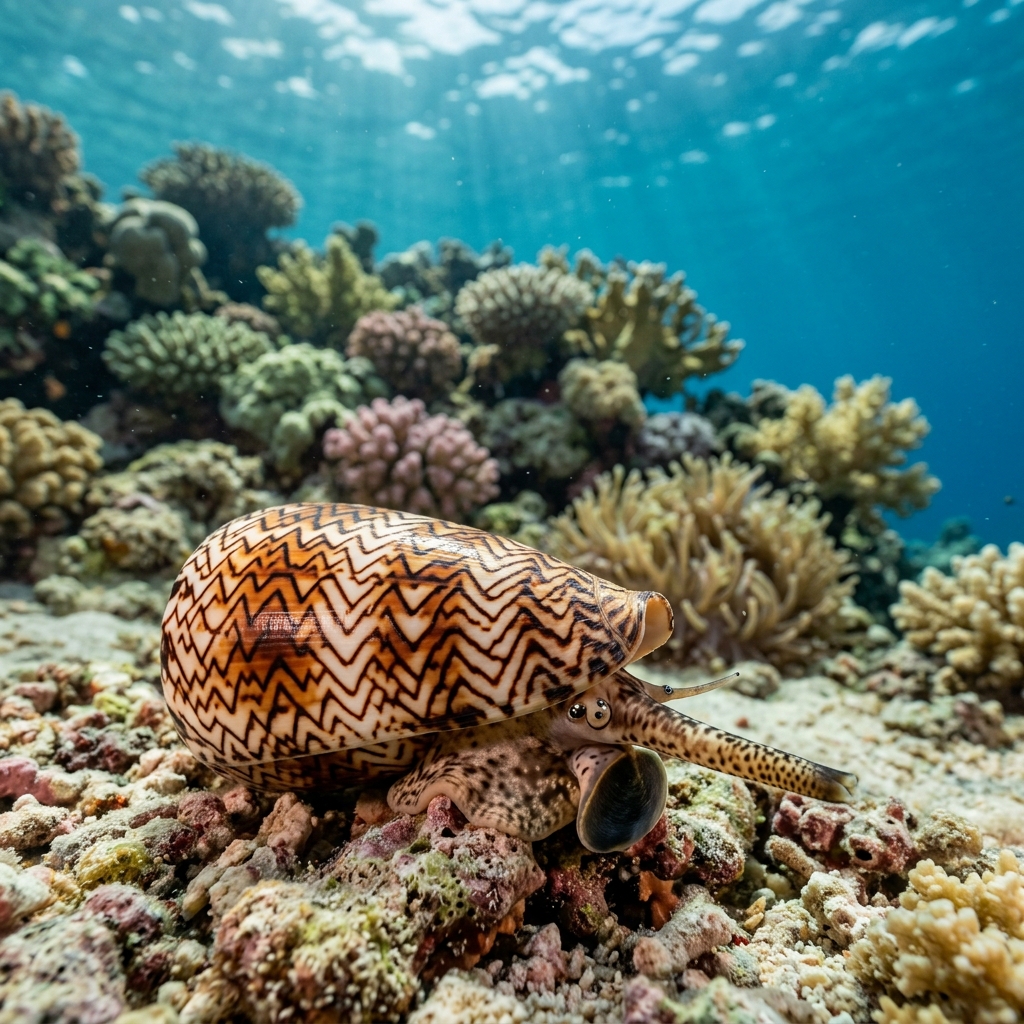
A medium-to-large cone shell covered in a distinctive net-like pattern of irregular brown lines and patches on a white or cream background, resembling an old geographic map, hence the name. The shell is broadly cone-shaped with a relatively flat spire and a wide aperture (opening). Underwater, the living animal may extend a fleshy, spotted mantle and a long proboscis from the narrow end of the shell.
Geographer Cones are largely nocturnal, spending daylight hours buried in sand or tucked under rubble, which makes daytime sightings relatively uncommon. At night they emerge to hunt, extending a remarkably long and flexible proboscis to deliver their venomous harpoon-like tooth (radula) to fish prey. When encountered, they tend to be slow-moving and may partially retract into the shell if disturbed.
This species is among the most venomous animals on Earth. It hunts fish (rather than worms or molluscs like many cone snails) using a conotoxin-loaded radular tooth that can be delivered from virtually any angle around the shell, including the wide end that divers instinctively consider the 'safe' end to hold.
No seasonal pattern has been detected from current sighting data, so it should be treated as a year-round possibility on suitable reefs. Its observed temperature niche of roughly 26 to 29°C points to consistently warm tropical environments where conditions remain stable throughout the year.
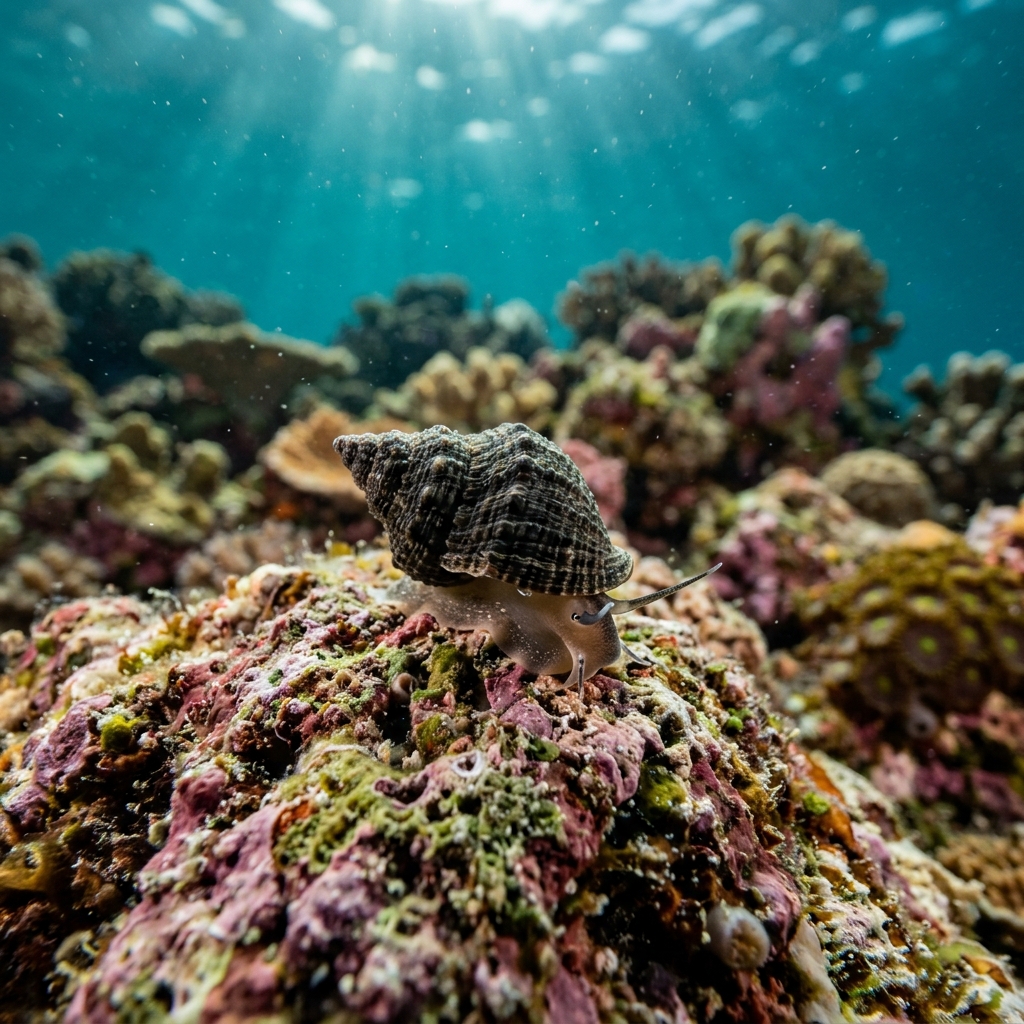
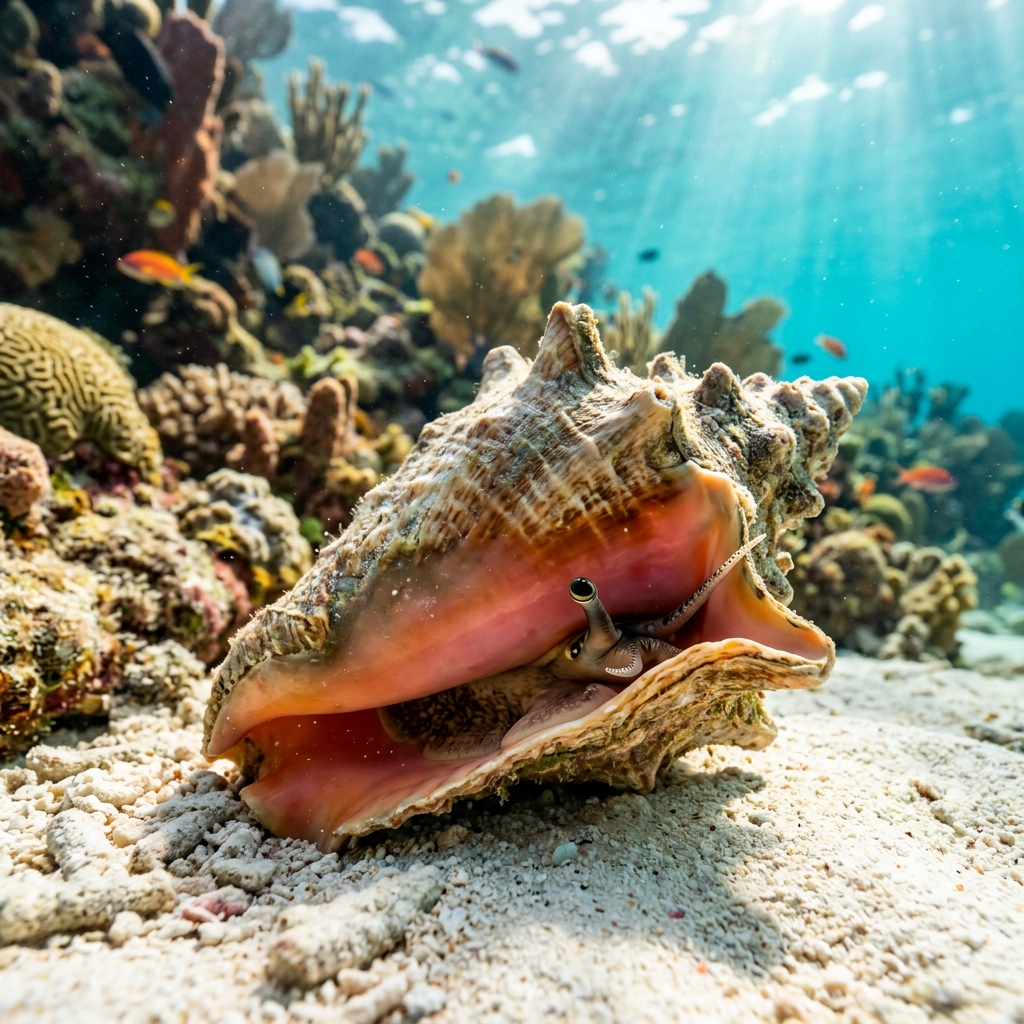
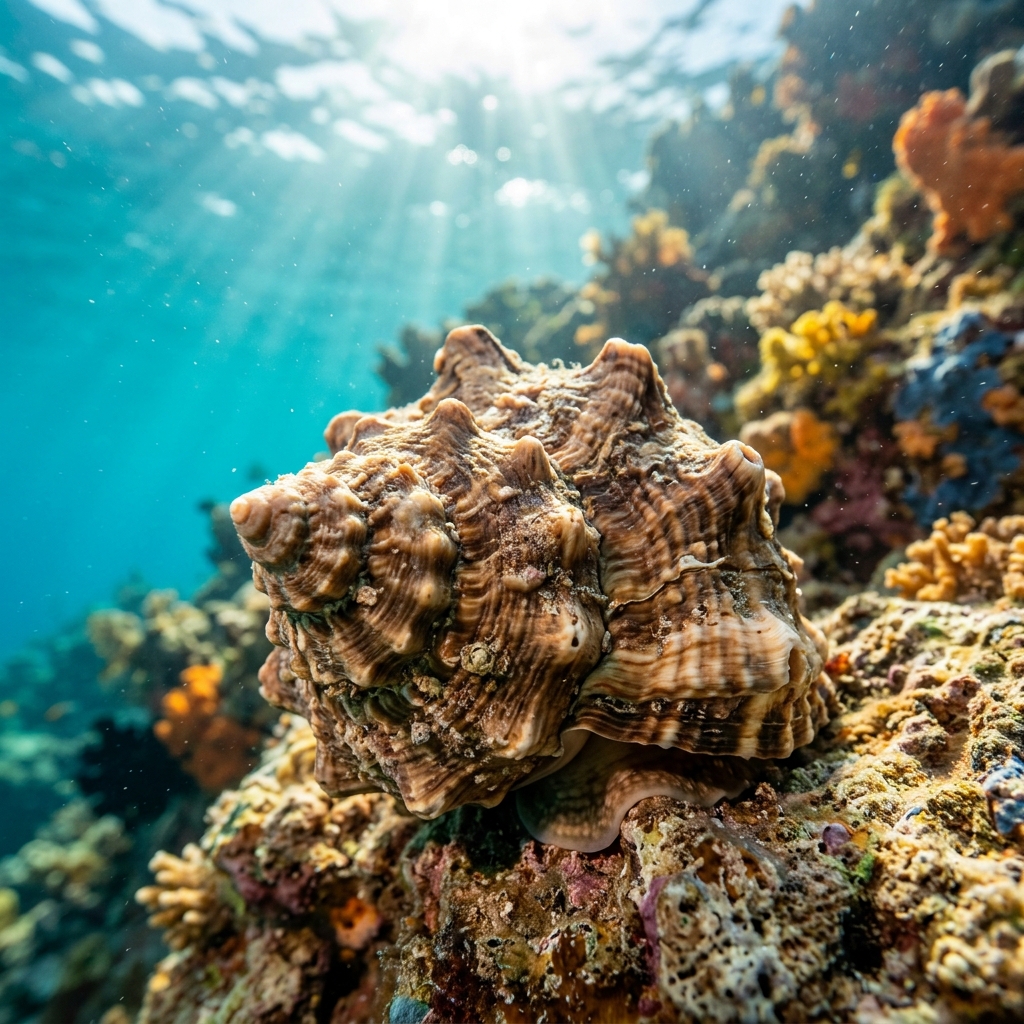
Reef neighbours a diver could mistake it for. Use the identification notes above to tell them apart.
Sighting data for this species is not yet aggregated across specific dive sites on Fin, so no regional hotspots can be confirmed from logged dives. Based on known biology, it inhabits shallow sandy and rubble areas on Indo-Pacific coral reefs, so reef systems across that broad region are where searches should begin.
Mapping where Geographer Cone is logged…
Look for the distinctive brown net-like or map-like pattern on a pale cream shell, no other common cone snail has quite the same geographic patchwork. The shell is broad at one end and tapers sharply, and the living animal may show a spotted mantle tissue extending over the shell edges.
Yes, despite the DATA BLOCK classification, the Geographer Cone is widely regarded by marine biologists as the most venomous cone snail to humans and has been responsible for fatal stings. Never pick one up. The proboscis can reach around the shell in any direction, so there is no safe way to handle a live animal. Observe it from a respectful distance without touching.
No strong seasonal peak has been recorded in current dive logs, and the species lives on warm tropical reefs where water temperatures sit around 26-29°C year-round. Night dives are your best bet regardless of season, as this snail is primarily nocturnal and spends the day buried in sand.
It is a fish-hunting cone snail, which means its conotoxins are fast-acting enough to paralyse vertebrates. It can project its flexible proboscis in almost any direction around its shell, so a person holding the shell is not safe from any angle. The venom cocktail it delivers can cause rapid paralysis and, in serious cases, respiratory failure.
Site and sighting data is aggregated from diver logs, iNaturalist and GBIF. For taxonomy and conservation status:
Triton Shell
2,297 sites