Condylactis gigantea
Spot Atlantic Anemone on Caribbean reefs from the Yucatán to Roatán. Tips on ID, when to look, and where divers log it most.
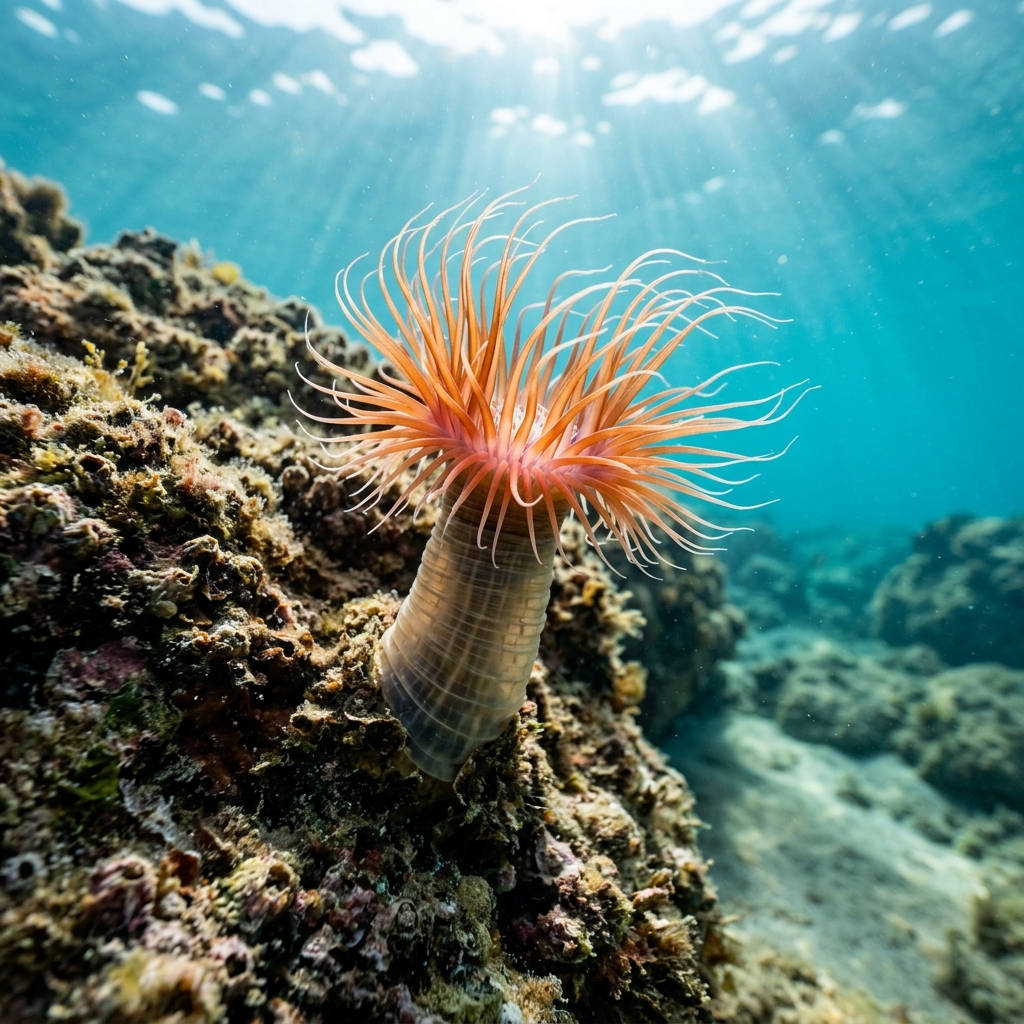
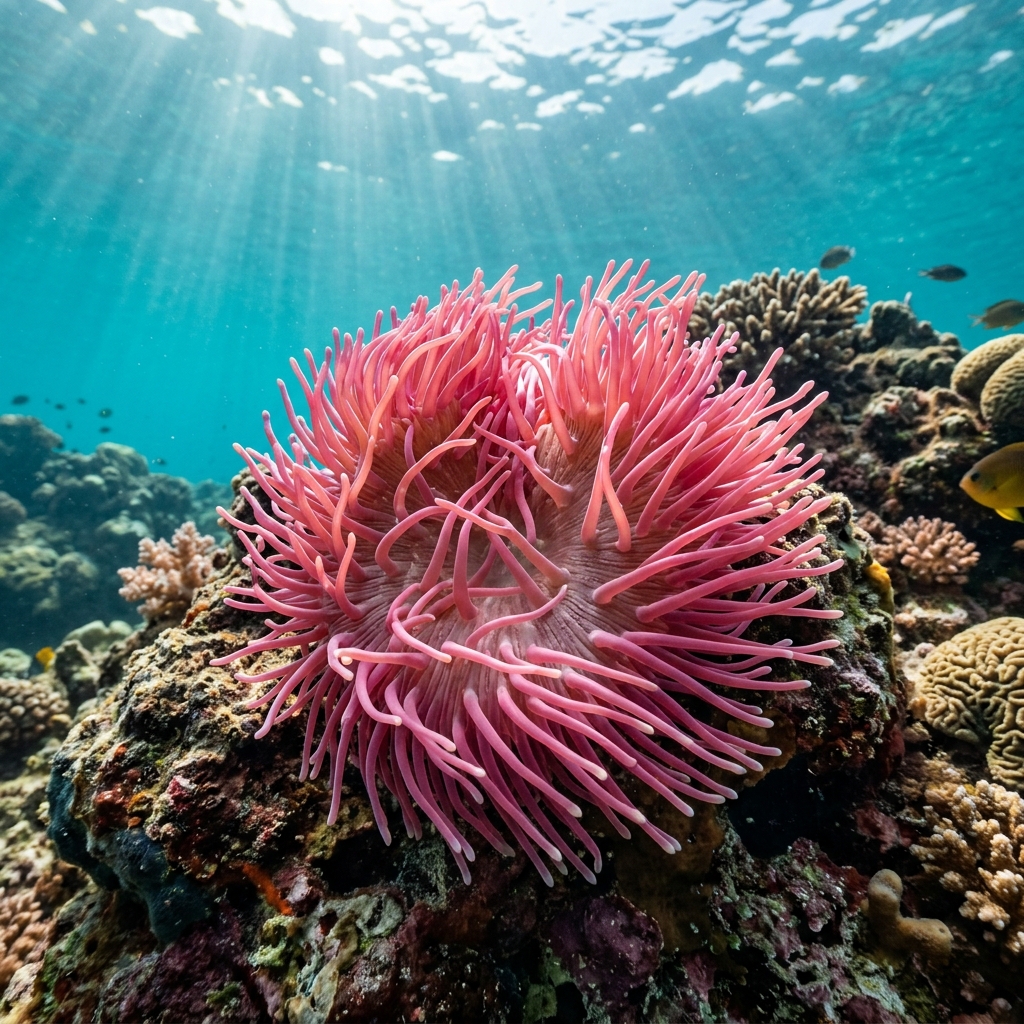
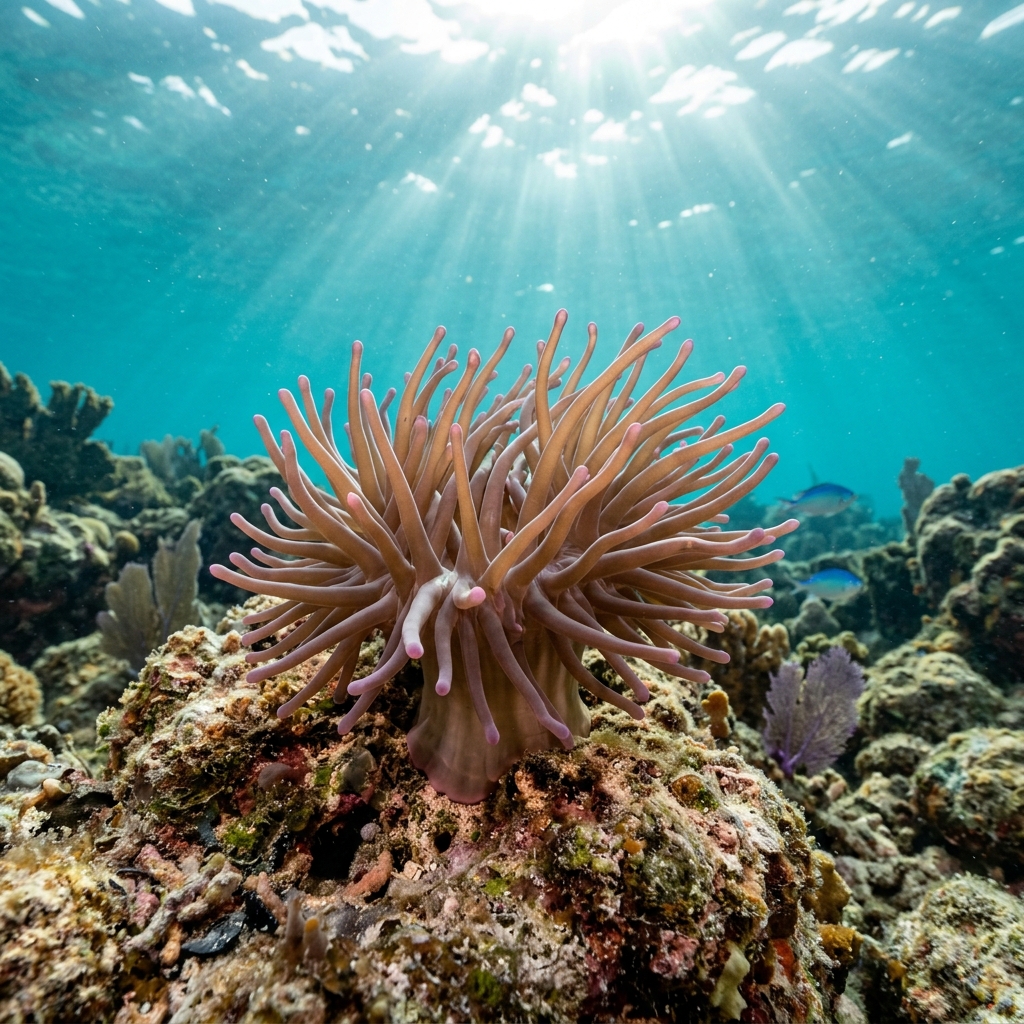
Long, flowing tentacles, often numbering in the hundreds, give this anemone its most distinctive look underwater; the tips are almost always tinged pink, lavender, or purple against an otherwise white or greenish column. The oral disc (the flat, central plate from which tentacles emerge) can span 30 cm or more, making it one of the largest anemones on Caribbean reefs. Look for it sitting in open sandy patches or in crevices along coral heads, column partially exposed. The colour palette shifts between individuals, but the contrasting purple or pink tentacle tips are the reliable field mark.
Atlantic Anemone spends most of its time anchored to hard substrate or tucked into reef crevices, column fixed and tentacles fully extended into the current to catch passing food. Resident clownfish-equivalent partnerships are not typical here, look instead for small shrimp or fish sheltering among the tentacles. It rarely reacts to divers unless touched, when it contracts slowly, drawing tentacles inward.
Several small shrimp species, including the spotted cleaner shrimp, are commensal residents (living inside the tentacles without being eaten), so hovering close often reveals tiny hitch-hikers that make for excellent macro photography.
Sightings concentrate between July and April in the northern Caribbean, which broadly tracks the region's warm-water season and peak dive season. Water temperatures where it is observed run 26.5 to 29 °C, consistent with tropical reefs that hold these conditions for much of the year.
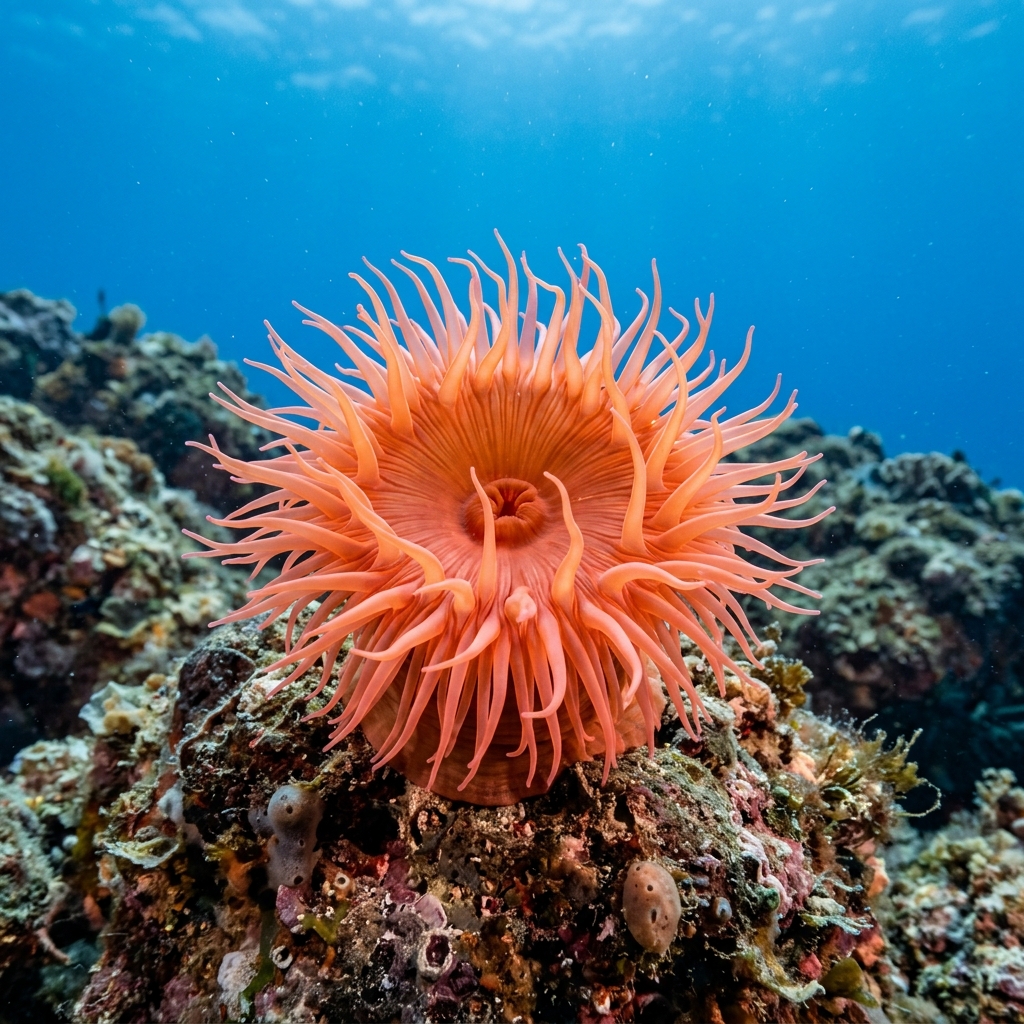
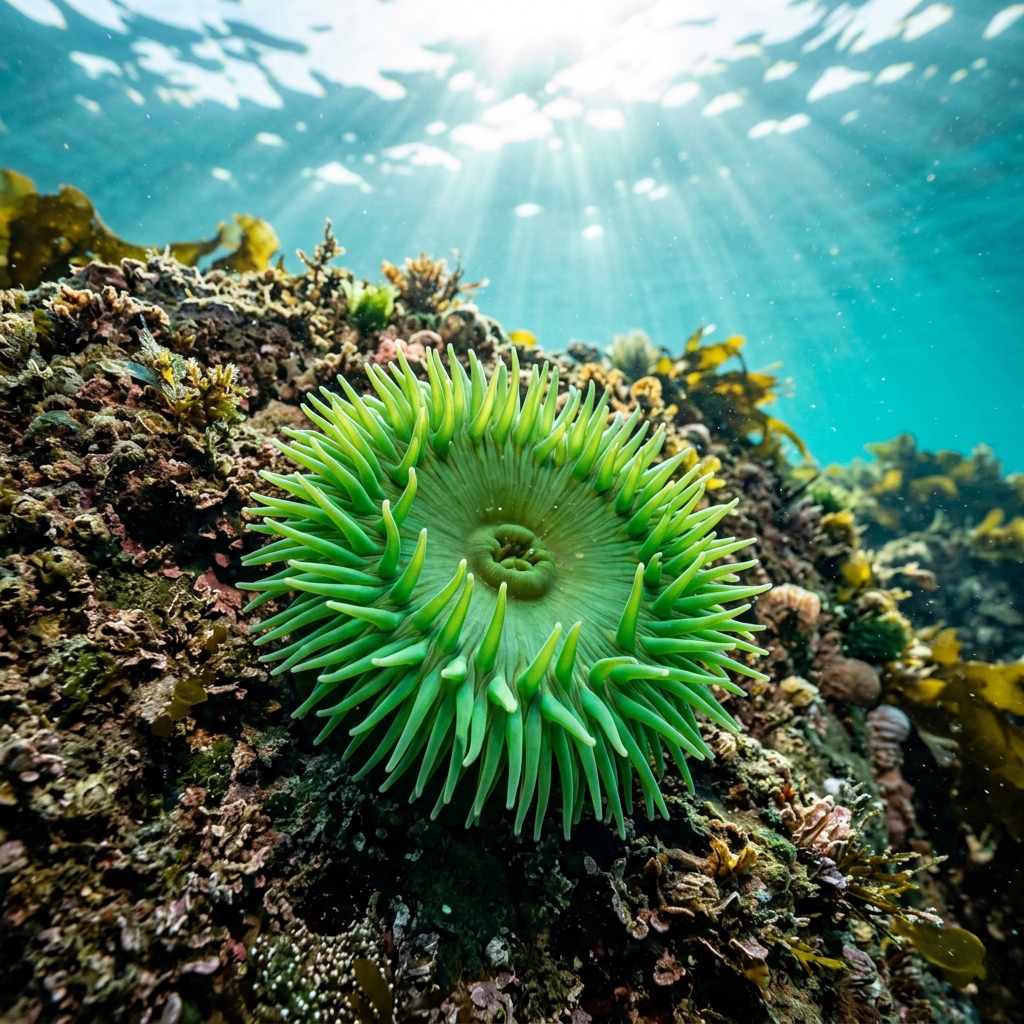
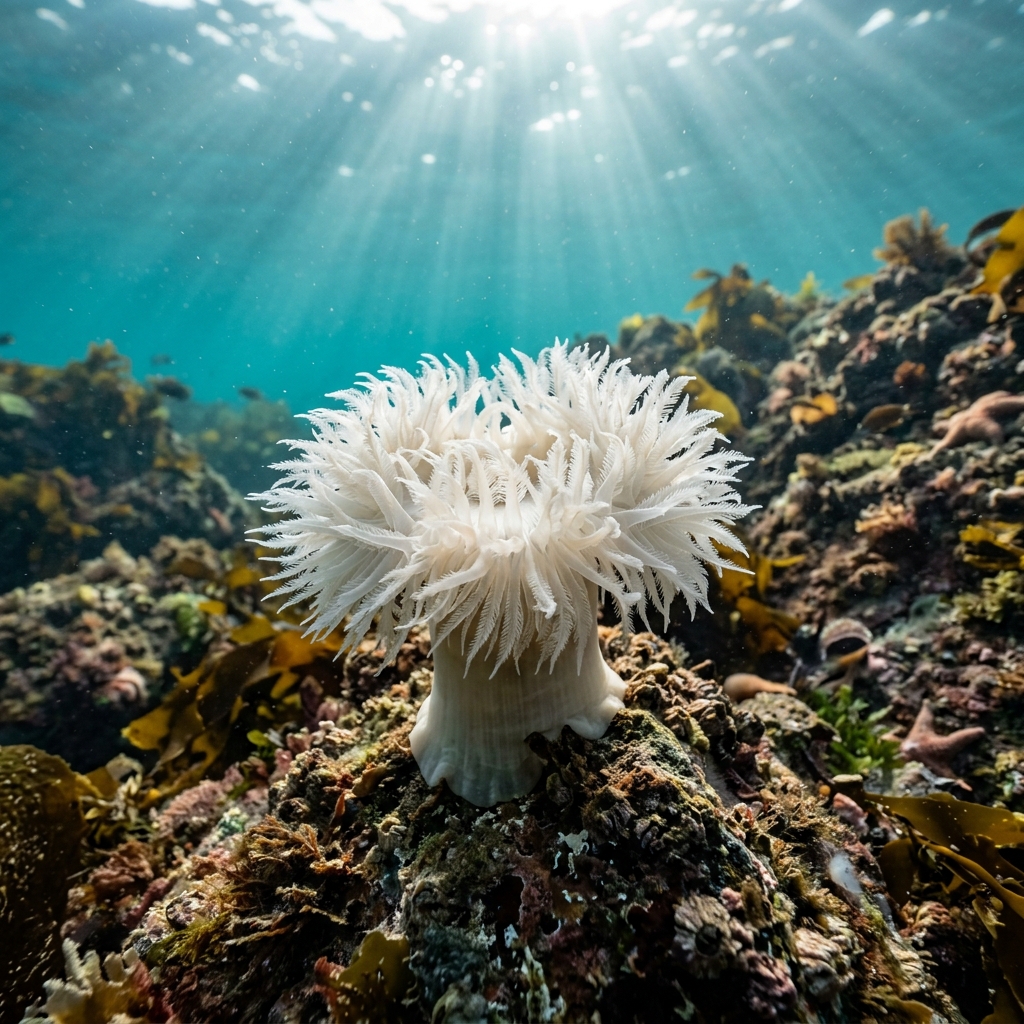
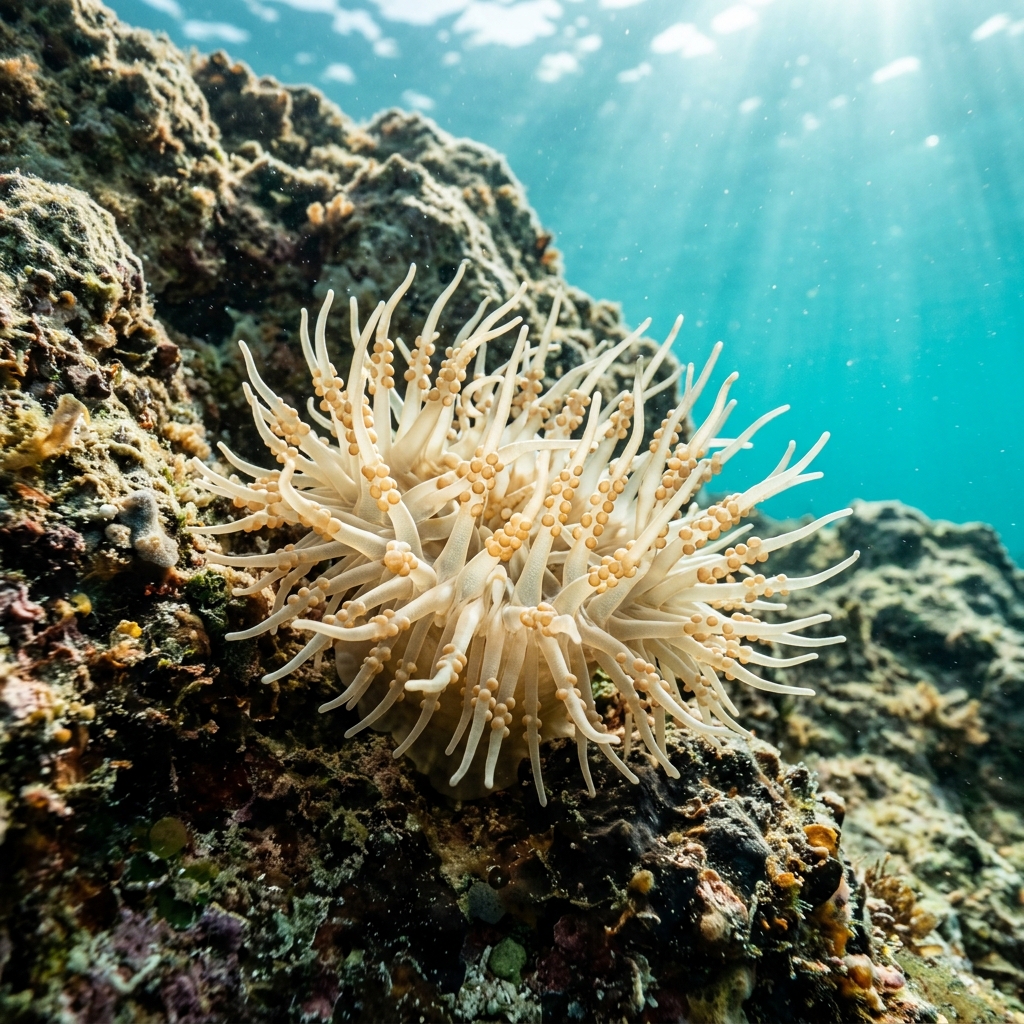
Reef neighbours a diver could mistake it for. Use the identification notes above to tell them apart.
Atlantic Anemone is most commonly logged across the wider Caribbean, with the strongest records coming from Mexico's Yucatán Peninsula and the reefs around Grand Cayman. It is also a reliable sight on Roatán in Honduras, across Bonaire's Klein Bonaire sites, and in the waters off San Andrés and Providencia in Colombia. Strong sighting records also come from Curaçao's south coast and the US Virgin Islands.
Mapping where Atlantic Anemone is logged…
Atlantic Anemone is logged across a wide sweep of the Caribbean. The Yucatán Peninsula in Mexico leads all regions, followed by Grand Cayman, Roatán in Honduras, and Klein Bonaire. It also appears regularly in San Andrés and Providencia, Curaçao's south coast, and Saint Croix in the US Virgin Islands.
Diver records concentrate between July and April across its Caribbean range, aligning with warm, settled conditions. Water temperatures at logged sites run 26.5 to 29 °C, so it is present on tropical reefs for much of the year rather than in a narrow seasonal window.
The key field marks are the large size, the oral disc can be 30 cm or more across, and the tentacle tips, which are almost always tinged pink, lavender, or purple. No other common Caribbean anemone combines that scale with those coloured tips. The column is usually pale white or greenish.
The oral disc routinely reaches 30 cm in diameter, and the individual tentacles can be several centimetres long. This makes it one of the largest sea anemones in the Caribbean, easy to spot from a metre or two away once you know the purple-tipped tentacle pattern to look for.
Yes. Several small commensal shrimp, including spotted cleaner shrimp, regularly take up residence among the tentacles, using the stinging cells for protection while causing no harm to the host. Looking carefully at the base of the tentacles during a dive often reveals these tiny lodgers.
Site and sighting data is aggregated from diver logs, iNaturalist and GBIF. For taxonomy and conservation status:
Plumose Anemone
2,032 sites