Fusigobius neophytus
Spot this pale, spot-tailed goby resting on rubble in Marsa Alam's dive sites, active year-round in 25-29C Red Sea water.
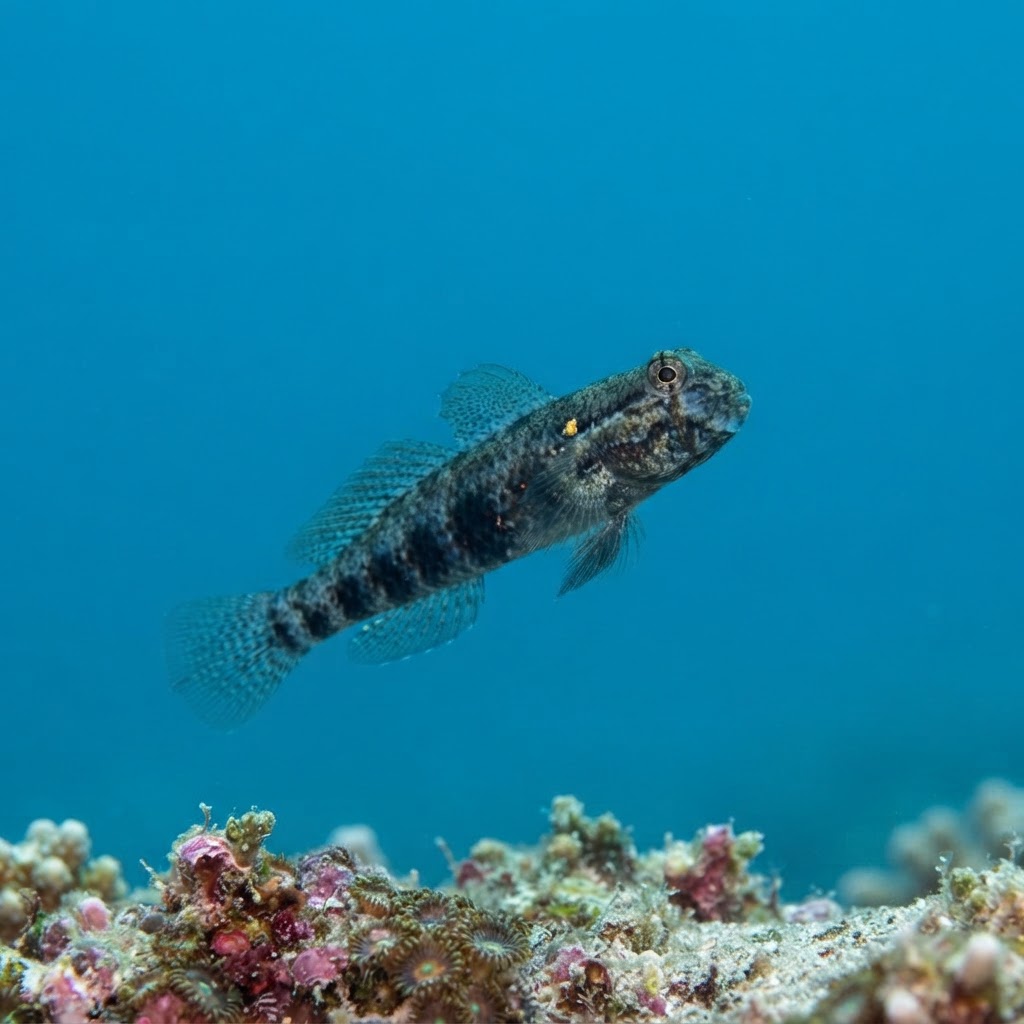
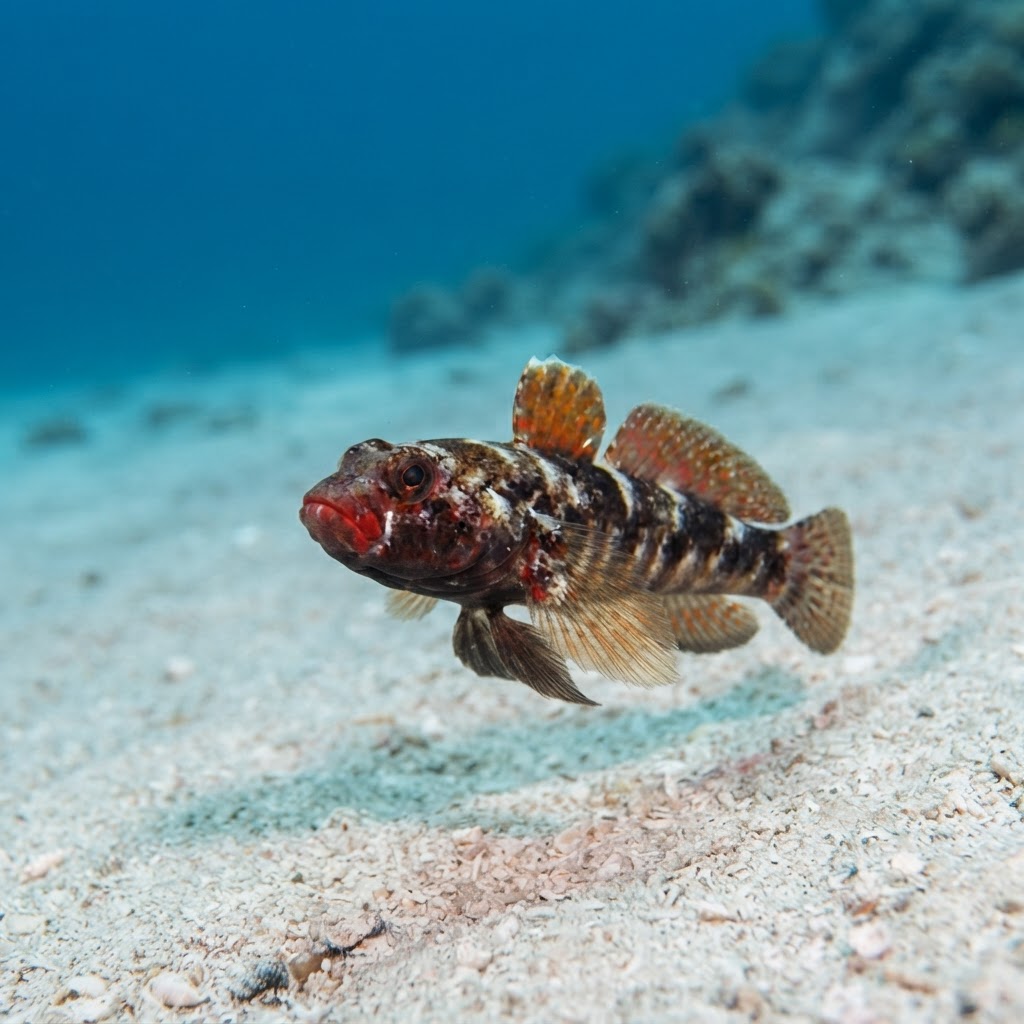
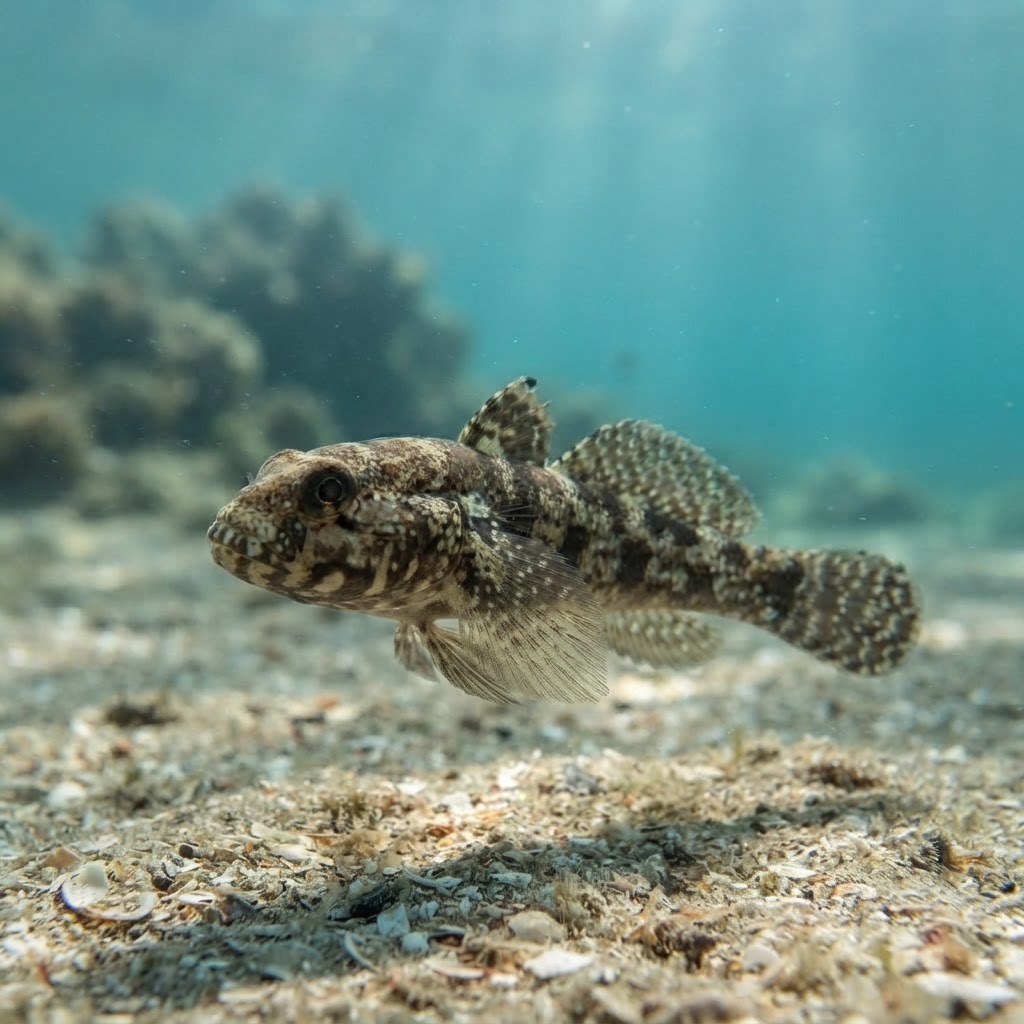
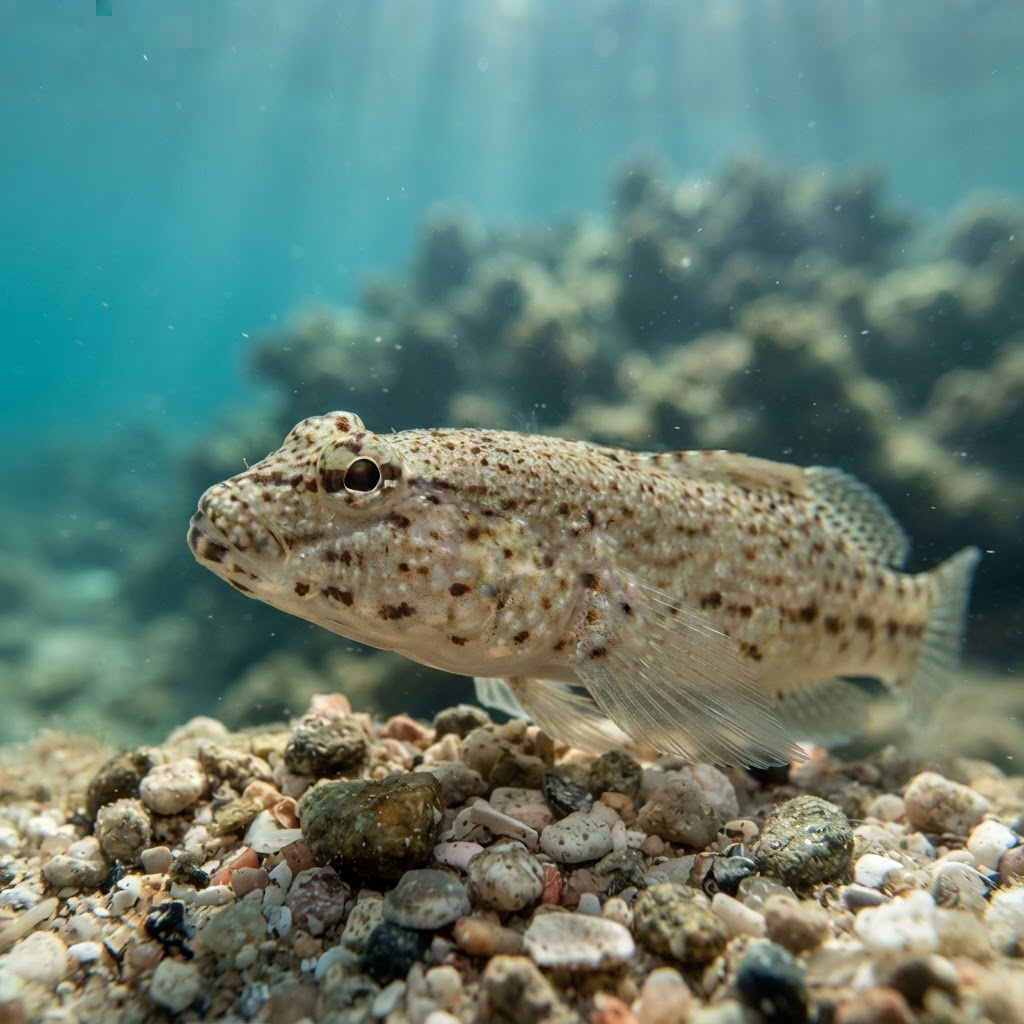
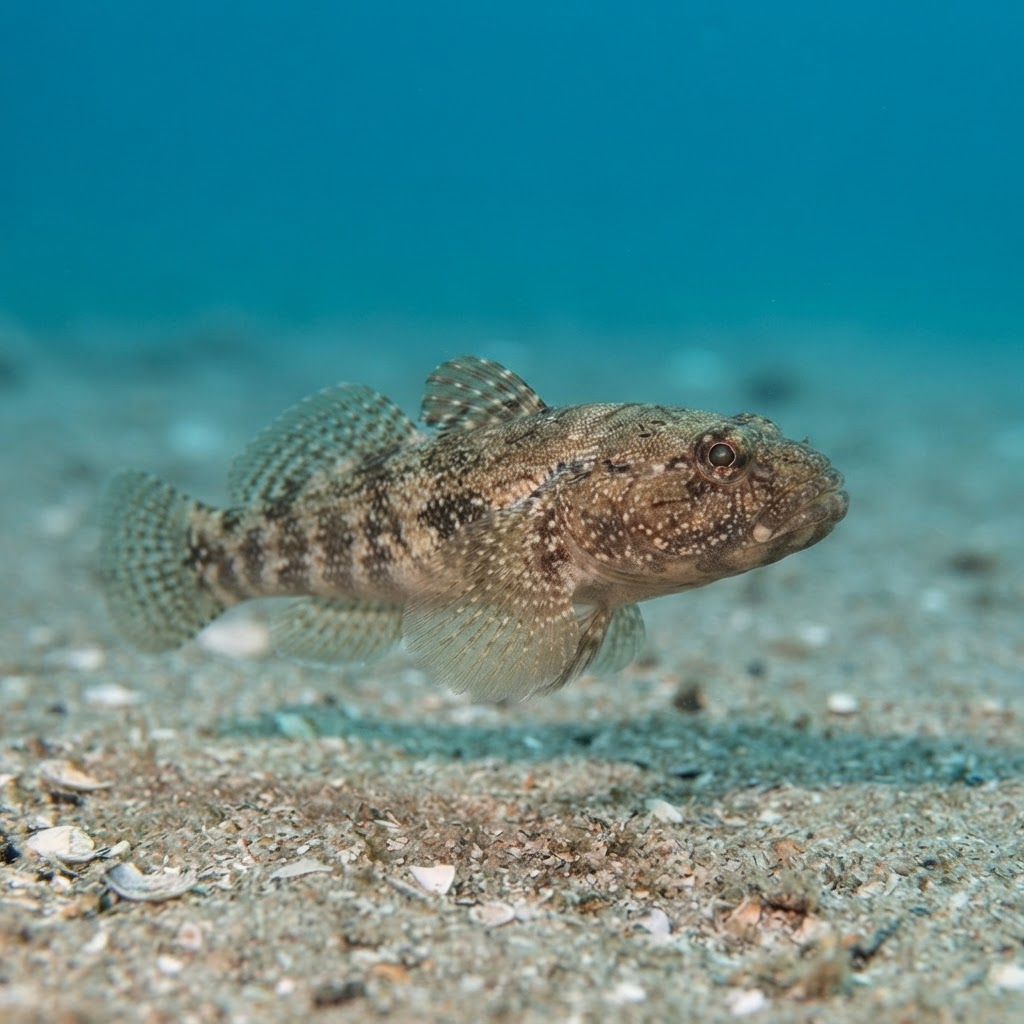
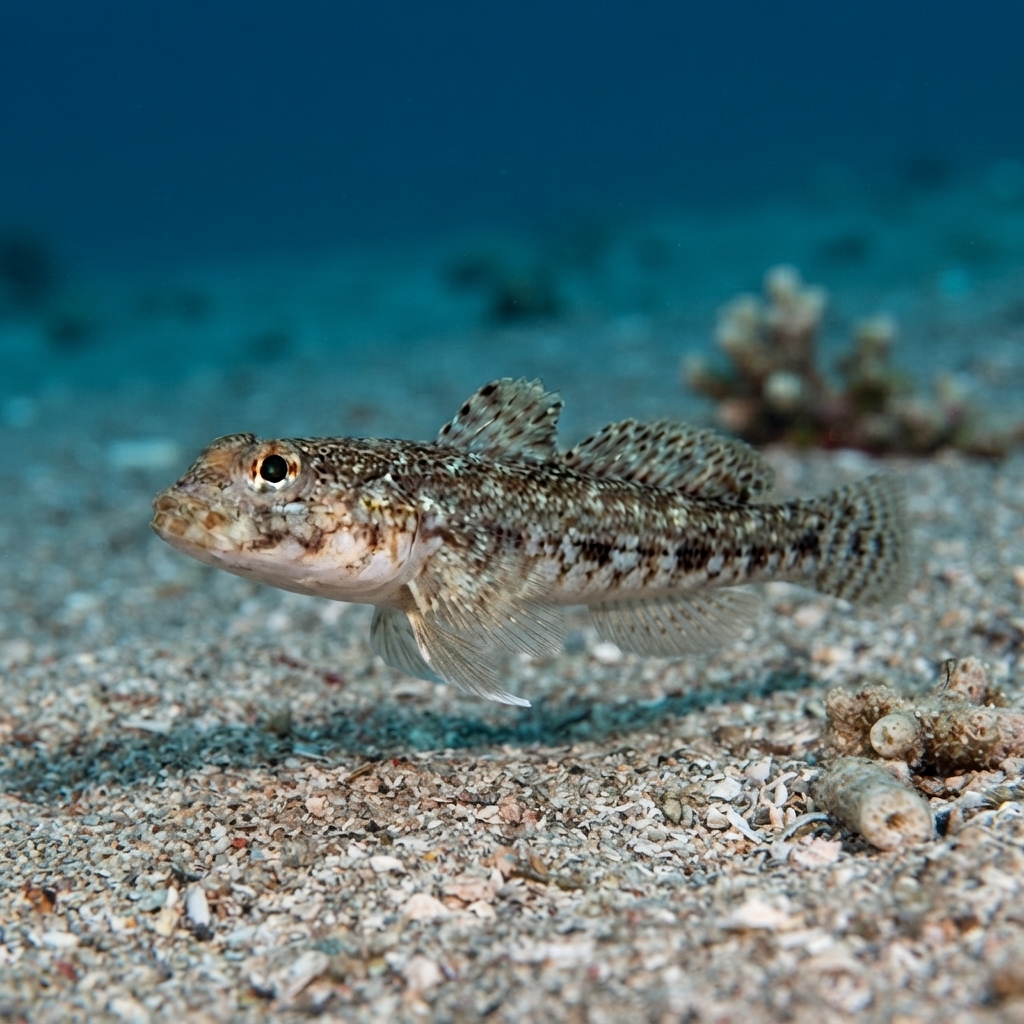
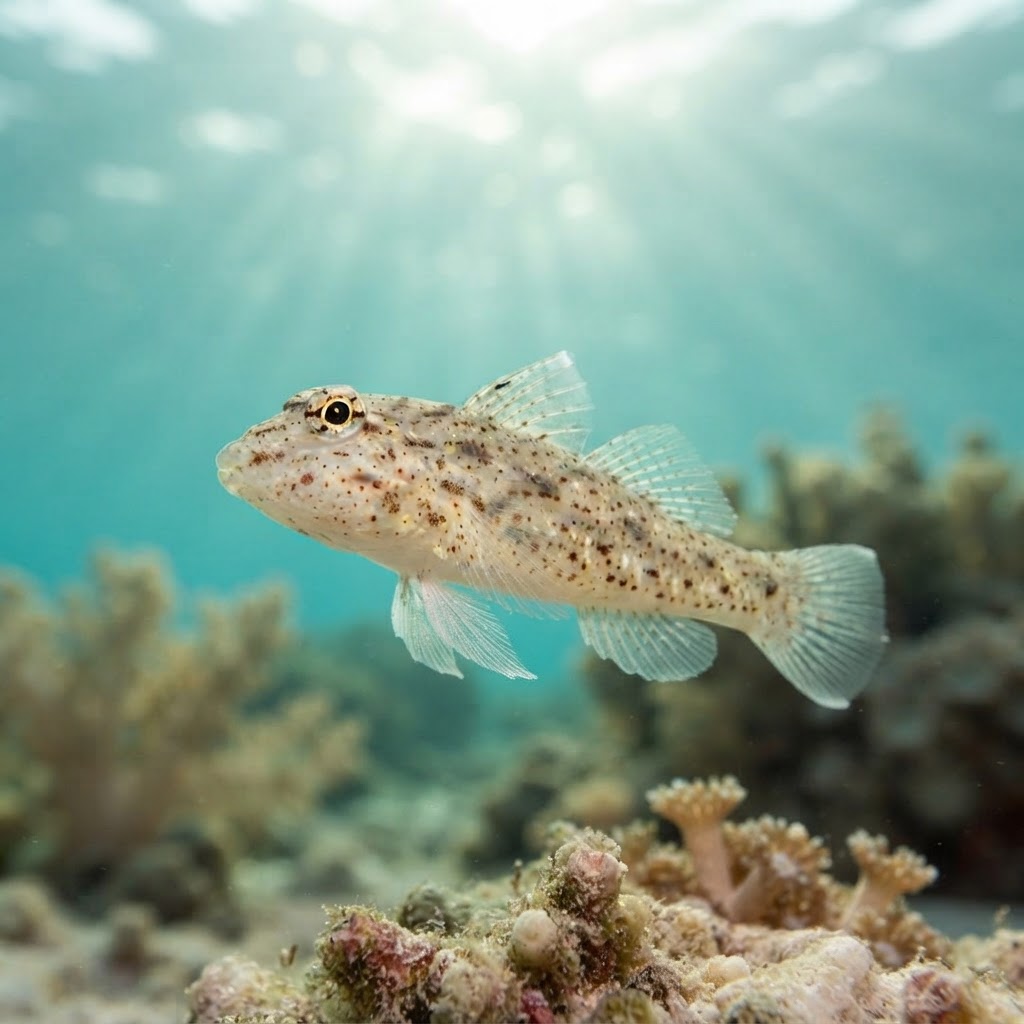
A small, pale sand-coloured goby around 6cm long, usually seen propped on its front fins on rubble or sand rather than swimming freely. Look for fine dark speckling across the body and a distinctive dark blotch or bar near the base of the tail fin. The head is slightly bulbous with large eyes set high, typical of gobies that watch for prey and threats from a stationary perch.
Spends most of its time perched motionless on rubble, sand patches or low coral debris, propped up on its pectoral fins while it scans for small invertebrates. It tends to hold its position as divers approach, darting only a short distance if pressed too closely, then settling back down nearby. Best found by slowing down and scanning open rubble areas rather than looking at the reef structure itself.
Like many small gobies, it relies on camouflage and short darting retreats rather than fleeing far, so a slow, patient approach with a torch or macro lens is more productive than a quick chase.
No clear seasonal pattern shows up in the data, and with a comfortable range of roughly 24.7 to 29.3C it can be found on tropical reefs at any time of year. Treat it as a year-round possibility rather than a seasonal target.
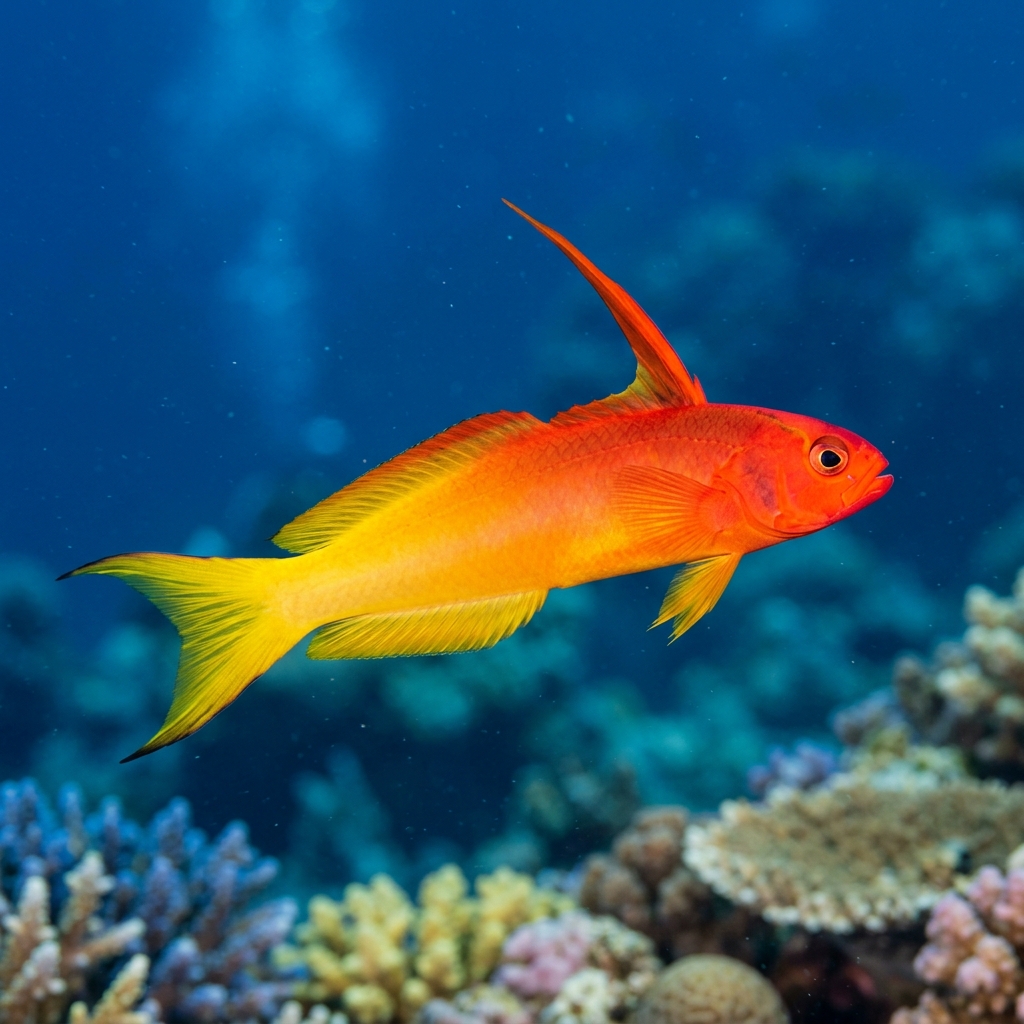
Reef neighbours a diver could mistake it for. Use the identification notes above to tell them apart.
Most reliably logged in Egypt, particularly around Marsa Alam and the Deep South, where it turns up on several dive sites. It has also been recorded in Sulawesi, Indonesia, and in Apra Harbor, Guam, so it has a wide Indo-Pacific spread even though sightings anywhere are uncommon rather than guaranteed.
Mapping where Common Fusegoby is logged…
It is most consistently logged around Marsa Alam and the Deep South in Egypt, with additional sightings in Sulawesi, Indonesia, and Apra Harbor, Guam. It is uncommon everywhere it has been recorded, so treat any sighting as a bonus rather than a guaranteed find.
There is no detected season, and it lives in water between about 24.7 and 29.3C, so it can turn up on tropical reefs at any time of year.
Look for a small, pale, speckled goby around 6cm long resting on rubble or sand, propped up on its front fins rather than swimming. A dark blotch near the base of the tail is a useful marker to separate it from similarly patterned gobies nearby.
They stay small, typically around 6cm in length, which is fairly average for a reef-associated goby.
No. They are harmless, tiny reef fish that pose no risk to divers and will simply dart away or hold still if you get close.
Site and sighting data is aggregated from diver logs, iNaturalist and GBIF. For taxonomy and conservation status:
Slender Goby
806 sites