Ecsenius opsifrontalis
A 4cm reef dweller most often found peeking from rubble in Palawan and Apra Harbor, Guam, in warm 27-29C water year-round.
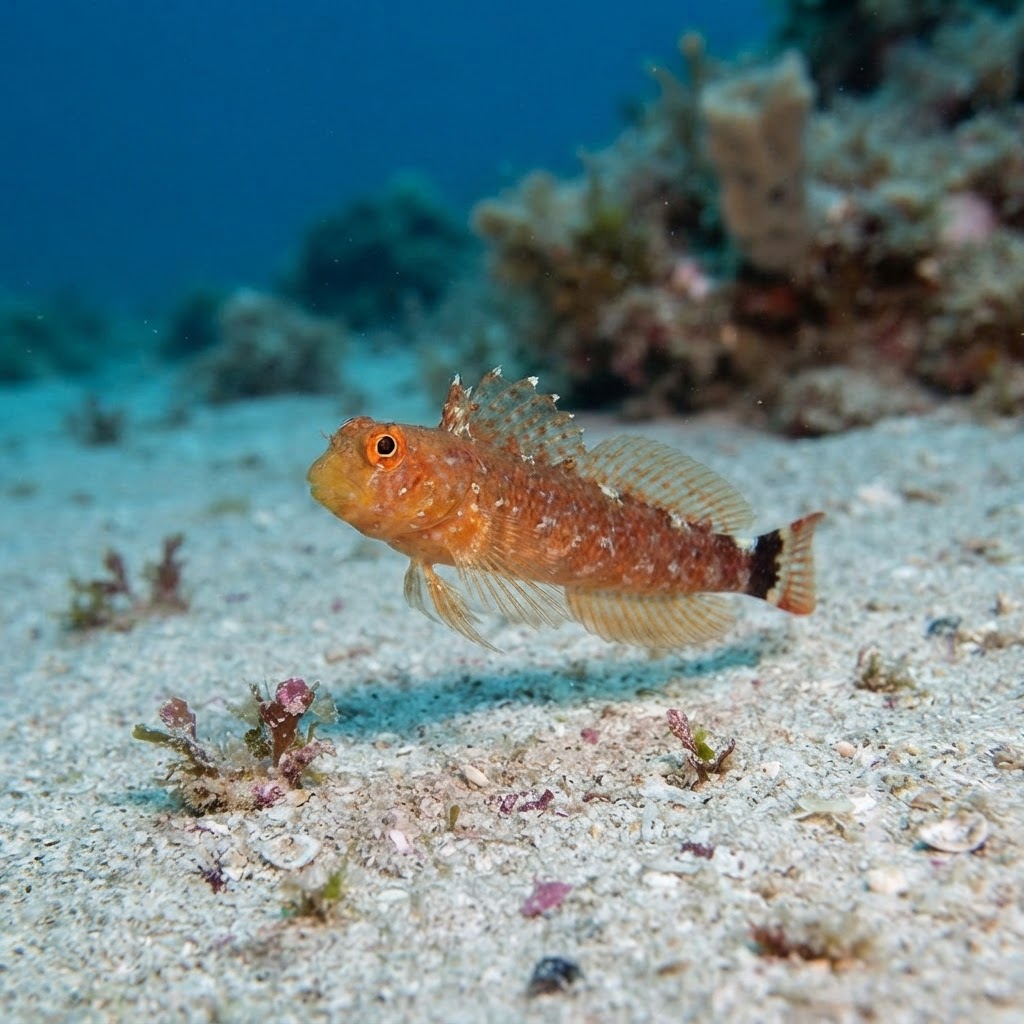
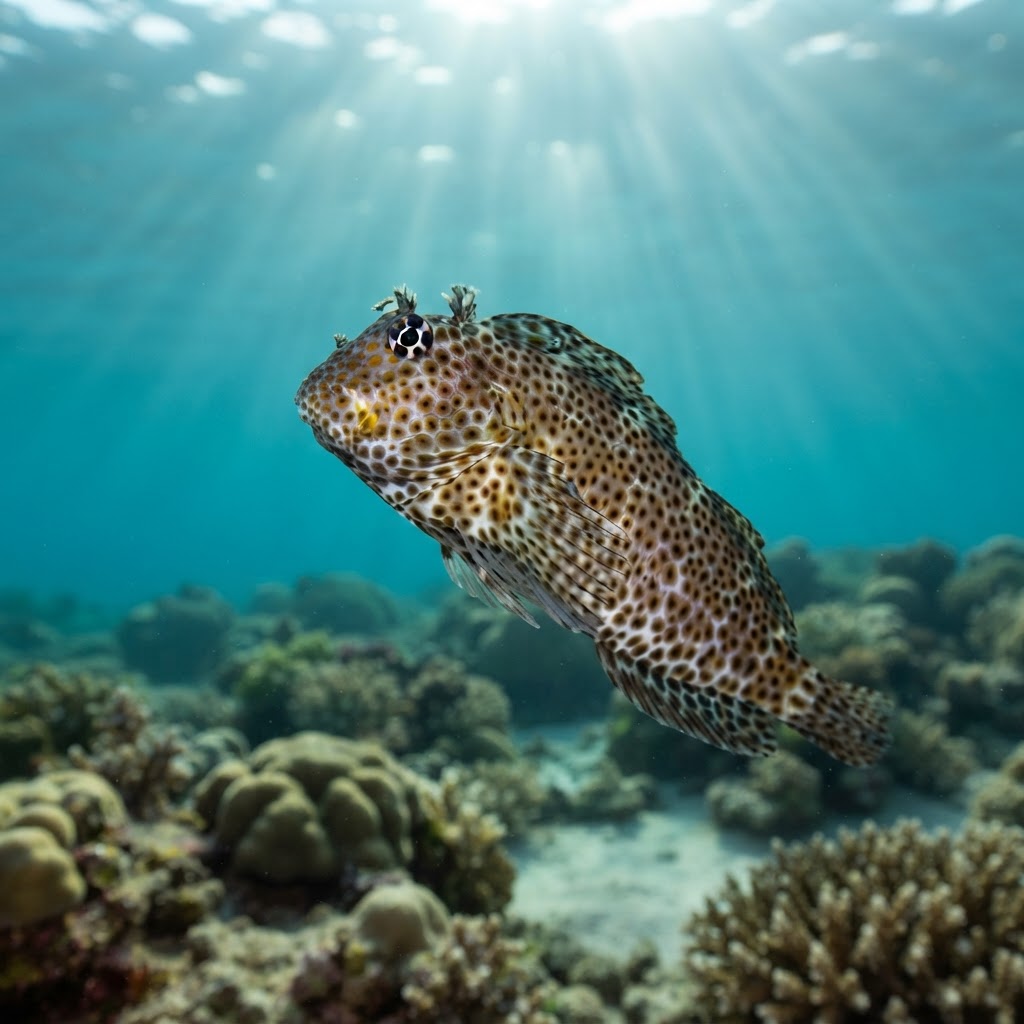
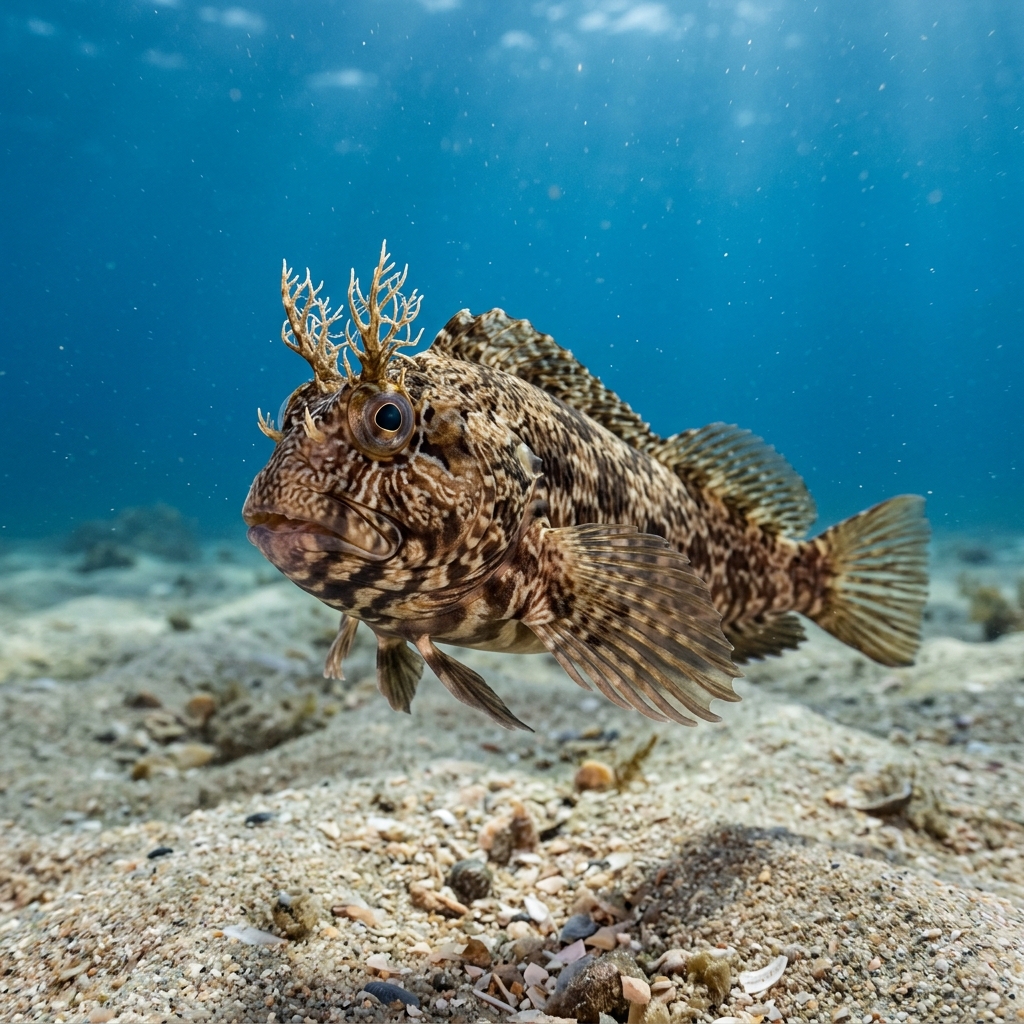
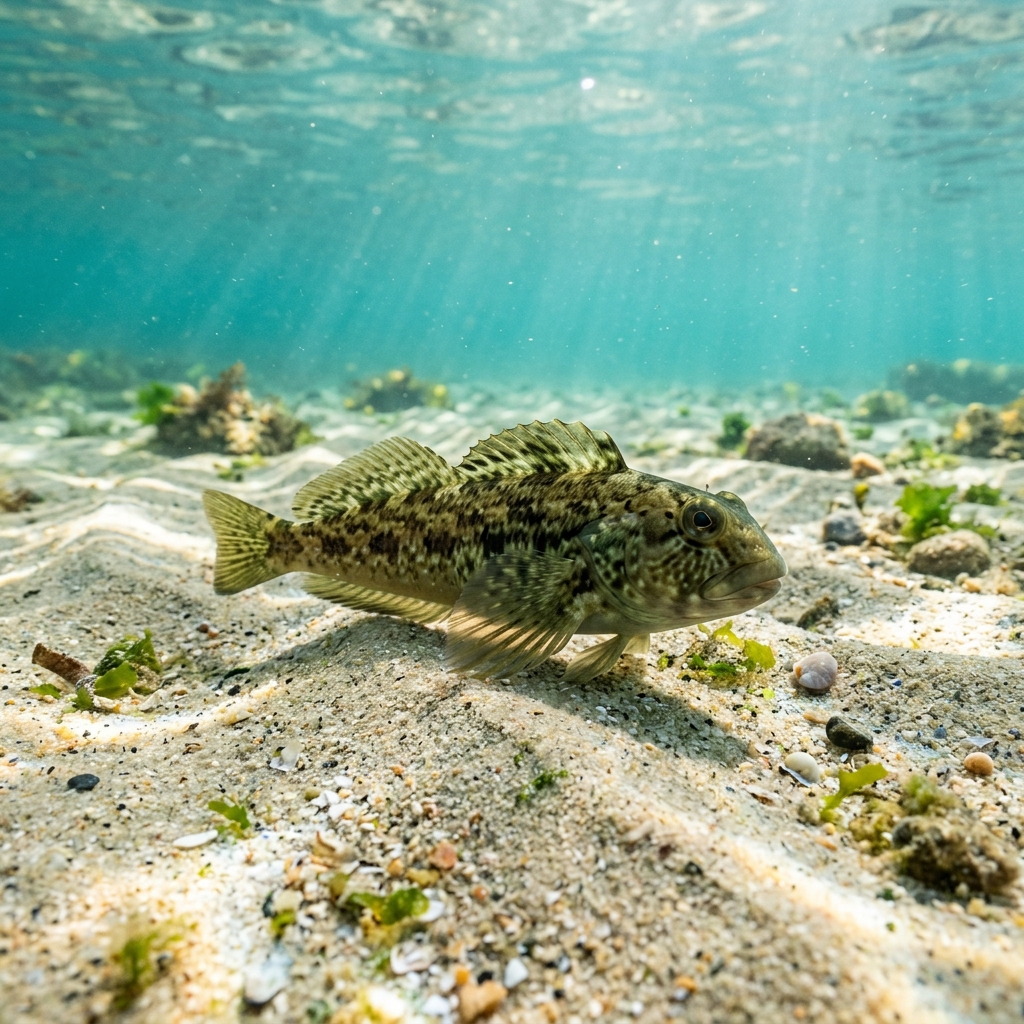
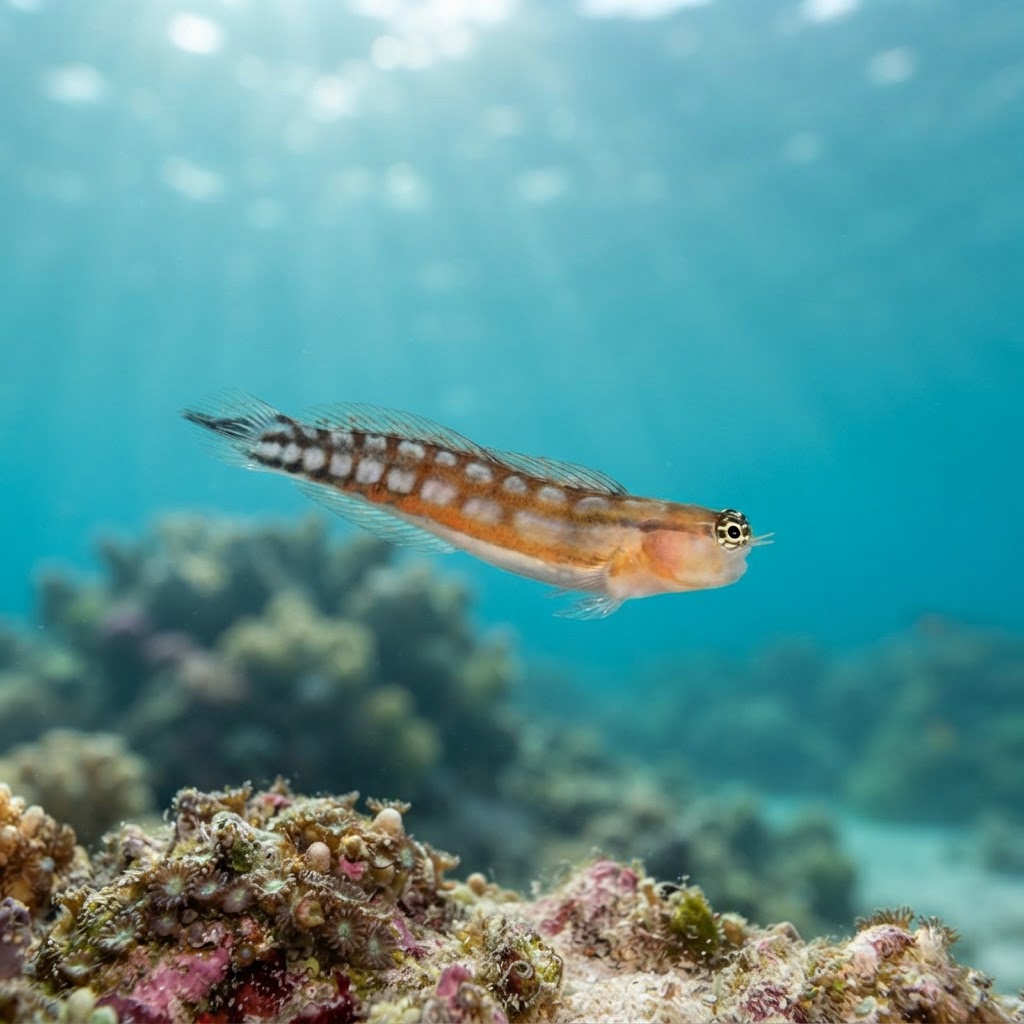
A tiny blenny, barely 4cm long, with a stubby body and a blunt, almost cartoonish face that gives it its name. Look for mottled brown-and-cream patterning that breaks up its outline against rubble and dead coral, plus the way it props itself up on its pectoral fins rather than lying flat. It rarely strays far from a small hole or crevice, which is often the fastest way to relocate it if it darts away.
Divers typically find it sitting still on rubble, dead coral, or low reef structure, propped up and watching the world go by rather than actively swimming. It tends to hold its ground until a diver gets close, then darts into a crevice for cover, only to reappear once the fuss dies down. Most sightings happen on slow, careful looks along the substrate rather than in open water.
Like other combtooth blennies, it grazes algae and detritus straight off the rock and rubble surface using comb-like teeth, so watching one for a minute often reveals it nibbling the reef rather than just resting on it.
No clear season shows up in the sightings data, and its comfort range of 27.4 to 29.4C matches these tropical reefs all year, so it is a year-round find rather than a seasonal one.
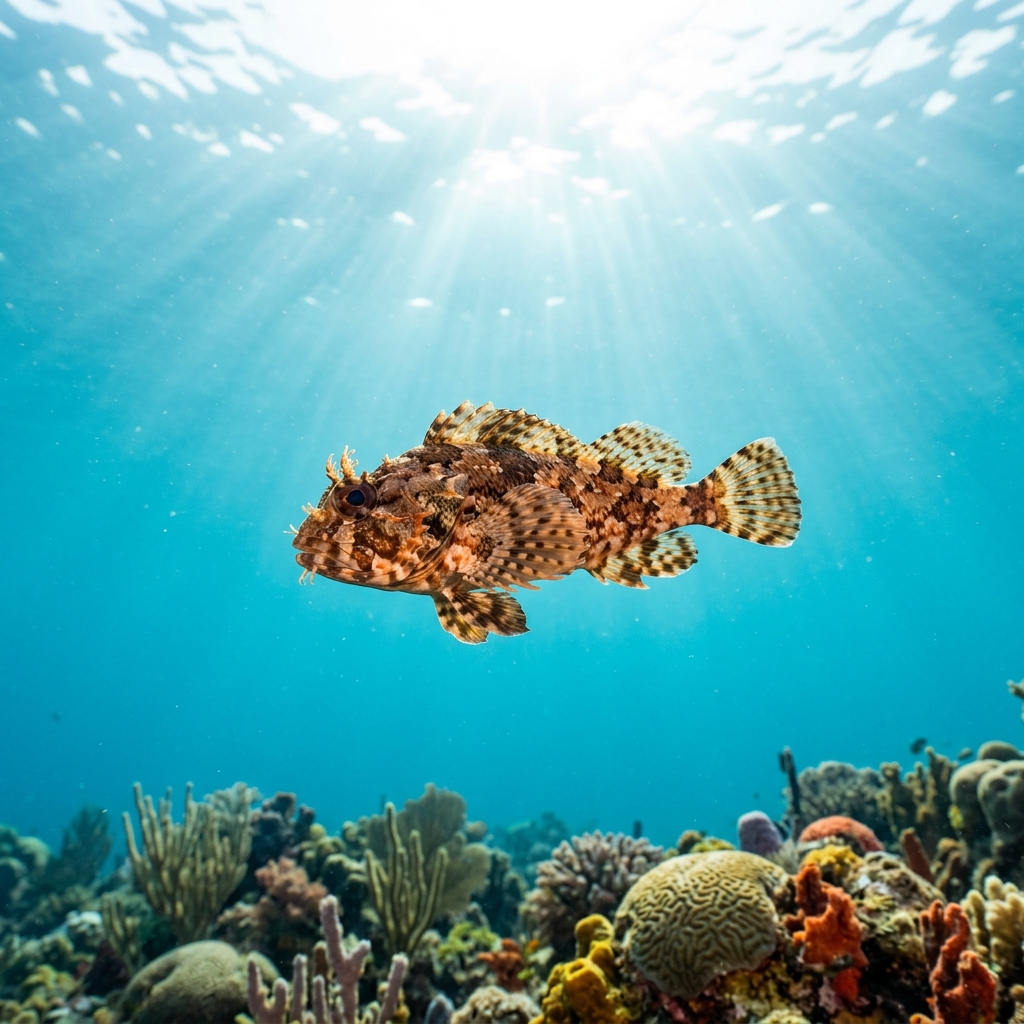
Reef neighbours a diver could mistake it for. Use the identification notes above to tell them apart.
Most reliably logged in the Philippines, especially around Palawan, and across Guam, particularly in Apra Harbor. It also turns up with fair regularity in Saipan in the Northern Mariana Islands and around Pohnpei in Micronesia, making the western Pacific the reliable region for this species.
Mapping where Comical Blenny is logged…
The strongest sightings come from Palawan in the Philippines and Apra Harbor in Guam, with further records from Saipan in the Northern Mariana Islands and Pohnpei in Micronesia. It is an uncommon but reliable find across these western Pacific sites for divers who check rubble and low reef structure closely.
There is no strong seasonal pattern in the sightings, and it sits comfortably in 27.4 to 29.4C water, which holds steady on these reefs most of the year. Treat it as a year-round species rather than one tied to a particular month.
Look for a tiny, 4cm fish with a blunt face and mottled brown-and-cream markings, propped on rubble or dead coral rather than swimming freely. It holds still until approached, then ducks into a nearby crevice.
It is a small species, reaching only about 4cm in length, so it is easy to miss unless you are looking closely at rubble and reef debris.
No, they pose no danger to divers. They are small, non-aggressive fish that retreat into crevices when approached rather than confront anything larger than themselves.
Like other combtooth blennies, it uses comb-shaped teeth to graze algae and detritus straight off rock and rubble surfaces, so a still-looking fish is often quietly feeding.
Site and sighting data is aggregated from diver logs, iNaturalist and GBIF. For taxonomy and conservation status:
Rusty Blenny
2,605 sites