Coryphopterus dicrus
Tiny sand-dwelling goby logged across Tortola and the BVI's Southern Islands in warm 26 to 28 C water, year-round on Caribbean reefs.
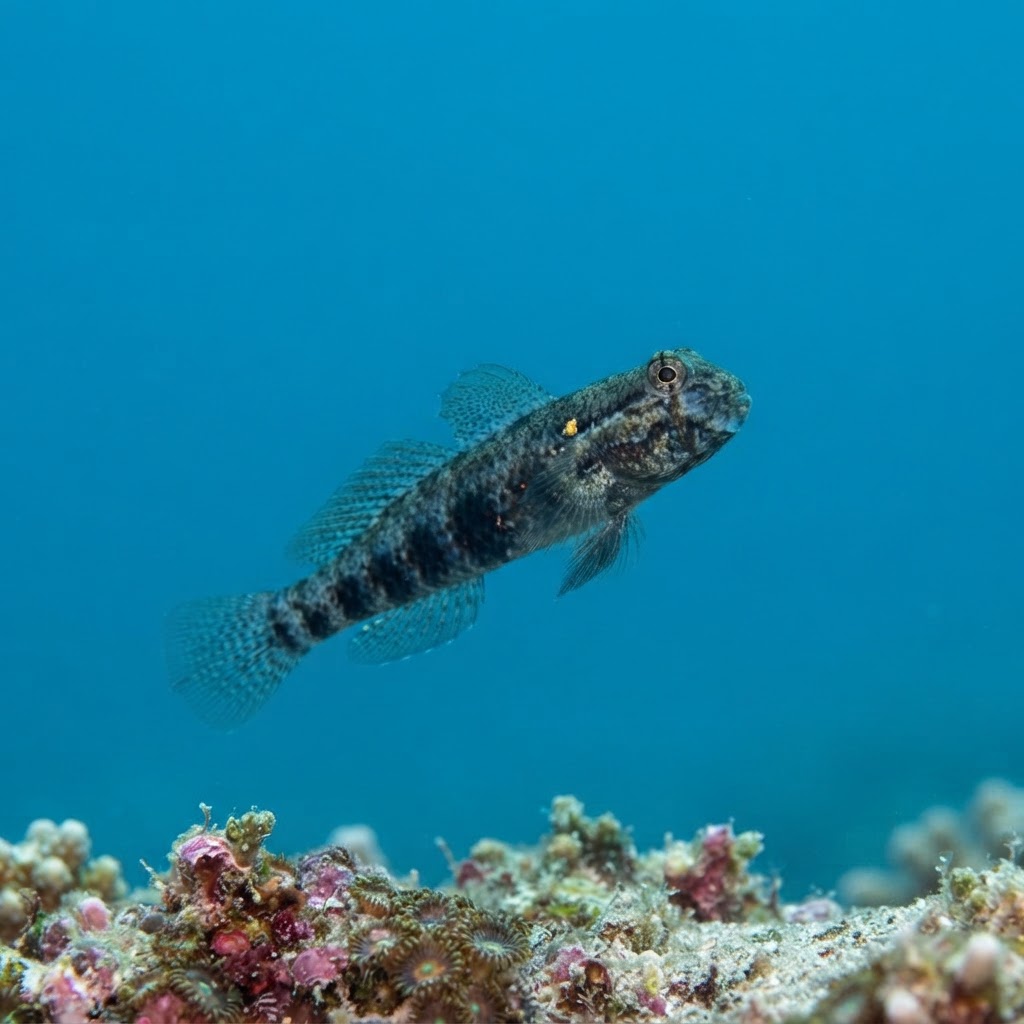
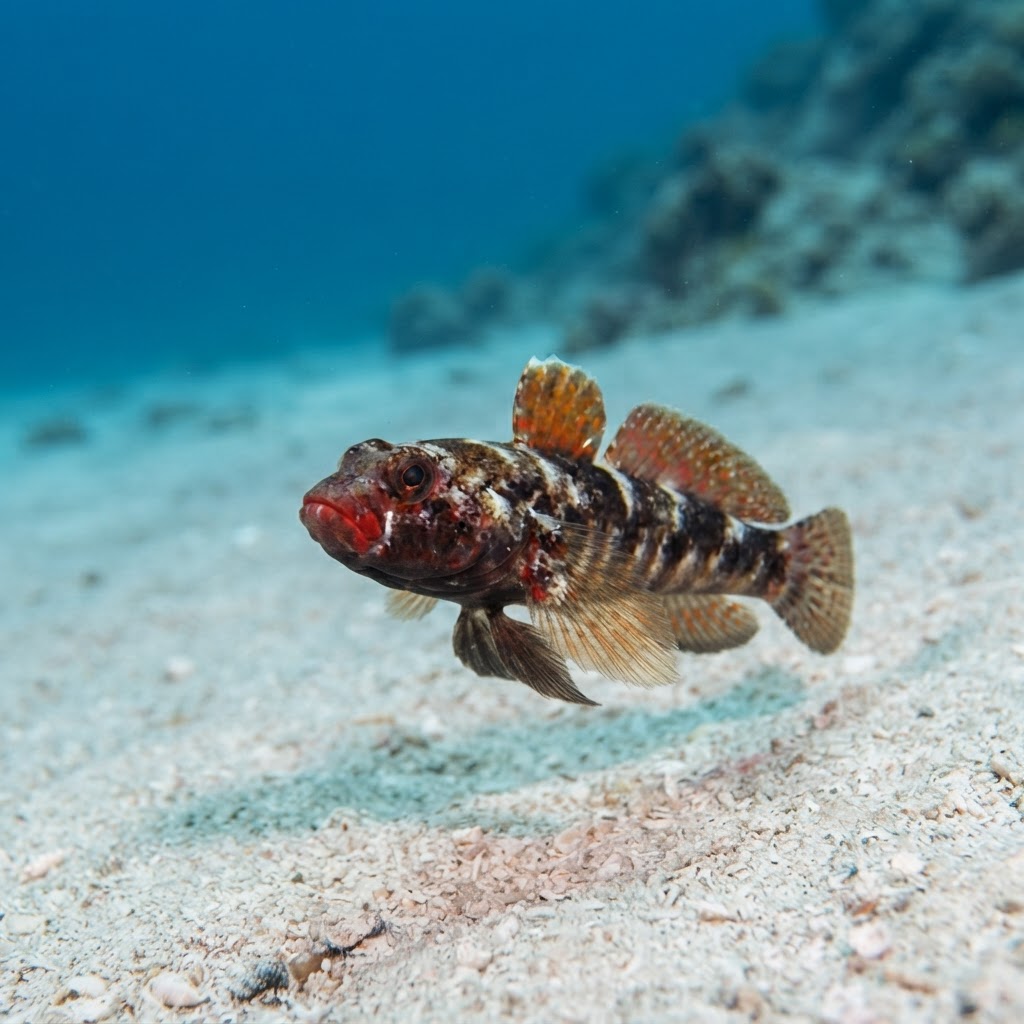
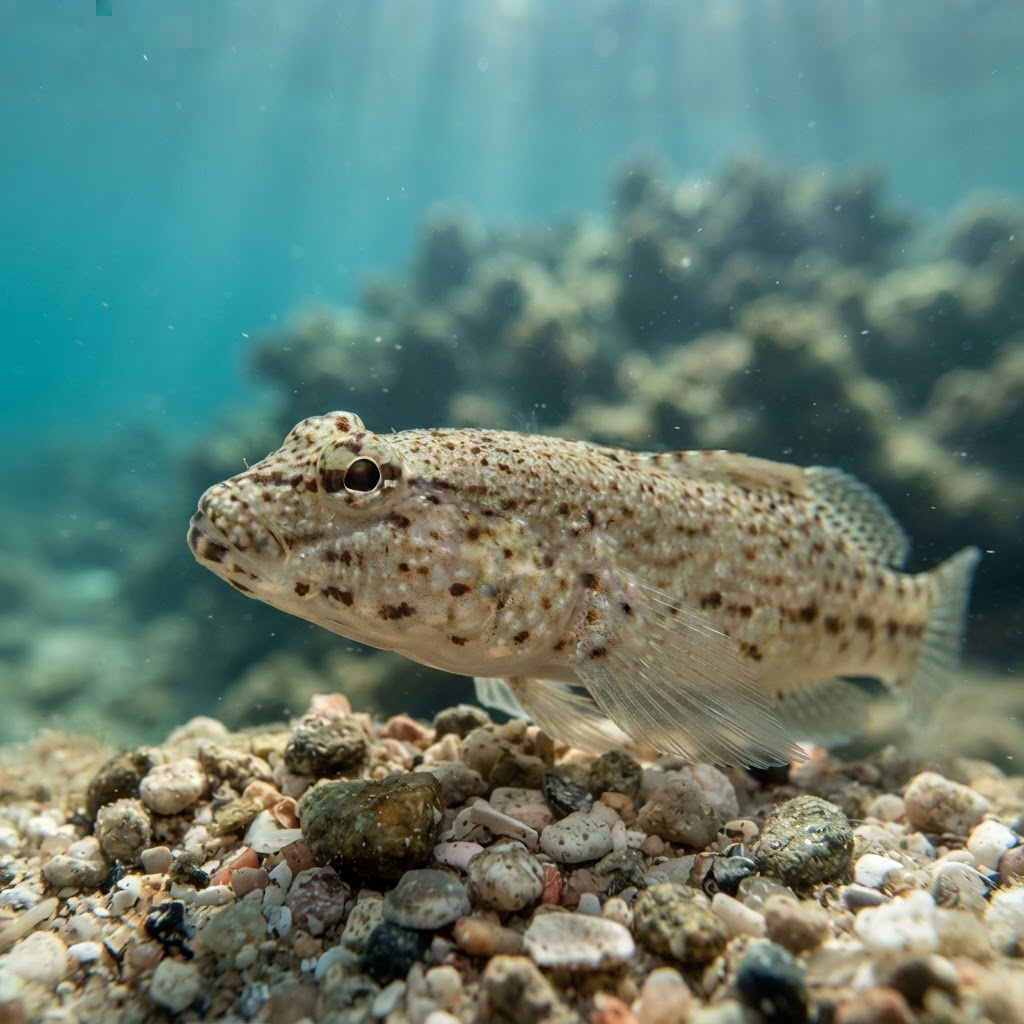
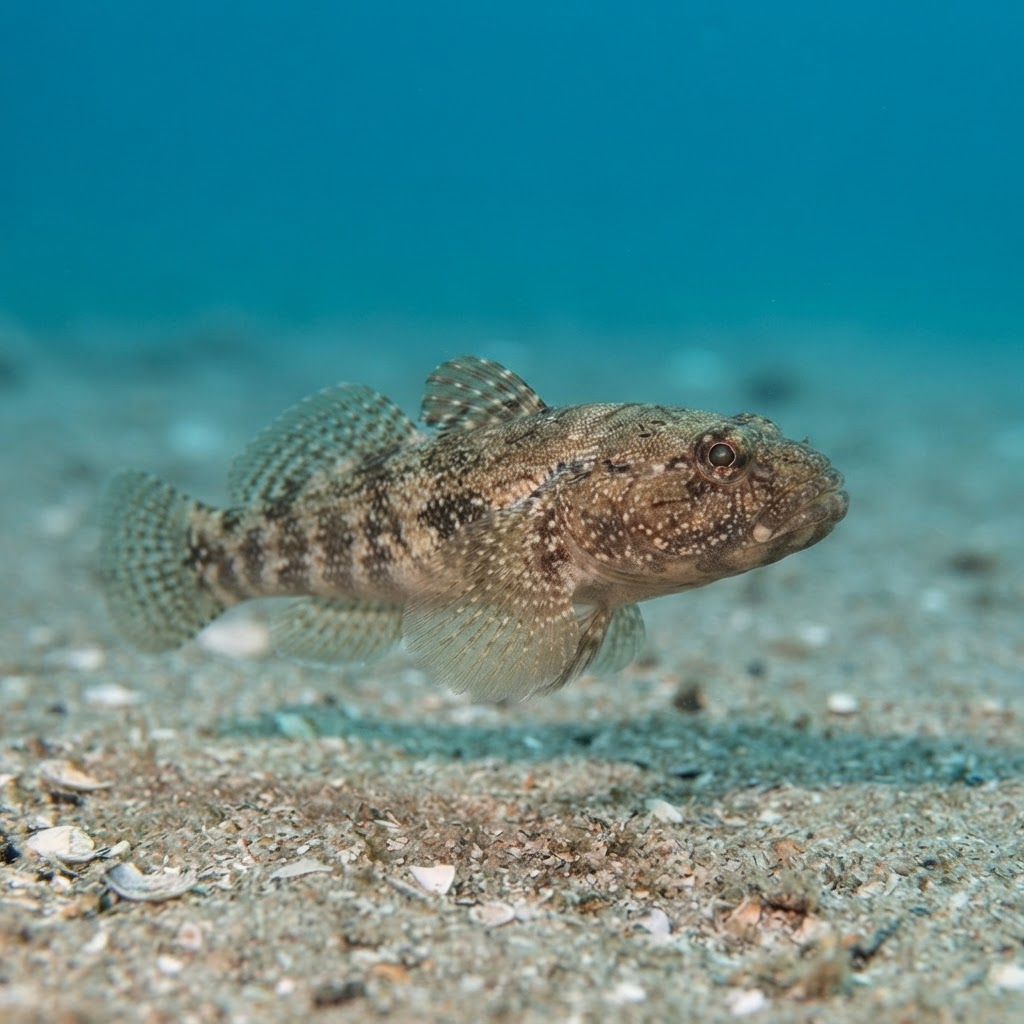
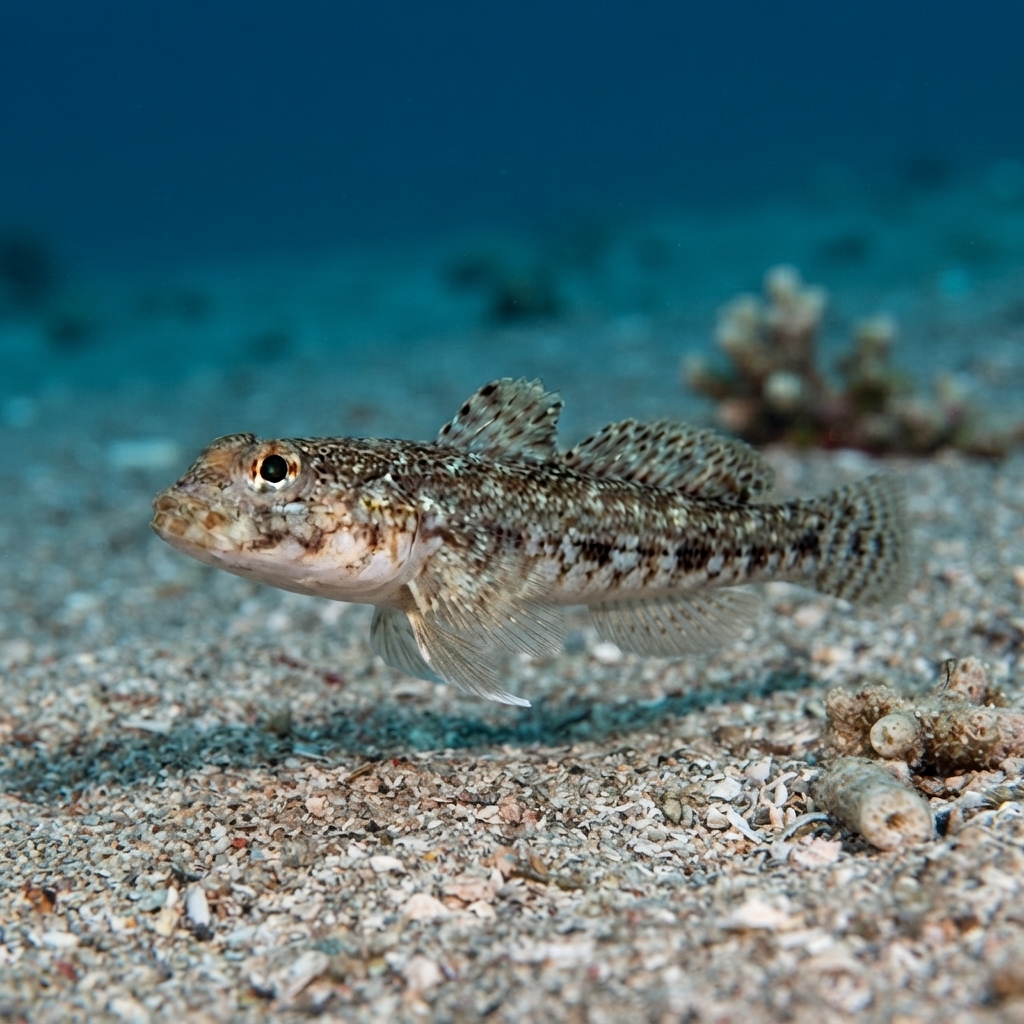
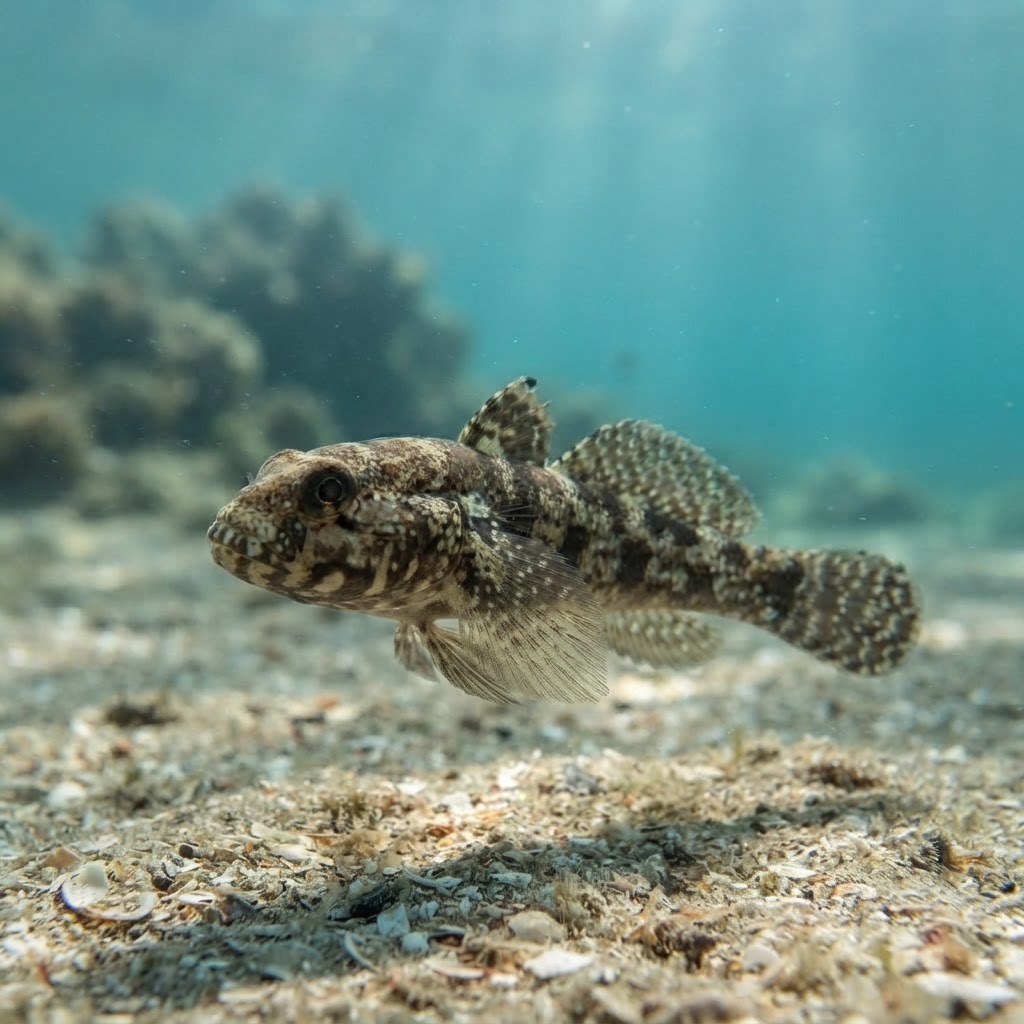
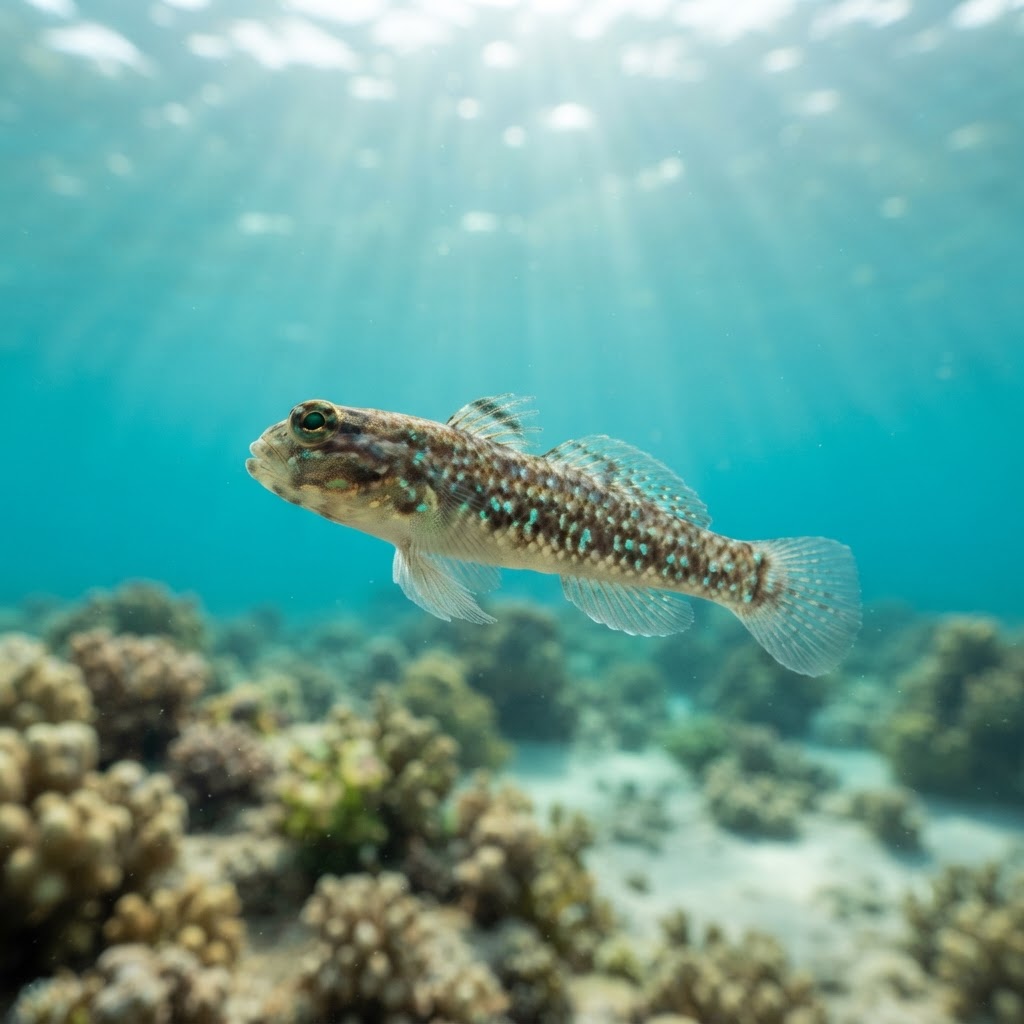
A tiny goby, barely 4 cm, with a translucent pale grey to sandy body that lets it blend straight into rubble and sand patches. Look for two small dark spots stacked vertically on the upper base of the tail, the marking that gives this goby its name. It perches rather than swims freely, propped up on its pelvic fins with its head raised, watching the sand around it.
Expect to find it perched motionless on open sand or rubble close to the reef base, tail flicking occasionally as it holds position rather than cruising about. It tends to sit tight rather than dart off when divers approach slowly, which makes it an easy macro subject once you spot the pale, low-lying shape against the sand. Most sightings come from divers working slow, close looks along sand channels rather than mid-water scanning.
Its pale, sand-matched colouring and habit of perching still rather than swimming make it one of those species divers walk right past until they learn to scan sand patches at eye level instead of the reef face.
No clear season shows up in the sightings, and its comfort range of 26 to 28.2 C matches Caribbean reef water most of the year, so any month works for a look.
Reef neighbours a diver could mistake it for. Use the identification notes above to tell them apart.
Most reliably logged in the British Virgin Islands, especially around Tortola and the Southern Islands, where it turns up on sand and rubble patches at a large share of dive sites. Beyond the BVI it is a steady find on Florida's reefs, at Belize's Lighthouse Reef, and around Honduras's Bay Islands, with smaller but real populations noted in the US Virgin Islands, Martinique, Dominica, and Mexico's Yucatán Peninsula.
Mapping where Colon Goby is logged…
Its strongest populations are around Tortola and the Southern Islands in the British Virgin Islands, with reliable sightings also in Florida, Belize's Lighthouse Reef, and Honduras's Bay Islands.
There is no strong seasonal pattern in the sightings, and it favours warm water between 26 and 28.2 C typical of Caribbean reefs year-round, so it can be found in most months.
Look for a tiny, pale, sand-coloured goby around 4 cm long perched on sand or rubble with two small dark spots stacked on the upper tail base. It sits propped on its fins rather than swimming in open water, which helps separate it from more active reef gobies.
It stays small, reaching only around 4 cm in length, so it is very much a macro subject rather than something spotted from a distance.
No, it poses no risk to divers. It is a tiny, non-aggressive sand dweller that simply holds still as you pass.
Site and sighting data is aggregated from diver logs, iNaturalist and GBIF. For taxonomy and conservation status:
Slender Goby
806 sites