Chromodoris colemani
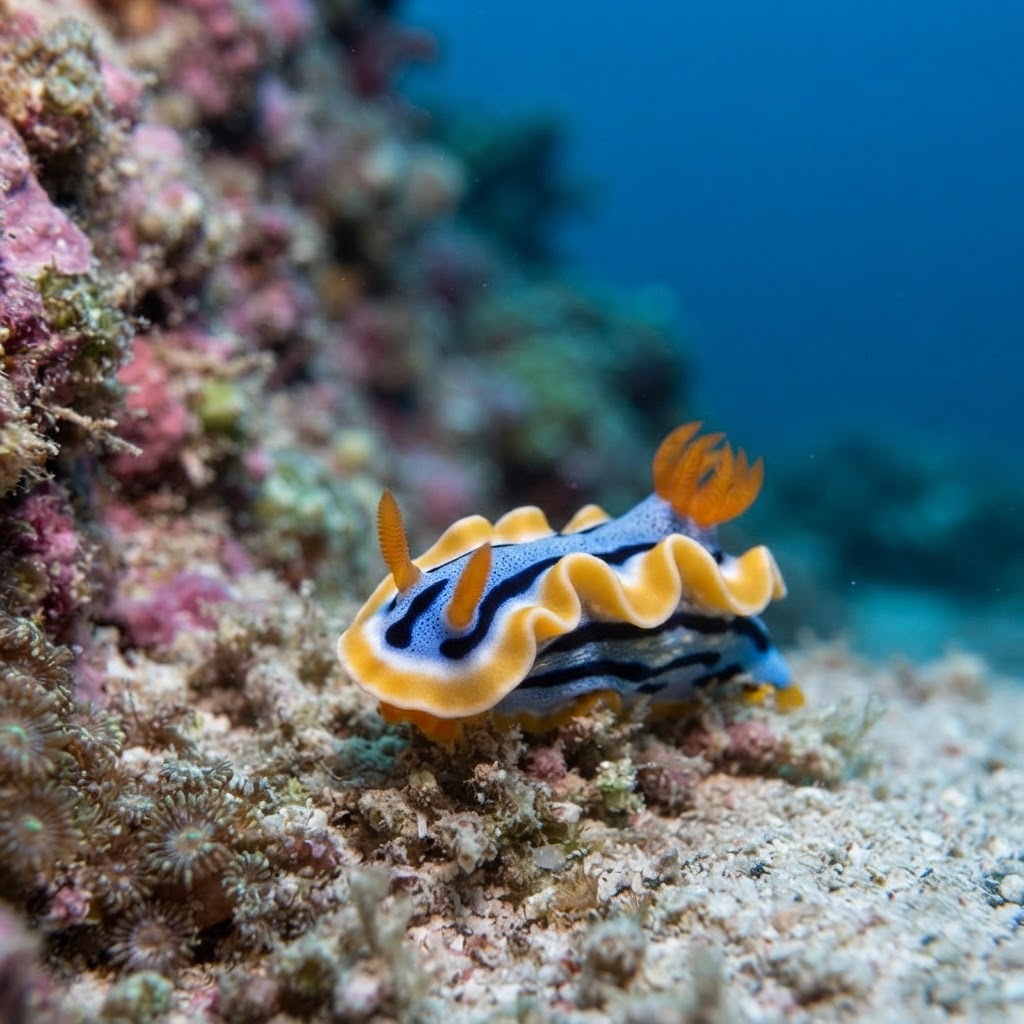
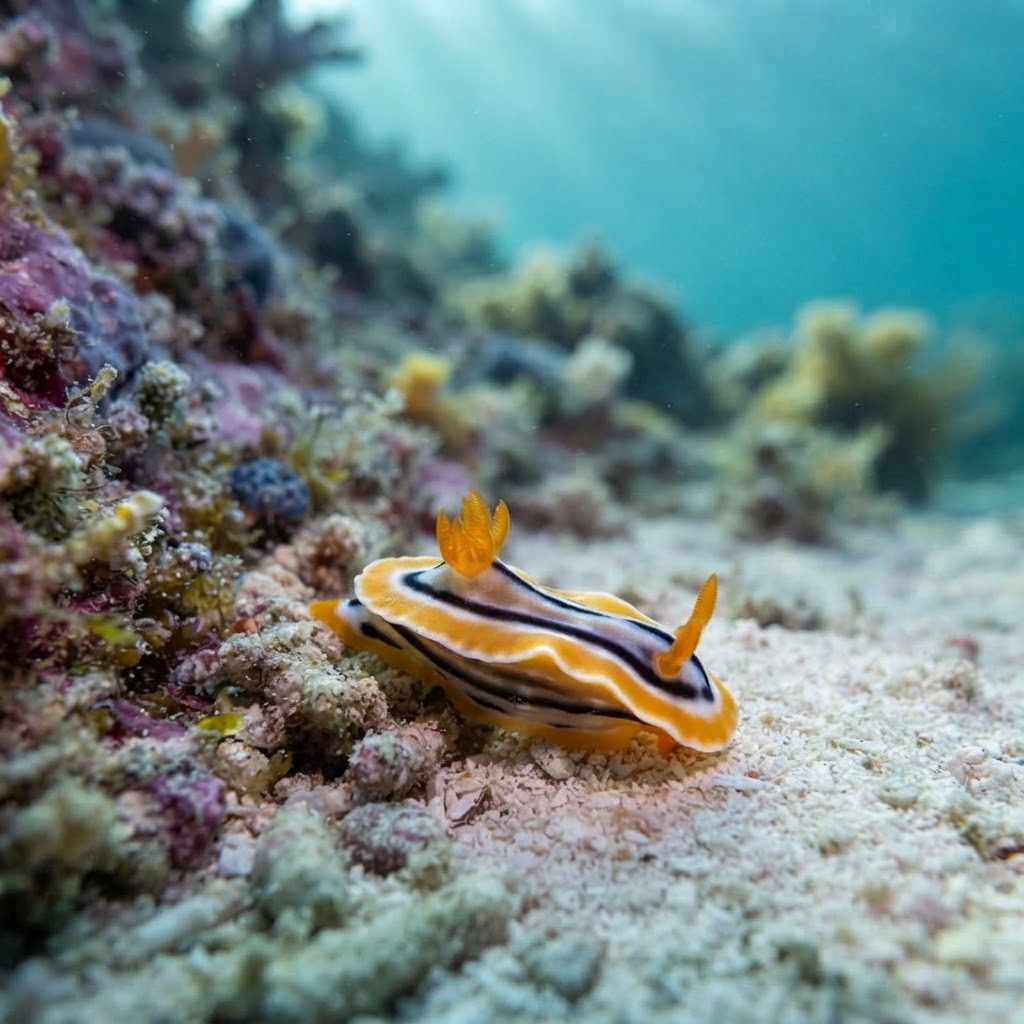
White ridged nudibranch under 1cm found on Okinawa reefs and in the Visayas, watch for the raised orange-tipped ridges.
At about a centimetre long, this nudibranch is easy to walk right past unless you know to check patches of sponge and algae closely. The body is white to pale cream with a distinctive raised network of ridges tipped in orange or yellow running down the back, giving it a slightly quilted look rather than a flat, smooth mantle. The gills and rhinophores (the paired sensory horns on the head) are typically edged in the same orange tone, which is the quickest visual cue against the plain background colour.
Divers find this one parked on sponge or algae-covered rock and rubble in shallow water, usually between 3 and 11 metres, moving at the unhurried pace typical of nudibranchs grazing on sessile prey. It shows no reaction to divers beyond the usual slow retraction if directly touched, and macro photographers tend to spot it during slow, close scans of the substrate rather than mid-water. Most logs describe it as an uncommon find, so patience and a careful eye on textured surfaces pay off more than luck.
Like other Chromodoris species, it likely feeds on specific sponges and stores or modifies their chemical defences in its own tissue, which is part of why the bright colouration can act as a warning rather than camouflage.
Sightings sit comfortably within a 23.9 to 29.9C range, which covers most tropical and subtropical reef conditions year-round, and the data shows no strong seasonal spike, so any month is a reasonable bet at the sites above. Treat it as a species to look for on any dive rather than one tied to a particular season.
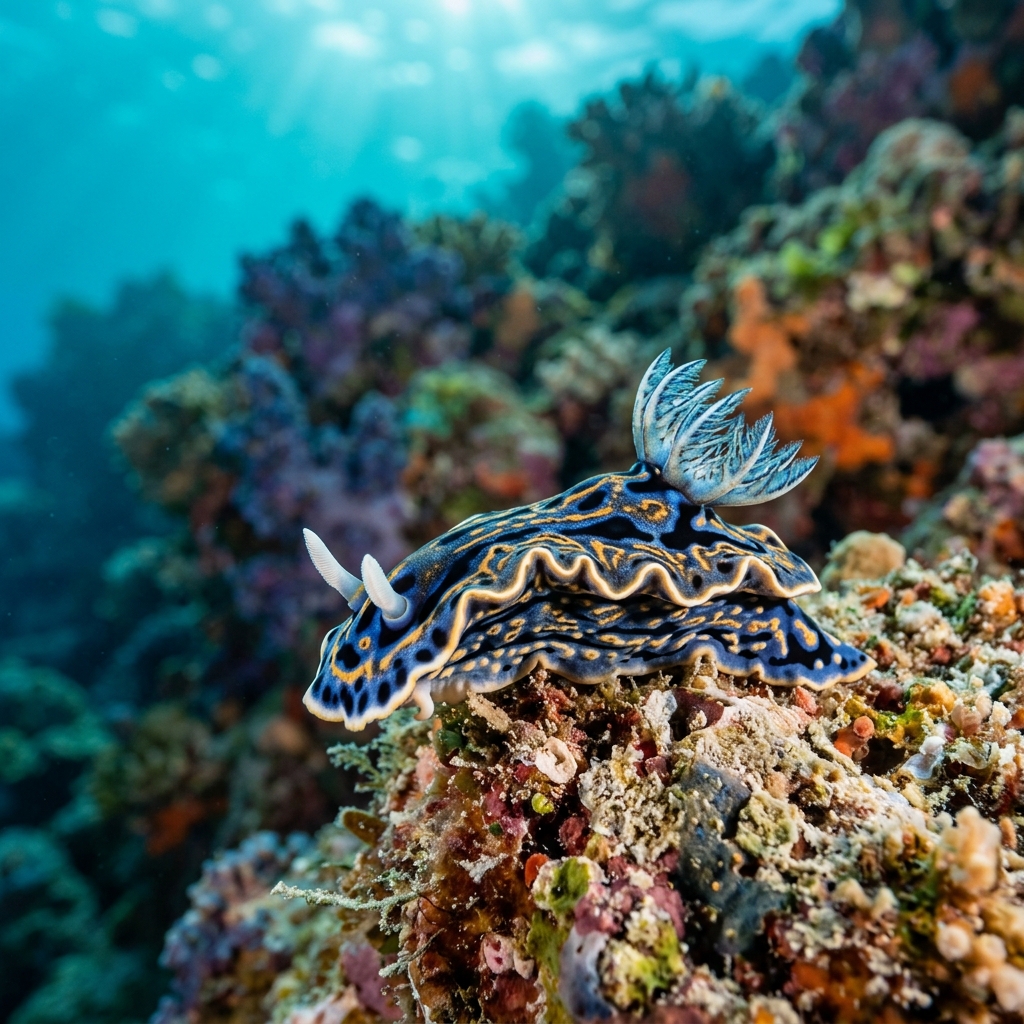
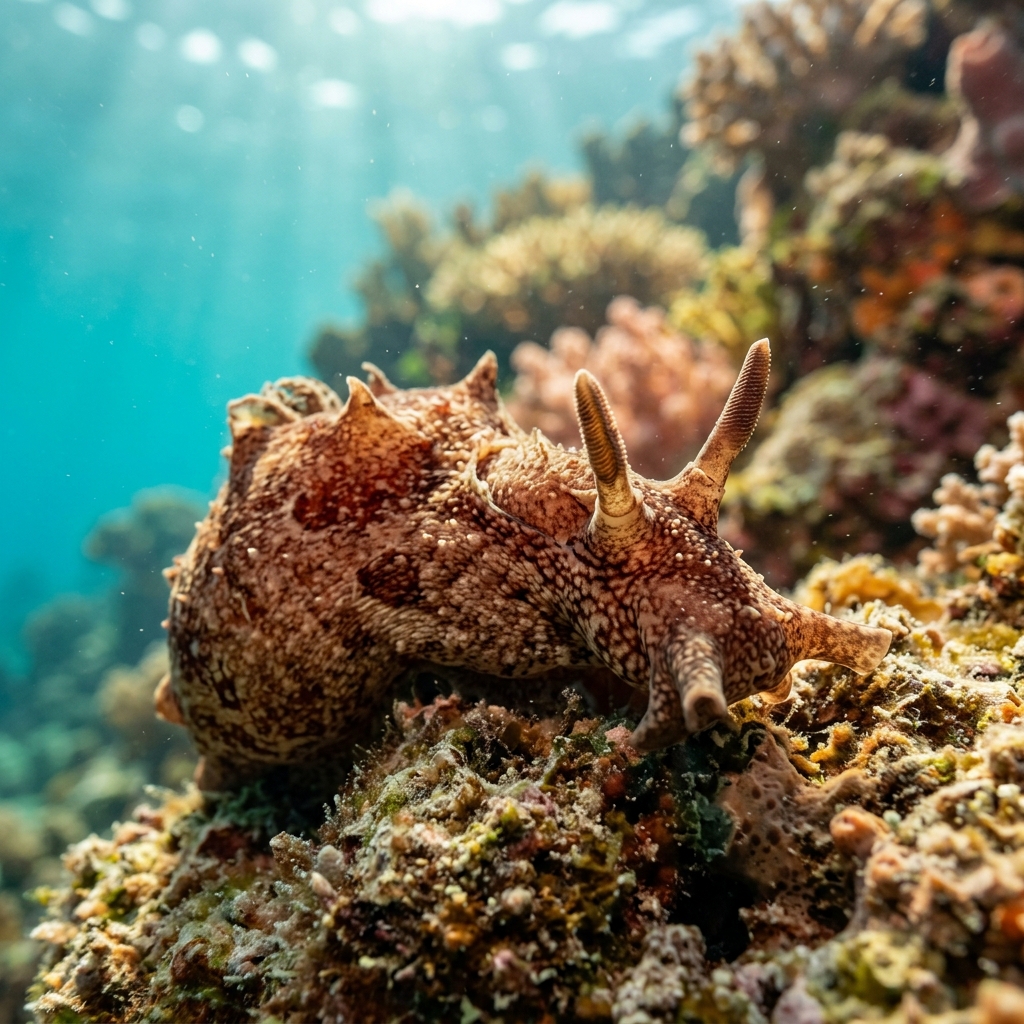
Reef neighbours a diver could mistake it for. Use the identification notes above to tell them apart.
Most reliably logged across Okinawa and the Ryukyu Islands in Japan, which accounts for the bulk of sightings, with the Visayas and Luzon in the Philippines close behind as the other strong hotspot. Smaller but real populations turn up in Western Australia, Kwajalein Atoll in the Marshall Islands, and Xiaoliuqiu in Taiwan.
Mapping where Coleman's Chromodoris is logged…
The strongest populations are around Okinawa and the Ryukyu Islands in Japan, with the Visayas and Luzon in the Philippines also reliable. Smaller numbers are logged in Western Australia, Kwajalein Atoll, and Taiwan.
There is no clear seasonal pattern in the sighting data, and its comfortable temperature range of roughly 24 to 30C covers these reefs year-round, so it can turn up on any dive in any month.
Look for a tiny white to cream nudibranch, about a centimetre long, with raised ridges along its back tipped in orange or yellow. The rhinophores and gills usually carry the same orange edging, which helps separate it from plainer white species.
It is a small species, typically reaching only about 1 centimetre in length, so it takes a careful, close look at the substrate to spot one.
No, it poses no danger to divers. It is a slow-moving, benthic species with no sting or bite risk, best appreciated with a macro lens rather than handled.
Like most Chromodoris nudibranchs, it almost certainly grazes on specific sponge species, and may retain chemical compounds from that diet as a form of chemical defence, which is thought to relate to its bright warning colouration.
Site and sighting data is aggregated from diver logs, iNaturalist and GBIF. For taxonomy and conservation status:
Light-spotted Aegires
3,168 sites