Stegastes xanthurus
Small brown reef guardian common in Florida and the BVI, holding tight to its patch of coral year-round in 22 to 29 C water.
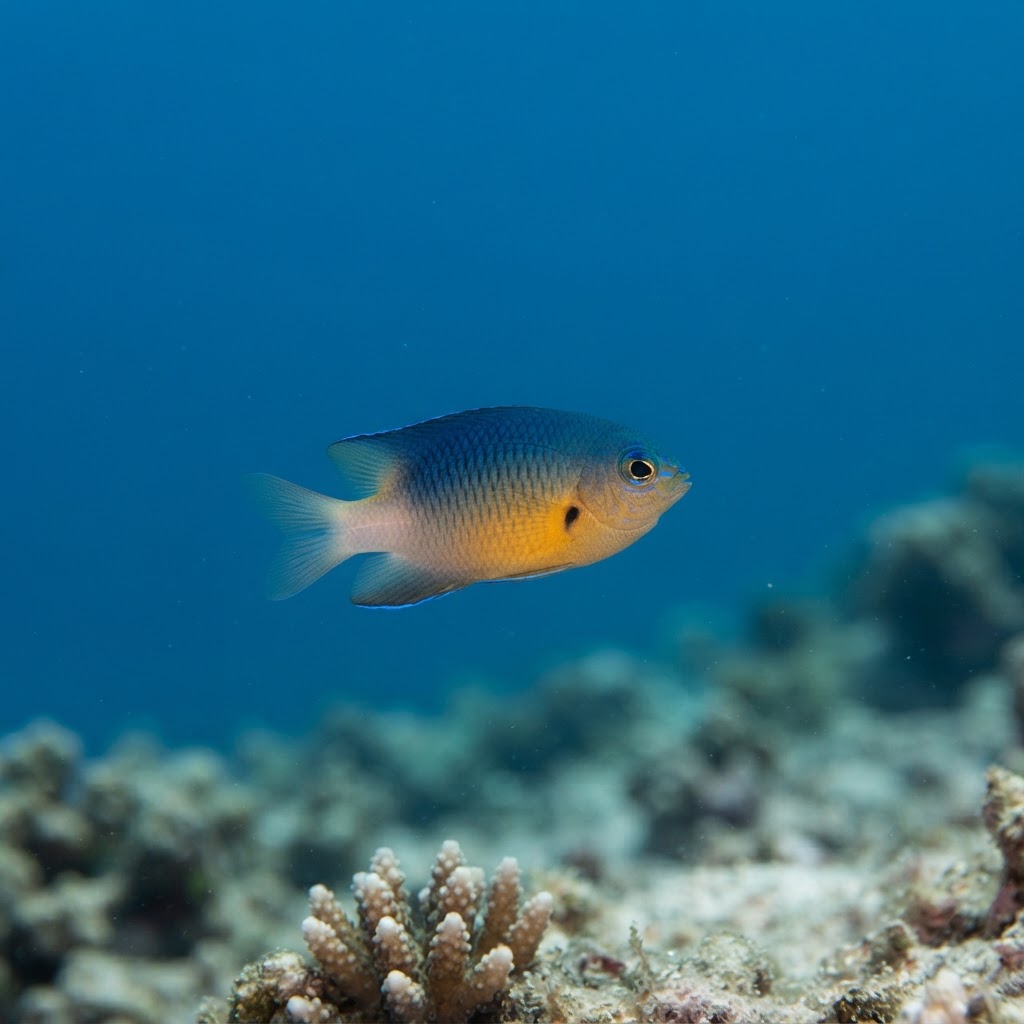
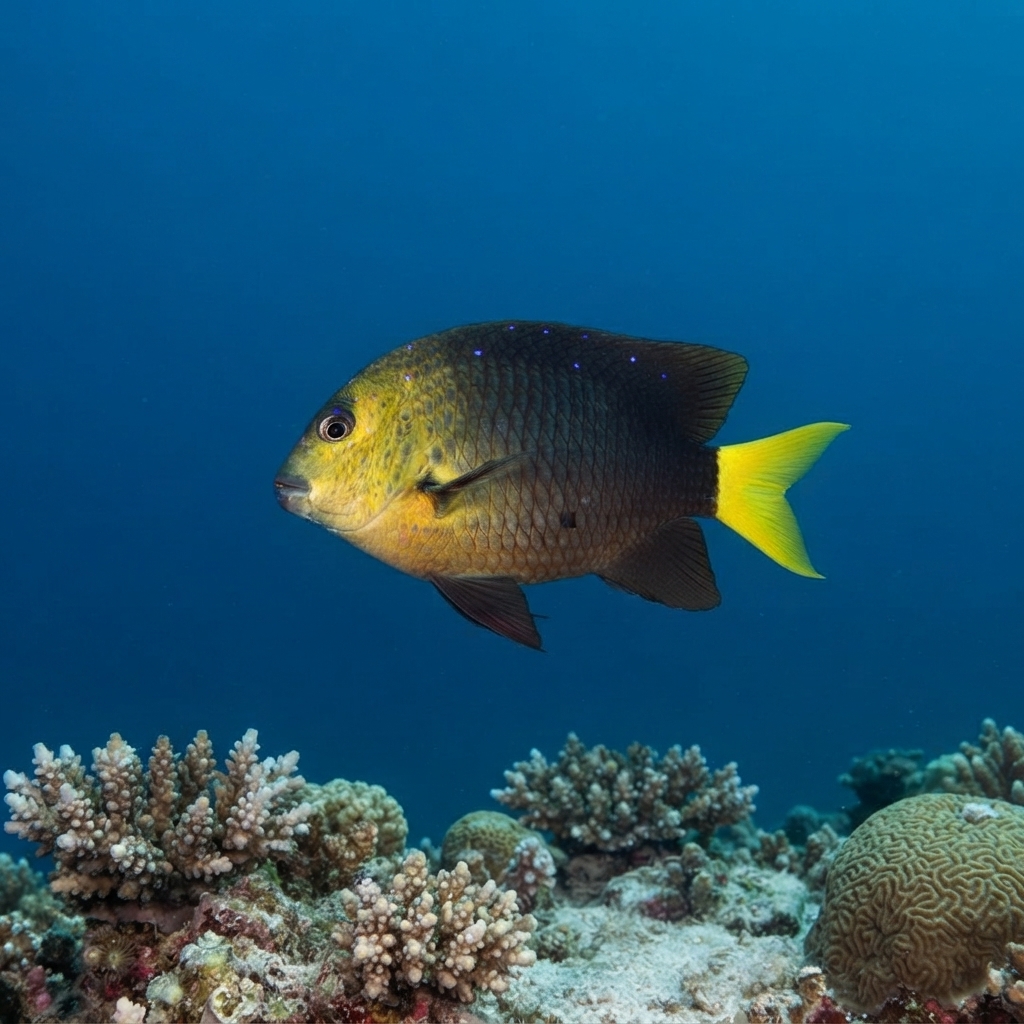
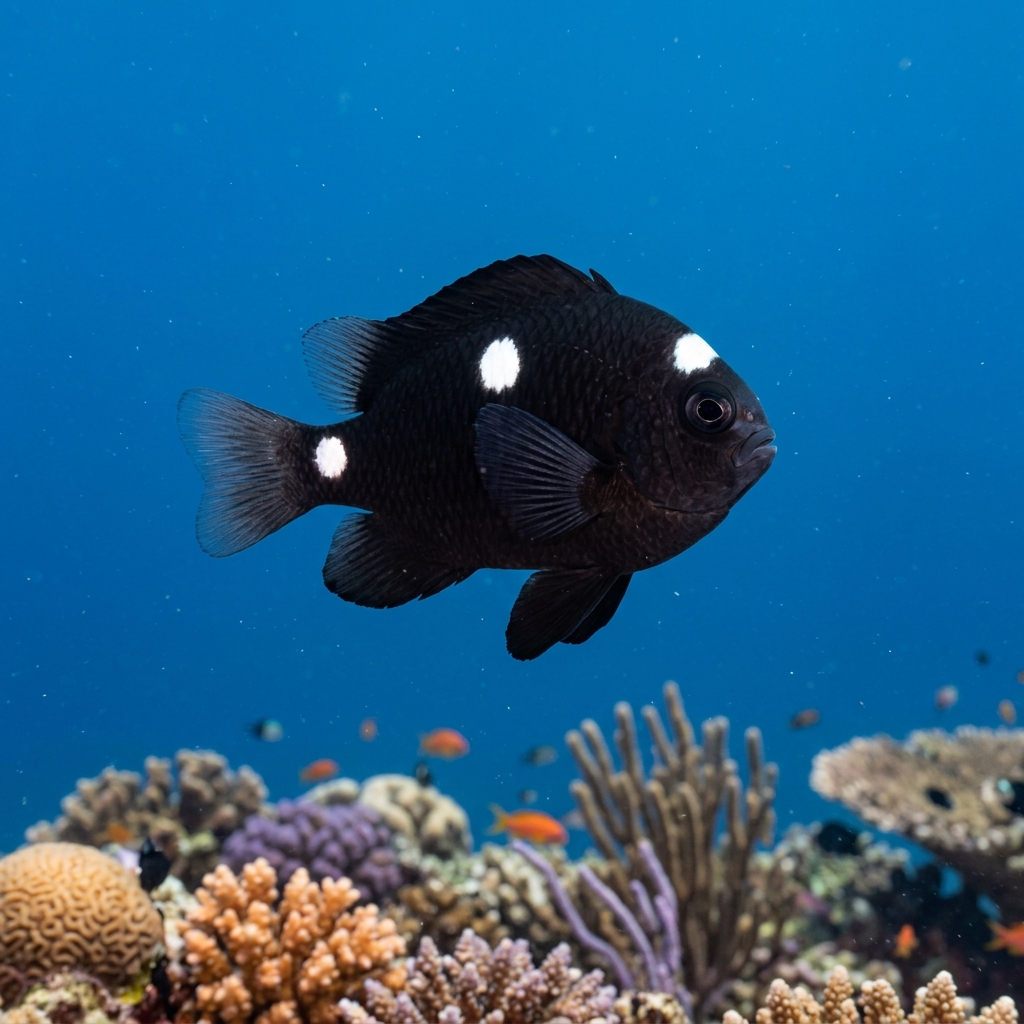
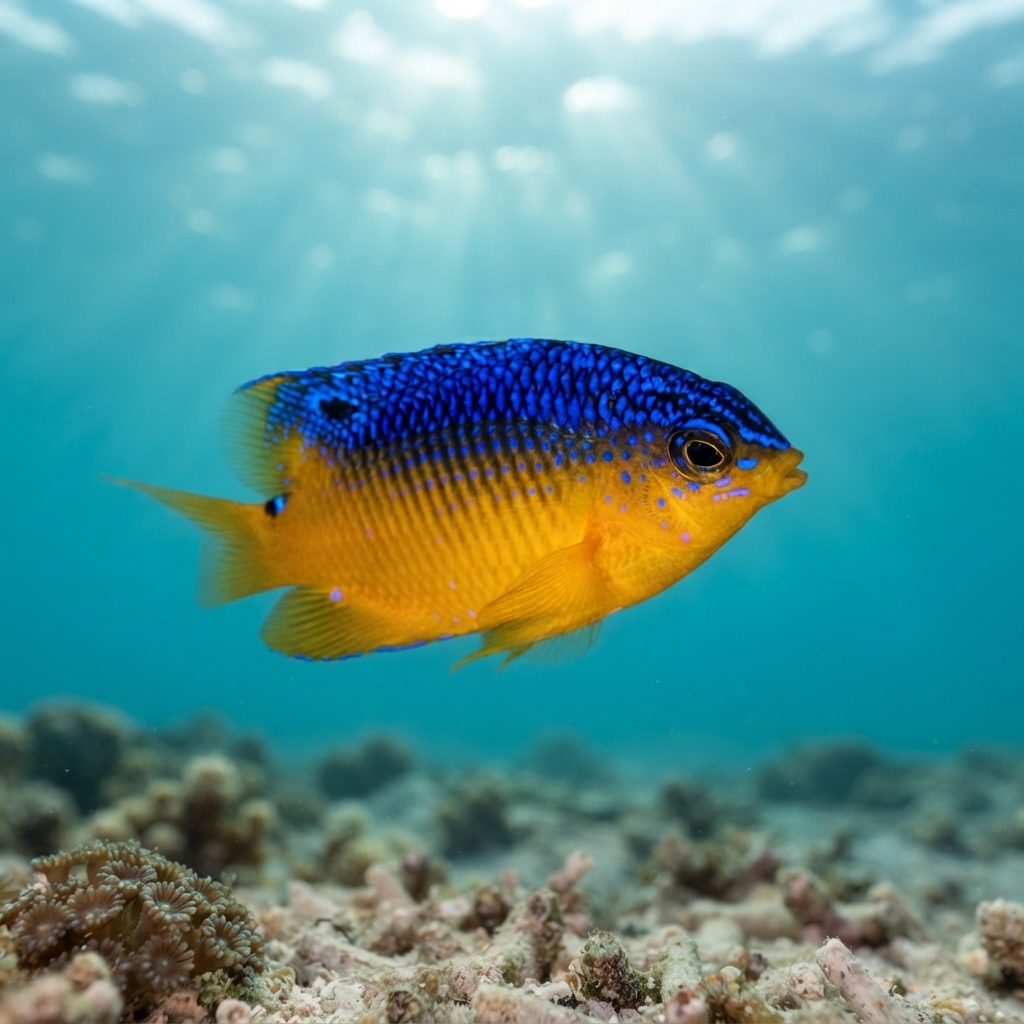
A small, deep-bodied fish around 4 cm, coloured plain brown to dusky olive with a paler tail base and a faint dark spot near the top of the gill cover. Body shape is the classic damselfish oval, blunt-nosed and flattened side to side, held close to a chosen patch of coral or rubble. Look for the subtle yellow-brown wash on the tail that gives this species its name, since overall it is a duller, less flashy fish than many of its reef neighbours.
Watch the substrate rather than the water column: this damselfish sticks close to a small patch of reef or rubble it treats as home turf, darting out to nip at algae and retreating just as fast. It's territorial for its size and will make short, quick charges at other small fish or even a diver's finger that strays too close to its patch. Most sightings are on shallower reef structure where algae growth gives it something to defend.
Like other Stegastes damselfish, it actively tends and defends small algae patches on the reef, effectively farming its own food supply and chasing off grazers that try to move in.
No clear seasonal pattern shows up in sightings, so treat this as a year-round fish on Caribbean and Florida reefs. Water in its comfort range runs 22.3 to 28.8 C, which covers those reefs for most of the year, so timing your trip around this species specifically isn't necessary.
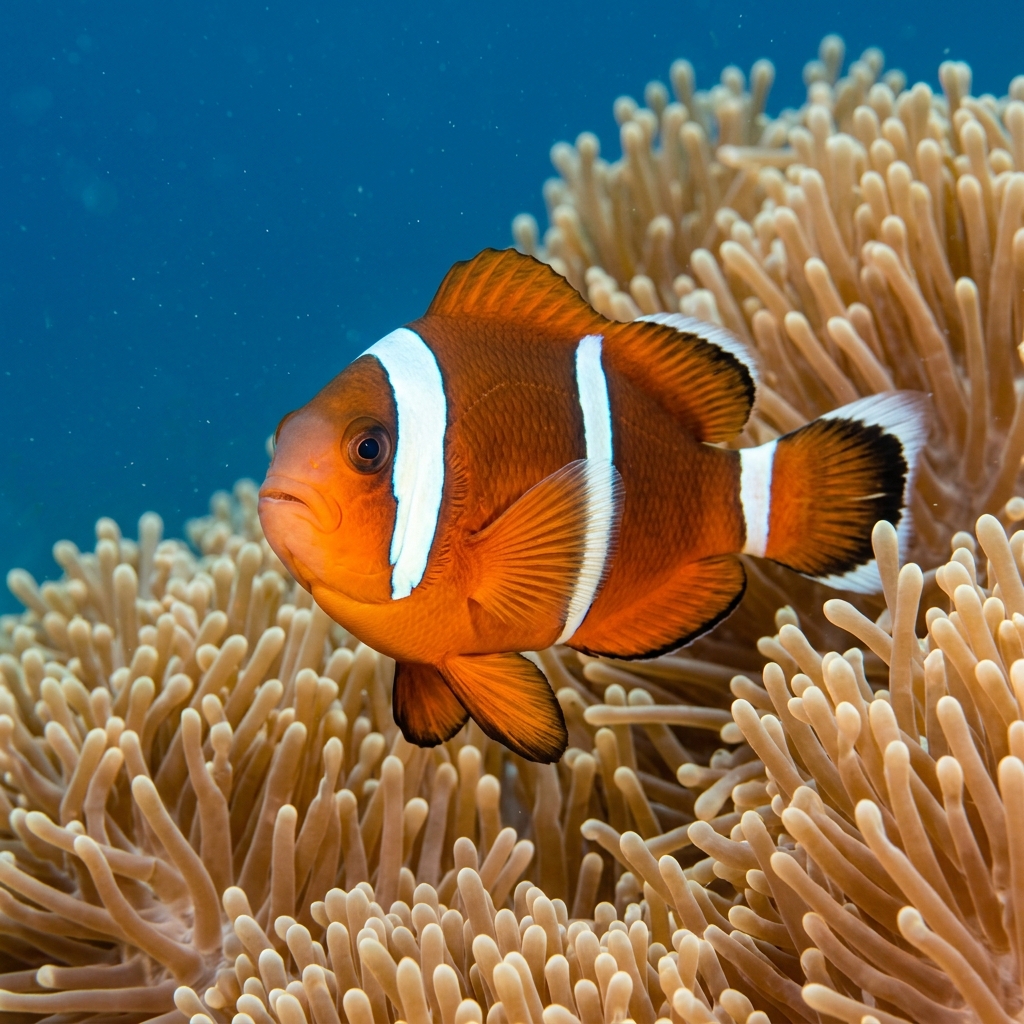
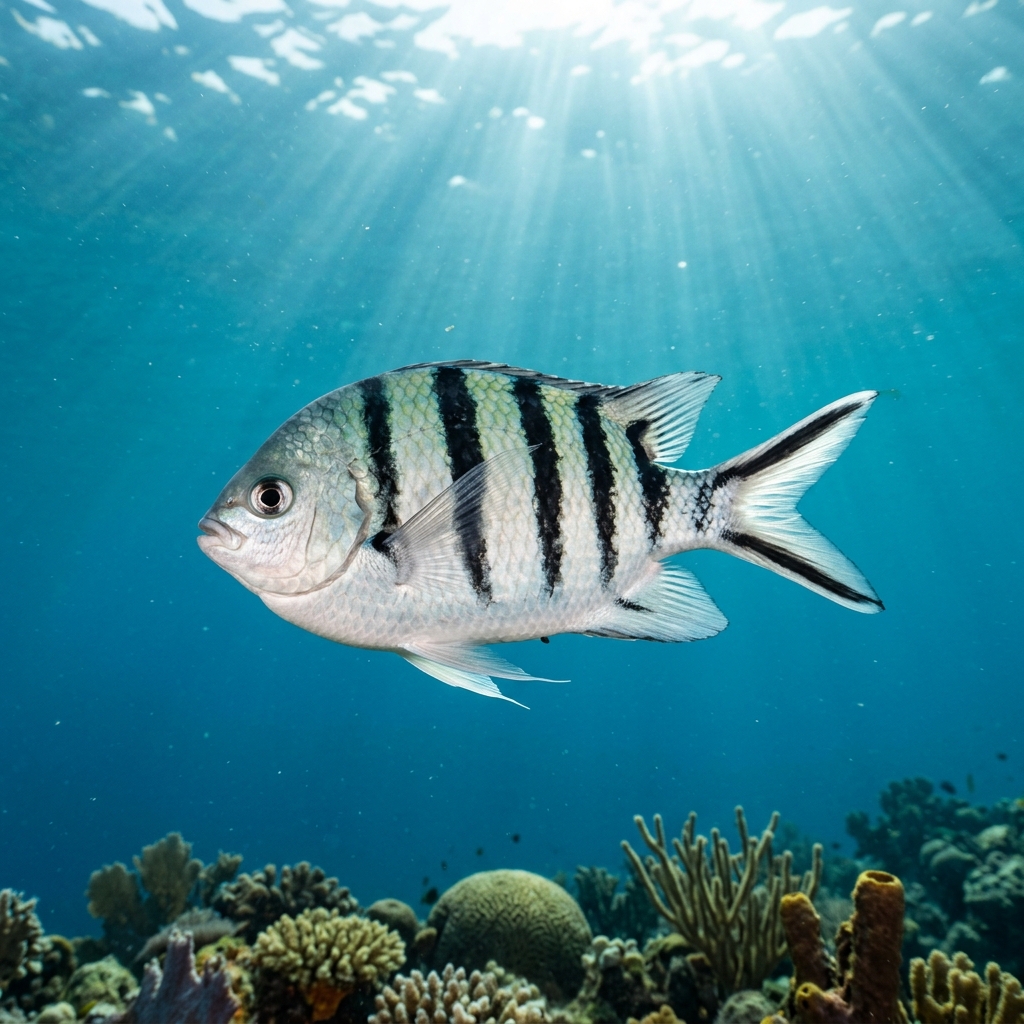
Reef neighbours a diver could mistake it for. Use the identification notes above to tell them apart.
Most reliably logged on Florida's reefs in the United States, with strong numbers also around Tortola and the southern islands of the British Virgin Islands. Sint Eustatius, Saint-Pierre in Martinique, and Saint Martin round out the other consistent spots, with smaller but real populations in the US Virgin Islands, Anguilla, and Panama.
Mapping where Cocoa Damselfish is logged…
Florida's reefs in the United States are the most consistent place to find them, followed by Tortola and the southern British Virgin Islands. Sint Eustatius, Martinique, and Saint Martin also have reliable populations.
There's no strong season in the data, so they're present year-round on reefs within their 22.3 to 28.8 C comfort range. Any time you'd normally dive Florida or the eastern Caribbean works.
Look for a small, oval, brownish fish around 4 cm long holding position over a patch of reef or rubble. The tail base often shows a subtle yellow-brown tinge, and it tends to dart out aggressively at anything that nears its patch.
They stay small, typically around 4 cm as adults, making them easy to overlook against busier reef life.
No, they pose no danger to divers. They may dart at your hand or camera if you get close to their patch, but this is just territorial bluffing, not a real threat.
Site and sighting data is aggregated from diver logs, iNaturalist and GBIF. For taxonomy and conservation status:
Dascyllus
3,697 sites