Coris aygula
Bulging lips, humped forehead, blue-green scribbles: clown wrasse turn up often in South Sinai and year-round on warm Indo-Pacific reefs.
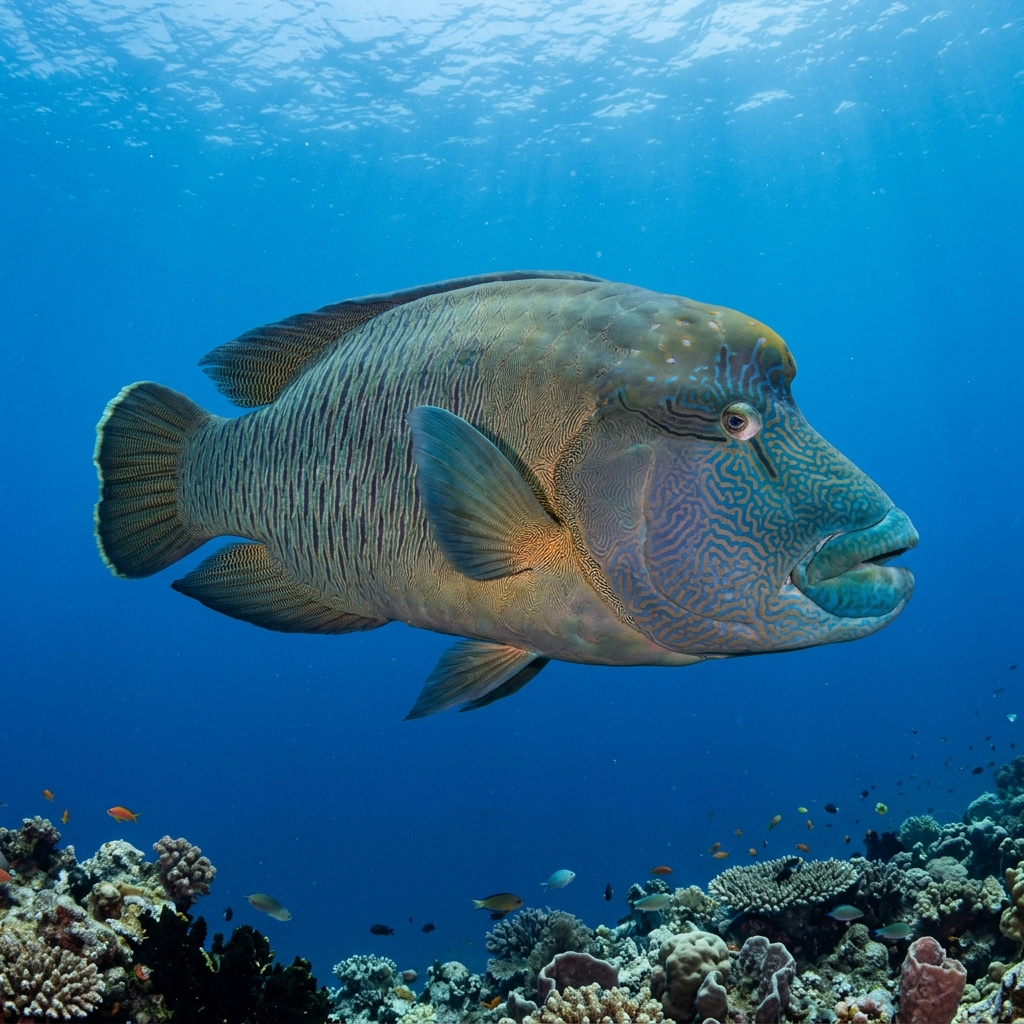
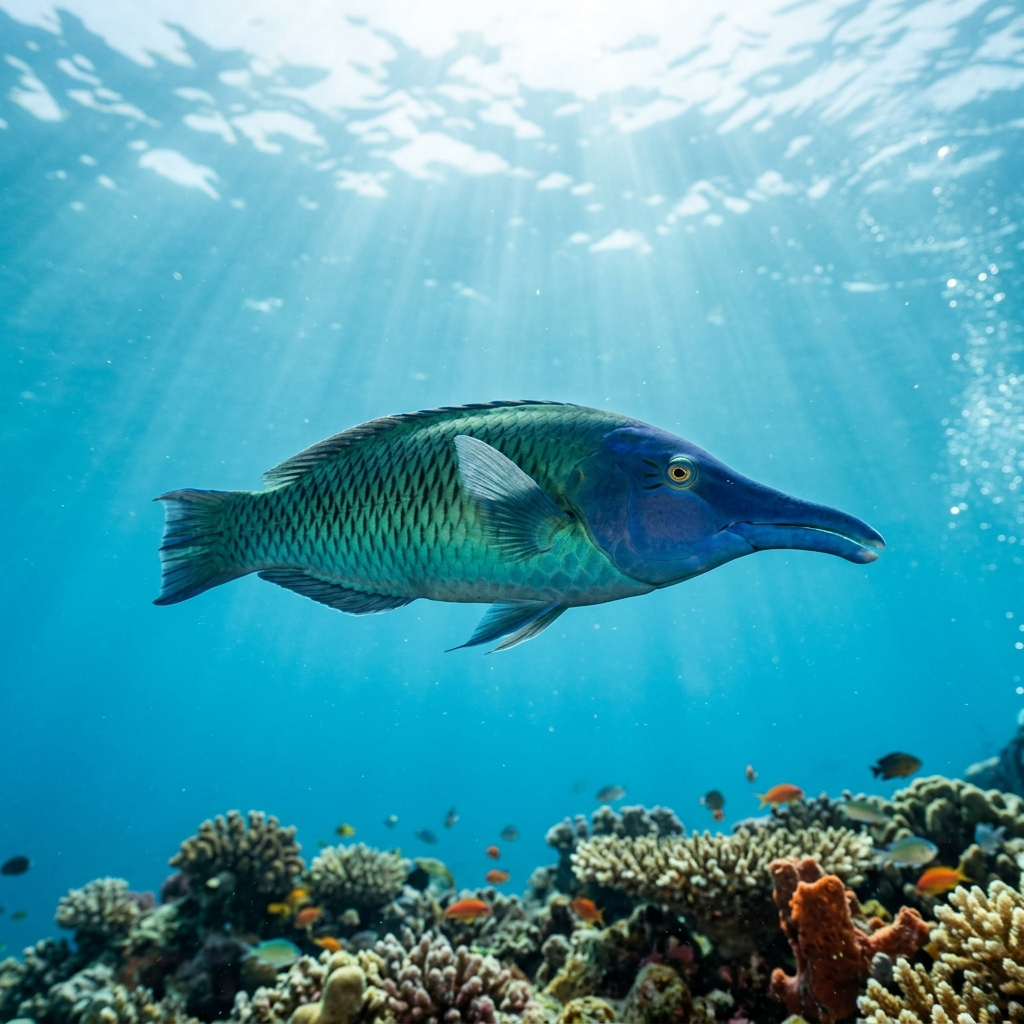
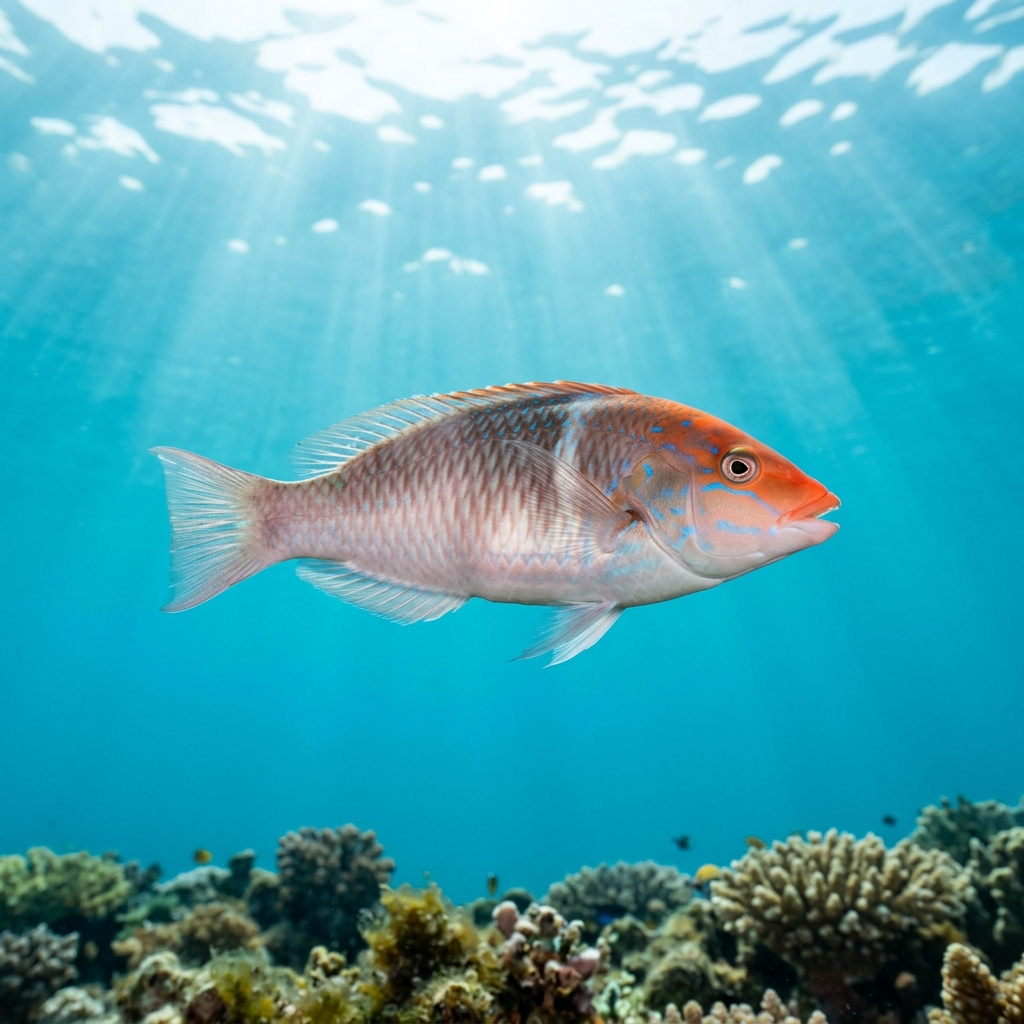
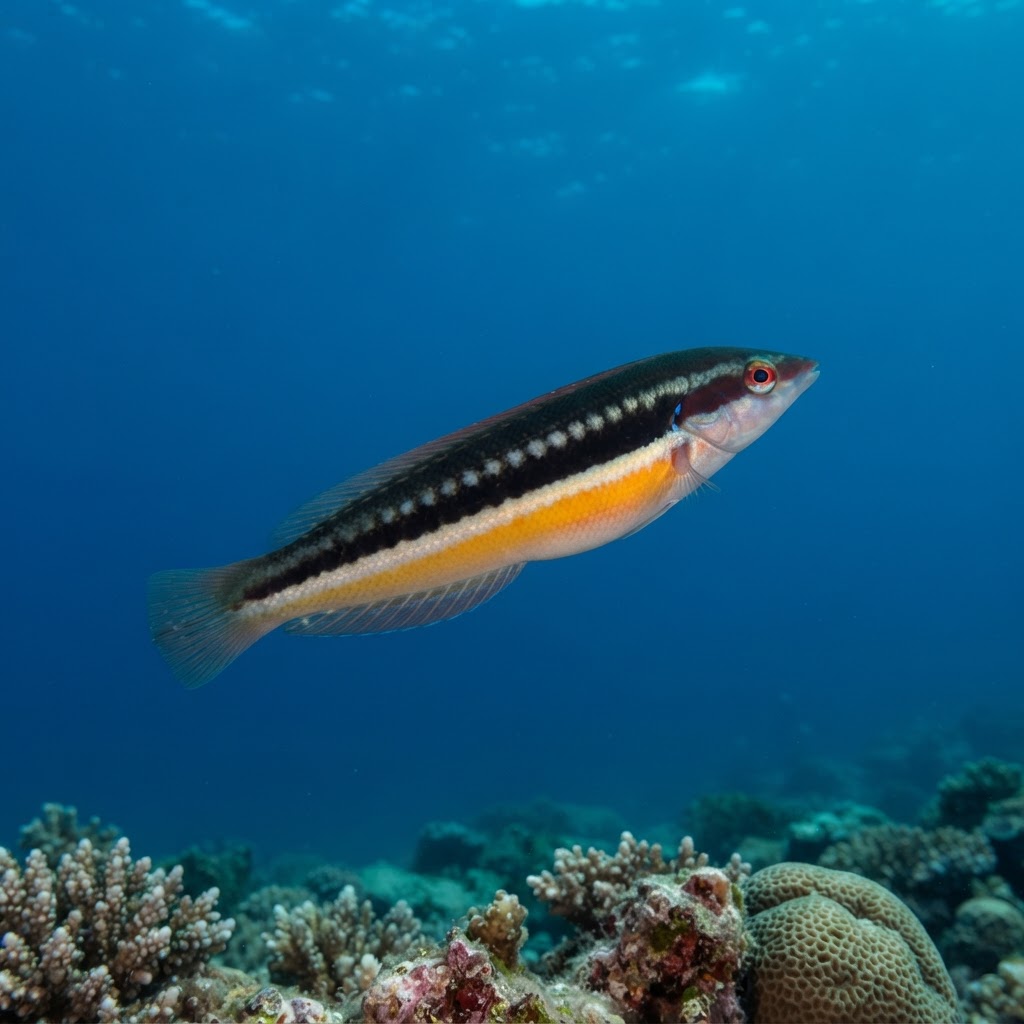
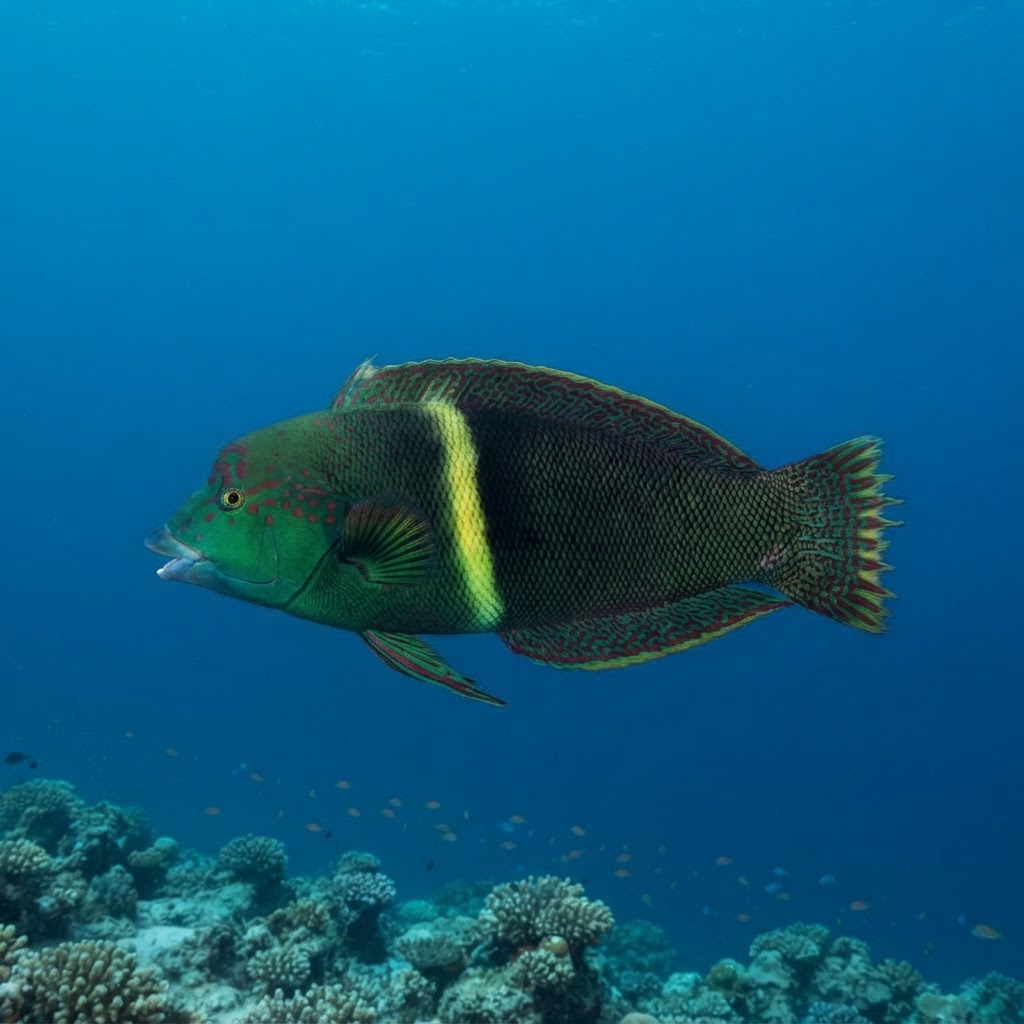
Look for a heavy-bodied wrasse with a noticeably bulging, humped forehead and thick lips, growing large enough to stand out against most reef fish around it. Adults show a pale body etched with green to blue scribbled lines and blotches, with a dark saddle-like patch often visible near the tail. Juveniles look completely different, with bold white, orange and black blotches that make them easy to mistake for a separate species until you know what to look for.
Expect to see clown wrasse cruising slowly over open reef and sandy patches, nosing into rubble and coral heads as they hunt, rather than schooling or holding station. They are generally unbothered by divers and will often continue foraging at a comfortable distance rather than bolting, though larger adults tend to keep more space between themselves and a diver than juveniles do. Most sightings come from mid-depth reef areas within the 2 to 30 m range, at any time of day when they are actively feeding.
Adult and juvenile clown wrasse look so different in colour and pattern that they were historically described as two separate species, a common story among large wrasses that change dramatically as they grow.
There is no clear seasonal pattern in the sightings data, and with a comfortable range of roughly 24.6 to 29 C, this fish is present on tropical and subtropical reefs throughout the year. Plan around good visibility and calm conditions at your chosen site rather than a particular month.
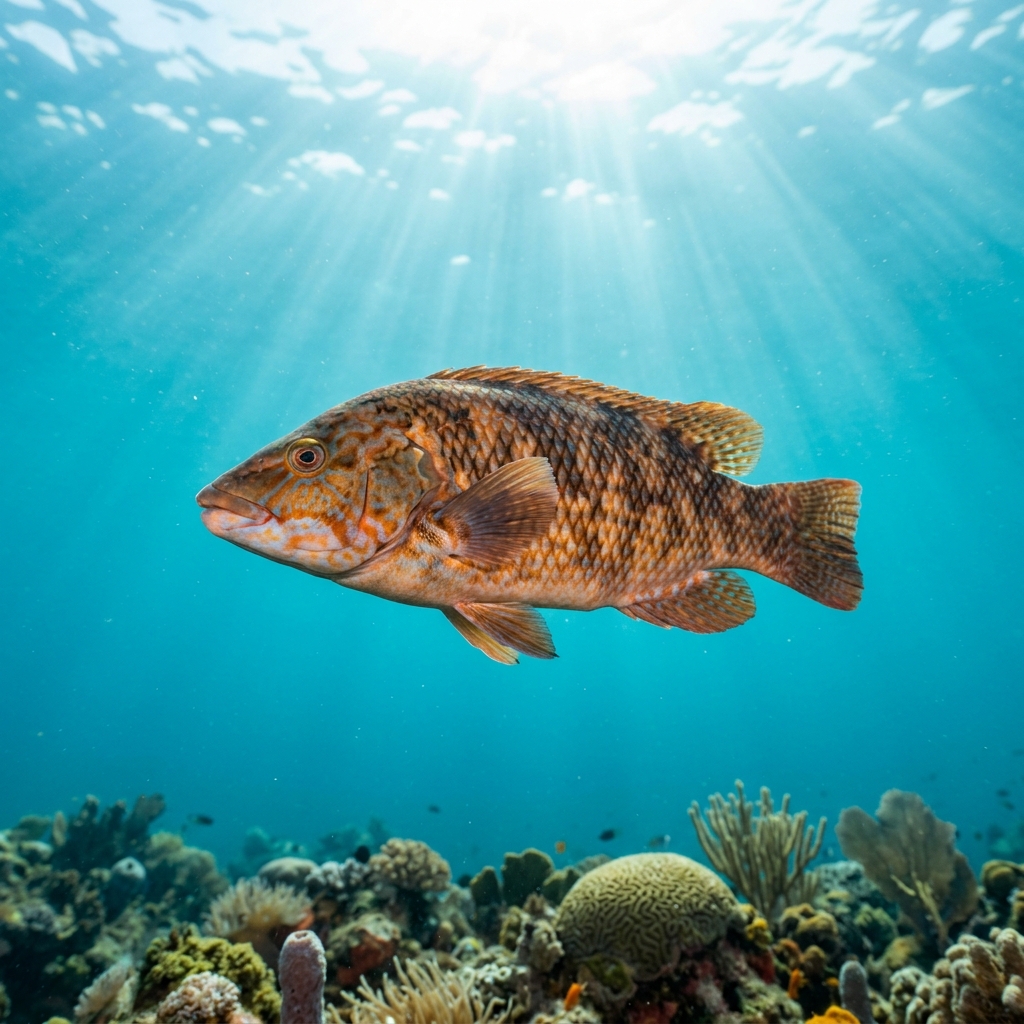
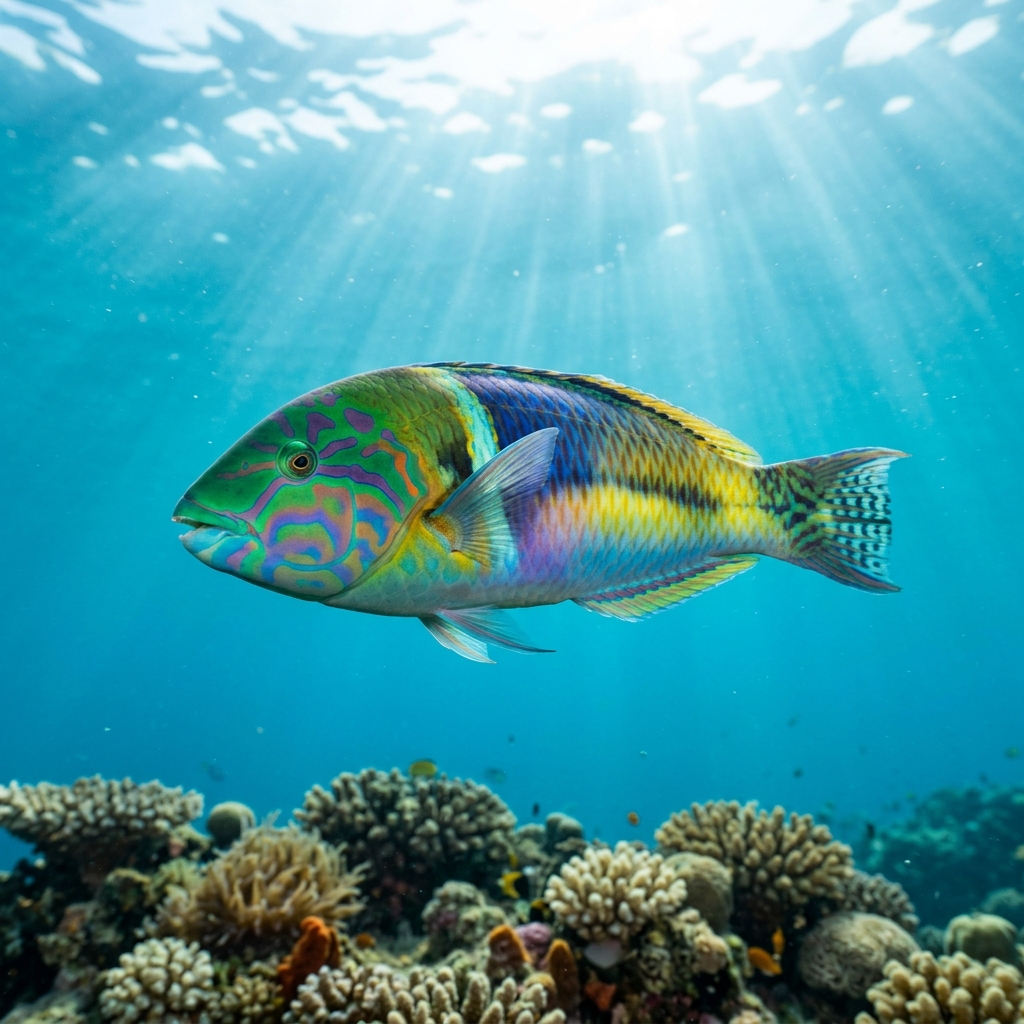
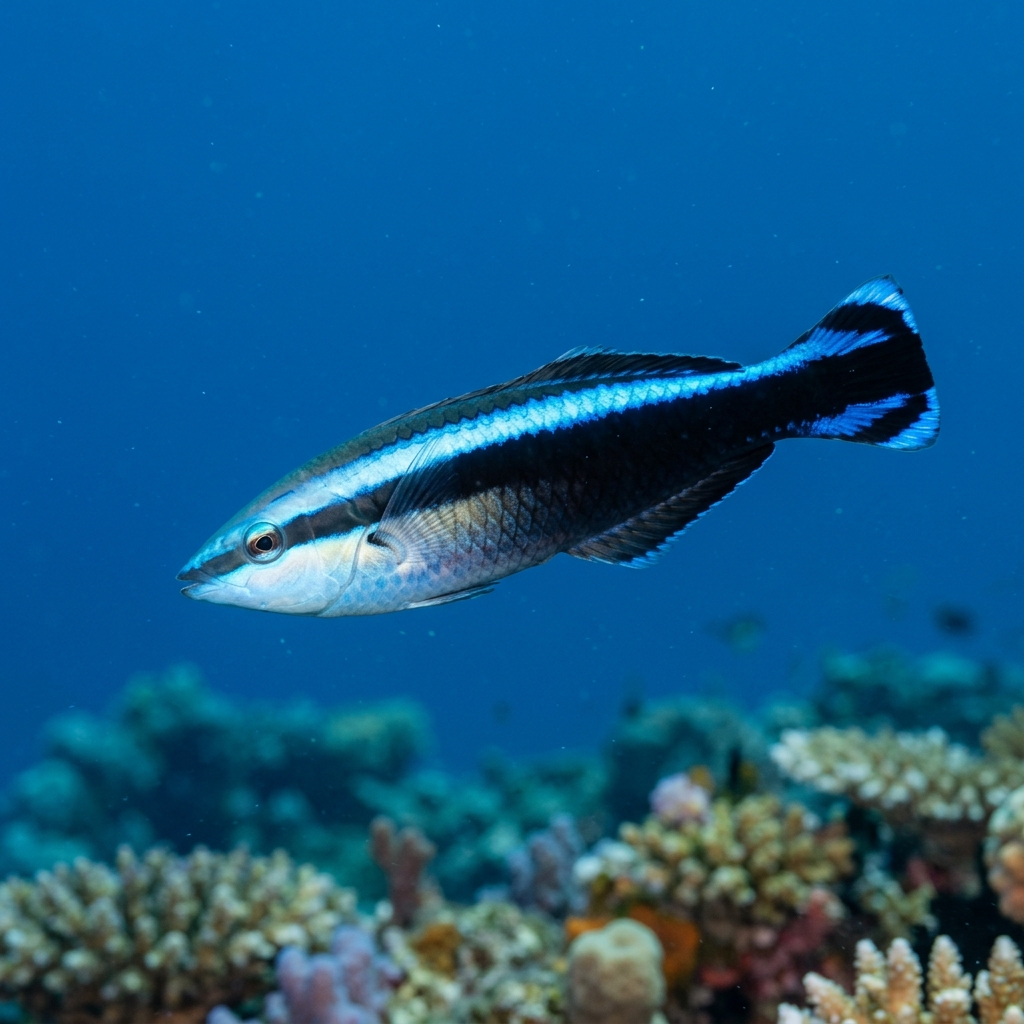
Reef neighbours a diver could mistake it for. Use the identification notes above to tell them apart.
Clown wrasse are most reliably logged in Egypt, especially South Sinai, Marsa Alam and the Deep South, and the Red Sea Riviera, where they turn up on a large share of reef dives. Outside the Red Sea they show up with good consistency in French Polynesia's Society Islands, Okinawa and the Ryukyu Islands in Japan, and around Mauritius's Flic-en-Flac, with further sightings in Western Australia, Reunion, and Israel's Eilat coast.
Mapping where Clown Coris is logged…
South Sinai, Marsa Alam and the Red Sea Riviera in Egypt are the most consistent places to find them, alongside French Polynesia's Society Islands, Okinawa in Japan, and Mauritius's Flic-en-Xac coast.
There is no strong seasonal pattern in sightings, and the fish tolerates a wide temperature range of roughly 24.6 to 29 C, so it can be seen on reef dives at any time of year.
Adults have a heavy body, a bulging humped forehead, thick lips, and pale skin covered in green or blue scribble-like markings, often with a dark patch near the tail. Juveniles look nothing like adults, showing bold white, orange and black blotches instead.
They can reach around 84 cm in length, making them one of the larger wrasses a diver is likely to encounter on a reef.
Juveniles are patterned so differently from adults, with bold blotches of white, orange and black instead of the adult's scribbled green lines, that early naturalists classified them as separate species.
Site and sighting data is aggregated from diver logs, iNaturalist and GBIF. For taxonomy and conservation status:
Bird Wrasses
3,632 sites