Dascyllus carneus
A small grey-and-white damselfish common on Maldives reefs, sheltering in coral heads at 25.9-29C year-round.
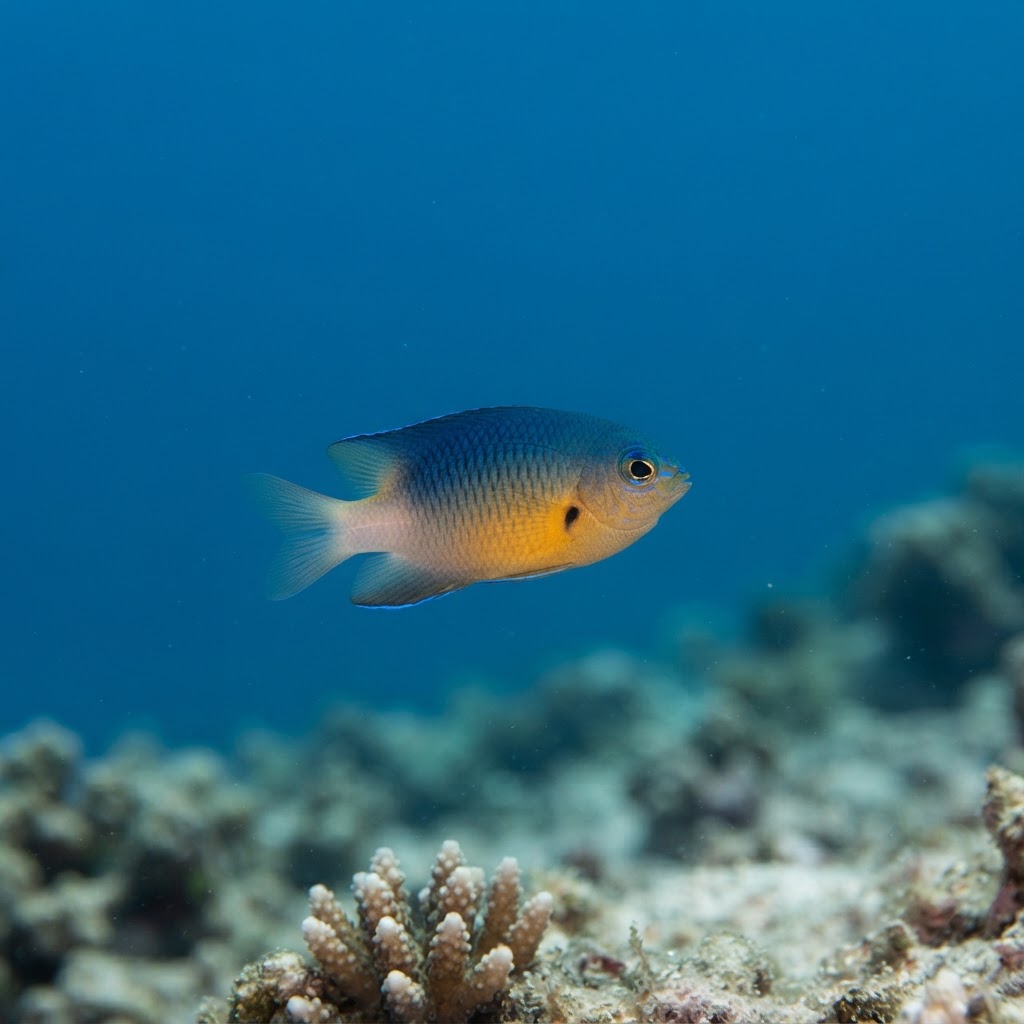
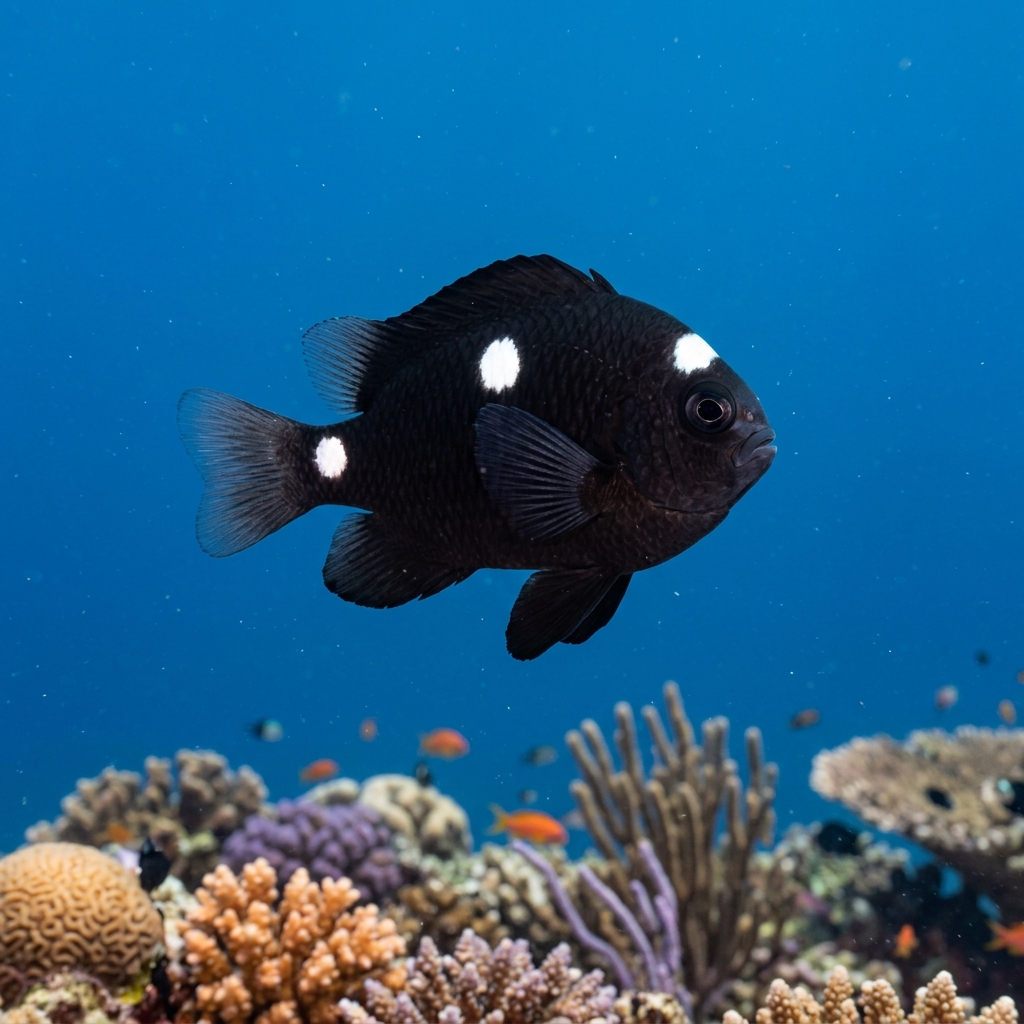
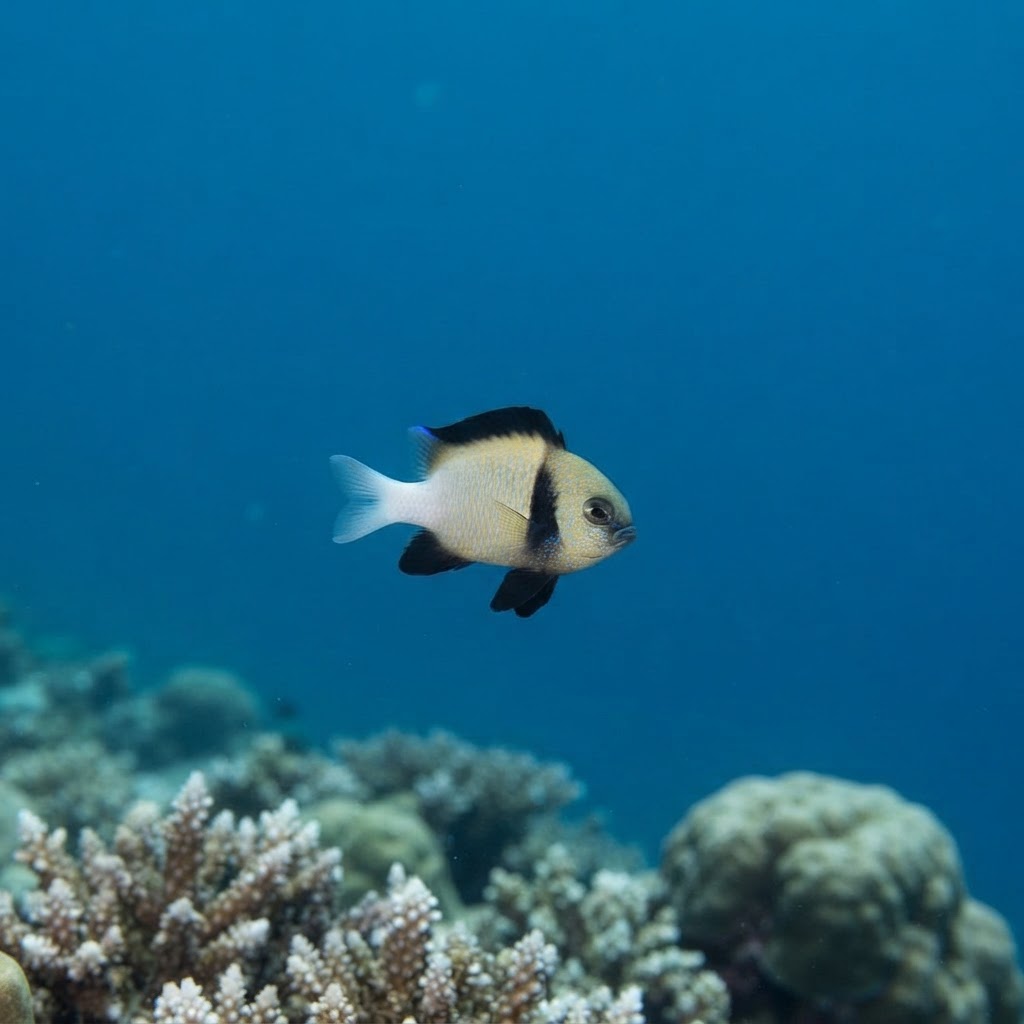
A small, oval-bodied damselfish around 4 cm, coloured a soft smoky grey to pale bluish-white with a faint dusting of darker scale edges that gives it a cloudy look. Look for a whitish patch near the base of the tail and a dark smudge at the pectoral fin base, which help separate it from plainer grey reef damsels. It moves in short, twitchy bursts rather than gliding, usually staying close to a chosen coral head.
Spends most of its time hovering in loose groups just above a favoured coral colony, darting back into the branches the moment a diver gets too close. It picks at plankton drifting past in the water column and returns to the same patch of reef dive after dive, making it a fish you notice more for its constant fidgety motion than any bold display. Most sightings are on shallower to mid-depth reef structure rather than open water or sand.
Like other Dascyllus damselfish, it will guard a patch of coral against other small reef fish, chasing off intruders that stray too close to its shelter.
No clear seasonal pattern shows up in the sightings, and with a comfortable temperature range of 25.9 to 29C it is present on these reefs year-round. Plan around the Maldives, Thailand or Tanzania's general dive seasons rather than any specific month for this fish.
Reef neighbours a diver could mistake it for. Use the identification notes above to tell them apart.
Most reliably logged in the Maldives, especially across the Central Atolls, where it turns up on coral-head reefs in strong numbers. Thailand is the next best bet, with regular sightings around Phuket, Koh Phi Phi and Khao Lak, and it also shows up consistently in Tanzania's Zanzibar sites, the Seychelles' Inner Islands, and Sri Lanka's Trincomalee coast.
Mapping where Cloudy Dascyllus is logged…
The Maldives, particularly the Central Atolls, is the strongest region for sightings, with good numbers also logged in Thailand around Phuket, Koh Phi Phi and Khao Lak. Tanzania's Zanzibar, the Seychelles' Inner Islands and Sri Lanka's Trincomalee area are other solid options.
There is no strong seasonal pattern in the sightings, so it is considered a year-round fish on the reefs where it lives. Its comfort range of roughly 26 to 29C matches typical tropical reef conditions in the Maldives, Thailand and East Africa all year.
Look for a small, roughly 4 cm damselfish in a smoky grey to pale bluish tone with a faint mottled or cloudy pattern across the body. A whitish patch near the tail base and its habit of darting between coral branches rather than swimming freely are good giveaways.
They stay small, typically around 4 cm in length, which is normal for damselfish in the Dascyllus group. You will usually see several together around one coral head rather than a single large fish.
No, they pose no danger to divers. They may dart towards a diver's mask or hand if it strays too near their coral shelter, but this is a territorial bluff, not a real threat.
Like its damselfish relatives, it stakes out a small patch of coral as home turf and will chase away other small fish that get too close. Divers who linger near one coral head often see the same group return to it dive after dive.
Site and sighting data is aggregated from diver logs, iNaturalist and GBIF. For taxonomy and conservation status:
Dascyllus
3,697 sites