Pterois russelii
Feathery striped lionfish logged uncommonly across Sabah, Koh Chang and Bali in 25 to 29C water, year-round on the reef.
Safety warning
Its dorsal, anal and pelvic spines carry venom that causes intense pain, swelling and sometimes nausea or breathing difficulty if you brush against it. Give it space, never touch or corner it for a photo, and watch your fin and hand placement near ledges and rubble where it likes to sit still and unnoticed.
If you're stung
Venomous spinesGeneral first-aid guidance, not a substitute for professional medical care. In an emergency, call your local emergency number.
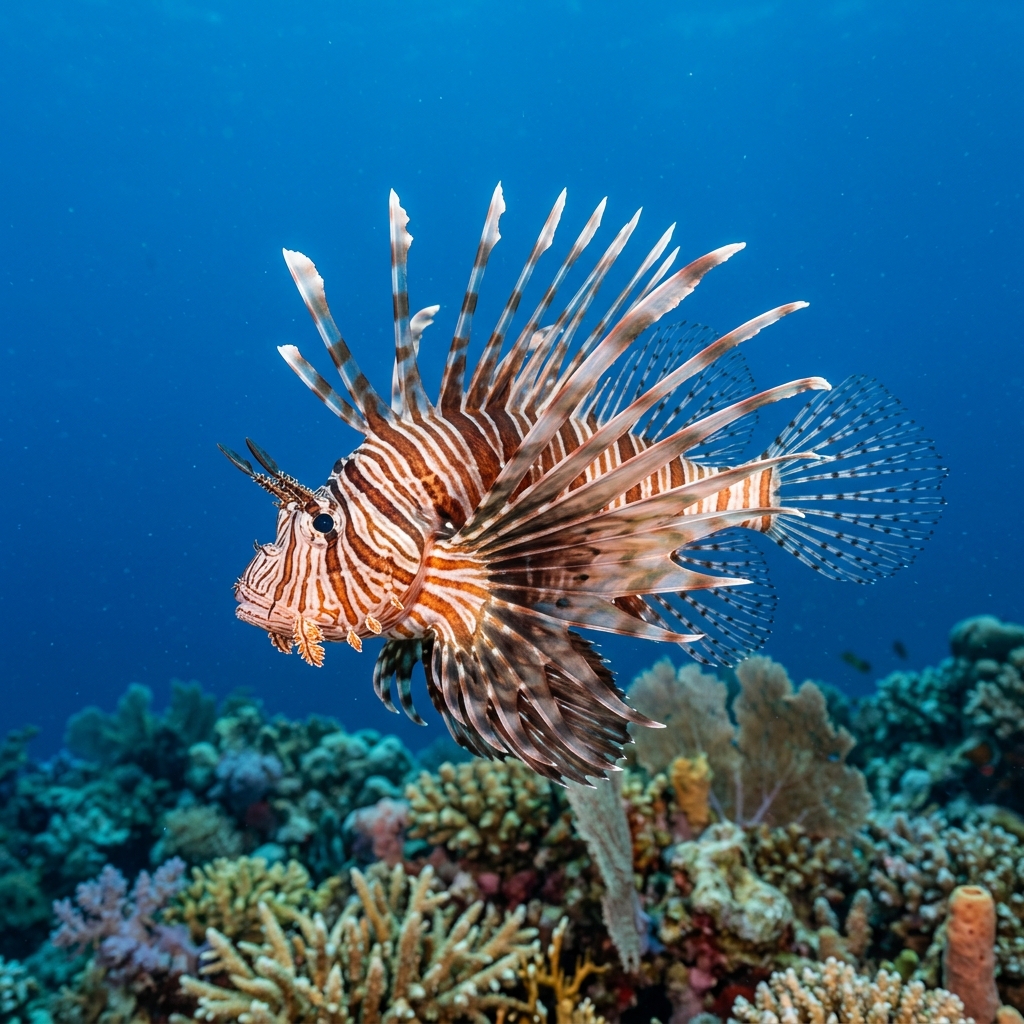
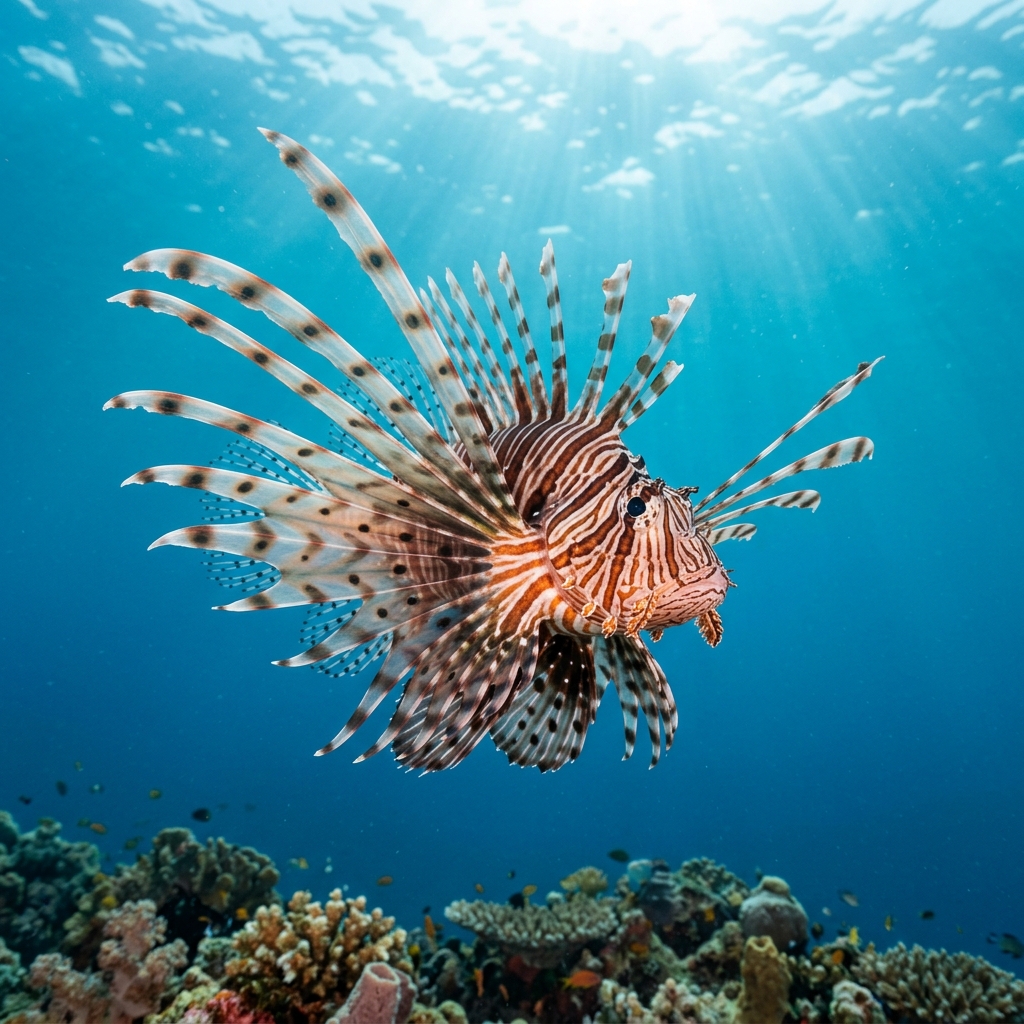
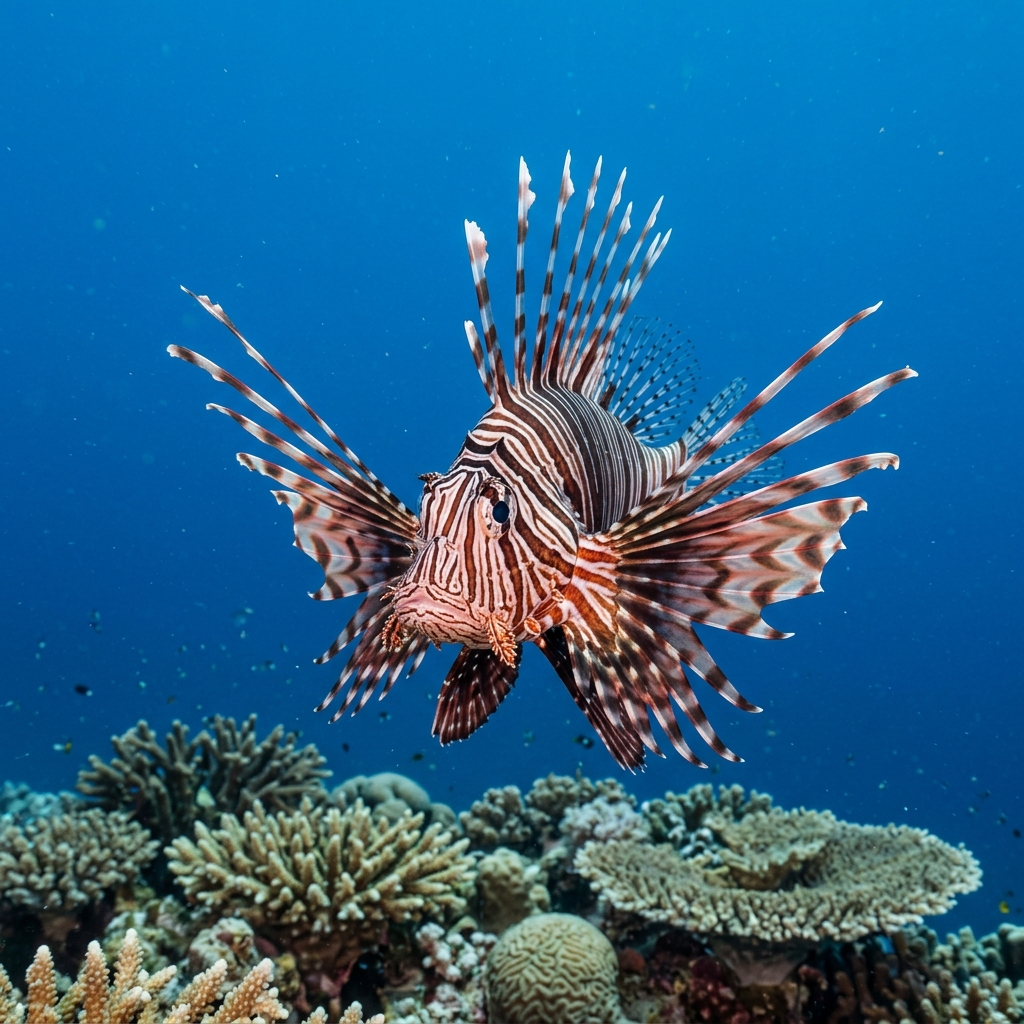
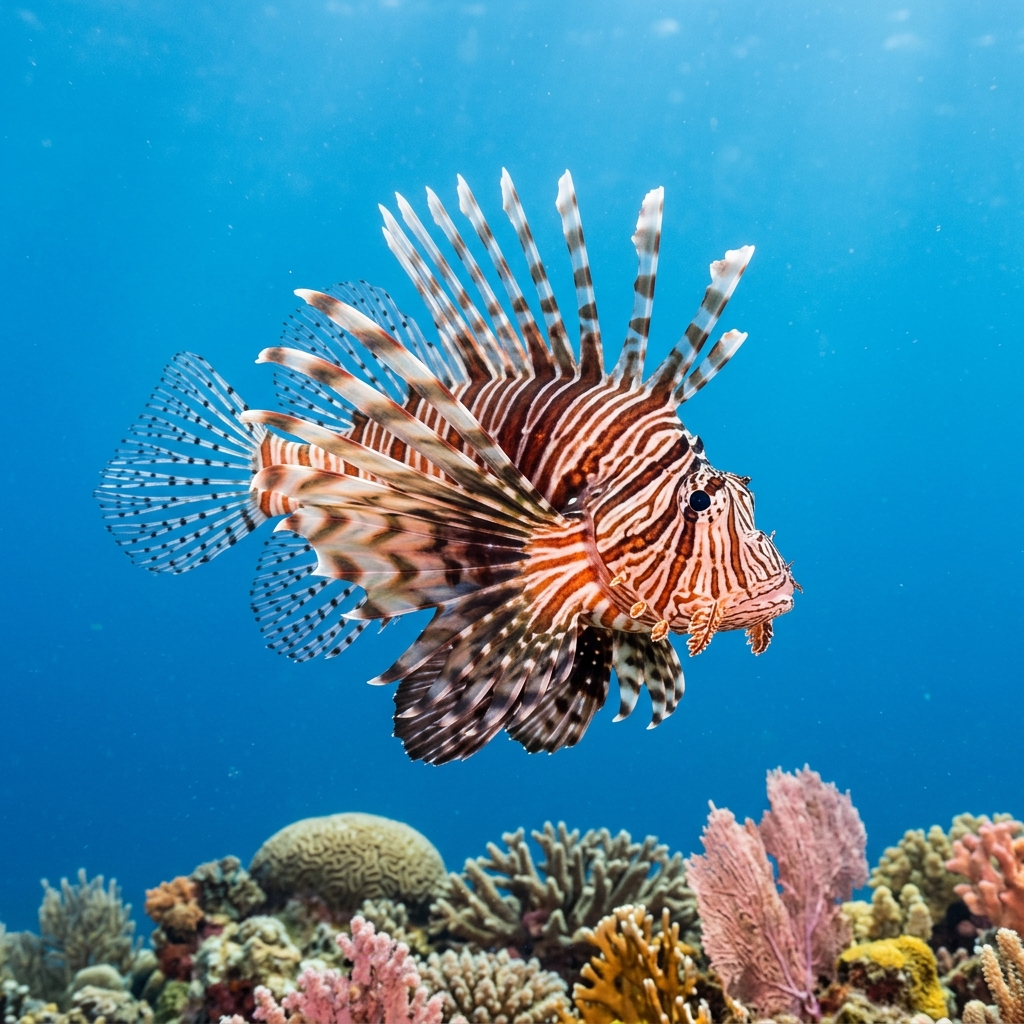
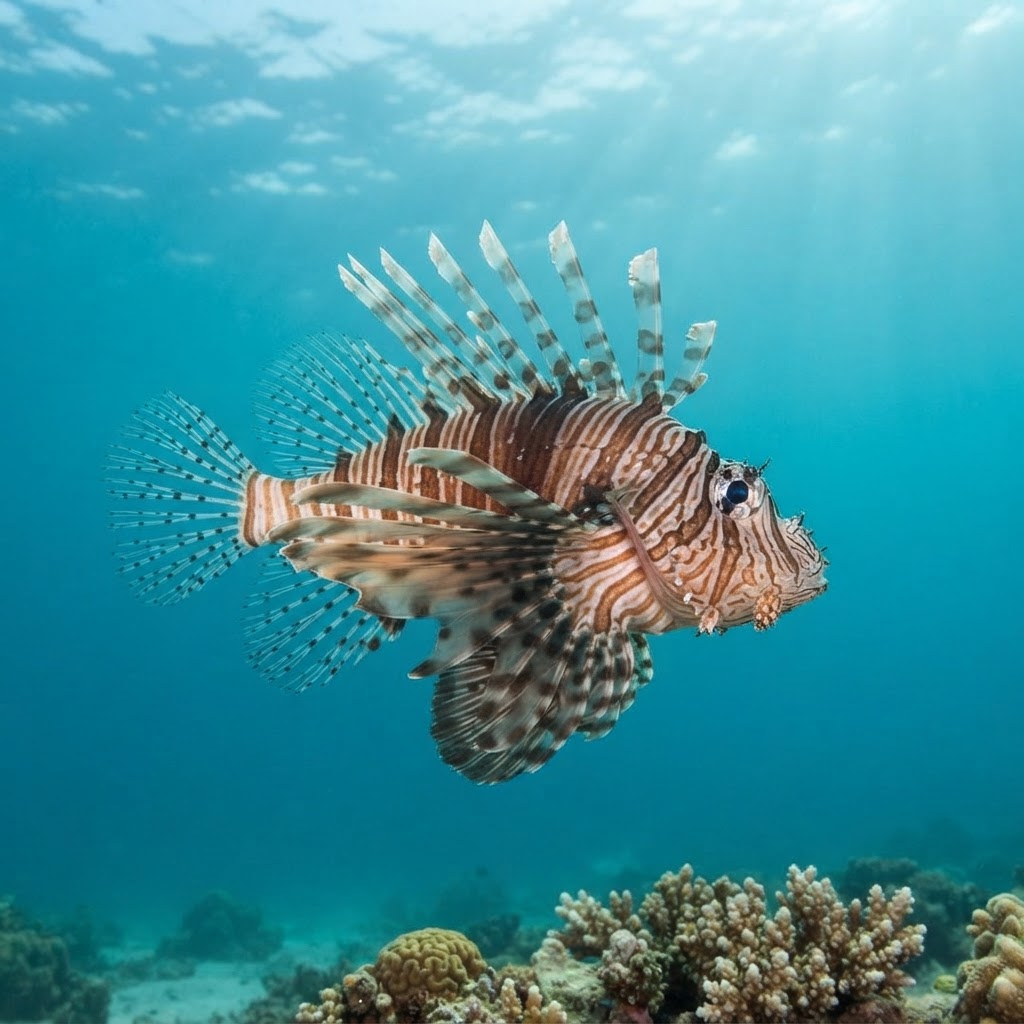
Grows to around 21 cm, with a striped brown-and-white body and long, fan-like pectoral fins held out like a display. The fin membranes are noticeably clear or lightly spotted rather than solid, which is the main feature separating it from its heavier-marked cousins. It usually hovers just above the substrate or tucks under a ledge, fins spread, rather than swimming openly across the reef.
Divers typically find it parked motionless on sand patches, rubble, or under coral ledges by day, fins fanned out, relying on stillness rather than flight. It tends to stay put as you approach, which makes for a good slow look, but it will drift off with an unhurried wafting motion if crowded. Most sightings are during daylight reef dives rather than night dives, though like other lionfish it may become more active after dark.
Those spread-out pectoral fins aren't just for show, they're used to herd and corner small fish and shrimp into tight spots before a quick close-range gulp.
No clear seasonal pattern shows up in the data, and its comfort range of roughly 25 to 29C matches tropical reefs year-round, so any month diving Sabah or Koh Chang is fair game.
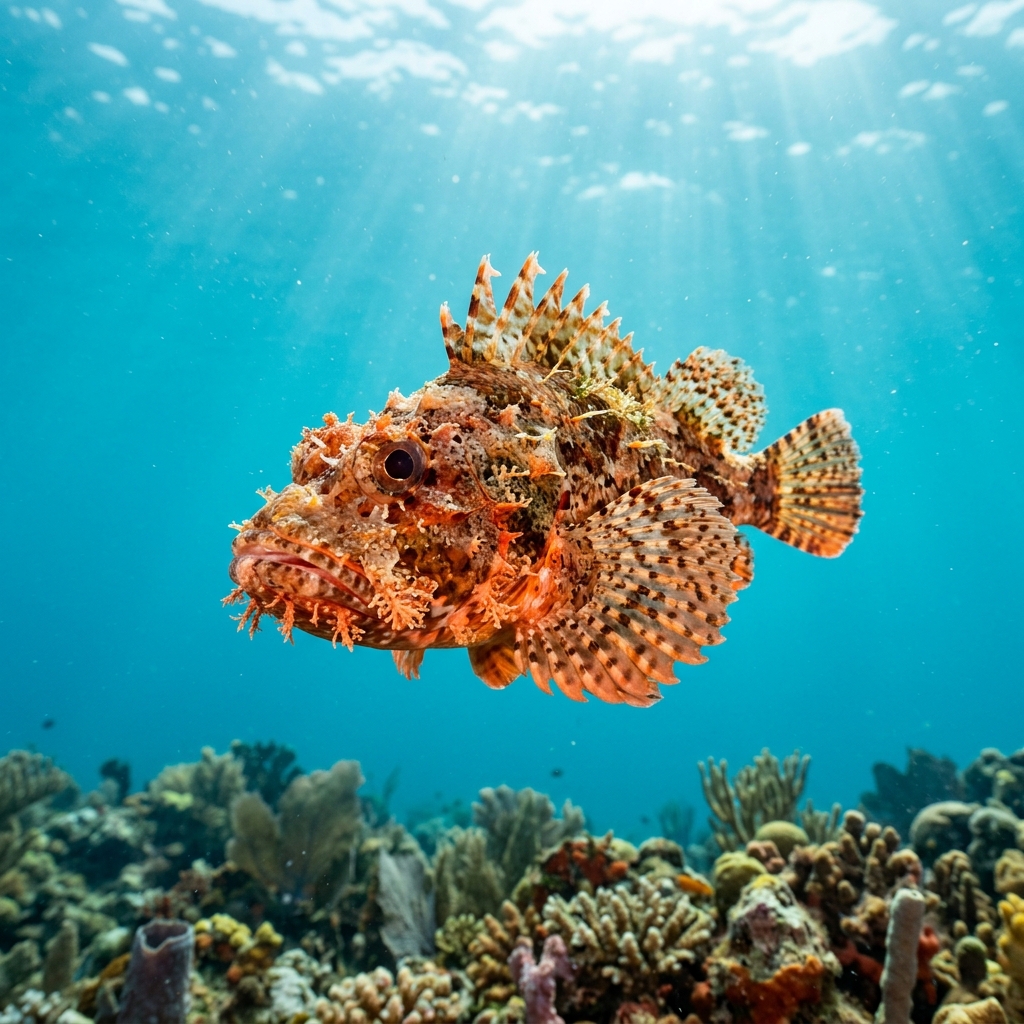
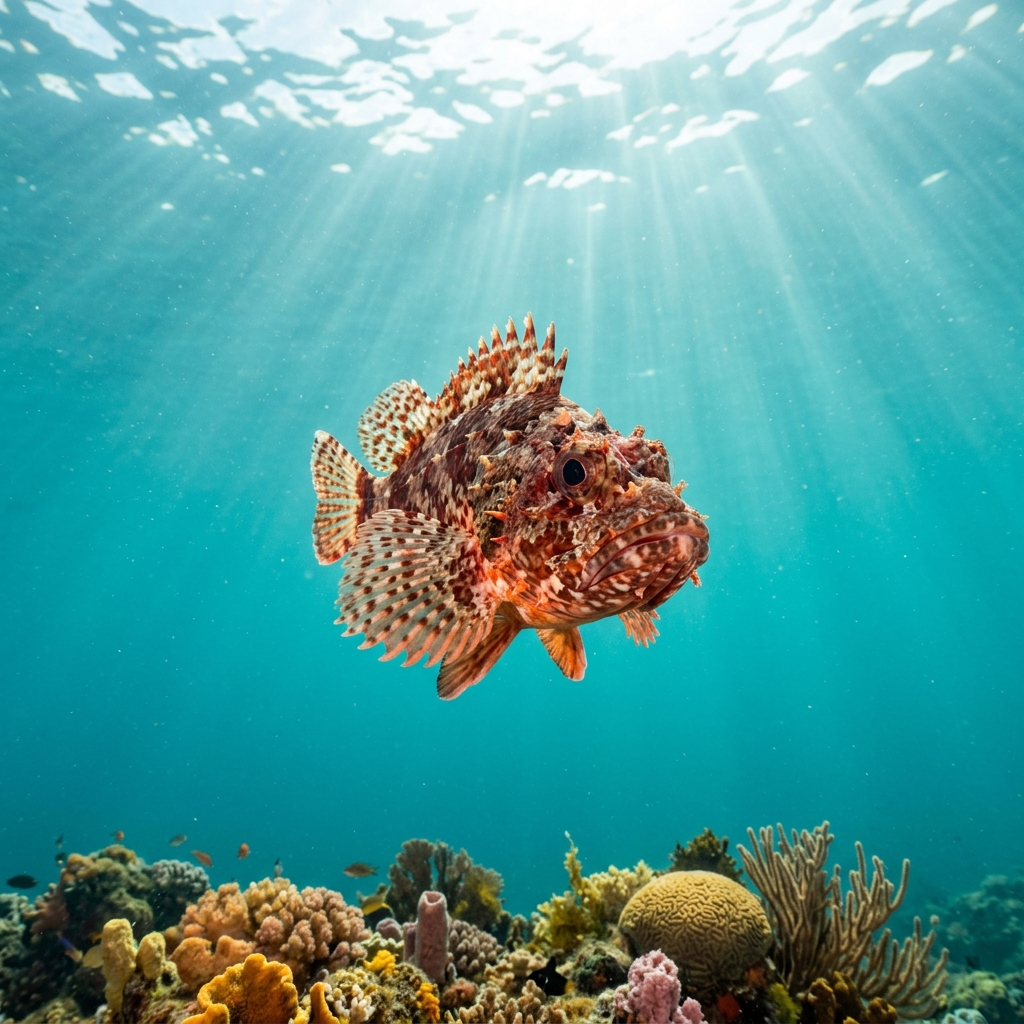
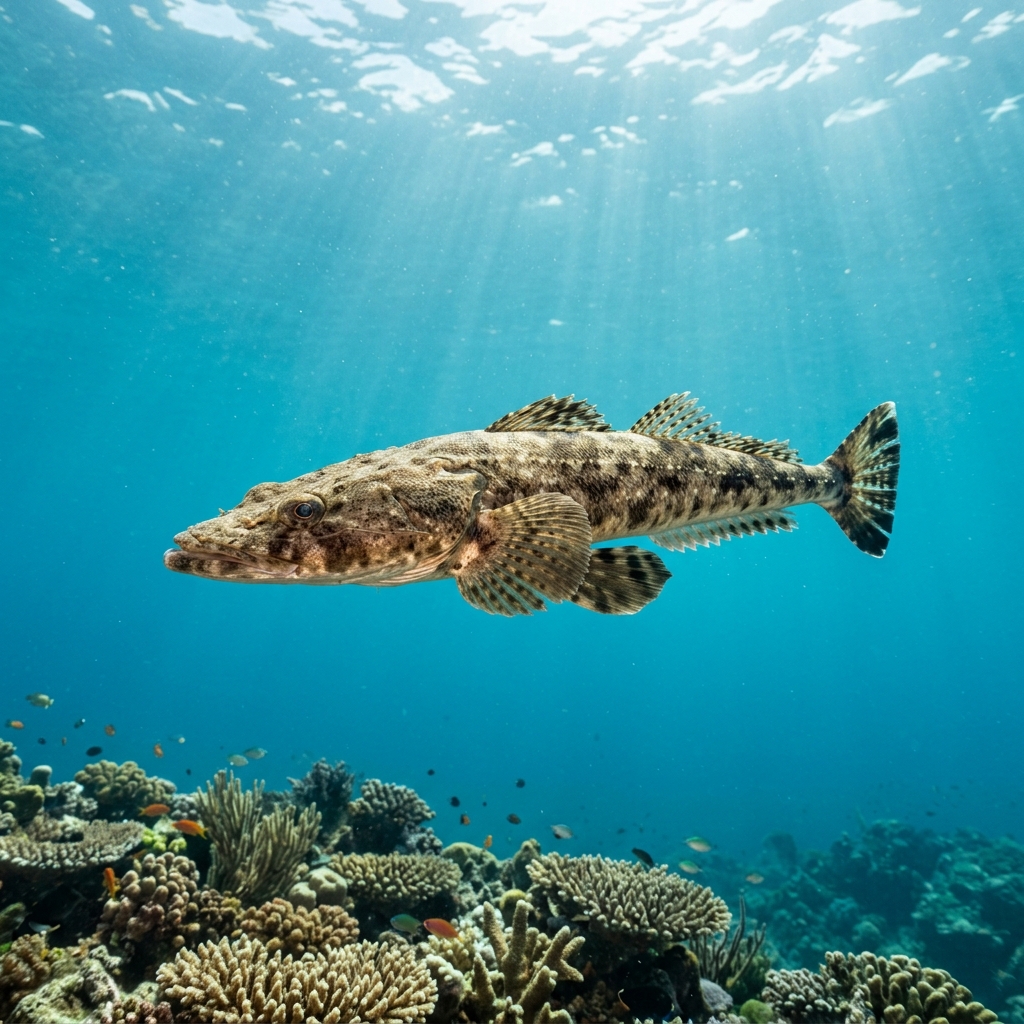
Reef neighbours a diver could mistake it for. Use the identification notes above to tell them apart.
Most reliably logged in Sabah, Malaysia, and Koh Chang, Thailand, with additional sightings from Bali, Indonesia, and a single record in Western Australia. Across all these sites it turns up as an uncommon find rather than a given, so treat it as a bonus spot on a reef dive rather than the main target.
Mapping where Plaintail Lionfish is logged…
Sabah in Malaysia and Koh Chang in Thailand are the most consistent spots, with further sightings in Bali, Indonesia, and Western Australia. It's an uncommon find even at these sites, so spot it as a bonus rather than a guaranteed encounter.
There's no strong seasonal pattern in the sightings, and it sits comfortably in 25 to 29C water, so it's a year-round find on reefs in Sabah and Koh Chang.
Yes, its spines are venomous and a brush against them causes severe pain and swelling. It won't chase you, but stay clear of ledges and rubble patches where it sits still and can be easy to miss.
Look for a striped brown-and-white body around 21 cm long with long, fan-like pectoral fins that have a clear or lightly spotted membrane, distinguishing it from more solidly marked lionfish. It's usually seen resting still on sand, rubble or under a ledge rather than swimming in open water.
They reach around 21 cm in length, a modest size compared to some other lionfish species but still easy to spot thanks to their spread fins.
They fan their pectoral fins out to corner small fish and shrimp against the reef before striking, using the fins almost like a net rather than just for display.
Site and sighting data is aggregated from diver logs, iNaturalist and GBIF. For taxonomy and conservation status:
Madeira Rockfish
2,773 sites