Parupeneus heptacantha
An uncommon goatfish find on reefs in Bali and Egypt's Red Sea Riviera, in warm water from 23 to 28C year-round.
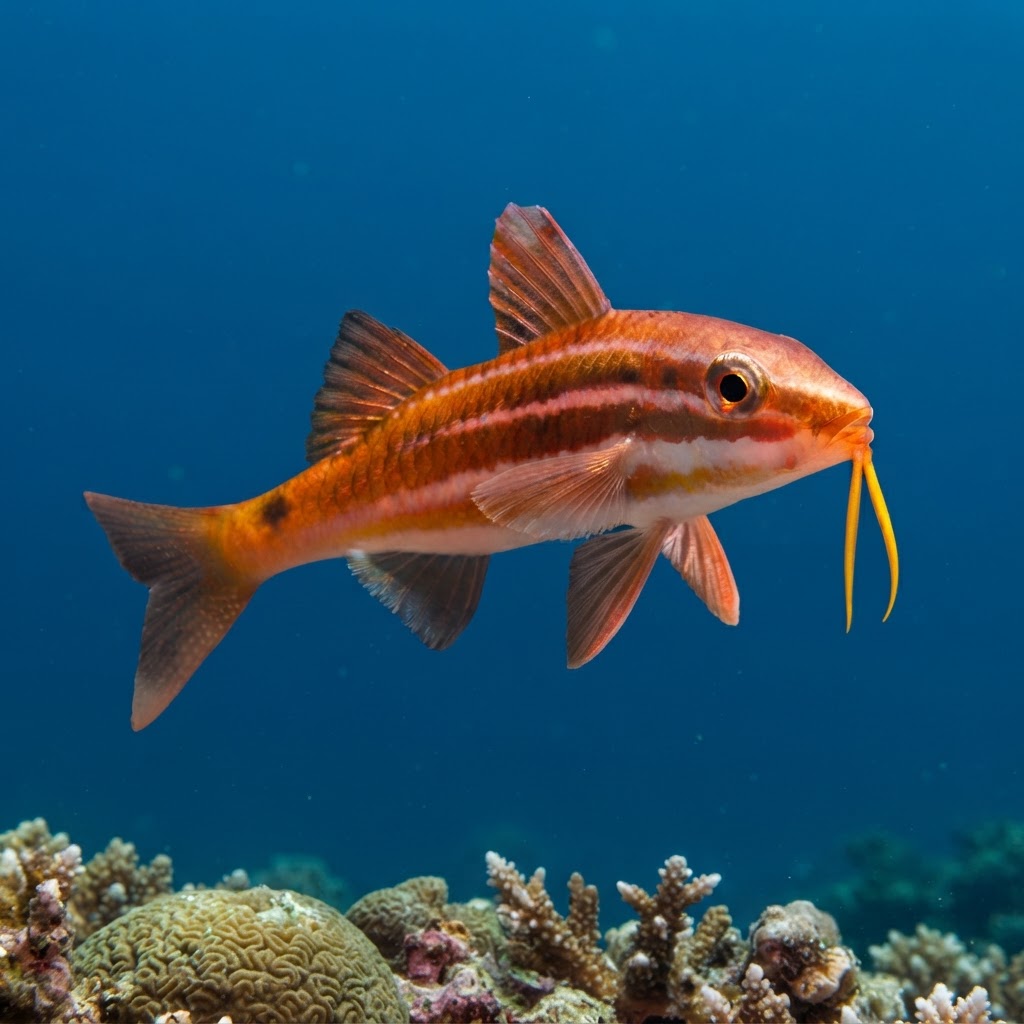
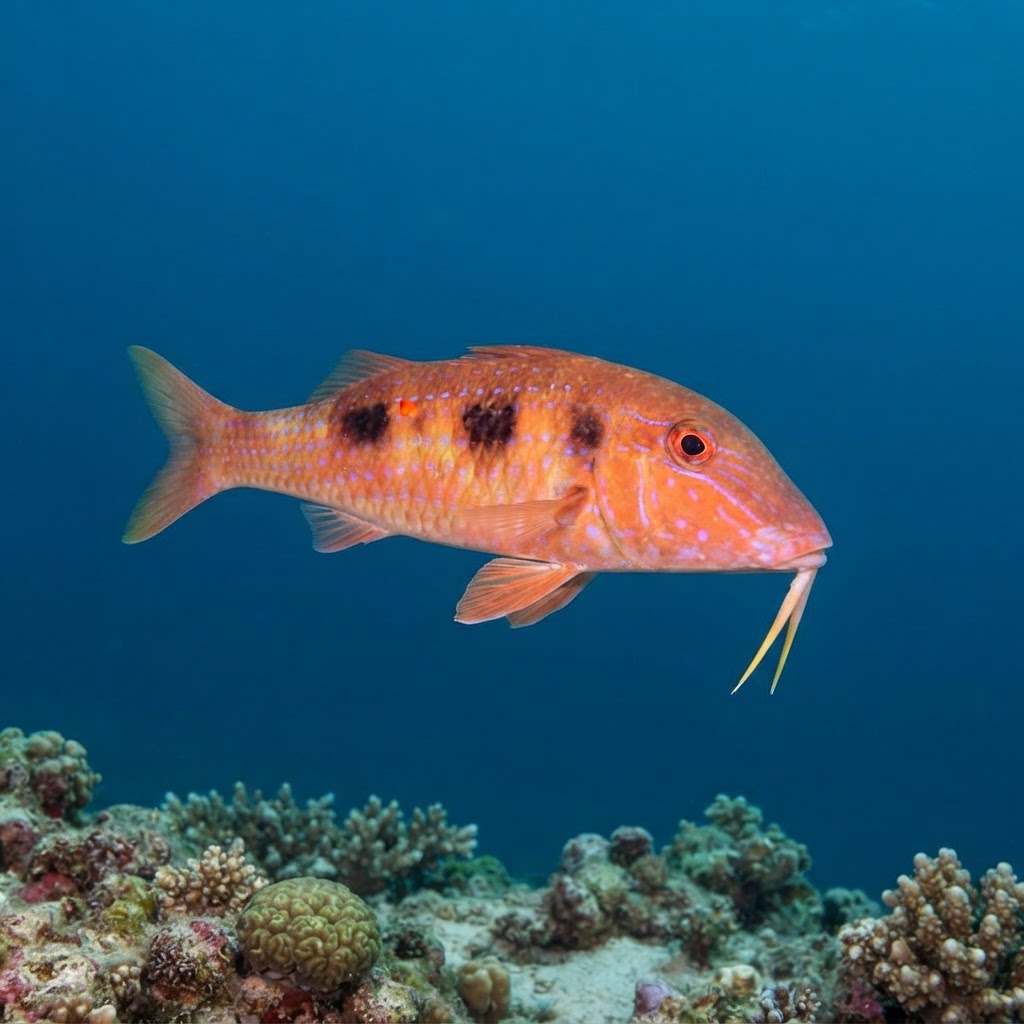
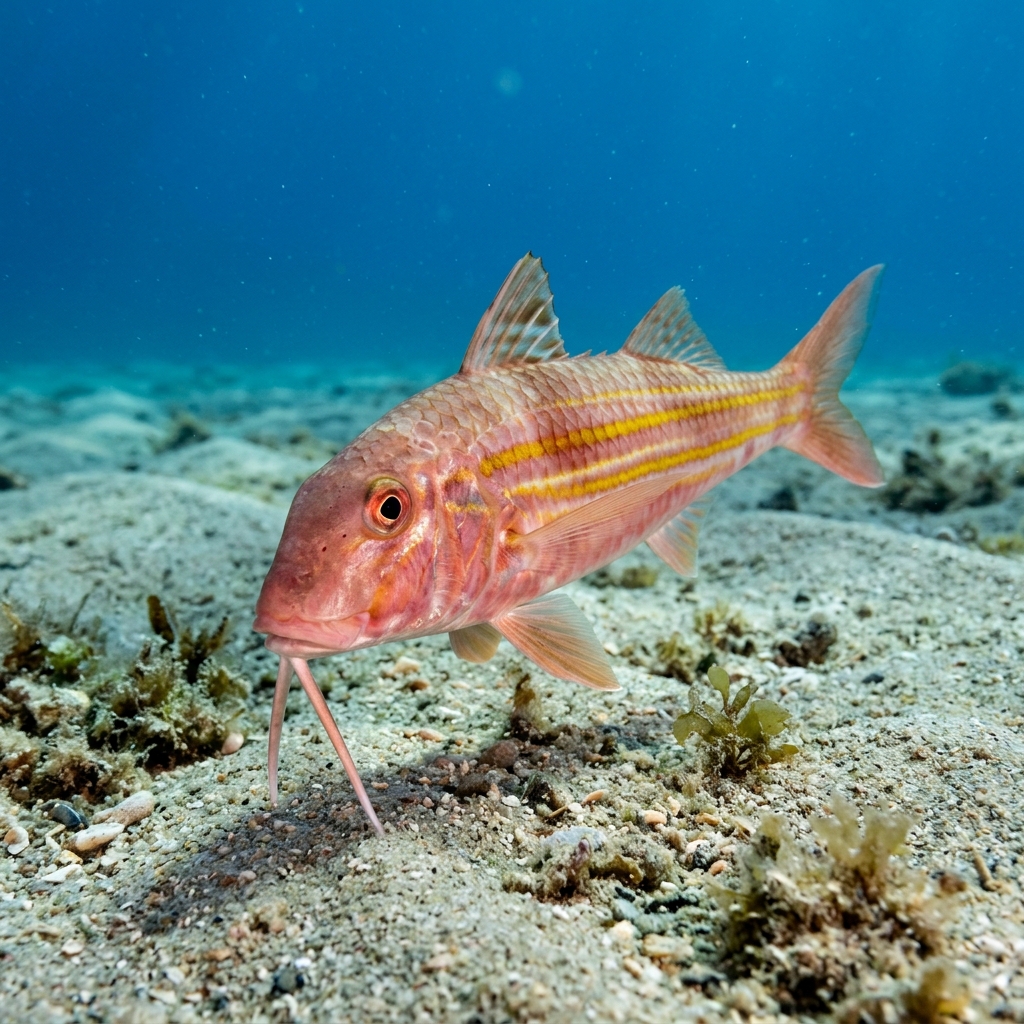
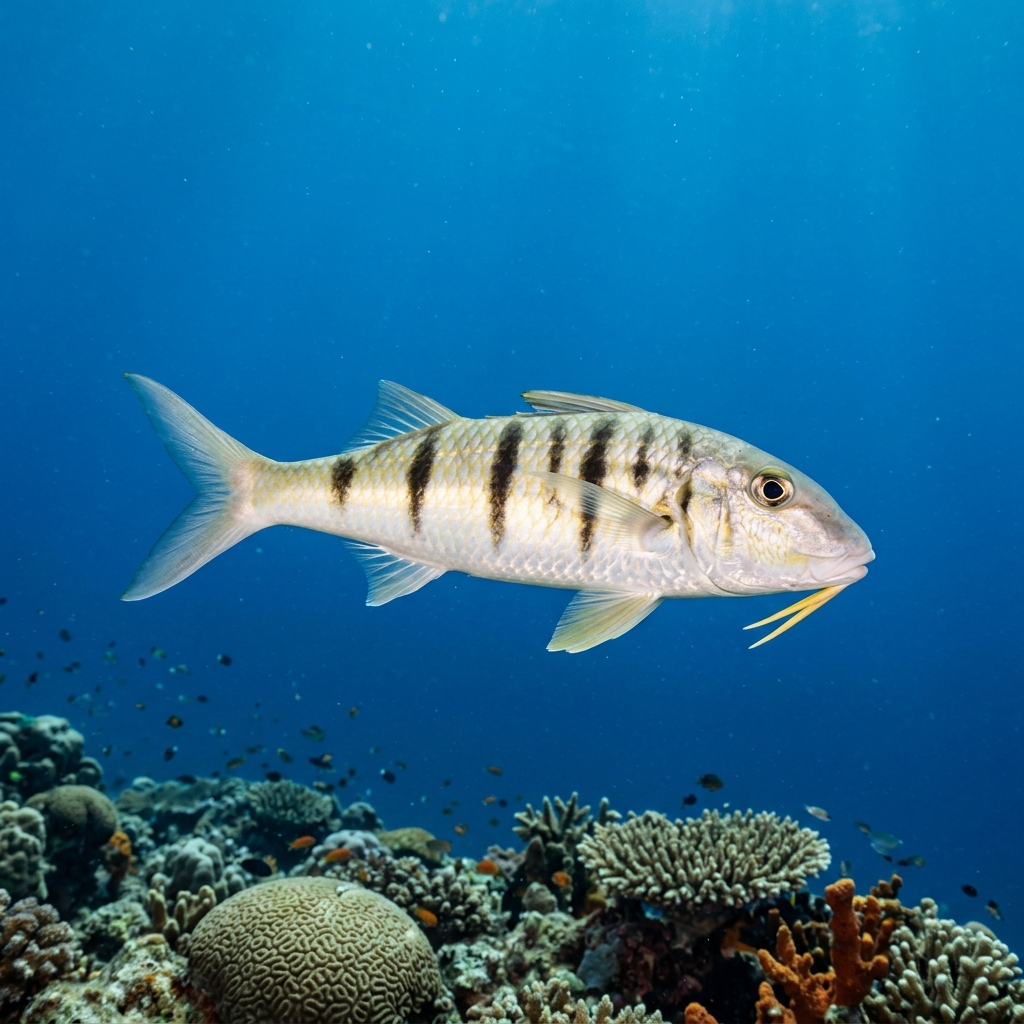
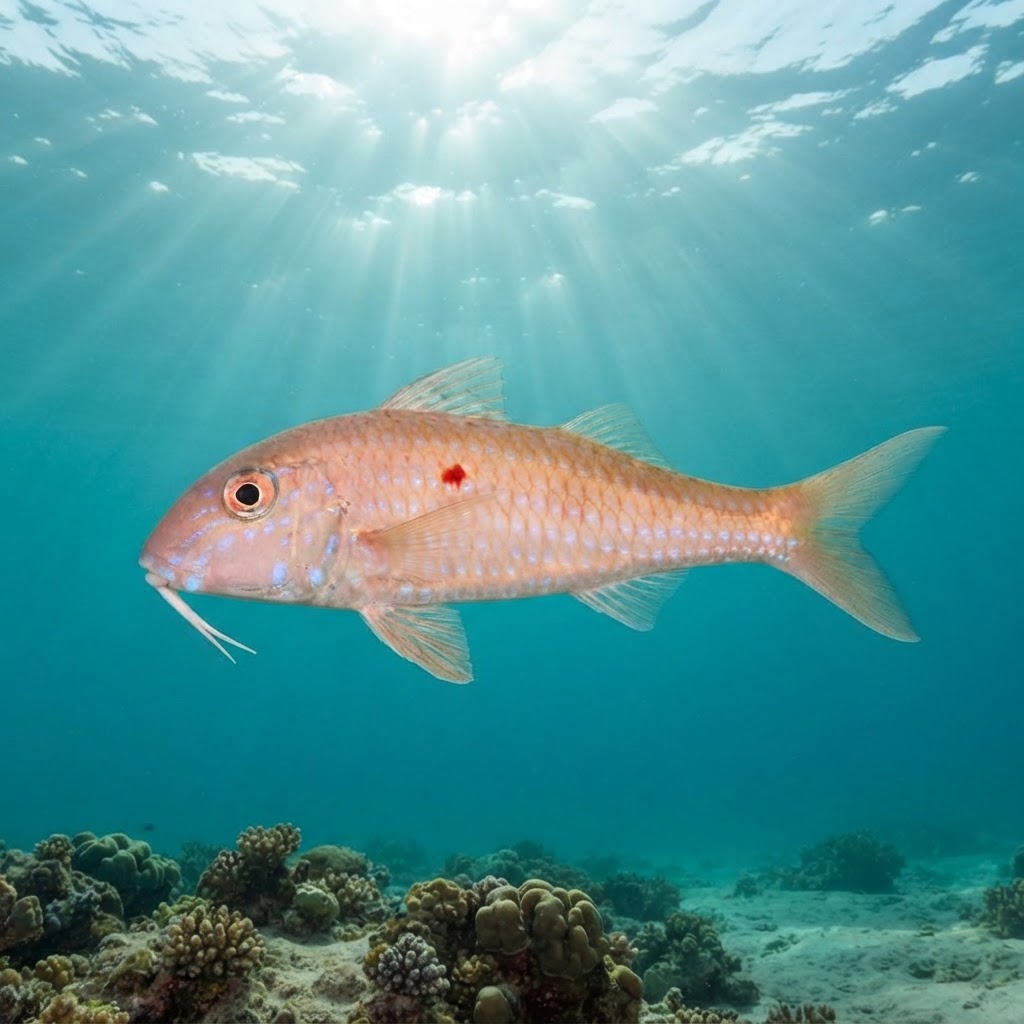
Grows to around 25 cm, with a reddish to brownish body that can pale or darken depending on mood and background. Like other goatfish it has a pair of long chin barbels (whisker-like feelers) used to probe the sand and rubble for food, and a fairly deep, torpedo-shaped body. Look for it hovering close to the substrate rather than out in open water, often with the barbels actively working the bottom.
Divers usually find it working low over sand, rubble, or the reef base, sweeping its barbels across the substrate in search of small invertebrates. It tends to keep a low profile and will often move off unhurriedly rather than bolt if approached slowly. Sightings are typically solitary rather than in groups, fitting the more retiring habits of many goatfish species.
Those chin barbels are packed with chemical and touch sensors, letting it detect buried prey in sand and rubble without ever having to see it, a feeding trick shared across the goatfish family.
No clear seasonal pattern shows up in the sighting data, and the water temperature range it is found in, roughly 23 to 28C, spans typical conditions on these reefs year-round, so any month is a fair bet.
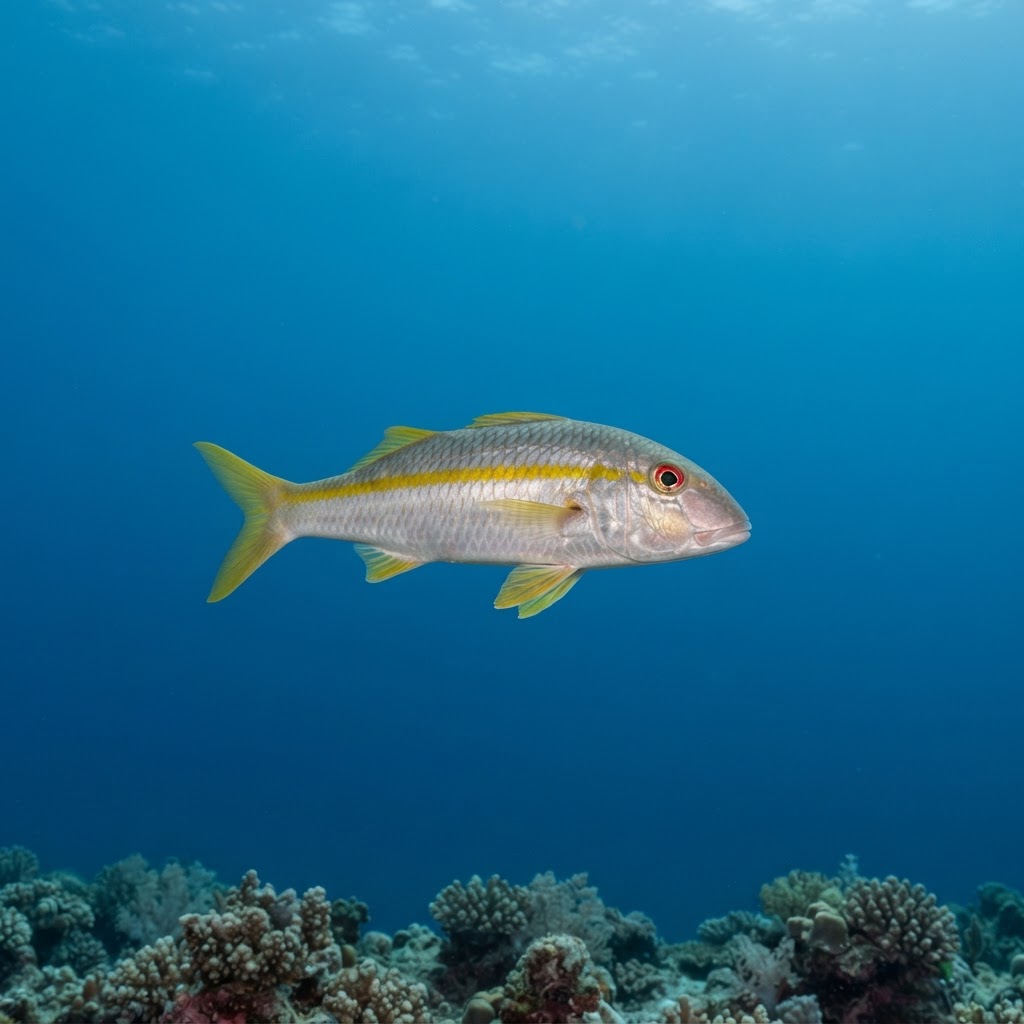
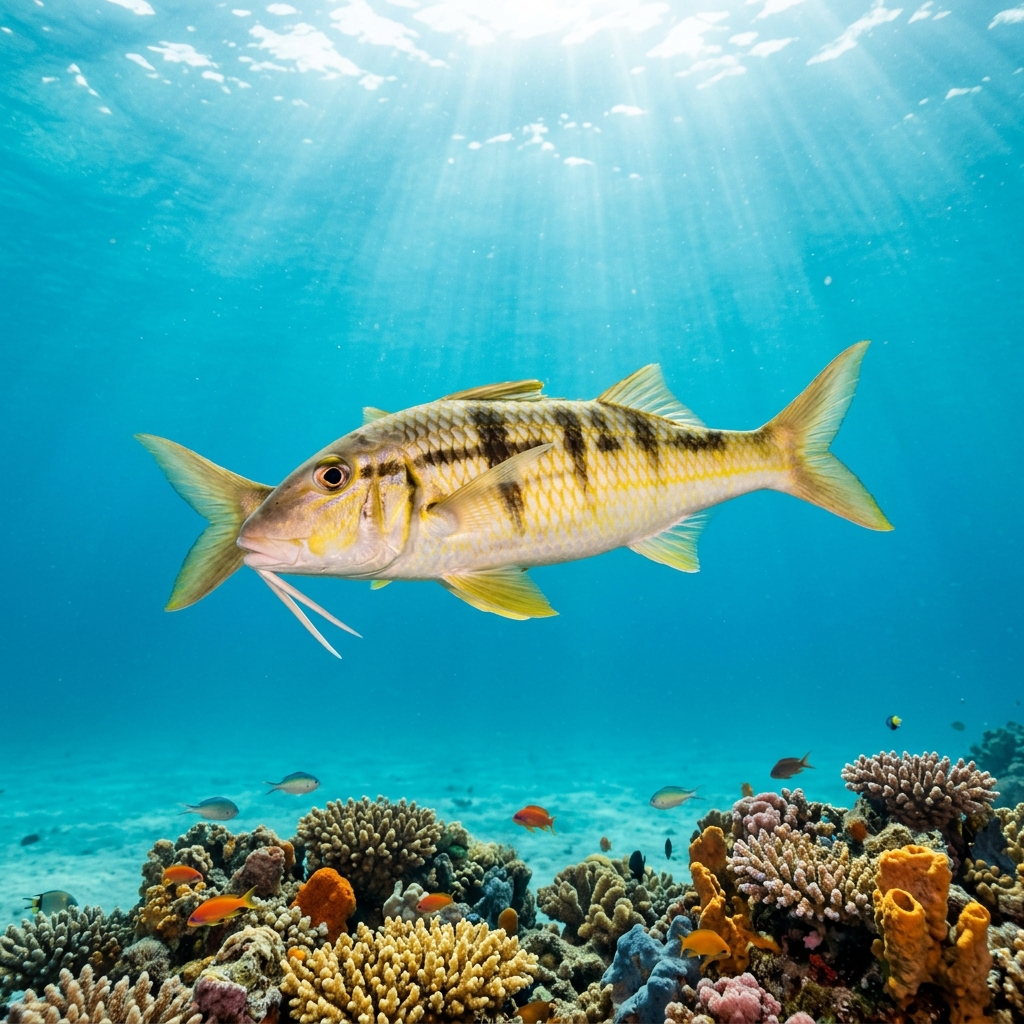
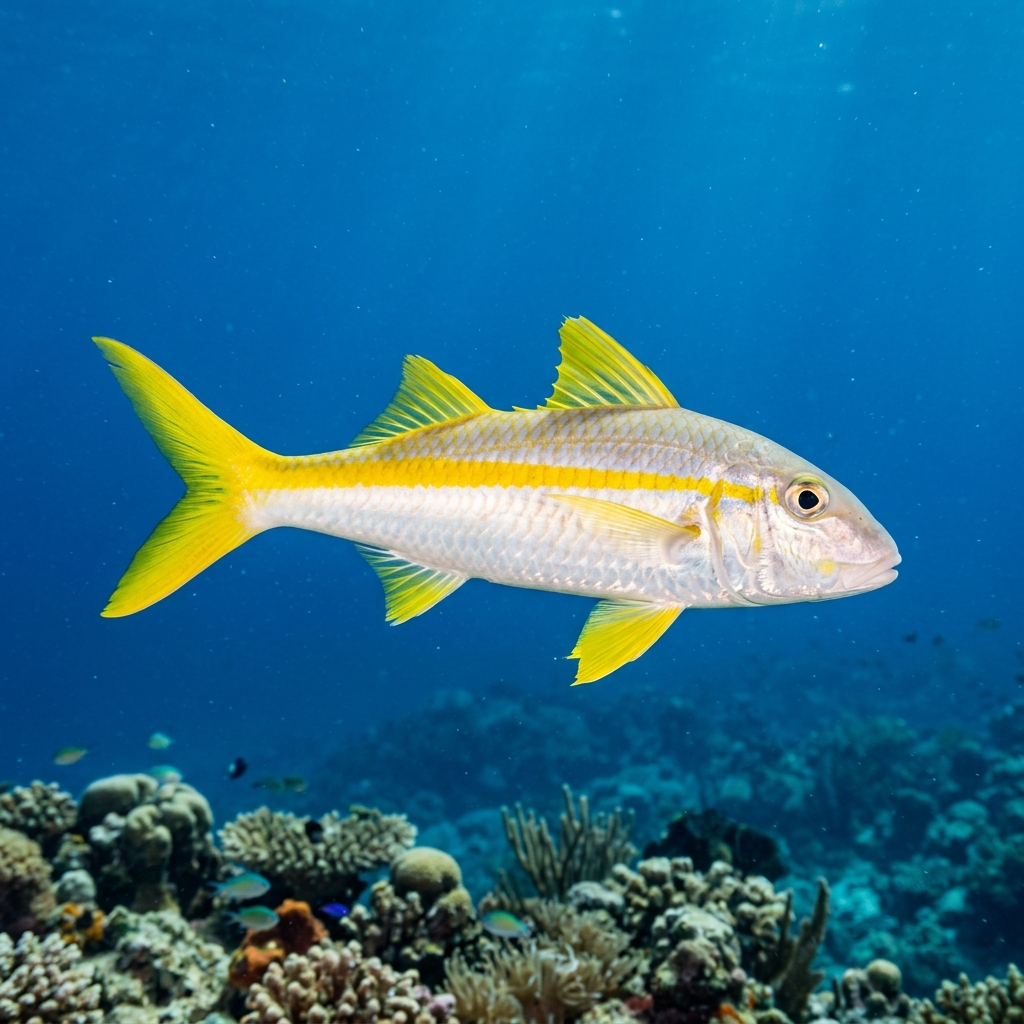
Reef neighbours a diver could mistake it for. Use the identification notes above to tell them apart.
Most consistently logged in Indonesia, with sightings from both Bali and Sulawesi, and also turns up on the Red Sea Riviera in Egypt. Across the handful of sites where it has been recorded, it is an uncommon find rather than a guaranteed one, so treat it as a nice bonus sighting on a reef dive rather than the main target.
Mapping where Cinnabar Goatfish is logged…
It has been logged at reef sites in Bali and Sulawesi in Indonesia, and along the Red Sea Riviera in Egypt. It is an uncommon sighting even at these locations, so consider it a bonus rather than a certainty on any given dive.
There is no strong seasonal pattern in the sighting data. It is found in water between about 23 and 28C, conditions that hold year-round on the reefs where it occurs, so it can turn up in any month.
Look for a reddish-brown, torpedo-shaped fish around 25 cm long hovering just above sand or rubble, with a pair of long chin barbels sweeping the bottom as it feeds. It rarely swims far off the substrate.
They typically reach around 25 cm in length, a modest, easy-to-overlook size that suits their habit of feeding low over sand and rubble.
It hunts using a pair of sensitive chin barbels that detect buried prey by touch and chemical cues, letting it find hidden invertebrates in sand and rubble without needing to see them first.
No, they pose no threat to divers. They are quiet bottom feeders that will simply move away if you get too close.
Site and sighting data is aggregated from diver logs, iNaturalist and GBIF. For taxonomy and conservation status:
Yellowfin Goatfish
2,241 sites