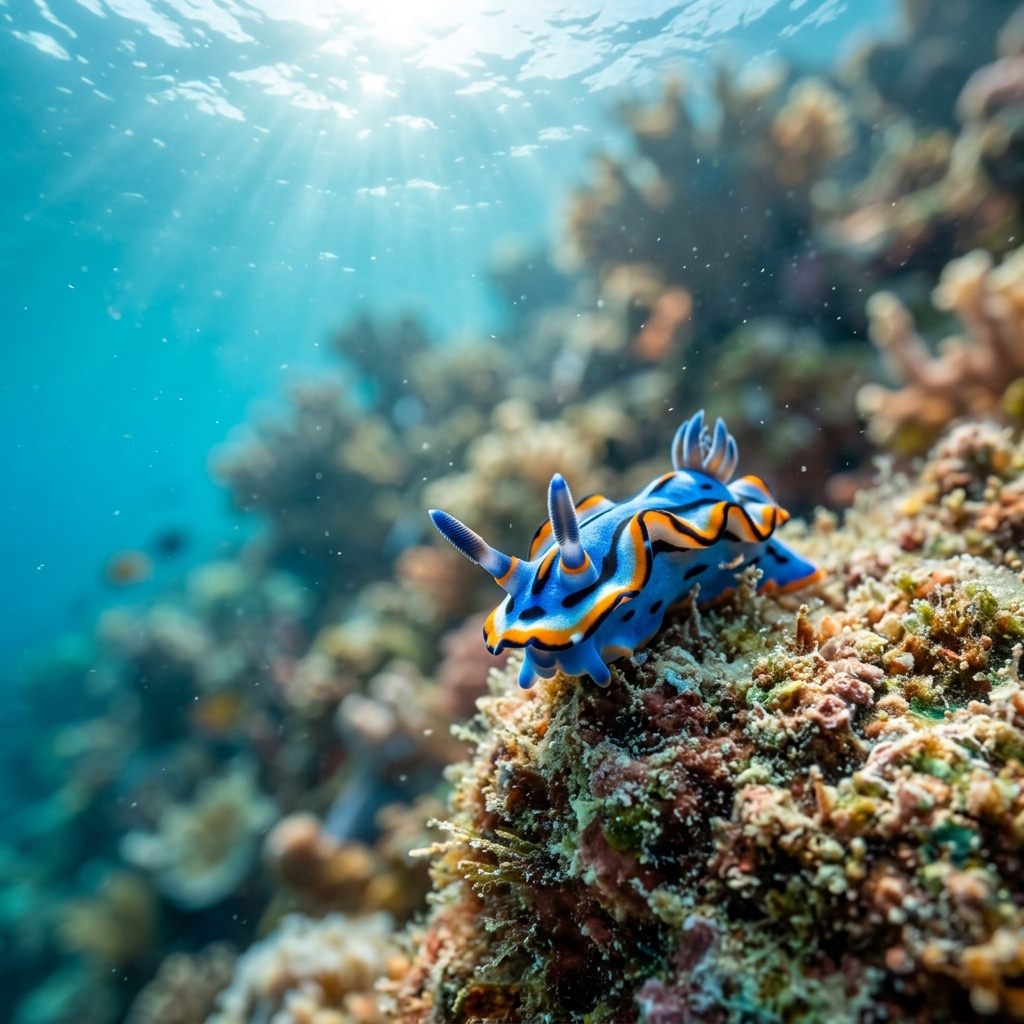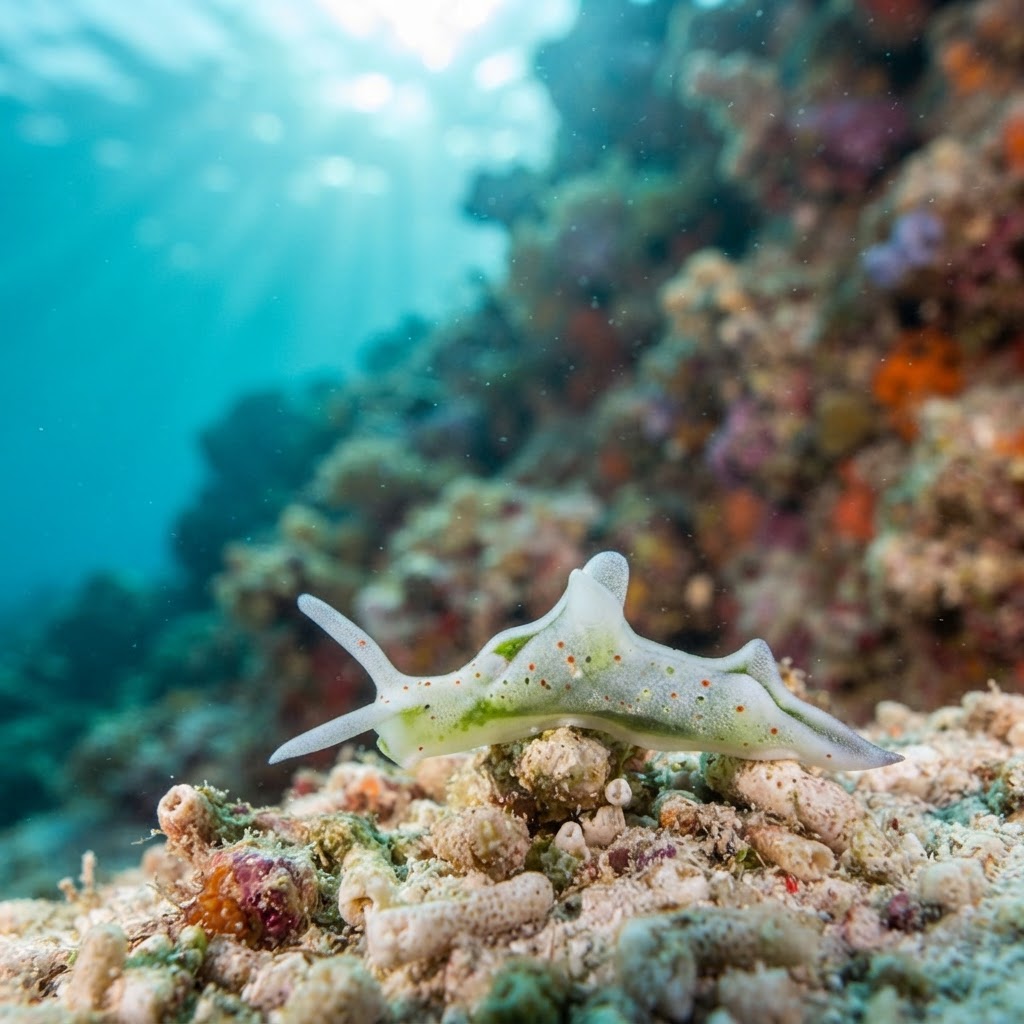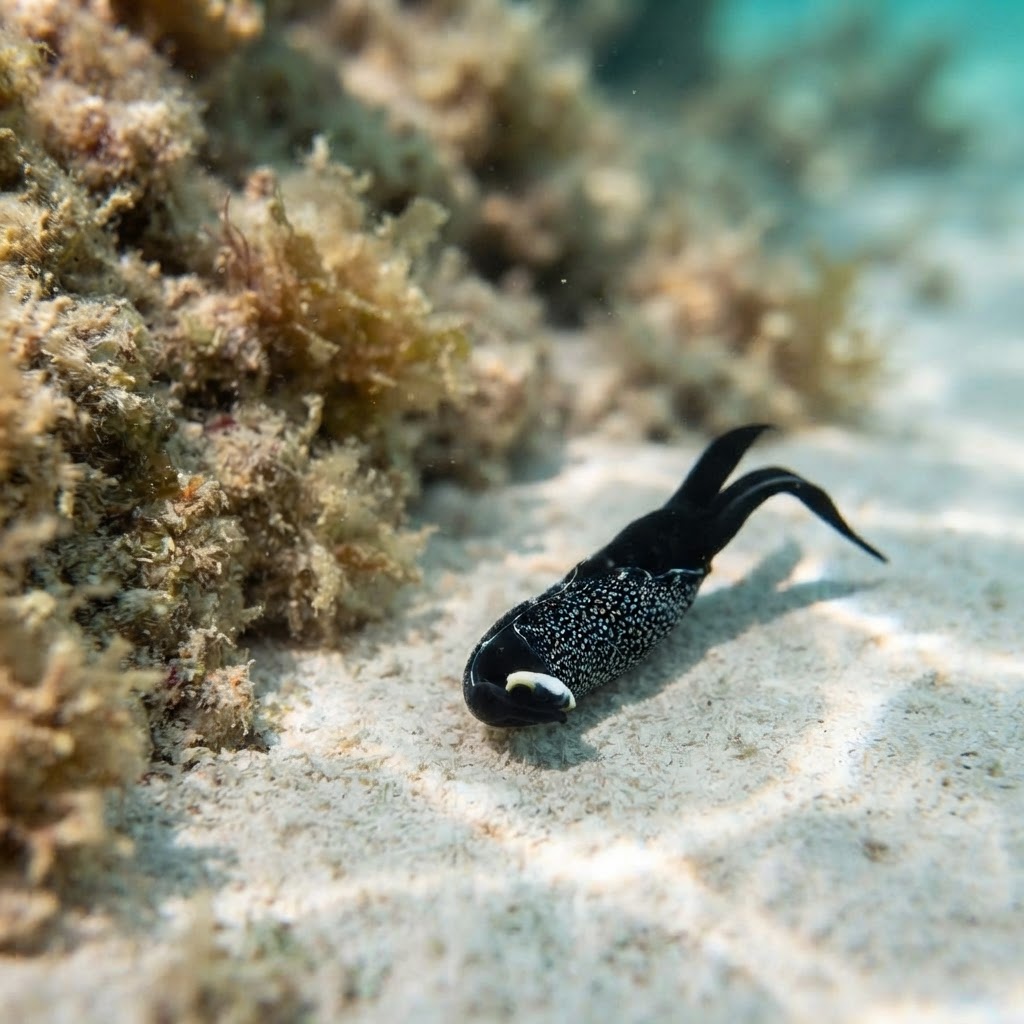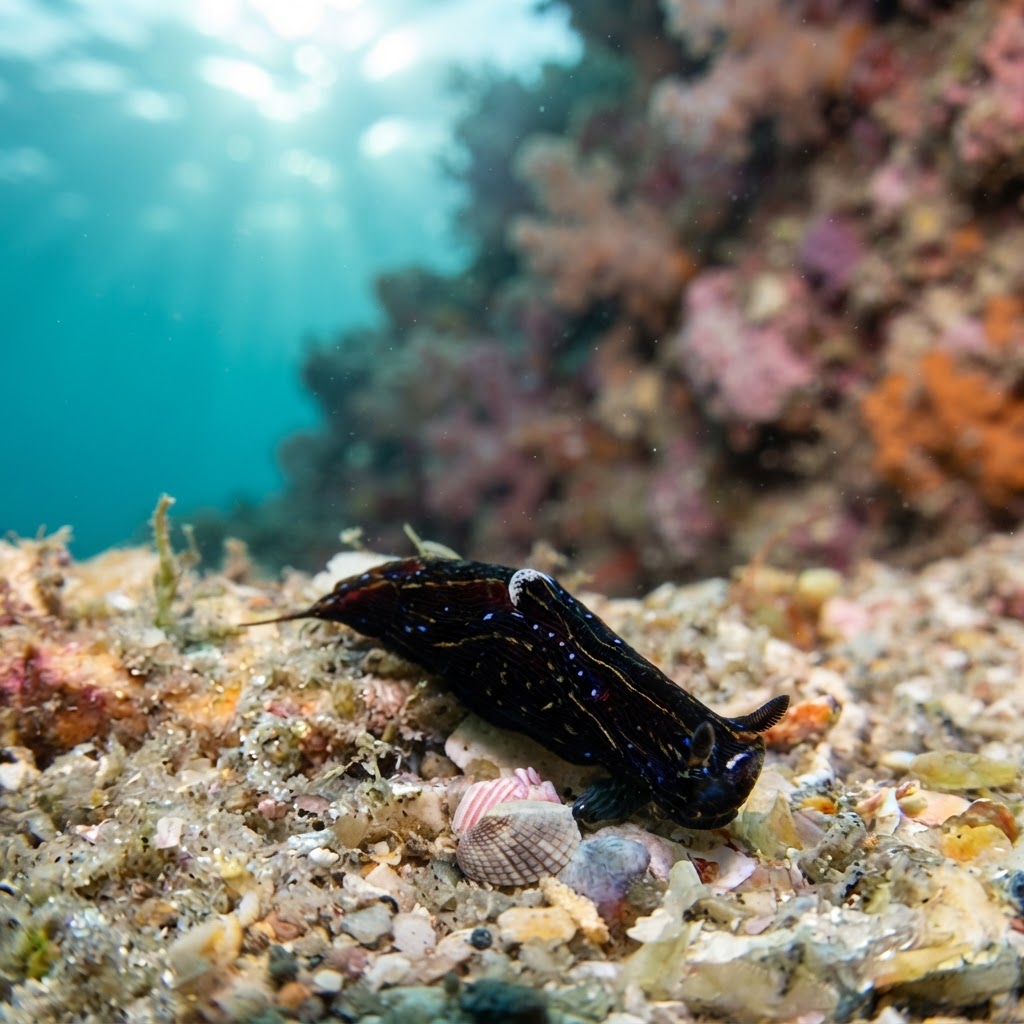
Chelidonura cubana
A rare 1cm headshield slug found in Guadeloupe and Grand Cayman, most often spotted in warm reef water between 25 and 31C.
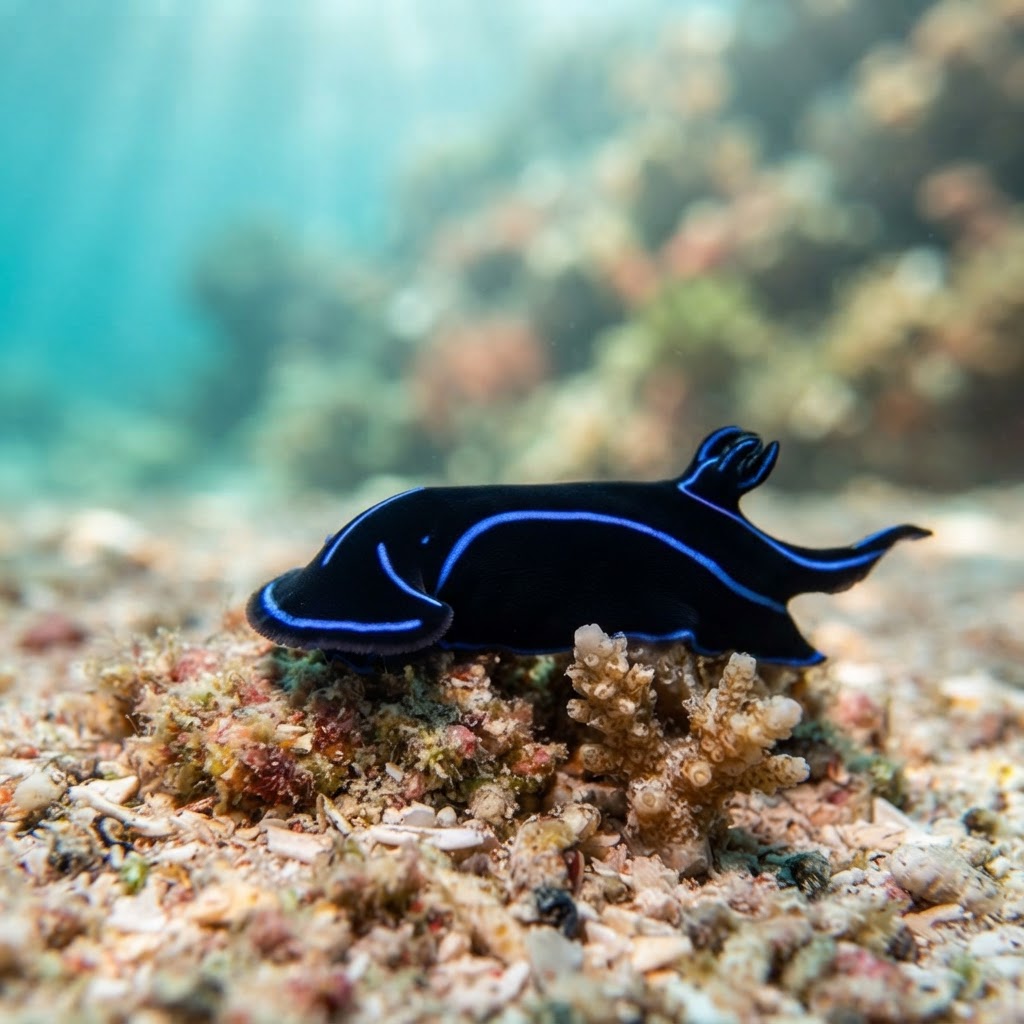
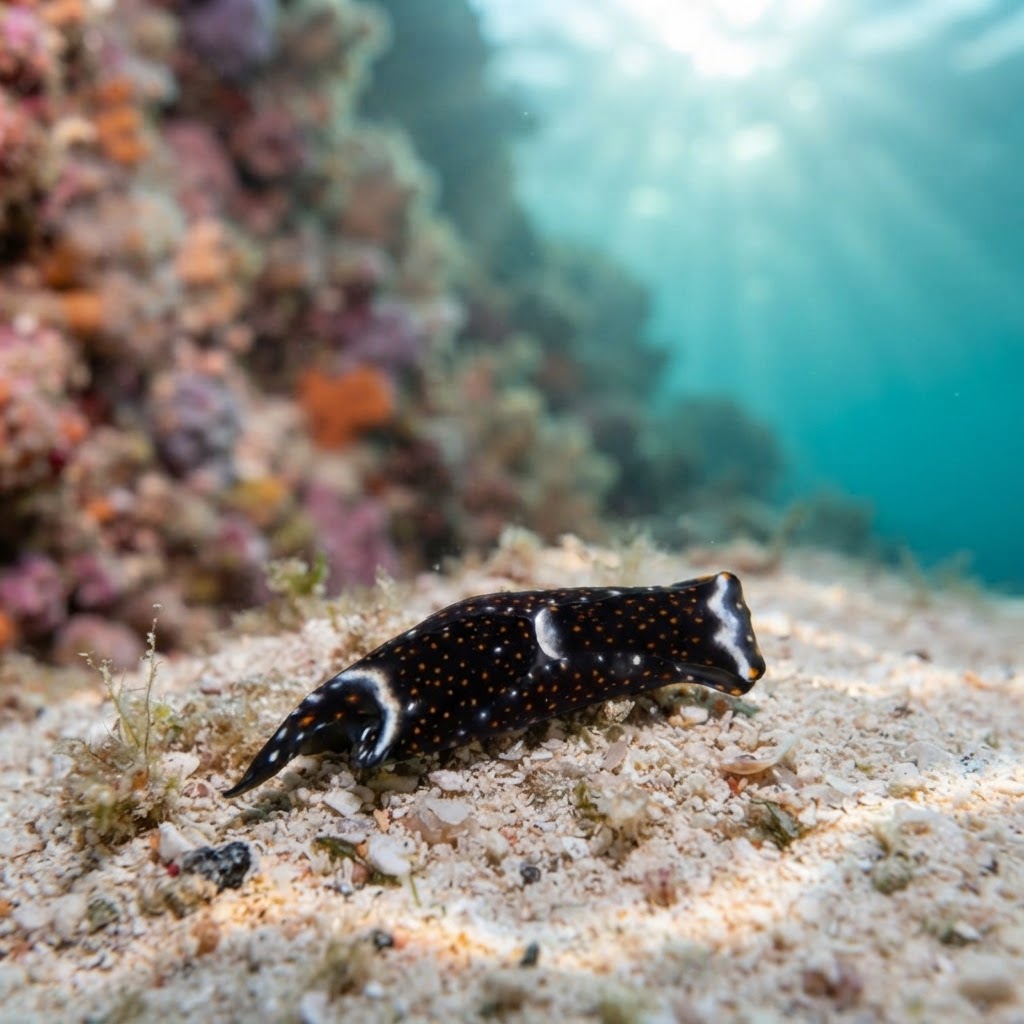
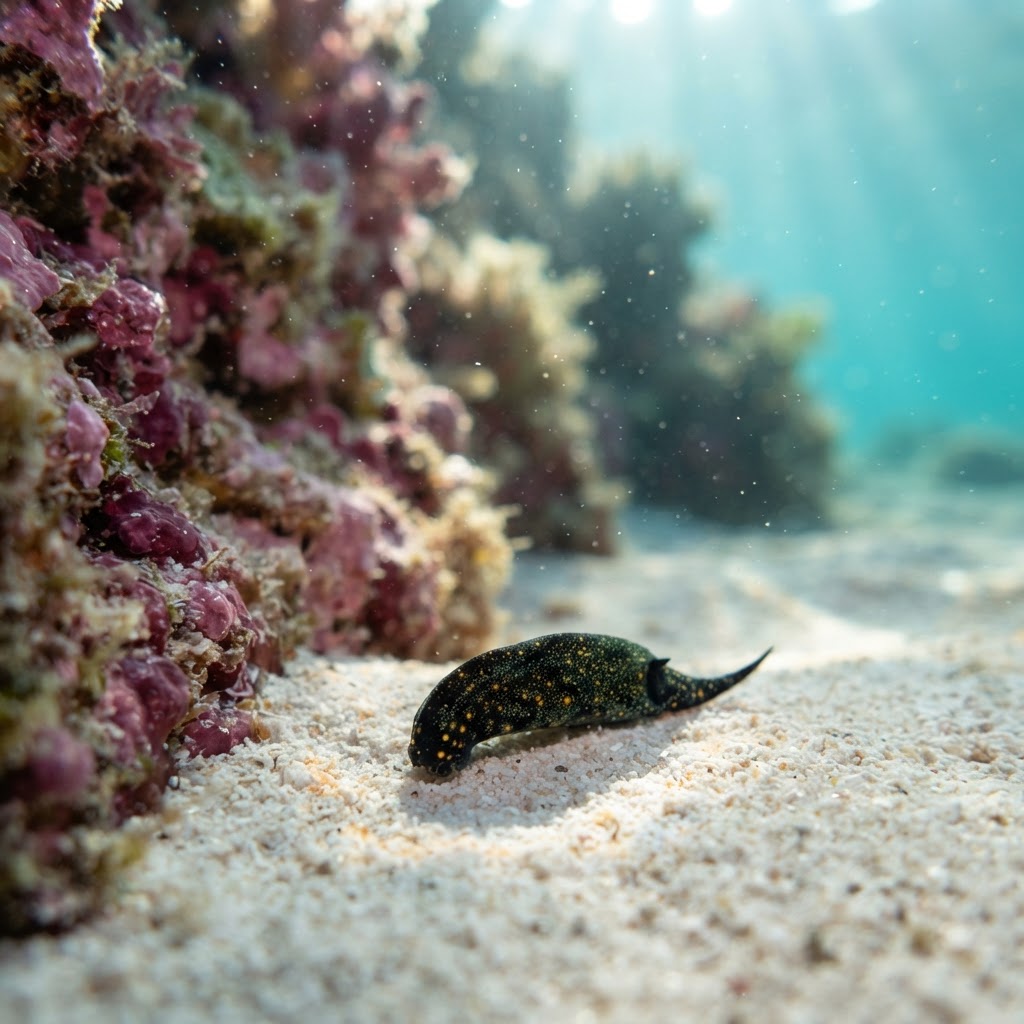
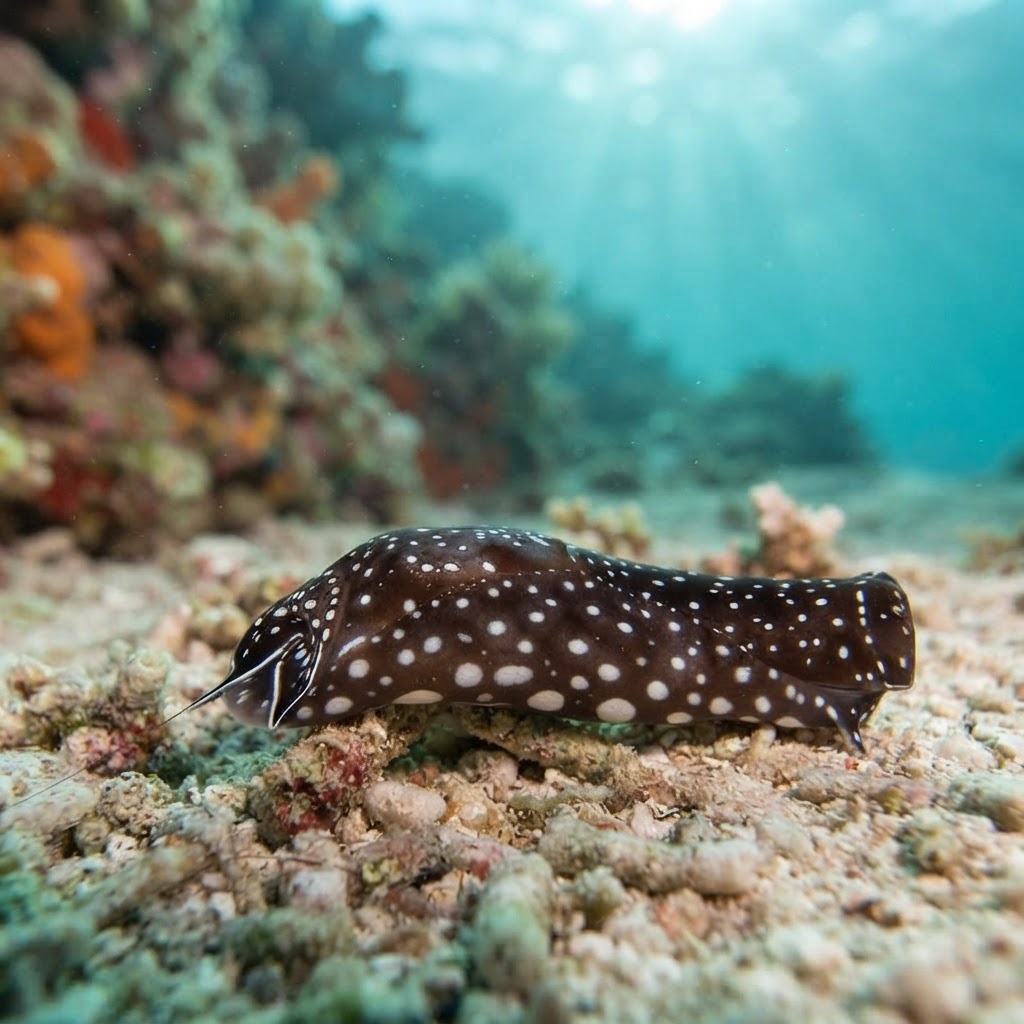
Barely a centimetre long, so you're hunting for a dark, elongated slug body with a distinctive shield-like head shape typical of the genus rather than bold colour. Look closely at the head margins and tail for the fine banding or pale edging that separates this species from its relatives, since at this size general body shape counts for more than colour from a metre away. Most divers find it by scanning sand or rubble patches with a torch rather than spotting it in open view.
Divers find it crawling slowly over sand, rubble or fine sediment, usually low on the reef where it's easy to miss without a careful look. It shows no reaction to divers beyond its usual unhurried pace, and there's no schooling or grouping behaviour to watch for, just a solitary slug going about its business.
Like other headshield slugs in the Aglajidae family, it's a predator of smaller invertebrates hiding in the sediment, using its shield-shaped head to plough through sand while hunting rather than grazing algae.
No clear seasonal pattern shows up in the sightings, and it's logged in water from roughly 25 to 31C, so it's around year-round on these warm Caribbean reefs.
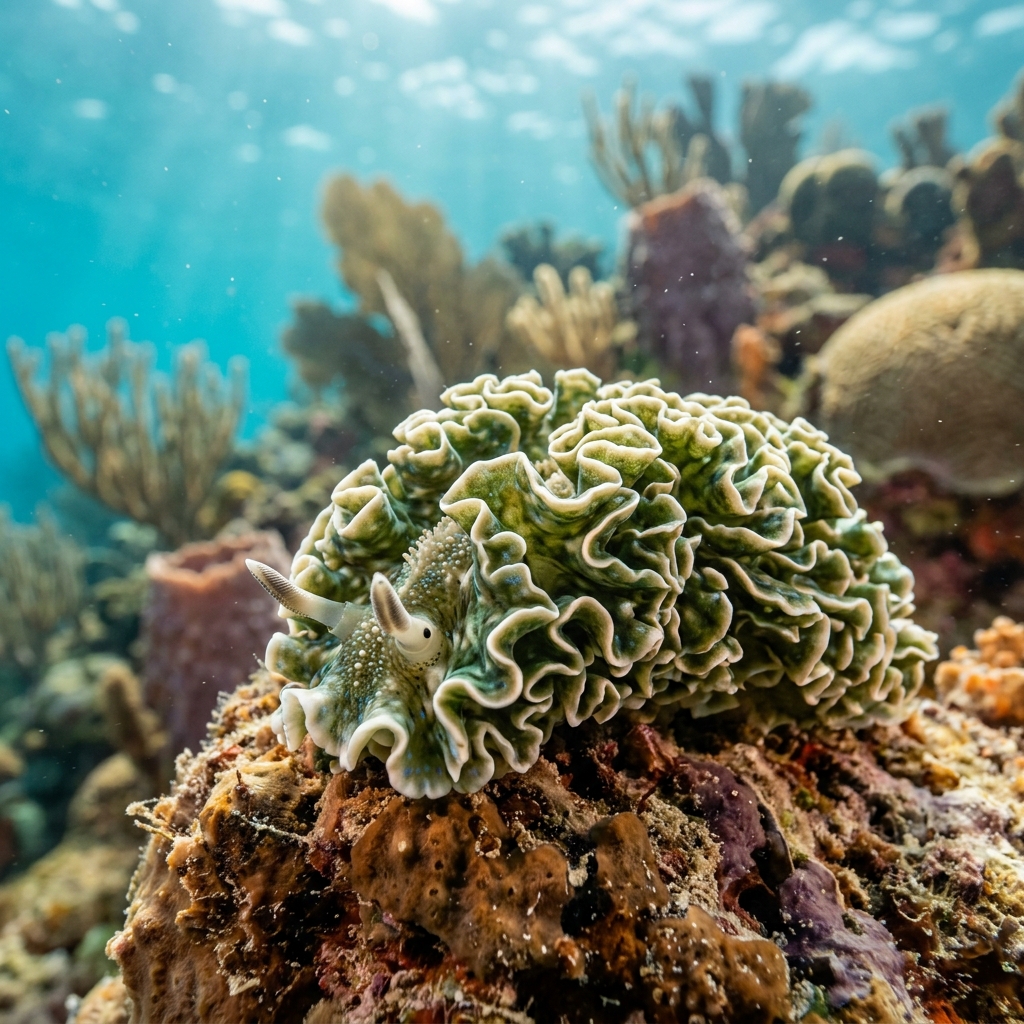
Reef neighbours a diver could mistake it for. Use the identification notes above to tell them apart.
Most consistently logged in Guadeloupe, with sightings split between Grande-Terre and Basse-Terre, and also turning up on Grand Cayman in the Cayman Islands. Sightings are thin everywhere it's found, so this is a species you go looking for on a known site rather than expect to stumble across.
Mapping where Chelidonura Cubana is logged…
It's most reliably reported in Guadeloupe, across both Grande-Terre and Basse-Terre, with additional sightings on Grand Cayman in the Cayman Islands. Even at these sites it's logged as rare, so treat it as a bonus find rather than a guaranteed sighting.
There's no detected season in the sighting data, and it's found across a warm temperature range of about 25 to 31C, so any time of year on a Caribbean reef trip gives you a shot at it.
Around 1cm long, making it one of the smaller headshield slugs divers try to spot. You'll need a torch and a slow, close look at sand and rubble patches rather than a scan of open reef.
Look for a tiny, dark, elongated slug with a shield-shaped head crawling over sand or rubble. Its small size and subtle markings mean it's easily confused with other headshield slugs, so a close macro look at the head and tail margins helps confirm it.
No, it poses no threat to divers. It's a small, slow-moving invertebrate best appreciated by looking closely without touching.
Site and sighting data is aggregated from diver logs, iNaturalist and GBIF. For taxonomy and conservation status:
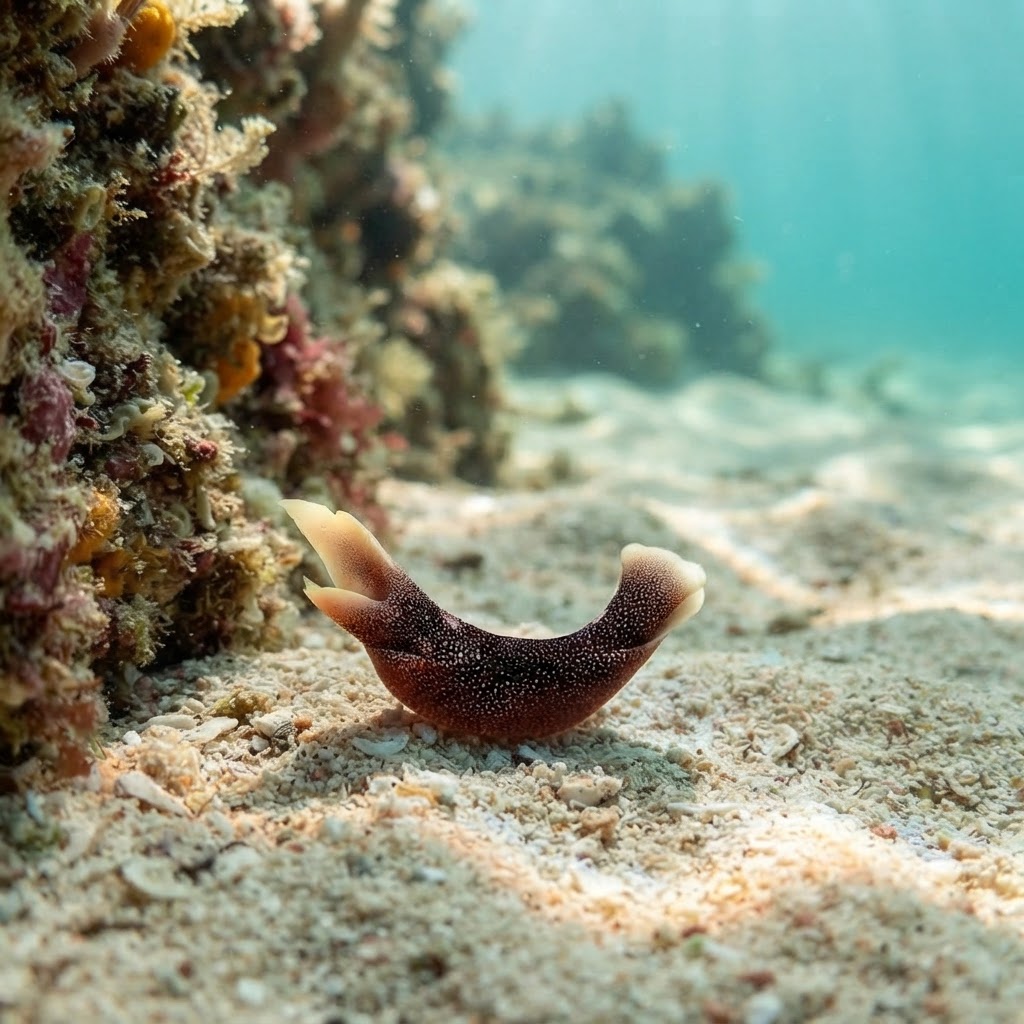
Chelidonura amoena
Elysia Timida
573 sites